Mentoring matters: Exploring pre-service teachers' experiences and identity development during teaching practice
Abstract
Teaching Practice (TP) plays a pivotal role in pre-service teachers' professional learning and identity development, particularly within distance-learning contexts where mentoring becomes the primary source of support. This qualitative narrative inquiry explores the mentoring experiences of five distance-learning Foundation Phase pre-service teachers enrolled at a private higher education institution in South Africa. Guided by Social Cognitive Theory and the distinction between planned and lived curriculum, the study draws on digital collages and unstructured interviews to illuminate how mentoring shaped participants' pedagogical growth, self-efficacy, emotional resilience, and emerging teacher identities across four years of TP. Findings reveal significant variability in mentoring quality, ranging from nurturing, transformative support to minimal or absent guidance. The study highlights mentoring as a critical mediator between theory and practice and underscores the need for more structured, equitable mentoring frameworks to support distance-learning pre-service teachers during TP.
teaching practice; pre-service teachers; mentor teachers; higher education institution; initial teacher education
Introduction
A persistent challenge in teacher education is the gap between how mentoring during teaching practice (TP) is envisioned in policy and programme design, and how it is experienced by pre-service teachers in schools (Satmaz et al., 2026). Although TP is intended to be a collaborative process characterised by guidance, feedback, and professional support, mentoring practices are often inconsistent and dependent on individual mentor teachers and school contexts (Jita & Munje, 2022; Ntshangase & Nkosi, 2022). As a critical component of initial teacher education (ITE), TP plays an important role in shaping pre-service teachers' professional identity, pedagogical competence, and confidence (Hoben, 2021; Maphalala, 2013).
For distance-learning (DL) pre-service teachers, TP assumes even greater importance because opportunities for regular face-to-face engagement with lecturers and peers are limited, making mentor teachers a primary source of professional learning and support (Mukeredzi, 2017). However, research indicates that DL pre-service teachers often experience uneven levels of supervision, feedback, and mentoring during TP (Moosa & Rembach, 2020; Muyengwa & Jita, 2020). While some mentor teachers adopt nurturing and reflective support, others offer limited guidance and, at times, treat pre-service teachers as additional classroom assistants rather than developing professionals (Gut et al., 2014; Sokhulu, 2018).
The expansion of distance teacher education in South Africa has increased the need to understand how DL pre-service teachers are supported during school-based learning. Although TP mentoring has been widely examined within contact-based teacher education programmes (Jita & Munje, 2022; Ntshangase & Nkosi, 2022), comparatively little research has focused on the mentoring experiences of DL pre-service teachers, particularly within private higher education institutions (PHEIs). Existing studies have largely concentrated on broader TP and mentoring challenges in DL contexts, with limited attention given to the mentoring experiences of pre-service teachers in PHEIs (Davids & Waghid, 2020; du Plessis, 2013; Mokoena, 2017; Olaniran, 2022).
This study addresses this under-researched area by exploring the mentoring experiences of the first cohort of DL Foundation Phase pre-service teachers enrolled at a national PHEI. Specifically, it examines how mentoring shaped participants' professional learning, identity development, and experiences during TP. The study was guided by the following research question: "What were DL pre-service teachers' experiences of mentoring during school-based Teaching Practice?"
The analysis is informed by Bandura's Social Cognitive Theory (SCT; 1986), Aoki's (1999) distinction between lived and planned curriculum, and Hargreaves and Fullan's (2012) concept of professional capital. Together, these perspectives provide a lens for understanding mentoring as both a social learning process and a contextual experience shaped by school environments, mentor practices, and institutional expectations.
Background and context
Massification of higher education and distance-learning growth
The transformation of South Africa's higher education sector since the adoption of the White Paper on Education and Training (Department of Education, 1995) has resulted in rapid massification and diversification of higher education pathways. The expansion of higher education and the growth of DL have increased access to teacher education for geographically dispersed and working students (Davids & Waghid, 2020). As a result, understanding how DL pre-service teachers are supported during TP has become increasingly important.
Teaching practice within initial teacher education
The Revised Policy on the Minimum Requirements for Teacher Education Qualifications (MRTEQ) of the National Qualifications Framework Act 67 of 2008 (Department of Higher Education and Training [DHET], 2015) stipulates pre-service teachers must complete 20-32 weeks of supervised school-based practice over a four-year degree. TP aims to link theory and practice, allowing pre-service teachers to apply academic knowledge, observe skilled practitioners, engage with learners, and reflect on their teaching. Scholars assert that TP has a major influence on novice teachers' future effectiveness, confidence, and retention (Podolsky et al., 2019; Tatto & Menter, 2019).
However, TP experiences are deeply affected by mentor teachers. Effective mentorship includes modelling didactic methods, giving constructive feedback, engaging in reflective dialogue, and supporting pre-service teachers in dealing with classroom diversity, planning, and behavioural challenges (Hahl & Mikulec, 2018; Hudson, 2013). Yet research shows that mentorship quality is highly variable, depending on school culture, workload, mentor motivation, and teacher perceptions of the mentoring role (Jita & Munje, 2022; Muyengwa, 2018). This variation strongly influences pre-service teacher identity development, particularly in DL contexts in which structured institutional support is limited.
Theoretical framework
This study is informed by three complementary theoretical perspectives: SCT (Bandura, 1986), Aoki's (1999) distinction between the lived and planned curriculum, and Hargreaves and Fullan's (2012) concept of professional capital. Together, these frameworks provide a lens for understanding mentoring as a learning process, a lived educational experience, and a socially situated professional practice.
SCT explains how pre-service teachers learn through observation, feedback, and social interaction. According to Bandura (1986), learning occurs through the reciprocal interaction of personal factors, behaviour, and environment. Within TP contexts, mentor teachers act as role models whose actions, feedback, and guidance influence pre-service teachers' professional learning, identity development, and confidence. A key aspect of SCT is self-efficacy, which refers to individual's beliefs in their ability to perform successfully (Bandura, 1997). Supportive mentoring can strengthen self-efficacy through positive feedback, modelling, and opportunities for successful teaching experiences.
Aoki's (1999) distinction between the planned and lived curriculum provides a framework for examining differences between institutional expectations of mentoring and the realities encountered in school settings. While ITE programmes may prescribe structured mentoring, the actual experiences of pre-service teachers are shaped by school contexts, relationships, and everyday practices. This distinction is particularly useful for understanding tensions between intended and enacted mentoring practices during TP.
Professional capital (Hargreaves & Fullan, 2012) extends the analysis beyond individual mentoring relationships to the broader professional environment. Professional capital comprises human capital (professional knowledge and skills), social capital (professional relationships and collaboration), and decisional capital (professional judgement). These concepts highlight how school cultures, collegial relationships, and mentor expertise may enable or constrain mentoring opportunities and professional learning.
Collectively, these frameworks support an analysis of mentoring as an individual, relational, and contextual process.
Methodology
Research paradigm
This study was grounded within an interpretivist paradigm, which views reality as socially constructed and shaped by individual experience (Kivunja & Kuyini, 2017). A qualitative narrative inquiry approach was adopted to explore how DL pre-service teachers made sense of their mentoring experiences during TP. Narrative inquiry is particularly suited to studies concerned with lived experiences, identity development, and meaning-making over time (Chase, 2018).
Research site and participants
This study was conducted at a national PHEI offering a DL Bachelor of Education (Foundation Phase) programme. Participants were final-year students who had completed four years of school-based TP under the guidance of mentor teachers. Participants in the study were selected according to the following criteria: (1) final (fourth) year students who completed their Foundation Phase Bachelor of Education degree in 2022, (2) were DL students during their studies towards their Bachelor of Education degree; (3) did school-based TP block sessions under mentor teachers; and (4) were registered at a particular PHEI in South Africa.
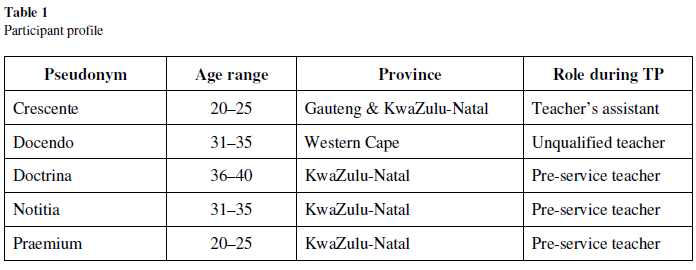
Purposive sampling was used to recruit participants who could provide rich descriptions of mentoring experiences (Campbell et al., 2020). Nine students initially volunteered, from whom five participants were selected for inclusion in the study. At the time of recruitment, the participants were at the end of the fourth year of their Bachelor of Education Foundation Phase degree and the initial meeting, digital collage creation, and unstructured interviews took place within the first five months of their first year of teaching (Table 1).
Narrative inquiry typically involves a small number of participants because the emphasis is on obtaining rich, detailed accounts of lived experience rather than achieving breadth or statistical representation (Barkhuizen, 2019; Clandinin & Connelly, 2000). The sample of five participants enabled detailed exploration of individual mentoring stories while maintaining the depth required for narrative analysis.
Researcher positionality
The researcher was employed at the institution where the participants studied, and had professional contact with some members of the cohort. To minimise potential power imbalances, participants were recruited only after completing their studies and all assessment processes. The researcher did not assess members of the DL cohort directly. Internal and external moderation procedures were used for modules associated with the researcher, and participation was entirely voluntary. Throughout the study, the researcher maintained a reflexive journal to document assumptions and interpretive decisions.
Data generation
Data were generated using digital collages and unstructured narrative interviews. Participants created digital collages to represent significant mentoring experiences from their four years of TP. These collages served as elicitation tools during individual online interviews conducted via Microsoft Teams. The unstructured interviews enabled participants to explain the meaning of images, symbols, and metaphors used in their collages (Schurink et al., 2021), while sharing their mentoring stories in detail. Interviews were recorded, transcribed verbatim, and returned to participants for member checking.
Data analysis
Thematic narrative analysis
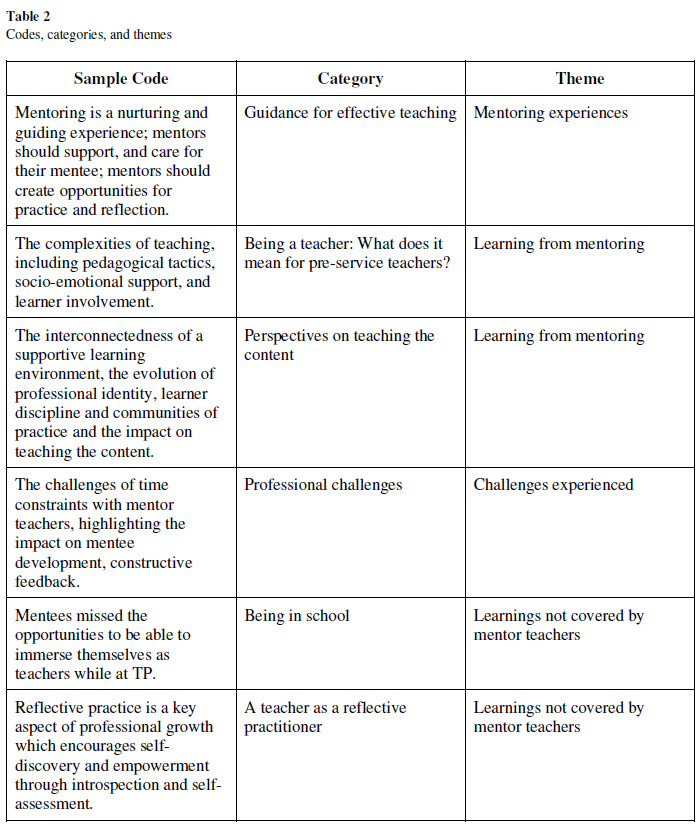
The data from the digital collages and unstructured interviews were analysed using thematic narrative analysis. Riessman (2008) explains that thematic narrative analysis focuses on the content of narratives, enabling researchers to identify recurring meanings across participants' stories while preserving the temporal and experiential nature of narrative accounts. This approach was complemented by thematic coding procedures that facilitated the systematic identification and organisation of patterns within the data (Maunula et al., 2023). According to Kumar (2019), to identify the themes, the researcher must review the descriptive responses given to each question to understand the meaning of the response and thus from the responses, broad themes will develop (see Table 2). Kumar (2019) stresses the importance of selecting the wording of the themes as these are the basis for analysing the unstructured interviews. The themes were then interpreted through Bandura's (1986) SCT, Aoki's (1999) distinction between the planned and lived curriculum, and Hargreaves and Fullan's (2012) notion of professional capital, ensuring conceptual coherence.
Trustworthiness, limitations, and ethical considerations
Trustworthiness was enhanced through member checking, peer debriefing, an audit trail, and the use of rich participant descriptions (Lincoln & Guba, 1985; Nowell et al., 2017). These strategies supported the credibility, dependability, confirmability, and transferability of the findings. The study involved a small purposive sample drawn from a single PHEI and therefore provides context-specific insights rather than findings intended for statistical generalisation. In addition, the researcher's institutional affiliation may have influenced participants' responses or the interpretation of data, although reflexive practices, peer debriefing, and an audit trail were employed to mitigate this risk. Ethical clearance and institutional permission were obtained prior to the study. Participation was voluntary, informed consent was secured, and pseudonyms were used to protect participant anonymity and confidentiality.
Findings
The data presented herein offer a detailed account of the participants' mentoring experiences during TP block sessions. Through the participants' narratives, insight is gained into the complex nature of the mentoring relationships, the successes and challenges they faced, and the ways in which they fulfilled their roles as pre-service teachers. The researcher explores the pre-service teachers' experiences in their own words thus highlighting the key themes and trends that emerged from the rich data. The narratives are presented in a manner that respects the participants' voices and points of view, while offering a critical analysis of data. The narratives were developed based on the digital collages and the unstructured interviews of each participant. The researcher worked with the information gathered to generate the narratives. The researcher has included the exact wording from the unstructured interviews to add depth and credibility to the data presentation.
Narrative snapshots of participants
Crescente
Crescente's mentoring journey was characterised by a contrast between limited support in her early TP experiences and more meaningful mentorship in later years. During her first year, she received minimal guidance from mentors who were often unavailable, leaving her feeling unsupported and questioning her career choice. A key turning point occurred in her third and fourth years when she encountered mentors who were more engaged, reflective, and learner-centred. Through these experiences, she learned that teaching extends beyond delivering content and involves creativity, collaboration, emotional responsiveness, and attention to individual learner needs. Observing effective mentors helped her develop a broad understanding of teaching, while negative experiences strengthened her capacity for self-reflection and independent learning. Overall, Crescente's narrative highlights how both the quality of mentorship and the school context shaped her professional growth, identity formation, and understanding of effective TP.
Docendo
Docendo's mentoring journey was shaped largely by observation rather than direct guidance because her mentor teachers were often too busy to engage in purposeful mentoring conversations. As a result, many of her professional learnings emerged from watching how experienced teachers interacted with learners and managed classroom environments. A key turning point in her development was recognising the importance of balancing discipline with care, patience, and enjoyment in the learning process. Through observing both effective and ineffective practices, she developed a strong belief in positive, non-aggressive approaches to learner discipline and the value of creating engaging learning environments. Docendo also came to appreciate the importance of empathy, calm communications, transparency, and acknowledging mistakes as essential qualities of effective teachers. Overall, her experiences reinforced the view that teaching is as much about nurturing learners' personal growth and well-being as it is about supporting their academic achievement.
Doctrina
Doctrina's mentoring journey was characterised by both significant challenges and meaningful professional growth. A key turning point occurred during her first year of TP, when she struggled with learner discipline and classroom management but received practical, direct guidance from a mentor who helped her develop strategies for positively channelling learners' energy and creating a more engaging classroom environment. This experience strengthened her ability to connect theory with practice and highlighted the value of a supportive mentor-mentee relationship. Through observation, she learned the importance of flexibility, individualised teaching approaches, and building meaningful relationships with learners. However, her third- and fourth-year experiences were marked by limited mentoring, insufficient feedback, and a lack of opportunities for reflective dialogue, particularly regarding learners with diverse needs. Overall, Doctrina's experiences reinforced her belief that effective mentors require both teaching experience and the willingness to provide meaningful guidance, feedback, and support to pre-service teachers.
Notitia
Notitia's mentoring journey reflects a gradual transition from a novice pre-service teacher to a more confident and resilient emerging professional. Through her mentoring experiences, observations, and reflections, she gained insight into the complex realities of teaching, including lesson preparation, time management, multitasking, continuing professional development, and meeting competing demands. A significant turning point in her development was recognising that effective teaching requires both careful preparation and strong relationships with learners and colleagues. Observing different mentor teachers exposed her to both positive and negative teaching practices, enabling her to critically evaluate which approaches she wished to adopt in her own practice. She learned that mentoring experiences are shaped by who the mentor is, their purpose for mentoring, and the opportunities they create for learning. Overall, Notitia's journey fostered a commitment to lifelong learning, collaboration, and using teaching as a means of making a meaningful difference in learners' lives.
Praemium
Praemium's mentoring journey was characterised by resilience, adaptability, and significant personal growth. Across her TP experiences, she learned that effective teaching requires flexibility because carefully planned lessons often need to be adapted to accommodate learners' needs and sustain engagement. A key turning point occurred during her third-year TP, where challenging mentoring experiences tested her confidence but ultimately contributed to her professional development and self-awareness. Despite these difficulties, Praemium emerged with a stronger sense of purpose and a deeper understanding of herself as a teacher. She observed that mentor teachers who occupied leadership positions often provided limited direct mentoring, whereas classroom-based mentors offered richer insights into the realities of teaching and learner engagement. Through supportive mentoring relationships, Praemium developed greater confidence, positivity, and appreciation for the role mentorship plays in shaping professional identity and preparing pre-service teachers for the complexities of classroom practice.
Themes
These themes provide insight into the question: "What were DL pre-service teachers' experiences of mentoring during school-based TP?" The findings are presented according to the four major themes developed through thematic narrative analysis: (1) mentoring experiences, (2) learning from mentoring, (3) challenges experienced, and (4) learnings not covered by mentors. Together, these themes illustrate how mentoring shaped participants' identity development and pedagogical growth across the four-year TP journey.
Theme 1: Mentoring experiences
Positive, nurturing, and transformative mentorship. Several participants encountered mentors who embodied the nurturing, relational qualities highlighted in the teacher education literature. Successful mentors demonstrated patience, compassion, reflective thinking, and pedagogical adaptability-qualities that correspond with the view of effective mentoring as a holistic, relational process. For example, Crescente described her third-year mentor as "a hero," someone who modelled humour, empathy, calmness, and intentional support. This mentor consistently answered questions, provided helpful tips, and displayed emotional warmth in her interactions with learners.
Similarly, Docendo observed from mentors who demonstrated humility and ethical responsibility: "You need to lead by example when you teach because when you teach children, you don't only teach content but also how to be 'proper' [good] human beings." This was evident to Docendo when her mentor teacher openly acknowledged a mistake in front of learners. When a mentor apologised to her class for an error made on the board, Docendo realised that teaching involves modelling integrity and human fallibility.
For Doctrina, meaningful mentoring occurred when mentors offered direct, actionable guidance on lesson execution and classroom management. Doctrina recalled: "She [mentor teacher] gave me practical tips to implement in my lessons . . . they helped me with classroom management." These tips furnished her with hands-on approaches for grounding restless learners, helping her contend with the complexities of real classroom dynamics.
Limited, inconsistent, or absent mentorship. In sharp contrast, other participants experienced minimal mentoring because mentors were overwhelmed, disengaged, or occupied with leadership duties. Crescente described her first-year mentor-who was the school principal-as "barely in the class." As a result, Crescente taught unsupervised for long stretches, with little support or feedback.
Notitia reported mentors who delegated disproportionate amounts of administrative and clerical work without providing professional guidance. Rather than modelling effective planning or assessment practices, these mentors treated her as unpaid support staff.
Theme 2: Learning from mentoring
Learning what it means to be a teacher. All participants reported learning important lessons about teaching as a relational, emotional, and adaptive profession. They learned that teaching requires "flexibility," compassion, improvisation, and constant reflection. For example, Crescente learned to think "outside the box," adopting her mentor's strategy of teaching outdoors to revitalise learner engagement. This demonstrated to her that teachers must adapt the environment to meet learner needs.
Similarly, Docendo observed that teachers must balance structure with joy. She noticed that mentors were "so focused on getting through the content that some children are left behind" whereas she believes teachers need to "focus more on what they [learners] have accomplished"-strengthening the idea that teaching must be responsive, dynamic, and relational.
Pedagogical and classroom management skills. Participants acquired practical pedagogical knowledge through observation, modelling, and trial-and-error. They learned techniques for behaviour management, lesson adaptation, differentiation, and maintaining learner engagement. Doctrina, for instance, learned that introducing short movement breaks could redirect learner energy and "they helped me with classroom management."
Praemium learned to view learner diversity as a central aspect of teaching. Her collage depicted learners as "one-of-a-kind," symbolising her realisation that pedagogy requires constant adjustment to satisfy unique learner needs.
Identity development. Participants described key moments that shifted their understanding of themselves as teachers. Crescente observed her mentor's "power of being a hero" supporting an anxious learner, using lavender's calming scent to reduce the anxiety, and said that that is kind of teacher she aims to be. Notitia's moment when a foreign learner offered "heartfelt gratitude" strengthened her belief that she could make a meaningful difference. Praemium's fourth-year mentor was "very encouraging and supportive" and offered her "space to explore"-experiences that confirmed her sense of professional purpose.
Theme 3: Challenges experienced
Time constraints. Crescente identified limited mentor support as a key challenge during her first year TP, with a slight recurrence in third year. Both mentors held senior roles and had limited time for mentoring. In first year, the mentor was "barely in the class" leaving Crescente to "manage and teach the class without supervision" for most of the day. Feeling that she was "not learning anything," and "was not being mentored," she requested a transfer. Although her new school provided greater access to a mentor, she felt that she "did not learn much" because the mentor "followed the rulebook" instead of using engaging strategies. This experience led her to question her career choice, asking: "Is this really what I'm going to do?" Her later mentoring experiences in third and fourth year restored her confidence in teaching.
Docendo used a comic image of a woman sitting at a cluttered desk saying, "Time management is a great concept, but who has time for it?" to represent her mentoring experience. She explained that "there was never time" to talk to her mentor or ask questions because everything was "a rush," particularly in large classes. Although mentoring occurred "during class," it was not a "focused" mentoring session.
Praemium felt that her first-year mentor teacher's experience and knowledge were not fully shared because of time constraints. She believes she "could have learned a lot more" from her mentor teacher "if time was not as limited."
Teaching styles and strategies. Crescente described her first mentor teacher as having "boring ideas" and felt she "did not put much thought" into her teaching. Consequently, Crescente "did not learn how to think outside the box and how to make learning fun." Her second mentor teacher similarly taught "by the rulebook," leading Crescente to feel she learned to follow CAPS rather than how to teach creatively.
In her third and fourth years, Doctrina found lessons "daunting" because of two learners with behavioural issues. Their disruptions caused her to focus away on "trying to control them," and her "lesson went to pieces." One mentor teacher "left it up to her to manage how the lesson ran," intervening only when situations became "completely out of hand," believing this would help her "figure it out." In contrast, her fourth-year mentor allowed flexibility and discussion, while her third-year mentor adhered strictly to the lesson plan.
Behaviour management. Doctrina's fourth-year mentor teacher showed little patience for a learner experiencing behavioural difficulties, claiming she had "exhausted all her efforts" and often "brush[ed] him aside" during meltdowns. Doctrina adopted a different approach, spending time with the learner and witnessing significant growth over six weeks. As a result of her "patience and efforts," the learner was sometimes better behaved with her than with the mentor. His progress reflected the title of Doctrina's collage: a "journey of a smile."
Roles of a pre-service teacher. Notitia felt overwhelmed by the volume of tasks assigned to her, likening the experience to First National Bank's slogan, "FNB. How can we help you?" She perceived her mentor's approach as focused more on what the student teachers could do for her than on supporting their professional development.
Double standards. Praemium struggled with her third-year mentor teacher's "double standards" and "unrealistic expectations" of her. Although she felt she was "giving her best," her mentor believed her "best was not good enough." Praemium felt pressured to "teach in her style," limiting opportunities to develop her own teaching identity. She described the mentor as "excessively critical" and believed the treatment stemmed from perceptions that she was "inexperienced due to being younger" than other TP students, resulting in a "perceived sense of immaturity."
Theme 4: Learning not covered by mentors
Assessments. Crescente identified assessment as a key mentoring gap. She was not involved in "assessing learners' progress or analysing the assessment results" and noted that "you are expected to have this knowledge, but you cannot have it if no-one has mentored you in how to do it."
Dealing with learners. Docendo observed that teachers are often "so focused on getting through the content that some children are left behind." She believed teachers should "focus more on" learners and their achievements and "be patient" when learners struggle. Similarly, Doctrina felt her behaviour management challenges could have been reduced if mentors had "guided her more" and engaged in reflective discussions about difficult situations, which she said was "rare."
Constructive feedback. Doctrina expressed a need for feedback that was "always positive but not constructive," noting that she needed comments she could "work with." Notitia similarly valued constructive feedback, believing that "true growth came from introspection and self-improvement." She also reported receiving little guidance on managing the stressors of teaching, feeling that mentors adopted the view, "you chose this career so deal with it [the stressors]." As a result, she learned to cope independently, reminding herself that "at times you have to be your own hero and find a way."
Meetings. Although Praemium learned about conducting parent meetings, she was not given opportunities to observe "how to engage with the learners' parents in terms of the standards, procedures, and boundaries."
Discussion
This discussion interprets the four themes through SCT, Aoki's lived and planned curriculum, and Hargreaves and Fullan's professional capital to explain how mentoring shaped pre-service teachers' learning and identity during TP.
Mentoring experiences
Mentoring quality was closely linked to mentors' willingness and ability to model professional practice. Through the SCT lens, mentors served as models from whom pre-service teachers observed pedagogical practices, professional values, and behaviours. Mentoring characterised by compassion, reflection, and adaptability positively influenced participants' development as emerging educators, supporting Bandura's (1986) view that learning occurs through observation and interpretation of others' actions.
Identity formation emerged as an important outcome of mentoring. Positive mentoring relationships enabled participants to develop confidence and professional purpose, while negative experiences provided examples of practices they chose not to emulate. This supports Izadinia's (2017) argument that both positive and negative mentoring experiences contribute to professional identity development.
From a professional capital perspective, supportive mentoring relationships fostered social capital through collaboration, guidance, and emotional support. In contrast, absent or disengaged mentors limited opportunities for professional learning and relationship building. For DL pre-service teachers, mentor teachers often became the primary source of professional guidance, making mentoring quality particularly influential.
An important finding was that participants' professional growth was influenced not only by effective mentoring but also by ineffective mentoring. While previous research typically emphasises the benefits of positive mentoring relationships, participants in this study often developed professional insight by critically reflecting on mentoring practices they did not wish to emulate. This suggests that mentoring may shape professional identity through both modelling and critical contrast, highlighting the active role pre-service teachers play in interpreting mentoring experiences.
Learning from mentoring
Participants described learning through observation, participation, reflection, and interaction with experienced teachers. Consistent with SCT, they adopted observed practices related to classroom management, learner engagement, differentiation, and professional conduct, thereby expanding their teaching repertoires and confidence.
Aoki's (1999) distinction between planned and lived curriculum helps explain these experiences. While ITE programmes provided theoretical foundations, participants frequently reported learning about flexibility, learner diversity, relationship building, and teacher identity through authentic classroom experiences. Professional learning therefore extended beyond formal coursework and occurred through engagement with the realities of practice. These experiences also contributed to the development of professional capital. Participants developed human capital through practical pedagogical skills, social capital through collaboration and observation, and decisional capital through opportunities for reflection, professional judgement, and independent decision-making.
A notable finding was that many participants learned through observation despite receiving limited direct mentoring. This suggests that, for some DL pre-service teachers, professional learning occurred through participation in the broader school environment rather than through formal mentoring interactions alone. Such findings complicate traditional understandings of mentoring by indicating that learning may continue even when structured mentoring opportunities are limited.
Challenges experienced
Time constraints, limited mentor availability, inconsistent mentoring practices, role ambiguity, and behaviour management difficulties highlight tensions between planned and lived curriculum of TP. Although ITE programmes assume mentors will provide regular guidance, feedback, and reflection opportunities (DHET, 2015), participants' experiences were often shaped by competing school demands and contextual constraints.
These challenges reflected variations in professional capital. Limited communication and support constrained social capital, while inconsistent mentoring reduced opportunities to develop human capital through guided practice. Participants who experienced rigid or controlling mentoring relationships had fewer opportunities to develop decisional capital. These challenges may be particularly significant for DL pre-service teachers, who rely heavily on school-based mentors to connect coursework with classroom practice.
The prominence of mentor unavailability was particularly noteworthy in this study. While mentoring literature often assumes that mentors are available to provide regular guidance and feedback, several participants described mentors whose leadership and administrative responsibilities substantially reduced mentoring opportunities. This finding suggests that the quality of mentoring may be influenced not only by mentor expertise but also by school organisational structures and workload demands.
Learnings not covered by mentors
Several professional learning areas were insufficiently addressed during mentoring, including assessment, parent engagement, stress management, behaviour support, and constructive feedback. These gaps illustrate the difference between what ITE programmes intend pre-service teachers to learn and what they actually experience during TP. From Aoki's (1999) perspective, these omissions represent areas of the lived curriculum that failed to expose pre-service teachers to important dimensions of professional practice. While participants observed classroom teaching, they often lacked opportunities to engage with broader teaching responsibilities such as assessment analysis, parent communication, and professional well-being.
A distinctive contribution of this study is the identification of professional learning areas that participants perceived as largely absent from mentoring. While mentoring often focuses on classroom teaching and lesson delivery, participants highlighted limited exposure to assessment practices, parent engagement, professional well-being, and stress management.
These findings suggest that mentoring may be preparing pre-service teachers for classroom instruction without necessarily preparing them fully for the wider professional responsibilities of teaching. These omissions also affected professional capital development. Limited exposure to assessment practices, reflective dialogue, and constructive feedback constrained human and decisional capital. Feedback was particularly important because it supported self-evaluation, professional judgement, and continued growth. When feedback was absent or overly general, participants reported uncertainty about their progress and development.
Overall, mentoring provided valuable opportunities for professional growth but did not consistently address all aspects of teacher preparation. Strengthening mentor preparation, expanding opportunities for reflective dialogue, and ensuring exposure to the broader responsibilities of teaching may better prepare pre-service teachers for entry into the profession. For PHEIs offering DL ITE programmes, greater investment in mentor preparation and monitoring may improve consistency in mentoring quality across TP placements.
Conclusion
This study explored the mentoring experiences of DL pre-service teachers during TP at a PHEI in South Africa. Guided by SCT (Bandura, 1986), Aoki's (1999) distinction between lived and planned curriculum, and Hargreaves and Fullan's (2012) professional capital theory, the study demonstrated that mentoring played a central role in shaping participants' professional learning, identity development, confidence, and understanding of teaching. The findings contribute to a limited literature on mentoring within distance ITE programmes offered by PHEIs. They highlight the importance of mentor availability, modelling, feedback, and reflective dialogue, while also revealing gaps in mentoring related to assessment practices, parent engagement, learner support, professional well-being, and constructive feedback.
Importantly, the study suggests that mentoring gaps may extend beyond classroom teaching to include assessment, parent engagement, and professional well-being. This finding highlights dimensions of teacher preparation that may be overlooked within existing mentoring models and warrants further investigation within distance teacher education contexts. The findings suggest that DL pre-service teachers may benefit from more structured and responsive mentoring support, given their reliance on school-based mentors to connect coursework with classroom practice. For PHEIs, this highlights the need for stronger mentor preparation, support, and monitoring processes to promote more consistent mentoring experiences during TP.
The findings should be interpreted within the study's limitations. The research involved a small purposive sample of five participants from a single PHEI, and therefore reflects the experiences of a specific group of DL pre-service teachers rather than the broader population of students. Nevertheless, the study provides valuable insight into an under-researched area and offers a foundation for future research on mentoring in distance teacher education contexts. Overall, the study reinforces the importance of mentoring as a key component of TP and highlights the need for mentoring practices that are intentional, supportive, and responsive to the needs of DL pre-service teachers.
Recommendations
Recommendations for higher education institutions
The findings suggest that PHEIs offering distance ITE programmes should strengthen mentor preparation and support structures to improve the quality and consistency of mentoring during TP. Structured mentor development programmes should focus on key mentoring practices such as modelling effective teaching, providing constructive feedback, facilitating reflective dialogue, and supporting pre-service teachers' professional (Wexler, 2019). In addition, PHEIs should provide clear mentoring guidelines and practical tools to support consistency across school placements. Given the limited face-to-face contact experienced by DL students, PHEIs should also establish regular check-in opportunities during TP and strengthen partnerships with schools to ensure mentors understand their roles and responsibilities within the practicum process.
Recommendations for mentor teachers
Mentor teachers should prioritise regular opportunities for professional dialogue, feedback, and reflection with pre-service teachers. Constructive, specific, and actionable feedback is essential for supporting professional learning and the development of decisional capital (Parker et al., 2021). Mentors should also intentionally model professional conduct, reflective practice, and effective classroom management strategies. Furthermore, pre-service teachers should be given opportunities to participate in the wider responsibilities of teaching, including assessment processes, parent interactions, staff meetings, and collaborative planning activities. Such experiences help bridge the gap between the planned and lived curriculum of TP.
Recommendations for future research and policy
Further research is needed to explore mentoring experiences within distance teacher education programmes across both private and public higher education institutions. Larger and more diverse studies could provide greater insight into the mentoring practices across different contexts. At a policy level, greater attention should be given to the preparation, support, and recognition of mentor teachers. Clear mentoring expectations aligned with MRTEQ requirements may contribute to more consistent and equitable TP experiences for pre-service teachers.
References
- Aoki, T. (1999). Interview: Rethinking curriculum and pedagogy. Kappa Delta Pi Record, 35(4). https://doi.org/10.1080/00228958.1999.10518454
- Bandura, A. (1986). Social foundations of thought and action: A social cognitive theory. Prentice-Hall. http://ereserve.library.utah.edu/Annual/PSY/3960/Gelfand/social1.pdf
- Bandura, A. (1997). Self-efficacy: The exercise of control. W. H. Freeman.
- Barkhuizen, G. (2019). Narrative inquiry in applied linguistics. Cambridge University Press. https://doi.org/10.1017/9781139135301
- Chase, S. E. (2018). Narrative inquiry: Toward theoretical and methodological maturity. In N. K. Denzin & Y. S. Lincoln (Eds.), The SAGE handbook of qualitative research (pp. 546-560). SAGE. https://doi.org/10.4135/9781529770278.n19
- Clandinin, D. J., & Connelly, F. M. (2000). Narrative inquiry: Experience and story in qualitative research. Jossey-Bass.
- Department of Education. (1995). Education and training in a democratic South Africa [White paper]. https://www.gov.za/sites/default/files/gcis_document/201409/16312gen1960.pdf
- Department of Higher Education and Training. (2015, February 19). National Qualifications Framework Act (67/2008), Revised policy on the minimum requirements for teacher education qualifications (Government Notice No. 111). https://www.dhet.gov.za/Teacher%20Education/National%20Qualifications%20Framework%20Act%2067_2008%20Revised%20Policy%20for%20Teacher%20Education%20Quilifications.pdf
- Gut, D. M., Beam, P. C., Henning, J. E., Cochran, D. C., & Knight, R. T. (2014). Teachers' perceptions of their mentoring role in three different clinical settings: Student teaching, early field experiences, and entry year teaching. Mentoring & Tutoring: Partnership in Learning, 22(3), 240-260. https://doi.org/10.1080/13611267.2014.926664
- Hargreaves, A., & Fullan, M. (2012). Professional capital: Transforming teaching in every school. Teachers College Press.
- Hoben, N. (2021). Challenges for mentors in working with secondary school pre-service teachers. New Zealand Journal of Educational Studies, 1-23. https://doi.org/10.1007/s40841-021-00198-0
- Izadinia, M. (2017). From swan to ugly duckling? Mentoring dynamics and pre-service teachers' readiness to teach. Australian Journal of Teacher Education, 42(7), 66-83. https://doi.org/10.14221/ajte.2017v42n7.5
- Kumar, R. (2019). Research methodology: A step-by-step guide for beginners (5th ed.). SAGE.
- Lincoln, Y. S., & Guba, E. G. (1985). Naturalistic inquiry. Sage.
- Maphalala, M. (2013). Understanding the role of mentor teachers during teaching practice session. International Journal of Educational Sciences, 5(2), 123-130. https://doi.org/10.1080/09751122.2013.11890069
- Maunula, M., Maunumäki, M., Marôco, J., & Harju-Luukkainen, H. (2023). Developing students well-being and engagement in higher education during COVID-19: A case study of web-based learning. Sustainability, 15(4), 1-9. https://doi.org/10.3390/su15043838
- Mokoena, S. (2017). Student teachers' experiences of teaching practice at open and distance learning institution in South Africa. Turkish Online Journal of Distance Education, 18(2), 122-133. https://doi.org/10.17718/tojde.306564
- Muyengwa, B. (2018). The context and practice of school-based mentoring of pre-service teachers in Zimbabwe [Doctoral dissertation, University of the Free State]. https://scholar.ufs.ac.za/items/f162ce44-3b7f-4903-93a1-3028dbb28afa
- Muyengwa, B., & Jita, T. (2020). Improvements in mentoring of pre-service teachers: Experiences of field placement. Journal of Studies in Social Sciences and Humanities, 6(1), 1-9. https://api.core.ac.uk/oai/oai:doaj.org/article:cdca1758d6ca4efa9ba0f1e7e6034123
- Nowell, L. S, Norris, J. M., White, D. E., & Moules, N. J. (2017). Thematic analysis: Striving to meet the trustworthiness criteria. International Journal of Qualitative Methods, 16, 1-13. https://doi.org/10.1177/1609406917733847
- Ntshangase, S. Z., & Nkosi, Z. P. (2022). Effective mentoring: Understanding factors affecting the holistic development of pre-service teachers during teaching practice. South African Journal of Education, 42(4). https://doi.org/10.15700/saje.v42n4a2062
- Podolsky, A., Kini, T., & Darling-Hammond, L. (2019). Does teaching experience increase teacher effectiveness? A review of US research. Journal of Professional Capital and Community, 4(4), 286-308. https://doi.org/10.1108/JPCC-12-2018-0032
- Riessman, C. K. (2008). Narrative methods for the human sciences. Sage.
- Satmaz, İ., Girgin, D., Yilmaz Yildiz, S. B., & Kiraz, E. (2026). Bridging expectation and realities in the teaching practicum: Pre-service teachers' evaluation of mentor competencies. European Journal of Educational Research, 15(3), 777-793. https://doi.org/10.12973/eu-jer.15.3.777
- Schurink, W. J., Jordaan, W. J., & Schurink, E. M. (2021). Narrative inquiry in qualitative research. In C. B. Fouché, H. Strydom & W. J. H. Roestenberg (Eds.), Research at grass roots: For the social sciences and human services professions (5th ed., pp. 311-331). van Schaik.
- Sokhulu, L. H. (2018). Exploring pre-service teachers' experiences of mentoring during teaching practice [Master's thesis, University of KwaZulu-Natal]. University of KwaZulu-Natal Research Space. https://researchspace.ukzn.ac.za/items/e4a7a06f-a64f-4022-8e07-6dc8413b8bb8
- Tatto, M. T., & Menter, I. (2019). Knowledge, policy, and practice in teacher education: A crossnational study. Bloomsbury.
- Wexler, L. J. (2019). Working together within a system: Educative mentoring and novice teacher learning. Mentoring and Tutoring: Partnership in Learning, 27(1), 44-67. https://doi.org/10.1080/13611267.2019.1583406
Accepted: 11 August 2026