Teacher education in a VUCA world: Towards judgement and responsivity in community of practice
Abstract
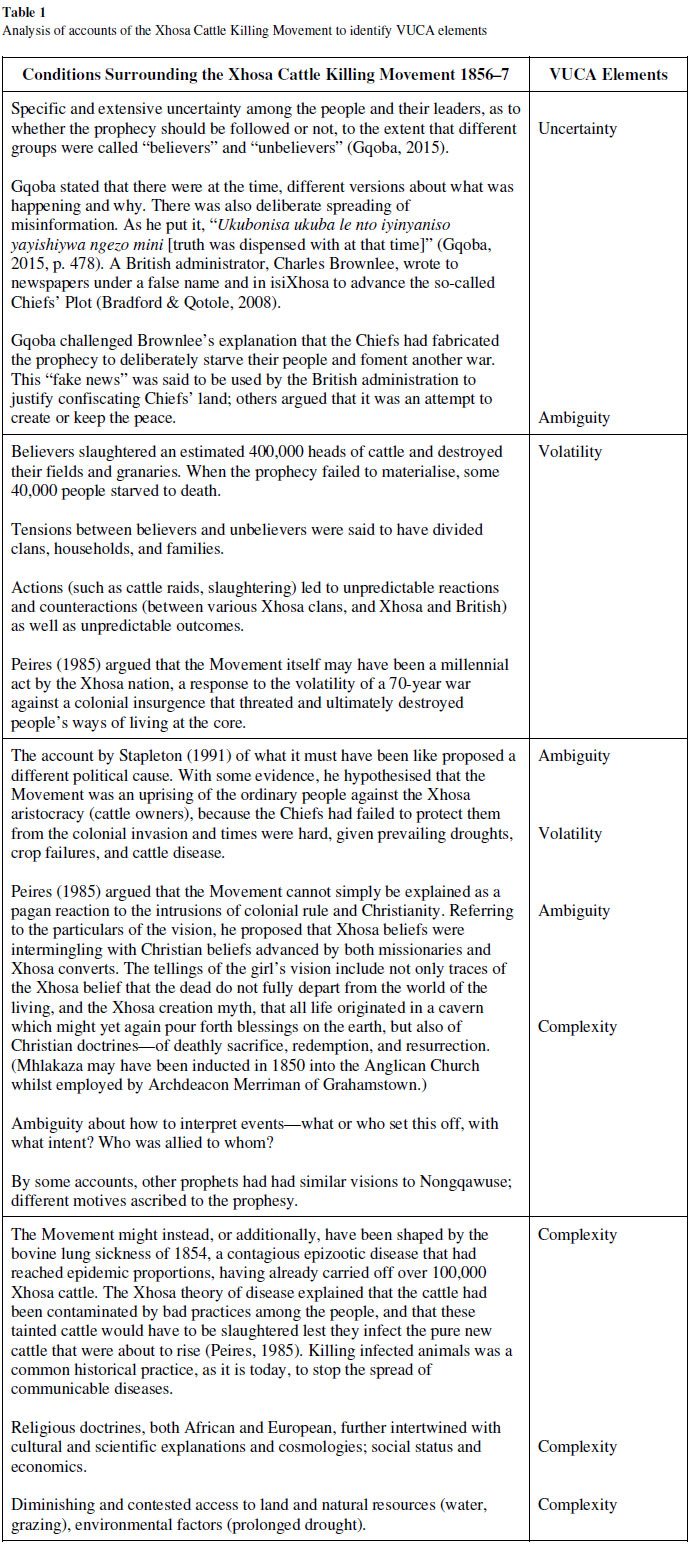
When educators are asked to equip learners for a volatile, uncertain, complex, and ambiguous (VUCA) world, being future-fit is often associated with 21st-century skills in which digital technologies feature prominently. This paper cautions that we may be at risk of misdiagnosing the nature of educational contexts and futures and therefore, of inappropriately narrowing teaching and teacher education. The argument is developed through three case analyses. Case 1 reviews Basic Education Lekgotlas and identifies a risk of reducing future readiness to mastering technology. Case 2 reviews accounts of a colonial polycrisis, the Xhosa Cattle Killings, concluding that uncertainty and complexity are enduring conditions. Case 3 unpacks the African Union's standards and competences for the teaching profession. The paper connects these standards with Biesta's (2015) calls for teacher professionalism in the face of complexity, arguing that they too, frame teaching as a teleological practice shaped by the purpose, contextual, and relational nature of education in society. Thus, teacher education must equip teachers with professional judgement and context responsiveness in community of practice.
VUCA; teacher education; professional judgement; context responsive; community of practice