Beyond compliance: Personal protective equipment use and learner safety in mechanical technology workshops
Abstract
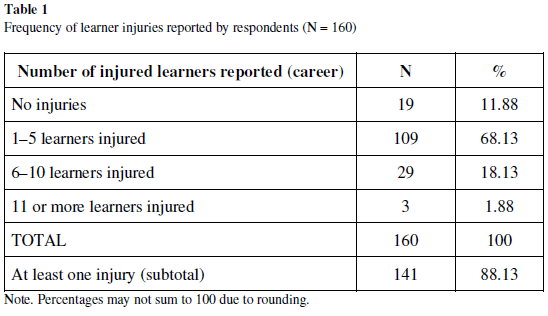
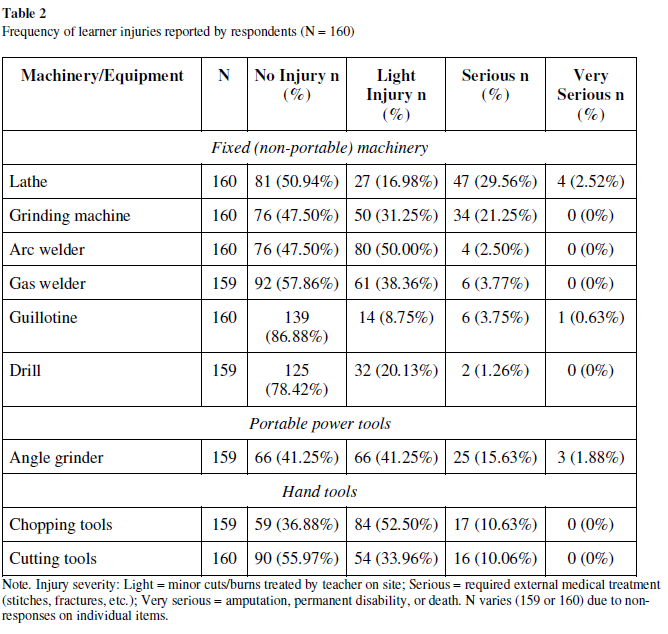
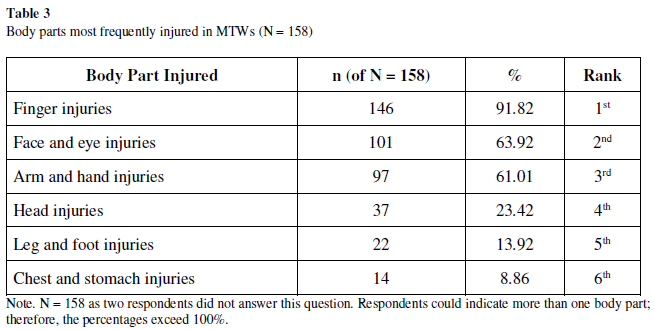
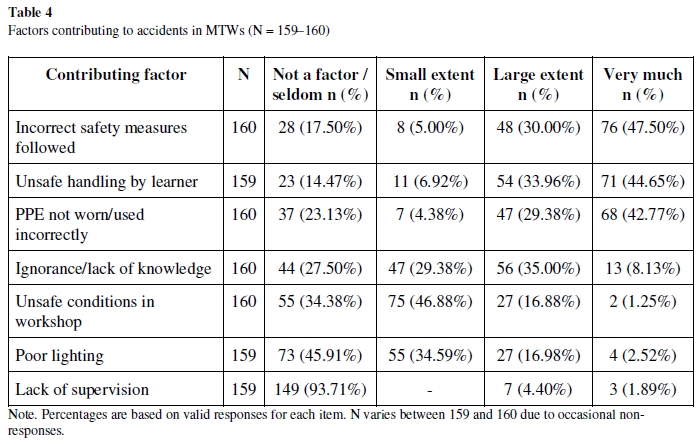
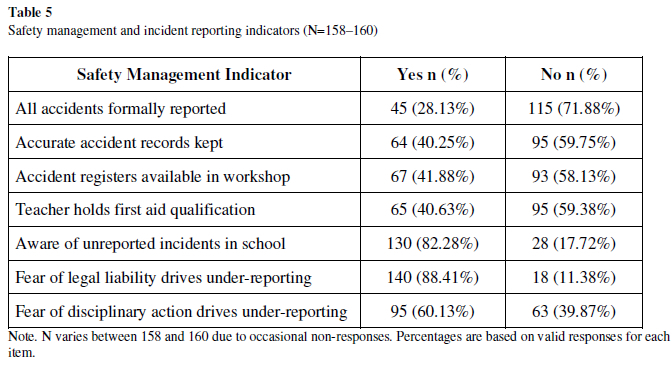
Mechanical technology workshops expose learners to a range of occupational hazards, necessitating effective safety management and consistent use of personal protective equipment (hereafter PPE). However, despite legislative and policy frameworks, learner injuries have occurred in school workshops in South Africa. This research aimed to explore the relationships among PPE use, injury incidence, and safety management processes in mechanical technology workshops (hereafter MTWs). A sequential explanatory mixed-methods research design was employed. The quantitative data were gathered through a structured questionnaire survey involving 160 mechanical technology teachers, and eight purposively sampled teachers were interviewed using semi-structured interviews. Descriptive analysis was used to analyse quantitative data, and thematic analysis to analyse qualitative data. The results suggest that learner injuries remain common in MTWs. Finger, hand, and facial injuries were the injuries most experienced, and lack of compliance with PPE requirements, poor learner conduct, and safety practices were found to be some of the major causes for such incidents. Moreover, there was clear evidence of poor legal literacy among teachers, poor incident reporting, and safety- and supervision-related issues. The research adds empirical evidence on learner safety in South African MTWs, indicating that the incidence of injuries is influenced not only by the availability of PPE but also by behavioural, legal, and management factors. The findings highlight the significance of enforcing PPE use, legal literacy, incident reporting, and supervising learners as means of improving their safety and adopting ethical safety management practices in workshops.
affirmative ethics; geborgenheid; learner safety; mechanical technology; personal protective equipment (PPE); safeguarding; safety management