Risk Communication Strategies Used During the Rising Water Levels Around Kenya's Lake Naivasha
Abstract
Risk communication is critical to providing a scientific understanding of perceptions and responses to climate change threats. Using seven focus group discussions comprising 75 participants, this study examined the role of risk communication in effective implementation of climate change adaptation during floods experienced around Lake Naivasha basin in Kenya in 2018. Specifically, within the contexts of Protective Action Decision Model and risk communication in relation to flood occurrences, the study investigated the following: knowledge and awareness of climate change, risk communication systems put in place to enhance adaptive behaviour and whether the risk communication systems in place were viewed as effective. Findings revealed that the participants understood what climate change is, and related it to their own experiences. In addition, as there was no clear communication before the floods occurred, the risk communication systems were seen as not effective enough, even though the participants received warnings about the imminent rise of water levels in the freshwater lake.
Climatic event; communication strategies; flooding; Kenya; rising water levels; risk communication
INTRODUCTION
Risk communication is an important means for scientific understanding of perceptions and responses to climate change threats (Lundgren & McMakin, 2013; MacIntyre et al., 2019). Effective communication is required to reach policymakers, inform decision-making actions and influence people's behavioural choices (Buszko-Briggs, 2021) - whether in times of threat or not. However, it is notable that during extreme weather changes, risk communication tends to focus more on short-term messaging about the hazards and protective actions that need to be taken by organisations and individuals affected during such life-threatening events (MacIntyre, et al., 2019). On the contrary, climate change often requires long-term proactive risk communication strategies that motivate adaptive changes so as to ultimately improve climate resilience, and to safeguard the continuity of communities' daily activities and the operations of public and private institutions. Research suggests that current risk communications have not resulted in the intended increase in awareness or behavioural change in response to topics related to climate change consequences (Rollason et al., 2018). Literature shows that people want information on when and how flooding may occur so that they can understand their risk and feel in control of their decisions on how to respond (Rollason et al., 2018).
The study examined the role of risk communication in effective implementation of climate change adaptation during flooding periods experienced around Lake Naivasha basin in Kenya. To be more specific, within the contours of Protective Action Decision Model (PADM) and risk communication in relation to flooding occurrences, the study investigated the participants' knowledge and awareness of climate change, risk communication systems put in place to enhance adaptive behaviours and whether the interviewees viewed the risk communication systems in place as effective. PADM was the study's perfect intellectual guide because it incorporates the processing of information derived from both social and environmental signifiers with messages that social sources convey through communication channels to those at risk (Savitt, 2015).
Climatic crises in the Eastern Africa region and globally are undeniable. Floods, typhoons, storm surges and sea level rise represent significant risk management challenges. This calls for a need to develop early warning systems that start with seasonal preparedness and continue to all the way to strategic planning for future risks (Ngo et al., 2019). Unfortunately, potentially affected populations are often familiar with only local natural hazards such as flood risks and are, at times, less aware of risks associated with a changing climate or they do not associate perceived hazards with climate change (Ngo et al., 2019). Thus, it is necessary to create public awareness about climate change and its associated risks. This makes the current research important as it provides useful information regarding the central role of risk communication during catastrophes such as floods in Lake Naivasha. Literature shows a paucity of research about the place of risk communication during flooding periods in Kenya, when compared to other sub-Saharan Africa nations such as Nigeria, where this topic of investigation has been significantly studied (Nwafor, 2021; Olawuyi & Adiamoh, 2015; Oruonye, 2013). Even the available Kenyan studies in risk communication are lopsided in favour of the health sector (see Cholo et al., 2024; Kaduka et al., 2023; Khaoya & Mogambi, 2024; Otaye & Awuor, 2024). As such, one overarching goal of the study discussed in this article was to bridge this existing research gap.
While the study helps to narrow down the identified research gap, it also contributes to the growth of PADM in African risk communication scholarship. Scholars of risk communication and climate change, government environmental agencies, governments, policymakers, non-governmental organisations, donors, climate change advocates and local communities around flood-prone areas will find this study's findings highly beneficial. For instance, the Kenyan government could use the current findings to improve the existing risk communication strategies, while donors could provide more funding to strengthen the identified weak areas in risk communication strategies.
THE RISING WATER LEVEL PHENOMENON IN THE RIFT VALLEY LAKESThe rising water levels of Kenya's Rift Valley lakes have been a major cause of concern for the country's socio-economic development (Republic of Kenya, 2021). In recent years, the rising waters have caused a humanitarian crisis with approximately 75,987 households displaced in 13 affected counties. This has resulted in 379,935 people requiring humanitarian help (Republic of Kenya, 2021). The effects on lake ecologies are a concern as flooding increases disturbance and dilutes the saline waters of alkaline lakes (Avery, 2020; Cherono, 2021; Omondi, 2020). These upsurges have affected not only the rich biodiversity but also the infrastructure and livelihoods of the local communities within the vicinity (Herrnegger et al., 2021). Lake Turkana, the largest permanent desert lake in the world, has shown substantial increases in water levels that have affected the local communities.
Lake Naivasha, the focus of this study, is part of the Kenya Lake System in Great Rift Valley. Situated in the eastern Rift Valley, and about 100km north of Nairobi (Kenya's capital), the lake is a shallow freshwater lake (three to six metres in depth) and occupies approximately 160 km2 in area (Hickley et al., 2002). The lake lies in a closed basin at an altitude of 1890m above the sea level, receives 90% of its water from River Malewa and is subject to considerable fluctuations in water level (Hickley et al., 2002). Since 2018, the lake has experienced an inexplicable rise in water levels (Nzuve, 2023). With a 30% increase in mean annual rainfall between 2010 and 2020, the lakeside town of Naivasha was hit by catastrophic floods that lasted for nearly a year (Nzuve, 2023). The local community, especially those residing in Naivasha's Kihoto Settlement, bore the brunt of the disaster: hundreds of people were displaced and countless facilities, public services and livelihoods were lost as the waters rose (Nzuve, 2023). Further, the lake's rising water levels - attributed to climate change - displaced between 1,400 and 5,000 people from Kihoto and Kamere beaches (Gitonga, 2024; Nzuve, 2023). Also, flower farms, wildlife, crop fields and fishing activities were not spared (Gitonga, 2024; Nzuve, 2023).
The Kenyan government attributes the lake's changing water levels to climate change, which it sees as the chief cause, and to a combination of other human activities such as deforestation and accumulation of silt (Republic of Kenya, 2021). Avery (2020) points out that the rising Rift Valley lake levels are not unprecedented, because such lakes as Lake Naivasha have reached higher levels historically. This is supported by Herrnegger, et al. (2021) who observe that the current fluctuations in lake levels had been there in the past. In 1917, for instance, the lake was 2.4 metres higher than it is and at least 13 metres higher in earlier centuries. Lakes Nakuru, Baringo and Bogoria have also risen to their highest level in decades, but they all had been higher in earlier centuries. Even then, in conjunction with the United Nations Development Programme (UNDP), the government of Kenya cited climate change as the main factor behind the rising lake levels in the Rift Valley basin (Republic of Kenya, 2021).
The current population in the region has expanded, however. This has resulted in higher population densities, more so in the riparian areas, which has led to higher damage potential (Herrnegger, et al., 2021). Similarly, Avery (2020) adds that conversion of catchment areas to agricultural land, coupled with clearing of forests in the catchment areas, encroachment of riparian land and wetland zones in general, besides increase in urbanisation, have all led, in part, to the degradation of the land surrounding the lakes.
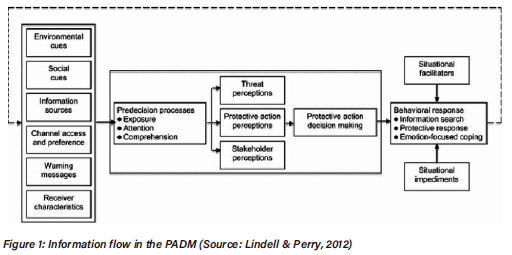
THEORETICAL FRAMEWORKThe present research was anchored on the revised PADM. The model, as captured in Figure 1 below, identifies three core perceptions: threat perceptions, protective action perceptions and stakeholder perceptions that form the basis for decisions about how to respond to an imminent or long-term threat (Lindell, 2021). PADM suggests that risk communicators should not neglect any step of the model to avoid ambiguity for their audiences as this could initiate a repetitive cycle of decision processing and information seeking, which in turn could delay the initiation of protective action (Lindell & Perry, 2012). Further, Lindell and Perry (2012) point out that the outcome of the protective action decision-making process, together with situational facilitators and impediments, produces a behavioural response among the audiences. In the present study, PADM was used to demonstrate the importance and effectiveness of risk communication, and the eventual adaptation of long-term risks linked to climate change. PADM identifies three critical pre-decision processes: reception, attention and comprehension of warnings or exposure that precede all further processing.
Further, the flow chart in Figure 1 provides a graphic representation of the model, which captures the findings of studies on individual response to environmental hazards or disasters (Lindell & Perry, 2012). The process of protective action decision making begins with three types of cue: environmental cues, social cues and warnings (Lindell & Perry, 2012). While environmental cues include sights, smells or sounds that signal the onset of a threat, social cues emanate from observations of others' behaviour (Lindell & Perry, 2012). Lindell and Perry (2012) say that warnings are messages that are transmitted from a source via a channel to a receiver. These warnings result in effects that rely on the receivers' attributes such as physical (e.g., strength), psychomotor (e.g., vision), cognitive (e.g., mental abilities), economic abilities (e.g., money) and social resources (friends). Effects are changes in receivers' beliefs and behaviours.
In related works, Mileti and Sorensen (1990) developed a sequential process model of decision making: hear the warning, understand the contents of the warning message, believe the warning is credible and accurate, personalise, confirm that the warning is true and others are acting, and respond with protective action. Importantly, Strahan and Watson (2018) in their research concluded that the PADM should be modified to reflect the complexity of choice confronting communities facing risk, and consider alternatives to mandatory evacuation. Thus, information from the physical environment will not lead to the initiation of appropriate protective actions unless people are exposed to, heed and accurately interpret the environmental cues (Mileti & Sorensen, 1987). Most studies have found that risk perception predicts response activities as well as long-term hazard adjustments for a variety of hazards (Dash & Gladwin, 2007; Lindell, 2013; Sorensen, 2000).
From the three core perceptions of the revised PADM mentioned above, stakeholders include "authorities (all levels of the government from the top to the local government), evaluators (scientists, medical professionals, universities), watchdogs (news media, citizens' and environmental groups), industry/employers, and households" (Lindell & Perry, 2012:620). Some stakeholders have more power to influence than others do. That said, Raven (1993) highlights six bases of this power held by some stakeholders: reward, coercive, expert, information, referent and legitimate power. Reward and coercive bases of power consist of regulatory approaches that require constant scrutiny to ensure rewards are received only for compliance and that punishment will inevitably follow noncompliance (Lindell & Perry, 2012; Raven, 1993).
Studies indicate that effective climate change communication depends on how the message is designed and how it resonates with the intended audience (Poortvliet, et al., 2020). The assumption that the general public simply does not have enough information to accurately evaluate societal risks has dominated the risk communication field for many years (Heath et. al., 2017). Thus, if scientists and experts in the field would do a better job of explaining and communicating climate science in a simplified or tailored manner, then, perhaps, the public would be more concerned about the issue (Banerjee, 2015). Studies such as that of Markowitz and Guckian (2018) highlight climate communication challenges, insights and opportunities with an existing evidence base that communicators can incorporate to improve outcomes. This includes the importance of knowing one's audience, cultivating the right message, framing the issue carefully, highlighting solutions and confronting false information in ways that unify diverse audiences rather than contribute to polarisation (Markowitz & Guckian, 2018).
In support of such solutions, Poortvliet, et al. (2020) conclude that effective climate change communication depends on how the message is designed and how it resonates with the intended audience, which is probably why there is a need to explore different ways of effectively passing on the intended messages. In this context, various studies have examined the risk communication strategies employed during occurrences of climate change consequences such as rising lake water levels that result in flooding and that are characterised by extensive damage to human life and property (see Ben-Enukora et al., 2023; Elia, 2017; Krueger, 2022; McIntyre et al., 2019; Zhong et al., 2021).
In Nigeria, Ben-Enukora et al. (2023) examined flood risk communication, risk perception and precautionary behaviours among heads of households in flood-prone communities in select local governments in Kogi State. Findings showed that access to early warning about the risk of flooding was high (68.8%) and accessible through interpersonal communication channels. However, perceived knowledge of flood precautionary measures and emergency protocols gained from early warning information was low. In conclusion, although the results show a high-risk perception of floods, perceptions of coping abilities are low, which results in low levels of precautionary measures. Ben-Enukora et al. (2023) recommend an appropriate media mix and action-based information for future flood risk communication.
Elia (2017) investigated farmers' awareness and knowledge of climate change and variability of farmers in Tanzania. Using in-depth interviews and focus discussion groups, findings showed that farmers were aware of climate change, its variability and had coping and adaptation knowledge. Further, factors that affected farmers' awareness and understanding of climate change were the types of media used in communication, communication gaps, unreliable and untimely information, low income and budget constraints. The study recommended intensive awareness and sensitisation, timely access to information and frequent contacts between researchers, extension officers and farmers. In Thailand, Kittipongvises and Takashi (2015) investigated public perception of flooding events through analysis of risk communication for Bangkok's flood crisis of 2011. Using an online survey of 437 respondents, findings showed poor risk communication. The vast majority of the respondents distrusted any information provided by the central government, while rumours and misinformation might have affected public perceptions and responses to the floods.
Taking cognisance of how to improve the decision making of risk management and enhance community resilience to flash floods, Zhong et al. (2021) examined the perception of risks, communication of warnings and mitigation actions concerning flash floods in Qingyuan district, Guangdong province in China. Enlisting a survey sample size of 280 respondents, they found that risk perceptions and risk communications influenced the mitigation action in the community. For instance, 55.4% of the respondents misperceived or underestimated the risk of flash floods. Moreover, residents in the rural community and suburban community reported close social communication with neighbours, which might have influenced the inhabitants' attitudes and behaviours towards the flash flood warnings and mitigation actions. Krueger (2022) examined important flood risk communicators in Canadian municipalities - flood risk communication practices relative to risk communication theory. The study surveyed staff from 18 large, flood-prone Canadian municipalities and interviewed 21 subject matter experts concerning household-level flood risk mitigation. Krueger's findings indicate that most municipalities' flood risk communications should theoretically be raising residents' flood risk awareness and preparedness. Limited time and resources were the greatest barriers to municipalities' flood risk communication efforts to the public. The study recommended further application of evaluation frameworks to flood risk communication activities.
In Pakistan, Ali et al. (2022) explored risk perception and communication in flood-prone rural areas of District Dera Ghazi Khan. The research reported a strong correlation between flood risk perception and risk communication. Those living away from the river had higher risk perception and received better risk communication than their peers. Further, hazard proximity was also found to affect risk perception and communication. Thus, people with higher risk perception were likely to seek risk communication information and engage in flood preparedness and mitigation measures, the findings showed. MacIntyre et al. (2019) reviewed 43 articles addressing issues such as climate change, flooding, hurricane events, extreme heat and wildfires predominantly from the United States, Canada and Europe. Their findings on the evaluation of risk communication show that community-based strategies proved to be more effective in extreme weather and climate change. In their analysis, McIntyre et al. defined effective risk communication as a two-way exchange of information between parties (government, public, community, experts).
This comprehensive review of literature leads to the study's five research questions (RQ):
RQ1a: Do participants understand what climate change is?
RQ1b: Do participants relate their experiences to climate change?
RQ2a: What climate change risk communication systems are in place to enhance adaptive behaviour to climate change?
RQ2b: Was climate change information available to the participants?
RQ3: Do participants view as effective the risk communication systems put in place to enhance adaptive behaviour?
METHODS
This study used focus group discussions to collect data from 75 participants who were recruited using a combination of purposive and snowball sampling techniques from community members living around Lake Naivasha, Kenya. The participants comprised 55 community members and 20 key informant interviews (KI Is) took place. Focus group discussions were chosen as they are effective in getting in-depth insights about perceptions, implicit beliefs and attitudes (Keyton, 2014; Lindlof & Taylor, 2011; Rubin & Rubin, 2012). Each focus group discussion had between six and 10 participants. The participants involved in the KIIs were drawn from various categories based on the stakeholder mapping framework developed by Ogada et al. (2017). To enhance data validity and reliability, each focus group discussion interview was recorded and saved as an audio file to ensure accuracy during transcription. The participants' inclusion criteria were guided by the following: community members who were directly affected by the rising Lake Naivasha water levels; those displaced by the lake's waters or people currently living near the risen water levels of the lake; KIIs participants who were directly affected by the rising waters or involved with creating the awareness; those involved in helping the community with the climatic crisis and mitigation measures; and a participant had to be at least aged 18 years.
The 75 participants were drawn from members of the communities surrounding the lake; stakeholders in the Lake Naivasha basin which includes villages such as Kihoto, Kasarani and Malewa; members of government agencies such as the National Environment Management Authority (NEMA); the business sector such as Naivasha Tourism Group, KenGen Limited whose Ol Karia hydropower plant is a prominent lakeside landmark; international agencies/NGOs; local resource-use groups such as farmers or fishing communities; local community-based organisations and research institutions. The focus group discussion interviews were conducted between March and May 2022. The research was approved by the Institutional Review Board (IRB) of the United States International University-Africa and the Government of Kenya through the National Commission for Science, Technology and Innovation (NACOSTI).
The data corpus was analysed using thematic analysis, where only the emerging themes and patterns that were relevant to the two research questions and the PADM were considered. Braun and Clarke (2006) argue that thematic analysis involves analysing and reporting patterns within data. The first step in the analysis process was to familiarise the researcher with the data through transcription of the audio files. The transcripts were then read to observe meanings and patterns that occurred across the data set. This led to the development of a coding system that represented the meanings and patterns identified from the data. Codes were subsequently collated manually with the supporting data. Through this, classification of the major issues was done by sorting the codes into potential themes with the research questions as the foundation. The researcher then reviewed and revised the themes to ensure that each theme was supported by sufficient data to back it up. The researcher removed those that did not have sufficient data. The final step was to synthesise data into findings that identified the major themes that addressed the research questions.
FINDINGS
Knowledge and awareness of climate change
RQ 1a explored the participants' knowledge and awareness of climate change, while RQ1b examined the participants' experiences of climate change. The findings revealed that most of the participants understood what climate change is, and could relate to it through their own experiences, including the risks they faced as a result of the weather phenomenon. In addition, the participants said their awareness of climate change was from mainstream media (television and radio) and social media platforms. For instance, Wallace (40 years) from Kihoto said: "Climate change is the weather variability during certain seasons due to global warming caused by human activities such as deforestation and pollution" Jane (34 years) from the Lake Naivasha Riparian Association explained: "Climate change is the changes in the usual climate of the planet that are especially caused by human activities'! These findings suggest that most participants know what climate change is. This indicated a need to focus on interventions, more so the effects of climate change, rather than focus on rudimentary concepts of the weather phenomenon.
Most of the participants learnt about climate change through television, which points to a possibility that information may not have reached some people, specifically those who do not own a television set. In addition, the majority of the interviewees attributed the rising water levels of Lake Naivasha to climate change. Similarly, some participants reported that dumping waste in the lake was one of the main reasons causing the water levels to rise. They observed that some residents and business people, including industrial plants, practised poor waste management. As a result, the lake has high metal levels with raw sewage, phosphates and nitrates washed into it by river tributaries when it rains. Notably, waste management has remained a great challenge in Lake Naivasha, according to some stakeholders.
Existing climate change risk communication systems
In line with RQs 2a and 2b, the findings showed that there was no explicit nor clear communication, especially before a climatic risk or extreme weather event. Nevertheless, most people living around the lake region usually receive warnings concerning the possible risks of climate change, such as rising water levels. However, this happens when it starts to rain and not before. Some participants confirmed receiving warnings. Salim (46 years) stated: "I heard on the radio that Lake Naivasha has broken its banks further as the water has been rising. People were advised to move to higher grounds with immediate effect". Likewise, a 25-year-old female from Kihoto concurred with Salim's observations:
Yes, I have received such warnings before. Initially, when I relocated to Naivasha, I heard that Lake Naivasha usually bursts its banks and that it is always destructive, especially to businesses and those living around the Lake. Therefore, I am always prepared to move once it happens.
These observations are consistent with previous studies which showed that during extreme weather, risk communication tended to focus on short-term messaging around the hazards and protective actions that needed to be taken by organisations and individuals during these events (MacIntyre, et al. 2019). The authorities responsible oftentimes failed to motivate long-term adaptive behaviour since long-term proactive communication strategies required for effective impact were usually lacking.
In a similar vein, the findings from this study also revealed that some participants who received the warnings about rising waters did so from community leaders who disseminate such information, especially during the rainy season. They noted that community leaders and those under the "Nyumba Kumi Initiative" went door-to-door to notify people living around the lake to vacate before flooding was out of control. "I received the warning from the community leaders from 'Nyumba Kumi' They visited every household around the lake to notify them that the lake would burst its bank and advised people to relocate to the higher grounds," said 40-year-old Giselle from Malewa Group. In addition, other community leaders were reported to have used public address systems to alert the community members about rising water levels. Most of the participants recognised the public address system as the most effective means of disseminating information on rising waters as it caters to the needs of everyone, even those without access to media such as television and radio.
Relatedly, some participants learnt from the older people who had lived in the area for a long time and who understood the possible occurrences based on their historical background. For instance, Onditi (41 years) said his grandmother told him that when it rained heavily, the lake used to extend and its waters filled their houses. However, other participants reported having never received any warnings of the possible risks of climate change. James (28 years) from Malewa area said this:
I am one of the victims of the rising levels of Lake Naivasha. I have never received any warning signs of the chances of this happening. I know that the lake broke its banks after a long time, but I did not get any warning.
Notably, communication has been given in a top-down manner, or one way, and the community has no way of responding to or inquiring from the authorities. However, the respondents held the government responsible for ensuring that climate change information was accessible and also for disseminating the relevant communication on climatic issues that affected them. Mary (from Karagita Group), noted:
I would not say I have access to that kind of information. The government officials are supposed to communicate and even create awareness of the impacts of climate change risks don't do so. They only come to communicate with us after the risk has happened.
These comments capture the frustrations participants experience with the government not utilizing early warning systems that could help the communities relocate from areas near the lake before flooding starts. This calls for the government to work closely with the communities to co-create solutions that could foster community trust between them and enhance the effectiveness of communication systems.
Environmental organisations such as NEMA were recognised by the participants as the bodies responsible for communicating information on risks associated with climate change. NEMA is a government agency responsible for the implementation of all policies relating to the environment. According to the interviewees, matters concerning environmental sustainability and climate are in NEMA's domain, and so the agency should do its work by ensuring the dissemination of the right information at the right time, and by using the most accessible means. Alvin, 22 years, said: "I think environmental organisations such as NEMA should be entrusted with communicating climate issues since it is their work'! In addition, Josephat (39 years) asserted: "Environmental organisations should be the ones that disburse information on climate change risks and its impacts'. These sentiments illustrate that the participants know the organisations that deal with environmental risks at Lake Naivasha, but it appears that the communication channels used by these organisations have not been effective. Thus, there is a need to enhance how government agencies communicate the risks associated with the rise in water levels to ensure that the communities residing around the lake are properly forewarned on time.
Effectiveness of the risk communication systems
Poortvliet et al. (2020) reiterate that effective climate change communication depends on how the message is designed, and how it resonates with the intended audience. This makes clear the importance of messaging and tailoring message designs for specific audiences. As clearly stated, the PADM integrates the processing of information derived from social and environmental cues with messages that social sources transmit through communication channels to those at risk. From the findings of RQ 3, participants considered the existing warning system not effective enough. However, as noted above, during floods, warning systems such as the use of radio and public address systems informing people to move to safer grounds were used, which seemed to have been more effective. MacIntyre et al. (2019) note that risk communication efforts during short-term extreme weather events appear to be more effective than efforts to communicate risk around climate change. Their study suggested that this could highlight a unique opportunity for authorities to adapt strategies commonly used for extreme weather to climate change.
The rate of adaptive practices such as relocating to higher grounds was observed to be drawn from environmental cues as the water levels kept rising, displacing more people as it spread. Warnings were sent by the county government through radio and community leaders such as chiefs using public address systems. Importantly, responses to the climatic change warnings were an indicator of how effective the risk communication was. Most participants who received communication concerning Lake Naivasha's rising water levels took the warning seriously and responded in different ways. Some relocated their families, while others stayed in the same area but were more cautious and observant of the slightest changes in the lake water levels. Here are three excerpts from the interviewees.
When I received the warning, I relocated my family to another rental away from Kihoto. It was very expensive to move, but we could not wait for the danger. Now we are waiting until we move back when everything goes back to normal. (Morris from Kihoto)
I received the warning, but I could not relocate because I am running my business here. However, I got more attentive and cautious so that in case of any notable signs of the rising waters, I moved to a different place. (Kimani from Kongoni)
After I received the warnings, I relocated. I am not planning to ever live in Kihoto again because the area always has issues with flooding. (Esther, 37 years from Kihoto)
The initial stages of PADM include messages that social sources transmit and postulate how channels differ in characteristics such as dissemination rate and precision. Moreover, it goes on to show that people differ in their channel access and preference (Lindell & Perry, 2012). The respondents in this study expressed their preferred mode of communication based on what they deemed more effective - the use of the public address system by the community leaders or the government officials were seen as more or less acceptable and effective. This is important for the policymakers and the Nakuru county leadership to note when considering effective channels and modes of communication, especially when climatic risk is involved.
DISCUSSION
Information is an important tool used in the realisation of any set objective, especially where adaptation is required (Awili et al., 2016). This study's findings demonstrate that most of the residents in the Lake Naivasha region do not have access to basic information on climate change risks. The vast majority of the participants did not have access to relevant data on climate that was important to their situation or experiences. This calls for more awareness and education concerning climate change risks, mitigation and how it impacts people directly in their daily lives. There is a critical need to come up with communication systems that are both convenient and effective to satisfy the need to access climate change information.
Living in the digital age, we are exposed to too much information, too many sources and information often seems to be too complicated (Wardekker, 2004). In the wake of smartphone devices, younger people can find out general information on climate change, but none tailored specifically for their situation or area. A study showed that despite having a wealth of information and knowledge existing in research institutions, universities, public offices and libraries, only a small amount of information reaches grassroot level (Awili et al., 2016). People who have access to climate change information, either from the Internet or television, stated that information on climate change risks was quite complex with scientific jargon that ended up being misinterpreted by most recipients. Mabon (2020) recognises that "translating" knowledge and enhancing user capacity to understand complicated data are recognised challenges to making climate information services more effective. However, climate change policymakers are urged not to underestimate the citizens' ability to comprehend climate change awareness and their willingness to engage with complex scientific data. This resonates with the respondents' attitudes towards climate change information in this study.
Coincidentally, previous research shows a gap in climate change risk communication. Rollason et al. (2020) found that current risk communications failed to meet user needs for information in the period before a flood event, thus leaving users unsure of what would or might happen, and how best to respond and adapt. The PADM includes information-seeking activities that involve information needs assessment, communication action assessment and communication action implementation, all of which influence protective action. The process of information search begins with an information needs assessment arising from an individual's judgement that the available information is insufficient to justify proceeding further in the protective action decision process (Lindell, 2021). Understandably, the residents in this study expressed the need to learn more for them to be better equipped for climate change impacts.
Scholars such as Poortvliet et al. (2020) suggest that the overall goal of climate change communication should first be determined to create the right messaging appropriate for the cause - whether for scientific communication or a call to action for adaptive behaviour. Once this is determined, they further suggest that greater efforts towards measuring the efficacy of climate change risk communication be used to track the effects of varying communication strategies quantitatively. These are critical pointers for the government and other responsible stakeholders to note.
PADM notes that the process of protective action decision making begins with environmental cues, social cues and warnings. In this study, all these cues were present and influenced the decision of many people around Lake Naivasha to move or relocate to safer grounds. However, when it comes to information needs assessment, the available information was not sufficient to justify long-term protective action. This information provides the opportunity to make long-term plans on climate change information education available for all. In so doing, people would be able to adapt to the environmental changes happening every day. Studies recommend intensive awareness and sensitisation, timely access to information and frequent contact between researchers, extension officers, farmers and the community (see Elia, 2017).
FUTURE RESEARCHIn this study, respondents expressed worries about the reactive nature of the messages they received. This opens a door for future research to finding out the reasons that may hinder the dissemination of proactive climate-change-related information, especially in the context of sub-Saharan Africa. Further, the rising water levels have also affected other Rift Valley lakes such as Turkwel Gorge Dam and Lake Victoria, according to a government report (Republic of Kenya, 2021). Similar studies should include people living around major lakes and those who have experienced floodings due to climate change. This calls for thorough research in these areas, of both a qualitative and quantitative nature.
More investigations could be carried out to find out specific gender perceptions and to gauge whether there might be distinct attitudes between men and women, so as to develop better risk communication strategies that accommodate both genders. Some studies have shown that women are more knowledgeable on climate change affairs than men. However, despite this, they are less likely than men to respond to climate change risks due to gender-specific adaptation barriers (Akter & Khanal, 2020). Women experience a higher burden of domestic work, which limits their ability to participate in climate change adaptation measures such as training or information-sharing sessions (Akter & Khanal, 2020). Such a study could also be extended to consider other factors and demographics, for example, different age groups could be reached better through different means of communication. Young people, for instance, are more likely to be reached by information disseminated via social media platforms than older people who might be either illiterate or semi-literate. Future research could also take an ethnographic approach, where the researcher would use a combination of several data collection techniques (surveys, observations, in-depth interviews, document analysis, diary note taking, focus group discussions, case studies, etc.) to holistically understand the place of risk communication in flood-prone areas such as Lake Naivasha.
LIMITATIONSA major limitation of this study was the fact that scores of communities had been displaced by the swelling banks of Lake Naivasha, hence most of the target respondents had either moved to safer grounds or relocated from the area completely. To address this limitation, the study used a combination of purposive and snowball sampling approaches to locate the relevant target population for data collection. Also, this being qualitative research based on non-representative sampling techniques (purposive and snowball); the results are not generalisable to the larger population and should be interpreted with caution, even though they provide wonderful insights about the topic of investigation. This calls for more studies which use representative sampling techniques, for example, survey research.
CONCLUSION
The current research examined the role of risk communication in effective implementation of climate change adaptation during flood periods experienced around Kenya's Lake Naivasha basin in 2018. Within the context of PADM and risk communication in relation to flood occurrences, the study explored knowledge and awareness of climate change, risk communication systems put in place to enhance adaptive behaviour and whether the risk communication systems in place were viewed as effective. Findings revealed that the participants were knowledgeable about climate change and related it to their own experiences. As there was no clear communication before the floods occurred, the risk communication systems were seen as not effective enough, even though the participants received warnings about the imminent rise of water levels in the freshwater lake. The findings coincide with other studies (MacIntyre et al., 2019; Poortvliet et al., 2020), which reiterates that effective climate change communication depends on how the message is designed and how it resonates with the intended audience. It is important that the right expertise should be employed, applying the right strategies, for effective communication to specific audiences. From a theoretical viewpoint, the government should create a feedback mechanism for monitoring and evaluation. This should be in line with the final stage in the PADM, which is a feedback loop directed by the communication action assessment that returns to the initial inputs that include the environmental and social cues, information sources, channel access and preferences, and warning messages. Feedback is an important tool to get communication right as it reveals what is effective and what is not, whether people have the right information, and it gives a chance to offer clarity wherever there is doubt. The feedback from the government should take a collaborative approach with all relevant stakeholders because issues related to climate change require combined efforts for collective resilience. The stakeholders include communication experts, researchers, climate change experts, government, policymakers, donors and communities, to name but a few.
REFERENCES
LITERATURE REVIEW
- Akter, S. & Khanal, S. (2020). How perceptions of risks affect responses to climate change: implications for water resource planning. Oxford Research Encyclopedia of Global Public Health, 1-24.
- Ali, A., Rana, I., Ali, A. & Najam, F. (2022). Flood risk perception and communication: the role of hazard proximity. Journal of Environmental Management, 316:115309.
-
Avery, S. (2020). Kenya's Rift Valley lakes have been this high before. But there's cause for concern. The Conversation, 14 October. Available from: https://theconversation.com/kenyas-rift-valley-lakes-have-been-this-high-before-but-theres-cause-for-concern-147476
» https://theconversation.com/kenyas-rift-valley-lakes-have-been-this-high-before-but-theres-cause-for-concern-147476 - Awili, M., White, P. & Kimotho, S. (2016). Factors that influence effective communication of agricultural information among farmers: the case of farmers in South West Kisumu Ward, Kisumu County. Journal of Developing Country Studies, 1(1):1-20.
- Banerjee, R.R. (2015). Farmers' perception of climate change, impact and adaptation strategies: a case study of four villages in the semi-arid regions of India. Natural Hazards, 75:2829-2845.
-
Ben-Enukora, C., Okorie, N., Ejem, A. & Eze, I. (2023). Flood risk communication, risk perception and precautionary behaviors among residents in flood-prone state in North-Central, Nigeria. Social Science Research Network (SSRN). Available from: https://ssrn.com/abstract=4527926 or http://dx.doi.org/10.2139/ssrn.4527926
» https://ssrn.com/abstract=4527926 -
Braun, V. & Clarke, V. (2006). Using thematic analysis in psychology. Qualitative Research in Psychology, 3(2):77-101. https://doi.org/10.1191/1478088706qp063oa
» https://doi.org/10.1191/1478088706qp063oa -
Buszko-Briggs, M. (2021, September 10). Why communication is a crucial tool in tackling planetary crises. Forests News, 10 September. Available from: https://forestsnews.cifor.org/74505/why-communication-is-a-crucial-tool-in-tackling-planetary-crises?fnl=
» https://forestsnews.cifor.org/74505/why-communication-is-a-crucial-tool-in-tackling-planetary-crises?fnl= -
Cherono, S. (2021). Kenya: Experts - why the water levels of Rift Valley lakes are rising. Allafrica, 11 January. Available from: https://allafrica.com/stories/202101110248.html
» https://allafrica.com/stories/202101110248.html - Cholo, W., Njororai, F., Amulla, W.O. & Nyaranga, C.K. (2024). Risk communication and public health emergency responses during COVID-19 pandemic in rural communities in Kenya: A cross-sectional study. COVID 5(5):74.
- Dash, N. & Gladwin, H. (2007). Evacuation decision making and behavioral responses: individual and household. Natural Hazards Review, 8(3):69-77.
- Elia, E. (2017). Farmers' awareness and understanding of climate change and variability in central semi arid Tanzania. University of Dar es Salaam Library Journal, 12(2):124-138.
-
Gitonga, A. (2024). 5,000 people displaced as Lake Naivasha water levels rise. The Standard, 4 June. Available from: https://www.standardmedia.co.ke/sports/rift-valley/article/2001496537/5000-people-displaced-as-lake-naivasha-water-levels-rise
» https://www.standardmedia.co.ke/sports/rift-valley/article/2001496537/5000-people-displaced-as-lake-naivasha-water-levels-rise - Heath, R.L, Lee, J., Palenchar, M.J. & Lemon, L.L. (2017). Risk communication emergency response preparedness: contextual assessment of the protective action decision model. Risk analysis 38.
- Herrnegger, M., Stecher, G., Schwatke, C. & Olang, L. (2021). Hydroclimatic analysis of rising water levels in the Great rift Valley Lakes of Kenya. Journal of Hydrology: Regional Studies, 36:100857.
- Hickley, P., Bailey, R., Harper, D., Kundu, R., Muchiri, M., North, R. & Taylor, A. (2002). The status and future of the Lake Naivasha fishery, Kenya. Hydrobiologia, 488:181-190.
- Kaduka, L., Olale, J., Karamanos, A., Mutai, J., Coultas, C., Ahmed, I., ... & Harding, S. (2023). Contextually appropriate communication strategies for COVID-19 prevention in Kenya border regions: evidence from a mixed methods observational study in Busia and Mandera counties. BMJ open, 13(5):e062686.
- Keyton, J. (2014). Communication research: Asking questions, finding answers. McGraw-Hill.
- Khaoya, M. & Mogambi, H. (2024). Risk communication in cigarette health warning labels and behavior change in Kenya: A qualitative study. Journal of Public Health Research & Community Health Development, 8(1):61-70.
- Kittipongvises, S. & Takashi, M. (2015). Perception and communication of flood risk: lessons learned about Thailand's flood crisis of 2011. Applied Environmental Research, 37(1):57-70.
- Krueger, R. (2022). Promoting flood risk mitigation among Canadians through effective risk communication. MA thesis. Waterloo, Canada: University of Waterloo.
- Lindell, M. (2013). North American cities at risk: household responses to environmental hazards. In H. Joffe, T. Rossetto, & J. Adams (eds.). Cities at risk: Living with perils in the 21st century. Springer Netherlands, 109-130.
- Lindell, M. (2021). The protective action decision model: implications for increasing self-protective behavior. Hazard Reduction & Recovery Center. Texas A & M University.
- Lindell, M., & Perry, R. (2012). The protective action decision model: theoretical modifications and additional evidence. Risk Analysis, 32(4):616-632.
- Lindlof, T. & Taylor, B. (2011). Qualitative communication research methods. Sage.
- Lundgren, R., & McMakin, A. (2013). Risk communication: a handbook for communicating environmental, safety, and health risks. John Wiley & Sons, Inc.
- Mabon, L. (2020). Making climate information services accessible to communities: What can we learn from environmental risk communication research? Urban Climate, 1-14.
- MacIntyre, E., Khanna, S., Darychuk, A., Copes, R. & Schwartz, B. (2019). Evidence synthesis evaluating risk communication during extreme weather and climate change: a scoping review. Health Promotion and Chronic Disease Prevention in Canada: Research, Policy and Practice, 39(4):142-156.
- Markowitz, E. & Guckian, M. (2018). Climate change communication: challenges, insights, and opportunities. In S. Clayton & C. Manning. Psychology and climate change. Academic Press, 35-63.
- Mileti, D., & Sorensen, J. (1987). Why people take precautions against natural disasters. In N. Weinstein (ed.). Taking care: Why people take precautions. Cambridge University Press, 296-320.
- Mileti, D., & Sorensen, J. (1990). Communication of emergency public warnings: A social science perspective and state-of-the-art assessment (No. ORNL-6609). Oak Ridge National Lab. (ORNL), Oak Ridge, TN (United States).
- Ngo, C., Poortvliet, P. & Feindt, P. (2019). Drivers of flood and climate change risk perceptions and intention to adapt: an explorative survey in coastal and delta Vietnam. Journal of Risk Research, 23(4):424-446.
-
Nwafor, G. (2021). Influence of flood risk awareness information on the adaptive behaviour of residents in flood prone areas in Southeast Nigeria. Available from: https://ssrn.com/abstract=5159793
» https://ssrn.com/abstract=5159793 -
Nzuve, L. (2023). Revisiting the rising Rift Valley lakes: a glimpse into Kihoto's struggles. Stockholm Environment Institute. Available from: https://www.sei.org/features/revisiting-the-rising-rift-valley-lakes-a-glimpse-into-kihotos-struggles/#start-of-content
» https://www.sei.org/features/revisiting-the-rising-rift-valley-lakes-a-glimpse-into-kihotos-struggles/#start-of-content - Ogada, J., Krohda, G., Veen, A., Marani, M. & Oel, P. (2017). Managing resources through stakeholder networks: collaborative water governance for Lake Naivasha basin, Kenya. Water International, 42(3):271-290.
- Olawuyi, E., & Adiamoh, A. (2015). Influence of flood risk information on perceived risk severity and vulnerability among inhabitants of Ibadan, South-West Nigeria. Journal of Communication and Media Research, 7(1):105-123,
-
Omondi, F. (2020). The rising lakes of the Rift Valley. Available from: https://africasacountry.com/2020/09/therisinglakesof-the-rift-valley
» https://africasacountry.com/2020/09/therisinglakesof-the-rift-valley - Oruonye, E. (2013). An assessment of flood risk perception and response in Jalingo metropolis, Taraba state, Nigeria. International Journal of Forest, Soil and Erosion, 3(4):113-117
- Otaye, E. & Awuor., E. (2024). The influence of the Covid-19 risk communication and community engagement strategy on non-state actors' communication activities: a case study of shining hope for communities (Shofco) Kenya. African Multidisciplinary Journal of Research, 1(1):313-327.
- Poortvliet, P., Niles, M., Veraart, J., Werners, S., Korporaal, F. & Mulder, B. (2020). Communicating climate change risk: a content analysis of IPCC's summary for policymakers. MDPI, 1-14.
- Raven, B. (1993). The bases of power: origins and recent developments. Journal of Social Issues, 49(40):227-251.
- Republic of Kenya. (2021). Rising water levels in Kenya's Rift Valley Lakes, Turkwel Gorge Dam and Lake Victoria. UNDP.
- Rollason, E., Bracken, L., Hardy, R. & Large, A. (2018). Rethinking flood risk communication. Natural Hazards, 92:1665-1686.
- Rubin, H. & Rubin, I. (2012). Qualitative interviewing: the art of hearing data. Sage.
- Savitt, A. (2015). An evaluation of the protective action decision model using data from a train derailment in Casselton. Master's thesis. North Dakota State University.
- Sorensen, J. (2000). Hazard warning systems: review of 20 years of progress. Natural Hazards Review, 1(2):119-125.
- Strahan, K. & Watson, S. (2018). The protective action decision model: when householders choose their protective response to wildfire. Journal of Risk Research, 22(12):1602-1623.
- Wardekker, J. (2004). Risk communication on climate change. Utrecht University, Utrecht.
- Zhong, M., Xiao, L., Zhang, Q. & Jiang, T. (2021). Risk perception, risk communication, and mitigation actions of flash floods: results from a survey in three types of communities. Sustainability, 13(22):12389.
Accepted April 2025