Stakeholder Relationships in the Child Protection Organisation (CPO) Sector: A Strategic Integrated Communication Approach
Abstract
This article explores the applicability of a strategic integrated approach to communication to manage stakeholder relationships in the child protection organisation context. The Niemann (2005) implementation model for strategic integrated communication in the for-profit sector was taken as the point of departure. Taking the specific challenges and constraints of the child protection organisation sector into account, the Niemann model is adapted to a framework for strategic integrated communication in the child protection organisation sector. The study included focus group discussions and semi-structured interviews with communication practitioners, managers and social workers from four registered national child protection organisations, along with external media and law experts. The results indicate that while the basic guidelines of the strategic integrated communication model apply to child protection organisations, not all aspects are attainable in the context of the child protection organisation. The strategic integrated communication framework for the child protection organisation context argues for integrated collaboration across contextual, organisational, stakeholder and environmental integration areas. The strategic integrated communication framework emphasises the interrelatedness needed to achieve communication outcomes, build strong relationships, maintain a recognisable brand and responsibly report on child protection issues. The study identifies five enablers - learning mindset, expertise sharing, networking, advocacy and technology adoption - to achieve the strategic goal of safeguarding vulnerable children. It is recommended to move from a stakeholder integration area to a stakeholder responsive area, which emphasises building trusting relationships and a recognisable brand.
Child protection organisations (CPOs); confidentiality; nonprofit organisations (NPOs); South Africa; stakeholder relationships; stakeholder responsiveness; strategic communication; strategic integrated communication; sustainability
INTRODUCTION
In South Africa, nonprofit organisations (NPOs) often fill the gap left by government and the private sector in the provision of social services in society (Chauke & Du Plessis, 2013; Nwauche & Flanigan, 2022; Patel, 2012). A child protection organisation (CPO) is a specific type of NPO that forms part of the social services in South Africa, which addresses the needs of abused, neglected and vulnerable children.
Although these organisations are partially subsidised by the Department of Social Development, the subsidies are far from sufficient and CPOs are forced to resort to other means to raise funds to be sustainable (Damons, 2023). Stagnant subsidies have pushed designated child protection organisations into a critical state (ACVV, 2023). To address shrinking budgets, CPOs engage in various short-term marketing and fundraising activities, such as organising charity events, leveraging online crowdfunding, running social media campaigns, sending email appeals, applying for grants from the National Lottery Fund, foundations and corporations; and creating merchandise to sell, thereby raising both funds and awareness for their cause.
Raising extra funds can be challenging, given that South Africa has a large NPO sector with 289,753 registered NPOs and 3,803 applications in progress (Department of Social Development, 2024). NPOs therefore have to compete with one another for donations and support from government, churches, for-profit organisations, funding agencies and for funding projects to be sustainable (Gastrow, 2019; Maboya & McKay, 2019).
In this competitive environment, communication plays an important role in relationship building, mainly with the aim of raising funds. However, relationship building in the CPO sector is a complex process.
CONSTRAINTS AND CHALLENGES REGARDING STAKEHOLDER RELATIONSHIPS IN THE CPO CONTEXTAs is the case in the broader NPO sector, the absence of communication expertise in raising brand awareness and reporting issues impedes CPOs building of stakeholder relationships with stakeholders (see Benecke & Holtzhausen, 2018:232; Holtzhausen, 2013). Persons responsible for the communication function are often not fully prepared for their communication responsibilities, since they are not always trained communication practitioners and might also have other responsibilities. Furthermore, limited resources are available for the communication function, which is often regarded as a "luxury item" and mainly for "self-promotion" (Degenaar, 2021:26; Holtzhausen, 2013:6; Richardson, 2017).
Besides these general challenges and constraints relating to the broader NPO environment, CPOs also faces challenges specific to the NPO sector. These are briefly outlined below.
Diverse stakeholders
It is argued in this article that CPOs have diverse stakeholders, which poses challenges that are unique to the CPO sector. The most important stakeholders are the children themselves, whose safety and rights are the primary concern. CPOs must also involve parents and caregivers, who play a central role in a child's upbringing and often receive support, guidance and counselling to enhance their parenting skills or to address specific challenges.
Government agencies and policymakers are another essential set of stakeholders, as they often shape the legal and regulatory framework within which CPOs operate and provide funding. In addition, the broader community, including schools, community organisations and law enforcement agencies, play a vital role. Finally, donors and supporters, ranging from everyday individuals such as "the man in the street" to philanthropic foundations, provide financial and moral support, allowing CPOs to fulfil their mission and expand their reach. It is evident that the communication requirements for the different stakeholders varying from the children to the donors and funders would vastly differ and could even conflict with one another.
CPO communication legal restrictions
CPOs must adhere to binding statutory and regulatory restrictions, particularly pertaining to confidentiality, when communicating about the organisation and the children under their care. Current legislation such as the Children's Act 38 of 2005 makes separate provisions that prevent children under statutory order from being identified. Children under statutory order include persons under the age of 18 years who were or are part of Children's Court proceedings (Children's Act 38 of 2005).
Ethical concerns
Apart from formal legislation, registered social workers must also strictly adhere to their profession's own code of ethics, which emphasises their primary obligation to render a quality service in a professional and ethically correct manner to protect the child's well-being (Meleyal, 2017; South African Council for Social Services Professions, 2020).
These constraints and challenges impact on the relationship between CPOs and their stakeholders, and often lead to negative perceptions shaped by the media. The tone of media reports about child protection is generally negative and sometimes sensational, such as the death of a child in alternative care or while on the caseload of a CPO, or social workers removing children from a home (Franklin & Parton, 1991; Sjöström & Öhman, 2018; The Media Monitoring Project, 2004; Welliver, 2020).
Due to the restriction of confidentiality, social workers cannot publicly justify actions taken to protect abused and neglected children. Therefore, they often have to accept inaccurate stereotypes (Forrest, 2013; Nhedz & Makofane, 2015). Degenaar and Fourie (2024) argue that digital media has amplified this negative impact and increased the risk of confidentiality breaches and the spread of false information, as the ordinary person on the street can now publish aspects to which a CPO cannot respond due to ethical and legal implications.
The new media landscape with interactive media has brought about new opportunities and means of interacting with stakeholders (Degenaar & Fourie, 2024; Overton-de Klerk & Verwey, 2013; Van Baalen & Mulder, 2016), but also some challenges. On the positive side, it creates opportunities for personalised storytelling, which can enhance stakeholder relationships, foster transparency and potentially attract more support. While Internet technology and social networking sites have made it easier to share images and information about children, it is paramount for CPOs to ensure that personalisation is done within legal boundaries and that it does not compromise the privacy rights of children under statutory order (see Degenaar & Fourie,2024 for a more comprehensive discussion).
Furthermore, the real-time interactive nature of social networking sites makes them difficult to manage and impossible to control (Freberg, 2018). For CPOs, this means that while anyone can comment freely by expressing distorted perceptions, and by obtaining and distributing images, videos and information, thereby identifying children under statutory order on the Internet, CPOs are bound by confidentiality restrictions and cannot respond. This can lead to mistrust between CPOs and their stakeholders who could be misinformed, thus leading to damaging the public image of a CPO.
Against the above-mentioned background, it is argued that to secure long-term sustainability, CPOs should adopt a more strategic, long-term communication approach, integrating all communication functions, rather than solely concentrating on short-term fundraising. As there is often not a dedicated, expert person to perform these functions, it would also require a team effort (i.e., unity of effort) by CPO functionaries, including social workers, to participate in more integrated communication processes towards building strong stakeholder relationships.
The research question under investigation in this article is thus: How can a strategic integrated communication approach to stakeholder relationships be adapted to be suitable for the CPO sector?
The question is answered by taking the strategic integrated implementation model of Niemann as a point of departure. This is a South African implementation model that has not been further explored in research. While this model was developed for the for-profit sector, the strategic unified approach to stakeholder integration could be valuable to the CPO sector. However, it was first anticipated that this model would need to be adapted to take into account the unique challenges of the CPO sector. Second, the perceptions of participants from the CPO sector (managers, communication practitioners, social workers) as well as external media and law experts regarding communication and relationship management challenges were determined. Finally, the findings culminated in a proposed strategic integrated communication (SIC) framework for the CPO context, with the focus on stakeholder relations.
THEORETICAL POINT OF DEPARTURE: NIEMANN'S STRATEGIC INTEGRATED COMMUNICATION IMPLEMENTATION MODEL
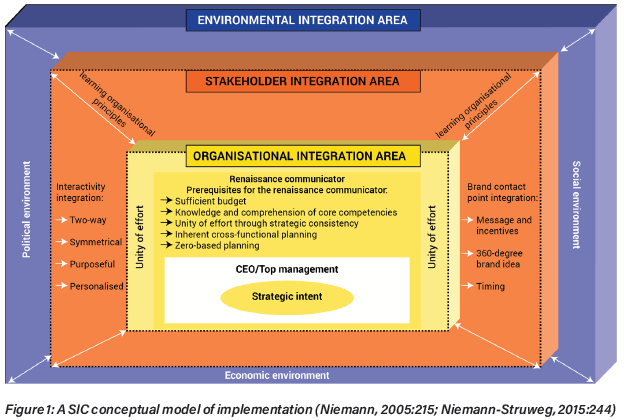
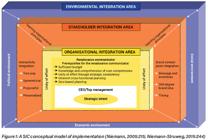
The model is grounded by two underlying principles: strategic intent should drive all communication and an organisation should be a learning organisation. These principles manifest in three areas of integration (organisational, stakeholder, environmental) that are interrelated with a free flow of information (Niemann, 2005; Niemann-Struweg, 2015).
This article focusses specifically on the stakeholder integration area of the SIC model, aiming to explore and adapt Niemann's (2005) model to suit CPOs' operating context. See Degenaar (2021) and Degenaar et al. (2022) for a discussion of the other areas.
BASIC ASSUMPTIONS OF THE NIEMANN MODEL FOR SIC: STAKEHOLDER INTEGRATION
Niemann (2005) identifies two tiers of stakeholder integration (see Figure 1). The first tier is the interactivity integration area that involves two-way symmetrical, purposeful and personalised communication, and the second is brand contact point integration, which relates to stakeholder-appropriate messages and the 360-degree brand idea.
Stakeholder interactivity integration
Stakeholder interactivity involves active stakeholder participation and collaboration between an organisation and its stakeholders (Duncan, 2002; Niemann, 2005). It goes beyond traditional reciprocal communication as it is "interactive in nature" and emphasises the continuous creation, exchange and sharing of meanings by all parties involved (Van Ruler, 2018:379). This interactivity is facilitated by means of two-way symmetrical communication and purposeful, personalised communication.
Two-way symmetrical communication is characterised by stakeholder engagement, active listening and mutual understanding (Grunig, 2013). This implies that the organisation should respond to stakeholders to understand their views, and at the same time balance the needs of the stakeholder with "serving the public" (see Heide et al., 2018:462). Two-way symmetrical communication requires not only listening, but also providing constructive feedback, which is imperative for fostering cooperation and mutual benefit (Bosley, 2014; Broom & Sha, 2013; Morsing & Schultz, 2006) and ultimately establishing trust. For a CPO, this would mean that stakeholders understand the benefits of involvement in or donations to the NPO, while the CPOs themselves should communicate their assistance requirements from stakeholders, particularly considering resource competition. Establishing trust with potential donors goes beyond fundraising and aims to cultivate relationships and increase donor participation (Klein, 2007; Norton, 2003).
Purposeful communication entails intentional information exchange with a defined goal. Messages that are crafted are aligned with specific and mutually beneficial intentions (Niemann-Struweg, 2015).
Personalised interaction recognises individuals' interests, behaviours and needs in communication (Denner et al., 2019; Karvonen, 2010). This enables trust building and establishing meaningful connections between stakeholders and the organisation (Türkel et al., 2021).
CPOs should be able to personalise interaction and tailor content by including email newsletters that address individuals by their first names and that share impactful stories and images of assisted children to foster relevance and personal connection with individuals interested in child protection issues. Personalised content also typically entails the use of emotional appeals to resonate with the audience (Clayton, 2017; Engelbrecht & Ngongo, 2018; Network for Good, 2017). While the content shared by CPOs lends itself to emotional appeals regarding the plight of children, the legal and ethical considerations restrict the applicability of emotional appeals.
Brand contact point integration
Brand contact points encompass the various ways in which stakeholders encounter a brand's message, including in-person interactions, websites, social media and other communication channels (Niemann-Struweg, 2015; Rensburg & Cant, 2009). Stakeholder behaviour, along with marketing and public relations activities, shapes the brand of an organisation. Interactions across diverse contact points significantly impact stakeholder perception, leading to either positive or negative views (Enslin, 2005; Wang, 2007). This implies that adopting a communication strategy that integrates all activities and takes a strategic approach proves more effective than isolated efforts (Wang, 2007).
Brand contact point integration is further based on the following two ideas: appropriately timed messages and delivery systems, and the 360-degree brand idea (Niemann-Struweg, 2015).
Effective communication requires the customisation and timing of messages to meet stakeholder preferences and needs through their preferred communication channels (Niemann-Struweg, 2015). While personalisation focuses on tailoring interactions from the organisation's side, customisation involves stakeholders' reactions to content that aligns with their individual preferences (Davis, 2018). Understanding diverse stakeholders and their goals is therefore key in developing effective messages (Niemann-Struweg, 2015; Van Baalen & Mulder, 2016).
Ultimately, customising and timing messages, catering to stakeholder preferences and utilising appropriate channels can help CPOs to stand out and foster strong, long-term relationships with diverse stakeholders (see Niemann-Struweg, 2015).
The 360-degree brand idea emphasises that all employees of an organisation are representatives of the brand and contribute to brand contact points with the public and stakeholders (Heide et al., 2018). The person responsible for the communication function plays a vital role in understanding stakeholder preferences, integrating messages effectively and fostering continued discussions within the organisation (Heide et al., 2018). To implement the 360-degree brand idea, the organisation must adopt an integrated approach across various contact points, including personal interactions, events and multiple communication channels (Niemann-Struweg, 2015). But in the context of the CPO, social workers face restrictions in disclosing information about children under statutory orders.
From the above-mentioned discussion it is clear that while the Niemann model provides guidance for the integration of stakeholder relations in the organisation, it would need some adaptation to be suitable to the CPO environment.
RESEARCH METHODSResearch approach
A qualitative research design was followed using semi-structured interviews and focus group discussions as data collection methods. This was done to comprehend the different perspectives of a wide variety of participants (representing sampled CPOs and stakeholders) regarding the communication function of the child protection sector in South Africa. The study was approved by the Arts Ethics Committee of the North-West University (NWU) (ethics number: NWU-00370-17-A7).
Sampling of organisations
The child welfare sector is the largest sector within the social services-driven NPO category in South Africa, which is beyond the scope of this study. Hence, four of the largest registered national child welfare organisations in South Africa and various regional organisations, and local branches that form part of these four national organisations, were purposively selected. The selection criteria required the organisations to be prominent, registered NPOs in the social services sector and designated CPOs in South Africa. Furthermore, the national organisations had to include various provincial and regional organisations and local branches as part of their structure. The national organisations selected were RATA Social Services, SAVF Social Services, Child Welfare South Africa and the Council of Church Social Services (CSCC). From these, four provincial, 10 regional and 11 local branches were purposively selected. Five of the regional organisations were chosen specifically because they have official communication officers.
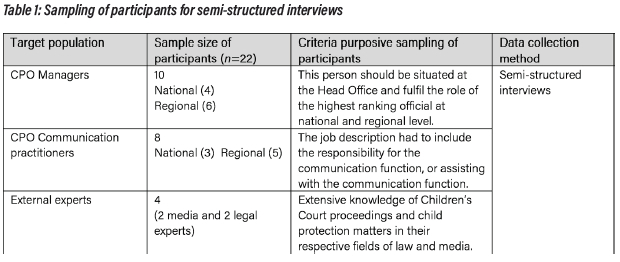
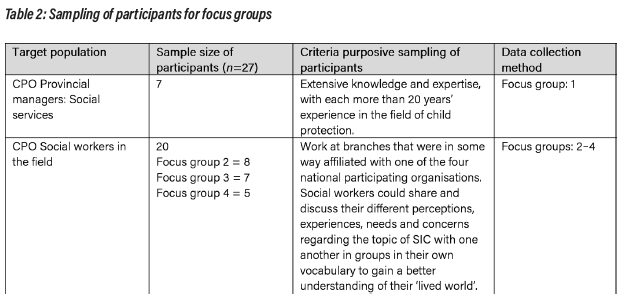
To gather both in-depth individual insights and diverse group perspectives, two methods were used: semi-structured interviews and focus groups, as indicated in Tables 1 and 2.
Selection of participants for semi-structured interviews
Managers and communication practitioners from participating organisations and external legal and media experts were purposively sampled, as depicted in Table 1. There were 22 semi-structured interviews in total.
Selection of participants for focus groups
The first focus group consisted of seven social workers in provincial managerial positions. The other three focus groups consisted of social workers working in the field and employed at 11 regional CPOs that formed part of the four selected organisations. All focus groups were facilitated by the first author. Table 2 summarises the sampling of participants for focus groups.
Data analysis
The recordings of the interviews and focus group discussions were transcribed by an external person and analysed by the researcher by means of qualitative content analysis (Wimmer & Dominick, 2006). The researcher chose to analyse the data manually. She created a Word document with concepts and constructs, which acted as a guide for conducting the analysis of the huge amount of text. The manual analysis was done by carefully reading through the transcripts several times and typing the corresponding information on the appropriate page of the spreadsheet. The corresponding information was then re-analysed to identify aspects to answer the specific research questions. From the Word document, the data were captured on Excel spreadsheets, divided into pages for communication persons, managers, external experts and social workers. The same procedure was followed with the identification of new themes. The main themes for this article were the concepts and sub-concepts related to stakeholder integration (see Table 3).
FINDINGS
In order to answer the research question, how can a strategic integrated communication approach to stakeholder relationships be adapted to be suitable to the CPO sector, the findings are discussed according to the main concepts regarding the stakeholder integration area of the Niemann SIC model.
Interactivity integration
Two-way symmetrical communication: Stakeholder identification
The Department of Social Development was identified as the most important stakeholder due to its funding role. In addition, various stakeholders were identified, including management bodies, government departments, NPOs, volunteers, media, external consultants, companies, small businesses, churches and the broader community.
It became apparent that stakeholders are prioritised differently based on the positions, functions and
fields of expertise of participants. Managers at the national level prioritised networking with national bodies, government departments and other NPOs in the field of child and family care, highlighting the collaborative nature of their work, "as we are in this together". Conversely, communication personnel emphasised engaging with the broader community, donors and the media, recognising the importance of outreach and fundraising efforts. Social workers prioritised communication with local government officials, non-profits and volunteers, emphasising the importance of serving parents, families and children.
This confirms the assumption that stakeholder experiences and expectations of participants differ, and that communication needs to be conveyed to diverse stakeholder groups.
Listen to understand views: The majority of participants, including legal experts, found it challenging to listen to stakeholders' views due to differing perspectives and unrealistic expectations. The primary focus of listening was to understand the motivations behind stakeholders' donations and their desire to be associated with the CPO.
Communication participants acknowledged that they could not single-handedly listen to and meet stakeholder expectations, feeling that "we are not magicians". Furthermore, it was evident that they could not meet all stakeholder expectations due to limited resources, funding, skills, technology and confidentiality policies that hinder accommodating all stakeholder needs. Consequently, participants were hesitant to engage in open two-way discussions, leading to a lack of clarity regarding stakeholders' viewpoints. One manager aptly summarised the situation, expressing uncertainty about the desires of external stakeholders and how to gain their support: "We are not sure what people out there want and how to get their buy-in".
This indicates a misunderstanding of the listening process, as participants primarily focused on what stakeholders expected from them, resulting in limited reciprocal discussions. The findings highlight the need for diverse communication activities and an integrated approach to comprehend stakeholders. This supports the idea that open two-way discussions should foster mutual understanding of stakeholders' needs.
Feedback: The findings highlighted four trends regarding feedback. First, the majority of all participants associated feedback primarily with providing financial feedback to stakeholders and being transparent and accountable when receiving funding. They recognised the necessity to share audited financial statements and annual reports to demonstrate accountability and governance by means of their website or physical reports.
Second, participants identified the mutual interests between stakeholders and the organisation, highlighting the need for feedback that showcases how children were helped. Donors, particularly large corporations, sought so-called success stories and requested photos of children impacted by their donations, despite legal constraints and confidentiality concerns. Communication personnel and managers acknowledged the importance of finding alternative ways to provide feedback, while staying authentic and compliant with regulations. However, social workers and external legal experts prioritised child protection over such feedback. Frustration among social workers, managers and communication practitioners arose, as donors preferred feedback on programme outcomes rather than overhead costs. This led to a desire to raise public awareness about the necessity of resources for effective work. One participant responsible for the communication function voiced her frustration in this regard: "If only we can make the public more aware of the fact that manpower, vehicles with petrol and telephone calls are necessary to eventually be able to do the work.''
Third, participants held conflicting views on providing feedback on social networking sites and online platforms. Managers and communication personnel relied on social workers for the necessary information to share feedback with stakeholders on these platforms. However, social workers expressed reservations about sharing case-specific feedback about their clients, even though they recognised the importance of informing donors about how their money was being spent. Social workers highlighted the complexity and confidentiality of child protection processes, making it challenging to provide a traditional "success story' for public display.
Fourth, the increase in negative online comments, complaints and inquiries emerged as a significant concern for all participants. These comments primarily surfaced on platforms such as Facebook, monitored either by managers, administrative personnel or the communication function representative. However, monitoring these platforms 24/7 was challenging, leading to delayed responses and the rapid spread of unsubstantiated rumours. Feedback was further complicated by the need to obtain information from social workers before responding and to ensure respect for client confidentiality. Consequently, these circumstances contributed to a negative perception of child protection, as people often failed to understand the necessary procedures and perceived the CPO as unresponsive. As recommended by an external media expert, when a CPO receives an enquiry from a journalist, whether for an online platform or in print, "rather comment to the best of your ability, because if you say no comment, they will think that you want to sweep something under the carpet".
Finally, during focus group discussions with social workers, it was evident that they were uncertain as to who should react to online queries and negative comments and where the responsibility lay. The majority of the social workers conveyed that they did not want to be involved in Facebook disputes on community pages. The only feedback that they were prepared to give was that complainants should arrange a formal appointment. They were very hesitant to use any social media platform for any communication with the public or with clients, as some of them had been stalked or harassed by clients and had even had to block them.
Overall, unrealistic expectations and a lack of response from social workers, combined with a lack of knowledge and skills, posed challenges to the feedback function and donor relationships.
Mutually beneficial relationships: The participants recognised the importance of maintaining and cultivating donor relationships for mutual benefit, primarily driven by the need for funding. Communication efforts largely focused on providing information to donors, with the emphasis on financial benefits and tax exemptions. However, the majority of the communication persons in the semi-structured interviews and managers during the focus group discussions expressed frustration that this was not sufficient to manage stakeholder relations: "People are sick and tired of being bombarded with requests". Stakeholders were reluctant to contribute to overhead costs such as telephone bills, electricity and fuel for transport, despite their necessity for the CPO's operations.
A common concern among participants was the lack of public awareness regarding how to support CPOs and the potential benefits involved. This drove a strong emphasis on one-way information distribution to raise awareness and differentiate the CPO from other non-profits as the saying "known is loved" implies - the more you know about an organisation, the more likely you are to develop positive feelings about it and eventually support their cause.
Confidentiality and child welfare considerations limited communication options. While communication practitioners were open to exploring alternative approaches, resistance from social workers hindered their efforts. The findings did not support the idea of organisation-wide support for the CPO's work, as employees lacked agreement on achieving mutual benefit. Communication practitioners felt burdened with responsibility, as managers and social workers were occupied with other tasks "so I have to ask this, and ask that, and ask again because they work with the children on a daily basis". External media experts observed a general fear among CPOs in engaging with the media, leading to missed opportunities for free publicity and support. An external media expert put this well: "Often the social work supervisors are sceptical, they do not trust the journalist. Maybe sometimes that is a mistake and if you know someone and you can trust that person in the journalistic world it (a story) can be done very well. Be open and give that person a chance and build a trusting relationship".
External media experts emphasised the need for widespread stakeholder support to fulfil the CPO's mission, while upholding legislation and prioritising the best interest of the child. However, the different interpretations of the dignity and best interest of the child cause unease and hesitance to use emotional messages. On the one hand, the CPO wants to "sell a story" and, on the other hand, the social worker has the responsibility to protect their client, while adhering to their own ethical code of conduct, which can impede cooperation and sharing information with the communication practitioner.
Outcome of two-way communication is trust: The majority of the participants placed extremely high value on trust in the context of the CPO's work. Trust was perceived as being closely linked to core values, particularly integrity and accountability. Participants, especially managers, believed that trust is built over time and they acknowledged the trust placed in the CPO by existing stakeholders, "those that know us" such as the government and churches. However, there were differences in perspectives between managers and social workers regarding the nature of trust. Social workers viewed trust from the standpoint of their clients, valuing their return and trust in seeking assistance. While financial accountability and service quality were seen as contributing to trust, other aspects such as openly sharing information were not explicitly associated with trust in the discussions.
Purposeful, personalised communication
Concerns over lack of control and exposing children on interactive media: Interactive media can be used to involve stakeholders in becoming emotionally invested in the CPO's mission of protecting vulnerable children, but the majority of the participants feared the lack of control that goes hand-in-hand with interactive media, emphasising the need for "time and expertise." Communication practitioners and external media experts felt that "there are ways of working around confidentiality" and were prepared to explore alternative ways of communicating while taking legal and ethical stipulations into consideration. However, the majority of social workers and legal experts were very hesitant to use emotional appeals to portray the vulnerable children that benefit from their services. As stated by one of the national managers, "you often want to send across a positive message, but then you cannot quite see how it will come out at the other end ... your intention is good ... but anyone can make mistakes with material" It is important to note that as the majority of the middle management comprises social workers, their perceptions add to the hesitancy. Requests by the person responsible for the communication function are seen as an intrusion and as unrealistic. During focus group 2 with social workers in the field, they made comments such as "they just want tear-jerker stories" and "sad pictures of children with runny noses and blue eyes". See Degenaar and Fourie (2024) for an extensive discussion of the concerns over lack of control and exposing children on interactive media.
Brand contact point integration
The findings showed participants' frustration and inability to fulfil increasingly unrealistic expectations and demands for communication to be custom designed for stakeholders as individuals. This was aptly put by a communication person who used phrases such as "we cannot be everything for everyone". In many instances, communication persons conduct self-directed research in their free time during the evenings after work. "My husband knows that I have to spend two to three hours extra each evening in front of the fireplace". The majority of communication persons confessed that compiling content for the diverse stakeholders was a "daily struggle", and they needed information from other staff who were already overloaded with their own work. A further issue highlighted by communication persons is the fact that social work jargon was often used, which complicates comprehension. They (social workers) would refer to "paternal grandfather, but I tell them, no, just say grandpa". The majority of the CPOs had only one person responsible for communication, marketing and fundraising of the CPO, and not necessarily a trained communication expert. As stated by two of the communication persons: "I think our organisation unfortunately is not one of those that have the luxury to be able to say you are only the media officer, or you are the only one writing the proposals. You need to be capable of doing different things" and be a "jack of all trades". The findings also showed an unrealistic expectation of the person responsible for the communication function, mostly comprising an individual, to understand, monitor and evaluate all contact points and stakeholder preferences as part of an isolated effort and without any budget. Social workers in focus groups especially believed that these activities were the responsibility of the "marketing person"; as "we were appointed 'to do our job to protect children'". Although it is understandable due to these limitations, the CPO cannot disregard the many benefits of modern personalised strategic communication to build much-needed stakeholder relationships.
RECOMMENDATIONSThe above-mentioned findings contribute to the adaptation of the Niemann (2005) framework to ultimately develop a SIC framework for the CPO sector.
Key adaptations to the Niemann model
This article forms part of a PhD study (Degenaar, 2021) in which it was evident that most of the basic guidelines of the SIC are also applicable to and feasible in the CPO milieu. However, two key adaptations were necessary:
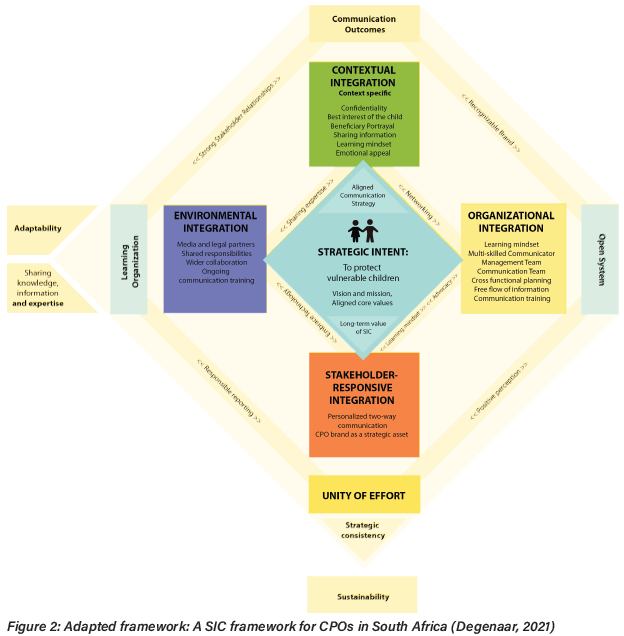
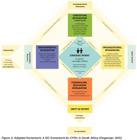
Due to the pervasive role that the confidentiality legislation plays in restricting communication practices, it was necessary to add a separate area of integration to account for the contextual factors impacting on the communication functions of CPOs. See Figure 2 and Degenaar (2021) and Degenaar et al. (2022) for a comprehensive exposition of the framework.
Second, more emphasis is placed on the unity of effort for innovative ways of communicating, not only by the person responsible for the communication function, but by everyone involved in the CPO, to achieve strategic consistency that ultimately assists with sustainability.
Communication outcomes
It is argued that the communication outcomes of the SIC framework for the CPO sector would be strong stakeholder relationships, a recognisable brand, responsible reporting regarding child protection issues and, in the long run, a positive perception. This article focuses on the outcome of strong relationships.
Given the intricate nature of the environment in which the CPO function operates, there should also be an enabling environment to reach the communication outcomes.
Enablers of strategic intent
Five enablers should be used to achieve the strategic intent of safeguarding vulnerable children. These enablers include a learning mindset, sharing expertise, networking, advocacy and the embracing of technology (see Figure 2).
It is important for all functions within a CPO, including management, communication officers, social workers and external legal experts, to have a learning mindset to recognise the need to explore alternative methods of communication.
Online advocacy and networking should not only be done by employees, but by all persons involved in the CPO.
Child protection groups that face criticism can use online advocacy. Involving everyone in the organisation is a budget-friendly way to build relationships, connect with new supporters, correct misunderstandings and get valuable support. By sharing content on their personal profiles or engaging on social media, employees, board members and volunteers who are natural social media users can contribute to portraying the organisation's work in a more humanised and relatable way, fostering connections with peers, media and the public. See Degenaar and Fourie (2024) for an extensive discussion of the advantages and challenges of online advocacy for CPOs.
Unity of effort: The pillar of communication
A unity of effort among all persons involved in CPOs is the foundation for fusion of all four integration areas. This means that all staff (managers, board members and volunteers) should be able to contribute to the communication function. This would enable CPOs to appeal to a wider range of stakeholders while fulfilling stakeholder expectations.
As a result, a broader spectrum of stakeholders would realise the value of the work done by CPOs and accept their joint responsibility.
Stakeholder responsive integration
In this article, the focus is on stakeholder relationships and, as such, stakeholder integration was explored. It should, however, be kept in mind that the point of departure of the framework is that the different areas are interrelated and are all dependent on an enabling factor to achieve common communication outcomes.
Stakeholder responsiveness
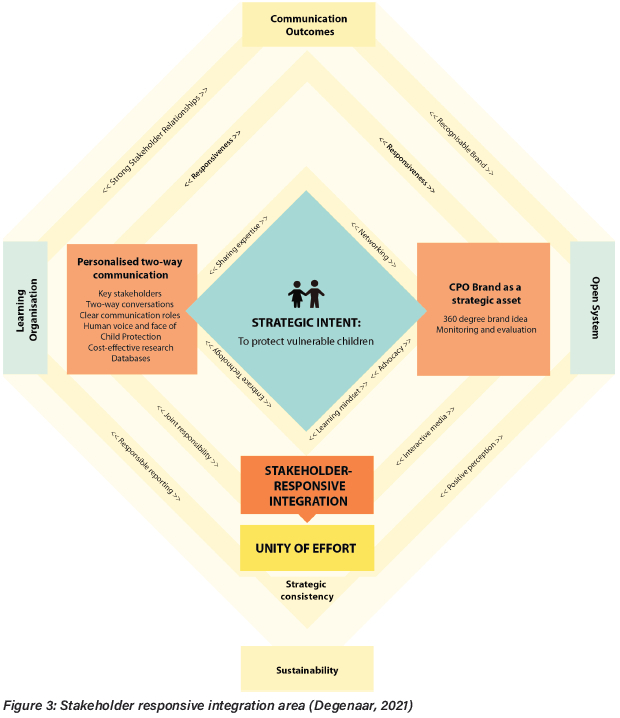
From the results, it was evident that full interactivity as suggested by Niemann (2005) was unattainable in the light of the limited resources and skills available, as well as the diverse set of stakeholders in the legally and ethically restricted context of CPOs. Hence, it is suggested that they initiate a more responsive approach to effectively integrate stakeholders (see Figure 3). Responsiveness is the ability of an organisation to listen to and address stakeholders' needs and concerns promptly and appropriately while being accountable for meeting their interests and needs (Gennari, 2020).
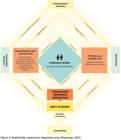
Accordingly, the adapted framework shows that personalised two-way communication and the brand as a strategic asset are inextricably linked to reach the strategic intent and, ultimately, the communication outcomes of a CPO.
Personalised two-way communication
From the findings, it follows that attempts are inhibited to involve diverse stakeholders in the proposed symmetrical open and balanced manner to create mutually beneficial relationships, while (a) adhering to legal stipulations regarding confidentiality; and given (b) the admissible focus on ethical conduct taking into account the best interest of the child; (c) various individuals and groups with different interests in CPOs; (d) unrealistic stakeholder expectations; (e) the fear of emotional manipulation; and (f) unclear communication roles.
Despite limitations, CPOs cannot disregard the many benefits of modern personalised strategic communication to build much-needed stakeholder relationships. Consequently, the following activities are recommended to facilitate personalised, two-way communication:
Key stakeholders
It is recommended that the framework identify and prioritise key stakeholders, instead of attempting to cater to everyone's needs. Besides the Department of Social Development, where CPOs typically have limited control, it is essential for them to prioritise relationship-building efforts to engage with stakeholders, who may also serve as supporters, across the broader public, the corporate sector and the media environment.
Focus on two-way conversations
Two-way conversations should be prioritised to ensure that stakeholders' viewpoints are acknowledged, and that they are reassured. While conventional two-way symmetrical communication may be challenging, these conversations should serve as platforms to convey the needs of the CPO, rather than solely focusing on stakeholder expectations.
Clear communication roles
CPOs should establish clear communication roles for all employees and individuals involved in the organisation, to define responsibilities and expectations from the different role players. Role clarification and accompanying enablement of roles are necessary steps for CPOs to follow a more integrated approach to communication. When roles and responsibilities are transparent to all, everyone should be aware of who is accountable for responding or how to redirect the questioner or complainant to a more appropriate spokesperson. This could include a link to online information to answer the most frequently asked questions, which would enable them to promptly respond to online inquiries and complaints, albeit within legal and ethical parameters.
Human voice and face of child protection
This entails that communication should not only be seen in terms of financial reporting and delivering high-quality social work services - but also with a stronger focus on more open sharing of other information about children to achieve mutually beneficial and long-term trusting relationships with stakeholders. The likelihood of donors being motivated to contribute funds to CPOs due to their trust in its integrity and appreciation for its transparent communication is greater than the chances of them solely pursuing personal gratification or tangible rewards. It is thus essential for CPOs to continuously adapt and explore innovative ways of communication, considering the limited resources and increasing demands they face. By leveraging the power of new media, CPOs can demonstrate their commitment to stakeholder engagement and effectively communicate the value and impact of their child protection services, within legal and ethical parameters. This links back to fostering a learning mindset within CPOs to employ emotional appeal storytelling that can secure support for CPOs by personalising communication and portraying children as the beneficiaries.
External stakeholders are encouraged to be more involved in CPOs as part of a joint/shared responsibility to protect children at risk. As part of the learning mindset, alternative out-of-the-box ways of communicating to give a human voice and face to child protection are explored, to continuously get stakeholders involved in CPOs by connecting with them on a more personal level.
Cost-effective research to compile databases
By conducting research (see Duncan & Moriarty, 1997), CPOs can identify personalised communication approaches, determine effective communication channels and understand stakeholder interests. This is important for relationship building and creating brand awareness. Modern technology provides cost-effective opportunities for this purpose.
As formal research is cost-effective, research to compile databases is suggested. For example, self-created online surveys or at least a small percentage of the budget allocation to purchase the basic software with accompanied training would be a good start.
CPO brand as a strategic asset
Equally important, the results lead to a stronger emphasis on unity of effort to ensure that CPO brand is seen as a strategic asset by everyone involved, without shifting the responsibility of brand awareness to the person responsible for the communication function.
360-degree brand idea
By emphasising the 360-degree brand idea by which everyone involved in the CPO integrates stakeholders at any contact point, be it during personal contact or online, during telephone conversations or writing a court report, the perceived unattainability of customised messages and delivery systems can be addressed.
Monitoring and evaluation
A point often overlooked in CPOs is that measuring and evaluation (M&E) processes should be strategically analysed against the goals of the aligned communication strategy.
The data gathered could assist the person responsible for the communication function to determine the interests and preferences of individual stakeholders in their quest to communicate more strategically. These goals should not be formulated in isolation, but should support the organisation's strategic goals and form a prominent part of management and financial decisions.
CONCLUSION
The SIC model of Niemann (2005) was taken as the point of departure to answer the research question posed: How can a strategic integrated communication approach to stakeholder relationships be adapted to be suitable to the CPO sector? Results reflected that for a context-specific CPO, not all of the guidelines of the SIC model are attainable. An adapted framework for the CPO context was proposed and thereby contributes to the theoretical body of knowledge on SIC. Effective communication relies on seamless collaboration across contextual, organisational, stakeholder and environmental integration domains. These interconnected areas work together to achieve communication outcomes and foster relationship building. The SIC framework indicates interrelatedness to achieve communication outcomes that build strong relationships, create a recognisable brand, report responsibly on child protection issues and, in the long run, reinforce a positive public perception. Given the intricate nature of the environment in which the CPO function operates, various factors contribute to the communication outcomes. Five enablers should be used to achieve the strategic intent of safeguarding vulnerable children. These include a learning mindset, sharing expertise, networking, advocacy and the embracing of technology.
The findings clearly indicate that achieving full interactivity, as proposed by Niemann (2005), was not feasible due to constraints such as limited resources, skills and the diverse range of stakeholders within the legally and ethically restricted context of CPOs. Therefore, it is recommended that a more responsive approach be initiated to integrate stakeholders effectively. Stronger emphasis should be placed on establishing long-term trusting relationships and a recognisable brand with stakeholders through stakeholder responsiveness. The CPO SIC framework highlights the importance of personalised two-way communication and the brand as a strategic asset, both of which are inextricably intertwined. This should be guided by unity of effort as the pillar of all communication efforts through strategic consistency. This emphasis is crucial for ensuring the sustainability of CPOs.
By implementing the guidelines of the adapted SIC framework, CPOs can effectively engage with stakeholders, improve and build stronger relationships and secure ongoing support, while navigating legal and ethical considerations. This can ultimately enhance the success and effectiveness of the organisation's child protection efforts.
LIMITATIONS AND FUTURE RESEARCHAlthough input from practice was gathered to compile this framework, it was only explored and has not yet been implemented in practice. Recommendations for future research can be made based on the SIC framework. The proposed framework could be further explored by being implemented in practice, with a focus on alternative organisational structures and the perception of external key stakeholders in the light of fundraising and sustainability. Further research would benefit communication scholars and South African society, ultimately playing a crucial role in advocating for our vulnerable children who cannot speak for themselves.
DECLARATION OF INTERESTNo potential conflict of interest was reported by the author(s).
REFERENCES
-
ACVV. (2023). Cutting child protection services threatens everyone's safety. Western Cape Child Protection Alliance press statement. ACVV, 29 May. Available from: https://www.acvv.org.za/latest-news/cutting-child-protection-services-threatens-everyones-safety/
» https://www.acvv.org.za/latest-news/cutting-child-protection-services-threatens-everyones-safety/ - Benecke, D.R. & Holtzhausen, L. (2018). Public relations in the South African non-profit sector: Partnerships for social change. In N. Garsten & I. Bruce (eds). Communicating causes: Strategic public relations for the non-profit sector. New York, NY: Routledge, 229-240.
- Bosley, C. (2014). Two-way symmetrical communication in a nonprofit organization. Masters thesis. San Diego: San Diego State University.
- Broom, G.M. & Sha, B.L. (2013). Cutlip & Center's effective public relations. 11th ed. Upper Saddle River, NJ: Pearson.
- Chauke, G. & Du Plessis, D. (2013). Public relations. In G. Angelopulo & R. Barker (eds). Integrated organisational communication. 2nd ed. Cape Town: Juta, 222-255.
- Clayton, A. (2017). The great fundraising masterclass 2017. University of Stellenboch Business School, 12-13 September 2017.
-
Damons, M. (2023). Child protection services raise alarm on funding shortfalls. GroundUp, 31 May. Available from: https://www.groundup.org.za/article/child-protection-organisations-forced-to-make-cuts-have-high-staff-turnover-and-closure-of-offices-amid-call-for-better-state-funding/
» https://www.groundup.org.za/article/child-protection-organisations-forced-to-make-cuts-have-high-staff-turnover-and-closure-of-offices-amid-call-for-better-state-funding/ -
Davis, P. (2018). What is the difference between personalization and customization? AtData, 5 November. Available from: https://atdata.com/blog/what-is-the-difference-between-personalization-and-customization/
» https://atdata.com/blog/what-is-the-difference-between-personalization-and-customization/ - Degenaar, A. (2021). A strategic integrated communication framework for the Child Protection Organisation in South Africa. Doctoral thesis. Potchefstroom: North-West University (South Africa).
- Degenaar, A. & Fourie, L.M. (2024). A strategic integrated communication framework for child protection organizations in South Africa: The role of digital media. Unpublished manuscript. Cape Town: AOSIS Publishers.
-
Degenaar, A., Fourie, L.M. & Holtzhausen, L. (2022). A strategic integrated communication framework for child protection organizations in South Africa. International Journal of Strategic Communication, 16(5):700-721. https://doi.org/10.1080/1553118X.2022.2093204
» https://doi.org/10.1080/1553118X.2022.2093204 - Denner, N., Viererbl, B. & Koch, T. (2019). A matter for the boss? How personalized communication affects recipients' perceptions of an organization during a crisis. International Journal of Communication, 13:2026-2044.
-
Department of Social Development. (2024). NPO register. Available from: http://www.npo.gov.za/
» http://www.npo.gov.za/ - Duncan, T. (2002). IMC: Using advertising and promotion to build brand. New York, NY: McGraw-Hill.
- Duncan, T. & Moriarty, S. 1997. Driving brand value: Using integrated marketing to manage profitable stakeholder relationships. New York, NY: McGraw-Hill.
- Engelbrecht, R. & Ngongo, M. (2018). Storytelling for social media platforms. In M. Pritchard & K. Sitto (eds). Connect: Writing for digital audiences. Cape Town: Juta, 206-230.
-
Enslin, C. (2005). The role of alternative brand contact planning in the South African marketing and communication industry. Doctoral thesis. Pretoria: University of Pretoria. Available from: http://hdl.handle.net/2263/26108
» http://hdl.handle.net/2263/26108 -
Forrest, S. (2013). Negative public images hamper child welfare investigators. University of Illinois Urbana Campaign, 14 March. Available from: https://socialwork.illinois.edu/negative-public-images-hamper-child-welfare-investigators/
» https://socialwork.illinois.edu/negative-public-images-hamper-child-welfare-investigators/ - Franklin, B. & Parton, N. (1991). Social work, the media and public relations. London: Routledge.
- Freberg, K. (2018). Social media for strategic communication. Los Angeles, CA: Sage.
-
Gastrow, S. (2019). The proliferation of non-profits is an indication of state failure. Daily Maverick, 8 October. Available from: https://www.dailymaverick.co.za/opinionista/2019-10-08-the-proliferation-of-non-profits-is-an-indication-of-state-failure/
» https://www.dailymaverick.co.za/opinionista/2019-10-08-the-proliferation-of-non-profits-is-an-indication-of-state-failure/ -
Gennari, F. 2020. Responsiveness. In Idowu, S., Schmidpeter, R., Capaldi, N., Zu, L., Del Baldo,M. & Abreu, R. (eds). Encyclopedia of sustainable management. Cham: Springer. https://link.springer.com/content/pdf/10.1007/978-3-030-02006-4_979-1.pdf
» https://link.springer.com/content/pdf/10.1007/978-3-030-02006-4_979-1.pdf -
Grunig, J.E. (2013). Excellence theory. A comprehensive look at modern public relations theory. James Grunig: Available from: https://excellencetheory.wordpress.com/2013/09/27/the-two-way-symmetrical-model-of-communication/
» https://excellencetheory.wordpress.com/2013/09/27/the-two-way-symmetrical-model-of-communication/ - Heide, M., Von Platen, S., Simonsson, C. & Falkheimer, J. (2018). Expanding the scope of strategic communication: Towards a holistic understanding of orgnanizational complexity. International Journal of Strategic Communication, 12(4):452-468.
- Holtzhausen, L. (2013). Managing corporate identities of nonprofit organisations in the social welfare sector. Jàmbá: Journal of Disaster Risk Studies, 5(2):1-8.
- Karvonen, L. (2010). The personalisation of politics: A study of parliamentary democracies. Colchester: ECPR Press.
- Klein, K. (2007). Fundraising for social change. 5th ed. San Francisco: John Wiley & Sons.
-
Maboya, M. & McKay, T. (2019). The financial sustainability challenges facing the South African non-profit sector. The Journal for Transdisciplinary Research in Southern Africa, 15(1):a693. Available from: https://doi.org/10.4102/td.v15i1.693
» https://doi.org/10.4102/td.v15i1.693 -
Meleyal, L. (2017). It's time to put social work regulation where it belongs - with employers. The Guardian, 23 January. Available from: https://www.theguardian.com/social-care-network/2017/jan/23/social-work-regulation-employers
» https://www.theguardian.com/social-care-network/2017/jan/23/social-work-regulation-employers -
Morsing, M. & Schultz, M. (2006). Corporate social responsibility communication: Stakeholder information, response and involvement strategies. Business Ethics: A European Review, 15(4):323-338. Available from: https://onlinelibrary.wiley.com/doi/pdf/10.1111/j.1467-8608.2006.00460.x
» https://onlinelibrary.wiley.com/doi/pdf/10.1111/j.1467-8608.2006.00460.x -
Network for Good. (2017). Storytelling for nonprofits: How to present stories that attract donors, win support, and raise more money. Available from: https://learn.networkforgood.com/storytelling-for-nonprofits-2017.html
» https://learn.networkforgood.com/storytelling-for-nonprofits-2017.html - Nhedz, F. & Makofane, M. (2015). The experiences of social workers in the provision of family preservation services. Social Work/Maatskaplike Werk, 51(3):354-378.
- Niemann, I. (2005). Strategic integrated communication: Towards a South African conceptual model. Doctoral thesis. Pretoria: University of Pretoria.
- Niemann-Struweg, I. (2015). Integrated communication implementation. In D. Mulder & I. Niemann-Struweg (eds.). Strategic integrated communication. Pretoria: Van Schaik, 213-228.
- Norton, M. (2003). The worldwide fundraiser's handbook. 2nd ed. London: Directory of Social Change.
- Nwauche, S. & Flanigan, S. (2022). Challenges to nonprofit organization participation in social and development policy planning in South Africa. Nonprofit Policy Forum, 13(2):119-139.
- Overton-De Klerk, N. & Verwey, S. (2013). Towards an emerging paradigm of strategic communication: Core driving forces. Communicatio, 39(3):362-382.
- Patel, L. (2012). Developmental social policy, social welfare services and the non-profit sector in South Africa. Social Policy & Administration, 46(6):603-618.
- Rensburg, R. & Cant, M. (2009). Public relations: African perspectives. Johannesburg: Heinemann.
-
Richardson, M.K. 2017. Two sides of the same coin: The reinforcing relationship between communications and development. NonProfitPro, 6 April. Availabe from: https://www.nonprofitpro.com/article/two-sides-coin-reinforcing-relationship-communications-development/
» https://www.nonprofitpro.com/article/two-sides-coin-reinforcing-relationship-communications-development/ -
Sjöström, S. & Öhman, A. (2018). What if an investigative journalist calls? Media Relations in social work. The British Journal of Social Work, 48(7):2077-2095. Available from: https://doi.org/10.1093/bjsw/bcx148
» https://doi.org/10.1093/bjsw/bcx148 -
South African Council for Social Services Professions (SACSSP). (2020). South African Council for Social Service Professions code of ethics. Available from: http://www.sacssp.co.za/professional-conduct-and-ethics-2/
» http://www.sacssp.co.za/professional-conduct-and-ethics-2/ -
The Media Monitoring Project. (2004). Children dying to make the news. Available from: https://www.mediamonitoringafrica.org/wp-content/uploads/2024/01/Children-Dying-to-make_-2003-1.pdf
» https://www.mediamonitoringafrica.org/wp-content/uploads/2024/01/Children-Dying-to-make_-2003-1.pdf - Türkel, S., Uzunoglu, E. & Misci Kip, S. (2021). Shared meaning at the intersection of NPO reputation and trust: A personification perspective. Corporate Communications: An International Journal, 26(1):124-142.
- Van Baalen, A. & Mulder, D. (2016). A conceptual analysis of integrated communication. Communitas, 21(89):89-107.
- Van Ruler, B. (2018). Communication theory: An underrated pillar on which strategic communication rests. International Journal of Strategic Communication, 12(4):367-381.
- Wang, A. (2007). When web pages influence web usability: Effects of online strategic communication. International Journal of Strategic Communication, 1(2):93-106.
-
Welliver, S. (2020). A journalist's guide on what to write - and what not to - when covering child abuse. Poynter, 4 February. Available from: https://www.poynter.org/ethics-trust/2020/a-journalists-guide-on-what-to-write-and-what-not-to-when-covering-child-abuse/
» https://www.poynter.org/ethics-trust/2020/a-journalists-guide-on-what-to-write-and-what-not-to-when-covering-child-abuse/ - Wimmer, R.D. & Dominick, J.R. (2006). Mass media research: An introduction. 8th ed. Belmont: Thomson Wadsworth.
Accepted March 2025