Using a Delphi Method in the Future of PR and Communication Global Study: South African Findings on Social Impact and PR Education
Abstract
Public relations in Africa and South Africa has evolved in accordance with its changing landscape. The South African public relations practitioner still operates as a technician, manager and strategist, with a steady increase in the performance of strategic decision-making roles in organisations. The purpose of this article is to present the views of South African public relations educators and practitioners who participated in a global study titled "The Future of PR and Communication and Their Social Impact". Current views expressed by these public relations experts include perspectives on their roles, social impact and value, and their influence on public relations education. Earlier studies on the roles of public relations in South Africa highlighted its strategic role with reports that South African public relations practitioners indicated an increase in strategic influence but with limited understanding and use of measurement applications and social impact analysis, which are key components in showcasing the influence of public relations in society. It is therefore essential to revisit the perceptions of public relations practitioners and educators of their roles and the social impact on society, together with its influence on public relations education. The global study "The Future of PR and Communication and Their Social Impact" applied a Delphi-method approach, which included various rounds of concept testing and meaning-making. This method is ideal for obtaining the views of public relations experts and reaching consensus within a specific geographical context such as South Africa. The study offered a unique approach to public relations research in South Africa, both in research methodology and opportunity to participate in a global study in 23 countries with over 600 participants. As is customary in a Delphi study, the researchers asked participants to match a series of characteristics with a specific label and practice noun describing public relations roles and social impact. This approach enabled comparisons of both assumptions and focus areas of regional (South African) public relations educators and practitioners. Significant findings obtained from these participants are aligned with international views and included an emphasis on the integration of communication activities with organisational business objectives as well as practical, real-life experiences included in public relations education. Participants agreed that social impact could be achieved through stakeholder engagement, agenda setting, creating awareness and influencing the corporate social responsibility focus of organisations. Participants viewed social value as the outcome of social impact activities.
Delphi methodology; measurement and evaluation; public relations education; public relations roles; social impact; social value; strategic role
INTRODUCTION
The role of public relations practitioners and the strategic function public relations fulfils in organisations have been the focus of many studies, with regular reviews of how theory and practice have evolved and what the future focus in education should be. The role of public relations assumes a strategic dimension in today's rapidly evolving economy and the effects of public relations globally have a direct effect on its practice in South Africa. Public relations as a strategic function, aimed at influencing the organisational objectives with a role in decision making, managing stakeholders and measuring results of communication strategies, has gained prominence during the past decade (Gregory, 2004). "The effectiveness of the PR [public relations] practitioner in achieving overall business success is analysed in the measurement and evaluation conducted as part of the strategic planning process. Measurement and evaluation, therefore, need to embrace whole organisation performance" (Gregory, 2023:105). This approach to measurement includes the review of stakeholder and societal objectives to determine whether they have been met. Notably, all public relations functions should be integrated to deliver maximum message and communication impact to their respective stakeholders (Verwey, 2015).
According to Prof. Anne Gregory, public relations has evolved as a comprehensive practice that extends beyond elevating an organisation's image and reputation, with greater emphasis placed on the strategic function of public relations in organisations and society (CPRE, 2023). Furthermore, a critical review of the importance of a context-specific approach to public relations was highlighted. The "Future of PR and Communication and Their Social Impact" global study (Global Future study) did not aim to find one common definition for public relations but rather challenged participants to identify the different functions. This resulted in identifying public relations as "an empowering vehicle that has the ability to embrace change and become the driving force of ethical debate involving both organizations and their stakeholders" (Adi & Stoeckle, 2023:67).
Furthermore, as public relations evolves, clearer ways of addressing the disconnect between theory and practice are being sought to enhance the synergy between academic theory and practical application. Public relations educators and practitioners seem to have a long-standing challenge in integrating theory and practice (CPRE, 2023). Globally, the relevance of public relations curricula and their effectiveness in preparing students and young practitioners for their careers as public relations practitioners have been high on the agenda. Academic programme leaders, or lecturers and practitioners, are often involved in updating curricula to address this need; however, there also exists a lack of understanding among these public relations experts as to the changing and volatile, uncertain, complex and ambiguous (VUCA) environments they operate in. A public relations lecturer may not be experienced in industry practices as they operate within an academic context, while a public relations industry member may not be familiar with the most recent studies on public relations as they focus mostly on developing strategies within specific contexts for specific clients. This tendency is observable in the current experiences of both the public relations industry and academia on the application of artificial intelligence (AI), especially generative AI (gen AI), in public relations.
The Global Future study, with its focus on social value and social impact, aimed to explore cultural diversity and differences in a multilingual and iterative reflective-qualitative approach. This Delphi study commenced in 2022 and investigated two distinct time perspectives: a) the present situation, focusing on facts as they are; and b) future development, adopting a normative approach that envisioned how things should be or may become (Adi & Stoeckle, 2023). The study started with a sample of 613 educators, academics and practitioners from 23 countries around the globe. All four rounds were completed by 313 respondents from 23 countries. To ensure clarity and incentivise responses, three languages were used: English, Spanish and Turkish. The first objective aimed to address critical questions related to the professionalisation of public relations, acknowledging that a profession's societal impact and social value are integral aspects of its role in society. The second objective was to formulate a set of actionable proposals concerning teaching and training in public relations and communication. As the landscape of public relations evolves, it becomes imperative to equip practitioners with the necessary knowledge and skills to navigate the complexities of their roles effectively. The aim was to contribute insights to shape educational approaches for relevance and responsiveness to the dynamic needs of the public relations and communication industry.
Public relations in Africa and South Africa has evolved in accordance with its changing landscape (El Rafie, 2024). The purpose of this article is to present findings on the perceptions of South African public relations practitioners and educators who participated in the global study with specific reference to the roles of public relations practitioners, social impact and social value, and aligning public relations education to address these developments.
In addressing the question of what the future of public relations holds for public relations practitioners, the Global Future study focused on the roles and practices of public relations practitioners, especially related to stakeholders and their influence on organisations, the social impact and value of public relations activities, and how these factors could influence public relations education. These objectives sought to provide meaningful insights to help shape educational approaches that remain relevant and responsive to the evolving needs of the public relations and communication industry.
Roles and practices of public relations practitioners
Wehmeier (2009) found that public relations theory and practice have taken on a management approach, with Dühring (2015:13) commenting on the "compartmentalization of PR into different schools of thought, namely, public relations, strategic communication and corporate communication" These developments demonstrate the relationship public relations has with the environment in which it practises. Increasing technological complexity and globalisation (Verwey, 2015), the influence of COVID-19 (Benecke et al, 2021) and the increasing significance of stakeholder engagement in both for-profit and non-profit organisations (Meyer & Barker, 2020) have altered the perception and practice of communication in general and the practice of public relations in particular. These changes require public relations scholars and practitioners to rethink their perspectives and understand the implications for their roles and purpose in organisations as well as broader society.
Debates about the role and purpose of public relations have been revived in several recent studies (Meyer, 2017; Pieczka, 2019; Suárez-Monsalve, 2022). In addition, in the 21st century, the study of public relations shows the tension between the social functions inherent in communication and the productivity demands of business (Suárez-Monsalve, 2022). The conceptual preferences of what public relations is and how it should be interpreted by understanding its constructs as well as its place in society are deemed important (Adi & Stoeckle, 2021; Pieczka, 2019). In this sense, the conceptualisation of the social impact and social value of public relations needs to be defined, and an understanding of measurement and evaluation should be formulated in accordance with traditional organisational and marketing objectives (Campaign Collective, 2018a and 2018b). Fawkes (2018) conducted a global study known as the Global Capability Framework (GCF), asking what the public relations profession and its practitioners were capable of. The latter encouraged a pilot study by Benecke et al. (2021) as the issues associated with the GCF coincided with the COVID-19 pandemic and its effects on the global industry and, more specifically, South Africa. The existing literature points to a lack of consensus and clarity regarding both the definition and purpose of public relations. This motivates South African public relations scholars to seek insights from the Global Future study and its influence on the profession in South Africa. As Adi (2022) points out, "only by thinking about the future, can we contribute to what we can do to address the challenges ahead".
Future changes and environmental factors also influence public relations research and theory building and practice in Africa. Several African scholars have highlighted the growth of public relations in various African countries and, aligned with other studies also referenced, the influence of digital platforms (Van Heerden & Rensburg, 2005), the glocalisation of public relations practice, which refers to the use of global practices but adjusting them for local use (Callista, 2023), and the importance of reciprocal relationships (Molekao cited in Africa PR Report, 2023).
Social impact and social value
A long-standing debate in public relations has been the value its actions have for organisations and society. Gregory (2004) started asking the question more than 20 years ago, "What is the value of PR?". Determining the value of public relations goes beyond determining what public relations is, what it does and who does it, or even what the return on investment is on the plethora of public relations activities. The question is also of specific relevance in a country such as South Africa, where local and international organisations are continuously embarking on campaigns and projects in an attempt to address various social, economic and environmental issues in a diverse and highly unequal society. Organisations spend an estimated R11.8 billion on corporate social investment annually (Trialogue, 2023). "Companies become synonymous with the social impact they create" (Trialogue, 2023:26). However, determining the social impact of public relations activities goes hand in hand with determining the social value of public relations activities.
In motivating for the Global Future study, research leads Ana Adi and Thomas Stoeckle argued the need for research on the social impact and value of public relations in addition to its roles and education. South Africa has also seen a limited number of research studies on social impact and value derived from public relations activities. Landsberg Boshoff (2023) found that measurement and evaluation are still low on the agenda of public relations practitioners in South Africa, raising the question of how social impact has been measured and social value determined outside of the basic results found in integrated reports. Social impact refers to the measurable results of communication and public relations activities in communities and society. In the Global Future study, social impact is seen as the "measurable result of concrete, conscious, and deliberate activities to generate social benefit, which emerges as the product of socially valuable decisions of an organization" (Adi & Stoeckle, 2023). Measurements may include gathering statistics such as how many people attended a community event, how many people are involved in a community project, and how many books are available to young children. Social value is the value that a society (individuals and social structures) places on public relations activities, which should be based on how these activities fulfil their needs. Social value speaks to the needs of those a strategy is intended to influence and is more than the measurements done to determine the social impact. It may also take longer to gain information about the social value of a public relations activity because change takes time.
Very few answers or models have been developed to measure and determine the social impact and social value of public relations activities. Values are often defined in organisational rather than societal terms, with few models assessing the social impact of public relations. In this regard, outcome reporting remains essential to maintaining professionalism. Reporting on the results achieved from any strategy is essential to maintaining professionalism in all major disciplines.
Public relations and communication education
Public relations practitioners play a critical role in organisations and society and thus require the appropriate education and training to act as intermediaries and influencers (Benecke, 2019; Rensburg & Cant, 2009). Coombs and Holladay (2013) state that the need for public relations education and training is to equip public relations practitioners with the knowledge and skills to be effective communicators on various levels, capable of building relationships and navigating complex environments. Their understanding of media dynamics, strategic planning, adaptability to technological advancements and emphasis on ethical conduct are integral components that should be covered in public relations education and training programmes (Zerfass et al., 2016). Ultimately, mastering these multifaceted skills is paramount to successfully managing communication, relationships and reputations in today's intricate and fast-paced professional landscape (CPRE, 2023; Kent & Taylor 2002).
When faced with dilemmas, practitioners use various resources to navigate conflicting interests between their organisation and/or client and the stakeholders they serve. These resources encompass an individual's personal values and beliefs, ethical guidelines within the organisation and ethical codes of practice from professional associations (Hagelstein et al., 2021). Public relations and communication education and training develop these resources to address multiple challenges, with well-established and competitive qualifications offered by private and public universities in South Africa.
A South African study conducted in 2021 on the Global Alliance Capability Framework indicated that although public relations practitioners are well educated and have the relevant qualifications, they lack a strategic approach and mindset (Benecke et al, 2021). The ability to fulfil a strategic function within organisations involves more than good qualifications; it also requires an enabling environment and evidence of the impact of public relations in achieving organisational success. Public relations educators and scholars are responsible for addressing all developments in identified issues in internal and external contexts. To address this in a South African context, graduate programmes require a focused approach in preparing aspiring professionals for their future careers. The teaching of public relations and communication should involve practical, real-life examples built on a strong theoretical foundation. This approach is deemed more effective in imparting sound public relations and communication principles to students and professionals.
METHODOLOGY
This study employed the Delphi method, a systematic and iterative forecasting technique that leverages expert consensus to explore complex issues where empirical data may be limited or fragmented (Dalkey & Helmer, 1963; Okoli & Pawlowski, 2004). The Delphi method is widely recognised for its application in fields requiring structured expert input, making it particularly suitable for examining the evolving role of public relations and communication in South Africa. Given the rapid shifts in the public relations landscape, including digital transformation, stakeholder engagement complexities and the integration of ethical considerations, this study sought to harness expert perspectives to develop a blended understanding of the sector's future direction.
Research design and approach
The Delphi technique was selected because it facilitates consensus building through multiple iterative rounds of data collection and analysis (Nasa et al., 2021). This method is particularly valuable in public relations research, where industry practitioners and academics provide diverse yet intersecting viewpoints (Adi & Stoeckle, 2023). The study adopted a modified Delphi approach, which allowed for integrating both qualitative and quantitative data across four rounds, ensuring methodological rigour and the progressive refinement of expert insights.
Sampling and expert panel selection
A purposive sampling approach was employed to identify expert panel members with significant experience in public relations practice, education and strategic communication. The sample was drawn from three primary categories: public relations practitioners, educators and academics. This diverse representation ensured that the study captured insights from those actively shaping the industry and those contributing to its theoretical development. In line with Delphi's best practices (Okoli & Pawlowski, 2004), a panel of 24 South African experts was recruited to participate in each iterative round of data collection.
Experts were identified through professional networks, academic affiliations and recommendations from industry bodies. The selection criteria included the following:
. A minimum of five years of experience in public relations practice or education;
. Active engagement in industry research, policymaking or strategic consulting;
. Demonstrated expertise through publications, leadership roles or significant contributions to public relations practice.
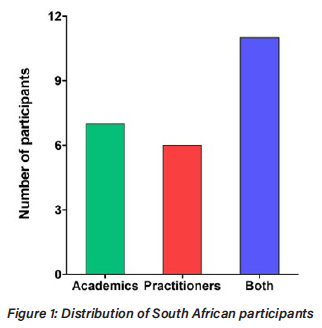
Figure 1 indicates that of the 24 participants who were included in the study, seven were from academia, six were practitioners and 11 were both.
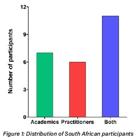
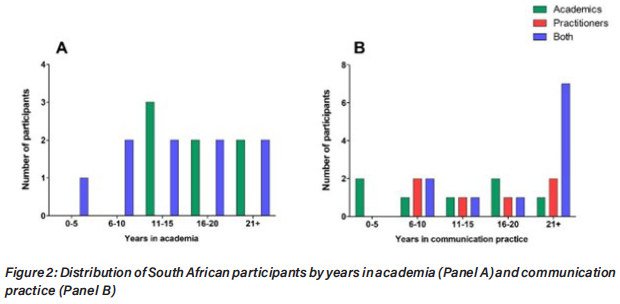
Figure 2 Panel A illustrates the distribution of participants based on their years in academia, categorised as academics, practitioners or those engaged in both roles, namely educators. The majority of participants with 11-15 years of experience were academics (n = 3). Participants engaged in both academia and practice (educators) were consistently represented across all experience levels, with a slight increase from 0-5 years (n = 1) to 6-10 years (n = 2) and then remaining constant at n = 2 for higher experience levels.
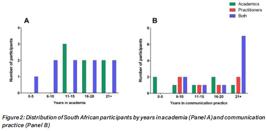
Figure 2 Panel B presents the distribution of participants based on their years in communication practice. Unlike academia, communication practice included contributions from academics, practitioners and individuals engaged in both roles across all experience levels. While individuals engaged in both roles were most prevalent in the 21+ years category (n = 7), practitioners were also well represented in the 6-10 years (n = 2) and 21+ years (n = 2) categories. Academics in communication practice followed a more even distribution, with representation across multiple experience levels but peaking at 16-20 years (n = 2).
Delphi rounds and data collection process
The study was structured into four iterative rounds. Responses were progressively refined through a combination of qualitative and quantitative techniques:
Round 1: Qualitative exploration
The first round involved an open-ended questionnaire designed to gather broad expert opinions on the current and future state of public relations in South Africa. Questions focused on the strategic role of public relations, stakeholder engagement, ethical challenges and the impact of technological advancements. Responses were collected via the Welphi platform, a web-based tool tailored for Delphi studies, which ensured secure and anonymous participation (Adi & Stoeckle, 2023). Thematic analysis was applied to identify key themes that emerged from qualitative inputs (Linneberg & Korsgaard, 2019).
Round 2: Refinement of themes
In the second round, panellists reviewed anonymised responses from Round 1 and were invited to refine their perspectives. This iterative process allowed for critical reflection and the identification of areas requiring further clarification. Participants could adjust their responses based on collective input, aligning with the Delphi method's objective of progressively enhancing consensus (De Bruin & Rosemann, 2007).
Round 3: Quantitative prioritisation
Based on the qualitative findings from the previous rounds, structured questions were developed using a five-point Likert scale. These questions aimed to quantify agreement levels regarding the key themes identified earlier. Aggregated rankings were used to determine the relative importance of identified factors. This ensured a robust prioritisation process (Nasa et al., 2021).
Round 4: Consensus and validation
The final round sought to validate findings by presenting refined statements and rankings derived from previous rounds. Consensus was defined as an agreement level of 75% or higher among participants, in line with established Delphi methodology (Dalkey & Helmer, 1963). Areas of divergence were documented to provide insight into ongoing debates in the field of public relations.
Data analysis and interpretation
Qualitative data were analysed through thematic coding to identify recurring patterns and conceptual relationships (Lee, 2020). Open coding was applied to participants' responses, enabling the extraction of core themes related to public relations roles, ethical considerations and social impact. Quantitative data from Rounds 3 and 4 were analysed using descriptive statistics, with mean scores and standard deviations calculated to assess levels of consensus (Rubin, 2021).
A critical component of the Delphi approach is the iterative engagement of participants, ensuring that evolving insights inform each subsequent phase (Engels & Kennedy, 2007). This process minimises bias while maintaining the validity and reliability of findings, which reinforces the study's methodological robustness (Sablatzky, 2022).
Trustworthiness and ethical considerations
Ensuring methodological rigour required adherence to credibility, dependability and confirmability principles (Guba & Lincoln, 1982). Credibility was upheld through expert panel diversity and iterative feedback loops, while confirmability was enhanced through independent coding verification. Ethical clearance was obtained from the University of Johannesburg and North-West University, ensuring compliance with research ethics standards (Adi & Stoeckle, 2023). Participants provided informed consent, and data confidentiality was maintained through secure electronic data collection.
Methodological contribution
This study contributes to public relations and communication research by demonstrating the efficacy of the Delphi method in exploring industry-specific trends. Unlike traditional survey methodologies, the iterative nature of Delphi allows for expert-driven insights that evolve over multiple rounds, leading to more refined conclusions (Dalkey & Helmer, 1963). The inclusion of South African public relations professionals adds contextual depth and highlights how global public relations trends intersect with local challenges and opportunities. In addition, the use of Welphi software facilitated real-time engagement and secure data management, showcasing the role of technology in enhancing qualitative research methodologies (Adi & Stoeckle, 2023).
By integrating qualitative and quantitative techniques, this study provides a replicable framework for future public relations research employing the Delphi methodology. The findings underscore the method's potential for strategic foresight in public relations education, practice and policymaking, offering a roadmap for future studies seeking to bridge the gap between theoretical and applied knowledge.
FINDINGS
The findings presented are on three key themes that support the research objectives, namely roles and practices of South African public relations practitioners, social value and social impact and, finally, public relations education for social impact and value.
Roles and practice of public relations in South Africa
During Rounds 1 and 2, several key observations emerged regarding the roles and purpose of public relations. Themes that overlapped from both rounds included the strategic importance of communication, stakeholder engagement and value creation. The lines were blurred between the different roles traditionally ascribed to public relations, corporate communication and marketing communication, with attention focused on the practice rather than on the designation or role. Considerable importance was attributed to integrating strategy into communication practices, with increasing recognition of its pivotal role in achieving strategic organisational goals.
The practice of communication as it applies to organisations is described by different terms in South Africa: corporate communication, communication management, marketing communication, and public relations. Strategic communication is a recognised term but rarely applied to describe an organisational function. i.e., I am still to see a company having a section/department called strategic communication. Public relations is a term that is still used by the government but is hardly used among big corporates. Public relations is, however, used to describe specialised services offered by communication and advertising agencies. Having said that, there seems a growing recognition among managers that communication is important to achieving strategic goals. However, that does not mean that communication strategy is seen as a key component of an organisational strategy. (Academic)
There was a focus on understanding and listening to stakeholder perspectives and needs, with organisations urged to align with stakeholder expectations.
In terms of non-profit organisations, I would like to think that the main purpose of communication practice is to engage with stakeholders to get them involved, advocacy and to see the needs of the beneficiaries that we are serving met. (Practitioner)
Communication practice mostly focuses on what is important to the organisation with little emphasis on what its stakeholders regard as relevant and important at a specific point in time. (Educator)
Even though many practitioners seem to understand that communication should benefit stakeholders, my observation and research indicate that especially government departments and smaller organisations, for reasons that should be investigated further, don't fully engage in finding out what stakeholder expectations are. Communication is used to present the organisational perspective or to present a particular image of the organisation. (Academic).
Simultaneously, organisations were urged to discern what is essential and relevant to be inclusive of diverse views, and not to merely pretend or whitewash stakeholder engagement.
Honestly, it depends on the type of organisation one comes from. For instance, for practitioners in South Africa in a government context, the term stakeholder is important. The rhetoric creates an impression that the engagements are stakeholder orientated. However, when one examines some of the approaches used in consultations about issues that affect communities, the consultations come across as rubber-stamping exercises where some of the critical stakeholders are not consulted. This results in white elephants (from structures to programmes with limited impact), wasted resources and hostile relations between the government and certain stakeholders. (Academic)
Regarding the perceived value of public relations, it seeks to offer both tangible and intangible benefits to the organisation and stakeholders. Participants addressed both the value and challenges associated with public relations, indicating an acknowledgement of its crucial yet intricate role, thus linking the practice to the complexities experienced in a VUCA environment.
Other themes that emerged from Round 1 were the role of public relations practice in crisis management and ethical communication. A pivotal role was assigned to public relations in the context of crisis management, emphasising its importance in navigating and mitigating crises for organisations. This underscored the strategic significance of public relations during turbulent times. A significant theme emerged concerning ethics in communication, signifying a notable recognition of the paramount importance of ethical considerations in the field. This theme reflected a conscientious approach to communication practices, acknowledging the ethical dimensions inherent in the discipline. This finding aligns with the 2024 Public Relations and Communication Association (PRCA) and African Public Relations Association (APRA) report, which revealed a clear distinction between individual and national ethical perceptions. While the majority of respondents stated that neither their personal ethics nor their organisation's ethics had been compromised in the past 12 months, they also indicated that their country's overall ethical standards had deteriorated (PRCA, 2024). This suggests that public relations practitioners prioritise professional and ethical conduct in their own practice, whereas the ethical lapses of politicians and certain government officials contribute to the broader ethical decline at a national level.
In the second round, responses delved deeper into the challenges related to the implementation of communication practices, providing a more nuanced understanding of practical obstacles. Highlighted trends included challenges in implementation, persuasive communication, alignment of messages and role distinction.
Challenges in implementation was a prominent theme, highlighting issues such as a lack of budget, support and a short-term focus that impacts communication practitioners in their efforts.
There is also some dichotomy between recognition of the importance of communication and communication practice. On the one hand, more organisations create communication positions at the top executive level; on the other hand, at the practice level, practitioners experience a lack of budget, lack of support for their initiatives, and a very instrumental and short-term approach to their task. (Academic)
These results indicate the prioritisation of communication and information dissemination as key responsibilities for public relations practitioners. A lack of resources and support, coupled with reactive and short-term actions, may contribute to the issue of strategic influence of public relations practice in South Africa. The need for alignment of messages was a prevalent theme, underscoring the importance of consistency in messaging, positioning and approach across various organisational functions.
The communication function should support engagement with stakeholders by other functions in the company or organisation. The comms staff would not typically be responsible for engagement but more for planned messaging, positioning, persuasion and disseminating information, whereas other functions would interact directly with stakeholders and build relationships. The communication sent out by the comms function should be aligned with the engagement that other functions embark on with stakeholders (in terms of messaging, approach, company position, etc.). (Practitioner)
Participants highlighted the importance of role distinction, noting that different organisational functions have distinct roles in communication, ranging from crafting messages to direct stakeholder interactions.
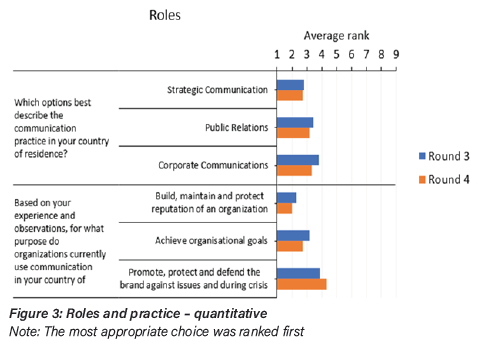
As illustrated in Figure 3, the majority of participants described communication as strategic communication, followed by public relations and then corporate communication.
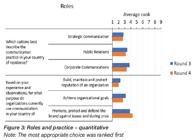
When asked about the current purpose of communication, the rankings primarily focused on building, maintaining and safeguarding the reputation of an organisation, followed by achieving organisational goals, and promoting, protecting and defending the brand against issues and during crises. The rankings remained consistent, although in Round 4, there was a lower average ranking.
Social value and impact
In answering the question "What is the value of PR?", the Global Future study aimed to explore the understanding public relations practitioners have of social impact and social value. Questions 14 to 17 focused on the definitions of social impact and social value: what the social value of PR is, the social impact of PR, what social value PR should provide to society and what social impact PR should provide to society. Question 20 asked how public relations should evaluate its social impact.
-
Definitions of social impact and social value
Participants commented during Rounds 1 and 2 that social impact refers to "the actions and interventions taken to change the status quo, [to make] real and meaningful progress".. Social impact further involves "the isolation and measuring of direct cause-and-effect relationships between a specific set of activities and outcomes through established research methodologies". Social value, conversely, is more subjective and relates to the positive benefits communities assign to activities they are involved in. Social value is thus dependent on the stakeholder's interpretation and therefore differs from social impact, as the research methodologies applied by public relations professionals may yield statistics and results aligned to the original strategy but may be different when the feedback and views of community stakeholders are taken into consideration. Social impact may thus have negative and/or positive results, while social value can be seen as the result of social impact interventions.
Current South African views of social value
Building on the definitions identified above, South African respondents identified stakeholder engagement, mutual understanding, representation, the promotion of values, and operational impact as the key constructs of social value. Related to the promotion of values and operational impact resulting from good public relations messages, the following quote provides some insights:
There are numerous social impacts as good PR/comms can help achieve desired behavioural changes that benefit the entire planet. For example, good PR/comms about climate change have made more people inclined to make environmentally sustainable choices when shopping or in their choice of transportation - this results in lower carbon emissions, which is better for global temperatures. (Educator)
South African participants view stakeholder engagement as essential, with both Rounds 1 and 2 emphasising the need for organisations to engage with and act in the best interest of their stakeholders, aiming to establish mutual understanding and represent the diverse nature of their stakeholders, including the voice of the "other".
Public relations helps our complex, pluralistic society to reach decisions and function more effectively by contributing to mutual understanding among groups and institutions. It serves to bring private and public policies into harmony. (Academic)
Expectations of the role of social impact in bringing about change
A key function of public relations in fostering social impact is its agenda-setting power. Public relations professionals play a crucial role in raising awareness and informing stakeholders about pressing societal issues while bridging the gap between organisations and communities through corporate social investment initiatives. In addition, public relations is well-positioned to facilitate meaningful dialogue between businesses and society, contributing to long-term sustainability. Given the complexity of these relationships, authenticity is essential to reducing mistrust and promoting transparency.
Social impact - it varies in terms of who says what to whom and with what effect. I feel the strategic communication industry works within a framework that limits the direction of society. The obsession with growth, for example, or the way promotional comms is driving consumer desires, or even voters' "hopes and fears". The impact of these could be negative, but in the end, PR is a profession funded by those who wish to communicate certain things to meet their objectives - hence we can only calculate the impact (positive or negative) of PR against the number of those that use the services and practices of strategic communication. (Practitioner)
Proposed measures for evaluation of the social impact of public relations in South Africa Some of the most insightful contributions from the Global Future study are the responses on measurement practices that South African participants proposed to determine social impact. Responses ranged from reflective practices involving personal evaluation to aligning organisational goals with those of stakeholders and communities. Participants also acknowledged existing instruments such as the AMEC model, balanced scorecards, psychological AI profiling and measurable communication objectives to assist in determining social impact. The need to actively seek stakeholder feedback (including sentiment analysis) within a specific context and in a holistic manner was an important principle that was highlighted. There was a general call made to develop a conceptual framework to measure social impact relevant to public relations activities.
Set clear objectives and measure impact in terms of the 3Ps: people (employees and all other stakeholders), planet (environmental impact and contribution) and profit (according to business objectives). (Educator)
Do research. Get the feedback from stakeholders and talk to the people who are being directly affected by the said impact. (Academic)
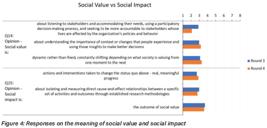
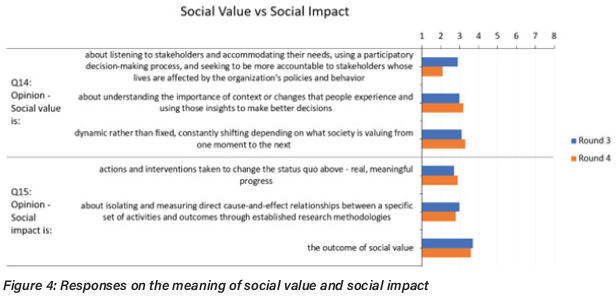
During Rounds 3 and 4, respondents presented their views on social value and social impact as similar in that they focused on the needs of the stakeholder, as opposed to the normative approach that regards the organisation as central to public relations activities. It is important to note that respondents acknowledged social impact as the direct "cause and effect" of public relations activities, while social value acknowledges the need to actively listen to stakeholders, identify the various changes they experienced and base decision making on these key insights.
Public relations education for social value and impact
The results categorised during the qualitative Rounds 1 and 2 focused on determining the optimal level and content of public relations and communication qualifications for maximising social impact and value. The primary findings emphasised the importance of incorporating both theory and practical elements in formal tertiary education and training. Round 2 specifically underscored the necessity for a well-rounded education programme, emphasising the significance of integrating theory with "intense practical experiences". Greater emphasis is placed on enhancing the social impact of public relations education through the effective integration of theory and practice.
In Rounds 1 and 2, both academics and practitioners indicated the importance of "practitioners understanding the value creation in all its tangible and intangible dimensions. All disciplines currently focus on value creation, and if public relations and communication can contribute to this debate in the organisation and in society, they could illustrate their value" This was reiterated in a statement that articulated the outcome of being "critical and open-minded thinkers". Understanding value creation would ensure that public relations practitioners understand not only their profession but also its contribution to society and the lives of multiple stakeholders. In the evolving landscape of public relations, a shift in focus from long-term communication strategies to the dynamic field of stakeholder relationship management is essential.
The theory and principles are taught, but what I believe is missing is how to manage stakeholders, managers and clients well enough to achieve communications objectives. Being able to influence the expectations and direction of the leaders is essential for productive and value-driven comms. (Academic)
The contemporary reality of the volatile, uncertain, complex and ambiguous (VUCA) world demands that public relations practitioners navigate communication processes efficiently and abandon rigid annual communication plans. Emphasising the cultivation of relationships with both internal and external stakeholders becomes paramount, enabling practitioners to identify and address issues related to social impact and organisational value.
Formal training and hands-on experiential learning, which incorporates theory and practical experiences, as well as real-life projects with organisations are crucial elements for public relations students. This approach exposes upcoming practitioners to various business and social challenges where effective communication plays a pivotal role in finding solutions.
My experience is that many (most) university lecturers in comms in my country don't have any (or much) experience of the corporate world. Academics in comms in my country have mostly only theoretical knowledge without practical experience and are therefore not able to expose students to the real issues in the discipline that they will have to deal with once their careers kick off. (Practitioner)
The potential negative influences of public relations are often linked to organisational management and culture (Sriramesh, 2007). Public relations and communication students need to be equipped with ethical values to withstand pressure from management and other functions (Zhang & Neill, 2023). Moreover, integrating modules on social value and impact into business qualifications, such as MBA curricula, is necessary (Barber & Venkatachalam, 2013). Chief executive officers (CEOs), future CEOs, and executives in MBA programmes need to be reminded of the organisation's social licence to operate, which could ensure a holistic understanding of role of public relations in organisational success.
Rounds 3 and 4 of the study aimed to provide a quantitative perspective on public relations and communication education. These rounds sought to determine the appropriate level at which public relations and communication should be taught to ensure their efficacy in achieving the desired social impact and value, which is integral to the future of public relations in South Africa. The credibility of the industry relies on its ability to demonstrate its influence in bringing about social change and meaningfully addressing social issues, which will ultimately influence organisations in the interconnected world. The findings underscored that an academic degree serves as the foundational point for public relations training in the country, and emphasised the necessity for continuous learning beyond this initial stage. Mentorship emerged as an additional crucial element to be incorporated into public relations training, and the significance of undergraduate-level public relations and communication qualifications was prominent. Beyond the question of the level at which public relations and communication should be taught, the study also shed light on the importance of the content included in these qualifications. According to the quantitative results, critical thinking, encompassing reflective practice, research, theories from diverse paradigms and disciplines, reasoning and argumentation emerged as central themes in public relations and communication training. Moreover, the findings highlighted the pivotal role of measurement and evaluation, incorporating data analytics. Notably, during quantitative Rounds 3 and 4 of the study, business management, covering project management, leadership, strategic thinking and proficiency in debate and negotiation techniques, stood out as central themes emphasised in public relations and communication training in South Africa.
Another aspect considered pertains to the target audience and stakeholders in public relations and communication training. The analyses revealed that public relations and communication training ought to cater to a diverse audience, including stakeholders in management and leadership, those within educational contexts, individuals aspiring to pursue careers in the field and the wider society. The educational approach should adopt an interdisciplinary framework, imparting universal skills that align with the social value and impact of public relations and communication training in South Africa.
SUMMARY OF FINDINGS
This article focused on three key themes relevant to public relations in South Africa, namely the role and practice of public relations, the social impact and value of public relations, and their influence on public relations education. It captures the perspectives of 24 South African public relations practitioners, public relations educators and academics who participated in the four rounds of a Delphi study titled "The Future of PR and Its Social Impact and Value"
Important findings on the roles and practice of South African public relations practitioners highlight the strategic importance of communication and that most practitioners find themselves in senior and strategic roles in organisations. There seems to be a discrepancy between these roles and the value that senior decision makers place on communicators in the organisation. This apparent contradiction - where senior communication practitioners are appointed while support remains insufficient - may suggest a symbolic commitment to communication rather than a fully integrated strategy. It is worth considering whether this reflects a form of "window-dressing" or whether senior roles are occupied by figures with limited influence, reinforcing the need for a deeper structural analysis of communication support within organisations. This observation also aligns with the views expressed by Steyn and Everett (2008) about the sense of value public relations offers to organisations. Stakeholder engagement holds a prominent position in public relations practice; however, there was a concern raised that institutions such as government departments are not always truthful in their stakeholder engagements. This finding raises concerns about whether this was related to the high regard for ethical and responsible communication reported by the participants. Persuasive communication and the dissemination of information as important functions (seen as a tangible benefit of public relations) are being influenced by changes in the media landscape and digital platforms together with a lack of resources and support.
Another focus area of this article was the views of participants on the social value and impact of public relations and communication. It asked the critical question of the value these roles and professions contribute to organisations and the society they operate in. The question of value involves more than the normal reporting on publicity generated for an organisation and/or client, often based on questionable measuring instruments such as Advertising Value Equivalency (AVE) instead of using research methodologies to determine the measurable impact of public relations activities on organisations and communities. The lack of measurement and evaluation practices by public relations practitioners was also highlighted by Landsberg Boshoff (2023). South African participants identified social value as interventions that enabled real social change, relating to the cause and effect of public relations activities. Social impact was also seen as the result of social value - listening to stakeholder needs as a dynamic, context-specific aspect of public relations and communication.
The third focus area of this article involved public relations education and its alignment to, among other aspects, the social impact and value of public relations. Landsberg Boshoff (2023) noted that the average age of respondents in the measurement and evaluation study was lower than in previous years. These respondents also practised less measuring and evaluation of their public relations activities, which is concerning in light of well-known claims of integrated theory and practice approaches in higher education public relations qualifications. Integrating theory into current public relations practices seems to still be a concern, prompting participants in this study to call for a more effective integration of theory and practice.
LIMITATIONSThe study used a relatively small sample size, with 24 participants per country in each round of the Delphi study. While this aligns with typical Delphi methodology, it may limit the generalisability of the findings to the broader South African public relations landscape. The purposive sampling method may introduce selection bias as participants were selected based on specific characteristics deemed relevant to the study, potentially overlooking certain perspectives within the field. Moreover, qualitative data analysis involves subjective interpretation during open coding. While efforts were made to ensure reliability through independent coding, the subjectivity in qualitative analysis poses a potential limitation. Finally, the study primarily focuses on the South African context, potentially limiting the generalisability of findings to other cultural or geographical settings. Public relations practices and their social impact may vary across different regions.
CONCLUSION AND RECOMMENDATIONS
This study offers valuable insights into the future of public relations and communication in South Africa, with a focus on practitioners' roles, social impact and educational needs. The research employed a Delphi methodology, engaging 24 South African experts across four iterative rounds to explore these critical areas. The findings revealed that South African public relations practitioners increasingly occupy senior strategic roles in organisations. However, a discrepancy exists between these elevated positions and the actual value and support given to communication functions at the operational level. This disconnect may suggest a symbolic rather than substantive commitment to strategic communication, highlighting the need for deeper structural analysis of communication support within organisations.
Stakeholder engagement emerged as a crucial aspect of public relations practice in South Africa. However, concerns were raised about the authenticity of these efforts, particularly in government institutions. This finding is particularly noteworthy when juxtaposed with the high regard for ethical and responsible communication reported by participants, indicating a potential gap between espoused values and actual practices.
The study underscores an evolving understanding of public relations' social impact and value among South African practitioners. Participants identified social value as interventions that enabled real social change, while social impact was seen as the measurable result of these activities. This nuanced perspective reflects a growing awareness of public relations' broader societal role beyond traditional organisational objectives. However, the research also highlighted a persistent lack of robust measurement and evaluation practices, echoing findings from previous studies in the South African context.
REFERENCES
LITERATURE REVIEW
- Adi, A. & Stoeckle, T. (2023). The future of PR/Comms and their social impact: Results of an international Delphi-method study. Quadriga University of Applied Sciences.
- Adi, A. (2022). The future of public relations. Unpublished notes. Berlin: Quadriga University of Applied Sciences.
-
Africa PR & Communications Report. (2023). Leveraging Strategic Communication for Africa's Growth. Africa PR & Communications Report. https://africaprreport.com/
» https://africaprreport.com/ - Barber, N.A. & Venkatachalam, V. (2013). Integrating social responsibility into business school undergraduate education: A student perspective. American Journal of Business Education, 6(3):385-396.
- Benecke, D.R. (2019). Social representation of PR activism: Perceptions of early career public relations professionals in South Africa. Doctoral thesis. Johannesburg: University of Johannesburg.
- Benecke, D.R; Muir, C; Porthen, D; Van Wyk, H & Du Plessis, N. (2021). The role of the Global Capability Framework within the strategic communication profession in an emerging post COVID-19 context: A South African perspective. ESSACHESS - Journal for Communication Studies, 14(27):137-159.
-
Callista, L. (2023). What to watch out for in Africa's growing PR potential. The PR Insider. Available from: https://curzonpr.com/theprinsider/what-to-watch-out-for-in-africas-growing-pr-potential.
» https://curzonpr.com/theprinsider/what-to-watch-out-for-in-africas-growing-pr-potential -
Campaign Collective. (2018)a. Definition of social impact of communications launched. Public Relations and Communications Association (PRCA). Available from: https://campaigncollective.org/2018/10/30/definition-of-social-impact-of-communications-launched/
» https://campaigncollective.org/2018/10/30/definition-of-social-impact-of-communications-launched/ -
Campaign Collective. (2018)b. Project to increase social impact of communications launched. Public Relations and Communications Association (PRCA). Available from: https://campaigncollective.org/2018/08/14/project-to-increase-social-impact-of-communications-launched/
» https://campaigncollective.org/2018/08/14/project-to-increase-social-impact-of-communications-launched/ - Commission on Public Relations Education (CPRE). (2023). Navigating change: recommendations for advancing undergraduate PR education. CPRE 50th Anniversary Report. Commission on Public Relations Education.
- Coombs, W.T & Holladay, S.J. (2013). It's not just PR: PR in society. 2nd ed. John Wiley & Sons, Inc.
- Dalkey, N.C. & Helmer O. (1963). An experimental application of the Delphi method to the use of experts, Management Science, 9(3):458-467.
-
De Bruin, T. & Rosemann, M. (2007). Using the Delphi Technique to identify BPM capability areas. ACIS 2007 Proceedings. Association for information systems. Available from: Using the Delphi Technique to Identify BPM Capability Areas (core.ac.uk)
» core.ac.uk - Dühring, L. (2015). Lost in translation? On the disciplinary status of public relations. Public Relations Inquiry, 4(1):5-23.
-
El Rafie, R. (2024). The evolution of public relations in Africa: A five-year retrospective. Africa.com. Available from: https://www.africa.com/the-evolution-of-public-relations-in-africa-a-five-year-retrospective-by-rania-el-rafie/
» https://www.africa.com/the-evolution-of-public-relations-in-africa-a-five-year-retrospective-by-rania-el-rafie/ - Engels, T.C.E & Kennedy, H.P. (2007). Enhancing a Delphi study on family-focused prevention. Technological Forecasting & Social Change, 74:433-451.
- Fawkes, J. (2018). The evolution of public relations research - an overview. Communication and Society, 31(4): 59-171.
- Gregory, A. (2004). Public relations in practice. 2nd ed. Kogan Page. VA.
-
Gregory, A. (2023). Some thoughts on the challenges of measurement and evaluation (M&E) in the field of public relations. Organicom, Revista Brasileira de Comunicação Organizacional e Relações Públicas, 20(42):104-107. Available from: https://doi.org/10.11606/issn.2238-2593.organicom.2023.210946
» https://doi.org/10.11606/issn.2238-2593.organicom.2023.210946 -
Guba, E.G. & Lincoln, Y.S. (1982). Epistemological and methodological bases of naturalistic inquiry. Eurasian Chemico-Technological Journal, 30(4):233-252. Available from: https://doi.org/10.1007/BF02765185
» https://doi.org/10.1007/BF02765185 - Hagelstein, J., Einwiller, S. & Zerfass, A. (2021). The ethical dimension of public relations in Europe: Digital channels, moral challenges, resources, and training. Public Relations Review, 47(4).
- Kent, M.L. & Taylor, M. (2002). Toward a dialogic theory of public relations. Public Relations Review, 28 (1):21-37.
-
Landsberg Boshoff, T. (2023). SA PR Measurement Landscape Report 2023. Johannesburg: PRISA. https://ornico.co/tag/pr-landscape-report/
» https://ornico.co/tag/pr-landscape-report/ -
Lee, K. (2020). A phenomenological exploration of the student experience of online PhD studies. International Journal of Doctoral Students, 15:575-593. Available from: https://doi.org/10.28945/4645
» https://doi.org/10.28945/4645 - Linneberg, M.S. & Korsgaard, S. (2019). Coding qualitative data: A synthesis guiding the novice. Qualitative research. Available from: DOI: 10.1108/QRJ-12-2018-0012
- Meyer, I. (2017). A metamodern stakeholder relationship management model for non-profit organisations. Doctoral thesis. Pretoria: University of South Africa.
- Meyer, I. & Barker, R. (2020). A metamodern model for managing stakeholder relationships in non-profit organisations. Communicare, 39(1):56-79.
- Nasa, P., Jain, R. & Juneja, D. (2021). Delphi methodology in healthcare research: How to decide its appropriateness. World Journal of Methodology, 11(4):116-129. Available from: Delphi methodology in healthcare research: How to decide its appropriateness - PMC (nih.gov)
- Okoli, C. & Pawlowski, S.D. (2004). The Delphi method as a research tool: An example, design considerations and applications. Information & Management, 42:15-29.
- Pieczka, M. (2019). Looking back and going forward: The concept of the public in public relations theory. Public Relations Inquiry, 8(3):225-244.
- Public Relations and Communications Association (PRCA) Africa and African Public Relations Association (APRA). (2024). 2024 PRCA Africa APRA Report. Available at: PRCA newsroom [Accessed 1 April 2025].
- Rensburg, R. & Cant, M. (2009). Public relations: African rerspectives. 2nd ed. Sandton, South Africa: Heinemann.
-
Rubin, A.T. (2021). Rocking qualitative social science: An irreverent guide to rigorous research. Stanford: Stanford University Press. Available from: https://books.google.co.uk/books?id=BZE2EAAAQBAJ
» https://books.google.co.uk/books?id=BZE2EAAAQBAJ -
Sablatzky, T. (2022). Delphi method. Hypothesis, 34. Available from: https://doi.org/10.18060/26224
» https://doi.org/10.18060/26224 - Sriramesh, K. (2007). The relationship between culture and public relations. In E.L. Toth (ed.). The future of excellence in public relations and communication management: challenges for the next generation. Mahwah, NJ: Lawrence Erlbaum Associates, 507-526.
-
Steyn, B. & Everett, T. (2008). International comparative study indicates different PR roles in South Africa and the UK, using the same measuring instrument. Tripodos, 24:95-105. Available from: https://tripodos.com/index.php/Facultat_Comunicacio_
» https://tripodos.com/index.php/Facultat_Comunicacio_ - Suárez-Monsalve, A.-M. (2022). Evolution of the public relations profession in Latin America: A brief review of the development of public relations in Latin American countries. Public Relations Inquiry, 11(2):257-274.
-
Trialogue. Business in Society Handbook. (2023). 26th ed. https://trialogue.co.za/wp-content/uploads/2023/11/Trialogue-Business-in-Society-Handbook-2023.pdf.
» https://trialogue.co.za/wp-content/uploads/2023/11/Trialogue-Business-in-Society-Handbook-2023.pdf - Van Heerden, G. & Rensburg, R. (2005). Public relations roles empirically verified among public relations practitioners in Africa. Communicare: Journal for Communication Studies in Africa, 24(1):69-88.
- Verwey, S. (2015). Paradigms, perspectives and practices of public relations and communication: Implications for "disciplined imagination" in South African scholarship. Communitas, 20:1-25.
- Wehmeier, S. (2009). Out of the fog and into the future. Directions of public relations theory building, research, and practice - a Delphi study. Canadian Journal of Communication, 34(2):265-282.
- Zhang, X. A. & Neill, M.S. (2023). Incorporating virtue ethics in public relations ethics education: Lessons from a standalone public relations ethics course. Journal of Public Relations Education, 9(2):1-24.
- Zerfass, A, Verčič, D. & Wiesenberg, M. (2016). The dawn of a new golden age for media relations? How PR professionals interact with the mass media and use new collaboration practices. Public Relations Review, 42(4):499-508.
Accepted March 2025