TV Alcohol Advertising as Countercultural: Disrupting Conservative (African) Cultural Ideologies
Abstract
This article explores the connection between exposure to television advertisements about alcohol and the experiences, social and faith-based values, and cultural backgrounds of young South Africans residing in the Elim region of the Limpopo province. The research relies on two complementary mixed-methods datasets, namely quantitative (questionnaire surveys) and qualitative (semi-structured in-depth interviews) data, obtained from the leading author's unpublished master's study on the media's influence on young people's interpretations of television alcohol advertisements in the Elim region, Limpopo province. Guided by Stuart Hall's encoding/decoding model, the study engages counterculture theory and complementary behavioural frameworks to interrogate how audiences interpret, resist or internalise alcohol advertising messages. The research uncovers complex patterns of meaning-making that move beyond conventional notions of passive media consumption. Findings reveal that the Elim-based young people's readings of alcohol advertisements are interestingly shaped by deeply embedded cultural norms and moral commitments linked to their sociocultural orientations, resulting in interpretations that both align with and subvert dominant cultural ideologies. The study introduces the concept of "silent resistance" a subtle, underappreciated form of agency in which audiences symbolically neutralise advertising's persuasive power through disengagement or deliberate indifference rather than open confrontation. Ultimately, the study contributes to scholarship in audience reception, advertising and cultural studies, revealing a peculiar countercultural dynamic in respondents' interpretations of alcohol advertising.
Alcohol advertising; decoding; Elim Limpopo; multidimensional counterculture; reception; television audiences
INTRODUCTION
This article explores how the exposure of youth in Elim, Limpopo province, to television advertisements about alcohol products connects with their everyday experiences, their sociocultural backgrounds and their decisions to consume or not consume alcohol products. This forms the key objective of this article which asks, how do sociocultural factors influence the interpretation of alcohol advertising among television audiences in Elim, Limpopo province? An investigation into the influence of television-based alcohol advertising on young people can raise obvious and contentious questions about exposure and consumption: What is the frequency of television-based alcohol advertisement exposure to young people? What is the impact of said frequency of exposure on consumption decisions and habits? These questions pose a further one: how do social factors and viewers' lived experiences affect the decoding of messages in alcohol advertisements? The latter question, in particular, is important when the investigation is approached through the theoretical lens of the encoding/decoding model, especially when the investigation deals with indigenous groups in (South) Africa who belong to diverse cultures that have variously integrated alcohol as part of their lives and lifestyles.
Previous studies have looked at how audiences receive or interpret media messages and many of them have suggested that a dominant culture (and said culture's ideological foundations) has a considerable influence on audiences. As such, people's dominant cultural ideologies can be used as interpretive resources during the meaning-making process in terms of media messages, including messages emanating from television advertisements. Within this scholarship, there have been differences in the intellectual interpretation of this phenomenon between, for instance, David Morley (1980) and Sujeong Kim (2004). These scholars of audience reception studies have made some, but arguably not robust, findings on specifically the countercultural and disruptive nature of media texts. Even so, these scholars have helpfully highlighted that media texts do bear an influence on viewers' interpretations by shaping, "reinforcing" or "conflicting" with viewers' sociocultural reference frames and positions. This means, in other words, audiences can, and do, take a dominant or agreeable position when a message from a media text "reinforces" their social position and will take an oppositional or disagreeable position when said message "conflicts" with their social position.
To grapple with the findings of this article, we considered insights from disciplines beyond communication and media studies, such as consumer behaviour and international marketing studies. We find that the idea of culture and contradiction, which develops during audiences' interactions with media texts, has overflown into these disciplines. Research in consumer behaviour and international marketing suggests that consumers can, and have often, contradicted (their) cultural values in the pursuit of consuming brands or products that these consumers deem desirable. Some of the consumer behaviour literature, for example, Gelbrich et al.'s work (2016), has concentrated more on buying habits in Western societies and refers to very specific individuals with particular traits (uniqueness). There have also been some transnational studies conducted across Asian and African countries that have looked at how the incorporation of local culture into the identities of global brands improves international brands' global appeal (Cawood & Du Toit, 2008; He & Wang, 2018; Nie & Wang, 2019; Mekonnen & Angelopulo, 2022). This phenomenon is variously theorised as "glocalisation" Most of these international marketing studies aim to make comparisons between foreign and local cultures and have mostly found that some audiences find advertisements unappealing even when said advertisements incorporate local culture elements (De Mooij, 2021; Zhou & Belk, 2004). In such instances, we may note a possible disconnect and ineffectiveness with regard to brands' glocalisation efforts.
Having looked at these scholarly research areas - reception studies, consumer behaviour studies and international marketing studies - we find that there is a considerable gap. Much of this important work has not satisfactorily looked at television advertisements about alcohol products as a capable trigger or cause for the disruption of viewers' conservative African cultural ideologies and expectations about alcohol consumption. In essence, this article approaches alcohol advertisements as countercultural texts that are potentially disruptive in relation to the dominant culture(s) of the study participants when said participants decode these advertisements. We will show that a peculiar outcome - one that contradicts dominant culture during the interpretation of television advertisements about alcohol - is triggered by advertisements that disrupt certain expectations and cultural ideologies of the participating audiences. Hence, we seek to answer the following research question: How do sociocultural factors influence the interpretation of alcohol advertising among television audiences in Elim, Limpopo province?
In answering this research question, this study makes a contribution to the literature by enriching reception studies (which generally proclaim that viewers use dominant culture or social positions as resources for interpretation), consumer behaviour research (which already presents nonconforming consumer behaviour) and international marketing research (which reveals that international brands infused with local culture often have limited appeal). We show through complementary mixed-methods results that the dominant ideologies anchoring the predominant cultures of the research participants can be contradicted and that audiences do not always conform to the ideologies from the dominant culture when decoding advertisements.
UNDERSTANDING COUNTERCULTURE: A BRIEF INTRODUCTORY OVERVIEW
In order to understand the arguments that will ensue in this article, it is important to understand the term counterculture because it is one of the concepts the study uses to understand audience decodings of alcohol advertisements. In this article, we use the term "counterculture" to refer to the deliberate construction of alternative systems of meaning and values that actively contest and seek to transform dominant cultural norms (Roszak, 1969; Hebdige, 1979; Goffman & Joy, 2004). The motivations behind the creation of countercultures are often lifestyle related in that members of a counterculture may hold the view that many of the lifestyle routines and worldviews of the mainstream culture are problematic or regressive (Drew 2023). Given South African indigenous groups' rich history and current uses of alcohol, we will carefully trace this history to highlight alcohol use in African culture, its consumption and its significance. This enables the article to determine any value conflicts, variability and rejection or disruption of the dominant culture by the individuals participating in this study. In order to explain any value conflicts, rejections or disruptions that arise, we partly borrow Homi Bhabha's (1994) postcolonial studies concept of "hybridity" as a tool to see these complexities.
It is important, for a study such as this one, to acknowledge that media audiences make three readings - or align to three kinds of positions of interpretation - when they are confronted with advertisements: dominant position, negotiated position and oppositional position (Hall, 1980). According to Baker (2016), the dominant position is how the producer of the media text wants the audience to perceive the text, and the communication process is presumptively symmetrical. Audience members will adopt this stance if the messages are clear, if the audience members interpreting the text are of the same age and culture, if the message has an easy-to-follow storyline and if the text addresses subjects who are important to the audience.
Procter (2004) describes the negotiated position as one that is characterised by a compromise between the dominant and oppositional readings, in which the audience member accepts some of the producer 's perspectives in relation to the featured subject matter but also has their own. Procter, furthermore, describes the oppositional position as one that can be noted when audiences reject the connotations of the media producer's message even though they may still comprehend the denotations. It is from these three readings proposed by Stuart Hall (1980) that the concept of counterculture is implicated in this article.
The next section provides a literature review that will, firstly, highlight the countercultural potential of some advertisements; then briefly unpack the use of alcohol across African contexts and also touch on the symbolic nature of alcohol in some African cultures. Thereafter, the article offers some brief notes on methodology to outline the mixed-methods approach that was relied on for the collection of data, before an eventual discussion of the results is offered.
Countercultural advertisements and dominant cultures as resources for audiences' understanding of media text
Alcohol advertising frequently promotes ideals associated with modernity, social mobility, cosmopolitan lifestyles and other such aspirational elements (Mager 2010). These advertisements depict urban spaces, glamorous attire and, depending on whom you ask, Westernised celebrations, which may conflict with non-Western audiences' (particularly those living in rural settings such as Elim) lived realities and cultural norms around communal drinking practices, such as traditional beer gatherings or stokvel-based consumption (Setlalentoa et al., 2010). This gap between aspirational images in present-day television alcohol advertisements and local, non-Western cultural values makes it possible for countercultural readings to happen. These readings are not only instinctual; they constitute deliberate acts of resistance, signifying a conscious decision to reject or undermine the prevailing ideas inherent in some advertising content (Goffman & Joy, 2004). By intentionally prioritising community drinking rituals over the individualistic attitude depicted in many alcohol commercials, rural audiences affirm cultural authenticity as a competing value system. Instead of completely adopting urban consumption patterns, they value traditions as culturally significant and socially relevant, viewing them as preferable to Western norms promoted in alcohol marketing.
Expanding on the concept of conscious resistance by audiences, Homi Bhabha's (1994) concept of cultural hybridity offers this article critical lenses to comprehend the historical context in which African audiences interact with alcohol advertising messages. While counterculture emphasises opposition to dominant discourses, hybridity describes how audiences simultaneously incorporate and transform global media symbols. Hybridity emerges when global advertising discourses, such as those for premium beers or spirits, are blended with indigenous cultural practices and identities, producing new cultural forms (Kraidy, 2005). Alcohol brands sold in South Africa, including Castle and Heineken, frequently tailor their advertisements by integrating African music, languages and traditional symbols with Western concepts of elegance and success (Mager, et al., 2012). Audiences interpret these hybrid messages selectively and consciously, choosing to emphasise aspects that reinforce their communal values. This illustrates that hybridity is not simply a byproduct of marketing strategies but also a result of intentional audience agency in meaning-making processes (Goffman & Joy, 2004).
The convergence of "counterculture" and "cultural hybridity" provides this article with an integrated perspective on rural South African interpretations of alcohol advertising. The idea of counterculture helps us identify people's efforts to actively resist prevailing consumerist ideals about alcohol consumption, whereas the notion of hybridity offers us the language to demonstrate how global alcohol branding patterns may be creatively combined with local cultural codes in contexts where people actively resist prevailing consumerist ideals about alcohol consumption. Therefore, given this study's rural contextual setting, this converged outlook is important to aid the article in showing that the rural South African study participants do not just accept or reject alcohol advertisements; they negotiate them by adapting to their culture, resisting symbols and expressing their mixed identities (Bhabha, 1994; Goffman & Joy, 2004; Kraidy, 2005).
The use of alcohol in African culture
In African communities, objects, food, beverages and certain fabrics carry symbolic and spiritual importance, especially when employed in communal rituals (Barber, 1997; Meyer et al., 2012). As such, when advertisements feature these elements, audiences may actively evaluate said advertisements' relatability based on their ritual importance and emphasis of community norms. According to O'Donnell (2017:37), television programming, including advertisements, serve as a reflection of many aspects of a society, including its beliefs, customs, practices, as well as its fads, interests and trends. Consequently, the audience's consciousness and understanding of their own culture grants them discernment into the messages presented in (alcohol) advertisements on television (Ross, 2019:17). According to Stuart Hall (in Procter, 2004:64), viewers possess interpretive resources aided by their own cultures. The population of interest for this study - young people in rural Elim - are anticipated to similarly use their own interpretive resources to derive significance from television adverts they are exposed to. In this case, the television adverts relate to alcoholic brands and consumption.
In many African tribes, alcohol use is socially sewn into cultural practices and is an intrinsic part of African people's cultural heritage (Usoro et al., 2018:10). Numerous African societies attach great importance to ritual practices that variously incorporate the use of alcohol (Murimbika, 2006:21). A series of studies conducted across the southern African regions of South Africa, Zimbabwe, Kenya, Botswana, Uganda and Lesotho proved that many African cultural activities harbour causal factors for alcohol use, and that people use alcohol in conformity with societal norms and values (Akong'a, 1987; Babane & Chauke, 2015; Byaruhanga, 1982:78; Frazer, 1942; Haruna, 1997; Huffman, 2012:137; Korster, 2011; Leeuw, 1987; Makuvaza, 2008; Matsuhira, 2013; Murimbika, 2006; Phibion, 2013; Prins, 1990; Rafapa, 2008; Schapera, 1930; Semenya, 2013; Usoro et al., 2018:150; Zvingowanisei & Chirongoma, 2024).
Literature has shown that the use of alcohol across African traditional systems is prehistoric. For instance, archaeological evidence by Huffman (2012:117) reveals that there is evidence of prehistoric rituals and behaviours involving alcohol in pre-colonial societies of southern Africa, including those of Vhavenda, Vatsonga, Nguni, Sotho and Shona. Huffman (2012:137) further notes that these rituals at the time were used in times of severe drought and for agricultural purposes. However, the ceremonies varied depending on who performed them, where and when they occurred and for what reason(s) (Ombati, 2017:86). Therefore, the use of alcohol in traditional rites in south(ern) Africa differs depending on how it is performed by different tribes, although the ceremonies might look more or less the same at face value (Brown, 1999:225).
As this study analyses how television audiences in the region of Elim interpret television messages about alcohol, it is important to understand the importance of alcohol use in this community, which is mostly populated by Vhavenda and Vatsonga tribes. This is important because an understanding of alcohol's sociocultural uses or practices in this region sheds light on how audiences from there take certain stances during the decoding of media messages about alcohol.
To understand the Vhavenda tribe and alcohol use, this study reviewed the work of Murimbika (2006), who reveals that alcohol is a key medium to communicate with the ancestors; this was especially prevalent during the times when Chiefs and Kings held all the responsibility in their societies (Murimbika, 2006:56). After harvest and prior to the beginning of the new farming season, the Vhavenda practise a number of alcohol-centric rites to honour their ancestors. To honour the royal ancestors, the royal family conducts the most sacred ritual, known as the "thevhula" (thanksgiving ceremony). This is one of the most complex and revered public ceremonies in Venda, and beer is central to this function as it is used as a medium to communicate with the ancestors (Murimbika, 2006:57). The Xitsonga-speaking tribe performs the rainmaking ceremony (nkelekele) to manage drought; this is the ritual they usually practise when there is a prolonged time of drought. Alcoholic beer has always been part of this ritual (Babane & Chauke, 2015:108). Another tribe that uses beer for rainmaking rituals in the Limpopo province of South Africa is the Pedi tribe (Murimbika, 2006:41).
The symbolic nature of alcohol in African culture
The symbolic image of alcohol, or the process of brewing it, is important to African people (Ainslie, 2020:349). The amount of time and consideration given to choosing the right bottle for a ritual during weddings or the pouring of libation or the fine grain to use during the beer-making process for rainmaking events shows how symbolic alcohol is (Ainslie, 2020:350). For example, to show the symbolic power of alcohol for African people during the brewing of the "mpambo" beer for the "thevhula" ritual, Vhavenda ritual leaders ensure that the beer is prepared by pre-pubescent girls and elderly women, and that a special sorghum from the royal granary is selected so that the beer becomes whitish. When the "mpambo" beer is whitish, it is seen as a symbol of the ancestors' fertility because the whitish colour is symbolically linked to semen and fertility (Mikovha, 2002:56; Murimbika, 2006:159). Besides just being consumed, alcohol evidently symbolises many things in African traditions.
Consider, for instance, the use of brandy in Black South African ethnic groups' wedding ceremonies (Ainslie, 2020:344). According to Brown (1999:228), the terms lobola (isiZulu and isiXhosa), mahadi (Sesotho), lovola (Xitsonga) and mahadzi (Tshivenda) are all employed to describe the concept of bride price. This ceremony involves a negotiation between the families of the bride and groom. The degree of complexity of such ceremonies may vary by location, tribe, clan and particular family; nonetheless, the ritual essentially consists of seven phases, each of which is accompanied with a bottle of brandy. In this procedure, brandy is produced as a key mediating element. Some may be consumed, and some may be offered to the ancestors by being poured onto the ground, but the significance lies mostly in the brandy anchoring the process of gift exchange rather than encouraging needless consumption thereof (Ainslie, 2020:345).
Bearing in mind the symbolic nature of alcohol and alcoholic brands in African cultures, this study sought to find out whether television advertisements by alcohol brands have an appeal to young people in Elim who are significantly associated with the Vhavenda, Vhatsonga and, to a small degree, the Bapedi/ Batswana cultural groups in the region, and to evaluate the nature of the interpretations these young people make of the alcohol advertisements they are exposed to on television.
METHODOLOGY
This study employed a mixed-methods approach to examine media influence on the perceptions of Elim-based people about, and engagements with, alcohol based on these people's diverse cultural backgrounds. In the first phase, a questionnaire, developed from existing literature and pilot tested, was administered to 600 respondents in Elim, Limpopo, using a two-stage random sampling method based on a household sampling frame. Households were systematically selected, and eligible participants, young people aged 18-35, were identified within each dwelling. Trained research assistants distributed the questionnaires to collect data on exposure to television alcohol advertising and alcohol consumption patterns and other related behaviours.
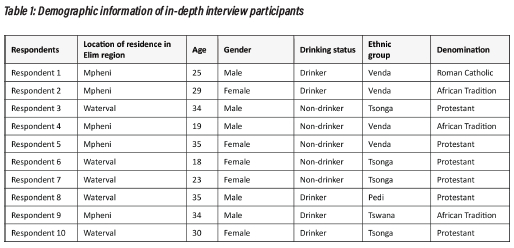
In the second phase, 10 young participants aged 18-35 (five women and five men) were purposively selected for in-depth interviews to explore their perceptions about alcohol advertising and its influence on consumption decisions. This study partially employed the snowballing strategy to recruit interview participants by soliciting name recommendations from influential community leaders. A preliminary brainstorming session was conducted with local informants, including civic organisations, to aid us in compiling a list of individuals appropriately qualified for the study. The informants did not participate as respondents in the actual in-depth interview sessions of the research. The maximum variation technique provided the majority of community members with the opportunity of inclusion in the sample, as it was derived from several informants who were requested to recommend individuals with particular traits. These traits included age, gender, educational background, occupation, socio-economic status and drinking status. Efforts were also made to include participants from different residential areas within the community and to represent various levels of exposure to alcohol advertising and consumption patterns.
The insights from the interviews were key to the study in making inferences about whether the media have the "power" to influence its audience in the reception of messages or whether the participating audiences have interpretive autonomy, given their diverse sociocultural and socio-ideological values and beliefs. Further to that, these insights were crucial in helping trace elements of counterculture from the participating interviewees. Given the widespread use of alcohol for drinking and ritual-aligned usage by residents across all regions of Elim, we included both drinkers and non-drinkers in the study. This helped to explore countercultural or socialisation dynamics, such as how upbringing and cultural or religious norms lead to (non)-drinking. Table 1 offers a description of all the interview participants.
This study's sample size of 10 in-depth interviewees is substantiated by qualitative research principles. While literature suggests a wide range of adequate sample sizes, for example, 5-50 interviews (Morse, 2000; Zucker, 2002), the key metric is thematic saturation, the point where new data no longer yields new insights, which is often achieved with 6-12 interviews (Guest et al., 2006). This standard is supported by Creswell (2013) and Patton (2015). Dworkin (2012) emphasises that qualitative research prioritises in-depth understanding over generalisability, and the smaller sample was intended to complement the 600 quantitative questionnaires to enrich the data quality.
For a maximum variation (maximum variety) sample, the study ensured that selected participants differed across key characteristics relevant to the study such as age, gender, education level and drinking status. The researcher tried to include all extremes in the population. For example, a young person who drinks alcohol every day and another young person who does not drink alcohol at all. Consent was secured from all gate-keepers prior to data collection. Practical efforts of participant recruitment involved distributing posters with study details in prominent locations frequented by potential participants, such as supermarkets, taverns and churches, which facilitated a smoother data collection process for both quantitative and qualitative methods.
The quantitative data from the survey questionnaires were entered into a Microsoft Excel sheet and then transferred to and analysed using the Statistical Package for the Social Sciences (SPSS) by means of descriptive and inferential statistics. Qualitative data that were collected through in-depth interviews with 10 participants were transcribed, analysed, summarised and organised into thematic categories and subcategories. The qualitative data were analysed using thematic analysis (Braun & Clarke, 2006), whereby the statements of participants were identified with codes in order to describe the content and discourses emerging from them. Then, the researcher searched for themes in the codes, defining and naming them. The study used an inductive thematic analysis approach to code the data, which means the themes were strongly linked to the data since they emerged from it. The researchers went into analysis without an idea of what themes would emerge and thus allowed themes to be determined by the data (Braun & Clarke, 2006; Caulfield, 2022; Nowell et al., 2017).
The quantitative data were analysed using Pearson's chi-square test of independence, which is a non-parametric statistical measure widely used in communication research to examine associations between categorical variables (Riffe et al., 2019). The chi-square is established in communication studies for analysing audience segmentation (Potter, 2019), media effects (Neuendorf, 2017; Sparks, 2020) and campaign efficacy (O'Keefe, 2022), which ensures methodological consistency with prior work. In this study, it was used to investigate the relationship between independent variables (for example, media exposure) and dependent variables (for example, audience perceptions about gender roles). The p-value indicates whether the outcomes of the test, such as the chi-square, are attributable to random chance or possess substantive significance. A little p-value (often <0.05) indicates that the results are improbable to be due to chance, suggesting that they likely represent a genuine association. A large p-value (>0.05) indicates that the results may be coincidental, suggesting a lack of substantial evidence for a correlation.
The qualitative data were analysed thematically, with key themes identified through systematic coding of interview transcripts.
RESULTS AND DISCUSSION
This section presents the quantitative and qualitative findings and their interpretations. First, key quantitative results are reported, focusing on alcohol consumption statuses, perceptions beyond intoxication, views linked to religious affiliations and access to advertisements. Second, qualitative interpretations delve into how youth in Elim understand these advertisements in relation to their values. The research integrates both data strands thematically, following narrative integration approaches to reveal how qualitative findings support and elaborate on quantitative data.
Demographic characteristics of the sample
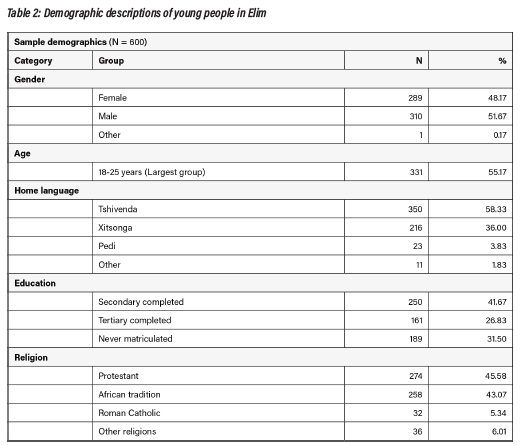
The sample consisted of 600 young people from Elim who completed a survey, comprising 51.67% male respondents, 48.17% female respondents and 0.17% who identified as other. The majority of respondents were aged 18-25 years (n = 331; 55.17%). In terms of home language, most spoke Tshivenda (58.33%), followed by Xitsonga (36.00%), Pedi (3.83%) and other languages (1.83%). Regarding education, 41.67% had completed secondary schooling, 26.83% tertiary education and 31.50% had not matriculated. Most respondents identified as Protestant (45.58%), followed by African Traditional Religion (43.07%), Roman Catholic (5.34%) and other religions (6.01%).
Television access, exposure to advertising and alcohol consumption
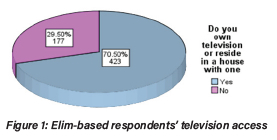
Figure 1 shows that 423 respondents (70.5%) from Elim had access to television, which might expose them to alcohol advertisements, while 177 respondents (29.5%) did not have access. On the whole, a significant majority (70.5%) of the respondents had access to television, rendering them suitably positioned to be constantly exposed to alcohol advertising content that may have had some influence on these individuals' interpretations of said alcohol advertising, and their alcohol consumption or non-consumption choices. Of the respondents with no television set in their home, 29.5% of respondents had presumably encountered a television set outside of their own home - on which they had been exposed to alcohol advertising content - and were thus still relevant respondents in this study.
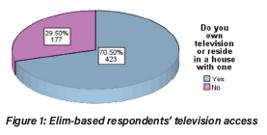
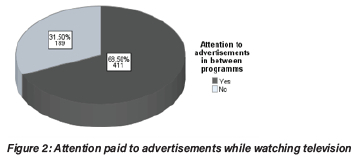
Figure 2 highlights respondents' interest in television advertisements, with all 600 having responded to the question about whether they paid attention to advertisements while watching television. The data show that the participating Elim-based young people were more likely to pay attention to advertisements between television programmes, given that 68.5% indicated that they paid attention to adverts between the programmes, while 31.5% indicated that they did not. These results reveal that television advertisements enjoy a notably captive audience when it comes to young people in Elim.
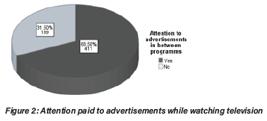
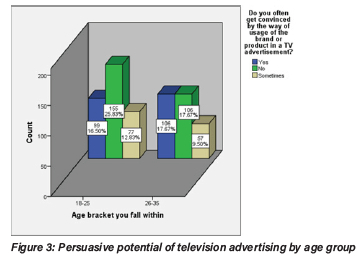
Figure 3 is a multi-variable clustered chart that provides an age group comparative overview of the persuasive potential of television advertising in the context of the Elim-based respondents. When queried about whether the advertisements they had come across on television persuaded them to use a brand or product, respondents between 18 and 25 years appeared less likely to be persuaded, with 25.83% stating no persuasion effect. That notwithstanding, it is important to note that the combination of respondents in this age group who stated that they were either often persuaded (16.5%) or sometimes persuaded (12.83%) to use a brand or product they had encountered through television advertisements, is notably higher (29.33%) than the 25.83% of respondents who stated no persuasion effect.
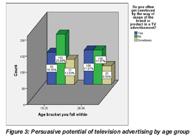
In terms of respondents aged between 26 and 35, 27.17% of them were often or sometimes persuaded to use a brand or product they had encountered through television advertisements, whereas 17.67% of them stated they had not been persuaded. Overall, it is evident that respondents on the low end (18-25 years) and the high end (26-35) of the youth spectrum in Elim were likely to be persuaded by television advertising as 56.5% of them stated that they were often or sometimes persuaded to use a brand or product they had encountered through television advertisements.
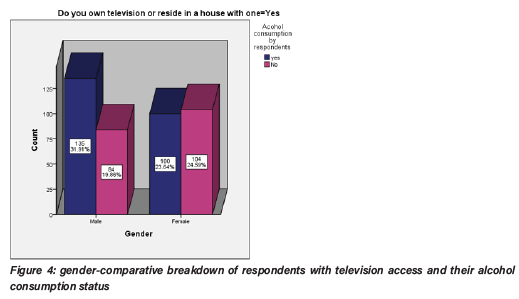
Figure 4 is an inferential multiple clustered chart that provides a gender-comparative report of the number of respondents who own (or have access to) a television and what their alcohol drinking statuses were at the time of the study. Of the 423 (70.5%) respondents with access to a television, a total of 135 (31.91%) male respondents were alcohol consumers, whereas 84 (19.86%) did not consume alcohol. A total of 100 (23.64%) female respondents were alcohol consumers, whereas 104 (24.59%) were not.
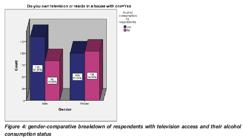
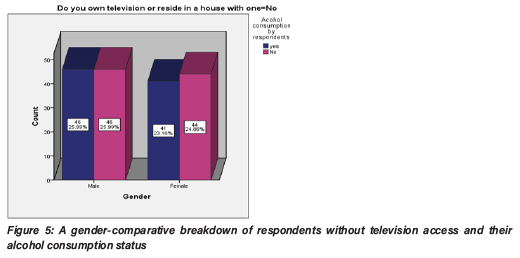
Figure 5 is an inferential multiple clustered chart that provides a gender-comparative report of the number of respondents who do not own (or have access to) a television and what their alcohol drinking statuses were at the time of this study. Of the 177 (29.5%) respondents without access to a television, a total of 46 (25.99%) male respondents were alcohol consumers, whereas 46 (25.99%) did not consume alcohol. A total of 41 (23.16%) female respondents were alcohol consumers, whereas 44 (24.86%) were not. It appears that, similar to households with television access, male respondents in households without television access were more likely to be alcohol consumers than female respondents. Important to note, though, is that the statistical difference of 1.8% - in terms of the gender gap between male drinkers of alcohol (25.99%) and female drinkers of alcohol (23.16%) in households without television access - is not significant.
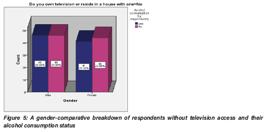
When the variables of the two multi-variable clustered graphs (Figure 4 and Figure 5) were tested on the chi-square test, we found a significant association between gender and alcohol consumption in television-owning households with a p-value of p=.009, with male respondents more likely to drink than female respondents. A less significant difference existed in non-television-owning households with a p-value of p=.814. The overall sample showed a weaker but still significant gender gap with a p-value of p=.021, suggesting that television ownership moderates this relationship. The results show that television ownership matters, as gender differences in alcohol drinking emerge more significantly in television-owning households.
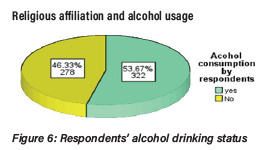
Figure 6 shows the drinking status of young people in Elim. All respondents were comfortable disclosing their drinking status. The chart shows that there was a larger proportion of young people in Elim who drank alcohol (322 respondents; 53.67%) than those who did not (278 respondents; 46.33%). From a social and health perspective in line with alcohol use and abuse by young people in South Africa, the results arguably paint a worrying picture, as the number of Elim-based youth who drank alcohol surpassed that of those who did not drink.
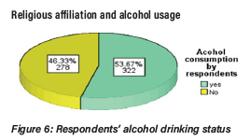
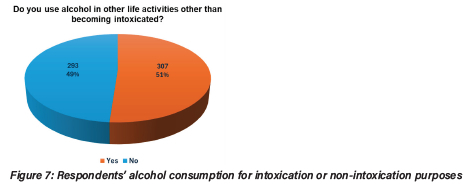
Figure 7 shows that 49% of respondents reported that they consumed alcohol only for the purpose of becoming intoxicated, whereas 51% of respondents claimed that they used alcohol for life activities other than becoming intoxicated. It appears that Elim-based youths were slightly more likely to engage with alcohol for reasons unrelated to becoming intoxicated. These reasons may be significantly driven by tradition and cultural practices. This is so because studies have found that, across diverse southern African contexts such as South Africa, Zimbabwe, Kenya, Botswana and Lesotho, many African cultural activities harbour causal factors for alcohol use, and that people use alcohol in conformity with societal norms and values in said contexts (Akong'a, 1987; Babane & Chauke, 2015; Byaruhanga, 1982:78; Frazer, 1942; Haruna, 1997; Huffman, 2012:137; Korster, 2011; Leeuw, 1987; Makuvaza, 2008; Matsuhira, 2013; Murimbika, 2006; Phibion, 2013; Prins, 1990; Rafapa, 2008; Schapera, 1930; Semenya, 2013; Usoro et al., 2018:150; Zvingowanisei & Chirongoma, 2024). These results show that the status of alcohol at Elim goes beyond the purpose of becoming intoxicated and is valued for other aspects such as traditional African practices, for instance.
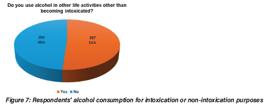
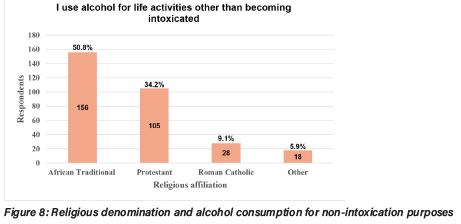
Figure 8 shows that of the 307 respondents who use alcohol for life activities other than becoming intoxicated, 50.8% were African Traditionalists in terms of religious/spiritual association, 34.2% were Protestant, 9.1% were Roman Catholic and 5.9% aligned with other religious beliefs. This is perhaps unsurprising because traditional African values and practices are more likely to align with cultural and traditional practices that involve the use of alcohol as a mediating element.
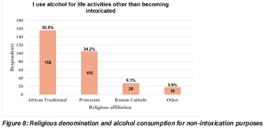
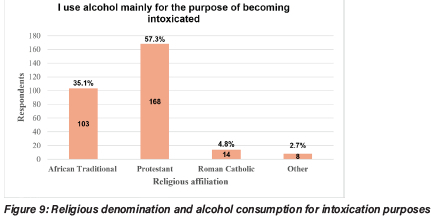
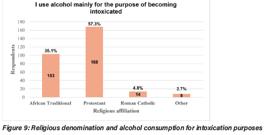
Figure 9 shows that of the 293 respondents who used alcohol mainly for the purpose of becoming intoxicated, 57.3% were Protestant in terms of religious association, 35.1% were African Traditionalists, 4.8% aligned with the Roman Catholic denomination and 2.7% were affiliated with other religious beliefs. Theological studies, such as that by Gaddis (2016), have highlighted that some Protestant Christian faith denominations such as the Lutheran faith are known to align with a moderationist worldview about alcohol, which maintains that alcoholic beverages are permitted for Christians and may be indulged in moderation. Elim-based respondents of Protestant faith may similarly align with this moderationist view regarding alcohol consumption, thereby consuming alcohol for reasons of intoxication.
Television alcohol advertising messages contradict my cultural values
There seems to be an emerging line of thought from the participants that television alcohol advertising goes against their cultural ideologies by promoting the consumption of alcohol which, according to some of them, goes against certain cultural expectations. Consider the following expression from one of the participants, which highlights this observation:
Participant 9 (Male, 34, Drinker): [...] the way I was raised is not the way I am at the moment. You see, so many things have changed. Some are the things that I was told not to do (drinking alcohol). Some of those things strictly in my Tswana culture are not allowed. For example, if you are in a tavern and you are under the influence of alcohol, you see, you feel like you can do anything, you have those powers and you are not scared of anything. Then, according to my culture, it does not allow a person to have more than one wife, but when you are under the influence of alcohol, you tend to forget about those things. Most alcohol advertisements have nakedness, which I don't think any culture allows, because like people will be naked touching each other. Remember, those people who are on the advert are other men's wives, and now they are being touched by other men on the advert. I really don't understand adverts that show people touching each other. It is not right because whoever the character on the advert is dancing with, if ever there is music, there will be too much touching and if those characters have partners, at the end of the day, there will be a divorce.
According to Participant 9 (Male, 34, Drinker), the messages integrated into the television alcohol advertisements that he has been exposed to are in contradiction to his cultural values as per his "Tswana culture" The respondent, who was a drinker of alcohol, was of the view that his decision to consume alcohol did not align with what he had been taught while growing up and he found it to be in contravention of the values and beliefs from his cultural background. It would seem, at face value, that this respondent had generally aligned with the dominant readings of the alcohol advertisements he had been exposed to, given that he admittedly had gone against his cultural values about alcohol consumption, although this was in contravention of the values and beliefs from his cultural background. In that sense, this participant arguably embodies countercultural behaviour (Redfield, 1940: 731) because of his decision to be an alcohol drinker although the values and norms of this behaviour differ from those of the mainstream or dominant culture that this respondent affiliates with. This aligns with a conscious, agentic break from his upbringing and thus embodies a countercultural stance.
In relation to alcohol advertising on television, the quoted interviewee suggests that there is a tendency towards representation of "nakedness" that he had noticed in alcohol advertising, and that he found that this was an advertising trope that clashed with cultural expectation because "I don't think any culture allows [nudity], because like people [in the advertisement] will be naked touching each other" Here, we can see evidence of a negotiated reading being adopted (Procter, 2004). It can plausibly be presumed that the participant's reference to "nakedness" in alcohol advertisements is in line with advertisements that feature characters in slightly revealing attire such as women in bikinis and bare-chested men in swimwear. This observation offers a peculiar take with regard to the representation of, and allowing of, nudity in cultural contexts. Many an African culture, such as, for instance, the Zulu, Swazi and Xhosa cultures, make provision for publicly represented forms of partial "nakedness" of unmarried virgin maidens who are allowed to go bare breasted during cultural events and rituals, for example. This participant's expressed aversion towards, and surprise at, forms of non-pornographic televised "nakedness" may be seen as countercultural, depending on whom you ask.
In this loaded reflection, the participant goes on to emphasise that polygamy is something that people in his culture are averse to, and that the consumption of alcohol (and its consequent diminishing of people's inhibitions) might lead people to neglect such important cultural values because "if you are in a tavern and you are under the influence of alcohol, you see, you feel like you can do anything, you have those powers and you are not scared of anything'! It seems, based on this response that this participant believes that alcohol advertising's encouragement of alcohol consumption influences people, like himself, to consume alcohol purely for intoxication purposes, which leads people to go against their cultural values. "Most alcohol advertisements have nakedness ... those people who are on the advert are other men's wives ... it is not right." This is not a casual dislike; it reflects a value-driven critique grounded in cultural and moral codes. The participant identifies sexualisation as a deliberate violation of cultural norms and expresses disapproval explicitly. This shows intentional moral positioning, not passive rejection.
Participant 8 (Male, 34, Drinker) makes a similar critique about the presence of "nakedness" and "indecency" in alcohol advertisements, by stating his discomfort with some alcohol advertisements he recalled from memory and the ones he had been exposed to by the researcher in the interview session: "Yes, especially on adverts that shows nudity, in our culture a woman must dress in a decent manner" Participant 8 seemed to explicitly frame his rejection of the contents of alcohol advertisements using cultural values of decency, stating that nudity in adverts contradicts the expected manner of dress for women in his culture. This is not about ignoring or adapting to adverts; it is a deliberate moral stance against the way alcohol enjoyment is being represented. Participants 8 and 9 show conscious acts of symbolic resistance, rejecting not alcohol itself but the cultural framing (sexualised imagery and disrespect towards women) embedded in the advertisements.
Alongside an overt resistance against what the interviewees deem countercultural in terms of the alcohol advertisements they had been exposed to, the findings also reveal a more subtle form of opposition against alcohol advertisement messages, which can be described as silent resistance or strategic indifference. Rather than engaging in direct critique of advertising, some participants disengaged deliberately, withholding attention from alcohol adverts while maintaining their cultural or religious boundaries. For instance, Participant 7 (Female, 23, Non-drinker) reflected: "When I grew up, I was told that alcohol is bad ... So, when I am confronted with an alcohol advertisement [...], I think when I compare it with [my] real life, there is that contradiction. Yaah, I just watch (advertisements) and do nothing about if Similarly, Participant 10 (Female, 30, Drinker) described ignoring adverts that conflicted with her religious values: ". if the advert goes against my beliefs, I ignore it or change the channel . I keep myself busy on the phone or something". These responses suggest that the quoted interviewees do not internalise advertising discourses, but neither do they always engage in active critique of said advertisements. Instead, they take a protective step back and ignore the adverts' metaphorical power, which lessens their ideological impact. Goffman and Joy (2004) say that resistance against what is deemed countercultural by members of a culture can show up in more than just verbal disagreement; it can also show up in more subtle ways that protect moral and cultural limits.
Participant 4 (Male, 19, Non-drinker) shared that "[Alcohol] advert[s] are not relevant to me, [they are] not important. I totally lose interest when an advert involves alcohol. Anything that is alcohol related is not meant for me. The way I have been raised and the way I am now affect the way I react to television alcohol advertisements because everything that deals with alcohol is already in conflict with who I am or my background". This is an active identity claim, a purposeful distancing from alcohol advertising discourses. The participant characterises alcohol advertising as incongruent with his self-identity and background, as a deliberate act of symbolic exclusion. Participant 7 (Female, 23, Non-drinker) similarly drew on her upbringing and community experiences to reject the credibility of advertising messages: "everything my parents told me about alcohol, I saw in my community as I grew up'! It seems, then, that this participant's knowledge about the presumably negative effects of alcohol consumption (as told/shown to her by her parents) encouraged her to reject or be indifferent to the messages in alcohol advertisements. Her indifference is not passive; it is a deliberate tactic to neutralise advertising's symbolic power (Goffman & Joy 2004). This becomes a value-based rejection as she juxtaposes the representations in alcohol advertising with the adverse real-life consequences of drinking to characterise alcohol advertising as countercultural.
It would seem, then, that based on these participants' intersectional (religious, cultural, social) backgrounds, the act of alcohol consumption is negatively regarded. The study finds this peculiar because, as the literature highlights, alcohol is part and parcel of so many African cultural practices. These reasons may include consumption of mqombothi for cultural ancestral ceremonies; whiskey, brandy and other hard liquors may be incorporated into cultural processes such as lobola negotiations; alcohol is also used in "stokvels" or "setlamo" traditional weddings, funerals and other events (Korster, 2011; Murimbika, 2006; Usoro et al., 2018), which are all viewed positively through a cultural lens. That the act of alcohol consumption is seemingly so negatively regarded by the interviewed youth from Elim is an interesting finding, but the result contradicts findings by Çelik (2011:64), Moyo (2014:54), Obot and Room (2005.143), Topouzis (1994:91) and Usoro et al. (2018:150). These studies have implicated culture in Africa, and South Africa in particular, in alignment with notable levels of alcohol consumption because they found that many traditional African activities cannot be complete without the drinking of alcohol.
The results contradict Kim's (2004:84) findings on advertising perception, which suggest that audiences view advertisements through the lens of the dominant culture. Participants in the study argue that alcohol consumption conflicts with their cultural values, perceiving alcohol advertisements as countercultural. This reflects an ideological stance where participants strip alcohol of its cultural significance, viewing it merely as a source of intoxication. As Participant 4 (Male, 19, Non-drinker) states, their identity conflicts with alcohol, indicating a disavowal of its cultural importance while engaging in countercultural behaviour.
'Soft' counterculturism: Elim youth's intentional subversion of dominant cultural values
It is also interesting to note that where participants appeared to align with the dominant reading of alcohol advertisements (that is, be influenced by alcohol advertisements to purchase the advertised products), they continued to mention the countercultural nature of this decision. There is clear evidence of hybridity and cultural negotiation as defined in the literature (Bhabha, 1994; Kraidy, 2005). Consider the following responses:
Participant 2 (Female, 29, Drinker): To be honest, the way that I have been brought up is not what I can say today that it is what I am. I was raised in a strict Christian background [ZCC], but as I grew older, I decided what kind of life I wanted to live. I decided to live the life that I am living now because I do not view alcohol as problematic.
Participant 2's comment articulates a purposeful and intentional departure from her socio-spiritual upbringing in that she decided to live the type of life she is living now (that is, consume alcohol purely for intoxication purposes) because she did "not view alcohol as problematic". This indicates a proactive redefinition of identity and values, departing from dominant traditional religious and cultural conventions in favour of a countercultural lifestyle. This also expresses individual awareness of cultural conflict and an intentional choice to deviate from dominant cultural or religious norms rather than passive drift. What this indicates is a distinct generational and cultural transformation in her values and identity. Her decision exemplifies countercultural conduct by rejecting her prevailing traditional norms and establishing an alternative identity that aligns with more permissive attitudes towards alcohol intake (Goffman & Joy, 2004; Roszak, 1969).
Participant 5, (Female, 35, Non-drinker) stated: "I grew up knowing that women do not drink alcohol in our culture . Although I am concerned with the rate at which women drink alcohol nowadays, I have come to accept that times have changed, and I am no longer shocked when I see a girl smoking cigarette or drinking alcohol'! This remark by Participant 5 illustrates cultural negotiation, initially based on traditional standards (women should abstain from alcohol consumption). The participant acknowledges modern or global changes outside her immediate cultural purview (i.e. increasing female drinking behaviour), and then the respondent moves to acceptance and tolerance without fully embracing the behaviour. This is hybridity in action, where traditional cultural codes coexist with new norms, producing a negotiated position rather than outright rejection or total adoption.
Participant 3 (Male, 34, Non-drinker) mentioned this during the conversation: "Yes, yes, culture plays a big role in people's lives and how they make decisions in buying - their purchases. There are some cultures where people are not allowed to drink alcohol. That is another barrier that is there. It does not mean that when your culture says you must not do this, it means it is ok. If I was not the person I am now, I would be perceiving things through my cultural background, but education has taught me a lot about culture, how we can tolerate each other's cultures, and before you judge something, you need to have more knowledge about it'.
These responses highlight cultural hybridity (Bhabha, 1994) in audience reception. Rather than wholesale rejection or uncritical acceptance, respondents negotiate between inherited cultural scripts or local codes and modern realities or global codes, incorporating elements of both. So, hybridity can be described as a form of "soft' counterculture. This style is countercultural because it resists the homogenising pull of global advertising by asserting the Elim-based interviewees' African agency in meaning-making. Alcohol advertising texts become catalysts for cultural dialogue, forcing individuals to reconcile traditional prohibitions with shifting social norms regarding alcohol.
This reflects Kraidy's (2005) concept of adaptive hybridity, where global media discourses are localised and reframed to coexist with indigenous cultural understandings. We categorise the above responses as hybridity (not simply resistance or adaptation) because interview participants did not reject change outright; they acknowledged shifting norms and adjusted their attitudes. Conversely, it is not a mere adaptation, because the process involves active negotiation and meaning-making, blending traditional morality with modern flexibility rather than fully assimilating global discourses. According to Bhabha (1994), hybridity occurs in these "in-between spaces', where cultural elements intersect to form new positions of identity, and this is precisely what the quoted participants express. The reason the responses relate to cultural negotiation is that the interviewed Elim youth recognise cultural dissonance (traditional norms vs. contemporary realities). They negotiate a compromise, as seen when Participant 5 maintained moral concern but developed acceptance, and Participant 3 upheld personal cultural restrictions but valued pluralism. This aligns with the literature's point that audiences are active agents who selectively appropriate global influences to align with localised logics (Hall, 1980; Kraidy, 2005).
Integration of findings: Reiterating the key takeaways
Finding 1: Elim-based youths' dual commitments to cultural alcohol uses and their moral rejection of commercial drinking is thought-provoking
Quantitative evidence: Survey results show that a slight majority (51%) of respondents used alcohol for purposes other than intoxication.
Qualitative evidence: Interviewees described strong cultural and religious objections to alcohol advertising and consumption, characterising alcohol adverts as "countercultural',' indecent and in conflict with values taught during upbringing.
Integrated interpretation: The quantitative finding (that 51% of respondents reported using alcohol for non-intoxication purposes) and the qualitative finding (that interviewees' cultural/religious orientations inspired their objections to alcohol advertising and consumption) together reveal a complex, ambivalent relationship to alcohol among Elim-based youth. Statistically, alcohol remains embedded in social and ritual life; it is used in ceremonies, lobola, ritual libation and funerals, which explains the majority reporting non-intoxicative uses. Concurrently, interview narratives show that many participants rejected contemporary alcohol consumption practices and televised alcohol marketing as morally or culturally inappropriate, describing adverts as countercultural, indecent or in conflict with upbringing.
Finding 2: A conscious divergence and young people's deliberate negotiation between religious/cultural proscriptions and alcohol practices
Quantitative evidence: Survey results show that 53.67% of respondents were alcohol drinkers. Younger cohorts (18-25 and 26-35) reported being often or sometimes persuaded by television advertisements and television ownership was associated with a stronger gender gap in drinking (p = .009 in television-owning households).
Qualitative evidence: Interview narratives demonstrate explicit, agentic accounts of departure from upbringing and faith. Some interviewees described conscious redefinitions of identity, admitting they rejected parental/religious teachings and negotiated new positions. Others described active ignoring of adverts that conflicted with beliefs. These accounts contrast with participants who deliberately resisted adverts or ignored them as a protective tactic, showing active choices rather than passive exposure.
Integrated interpretation: The qualitative interviews provide notable evidence that many participants were individually aware of cultural/religious conflicts and deliberately chose to deviate, negotiate or resist. These agentic stances explain the quantitative findings of substantial alcohol use, mixed motives for drinking, age- and television-related persuasion effects and gendered consumption differences.
Finding 3: Counterculture as silent resistance and strategic indifference
Quantitative evidence: 70.5% of respondents reported having television access, indicating broad exposure opportunities for alcohol advertising.
Qualitative evidence: Some respondents described intentional disengagement tactics, such as changing the channel, or mentally dismissing adverts that conflicted with upbringing or belief systems.
Integrated interpretation: High television penetration creates repeated exposure; this persistent visibility makes the need for everyday cultural defence strategies more salient, prompting quiet disengagement as a routine countercultural practice rather than a sporadic reaction. The results reveal a protective boundary at work, as constant exposure to globalised advert scripts motivates protective practices (changing channels) to defend local moral codes. The two datasets indicate that despite the high number of people having access to television, audiences silently disengaged from media messages. This silent disengagement can be described in this article as a distributed, low-intensity countercultural stance, and not visible protest but ongoing cultural maintenance that contests advertisement meanings within routine media use.
Limitations and recommendations
Although the article offers valuable insights, its focus on rural audiences in Elim, South Africa, limits the generalisability of results to urban audiences or different rural contexts. It specifically examines alcohol advertising, which is culturally significant, suggesting that other product categories such as fashion or technology may show different resistance patterns. Future research should explore countercultural strategies across various advertising genres and incorporate ethnographic observations to clarify the integration of advertising symbols in social rituals. In addition, the influence of digital media platforms on resistance and hybridisation needs to be addressed. Lastly, future studies should select participants based on religious beliefs to enhance the depth of the findings.
CONCLUSION
The central objective of this study was to explore how exposure to television advertisements about alcohol products connects with Elim-based youths' experiences, social and cultural backgrounds and decisions to consume or not consume alcohol products. As such, and guided by the encoding/decoding model of audience reception, the study asked, how do factors such as cultural, faith-based and traditional values and sociocultural experiences influence the ways in which television audiences in Elim interpret alcohol advertising? By so doing, the article showed that when decoding advertisements the dominant ideologies and values about alcohol usage or non-usage - that anchor the respondents' predominant cultures - can be neglected for alignment with countercultural ideological and behavioural cues about alcohol consumption that are perpetuated in television advertisements. Interestingly, while participants demonstrated a clear awareness of the disruptive nature of television alcohol advertisements in relation to their cultural foundations and values, they did not always conform to the dominant culture's ideologies when decoding these advertisements.
The study emphasises that media reception involves not merely resistance or complete internalisation, but rather deliberate cultural negotiation, in which audiences consciously reinterpret advertisement messages to preserve cultural integrity while pursuing contemporary ambitions. While alcohol remains functionally important in cultural contexts, this study illustrates that rural South African audiences engage with alcohol advertising through conscious resistance, cultural hybridity, silent resistance and alternative identity formation, hence contesting the notion of passive media consumption in postcolonial settings. Advertising serves not merely as a conduit for aspirational ideas but as a symbolic arena where global consumerist ideals confront local cultural norms. By employing selective appropriation and hybridisation, audiences demonstrate agency and cultural sovereignty, highlighting that media reception is an active and contentious process.
The findings of this article contribute to scholarship in audience reception, advertising and cultural studies by reconceptualising counterculture as a broad, multidimensional framework for understanding how African audiences engage with global advertising discourses. First, the study advances the theorisation of counterculture in media reception. Previous research has often treated resistance as a binary act of acceptance versus rejection. This article illustrates that counterculture comprises a spectrum of audience behaviours, ranging from explicit condemnation of perceived immorality and cultural inauthenticity to a fusion of global and local rules, as well as nuanced disengagement through calculated indifference. Second, the research expands discussions on cultural hybridity within postcolonial frameworks. While hybridity has often been considered adaptive blending (Bhabha, 1994; Kraidy, 2005), this research shows that hybridisation itself can be countercultural, functioning as a protective strategy that resists cultural homogenisation.
Finally, the study introduces the concept of "silent resistance" as an underappreciated form of agency. Audiences symbolically neutralise the power of advertising without confrontation by disengaging or treating advertisements with deliberate indifference. This contradicts the presumptions of reception theory that resistance must be vocal or performative, demonstrating that subtle withdrawal can be equally strategic. The study demonstrates that resistance to advertising in African contexts is not peripheral but central to meaning-making, thereby contributing a new integrative framework for countercultural audience practices. It suggests that audiences are not passive consumers of global media, but rather active cultural negotiators who reshape, resist or divest advertising of meaning in a manner that asserts autonomy, identity and community values.
REFERENCES
LITERATURE REVIEW
- Ainslie, A. (2014). Harnessing the ancestors: uncertainty and ritual practice in the Eastern Cape. Africa: Journal of the International African Institute, 84(4):530-552.
- Akong'a, J. (1987). Rainmaking rituals: a comprehensive study of two Kenyan societies. African Study Monographs, 8(2):71-85.
- Babane, M. & Chauke, M. (2015). The preservation of Xitsonga culture through rainmaking ritual: an interpretative approach. Studies of Tribes and Tribals, 13(2):108-114.
- Barker, C. & Jane, E.A. (2016). Cultural studies: theory and practice (5th ed.). Sage.
- Baker, C. (2008). Cultural studies: theory and practice. London: Sage.
- Barber, K. (ed.). (1997). Readings in African popular culture. Oxford: James Currey / Bloomington: Indiana University Press.
- Bhabha, H.K. (1994). The location of culture. London: Routledge.
- Bornman, E. (2004). Identity, social groups and communication: some frontiers for theory and research. Communicare, 23(1):149-170.
- Braun, V. & Clarke, V. (2006). Using thematic analysis in psychology. Qualitative Research in Psychology, 3(2):77-101.
-
Brown, K. (1999). Globalization and cultural conflict in developing countries: the South African example. Indiana Journal of Global Legal Studies, 7(1):Article 8. Available from: https://www.repository.law.indiana.edu/ijgls/vol7/iss1/8
» https://www.repository.law.indiana.edu/ijgls/vol7/iss1/8 - Byaruhanga, C. (2015). The history and theology of the ecumenical movement in East Africa. Kampala: Fountain Publishers.
-
Caulfield, J. (2022). Thematic analysis: step-by-step guide [YouTube video], 24 May. Available from: https://www.youtube.com/watch?v=5zFcC10vOVY
» https://www.youtube.com/watch?v=5zFcC10vOVY - Cawood, S. & Du Toit, J. (2008). Identity and the emergence of South African advertising esperanto: an interdisciplinary approach to multilingualism and the visual in advertising and information copy. Communicare, 27(1 & 2):81-97.
- Çelik, A.K. (2011). Alcohol-impaired walking in 16 countries: a theory-based investigation.
- Creswell, J.W. (2013). Qualitative inquiry and research design: choosing among five approaches (3rd ed.). Thousand Oaks, CA: Sage Publications.
- Creswell, J. & Creswell, J. (2018). Research design: qualitative, quantitative, and mixed methods approaches (5th ed.). Los Angeles: Sage.
- De Mooij, M. (2021). Global marketing and advertising and understanding cultural paradoxes. Los Angeles London New Delhi: Sage.
- Drew, T.H. (2023). Situating Svoi: nonconformism and intrainstitutional autonomy in late-Soviet Novosibirsk. Doctoral dissertation. Manchester: University of Manchester.
- Frazer, J.G. (1942). The golden bough: a study in magic and religion (3rd ed.). London: Macmillan.
- Gaddis, M.A. (2016). Controversy, consulting and the wedding at Cana: translating oinos in John 2 in the Nigerian context. MT thesis. South African Theological Seminary.
- Gelbrich, K., Roschk, H. & Gafeeva, R. (2016). A cross-national observation of counter-cultural consumer behaviour. Journal of Research and Management: 150-162.
- Goffman, K. & Joy, D. (2004). Counterculture through the ages: from Abraham to acid house. Villard: Random House.
- Guest, G., Bunce, A. & Johnson, L. (2006). How many interviews are enough? An experiment with data saturation and variability. Field Methods, 18(1):59-82.
- Hall, S. & Jefferson, T. (1993). Resistance through rituals: youth subcultures in post-war Britain (2nd ed.). USA and Canada: Routledge.
- Hall, S. (1980). Culture, media, language: working papers in cultural studies. London and New York: Routledge.
-
Haruna, A. (1997). Rituals and ceremonies accompanying rainmaking among the Guruntum and Bubbure people. University of Maiduguri. Available from: https://horizon.documentation.ird.fr/exldoc/pleins_textes/pleins_textes_6/colloques2/010012378.pdf Accessed: 16.03.2025.
» https://horizon.documentation.ird.fr/exldoc/pleins_textes/pleins_textes_6/colloques2/010012378.pdf - He, J. & Wang, C.L. (2018). How global brands incorporating local cultural elements increase consumer purchase likelihood: an empirical study in China. International Marketing Review, 34(4):463-479.
- Hebdige, D. (1979). Subculture: the meaning of style. London: Routledge.
- Huffman, T.N. (2012). Ritual space in pre-colonial farming societies in southern Africa. Journal of Ethnoarchaeology, 5(4):119-146.
- Kim, S. (2004). Rereading David Morley's The 'nationwide' audience. Cultural Studies, 18(1):84-108.
- Korster, M.M. (2011). The Kilumi rain dance in modern Kenya. The Journal of Pan African Studies, 4(6):171-193.
- Kraidy, M. (2005). Hybridity, or the cultural logic of globalization. Temple University Press.
- Leeuw, T. (1987). Communal knowledge and religious reality. Amsterdam: Radopi.
- Mager, A.K. (2010). Beer, sociability, and masculinity in South Africa. Bloomington: Indiana University Press.
- Mager, A.K., Ross, R. & Nasson, B. (Eds.). (2012). The Cambridge History of South Africa, Volume 2:1885-1994. Cambridge: Cambridge University Press.
- Makuvaza, S. (2008). Why Njelele, a rainmaking shrine in the Matobo World Heritage Area, Zimbabwe, has not been proclaimed a national monument. Heritage Management, 1(2):163-180.
- Matsuhira, Y. (2013). Rain making ceremony in the Nyandoro Region, Zimbabwe. African Religious Dynamics:165-182.
- Mekonnen, S. & Angelopulo, G. (2022). Brand contact integration in the Ethiopian beer market: an internal IMC view of the market interface. Communicare: Journal for Communication Studies in Africa, 41(1):25-34.
- Meyer, B., Petersen, Z., Kader, R. & Parry, C.D.H. (2012). Moving beyond access: Towards a quality-orientated substance abuse treatment system in South Africa. South African Medical Journal, 102(8):667-668.
- Morley, D. (1980). The nationwide audience. London: British Film Institute.
- Morse, J.M. (2000). Determining sample size. Qualitative Health Research, 10(1):3-5.
-
Moyo, L. (2014). Effects of alcohol advertisements and alcohol consumption amongst adolescents in selected high schools in the Eastern Cape, South Africa. Mediterranean Journal of Social Sciences. Available from: https://www.researchgate.net/publication/268741298 Accessed: 21.03.2025
» https://www.researchgate.net/publication/268741298 - Murimbika, M. (2006). Sacred powers and rituals of transformation: an ethnoarchaeological study of rainmaking rituals and agricultural productivity during the evolution of the Mapungubwe state, AD 1000 to AD 1300. Doctoral dissertation. University of the Witwatersrand.
- Neuendorf, K.A. (2017). The content analysis guidebook. Sage.
- Nie, C. & Wang, T. (2019). How global brands incorporate local cultural elements to improve brand evaluations. International Marketing Review:0265-1335.
- Nowell, L. S., Norris, J. M., White, D. E., & Moules, N. J. (2017). Thematic analysis: striving to meet the trustworthiness criteria. International journal of qualitative methods, 16(1):1609406917733847.
- O'Keefe, D. J. (2022). Persuasive message pretesting using non-behavioral outcomes: differences in attitudinal and intention effects as diagnostic of differences in behavioral effects. Journal of Communication, 71(4):623-645.
- Obot, I. S. & Room, R. (eds.) (2005). Alcohol, gender and drinking problems: perspectives from low and middle income countries. World Health Organizarion.
- O'Donnell, V. (2017). Television criticism. 3rd ed. London: Sage.
- Ombati, M. (2017). Rainmaking rituals: song and dance for climate change in the making of livelihoods in Africa. International journal of modern anthropology, 1(10):74-96.
- Patton, M.Q. (2015). Qualitative research and evaluation methods. 4th ed. Sage.
- Phibion, O. (2013). The rain praying music of the Bakalanga of Botswana and Zimbabwe. International Journal of Case Studies, 2(5):1-9.
- Potter, W.J. (2019). Media literacy. Sage.
-
Prins, F. (1990). Southern-Bushman descendants in the Transkei rock art and rainmaking. South Africa Journal of Ethnology, 13(3):110-116. Available from: https://www.africabib.org/rec.php?RID=079082718
» https://www.africabib.org/rec.php?RID=079082718 - Procter, J. (2004). Stuart Hall. Routledge.
-
Rafapa, L. (2008). At the heart of African rainmaking. ResearchGate. Available from: https://www.researchgate.net/publication/304771849_At_the_Heart_of_African_Rainmaking
» https://www.researchgate.net/publication/304771849_At_the_Heart_of_African_Rainmaking - Redfield, R. (1940). The folk society and culture. American Journal of Sociology, 45(5):731-742.
- Riffe, D., Lacy, S., Fico, F. & Watson, B. (2019). Analyzing media messages: using quantitative content analysis in research. Routledge.
- Ross, J. (ed.). (2020). Routledge handbook of street culture. Routledge.
- Ross, K. (2012). The handbook of gender, sex, and media. Wiley-Blackwell.
- Roszak, T. (1969). The making of a counter culture: reflections on the technocratic society and its youthful opposition. Doubleday & Company.
-
Schapera, I. (1930). The Khoisan peoples of South Africa: bushmen and hottentots. [Online] Available from: https://www.africabib.org/rec.php?RID=061159654
» https://www.africabib.org/rec.php?RID=061159654 -
Semenya, K. (2013). The making and prevention of rainmaking amongst the Pedi tribe of South Africa: a pastoral response. HTS Teologiese Studies/Theological Studies, 69(1):1-5. Available from: https://www.researchgate.net/publication/262438549
» https://www.researchgate.net/publication/262438549 - Setlalentoa, B. M. P., Pisa, P. T., Thekisho, G. N., Ryke, E. H. & Loots Du, T. (2010). The social aspects of alcohol misuse/abuse in South Africa. South African Journal of Clinical Nutrition, 23(sup2):11-15.
- Sparks, S. (2020). Polarization and the top-two primary: moderating candidate rhetoric in one-party contests. Political Communication:1-21.
- Topouzis, D. (1994). Uganda: the socio-economic impact of HIV/AIDS on rural families with an emphasis on youth. Food and Agriculture Organization of the United Nations (FAO).
- Usoro, N., Ononokpono, D., Ette, U. & Nkereuwem, N. (2018). Community perspectives on cultural practices and belief systems influencing alcohol and drug use: a qualitative study in Anaang community, Nigeria. African Journal of Drug and Alcohol Studies, 17(2):1-14.
- Zhou, N. & Belk, R. (2004). Chinese consumer readings of global and local advertising appeals. Journal of advertising, 33(3):63-76.
- Zucker, R.A., Brower, K.J., Aldrich, M.S., Robinson, E.A. & Greden, J.F. (2002). Insomnia, self-medication, and relapse to alcoholism. American Journal of Psychiatry, 158(3):399-404.
- Zvingowanisei, S. & Chirongoma, S. (2024). Shona women and rainmaking rituals in Zimbabwe: indigenous women's ecological wisdom and agency. In P. Leshota, M. Musingafi, I. Mokhele, & M. Makumane. From History to Herstory: Culture, Gender and Religion in Archival Material in Southern Africa. Springer.
Accepted April 2026