A Comparative Study of HPV Vaccine Acceptability Across Global North and South Countries: USA and Kenya
Abstract
This study examined the HPV vaccine landscape in Kenya and the USA with a focus on if differences exist in the perceptions of HPV knowledge, vaccine attitudes, subjective norms, perceived behavioural control, and vaccine intention among students across country and gender. It also provides useful findings that can inform the design of persuasive health messages to promote the uptake of HPV vaccines among college students in Kenya and the USA. The study used surveys to recruit 1,033 participants (511 Kenyan and 522 USA students). The two-way MANOVA analysis revealed that the multivariate main effects showed no significant differences for gender, but the results revealed a significant main effect for the country. However, the interaction between gender and country of the participants was not significant. The univariate analysis revealed that the participants of the two countries had small significant differences in their subjective norms about HPV vaccination, and perceived behavioural control. The correlation analysis showed that HPV knowledge correlates with knowledge about the HPV vaccine and country, but not with gender. The results also revealed that knowledge about the HPV vaccine correlates with both gender and country. These results highlight the most salient predictors of vaccination intentions among college students that health communicators can focus on when designing and implementing HPV vaccination campaigns targeting students in Kenya and the USA.
Attitudes; HPV knowledge; HPV vaccine; perceived behavioural control; subjective norms
INTRODUCTION
Across the globe, there has been a growing debate about the efficacy of vaccines. Past studies indicate that vaccines are important in safeguarding the public against preventable diseases (Mihigo et al., 2017; Skinner, 2017). The human papillomavirus (HPV) vaccine, for instance, has been successful in preventing genital warts and various types of cancers such as cervix uteri, penis, vulva, and vaginal cancers (Cipriano et al., 2018; Forman et al., 2012; Kiatpongsan & Kim, 2014). The efficacy of HPV vaccine against cervical cancer is important because cervix uteri cancer has the highest incidence and prevalence compared to other types of cancers (Forman et al., 2012). Presently, Sub-Saharan Africa leads in highest prevalence and incidence of HPV infections in the world (Kiatpongsan & Kim, 2014).
HPV also remains the most common form of sexually transmitted infection among young adults in the USA, and the uptake of the HPV vaccine in the USA remains low compared to other developed nations, such as England and Australia (North & Niccolai, 2016). Countries in the global south, such as Kenya, also lag behind, thus there is a need for multi strategies to improve HPV immunisation (Spayne & Hesketh, 2021). In Kenya in 2019, the government rolled out a national HPV vaccination program targeting girls (World Health Organization, 2019). However, immediately after the national vaccination program was rolled out, doctors affiliated with the Catholic Church expressed their reservations about the vaccine due to the view that it would encourage promiscuity among young adults (Njanja, 2019). However, the HPV vaccine is important because young adults and adolescents aged 15 to 24 years lead in both incidence and prevalence of most sexually transmitted infections (Panatto et al., 2009; Satterwhite et al., 2013).
Unfortunately, the uptake of the HPV vaccine remains low in many low and middle income countries such as Kenya, India, and South Africa, especially among school going populations (Ebrahimi et al., 2023). Among college students, for instance, the low uptake of the HPV vaccine has been linked to poor knowledge about HPV and the HPV vaccine (Khan et al., 2016; Pitts et al., 2009). Thus, this study examined whether differences existed in the perceptions of vaccine attitudes, subjective norms, perceived behavioural control, and vaccine intention among college students in Kenya and the USA. Health campaigns need to also target men because they are less likely than women to be aware of HPV vaccines and also get vaccinated against HPV. For example, Ragin et al. (2009) found that although men were aware of the HPV vaccine, most of them did not intend to be vaccinated. A similar finding was made by Vorpahl and Yang (2018), who noted that women are more likely to be vaccinated compared to men.
A study by Gerend and Shepherd (2012) found that the key predictors of HPV vaccination were subjective norms, self-efficacy, and vaccine costs. Additionally, in research on how students engage in physical activities, Blanchard and colleagues (2007) found that subjective norms were a significant predictor of intention to engage in physical activity in both black and white students.
Past studies indicate that women are more likely to get vaccinated compared to their male counterparts (Ragin et al., 2009; Vorpahl & Yang, 2018). Ragin et al. (2009) argues that although men are aware of the HPV vaccine, most of them do not intend to be vaccinated. Other studies have found that the main predictors for HPV testing are age, gender, and education (Dodd et al., 2014). This indicates that gender is an important consideration in HPV vaccination.
Thus, this study examined the following research questions:
RQ1: Do college students' perceptions of vaccine attitudes, subjective norms, perceived behavioural control, and vaccine intention differ across countries and genders?
RQ2: Are there any differences in the level of knowledge about HPV and the HPV vaccine among students by country and gender?
HPV and vaccine knowledge between the Global South and North
There has been a huge investment by world governments in the prevention of vaccine-treatable diseases or illnesses (North & Niccolai, 2016). However, the uptake of vaccines across the globe has been hindered by barriers such as suspicion about the safety and efficacy of vaccines and the systemic misinformation about the side effects associated with vaccines (Kahan, 2013). The controversy surrounding vaccines has led to an increase in vaccine preventable diseases in some states because some parents refuse to vaccinate their children (Gostin, 2018). The HPV vaccine is particularly important as it is estimated that 50% of sexually active people will get an HPV infection in their lifetime (Markowitz et al., 2014). College students, who are often in this age range and are sexually active, are at a greater risk of HPV infections. Moreover, compared with other groups, either below or above this age range, most college students are also in the HPV vaccination follow up bracket for those who have already started on the vaccine (Sharma & Nahar, 2017). Kasymova (2020) found that although many students were aware of HPV and the HPV vaccination, there were gaps in their understanding of the route of transmission, symptoms, risk factors, and HPV vaccine mechanism. The most often stated hurdles to acquiring the immunisation were the expense of HPV vaccination and worries about safety and the perceived negative side effects of the vaccine (Kasymova, 2020). Strengthening health education on HPV vaccination and identifying suitable solutions to the problem of "vaccine hesitancy" will be useful in increasing HPV vaccine coverage and reducing associated illnesses among male college students (Ran et al., 2022).
Global South
Generally, the HPV vaccine is a vital pillar in cancer prevention and there is a need for governments in developing countries to put more effort into incorporating the HPV vaccination into their public health immunisation programs. The problem of HPV is compounded by rising cancer rates, with the least developed countries leading in prevalence and cancer-related deaths (Vermandere et al., 2015). The African region, for instance, missed its millennium development goals and is still lagging behind in the global vaccine action plan (GVAP) that aims to achieve at least 90% national vaccine uptake (Nyaga, 2020; Mihigo et al., 2017). This is exacerbated by the fact that developing countries have poor records management of cancer information, including incidence and mortality. For example, in Kenya, there are very few cancer registries, so information about cancer incidence in Kenya is very scarce, not well managed, and based on incomplete population cancer registries (Korir et al., 2015). In addition, cancer remains a stigmatised illness and this can affect the health-seeking behaviours of the public. According to Knapp et al. 2014), cancer-related stigma is influenced by whether the type of cancer is preventable (e.g., lung, breast, skin) and whether its treatment effects are visible to the public (e.g., limb amputation). Other studies have also found a positive correlation between cancer stigma and HIV stigma (Rosser et al., 2016). Because HPV vaccines can help prevent some cancers, linking cancer prevention to HPV vaccination campaigns might increase its acceptability and adoption by the target population.
The efficacy of the HPV vaccine in preventing various cancers and genital warts makes the implementation of HPV vaccination programs a matter of national priority in Kenya because the vaccine can prevent 70% of cancers caused by HPV 16 and 18 (Vermandere et al., 2015). Considering that cervical cancer is the most common and dangerous form of cancer diagnosed among Kenyan women after breast and oesophagus cancer, it is important for the government to increase HPV vaccine uptake by enhancing accessibility, acceptability, and awareness of the vaccine by the general public (Nayak et al., 2016; Nyaga, 2020; Vermandere et al., 2015). The HPV pilot studies in Kenya identified the main challenges to the uptake of the vaccine as inadequate awareness of the vaccine, inadequate screening services, and limited information about the vaccine among the public (Korir et al., 2015; Vermandere et al., 2015).
The costs associated with immunisation programs is one of the considerations governments have to take into account when creating and rolling out vaccination programs. Therefore, Kenya, being a developing country, can learn from other countries that have implemented successful HPV vaccination programs and replicate such projects to support its national HPV vaccination drives. This can help reduce the costs of formulating new policies and campaigns because policies and campaigns can originate in one country and be replicated in other jurisdictions (Shen, 2014).
Global North
HPV is the most common form of sexually transmitted infection (STI) in the US with 14 million people infected each year (Markowitz et al., 2014). North and Niccolai (2016) observed that the HPV vaccination rates in the US among adolescents are lower compared to other vaccine-preventable diseases such as meningococcal conjugate, tetanus, and diphtheria. This has been attributed to parents' negative perceptions of the significance of the HPV vaccine, lack of provider recommendations, and worries about the perceived side effects associated with the HPV vaccine (Boyce et. al., 2022; North & Niccolai, 2016). Thus, it is necessary to continue educating clinicians and parents about the necessity of teenage vaccines (Boyce et. al., 2022). Also, vaccine coverage in the US is lower compared to other high-income countries, such as England, Australia, Portugal, Scotland, and Denmark, which have achieved more than 70% compliance for the three required doses (North & Niccolai, 2016). North and Niccolai (2016) also noted that the initial attempts to make HPV vaccines mandatory for school enrolment were resisted, because of the view that school-required vaccines should be reserved for diseases that can be transmitted easily at school and because of moral beliefs associated with the HPV vaccine.
Although HPV awareness in the US is high compared to other countries, it is not clear why the uptake of HPV vaccines remains low. In a study involving 12,259 participants in the US, UK, and Australia, for example, Dodd et al. (2014) found that the USA participants had higher HPV awareness compared to the UK and Australia. However, this did not translate to a high level of knowledge about HPV. In another study involving 2,442 participants from the United Kingdom, Australia, and the US, the results indicated that participants from the US had low knowledge about HPV, how it is transmitted, and its effects (Marlow et al., 2013). Therefore, from these findings, it is imperative for health communication practitioners to consider knowledge and awareness when designing and implementing HPV-related campaigns as a way of enhancing the success of programs aimed at boosting HPV testing and vaccination among young adults in the US.
Communicating about HPV Vaccination
Health communication plays a vital role in the design and implementation of HPV messages. The low uptake of the HPV vaccine indicates that HPV messages need to be enhanced for effectiveness in persuading target audiences. To encourage vaccination among students, this study emphasises an approach that educates college students on the risks associated with sexual behaviours, such as having multiple sex partners. This is informed by the fact that cancers associated with HPV take a long time to develop so young adults may not consider themselves vulnerable to such cancers, but might perceive themselves as susceptible to genital warts (Ragin et al., 2009). Research shows that well-planned social media strategies and the use of content subgroups are useful in promoting HPV vaccination among young people (Pedersen et al., 2020). According to Cartmell et al. (2018), HPV vaccination communications should emphasise cancer prevention rather than sexual transmission, routinise the vaccine, and stress the risks/costs of HPV. Messaging should be targeted at certain audiences, and numerous media outlets should be used to distribute consistent, scientifically correct messaging. Strategies such as appealing to parents' moral obligation to protect their children from cancer, highlighting HPV's ubiquity, and providing emerging information that HPV may be spread without sexual activity were also advocated (Cartmell et al., 2018).
Adolescent-adapted behaviour-change communication might minimise lost chances for HPV prevention, potentially reducing racial and ethnic differences in HPV-related morbidity and death (Xu et al., 2023). There is also a need to come up with health communication tools that educate and showcase the importance of the HPV immunisation, such as factsheets, as these have been proven to increase HPV vaccination acceptance among hesitant parents (Reno et al., 2019). Thus, the effectiveness of HPV messages may be linked to how well the messages appeal to the target audience's sense of personal susceptibility, and the extent to which information about HPV and HPV vaccination is available and discussed in an individual's social circle.
The Moderating Role of Gender
Although the HPV vaccine is recommended for both male and female students, most health communication strategies portray young women as the primary candidates for the HPV vaccine due to its relation to cervical cancer which mostly affects women (Kolek et al., 2022; Marlow et al., 2013). This may explain why women have more knowledge and a better understanding of HPV vaccines compared to their male counterparts. Due to the continued focus on women as the main targets for HPV vaccination, little is known about how gender differences influence HPV intent to receive the vaccine (Richards, 2016). In a study involving African American college students, results showed that compared to females, male students were less likely to get HPV information from healthcare providers and pamphlets, but were more likely to pay attention to HPV information on social media platforms like Facebook and Myspace (Bynum et al., 2011). In the same study, Bynum et al. (2011) found that women preferred to get HPV information from their healthcare providers, and that men are less aware of HPV and have less perceived subjective risk of HPV infections compared to women. These findings highlight the gender differences in information preference, and the need to address the stigma associated with cervical cancer among women so as to encourage women to take the HPV vaccine (Ginjupalli et al., 2022). In addition, there is a need to link women to actual services after HPV screening (Mungo et al., 2020). Furthermore, in the Rift Valley region in Kenya, Vermandere et al. (2015) found that fathers had scant knowledge about HPV, cervical cancer, and had difficulties differentiating between several types of cancers associated with HPV. Nan et al. (2016) also found that female participants with a high level of education had the highest likelihood of vaccinating their children against HPV.
Theory of Planned Behaviour (TPB)
This study is premised on the theory of planned behaviour (TPB). TPB is a psychological model that argues that the best predictors of behaviour are behavioural intention and perceived behavioural control (Hirth et al., 2018). Although TPB is a psychological model, it applies to communication research because communication can inform behaviour as well as be viewed as behaviour, and how we communicate is based on psychological factors and is personalised to an individual (Brann & Sutton, 2009). TPB assumes that individuals are rational decision makers who actively consider the consequences of their choices (Andrews et al., 2010; Gerend & Shepherd, 2012). According to the TPB, health campaigns can be enhanced by targeting normative and control beliefs that are the core of behavioural attitudes (Zemore & Ajzen, 2013). TPB views behaviour as a product of behavioural, normative, control beliefs, and available information (Ajzen, 1991). Ajzen (1991) argued that behavioural beliefs influence attitudes toward behaviour, while normative beliefs influence subjective norms. On the other hand, control beliefs are the foundation of behavioural control. Here are the definitions of key concepts of TPB: 1) attitude toward the behaviour refers to the degree of favourable or unfavourable appraisal of a given behaviour; 2) subjective norm refers to the individuals' judgement of important others' opinion on a given behaviour; and 3) perceived behavioural control (also known as self-efficacy) refers to the perceived ease or difficulty in performing a given behaviour (Ajzen, 1991). Thus, people form an attitude about a certain behaviour by linking it to a certain expected outcome (Ajzen, 1991).
So far, TPB has been utilised in many health campaigns such as those involving research on cancer, condom usage, addiction to drugs and substances, and eating disorders like obesity and anorexia (Brann & Sutton, 2009; Pickett et al., 2012). Previous studies on the uptake of HPV vaccinations by Hirth et al. (2018) found that the motivators for HPV vaccination were anticipated regret if one is eventually diagnosed with cancer after not getting vaccinated, reminders about when to make appointments, and making the vaccine available on campus.
METHOD
Participants
Participants for this study were students recruited from a U.S. public university and a Kenyan public university. A university student sample was chosen because it is the population at the greatest risk of HPV infections and in the age range recommended for vaccination, that is, 7 to 26 years (Nan et al., 2016). To participate in this study, participants had to be at least 18 years old and currently registered students at one of the universities. The total sample was 1,033 participants (consisting of 511 Kenyan and 522 US students) with an average age of 23.35 years. To enhance the validity of the study, international students were excluded from the final analysis to ensure the results reflected as closely as possible the views of the US students and those of the Kenyan students. However, the participants in the US who identified as permanent residents and undocumented immigrants were included in the analysis, because their experiences were perceived to be similar to those of the US students.
Procedure
A closed-ended survey was used to collect data after receiving approvals from both universities' Institutional Research Boards (IRBs). The questionnaires were administered differently due to technological differences between the two universities. The survey participants in the USA were recruited through convenience sampling using the online research pool (SONA).
The participants from Kenyan university were recruited using snowball sampling, in which the participants known to the researcher passed on a request to participate in the survey to other students who met the sampling criteria (Lindlof & Taylor, 2011).
The Kenyan students were given a printed questionnaire and asked to return it during the next class session. This provided convenient access to the survey in a country with poor internet connectivity and a lack of an online research participation system particularly in rural areas. Before participants could answer the survey questions, they had to confirm that they had read and agreed to the consent form. They then answered questions measuring their attitudes toward HPV vaccine, subjective norms about HPV vaccine, perceived behaviour control, HPV vaccine intention, HPV knowledge, HPV vaccine knowledge, and some demographics.
Data Analysis
The data from the survey were analysed using SPSS. In particular, SPSS was used to conduct various analyses, such as descriptive analysis, independent samples t-tests, correlation analysis, and multiple linear regressions. The research questions were addressed using a series of two-way Multiple Analysis of Variance (MANOVA) with the independent variables being country and gender. The dependent variables were vaccine attitudes, subjective norms, perceived behavioural control, HPV vaccine intention, HPV knowledge, and HPV vaccine knowledge.
Measures
Attitudes toward HPV vaccine. This variable was measured using five (5) modified items from the effectiveness subscale and harms subscale of The Carolina HPV Immunization Attitudes and Beliefs Scale (CHIAS). The vaccine attitudes scale had items assessing participants' attitudes toward the effectiveness of the HPV vaccine to cure genital warts, safety, and capability of causing harm. Example items included "The HPV vaccine might cause lasting health problems" and "The HPV vaccine is being pushed to make money for drug companies'! The five items used to assess the vaccine attitudes were reverse coded for credibility. The subscale had a reliability of (α) .67 to (α).70 across the four subsets (i.e., Kenyan females, Kenyan males, USA females, USA males) under consideration. The response options ranged from strongly disagree (1) to strongly agree (5).
Subjective norms about the HPV vaccine. This reflects the social pressure stemming from the approval or lack of approval for the HPV vaccine from people one considers important. This subscale had three (3) statements asking participants if other students or family members approved of them getting the HPV vaccine. The three items were "Students on my campus approve of me getting the HPV vaccine", "My family approves of me getting the HPV vaccine", and "Other students on my campus are getting the HPV vaccine". The scale had a reliability of (α) .76. The response options ranged from strongly disagree (1) to strongly agree (5).
Perceived behaviour control (PBC). PBC was assessed using three (3) items. The items addressed the perceived barriers that participants might experience when searching for physicians who administer the HPV vaccine and participants' ability to cover the expenses associated with the HPV vaccine. The three items were "It would be very hard to find a physician or clinic where I can get the HPV vaccine with ease", "It would be very hard to find a physician or clinic where I don't have to wait for long for an appointment to get the HPV vaccine", and "I am concerned that the HPV vaccine costs more than I can pay". The scale had a reliability of (α) .74. The response options ranged from strongly disagree (1) to strongly agree (5).
HPV vaccine intention. Intention was measured using four (4) items from the TPB questionnaire developed by Ajzen (1991). The items asked participants about their willingness to get vaccinated and if they would recommend the vaccine to their friends. Specifically, the items testing intention asked participants, "If in the next 12 months, they intended to get vaccinated against HPV', "If in the next 12 months, they would recommend HPV vaccination to other students on their campus" "If in the next 12 months, they would encourage other students to get vaccinated" and "If in the next 12 months they would get vaccinated if they were still in the HPV vaccine age bracket'! The scale had a reliability of (α) .84. The response options ranged from strongly disagree to strongly agree (5).
Knowledge about HPV and H PV vaccine. These two concepts were measured using scales developed by Perez et al. (2016). The HPV knowledge scale used in this study had 23 items. Example items included "HPV can be passed on during sexual intercourse" and "Having many sexual partners increases the risk of getting HPV". The HPV vaccine knowledge scale had 11 items. Example items included "You can cure HPV by getting the HPV vaccine" and "The HPV vaccine protects you from every type of HPV". Participants were asked to respond to the statement for each scale item with either a true, false, or I don't know option. During data analysis, the statements that the participants scored correctly were coded as 1 and the rest (including both incorrect and false statements) were coded as 0. The HPV knowledge scale had a reliability (α) of .873, and the knowledge about HPV vaccine scale had a reliability (α) of .745.
Demographics. These were measured using short questions about their age, gender, racial ethnicity, vaccination history, major, and year in school.
RESULTS
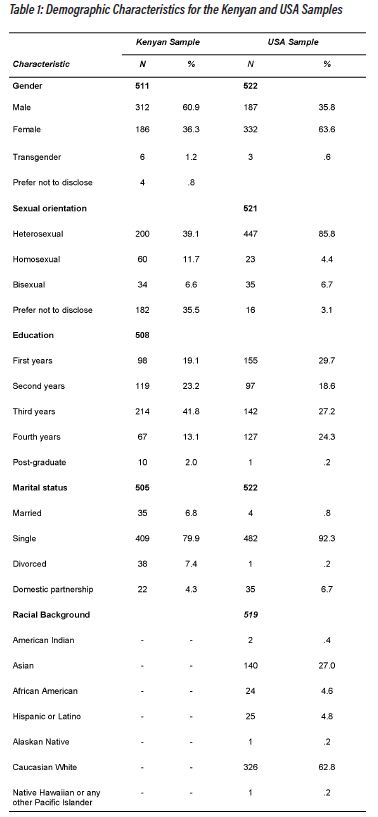
The demographic results revealed differences in gender and education level between the Kenyan and the US participants. While the majority of the Kenyan participants were males (61%), the majority of the US participants were females (63.6%). While a good number of the Kenya participants were third year students or juniors (41.8%), a good number of the US participants were first year students or freshmen (29.7%). On the other hand, the results revealed similarities in the sexual orientation and marital status between the Kenyan and the US participants. The majority of both the Kenyan (79.9%) and the US (92.3%) participants were single. Also, the majority of both the Kenyan (39.1%) and the US (85.8%) participants were heterosexuals. See Table 1 for demographic characteristics of the participants.
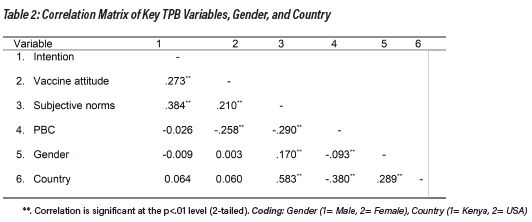
The first research question aimed to investigate the differences in the perceptions of vaccine attitudes, subjective norms, perceived behavioural control, and vaccine intention among students across country and gender. A correlation analysis revealed that there were statistically significant correlations among vaccine attitudes, subjective norms, perceived behavioural control, vaccine intention, country, and gender. Table 2 summarises the results of the correlation analysis.
A two-way MANOVA was conducted to investigate differences with gender and country as the independent variables and the vaccine attitudes, subjective norms, perceived behavioural control, and vaccination intention as the dependent variables. The multivariate main effects showed no significant differences for gender; Wilks Λ= 1.00, F(3,881) = .110 p >.05, η2 = .000, but the results revealed a significant main effect for country Wilks Λ= .616, F(3,881) = 183.082, (p < .01), η2 = .384. However, the interaction between gender and country of the participants was not significant (p > .05).
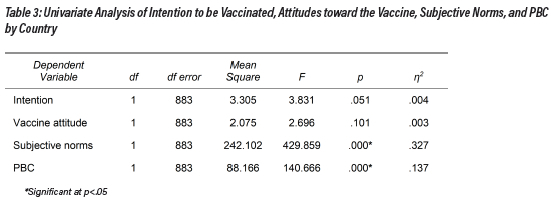
The univariate analysis revealed that the participants of the two countries had small significant differences in their subjective norms about HPV vaccine, F(1, 883) = 429.86, p < .001 η2 = .327, and perceived behavioural control, F(1, 883) = 140.67, p < .001, η2 = .137. Table 3 shows the results from the univariate analysis.
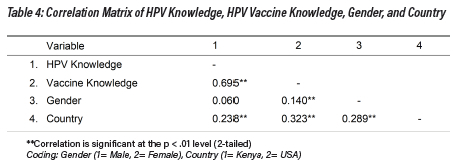
The second research question explored if there were any differences in the participants' HPV knowledge and HPV vaccine knowledge by country and gender. A correlation analysis revealed that HPV knowledge was correlated with H PV vaccine knowledge and country, but not with gender. The matrix also revealed that HPV vaccine knowledge was correlated with both gender and country. Table 4 summarises the results from the correlation analysis.
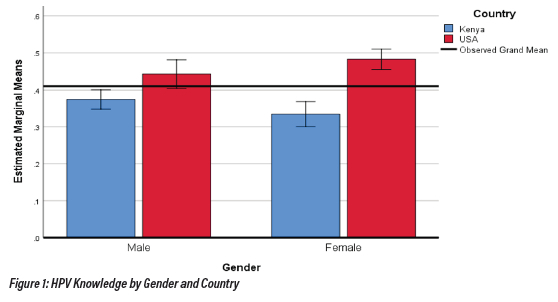
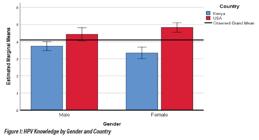
To investigate if there were any differences by gender and country concerning knowledge about HPV and the HPV vaccine, a two-way MANOVA was conducted with gender and country as the independent variables and the knowledge about HPV and the HPV vaccine as dependent variables. The multivariate analysis revealed minimal differences for gender, Wilks Λ = .992, F(2, 922) = 3.705, p < .05, η2 = .008, and the country of the participant, Wilks lambda = .915, F(2, 922) = 42.88, p < .001, η2 = .085. The interaction term for the main effect between gender and country of the participants was also significant, Wilks Λ = .978, F (2, 922) = 10.27, (p < .001), η 2 = .022. The results revealed that male (M = .4429, SD = .2591) and female participants in the US (M = .4829, SD = .2234) had a slightly greater knowledge about HPV compared to male (M = .3742, SD = .2312) and female participants in Kenya (M = .4829, SD = .2234). As a whole, women in both Kenya and the US had greater knowledge about HPV compared to men in their respective countries.
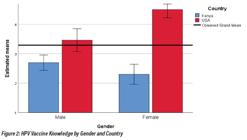
Regarding the HPV vaccine, the results revealed that males (M = .35457, SD = .25485) and females (M = .45496, SD = .2383) in the US had slightly greater knowledge about the HPV vaccine compared to males (M = .27695, SD = .2213) and females (M = .2301, SD = .23278) in Kenya. Overall, females in both Kenya and the US had greater knowledge about the HPV vaccine compared to males in their respective countries.
The univariate analysis between subjects revealed no significant gender differences in the HPV knowledge of the participants, F(1, 923) = .000, p = .993, η2 = .000. However, there were small significant differences in the vaccine knowledge of the participants by gender F(1, 923) = 4.055, p <.05, η 2 = .004. There were also significant differences in the HPV knowledge by country of the participants, F(1, 923) = 46.136, p < .001, η2 = .048, and significant differences by country in HPV vaccine knowledge, F(1, 923) = 85.299, p < .001, η2 = .085. Additionally, the interaction effect of gender and country was also significant for both HPV knowledge, F(1, 923) = 6.231, p = .013, η2= .007, and HPV vaccine knowledge, F(1, 923) = 20.048, p < .001, η 2= .021.
Overall, the male and female participants in the US outscored males and female participants from Kenya on both HPV knowledge and HPV vaccine knowledge. There were minimal differences between males in the US and males in Kenya, but US females had greater knowledge about HPV and HPV vaccine compared to the Kenyan females. The clustered bar graphs in Figures 1 and 2 show the differences by gender and country for the HPV vaccine.
DISCUSSION
Overall, the results suggest that Kenyan and the US students converged on certain health trends but differed in others. For example, the students at the Kenyan university indicated a low understanding of HPV and the HPV vaccine compared to students at the US university. More specifically, male and female students in the US scored higher than male and female students from Kenya on both knowledge about HPV and HPV vaccine. These finding are consistent with previous studies which have suggested that low HPV and HPV vaccine knowledge among Kenyans might be as a result of inadequate public awareness campaigns about risk factors of HPV, mistrust in government and health workers, poor service delivery, and religious beliefs (Muturi, 2020; Rositch et al., 2012). Also, the country of origin moderated the relationship between subjective norms and intentions. These findings suggest that when designing an intervention involving these two groups, there is a need to consider various factors relevant to the country of origin such as the prevailing norms about the HPV vaccine. This is especially important for the Kenyan students because Sub-Saharan Africa continues to lead in HPV infections and cervical cancer (Kiatpongsan & Kim, 2014).
The study also found that gender interacted significantly with the country of the student on subjective norms about HPV vaccine. Specifically, the US students were more likely influenced by subjective norms than the Kenyan students to get the HPV vaccine. This suggests that the opinions of important others (such as close friends or family) about HPV vaccines, either positive or negative, matter to the US students compared to the Kenyan students when deciding to get the HPV vaccines. The implication is that campaign messages highlighting subjective norms (i.e., opinion of important others) about the HPV vaccine will more likely encourage the US students than the Kenyan students to get the HPV vaccine. Additionally, the study found that females in both countries have greater HPV knowledge compared to their male counterparts. This is not surprising, as previous studies have consistently shown that males have lower HPV and HPV knowledge than their female counterparts because cervical cancer campaigns have almost exclusively targeted females (Kolek et al., 2022; Shah et al., 2021).
Furthermore, the results revealed that subjective norms and HPV knowledge were the strongest predictors of vaccination intentions among Kenyan female students. In comparison, the strongest predictors of intention among the US female students were subjective norms and attitudes toward the HPV vaccine. These findings are consistent with previous studies which have suggested that among the predictors of the theory of planned behaviour, attitudes and social norms are strong predictors of HPV vaccination intention among college students (Catalano et al., 2017; Shah et al., 2021). This highlights that even among those of the same gender in a population, the motivations for vaccination intentions differ. The same trend regarding gender was observed among male participants in Kenya and the US. For example, the strongest predictors of vaccination intentions among the Kenyan male students were subjective norms, perceived behavioural control, and HPV vaccine knowledge. In contrast, only subjective norms predicted the intention to be vaccinated among male students studying at the US university. These differences in vaccination intentions suggest the need to treat each target population as unique when designing and implementing health interventions.
In addition, this study demonstrates the relevance of the theory of planned behaviour in predicting and explaining health seeking behaviours among students (Blanchard et al., 2007; Gerend & Shepherd, 2012; Hirth et al., 2018). For example, various concepts of the TPB, such as attitudes toward the vaccine, subjective norms, and perceived behavioural control emerged as salient predictors of the intention of students to get the HPV vaccine. The findings of this study demonstrate the importance of TPB in communication research as its validity has been criticised by some scholars for ignoring the role of some variables, such as emotions and demographic characteristics of participants in predicting the intention to act (Sniehotta et al., 2014).
Implications for Policy and Practice
This study's findings offer some insights that contribute to both policy and practice in various ways. The findings highlight the most salient predictors of vaccination intentions among college students that health communicators can focus on when designing and implementing HPV vaccination campaigns targeting students in Kenya and the US. For example, the findings indicate that, across male and female participants, subjective norms strongly predicted intentions to get vaccinated. Thus, when designing campaigns targeting these groups, it would be important to consider the prevailing norms about the HPV vaccine and find ways of targeting those norms. This can be achieved by linking the HPV vaccine to the social benefits it can offer members of a social group, especially in preventing HPV infections such as genital warts and various types of cancer.
The subjective norms about HPV might be influenced by the prevailing culture of the target population. Culture is often a salient factor in health because it offers a context through which health issues can be discussed and better understood (Airhihenbuwa & Webster, 2012). Past research (e.g., Airhihenbuwa & Webster, 2012; Tindall & Vardeman-Winter, 2011) has argued that replicating health interventions developed from outside a culture can fail, especially if the interventions assume a universal, uniform approach to learning. In Kenya, there is a widespread belief that HPV and cervical cancer are women's health issues (Kolek et al., 2022). The feminisation of the HPV vaccination, which has resulted in female-focused initiatives, has resulted in a systematic disregard of the male sex in HPV vaccine campaigns, which is a cause for worry. As a result, there have been widespread requests for sex-neutral HPV vaccination campaigns (Kolek et al., 2022). The culture of students in Kenya is different from that of students in the US. Therefore, these groups might have divergent norms concerning the HPV vaccine that should be considered when implementing an intervention aimed at increasing uptake of the HPV vaccine. In addition, perceived behavioural control and HPV vaccine knowledge were important predictors of vaccination intention among the Kenyan males. This highlights the need to focus on perceived self-efficacy and self-control of Kenyan males regarding the HPV vaccine through the use of behaviour change campaigns based on theories, such as the health belief model. This is an interesting finding, considering that national HPV vaccination, which started in 2019, has solely targeted girls (WHO, 2019). The majority of men may not be aware that they can benefit from the HPV vaccine or even know where to get the vaccine. Therefore, a campaign aimed at enhancing the behavioural control of males can first target increasing their knowledge about the importance of the HPV vaccine and then explaining the infections it prevents. Such a campaign would be important because previous studies indicate that men tend to be less knowledgeable about the HPV vaccine than women, and they have a lower HPV vaccination rate than women (Mehta et al., 2013).
Among the Kenyan female students, HPV knowledge was an important predictor, while the US female students had an additional predictor such as vaccine attitudes. This suggests that to increase the vaccine intention of Kenyan women, besides targeting the subjective norms, health campaigns must also aim at boosting their understanding of HPV and the HPV vaccine. This would also be important because past research (e.g. Khan et al., 2016; Tatar et al., 2017) has indicated that students have little knowledge about HPV and the HPV vaccine. Previous studies (e.g., Korir et al., 2015; Vermandere et al., 2015) found that the major impediments to the uptake of the HPV vaccine in Kenya are inadequate awareness and low knowledge levels about HPV and HPV vaccines. To increase the uptake of the HPV vaccine among females in the USA, an effective health communication intervention should target both subjective norms and attitudes toward the HPV vaccine. Overall, boosting the knowledge of women in particular can help address misinformation associated with the HPV vaccine. In Kenya, for example, the doctors affiliated with the Catholic Church expressed reservations about the vaccine due to their concerns that the vaccine might encourage promiscuity among young adults (Njanja, 2019). Also, part of this misinformation alleges that the HPV vaccine might cause infertility among girls or even cause death (e.g., Cipriano et al., 2018), and might also be misconstrued as a validation of deviant sexual behaviours among young adults (e.g., Cipriano et al., 2018; Nan et al., 2016). Even so, promoting uptake of the HPV vaccine among female students is valuable and would go a long way towards preventing cervical cancer, which remains one of the leading causes of mortality among women (Nayak et al., 2016; Panatto et al., 2009).
Policy guidelines are particularly important for Kenya, which started its national HPV vaccination program in 2019 (WHO, 2019). When creating policies concerning HPV vaccination, the Kenyan government should consider both males and females, as the findings of this study indicate that males have scant knowledge about HPV and HPV vaccine and can benefit from the vaccine uptake to prevent genital warts and penile and anal cancers (CDC, 2016; Mehta et al., 2013). Kenya needs to enact policies that enable the access of both genders to the HPV vaccine, such as school-based programs that have proven effective in other countries (Brabin et al., 2008). This is particularly important, because the results of this study suggest that perceived behavioural control is an important predictor of vaccine intention among Kenyan males. Additionally, the Kenyan government can establish policies that support the administration of the HPV vaccine alongside other vaccines (e.g., Reiter et al., 2012). This would go a long way towards encouraging the uptake of the HPV vaccine in young adults.
LIMITATIONS OF THE STUDY AND FUTURE DIRECTIONSThis study had some limitations, such as its design which relied on self-reported measures. Therefore, it would be important to treat these findings with caution as it is possible that the participants forgot or even misrepresented their perceptions about their health-seeking behaviours. This study only focused on the vaccination intentions of students rather than the actual vaccination behaviours. Therefore, another possible route for future research would be to extend the current study to examine if the predictors of intention identified in this study also lead to vaccination behaviour.
CONCLUSION
Behaviour change communication aimed at increasing the uptake of HPV vaccine is a complex phenomenon that continues to intrigue many researchers and practitioners. Thus, the findings of this study provide preliminary data that can inform the design of effective HPV campaigns targeting college students. Collectively, the results of this study reveal the need for health communicators to appreciate that the health-seeking behaviours of college students are influenced by a confluence of factors. Such an appreciation is important in order to avoid the temptations of adopting a 'one health intervention fits all' approach when designing vaccination programs.
REFERENCES
LITERATURE REVIEW
-
Ajzen, 1. (1991). The Theory of Planned Behavior. Organizational behavior and human decision processes, 50, 179-211. https://doi.org/10.1016/0749-5978(91)90020-T
» https://doi.org/10.1016/0749-5978(91)90020-T -
Airhihenbuwa, C. & Webster, J. (2012). Culture and African contexts of HIV/AIDS prevention, care, and support. Journal of Social Aspects of HIV/AIDS, 1:4-13. https://doi.org/10.1080/17290376.2004.9724822
» https://doi.org/10.1080/17290376.2004.9724822 -
Andrews, K.R., Silk, K.S. & Eneli, I.U. (2010). Parents as health promoters: A theory of planned behavior perspective on the prevention of childhood obesity. Journal of Health Communication, 15:95-10. https://doi.org/10.1080/10810730903460567
» https://doi.org/10.1080/10810730903460567 -
Blanchard, C.M., Kupperman, J., Sparling, P., Nehl, E., Rhodes, R., Courneya, K.S., Baker, F. & Hunt, T. (2007). Ethnicity as a moderator of the theory of planned behavior and physical activity in college students. Research Quarterly for Exercise and Sport, 78:531-541. https://doi.org/10.1080/02701367.2007.10599452
» https://doi.org/10.1080/02701367.2007.10599452 -
Brabin, L., Roberts, S.A., Stretch, R., Baxter, D., Chambers, G., Kitchener, H. & McCann, R. (2008). Uptake of first two doses of human papillomavirus vaccine by adolescent schoolgirls in Manchester: Prospective cohort study. British Medical Journal, 336:1056-1058. https://doi.org10.1136/bmj.39541.534109.BE.
» https://doi.org10.1136/bmj.39541.534109.BE -
Brann, M. & Sutton, M.L. (2009). The theory of planned behavior and college students' willingness to talk about smoking-related behaviors. Communication Research Reports, 26:198-207.https://doi.org/10.1080/08824090903074399
» https://doi.org/10.1080/08824090903074399 -
Boyce, T.G., Christianson, B., Hanson, K.E., Dunn, D., Polter, E., VanWormer, J.J., Williams, C.L., Belongia, E.A. & McLean, H.Q. (2022). Factors associated with human papillomavirus and meningococcal vaccination among adolescents living in rural and urban areas. Vaccine: X, 11:100180. https://doi.org/10.1016/j.jvacx.2022.100180
» https://doi.org/10.1016/j.jvacx.2022.100180 -
Bynum, S.A., Brandt, H.M., Friedman, D.B., Annang, L. & Tanner, A. (2011). Knowledge, beliefs, and behaviors: Examining human papillomavirus-related gender differences among African American college students. Journal of American College Health, 59:296-302. https://doi.org/10.1080/07448481.2010.503725
» https://doi.org/10.1080/07448481.2010.503725 -
Cartmell, K.B., Young-Pierce, J., McGue, S., Alberg, A.J., Luque, J.S., Zubizarreta, M. & Brandt, H.M. (2018). Barriers, facilitators, and potential strategies for increasing HPV vaccination: A statewide assessment to inform action. Papillomavirus Research, 5:21-31. https://doi.org/10.1016/j.pvr.2017.11.003
» https://doi.org/10.1016/j.pvr.2017.11.003 -
Catalano, H.P., Knowlden, A.P., Birch, D.A., Leeper, J.D., Paschal A.M. & Usdan, S.L. (2017). Using the theory of planned behavior to predict HPV vaccination intentions of college men. Journal of American College Health, 65(3):197-207. https://doi.org/10.1080/07448481.2016.1269771
» https://doi.org/10.1080/07448481.2016.1269771 -
Centers for Disease Control and Prevention. (2016). Human Papillomavirus (HPV). Retrieved from https://www.cdc.gov/hpv/parents/whatishpv.html (October 20, 2018)
» https://www.cdc.gov/hpv/parents/whatishpv.html -
Cipriano, J., Scoloveno, R. & Kelly, A. (2018). Increasing parental knowledge related to the human papillomavirus (HPV) vaccine. Journal of Pediatric Health Care, 32:29-35. https://doi.org/10.1016/j.pedhc.2017.06.006
» https://doi.org/10.1016/j.pedhc.2017.06.006 -
Dodd, R.H., McCaffery, K.J., Marlow, L., Ostini, R., Zimet, G.D. & Waller, J. (2014). Knowledge of human papillomavirus (HPV) testing in the USA, the UK and Australia: an international survey. Sexually Transmitted Infections, 90:201-207. https://doi.org/10.1136/sextrans-2013-051402
» https://doi.org/10.1136/sextrans-2013-051402 -
Ebrahimi, N., Yousefi, Z., Khosravi, G., Malayeri, F.E., Golabi, M., Askarzadeh, M., Shams, M.H., Ghezelbash, B. & Eskandari, N. (2023). Human papillomavirus vaccination in low-and middle-income countries: Progression, barriers, and future prospective. Frontiers in Immunology, 14. https://doi.org/10.3389/fimmu.2023.1150238
» https://doi.org/10.3389/fimmu.2023.1150238 -
Forman, D., Martel, C., Lacey, C., Soerjomataram, I., Lortet-Tieulent, J., Vignat, J., Ferlay, J., Bray, F., Plummer, M. & Franceschi, S. (2012). Global burden of human papillomavirus and related diseases. Vaccine, 30(S):F12-F23. https://doi.org/10.1016/j.vaccine.2012.07.055
» https://doi.org/10.1016/j.vaccine.2012.07.055 -
Gerend, M.A. & Shepherd, J.E. (2012). Predicting human papillomavirus vaccine uptake in young adult women: Comparing the health belief model and theory of planned behavior. Annals of Behavioral Medicine, 44:171-180. https://doi.org/10.1007/s12160-012-9366-5
» https://doi.org/10.1007/s12160-012-9366-5 -
Ginjupalli, R., Mundaden, R., Choi, Y., Herfel, E., Oketch, SY., Watt, M.H., Makhulo, B., Bukusi, E.A. & Huchko, M. (2022). Developing a framework to describe stigma related to cervical cancer and HPV in western Kenya. BMC Women's Health, 22(1). https://doi.org/10.1186/s12905-022-01619-y
» https://doi.org/10.1186/s12905-022-01619-y -
Gostin, L.O. (2018). HPV vaccination: A public good and a health imperative. Opiods, Law & Ethics, 46:511-513.https://doi.org/10.1177/1073110518782958
» https://doi.org/10.1177/1073110518782958 -
Hirth, J.M., Batuuka, D.N., Gross, T.T., Cofie, L. & Berenson, A.B. (2018). Human papillomavirus vaccine motivators and barriers among community college students: Considerations for development of a successful vaccination program. Vaccine, 36:1032-1037. https://doi.org/10.1016/j.vaccine.2018.01.037
» https://doi.org/10.1016/j.vaccine.2018.01.037 -
Kiatpongsan S. & Kim, J.J. (2014). Costs and cost-effectiveness of 9-valent human papillomavirus (HPV) vaccination in two East African countries. PLoS ONE 9(9):e106836. https://doi.org/10.1017/S0950268817000747
» https://doi.org/10.1017/S0950268817000747 -
Kahan, D.M. (2013). A risky science communication environment for vaccines. Science, 342:53-54. https://doi.10.1126/science.1245724
» https://doi.10.1126/science.1245724 -
Kasymova, S. (2020). Human papillomavirus (HPV) and HPV vaccine knowledge, the intention to vaccinate, and HPV vaccination uptake among male college students. Journal of American College Health, 70(4):1079-1093. https://doi.org/10.1080/07448481.2020.1785471
» https://doi.org/10.1080/07448481.2020.1785471 -
Khan, T.M., Buksh, M.A., Rehman, I.U. & Saleem, A. (2016). Knowledge, attitudes, and perceptions towards human papillomavirus among university students in Pakistan. Papillomavirus Research, 2:122-127. https://doi.org/10.1016/j.pvr.2016.06.001
» https://doi.org/10.1016/j.pvr.2016.06.001 - Knapp, S., Marziliano, A. & Moyer, A. (2014). Identity threat and stigma in cancer patients. Health Psychology Open, 2014:1-10. doi: 10.1177/2055102914552281
-
Kolek, C.O., Opanga, S.A., Okalebo, F., Birichi, A., Kurdi, A., Godman, B. & Meyer, J.C. (2022). Impact of parental knowledge and beliefs on HPV vaccine hesitancy in Kenya-Findings and implications. Vaccines, 10(8):1185. https://doi.org/10.3390/vaccines10081185
» https://doi.org/10.3390/vaccines10081185 -
Korir, A., Okerosi, N., Ronoh, V., Mutuma, G. & Parkin, M. (2015). Incidence of cancer in Nairobi, Kenya (2004- 2008). International Journal of Cancer, 137:2053-2059. https://doi.org/10.1002/ijc.29674
» https://doi.org/10.1002/ijc.29674 -
Markowitz, L.E., Dunne, E.F., Saraiya, M., Chesson, H.W., Curtis, C.R., Gee, J., Bocchini Jr, J.A. & Unger, E.R. (2014). Human papillomavirus vaccination: Recommendations of the advisory committee on immunization practices (ACIP). Morbidity and Mortality Weekly Report, 63:1-30. Retrieved from https://www.cdc.gov/mmwr/preview/mmwrhtml/rr6305a1.htm
» https://www.cdc.gov/mmwr/preview/mmwrhtml/rr6305a1.htm -
Marlow, L., Zimet, G.D., McCaffery, K.J., Ostini, R. & Waller, J. (2013). Knowledge of human papillomavirus (HPV) and HPV vaccination: An international comparison. Vaccine, 31:763-769. https://doi.org/10.1016/j.vaccine.2012.11.083
» https://doi.org/10.1016/j.vaccine.2012.11.083 -
Mehta, P., Sharma, M. & Lee, R. (2013). Using the health belief model in qualitative focus groups to identify HPV vaccine acceptability in college men. International Quarterly of Community Health Education, 33:175-187. https://doi.org/10.2190/IQ.33.2.f
» https://doi.org/10.2190/IQ.33.2.f -
Mihigo, R., Okeibunor, J., Anya, B., Mkanda, P. & Zawaira, F. (2017). Challenges of immunization in the African region. The Pan African Medical Journai, 27:1-6. https://doi.org/10.11604/pamj.supp.2017.27.3.12127
» https://doi.org/10.11604/pamj.supp.2017.27.3.12127 -
Mungo, C., Ibrahim, S., Bukusi, E.A., Truong, H.M., Cohen, C.R. & Huchko, M. (2020). Scaling up cervical cancer prevention in western Kenya: Treatment access following a community-based HPV testing approach. International Journai of Gynecology & Obstetrics, 152(1), 60-67. https://doi.org/10.1002/ijgo.13171
» https://doi.org/10.1002/ijgo.13171 -
Muturi, N. (2020). eHealth literacy and the motivators for HPV prevention among young adults in Kenya. Communication Research Reports, 37(3):74-86. https://doi.org/10.1080/08824096.2020.1763942
» https://doi.org/10.1080/08824096.2020.1763942 -
Nan, X., Madden, K., Richards, A., Holt, C., Wang, M. & Tracy, K. (2016). Message framing, perceived susceptibility, and intentions to vaccinate children against HPV among African American parents. Health Communication, 31:798-805. https://doi.org/10.80/10410236.2015.1005280
» https://doi.org/10.80/10410236.2015.1005280 -
Nayak, A., Murthy, S.N., Swarup, A., Dutt, V. & Muthukumar, V. (2016). Current knowledge, attitude, and practice about cervical cancer among rural Indian women. International Journal of Medical Science and Public health, 5:1554-1558. https://doi.org/10.5455/ijmsph.2016.01112015252
» https://doi.org/10.5455/ijmsph.2016.01112015252 -
Nyaga, R. (2020). Do intentions vary? A comparative study of college students' HPV vaccine intentions in a Kenyan university and a large midwestern USA university [Doctoral dissertation, Purdue University Graduate School]. https://doi.org/10.25394/PGS.12592247.v1
» https://doi.org/10.25394/PGS.12592247.v1 -
North, A.L. & Niccolai, L.M. (2016). Human papillomavirus vaccination requirements in US schools: Recommendations for moving forward. American Journal of Public Health, 106:1765-1770. https://doi.org/10.2105/AJPH.2016.303286
» https://doi.org/10.2105/AJPH.2016.303286 -
Njanja, A. (2019, Aug 21) State to roll out cervical cancer vaccination. Daily Nation. Retrieved fromhttps://www.nation.co.ke/news/Catholic-doctors-oppose-cervical-cancer-vaccination-/1056-5243114-odx0nw/index.html
» https://www.nation.co.ke/news/Catholic-doctors-oppose-cervical-cancer-vaccination-/1056-5243114-odx0nw/index.html -
Panatto, D., Amicizia, D., Lugarini, J., Sasso, T., Sormani, M., Badolati, G. & Gasparini, R. (2009). Sexual behavior in Ligurian (Northern Italy) adolescents and young people suggestions for HPV vaccination policies. Vaccine, 27:A6-A10. https://doi.org/10.1016/j.vaccine.2008.10.057
» https://doi.org/10.1016/j.vaccine.2008.10.057 -
Pedersen, E.A., Loft, L.H., Jacobsen, S.U., S0borg, B. & Bigaard, J. (2020). Strategic health communication on social media: Insights from a Danish social media campaign to address HPV vaccination hesitancy. Vaccine, 38(31):4909-4915. https://doi.org/10.1016/j.vaccine.2020.05.061
» https://doi.org/10.1016/j.vaccine.2020.05.061 -
Perez, S., Tatar, O., Ostini, R., Shapiro, G.K., Waller, J., Zimet, G. & Rosberger, Z. (2016). Extending and validating a human papillomavirus (HPV) knowledge measure in a national sample of Canadian parents of boys. Preventive Medicine, 91:43-49. https://doi.org/10.1016/j.ypmed.2016.07.017
» https://doi.org/10.1016/j.ypmed.2016.07.017 - Pickett, L.L, Ginsburg, H.J., Mendez, R.V., Lim, D.E., Blankenship, K., Foster, L.E., Lewis, D.H., Ramon, S.W., Saltis, B.M. & Sheffield, S.B. (2012). Ajzen's theory of planned behavior as it relates to eating disorders and body satisfaction. North American Journal of Psychology, 14:339-354.
-
Pitts, M., Smith, A., Croy, S., Lyons, A., Ryall, R., Garland, S., Wong, M.L. & Hseon, T.E. (2009). Singaporean men's knowledge of cervical cancer and human papillomavirus (HPV) and their attitude toward HPV vaccination. Vaccine, 27:2989-2993. https://doi.org/10.1016/j.vaccine.2009.02.101
» https://doi.org/10.1016/j.vaccine.2009.02.101 -
Ragin, C., Edwards, R.P., Jones, J., Thurman, N.E., Hagan, K.L., Jones, E.A., Taioli, E. (2009). Knowledge about human papillomavirus and the HPV vaccine- a survey of the general population. Infectious Agents and Cancer, 4:1-9. https://doi.org/10.1186/1750-9378-4-S1-S10
» https://doi.org/10.1186/1750-9378-4-S1-S10 -
Ran, H., Chen, Y., Gao, J., Guo, H. & Peng, S. (2022). Low awareness of HPV infection and willingness of HPV vaccination among Chinese male college students in the east of China. Frontiers in Public Health, 10. https://doi.org/10.3389/fpubh.2022.971707
» https://doi.org/10.3389/fpubh.2022.971707 -
Reiter, P.L., McRee, A., Pepper, J.K. & Brewer, N.T. (2012). Default policies and parents' consent for school-located HPV vaccination. Journal of Behavioral Medicine, 35:651-657. https://doi.org/10.1007/s10865-012-9397-1
» https://doi.org/10.1007/s10865-012-9397-1 -
Reno, J.E., Thomas, J., Pyrzanowski, J., Lockhart, S., O'Leary, S.T., Campagna, E.J. & Dempsey, A.F. (2019). Examining strategies for improving healthcare providers' communication about adolescent HPV vaccination: Evaluation of secondary outcomes in a randomized controlled trial. Human Vaccines & Immunotherapeutics, 15(7-8):1592-1598. https://doi.org/10.1080/21645515.2018.1547607
» https://doi.org/10.1080/21645515.2018.1547607 -
Richards, K. (2016). Intention of college students to receive the human papillomavirus vaccine. Health Education, 116:342-355. https://doi.org/10.1108/HE-04-2015-0014
» https://doi.org/10.1108/HE-04-2015-0014 -
Rositch, A.F., Gatuguta, A., Choi, RY., Guthrie, B.L., Mackelprang, R.D., Bosire, R., Manyara, L., Kiarie, J.N., Smith, J.S. & Farquhar, C. (2012). Knowledge and acceptability of pap smears, self-sampling and HPV vaccination among adult women in Kenya. PLoS ONE, 7(7):e40766. https://doi.org/10.1371/journal.pone.0040766
» https://doi.org/10.1371/journal.pone.0040766 -
Rosser, J.I., Njoroge, B. & Huchko, M. (2016). Cervical cancer stigma in rural Kenya: What does HIV have to do with it? Journal of Cancer Education, 31:413-418. doi: 10.1007/s13187-015-0843-y
» https://doi.org/10.1007/s13187-015-0843-y -
Satterwhite, C.L., Torrone, E., Meites, E., Dunne, E., Mahajan, R., Ocfemia, M.C., Su, J., Xu, F. & Weinstock, H. (2013). Sexually transmitted infections among US women and men: Prevalence and incidence estimates, 2008. Sexually Transmitted Diseases, 40:187-193. https://doi.org/10.1097/OLQ.0b013e318286bb53
» https://doi.org/10.1097/OLQ.0b013e318286bb53 -
Shah, S.F.A., Ginossar, T., Bently, J.M., Zimet, G. & McGrail, J.P. (2021). Using the theory of planned behavior to identify correlates of HPV vaccination uptake among college students attending a rural university. Vaccine, 39:7421-7428. https://doi.org/10.1016/j.vaccine.2021.10.082
» https://doi.org/10.1016/j.vaccine.2021.10.082 -
Shen, G.C. (2014). Cross-national diffusion of mental health policy. International Journal of Health Policy Management, 3:269-282. doi: 10.15171/ijhpm.2014.96
» https://doi.org/10.15171/ijhpm.2014.96 -
Sharma, M. & Nahar, V.K. (2017). New approach for promoting HPV vaccination in college men based on multi-theory model (MTM) of health behavior change. Journal of Preventative Medicine Hygiene, 58 (3), E203-E210. Retrieved from https://www.ncbi.nlm.nih.gov/pmc/articles/PMC5668929/
» https://www.ncbi.nlm.nih.gov/pmc/articles/PMC5668929/ - Skinner, E. (2017). Vaccination policies: Requirements and exemptions for entering school. National Conference of State Legislatures, 25:1-2.
-
Sniehotta, F., Presseau, J., & Araújo-Soares, V. (2014). Time to retire the theory of planned behaviour, Health Psychology Review, 8(1):1-7. https://doi.org/10.1080/17437199.2013.869710
» https://doi.org/10.1080/17437199.2013.869710 -
Spayne, J. & Hesketh, T. (2021). An estimate of global human papillomavirus vaccination coverage: Analysis of country-level indicators reported to WHO-UNICEF. SSRN Electronic Journal. https://doi.org/10.2139/ssrn.3784648
» https://doi.org/10.2139/ssrn.3784648 -
Tatar, O., Perez, S., Naz, A., Shapiro, G.K. & Rosberger, Z. (2017). Psychosocial correlates of HPV vaccine acceptability in college males: A cross-sectional exploratory study. Papillomavirus Research, 4:99-107.https://doi.org/10.1016/j.pvr.2017.11.001
» https://doi.org/10.1016/j.pvr.2017.11.001 -
Tindall, N. & Vardeman-Winter, J. (2011). Complications in segmenting campaign publics: Women of color explain their problems, involvement, and constraints in reading heart disease communication. Howard Journal of Communications, 22:280-301. https://doi.org/10.1080/10646175.2011.590407
» https://doi.org/10.1080/10646175.2011.590407 -
Vermandere, H., Naanyu, V., Degomme, O. & Michielsen, K. (2015). Implementation of an HPV vaccination program in Eldoret, Kenya: Results from a qualitative assessment by key stakeholders. BMC Public Health, 15:1-15. https://doi.org/10.1186/s12889-015-2219-y
» https://doi.org/10.1186/s12889-015-2219-y -
Vorpahl, M.M. & Yang, J.Z. (2018). Who is to blame? Framing HPV to influence vaccination intentions among college students. Health Communication, 33:620-627. https://doi.org/10.1080/10410236.2017.1289436
» https://doi.org/10.1080/10410236.2017.1289436 -
World Health Organization. (2019, Oct 18). Kenya takes vital step against cervical cancer and introduces HPV vaccine into routine immunization. Retrieved from https://www.afro.who.int/news/kenya-takes-vital-step-against-cervical-cancer-and-introduces-hpv-vaccine-routine-immunization
» https://www.afro.who.int/news/kenya-takes-vital-step-against-cervical-cancer-and-introduces-hpv-vaccine-routine-immunization -
Xu, M.A., Choi, J., Capasso, A. & DiClemente, R. (2023). Patient-provider health communication strategies: Enhancing HPV vaccine uptake among adolescents of color. Healthcare, 11(12):1702. https://doi.org/10.3390/healthcare11121702
» https://doi.org/10.3390/healthcare11121702 -
Zemore, S.E. & Ajzen, I. (2013). Predicting substance abuse treatment completion using a new scale based on the theory of planned behavior. Journal of Substance Abuse Treatment, 46:174-182. https://doi.org/10.1016/j.jsat.2013.06.011
» https://doi.org/10.1016/j.jsat.2013.06.011
Accepted February 2024