The Practice of Public Relations in Lesotho's Government Ministries: A Case Study
Abstract
Although scholars and practitioners increasingly recognise the strategic importance of public relations in the private and public sector, many government ministries have poor public relations, which affects service delivery. This is coupled with limited scholarship on public relations in developing countries, including sub-Saharan Africa. This article draws on a case study of government ministries in Lesotho to establish how public relations is practised, contested and can be repurposed in the African context. To collect data, questionnaires and semi-structured interviews were employed to solicit views from 20 public relations officers working in 10 government ministries in Lesotho. Data were analysed through an inductive thematic analysis. The findings suggest that public relations professionals face many challenges in executing their duties. These include a lack of communication; a lack of resources; misunderstanding (specifically from management) as to what public relations entails; bureaucracy, political influence and manipulation of information released to the public; information presented in one language only; and the absence of a public relations cadre. Collectively, these challenges suggest limited awareness of the full scope of public relations and a predominance of routine technician tasks over strategic advisory roles. The proposed directives for improvement present an opportunity for public relations practitioners working in government ministries to strategise their work.
Communication; government ministries; Lesotho; management; public relations
INTRODUCTION
The body of knowledge on public relations has been dominated by discourse about best practices and how the profession might be applied to maximise value for organisations. Despite the call for increased documentation on public relations (PR) practice in underrepresented regions globally (Molleda et al., 2017), Africa continues to be among the most underrepresented continents in PR research (Nutsugah & Bossman, 2023). Research on PR practices on the African continent remains limited, with only a few studies conducted in Botswana (Chaka & Agang, 2011), Ethiopia (Geremew, 2017; Spurgeon & Wondimu, 2018), Ghana (Anani-Bossman, 2021; Wu & Baah-Boakye, 2014), Kenya (Kiambi, 2010; Kiambi & Nadler, 2012; Ramakrishna, 2016), Nigeria (Ukonu et al., 2018), South Africa (Holtzhausen, 2005; Rensburg & Botha, 2014; Tindall & Holtzhausen, 2011), Uganda (Natifu & Zikusooka, 2011) and Zimbabwe (Muchena, 2017, 2018; Ngondo, 2019; Ngondo & Klyueva, 2020). Many African nations are still left out of the PR discourse.
This state of affairs can be attributed to several factors: First, the ongoing issues of visibility for African PR scholarship at the global level (Nutsugah & Bossman, 2023) makes it challenging for academics and practitioners to obtain international recognition and impact, creating the impression that PR practitioners and academics in Africa are less knowledgeable or unaware of the most recent theories, studies and best practices (Akpabio, 2009). Second, there is a lack of understanding regarding PR practices in Africa (Anani-Bossman, 2022; Ngondo & Klyueva, 2023; Van Heerden & Rensburg, 2005), which prevents the continent from fulfilling its obligations to other emerging nations and the global PR society (Van Heerden & Rensburg, 2005). Third, political instability, economic challenges and shifting societal dynamics continue to pose significant obstacles for PR practitioners across the continent (El Rafie, 2024), while future changes and environmental conditions affect the development of public relations research, theory and practice in Africa (Benecke et al., 2025). Lastly, the dominance of Western perspectives and models in PR (Anani-Bossman & Tandoh, 2023; Ngondo & Klyueva, 2023) further contributes to this scarcity, leading to a potentially skewed understanding of the field and a lack of emphasis on the unique cultural, social and economic contexts of Africa.
Many private institutions and corporate companies globally recognise the importance of investing in their PR endeavours to build relationships and manage their reputation. In this regard, Balaban and Doornkaat (2009) note that many public and private institutions have PR departments or at least a person in charge of PR activities because communication has become a relevant domain in organisations. Even though the importance of PR is recognised by both the public and the private sectors, it appears that most studies on PR practices are rooted in the private sector (Castelli, 2007). Studies on PR in the public sector are generally overlooked (Luoma-aho & Canel, 2020). This means that very little research is available on the challenges, policies and practical aspects of PR activities in the public sector.
It is the responsibility of government departments to keep the public informed of their activities. However, the practice of PR in governments faces many challenges. Different political ideologies, sociopolitical controls and various levels of development in African countries contribute to these challenges. For instance, Molleda and Suárez (2005) contend that opportunities for corruption are caused by unregulated lobbying practices whereby PR in the government seems to serve the interests of personalities rather than those of institutions, while Rensburg (2002) declares that in many cases in Africa, PR is used as a self-serving tool by politicians.
Creedon and Al-Khaja (2019) submit that it is imperative to focus on PR practice in different countries, contexts and cultures to expand global literature on the practice of PR and to foster a more inclusive and culturally sensitive approach to PR research and practice. This view buttresses the suggestion by Edwards and Hodges (2011) that a (radical) sociocultural perspective of PR is both required and useful for increasing professional expertise and expanding research. These authors argue that more ethnographies of PR from diverse geographic regions and national contexts would help us to better understand the profession and allow us to see the connections between meanings formed in many contexts. Andersson (2024) submits that different contextual circumstances, like the type of organisation, sector and sociocultural circumstances, will influence how PR practitioners strategise their work. It thus makes sense, as Sterne (2011) suggests, that scholars should focus on a country or region when discussing PR practice to capture broader perspectives in international practice and to add to the global body of knowledge. Studies on PR in underexplored regions (such as the one reported in this study) could advance the field and expand theory outside of and without comparison to the Global West or North nations that dominate research (Iannacone et al., 2025).
To remedy the lack of PR scholarship in Africa, this study drew on a case study of government ministries in Lesotho to establish how PR is practised, contested and how it could be repurposed in the African context. In realising the aim, the following objectives were set: 1) to explore the roles and day-to-day activities of PR practitioners working in government ministries; 2) to outline the challenges they encounter in executing their duties; and 3) to propose directives for improving PR in their ministries. It was believed that such a study could inform the PR function at these ministries to be more focused and efficient by equipping PR professionals with the knowledge and skills needed to benefit their communities. In addition, the study could contribute to the knowledge base underpinning PR in Africa, foster awareness of PR practices on the continent and advance PR theory.
THE FOUR MODELS THEORY OF PUBLIC RELATIONS BY GRUNIG AND HUNT (1984)
The four models theory of public relations by Grunig and Hunt (1984) was studied to determine its applicability as a tool for assessing how PR is practised in the government ministries of Lesotho. The model serves as a foundation for understanding and explaining the behaviour of PR practitioners. Botan and Hazleton (2006) state that PR professionals use the four models to understand how they should approach the various publics they communicate with and how to do so effectively. The following section elaborates on the four models.
Press agentry is essentially a one-way communication system in which messages are sent from one source to another. The communication is often characterised by dishonesty, exaggeration and manipulation (Botan & Hazleton, 2006). According to Suyono and Hanathasia (2017), the press agentry or publicity model allows communication without the need for a carefully planned strategy or the study of a targeted public. When using this model, the organisation prioritises achieving its own goals over public interest (Grunig & Hunt, 1984). Although the model remains prevalent in public organisations, its focus is on generating publicity rather than fostering public engagement (Eyo & Onyewuchi, 2025). Since attracting media attention and coverage is its primary aim, accuracy is sometimes sacrificed for impact (Duru et al., 2025). Furthermore, there is the possibility of messages being manipulated by the organisation to achieve its objectives, which neglects the important aspect of feedback from stakeholders (Grunig & Hunt, 1984).
The public information model is similar to the press agentry model in that communication is primarily one way. However, it differs significantly by centring its mission on truthfulness rather than persuasion, meaning that the information shared must be precise, accurate and truthful (Botan & Hazleton, 2006; Suyono & Hanathasia, 2017). This model requires practitioners to not only assess the clarity of their messages but also conduct some audience research to ensure effective communication. Common tools include news releases, guidebooks and new media websites, all emphasising straightforward and relatively objective information (Grunig & Hunt, 1984; Suyono & Hanathasia, 2017). According to this model, disseminated information should be based on facts and should refrain from attempts to improperly influence opinions (Everything PR News, 2025).
Botan and Hazleton (2006) state that the two-way asymmetric model focuses on communication that fosters agreement between the organisation and its publics. Lane (2014) further explains that this model is designed to ensure organisational decisions adopt a balanced approach, aiming for positive outcomes for all parties involved. Central to the model is the use of social research to understand the audience's needs and behaviours, which helps tailor effective and persuasive messages aimed at influencing recipients to accept the organisation's point of view (Everything PR News, 2025; Suyono & Hanathasia, 2017). Although Kriyantono et al. (2017) acknowledge that the model involves public feedback, they emphasise that its primary purpose is to influence the public to adapt to the organisation, rather than fostering mutual adaptation. Supporting this, Suyono and Hanathasia (2017) note that the model employs one-way communication from the organisation to its target audience with the intention of prompting specific actions.
According to Botan and Hazleton (2006), the two-way symmetric model aims to establish mutual understanding between an organisation and its audiences. This model encourages both parties to adjust to each other using a two-way communication approach to develop and maintain harmonious relationships. It promotes direct, reciprocal dialogue between the organisation and its stakeholders. The model allows the organisation not only to influence but also to listen, learn and adapt its modus operandi as a result of the communication process. Importantly, according to this model, the public is considered the primary beneficiary of PR activities. Kriyantono et al. (2017) acknowledge that while the model involves thorough research, conflict resolution occurs through dialogue that leads to cooperative solutions, as the organisation also bears responsibility for protecting its image. Recent research highlights the model's significance in managing crises, enhancing reputations, and facilitating corporate social responsibility through transparency, accountability and ethical communication practices (Davidson, 2025). Evidently, the model calls for negotiations among stakeholders and requires the organisation's willingness to adapt and compromise in response to proposed changes.
ROLES INFORMING THE PRACTICE OF PUBLIC RELATIONSIn understanding PR, the concept of role is imperative (Dozier in Grunig, 1992). In this context, roles refer to the everyday activities that PR practitioners perform (Ngondo & Klyueva, 2020; Van Heerden & Rensburg, 2005). Global PR literature identifies a variety of roles performed by the PR practitioner.
Broom and Smith's (1979) foundational work conceptualised four roles. The communication facilitator facilitates two-way communication between an organisation and its publics. The problem-solving process facilitator works collaboratively with others to identify and solve organisational issues. The expert prescriber acts as a consultant prescribing professional solutions based on specialised knowledge. The communication technician handles the technical production and dissemination of communication materials.
Dozier (1983) tested these roles empirically and found a strong correlation between the roles of communication facilitator, problem-solving process facilitator and expert prescriber, representing distinct functions and responsibilities of a PR practitioner at the managerial level (Ngondo & Klyueva, 2020), while the communication technician was recognised as having a more tactical, execution-focused role. Subsequently, two predominant roles were identified: the manager and the technician.
The PR manager is responsible for developing communication programmes and policies, managing information input, determining what should be shared with the public and how it should be shared, and identifying, managing and anticipating threats from both the internal and external environments (Dozier & Broom, 2006; Ngondo & Klyueva, 2020). Apart from managing the PR team and crafting the brand's narrative, the PR manager has an impact on the workplace atmosphere and promotes organisational success by skilfully handling communication strategies and fostering relationships with important stakeholders. With the rise of digital media, the PR manager's role has evolved from simply issuing press releases to creating blogs and social media content that narrate the organisation's brand story (Sync, 2022).
The PR technician is tasked with producing and distributing communication materials such as news releases, brochures, fact sheets, photos, speeches and social media posts (Broom & Smith, 1979; Dozier, 1983; Ngondo & Klyueva, 2020). In fulfilling the technical role, PR practitioners carry out communication programmes and operate at an operational level, but they hardly ever conduct research or actively engage in the decision-making process (Broom & Smith in Grunig, 1992). Recent expansions of this role include technical digital skills such as search engine optimisation, web analytics and digital publishing to meet the demands of online and social media platforms (Clear, 2021). Literature indicates that in practice, especially within African PR contexts, the distinction between technician and manager can sometimes blur, with practitioners performing overlapping tasks (Anani-Bossman, 2022; Van Heerden & Rensburg, 2005). The blurred boundaries between technician and manager roles in some African settings indicate evolving PR practices towards multifunctionality under resource and skill constraints (Anani-Bossman, 2022).
Steyn (2003) conceptualised the role of the PR strategist to respond to evolving corporate expectations of PR practitioners to engage at a strategic, top-management level rather than just operational or managerial levels. Viewed as the most advanced level of the roles of PR practice (Van Heerden, 2005), the role of the strategist focuses on the "monitoring of relevant environmental developments and the anticipation of their consequences for the organisation's policies and strategies, especially with regard to relationships with stakeholders and other interest groups in society" (Steyn, 2003:8). This role involves making decisions, providing guidance, informing top management of potential outcomes and incorporating strategic information into the decision-making process (Van Heerden & Rensburg, 2005). Traditionally, PR strategists relied on sending press releases and media alerts to journalists, hoping to capture media attention. Today, modern PR approaches extend beyond traditional media outlets to engage audiences directly through the digital platforms and channels they regularly use, enabling more targeted and interactive communication (Noorman, 2024). The role of the PR strategist has been emphasised particularly in African research, highlighting its criticality in complex sociopolitical environments (Muchena, 2017; Ngondo & Klyueva, 2020; Steyn, 2000; Tindall & Holtzhausen, 2011).
It is important to note that both the manager and strategist roles require dynamic adaptability to complex environments and multicultural stakeholder landscapes, especially in African governmental contexts. This aligns with calls for PR to contribute more actively to social and political discourse (Anani-Bossman, 2022; Muchena, 2017).
Taking the above discussion into account, this study followed a three-role typology (PR manager, PR strategist and PR technician) to reflect the roles and describe the activities of PR practitioners in Lesotho's government ministries.
RESEARCH METHODSThe research sought to explore how PR practitioners make meaning of their daily lives in their working environment. Hence, this study was embedded in an interpretive-constructivist paradigm to create meaning of the practice of PR in Lesotho's government ministries. This article represents three facets of a master's study on the practice of PR in Lesotho's government ministries and reports on the roles and daily operations of PR practitioners, the challenges they face in performing their duties and directives for improvement. The article was guided by the following research questions:
RQ1: What are the roles and day-to-day activities of PR practitioners working in Lesotho's government ministries?
RQ2: What challenges do they encounter in executing their duties?
RQ3: How can PR in these ministries be improved?
Since the research was exploratory in nature, a qualitative mode of inquiry was deemed most suitable. Qualitative research explores how people construct meaning from their lived experiences (Babbie, 2011) and uses descriptions in revealing information about certain situations, settings, processes, relationships, systems, or people (Leedy & Ormrod, 2005). A case study design was particularly relevant since the research was focused on exploring a modern, bounded system in real life by gathering comprehensive data from a variety of sources (Creswell, 2013). A case study of the practice of PR in 10 government ministries in Lesotho is presented.
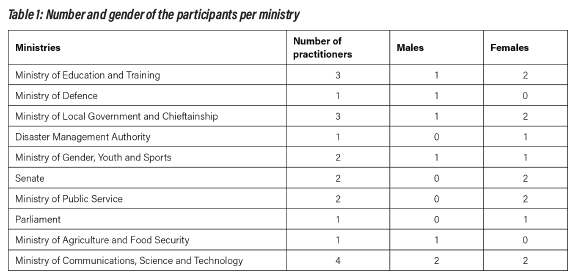
As indicated by Maree (2016), it is often challenging to include each participant in a study due to financial and time constraints. As such, the study's sample consisted of 20 PR practitioners, chosen from a total of 59 government PR practitioners across 10 government ministries in Lesotho. The ministries included the Ministry of Communications, Science and Technology; the Ministry of Education and Training; the Ministry of Defence; the Ministry of Local Government and Chieftainship; the Disaster Management Authority; the Ministry of Public Service; the Senate; Parliament; the Ministry of Agriculture and Food Security; and the Ministry of Gender, Youth and Sports of Lesotho. A purposive sampling strategy was employed to select small groups of individuals likely to be knowledgeable and informative about the practice of PR in Lesotho's government ministries. Selection criteria included the respondents' understanding of key concepts and practices in the field as well as their practical experience and proficiency in applying this knowledge.
The sample comprised seven male and 13 female public relations officers (PROs) (n = 20) from the various ministries. Table 1 outlines the sample of the study.
Semi-structured questionnaires administered through interviews were used to collect data. The main author interviewed the respondents face to face, but the respondents still had to complete the questionnaires. This dual approach provided a more comprehensive understanding of the subject. Furthermore, it allowed for cross-verification and elaboration of findings between the interviews and questionnaire responses, thereby enhancing the study's credibility and validity.
The questionnaire was divided into three sections and comprised 28 open- and closed-ended questions. Section A sought to explore the interviewees' demographic information such as gender, age, highest level of education and designation. Section B consisted of questions pertaining to knowledge and perceptions of PR practice. The last section, Section C, involved questions about the use of language in the practice of PR communication.
The qualitative data collected through the interviews (verbal exchanges) and questionnaires (written transcripts) were analysed by means of thematic analysis to inform the study's research questions, achieve its objectives and propose directives to the PR industry. The use of thematic analysis was particularly useful to find, examine and convey patterns in the data. In addition, it provided rich and comprehensive descriptions of the data (Braun & Clarke, 2006). The study used inductive coding because this method has the benefit of allowing for the emergence of new and unexpected themes from the data, which may render fresh knowledge to the topic under investigation (Drew, 2023).
The study adhered to quality criteria to ensure trustworthiness, credibility, validity and confirmability throughout the qualitative research process. Trustworthiness was established by triangulating methods (interviews and questionnaires) and providing rich participant descriptions that were supported by direct quotations. Reliability was strengthened through detailed documentation of each research step, creating an "audit trail" that allowed replication and evaluation of research rigour (Lincoln & Guba, 1985:316). Credibility was further supported by the study design, authentic representation of participants' perspectives and alignment with theoretical frameworks. Validity was secured by carefully constructing interview questions to minimise bias and by thoroughly describing procedures to enable replication. Confirmability was achieved by grounding findings in the data and maintaining transparency through detailed analysis and audit trails.
Ethical clearance (FRIC 02/21/02) was obtained from the research university's Faculty Research, Innovation and Engagement Committee. Approval from the respondents was sought in line with the Protection of Personal Information (POPI) Act (Republic of South Africa, 2013). The participants were assured of the anonymity and confidentiality of their responses. The results of the data analysis are discussed next.
FINDINGS AND DISCUSSION
Insights into the roles and perceptions of public relations practitioners in Lesotho's government ministries
As an initial step in exploring PR practitioners' roles in government ministries in Lesotho, the interviewees were asked to share the perceptions they have of their own roles. In order to gain a more holistic view of how the PR function is perceived and received in government ministries in Lesotho and among external stakeholders, the interviewees were also asked to comment on their views of colleagues' and external stakeholders' perceptions of their roles. The following section addresses these.
PR practitioners' understanding and experience of their roles
During the interviews, respondents emphasised the important role of PR and indicated that their ministries perceived PR as vital for building and maintaining a positive public image and reputation between the public and the ministry. In essence, the respondents were aware of the major concepts of PR as a communication function and management tool used by an organisation to gather and disseminate information to the public and to manage communication channels. The respondents emphasised that PR is a link between internal and external stakeholders to manage and maintain good relationships. In this, the practitioners seemed knowledgeable about the principles of PR - that it is ultimately concerned with managing and building relationships, through communication, between an organisation (or government) and its publics (PRISA, 2023; PRSA, 2022; Skinner et al., 2007).
According to Anani-Bossman (2022), PR must play a managerial or strategic role in developing, shaping, maintaining and managing relationships between an organisation and its publics. Half of the respondents believed PR to be a strategic management function, while the other half claimed that it was not a strategic management function. Through cross-tabulation, however, we found that six of the respondents who defined PR as a strategic management function later responded that it was not, while five who did not use the word "management" in their understanding of PR later considered it to be a management function. This shows a lack of understanding among the respondents regarding the important strategic role of PR in their ministries. The strategic role of PROs is imperative, since these practitioners are responsible for maintaining an open line of communication between the organisation and the general public (Van Heerden & Rensburg, 2005). Given the important role that the PR strategist plays in an organisation, one can therefore conclude that strategy is a central tenet in PR, as underscored in the work of And ersson (2024), Gregory (2020), Oliver (2010) and Silverman and Smith (2024).
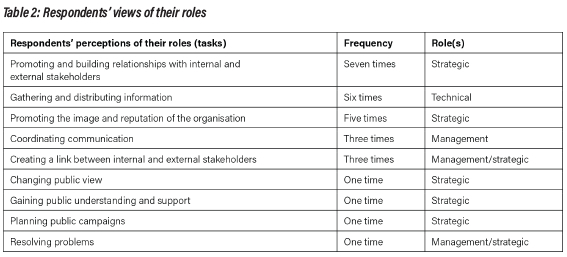
The respondents' understanding of their roles is reflected in their tasks. The tasks and how many times the task was mentioned by the respondents are listed in Table 2:
Literature indicates that the line between PR managers and PR technicians is sometimes blurred (Anani-Bossman, 2022; Dozier, 1983) and that their duties overlap (Van Heerden & Rensburg, 2005). This study, however, produced an unexpected finding in that the line between PR manager and strategist was blurred. But as Tindall and Holtzhausen (2011) point out, PR positions can be carried out across functional boundaries and are not mutually exclusive.
Even though the PROs recognise the important role that PR plays in Lesotho's government ministries, there was a recurring theme of PR professionals feeling underutilised in their organisations. This was evident in comments such as "As a PR professional I am less utilised"; "A PRO doesn't do much work in this ministry"; and "Public Relations is not well practised in the ministry"
Colleagues' awareness and misconceptions of PR roles in government
Some respondents stated that their colleagues' perception of their job was positive, that their colleagues understood their roles, and viewed their work as an important communication tool. However, the general view of colleagues' perception of the role and purpose of PR in government ministries showed an overwhelming feeling among the respondents that there was a lack of understanding of what they do, what their roles are, and what they are supposed to do.
Seventeen of the 20 respondents noted that they thought their colleagues had misconceptions and limited awareness of the true nature and role of PR. As one of the practitioners remarked, "I think this discipline is not understood by the ministry" Scholars such as Chaka and Agang (2011), Geremew (2017) and Spurgeon and Wondimu (2018) found similar results in Botswana and Ethiopia by indicating that top management did not understand what PR was and what role it should play in an organisation. Anani-Bossman (2022) highlights that management's lack of understanding of the importance of PR restricts PR practitioners' ability to fully optimise the strategic role.
Some participants believed their colleagues perceived their role as merely a tool for communication about the ministry's programmes and events, while others indicated that it was perceived as a shield to protect the government from bad publicity. This view is not unique to Lesotho, as other studies have also pointed to PR being viewed as a publicity and propaganda tool in African nations, including Botswana (Chaka & Agang, 2011), Ghana (Anani-Bossman, 2021) and Ethiopia (Spurgeon & Wondimu, 2018). The fact that PR is employed as a tool to save the government from unfavourable public opinion is a concern for practitioners, as was also evident in the study by Venter and Louw (2012) among PR practitioners in South Africa. PR within these ministries is therefore not exploited to its full strategic potential.
According to the respondents, there was a negative perception among colleagues who viewed PR professionals as individuals who had failed in other professions or as people who talked excessively and were lazy. This finding mirrors the view of Meintjes and Niemann-Struweg (2009) who found that South Africa's PR sector has served as a sanctuary for unsuccessful journalists. The view, we believe, prevents the profession and industry at large from positioning itself in the marketplace.
Overall, a lack of understanding and clarity existed regarding PR's multifaceted role, which is often reduced to mere information dissemination or media involvement. Some interviewees indicated that they face issues with management not taking the profession seriously and that the ministry viewed their work as only information dissemination. For example, one of the respondents commented, "Here it is all about news dissemination, nothing much'! According to Nabukeera (2006), top management's perception of PR practitioners is impacted by the lack of education in the field. The lack of knowledge and understanding about PR ultimately influences its practice and consequently its contribution to organisations, as Chaka and Agang (2011) rightfully observe.
The lack of professionalism and resistance to change further contribute to the confusion surrounding PR's significance within the ministries. This results in an overall perception that PR is not well established or recognised in the ministries, with departments independently handling communications, which leads to a disjointed approach.
Based on the findings, it was clear that very few respondents felt that their colleagues understood the role of PR and perceived it as an essential component to enhance smooth communication within government ministries.
External stakeholders ' understanding and expectations of PR functions
Various perspectives were expressed regarding practitioners' views on external stakeholders' perceptions of PR. The respondents thought that some stakeholders regarded the role of PR as important. Others indicated, however, that external stakeholders might feel that PR professionals should be more professional and positive in their approach and should recognise that PR is not just for the benefit of PR practitioners but also for the government ministries as a whole.
The respondents' perceptions of external stakeholders' views of their roles revealed several key insights: firstly, that external stakeholders, particularly the media, do not understand PR roles or duties; and, secondly, that stakeholders believed they were not carrying out their responsibilities effectively.
The participants concurred that external stakeholders did not understand the role and purpose of PR in government ministries. The interviewees pointed out that some stakeholders confused PR with media-related activities and thought that PR was solely about disseminating information. This was reflected in comments such as the following:
They do not understand the role of PR; they just consider it as part of media.
They think I should only disseminate information and that is all.
They do not know what public relations is. They think they know better about the activities that are PR related.
These comments clearly show that PR in Lesotho's government ministries is mostly equated to media relations, which groups their duties under the press agentry model (Grunig & Hunt, 1984). External stakeholders, especially the media, largely perceive PR as primarily about disseminating information, indicating a one-way flow of communication focused on publicity and promotion.
The respondents felt that some external stakeholders, especially the media, believed that PROs in the government ministries were not effectively performing their duties, and they felt that they (as the media) were doing the PR work for them. Here it is important to note that PR professionals and the media depend on each other to fulfil their daily tasks. However, even though there is a mutual need and interaction between PROs and journalists, Clear (2021) mentions that this can sometimes result in a favourable relationship and other times in a negative one. Interviewees felt that there was also a perception among stakeholders that PR is only responsible for responding to queries and inquiries from external parties.
There was a sense among the interviewees that some stakeholders might see PR professionals as lacking a clear understanding of their own roles and as engaging in tasks beyond their jurisdiction. Consistent with the findings of Ramakrishna (2016) regarding PR practitioners in Kenya, the respondents lacked a thorough understanding of what they should do, with concerns being raised about the status of their roles in the government ministries in which they were employed. This led to conflicting opinions about the profession both by practitioners and the external stakeholders.
Daily responsibilities and operational realities of public relations practitioners
To gain a better understanding of the daily practices of PR in Lesotho's government ministries, the respondents were asked, "Which day-to-day PR activities in this ministry are practised the most? Please list the most important daily activities" With this question, we sought to obtain a list of the PROs' duties in Lesotho's government ministries. The interviews revealed that the duties of PR professionals in Lesotho's government ministries encompass a wide range of PR responsibilities, including building relationships, gathering and distributing information, coordinating communication, gaining public understanding and support, planning public campaigns, protecting the organisation's image and resolving problems. Some of the responses included updating social media platforms such as Facebook and other websites, responding to media inquiries, disseminating information to the public, building community and employee relations, arranging radio programmes, organising press conferences and public gatherings, and writing news releases. These duties reflect the practitioners' responsibility to the ministry in which they work, the community and their colleagues.
The findings indicate that while PR practitioners in Lesotho's government ministries perform day-to-day duties associated with Steyn's (2000) strategist role, they mostly identify with Dozier's (1983) technician role. The list reveals that the PR professionals devote a significant amount of their daily tasks to the technician position. This is evident in comments such as "answering to the media enquiries" "updating social media", "Facebook and website are used on a daily basis", "news releases" and "radio interviews". The findings reveal that Lesotho's media environment includes traditional outlets (radio) and a rapidly growing digital sphere, especially social media platforms such as Facebook and organisational websites. PR professionals working in Lesotho's government ministries leverage these channels to reach their audiences.
In concurrence with the studies of Muchena (2018) and Anani-Bossman (2021), but in contrast with the findings of Ngondo and Klyueva (2020), Steyn (2000), Tindall and Holtzhausen (2011) and Van Heerden and Rensburg (2005), this study underscores the role of the PR practitioner as a technician. The practitioners see themselves as gatherers and distributors of information, promoting the government's image and reputation to internal and external publics. This is evident in their routine tasks of disseminating news releases and responding to media inquiries, functioning as communication technicians rather than strategic advisors. What is striking from the findings is that, while the respondents view their role as mostly strategic (as discussed earlier), the actual day-to-day activities they engage in solidify the role of the PR technician. This might explain the earlier-mentioned uncertainty among PR practitioners regarding what they do and what they are supposed to do.
Obstacles facing public relations and directives for improvement
The findings revealed that communication problems, a lack of resources, lack of understanding of the profession by management, colleagues and stakeholders, bureaucracy and administrative hurdles, the use of language in official communication and the absence of a PR cadre are the main challenges the PROs struggle with when performing their duties. The respondents were also asked for suggestions on how PR in their respective government ministries can be improved. These suggestions, or directives for improvement, encompass various aspects of improving PR in the government ministries in which the respondents worked. The challenges and directives for improvement are outlined next.
Communication barriers hindering effective public relations
As Tworzydto et al. (2021) highlight, communication serves as a fundamental process that enhances understanding and helps in successfully achieving objectives. Although communication forms the nucleus of PR, the PROs experienced a lack of communication from the government ministries in which they worked. This is not surprising, as devaluation of communication is generally experienced as a challenge in the public sector (Graham & Avery, 2013). Ngondo and Klyueva (2020) state that the PR function in closed systems is limited to one-way communication. The findings suggest that most of the communication involved one-way communication from the ministry, while many activities and decisions that PROs should know of were not shared with them. The respondents also indicated a lack of a proper communication strategy, colleagues not involving PR in their activities and activities not being made public as concerns. Some of the respondents commented as follows:
Model of communication used in this Ministry makes it difficult to explore, perform and apply creativity to enhance quality deliverable. Communication is one way thus PRs are just taking all that the Principal Secretary, minister and other authorities are saying.
There is no proper communication strategy amongst ministry staff.
These remarks show limited evidence of two-way symmetrical communication, where mutual understanding and genuine dialogue between the government and publics would occur. The communication barriers, lack of shared strategy and one-way communication culture in government ministries demonstrate that the ideal two-way symmetrical model is largely absent or underdeveloped.
The findings underscore the importance of communication in PR since the role of PR in government is to ensure that communication is well coordinated and that stakeholders have greater knowledge about the organisation, its activities and the services it offers (Mota, 2015). In support of the notion by Chaka and Agang (2011), open and transparent communication regarding all issues by organisations is becoming a necessity.
In view of the Excellence Study by Dozier et al. (1995) and the findings of Steyn (2000), this study submits that for an organisation to achieve excellent communication, there should be shared expectations between top management and the PR function.
Suggestions for improving communication in government ministries included the development of a proper communication strategy, that relationships with the press should be improved and that social media platforms be utilised more effectively for communication.
Resource deficits impacting public relations practice and effectiveness
The results revealed that PR practitioners experienced a lack of many resources, but the most urgent needs were for staff, equipment and financing for PR activities. Some of the responses follow:
Lack of equipment to no equipment at all.
Budget is always not enough for PR activities. We need advanced equipment to perform our job.
Lack of office equipment and other resources like Internet. Understaffed.
Shortage of staff.
A shortage of staff hinders PR functions, especially when there are series of events hosted at the same time. A lack of office equipment and office supplies (in this regard, especially modern cameras, printers and printer cartridges are urgently needed), as well as access to the Internet, makes it difficult for PR staff to do their work effectively. In this regard, Kiambi (2010) notes that the lack of Internet connectivity in rural areas makes it difficult to reach all targeted groups and people. The respondents also stated that the lack of finances has rendered their department useless due to budget constraints for PR activities. Insufficient training and transportation issues were mentioned as additional concerns. This lack of support provided to communication activities at the operational level was also underscored by Benecke et al. (2025:121), demonstrating a "symbolic rather than substantive commitment to strategic communication'!
It was suggested that PR should be allocated a budget so that they can manage their own resources.
Limited professional recognition and understanding within ministries
The respondents felt that management and colleagues did not understand PR duties and responsibilities, reflecting the imbalance and strategic uses of PR to protect government image, which is typical of the two-way asymmetrical model. The practitioners are told by other people what to do and are not involved in management or decision making. Their duties are duplicated with those in other departments, for example having to organise events, which leads to confusion and distrust. Although most of the 20 respondents had official qualifications, there is an urgent need for training on PR writing and Community Relations and Development Communication (offered by the Public Relations Institute of Southern Africa) and regular workshops.
In terms of support, the respondents felt that influence by ministers and principal secretaries, not being understood or recognised by management, consideration of their roles, involvement in decision making and a political environment that is conducive to unbiased work were lacking in their roles as PR professionals in their ministries.
Suggestions for improvement included that PROs be employed based on qualifications and experience, that PR job descriptions be revised, that PROs be given opportunities to participate in management decisions and that training opportunities be supported.
Bureaucracy, political influence and other hurdles affecting public relations delivery
Rensburg (2002) contends that PR in many cases in Africa is used as a self-serving tool by politicians. This study revealed that bureaucratic challenges, unnecessary red tape and uncertainty in the line of command due to political meddling in the government ministries lead to dissatisfaction and uncertainty. As one of the respondents commented, "It is always a challenge to not being politically biased when dealing with matters or issues of public interest in a political environment like National Assembly'! In this regard, Hopkins (2015) suggests that when a government's PR message is released, civil servants can be compelled to express a biased approach to please their political bosses.
Political influences were listed as government secrecy on some issues, politically appointed staff and political interference in the information released to the public. The challenges that PR professionals experience reflect the views of Tindall and Holtzhausen (2011) that political environments shape the context of PR roles. Respondents also felt that there was a duplication of duties with those in other departments.
The respondents indicated that these problems could be solved if a Director of Communication was appointed who could oversee PR activities and if PROs could work in a politically unbiased environment.
Language barriers in government communication
The respondents felt that the language of written communication was challenging. Some respondents mentioned that Sesotho-only speakers or English-only speakers might struggle with communications from the ministries if the communications were presented or published in only one of these languages. Using only English or only Sesotho in written communications might not be ideal for reaching the wider community as not all citizens can speak both languages. The following responses were recorded:
There is a need to shift to Sesotho as one official language because English remains a challenge to both the organisation and the public.
There are certain problems with regard to the use of language, especially written communication, for example, everything is in Sesotho, even on Facebook.
Several important insights were gleaned from the respondents' remarks about language use. Firstly, barriers to communication include varying meanings and wording and message quality and interpretation can be influenced by the language used to encode it (Mota, 2015). Secondly, language that is understood by all the participants in a communication encounter bridges knowledge gaps between communities and practitioners (Amano et al., 2016). Thus, it is evident that more engagement and deeper conceptual connections result from language that is understood by the intended audience (Manzini, 2000). When disseminating information, it is important to use a language that will be easily heard and understood by the audience (Flowers, 2015). Hence, it can be concluded that the use of language needs to be reconsidered by the PR profession in Lesotho's government ministries, as their work includes updating organisational websites and managing many social media platforms (Clear, 2021).
The findings in this study suggest that multilingual communication is essential. Koloti and Jita (2021) observe that the two official languages of Lesotho are Sesotho and English. The solution would be to present all communications in both Sesotho and English. Using Sesotho alongside English can thus maximise reach and impact.
The need for a professional public relations cadre to strengthen ministry communications
The respondents called strongly for the implementation of a cadre structure, as was suggested in the 2019 Report on the Restructuring and Professionalisation of the PR Cadre (Ministry of Communications, Science & Technology, 2019).
The respondents felt that the implementation of the proposed PR cadre would enable government ministries to recruit qualified PROs. Clear job descriptions for PR practitioners could be compiled and the role of PR professionals could be established. The PR professionals also believed that the structure would empower the PR cadre, lead to the growth of the profession and result in promotions for PR practitioners.
CONCLUSIONS AND RECOMMENDATIONS
PR in Africa is an evolving field that plays a key role in shaping the reputation of public institutions, including government ministries, across the continent. The purpose of this study was to join discussions on how PR is practised in different African nations by exploring the practice of PR in government ministries in Lesotho. The study outlined how PR is practised and contested by exploring various perspectives regarding the roles, the day-to-day activities PR practitioners engage in and the challenges they face in executing their duties. Given Africa's diverse cultures, languages and socio-economic contexts, PR strategies often need to be tailored to specific regional and local needs. As such, directives were outlined to improve PR in Lesotho's government ministries.
In addressing RQ1 (What are the roles and day-to-day activities of PR practitioners working in Lesotho's government ministries?), the study found that the practitioners primarily viewed their role as promoting and maintaining relationships with internal and external stakeholders, building the organisation's image and reputation, and managing communication. However, these roles were often contested and understood differently by the practitioners themselves, their colleagues (especially management) and external stakeholders such as the media. The study revealed that multiple role players were involved in the strategic practice of PR (practitioners, managers, media), each with divergent interests and expectations. Consequently, PR professionals' views of their own roles differed notably from those of their colleagues (particularly top management) and external audiences (particularly the media).
The practitioners' daily activities leaned heavily towards technical functions such as disseminating information, responding to media inquiries, updating social media and websites, arranging press conferences and organising public events. Despite acknowledging the strategic dimension of PR, most practitioners spent the majority of their time performing technician roles. This reveals an imbalance between their perceived role and actual practice, indicating that PR in the ministries is largely practised as a communication technician function with minimal engagement in strategic management or two-way symmetrical communication processes.
Regarding RQ2 (What challenges do they encounter in executing their duties?), the study revealed important insights. Resource constraints such as insufficient staff, equipment, finances and training opportunities limit effective PR delivery. In addition, a lack of understanding and recognition of PR's strategic value by management, colleagues and external stakeholders leads to misconceptions and underutilisation of PR functions. Bureaucratic and political influences further undermine unbiased communication and create operational hurdles. Language barriers also pose a challenge, as communications are predominantly conducted in either English or Sesotho, which limits reach and inclusiveness. Furthermore, the absence of a dedicated PR cadre to strengthen ministry communications was identified as an additional challenge.
The results revealed that the PR practitioners experience some trepidation regarding their work -both technically and strategically. On a technical level, they faced challenges executing their duties due to limited resources and infrastructure that constrained their daily tasks. The largest obstacle, however, appeared to be strategic two-way communication, both internally among practitioners, colleagues and management and externally with external publics and the media. Communication within the ministries was characterised by a one-way flow of information and a lack of inclusive communication strategies. The findings suggest that strategy and communication are closely intertwined. Communication is, therefore, essential to the creation of strategy and to engaging in PR activities.
RQ3 asks, How can PR in these ministries be improved? To enhance PR effectiveness in Lesotho's government ministries, several interventions are necessary. The findings indicate that improvements should begin with developing and implementing comprehensive communication strategies that promote two-way communication and integrate PR into decision-making processes. In addition, resource allocation must be increased, including budgets, equipment and dedicated PR staff. Training and professional development should be strengthened through workshops that focus on strategic communication and community relations. Language inclusivity is also crucial, involving the use of both Sesotho and English in official communications to broaden access and engagement. Further directives include appointing senior-level communication directors to oversee PR activities and encouraging organisational culture shifts to better support PR functions. Finally, establishing a formal PR cadre structure to professionalise the function was identified as essential to improving PR in Lesotho's government ministries.
The study is not without limitations. Firstly, there was no literature available on the practice of PR in Lesotho. Secondly, including PR specialists from the private sector in this study would have been more advantageous in order to ascertain whether there are variations in PR practice.
The following suggestions are put forward for further research: more studies on Lesotho's government PR need to be conducted to provide a more holistic view of the practice of PR in this country. Future studies could focus on the practice of PR in the private sector so as to gain new insight and perspectives on the field - not only towards individual professional development, but also for the improvement of the PR industry at large. A future stream of research could also focus on the journalistic skills, attributes and behaviours that are required to perform PR tasks, since this study underscored the important communication and information dissemination component (technician role) of the PR practice. Storytelling is not only an essential aspect of communication, but also a cultural artifact, linking the modern practices of PR with the rich oral traditions of African cultures. More research is required to explore the use of storytelling that emphasises local success stories and community impact to establish a sense of connection with audiences, and to foster trust and loyalty.
In conclusion, PR in Africa is an essential tool for communication that requires a nuanced understanding of regional differences and a focus on building sound relationships with diverse communities. This study serves as an initial step in exploring PR practices in Lesotho's government ministries. With this work, an attempt has been made to contribute to the knowledge base underpinning PR in Africa, to foster awareness of PR practices on the continent and to advance PR theory.
REFERENCES
- Akpabio, E. (2009). African public relations and the mainstream of global practice. African Communication Research, 2(3):351-366.
- Amano, T., González-Varo, J.P. & Sutherland, W.J. (2016). Languages are still a major barrier to global science. PLoS Biology, 14(12):1-8.
- Anani-Bossman, A.A. (2021). An exploration of strategic public relations management in Ghana. Public Relations Inquiry, 10(1):73-96.
- Anani-Bossman, A.A. (2022). An empirical investigation of public relations roles: a case study of the financial service sector of Ghana. Corporate Reputation Review, 25(2):94-105.
- Anani-Bossman, A. & Tandoh, I. (2023). Towards a framework for public relations scholarship and practice in Africa: a globalisation perspective. Corporate Communications: An International Journal, 28(1):48-67.
- Andersson, R. (2024). Public relations strategizing: a theoretical framework for understanding the doing of strategy in public relations. Journal of Public Relations Research, 36(2):91-112.
- Babbie, E. (2011). The basics of social research. 5th ed. USA: Wadsworth.
- Balaban, D.C. & Doornkaat, I.T. (2009). Efficiency in international PR. Case study: "The best job in the world'. Revista Românã De Comunicare, 11(2):27-34.
- Benecke, D.R., Meintjes, C., Moodley, P., Holtzhausen, L., Degenaar, A. & Levy, N. (2025). Using a delphi method in the future of PR and communication global study: South African findings on social impact and PR education. Communicare: Journal for Communication Sciences in Southern Africa, 44(1):107-123.
- Botan, C.H. & Hazleton, V. (2006). Public relations in a new age. In C.H. Botan & V. Hazleton (eds.). Public relations theory II. Mahwah, NJ: Lawrence Erlbaum, 1-18.
- Braun, V. & Clarke, V. (2006). Using thematic analysis in psychology. Qualitative Research in Psychology, 3(2):77-101.
- Broom, G.M. & Smith, G.D. (1979). Testing the practitioner's impact on clients. Public Relations Review, 5(3):47-59.
- Castelli, J.W. (2007). Government public relations: a quantitative assessment of government public relations practitioner roles and public relations model usage. Master's thesis. Tampa: University of South Florida.
- Chaka, M. & Agang, L. (2011). The role of public relations in the agricultural environment in Botswana. Journal of Public Affairs, 11(4):316-322.
- Clear, A. (2021). Dynamics of public relations and journalism. 5th ed. Juta: Cape Town.
- Creedon, P. & Al-Khaja, M. (2019). An overview of Middle East public relations practice, education, and research from isolation to globalization. Journal of Public Relations Research, 31(3-4):84-96.
- Creswell, J.W. (2013). Qualitative inquiry & research design: choosing among five approaches. 3rd ed. Thousand Oaks, CA: Sage Publications.
- Davidson, S. (2025). Public relations theory: conceptualising hegemonic communicative power as a continuum between expansive and neutralising strategies. Public Relations Inquiry, 14(2):203-220.
- Dozier, D.M. (1983). Toward a reconciliation of "role conflict" in public relations research. Paper presented to the Western Communications Educators Conference, California State University, Fullerton, California.
- Dozier, D.M. & Broom, G.M. (2006). The centrality of practitioner roles to public relations theory. In C. Botan & V. Hazelton (eds.). Public relations theory II. Mahwah, NJ: Lawrence Erlbaum, 137-170.
- Dozier, D.M., Grunig, L.A. & Grunig, J. (1995). Manager's guide to excellence in public relations and communication management. Mahwah, New Jersey: Lawrence Erlbaum Associates.
-
Drew, C. (2023). Inductive coding: a step-by-step guide for researchers. Available from: http://helpfulprofessor.com/inductive-coding
» http://helpfulprofessor.com/inductive-coding - Duru, C.W. Tahir, A.A. & Pepple, I.I. (2025). Information management: distinguishing public relations from propaganda. Journalism, 15(3):180-188.
- Edwards, L. & Hodges, C.E. (2011). Public relations, society & culture: theoretical and empirical explorations. New York: Taylor & Francis.
-
El Rafie, R. (2024). The evolution of public relation in Africa: a five-year retrospective. African Business. Available from: https://african.business/2024/07/apo-newsfeed/the-evolution-of-public-relations-in-africa-a-five-year-retrospective-by-rania-el-rafie
» https://african.business/2024/07/apo-newsfeed/the-evolution-of-public-relations-in-africa-a-five-year-retrospective-by-rania-el-rafie -
Everything PR News. (2025). The 4 models of public relations. Available from: https://everything-pr.com/the-4-models-of-public-relations/
» https://everything-pr.com/the-4-models-of-public-relations/ - Eyo, N.A. & Onyewuchi, C.O. (2025). Adoption of public relations models in Nigeria organizations: a comparative analysis of public and private sector practices. International Journal of Academic Research in Business and Social Sciences, 15(3):1867-1889.
- Flowers, A.A. (2015). Global writing for public relations: connecting in English with stakeholders and publics worldwide. New York: Routledge.
- Geremew, C.T. (2017). The practices and challenges of public relations within two Ethiopian towns: Harar and Dire Dawa. African Research Review, 11(1):136-155.
- Graham, M. & Avery, E.J. (2013). Government public relations and social media: an analysis of the perceptions and trends of social media use at the local government level. Public Relations Journal, 7(4):1-21.
- Gregory, A. (2020). Planning and managing public relations campaigns: a strategic approach. London: Kogan Page Publishers.
- Grunig, J.E. (1992). Excellence in public relations and communication management. New Jersey: Lawrence Erlbaum Associates.
- Grunig, J.E. & Hunt, TT. (1984). Managing public relations. Belmont: Holt, Rinehart, and Winston.
- Holtzhausen, D.R. (2005). Public relations practice and political change in South Africa. Public Relations Review, 31(3):407-416.
- Hopkins A.E. (2015). Government public relations: public diplomacy or propaganda? Inquiries Journal, 7(3):1-3.
- Iannacone, J.I., Ashby-King, D.T., Nzau, T., Balozwi, B., Ali, H.M., Rahyadi, I. & Capizzo, L. (2025). The MNO (pro) social license to operate: globalized public relations in Bangladesh, Botswana, Indonesia, and Kenya. Journal of Public Relations Research, 1-22.
- Kiambi, D.M. (2010). Public relations in Kenya: an exploration of public relations models and cultural influences. Master's thesis. Miami: Miami University.
- Kiambi, D.M. & Nadler, M.K. (2012). Public relations in Kenya: an exploration of models and cultural influences. Public Relations Review, 38(3):505-507.
- Koloti, A.C. & Jita, T. (2021). Grade R teachers' experiences with the implementation of the mother-tongue-instruction policy for pre-reading skills in Lesotho. South African Journal of Childhood Education, 11(1):1-10.
- Kriyantono, R., Amrullah, A.A. & Destrity, N.A. (2017). The model of public relations practices in Indonesia. Global Journal of Business and Social Science Review, 5(3):194-199.
- Lane, A. B. (2014). Pragmatic two-way communication: a practitioner perspective on dialogue in public relations. Ph.D. Thesis. Brisbane: Queensland University of Technology.
- Leedy, P.D. & Ormrod, J.E. (2005). Practical research: planning and design. Ohio: Pearson Education.
- Lincoln, Y.S. & Guba, E.G. (1985). Naturalistic inquiry. Newbury Park: Sage Publications.
- Luoma-aho, V. & Canel, M.J. (2020). Introduction to public sector communication. The handbook of public sector communication. New York: John Wiley & Sons, inc.
- Manzini, ST. (2000). The influences of a culturally relevant physical science curriculum on the learning experiences of African children. Master's thesis. Durban: University of Durban-Westville.
- Maree, K. (2016). First steps in research. 2nd ed. Braamfontein: Van Schaik.
- Meintjes, C. & Niemann-Struweg, I. (2009). The role of a professional body in professionalisation: The South African public relations case. Prism, 6(2):1-14,
-
Ministry of Communications, Science and Technology. (2019). Report on restructuring and professionalisation of the PR cadre. Available from: https://www.communications.gov.ls
» https://www.communications.gov.ls - Molleda, J.C. & Suárez, A.M. (2005). Challenges in Colombia for public relations professionals: a qualitative assessment of the economic and political environments. Public Relations Review, 31(1):21-29.
- Molleda, J.C., Moreno, Á. & Navarro, C. (2017). Professionalization of public relations in Latin America: a longitudinal comparative study. Public Relations Review, 43(5):1084-1093.
- Mota, M.A. (2015). Managing stakeholders involvement in website communication: a comparative study of Lesotho and South African national websites. Doctoral dissertation. Gqeberha: Nelson Mandela Metropolitan University.
- Muchena, E. (2017). An existential phenomenological analysis of public relations practice as a strategic management function in selected organisations in Harare (Zimbabwe). IOSR Journal of Humanities and Social Science, 22(6):58-65.
- Muchena, E. (2018). An investigation into the role played by public relations in selected public institutions in Harare, Zimbabwe. The International Journal of Humanities and Social Studies, 6(9):64-72.
- Nabukeera, Y. (2006). An analysis of the roles of public relations practitioners in Kampala, Uganda. Master's thesis. Gqeberha: Nelson Mandela Metropolitan University.
- Natifu, B. & Zikusooka, A. (2011). Public relations in Uganda: a historical account of the understanding, nature and growth of the practice in Uganda: 1890-2010 In The Proceedings of the International History of Public relations Conference, Bournemouth University, Bournemouth, 6 July 2011, 215-239.
- Ngondo, P.S. (2019). An exploratory study: digital and social media use by Zimbabwean public relations practitioners. Public Relations Journal, 12(3):1-26.
- Ngondo, P.S. & Klyueva, A. (2020). Exploratory study of public relations roles in Zimbabwe. Public Relations Review, 46(5):101961.
- Ngondo, P.S. & Klyueva, A. (2023). Inviting an ubuntu-based approach to public relations theory building in Sub-Saharan Africa. In C.H. Botan & E.J. Sommerfeldt (eds.). Public relations theory III: in the age of publics. New York: Taylor & Francis, 374-392.
-
Noorman, M. (2024). 9 PR trends reshaping how we think in 2025. Zen Media. Available from: https://zenmedia.com/blog/pr-trends-2025/
» https://zenmedia.com/blog/pr-trends-2025/ - Nutsugah, N. & Anani-Bossman, A. (2023). Development of public relations research in Ghana: a systematic review. Public Relations Review, 49(4):102348.
- Oliver, S. (2010). Public relations strategy. London: Kogan Page.
-
Public Relations Institute of Southern Africa (PRISA). (2023). Public Relations Institute of Southern Africa (PRISA). Available from: https://www.linkedin.com/company/prisaafrica/about
» https://www.linkedin.com/company/prisaafrica/about -
Public Relations Society of America. (PRISA). (2022). About public relations. Available from: https://www.prsa.org/about/all-about-pr
» https://www.prsa.org/about/all-about-pr - Ramakrishna, M.H.N. (2016). Assessment of public relations practitioners' perception on their own professional practice in Kenya. Assessment, 55.
- Rensburg, R.S. (2002). The Bled manifesto on public relations: an African perspective and vision. Keynote address at the 9th International Public Relations Research Symposium held at Lake Bled, Slovenia, 4-7 July 2002, 1-19.
- Rensburg, R. & Botha, E. (2014). Is integrated reporting the silver bullet of financial communication? A stakeholder perspective from South Africa. Public Relations Review, 40(2):144-152.
- Republic of South Africa. (2013). Protection of Personal Information Act, Publishing No. 4 of 2013. Pretoria: Government Printers.
- Silverman, D.A. & Smith, R.D. (2024). Strategic planning for public relations. 7th ed. New York: Routledge.
- Skinner, C., Von Essen, L., Mersham, G. & Motau, S. (2007). Handbook of public relations. 8th ed. Cape Town: Oxford University Press.
- Spurgeon & Wondimu, B. (2018). Perception and practice of public relations among municipality employees in Ethiopia. Media Watch, 9(3):437-446.
- Sterne, G. (2011). Images of public relations in New Zealand: perceptions of key stakeholders in business, education and the media. Unpublished PhD Thesis. Auckland: Auckland University of Technology.
- Steyn, B. (2000). CEO expectations in terms of PR roles. Communicare: Journal for Communication Sciences in Southern Africa, 19(1):20-43.
- Steyn, B. (2003). A conceptualisation and empirical verification of the 'strategist', (redefined) 'manager' and 'technician' roles of public relations. Paper presented at the 10th International Public Relations Research Symposium, held at Lake Bled, Slovenia, 3-6 July 2003.
- Suyono, R. & Hanathasia, M. (2017). Analysis of public relations model's utility in public diplomacy activities via Twitter. Journal Communication Spectrum: Capturing New Perspectives in Communication, 4(1):1-12.
-
Sync. (2022). What is the role of a PR manager in today's content-driven world? Available from: https://syncpr.co/2024/11/04/the-role-of-a-pr-manager-in-2024-and-beyond/
» https://syncpr.co/2024/11/04/the-role-of-a-pr-manager-in-2024-and-beyond/ - Tindall, N.T. & Holtzhausen, D.R. (2011). Toward a roles theory for strategic communication: The case of South Africa. International Journal of Strategic Communication, 5(2):74-94.
- Tworzydto, D., Gawronski, S. & Szuba, P. (2021). Importance and role of CSR and stakeholder engagement strategy in polish companies in the context of activities of experts handling public relations. Corporate Social Responsibility and Environmental Management, 28(1):64-70.
- Ukonu, M.O. Anyadike, D.O. & Okoro, N.M. (2018). Issues in the evolution of public relations in Nigeria. The Journal of International Communication, 24(1):37-54.
- Van Heerden, G. (2005). The practice of public relations in Africa: a descriptive study. Doctoral dissertation. Pretoria: University of Pretoria.
- Van Heerden, G. & Rensburg, R. (2005). Public relations roles empirically verified among public relations practitioners in Africa. Communicare: Journal for Communication Sciences in Southern Africa, 24(1):69-88.
- Venter, B.P. & Louw, F. (2012). Is public relations without a future? A South African perspective. Sociology Mind, 2(3):293-301.
- Wu, M.Y. & Baah-Boakye, K. (2014). Public relations in Ghana: professionalism and impacts of globalization. China Media Research, 10(3):15-23.
Accepted October 2025