Building resilience: quantity surveyors in the face of future pandemics
Abstract
This paper investigates the transformative impact of the global pandemic in the field of quantity surveying, specifically focusing on the challenges encountered by quantity surveyors and the resultant modifications in their professional activities. The study aims to equip quantity surveyors with valuable insights, fostering resilience to enable them to adapt and thrive amidst adversities. Employing a qualitative research approach, this study utilises interviews to delve into the challenges faced by quantity surveyors and identifies the essential traits necessary for future resilience. Six experienced quantity surveyors were purposively selected for in-depth interviews, and the collected data were subjected to thematic analysis to uncover prevailing trends and themes. The study reveals a spectrum of direct and indirect effects induced by the pandemic within the quantity surveying profession. Noteworthy impacts include alterations in work dynamics, modifications in site evaluations, increased instances of cost overruns, shifts in contract interpretation, and changes in the preparation of monthly payment certificates. As uncovered by the findings, resilience is not synonymous with avoiding challenges; instead, it involves the ability to adapt, learn, and grow stronger through adversity. Adopting resilient practices and mindset is crucial for quantity surveyors to navigate uncertainties and challenges effectively. This research not only enhances the resilience of quantity surveying as a profession but also imparts valuable lessons for mitigating the impact of future pandemics. By understanding the challenges and adaptations brought about by the pandemic, quantity surveyors can proactively shape their practices, ensuring a robust and resilient future for the profession.
COVID-19; quantity surveyors; resilience; remote work
1. INTRODUCTION
The COVID-19 pandemic, stemming from the emergence of the severe acute respiratory syndrome coronavirus 2 (SARS-CoV-2) in Wuhan, China, has unleashed an unprecedented global crisis, challenging societies and industries worldwide (Arndt et al., 2020; Assad, 2021; Harinarain, 2020). South Africa, like many nations, faced the daunting task of grappling with the novel coronavirus, prompting the implementation of stringent measures to contain its spread, including the temporary cessation of non-essential activities such as construction (Harinarain, 2020; Sekyere, Bohler-Muller, Hongoro, Makoe,2020). While essential for public health, this abrupt disruption cast a pall over the construction industry, compelling professionals to adapt to unforeseen challenges.
The construction industry, a vital economic sector, found itself particularly susceptible to the cascading effects of the pandemic. South Africa's experience highlights the industry's vulnerability, as the temporary shutdown in March 2020 disrupted construction activities, amplifying the economic repercussions on businesses and individuals (Harinarain, 2020; Sekyere et al., 2020). The complexities of this scenario extended to quantity surveyors, pivotal figures in construction projects, as they grappled with uncertainties and transformations brought about by the unprecedented circumstances (Kniffin, 2021).
Quantity surveyors entrusted with crucial responsibilities in cost estimation, contractual matters, and project management were thrust into uncharted territory. The enforced closure of businesses globally created a landscape within the construction industry marked by ambiguity and upheaval, necessitating adaptive responses from quantity surveyors (Kniffin, 2021). As the pandemic continued to unfold, scholars and practitioners recognised the imperative to investigate the pandemic's profound impact on the quantity surveying profession (Chigara, 2022). Understanding the nuanced disruptions caused by COVID-19 within the quantity surveying domain is paramount for fortifying the profession against future crises (Frei, Mbachu and Phillips, 2013).
This paper aims to scrutinise the intricate ways the pandemic has reshaped the landscape of quantity surveying. By examining the challenges faced by quantity surveyors and the consequent impact on their professional activities, the study seeks to contribute not only to the resilience of the profession but also to impart valuable insights for navigating future pandemics. The knowledge from this research is envisioned to empower quantity surveyors with the resilience necessary to adapt and thrive amidst the ever-evolving challenges presented by adversities like pandemics
2.1 QS activities affected by the pandemic
Quantity surveyors, recognised as financial consultants in the construction sector, assume a multifaceted role encompassing activities such as cost planning, feasibility studies, risk analysis, valuation, dispute resolution, and contractual advising (ASAQS, 2022). As key advisors throughout the property life cycle, quantity surveyors collaborate with architects, consultants, and contractors, leveraging their specialised knowledge to safeguard client interests (ASAQS, 2022). Governed by the South African Council for the Quantity Surveying Profession (SACQSP), quantity surveyors in South Africa actively engage with the latest industry technology and advancements (Bolae Oladipo, Funmiloa, and Fasuyi, 2020).
The enduring consequences of the COVID-19 pandemic necessitate a comprehensive understanding of its impact on various economic sectors (Agyekum et al., 2022). The construction industry, a pivotal component of any well-functioning economy, cannot afford to remain idle in the aftermath of this global crisis (Agyekum et al., 2022). Within this context, the quantity surveying (QS) profession contributes significantly to the industry resilience despite challenges like the pandemic, thereby demanding adaptable skill development among QS professionals (Hasen et al., 2021).
Resilience, a critical trait for quantity surveyors, denotes their ability to navigate challenges, uncertainties, and changes within the construction and built environment industry (Leung, Ojo and Wei, 2021). This involves adeptly adapting to unexpected situations, mitigating risks, and ensuring the overall functionality of projects despite various disruptions (Tan and Zainon, 2022). As central figures in cost management, project planning, and project execution, resilient quantity surveyors are essential for the sustained success of construction projects.
Quantity surveyors, involved from project initiation to close-out, are pivotal in ensuring successful project fruition with optimal capital and time utilisation (Rahman, 2022). The transformative nature of lockdown measures instituted by the South African government necessitated vigilance and adaptability among quantity surveyors, impacting various facets of their activities, including project time management, suspensions, cost control, claims, and tendering processes (Hasen et al., 2021). This literature review sets the stage for a comprehensive exploration of how quantity surveyors navigate the challenges posed by the COVID-19 pandemic and cultivate resilience in their professional practices.
Quantity surveyors, involved from project initiation to close-out, are pivotal in ensuring successful project fruition with optimal capital and time utilisation (Rahman, 2022). The transformative nature of lockdown measures instituted by the South African government necessitated vigilance and adaptability among quantity surveyors, impacting various facets of their activities, including project time management, suspensions, cost control, claims, and tendering processes (Hasen et al., 2021). This literature review sets the stage for a comprehensive exploration of how quantity surveyors navigate the challenges posed by the COVID-19 pandemic and cultivate resilience in their professional practices.
2.2
Psychological impact of COVID-19The COVID-19 pandemic has instigated a paradigm shift in the construction sector, compelling firms to reevaluate and enhance the safety and well-being of their personnel (Pamidimukkala and Kermanshachi, 2021). The adoption of remote work, while a necessary response to the pandemic, has given rise to profound concerns for employees, with the most pressing being the impact on mental health and overall well-being (Pamidimukkala and Kermanshachi, 2021). This seismic shift in work dynamics has prompted an amplified sense of uncertainty regarding physical and mental health among employees globally.
Evidence suggests a noteworthy decline in life satisfaction, particularly among those working remotely during the COVID-19 pandemic (Deutrom, Katos, and Ali, 2021). The investigation by Harinarain (2021) aligns with these findings, revealing pandemic-induced psychological stress among employees, characterised by feelings of hopelessness, fear, uncertainty, and distress. The transition to remote work has intensified concerns about job security, exacerbating anxiety and despondency and, tragically, even leading to instances of suicide within the workforce.
Pamidimukkala and Kermanshachi (2021) highlight that a lack of a safe office environment, coupled with extreme workloads, home situations, and fears about job stability, contribute significantly to anxiety, despair, and, regrettably, suicide. Quantity surveyors tasked with additional responsibilities during the pandemic, such as implementing time extensions and mitigating back costs, have worked under increased stress (Tan and Zainon, 2021). Beyond the QS profession, non-QS respondents have echoed similar observations, noting the heightened stress experienced by QSs in managing dispute resolution, claims, and variance work valuation, exacerbated by communication issues and challenges in scheduling site visits (Tan and Zainon, 2021).
To mitigate the psychological impact on employees, policies and procedures should be implemented to create a safe workplace environment, ensuring employees feel secure in their surroundings (Stride et al., 2022). The challenges of remote work, including feelings of loneliness and demotivation, can be addressed through robust technology support and increased face-to-face meetings, particularly for new employees (Naor, Pinto, Hakakian, Jacobs, 2022). However, the unique sense of belonging and emotional attachment to the organisation's identity that physical office space provides cannot be purely replicated by remote work, potentially leading to physical isolation and weakened organisational identification (Naor et al., 2022). Balancing the benefits of remote work with the inherent challenges is crucial for sustaining the mental health and well-being of employees in the construction sector.
2.3
Remote work dynamicsQuantity surveyors (QSs) have voiced concerns about various constraints significantly impeding their ability to execute manual tasks while working remotely (Tan and Zainon, 2021). The nature of the quantity surveying profession, often requiring hands-on tasks and on-site assessments, has encountered hurdles in the remote work landscape. The limitations experienced by QSs in performing manual tasks underscore the need for tailored solutions to address the unique demands of their profession in a remote work environment.
While remote work has brought about several positive changes, such as shortened work hours, altered salary structures, decentralised decision-making, improved networking, employee retention, and strategic outsourcing - all critical strategies for the resilience of Quantity Surveying firms during economic downturns - it has also unveiled challenges impacting both productivity and overall well-being (Jallow, Renukappa, and Suresh, 2021).
2.4
Remote work advancements and digital toolsThe shift towards remote work during the pandemic has prompted significant advancements in utilising virtual alternatives and digital tools within the infrastructure sector (Ogunnusi, Hamma-Adama, Salman, and Kouider, 2020). Adopting technology for managing operational activities, such as communication, meetings, and workshops traditionally conducted in person, has become imperative for maintaining productivity and collaboration. Platforms like Zoom and Microsoft Teams have become integral tools in daily work routines, facilitating seamless communication and virtual collaboration (Deutrom, Katos, and Ali, 2021).
Ogunnusi, Omotayo, Hamma-Adama, Awuzie, and Egbelakin's (2021) cross-continental study highlights the substantial utility of virtual work environments across construction collaboration, workspace management, and remote work settings on all five continents. While remote work has generally enhanced productivity and positive outcomes in the construction sector, respondents from Africa, Asia, and Europe reported challenges related to limited home workspace (Ogunnusi et al., 2021). Engaging in virtual work mitigates work-related stress and boosts feelings of autonomy, organisational commitment, job satisfaction, and overall performance. The study emphasises the need for continued efforts to optimise digital tools and virtual work environments to address challenges and capitalise on the benefits of remote work in the infrastructure sector.
2.5
Case study analysisThe protracted presence of the COVID-19 pandemic has necessitated a thorough exploration of its substantial and enduring consequences across various economic sectors (Agyekum, Kukah, and Amudjie, 2022). This imperative is particularly pronounced in the construction industry, a key player in the functionality of any well-operating economy. The need for a collaborative effort tailored to individual countries becomes apparent for the sustained resilience of the construction industry post-pandemic (Agyekum et al., 2022). The distinct case studies discussed below investigated the impact of COVID-19 on the quantity surveying profession, each with context-specific limitations.
Hansen, Rostiyanti, Rizaldi, and Andjarwati (2021) scrutinised the quantity surveyor's response to the COVID-19 outbreak in Indonesia, emphasising the effects on the construction sector, ranging from project delays and cost overruns to suspensions and terminations. This study delved into the pandemic's direct influence on project sustainability, technological adoption, and overall project resilience. It highlighted shifts in work culture within the quantity surveying profession, emphasising alterations in contract agreements, cost control, tendering, and claims management. While offering valuable insights, it is essential to note the study's limited scope, focusing exclusively on the impact in Indonesia.
Leung and Ojo (2021) provided a comprehensive analysis of the impacts of the COVID-19 pandemic on the construction industry from the perspective of quantity surveyors. The study identified five crucial aspects for mitigating the pandemic's effects on the profession: technological advancements, digitalisation of procurement processes, enhanced cash flow management, dispute prevention, and strengthened cooperation. Additionally, the research generated 28 recommendations for implementing pandemic-related changes in the construction industry, covering innovative technologies, government support, contractual matters, management approaches, and cross-regional online training.
Tan and Zainon's (2021) study uncovered substantial impacts on QS activities related to site visits, such as variation work and interim payment valuation. The study emphasised the need for alternative approaches to providing these services effectively and recommended particular attention to be given to the more directly affected services for the sustained growth of the QS profession.
The role of quantity surveyors in managing a project's finances, contracts, and business operations during construction is crucial (Rahman, 2022). Two additional studies, one conducted in Kuwait and another in Malaysia, delved into the causes of delay and survival strategies in the construction industry during COVID-19. The Kuwait study identified significant causes of delay, while the Malaysian study highlighted prominent impacts such as project suspensions, labour impacts, time overruns, cost overruns, and financial implications. Both studies contribute to a comprehensive understanding of the challenges faced by quantity surveyors in managing construction projects amidst the pandemic.
In summary, these case studies collectively contribute to an enriched understanding of the multifaceted challenges and opportunities arising from the COVID-19 pandemic within the quantity surveying profession and the broader construction industry. They underscore the need for tailored strategies, technological advancements, and collaborative efforts to navigate the evolving landscape and ensure the sustained resilience and growth of the construction sector. However, it is essential to recognise the contextual limitations of these studies, which predominantly rely on international contexts and lack specificity to the South African quantity surveying profession. Therefore, this study addresses this gap.
3. RESEARCH METHODOLOGY
The study adopts an interpreter's epistemology approach, utilising semi-structured interviews conducted via Microsoft Teams. This methodological choice is rooted in the belief that individuals possess unique perspectives and interpretations that can enrich our understanding of complex phenomena. The qualitative research methodology employed in this study seeks to capture the intricacies of individuals' experiences and viewpoints, explicitly focusing on the nuanced impacts of the COVID-19 pandemic on the Quantity Surveying (QS) profession and its various activities. The dual objectives of the study were to uncover the extent of the pandemic's impact on the profession and to gather valuable insights from respondents on navigating future similar events. The study's target population comprised QS professionals in South Africa, and six semi-structured interviews were conducted with purposively sampled practitioners who were actively engaged in quantity surveying before and during the pandemic.
The selection of semi-structured interviews as the primary data collection method allowed for a flexible yet focused exploration of respondents' perspectives. As advocated by Subedi (2021), the study considers the sample size of six QS professionals adequate for capturing diverse insights within the scope of the research objectives. According to Subedi (2021) considers this an adequate sample size. The interviews, conducted over three weeks, each lasting approximately 45 minutes, provided a comprehensive understanding of the participants' experiences. The inclusion of professionals with varying work experience, ranging from three to thirty years, ensured a diverse range of perspectives.
The voluntariness of participation and the recording of interviews aimed to uphold ethical standards, respecting the autonomy and privacy of the respondents. The subsequent transcription of the recorded interviews facilitated a detailed data analysis through thematic content analysis. This analytical approach aimed to identify recurring themes and patterns within the responses, allowing for a nuanced exploration of the impacts of the pandemic on the QS profession.
4. RESULTS AND DISCUSSION
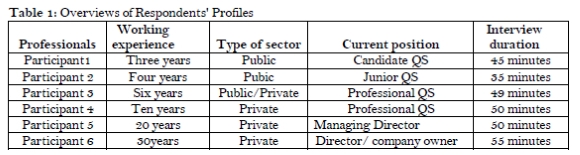
Table 1 illustrates the interviewed professional's profile. The average work experience by the participants was 12 years, with the majority of the participants having professional registration. The themes that emerged were the impact that the pandemic had on the QS profession, remote work comparison, psychological consequences and resilience of the QS profession.
Table 1 presents an overview of the interviewed professionals' profiles, providing insights into their work experience and professional registration status. The average work experience of 12 years among participants signifies a wealth of practical knowledge within the QS profession. The majority of participants holding professional registration further underscores the expertise and credibility of the sample.
The emergent themes from the thematic content analysis encompassed the impact of the pandemic on the QS profession, a comparative analysis of remote work, psychological consequences experienced by QS professionals, financial ramifications and the resilience demonstrated by the QS profession. These themes form the basis for the subsequent detailed exploration and discussion of the findings, shedding light on the multifaceted implications of the pandemic on the quantity surveying profession in South Africa. Integrating participant profiles with thematic analysis enriches the interpretation of results, providing a holistic understanding of the diverse experiences within the sampled QS professionals.
Theme 1 - impact of the pandemic
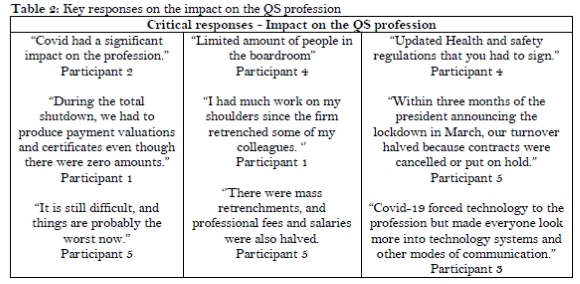
Pandemics exert substantial and multifaceted impacts on various Quantity Surveying (QS) activities within the construction industry, introducing disruptions that significantly affect professionals in the field. The participants' responses, summarised in Table 2, reflect a unanimous consensus on the detrimental effects of the pandemic on the QS profession. Participant 6 aptly encapsulated the sentiment, highlighting how "COVID-19 compounded pre-existing challenges within the construction industry, amplifying issues within the QS profession."
The employment landscape within the QS profession witnessed significant turmoil, with many participants reporting layoffs and financial strains. Companies struggled to maintain regular payments, prompting some participants to seek alternative employment opportunities. The repercussions were divergent across sectors, with public sector employees facing staff shortages due to heightened hospital projects during the initial lockdown. In contrast, those in the private sector grappled with job insecurity due to halted work. The unexpected health and safety adjustments in response to COVID-19 led to cost overruns in various projects, disrupting initial cost estimations.
Personal accounts from participants further emphasised the economic hardships brought about by the pandemic. Participant 5 shared the significant impact on personal finances: "My salary was slashed by half." Participant 6 recounted a scenario where a client refused payment, attributing it to COVID-19 and compelling them to drastically lower professional fees to navigate the challenging times.
The pandemic also introduced ambiguity in interpreting contract documents for quantity surveyors. Participants faced complexities in determining whether to compensate contractors for lockdown-induced cost losses, classify it as a force majeure event, or categorise it as an act of God. Participant 4 noted, "Interpreting contracts became complex due to differing definitions of unforeseen events." Among all tasks, site evaluations were notably affected by COVID-19 restrictions. Participant 3 highlighted the challenges: "Valuations and site inspections were functions of a quantity surveyor significantly affected by the pandemic." Participants echoed difficulties in activities like work variations, payment certificates, and onsite inspections. Participant 1 mentioned restrictions on site access, hindering team involvement. In contrast, participant 3 expressed the arduous nature of "preparing monthly payment certificates, relying on contractors' accounts due to the inability to conduct on-site evaluations."
This analysis illuminates the pervasive and intricate challenges brought about by the pandemic within the QS profession, underscoring the need for adaptive strategies and resilience in navigating the evolving landscape of the construction industry. The participants' experiences serve as valuable insights into the multifaceted repercussions of the pandemic on QS activities, informing future approaches to crisis management and professional adaptation within the construction sector.
Theme 2 - remote work comparison: home vs. virtual
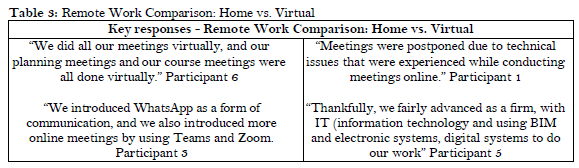
Examining participants' approaches to work activities during and after the lockdown period unveiled a noteworthy theme, elucidated in Table 3, concerning the transition to remote work in response to the COVID-19 pandemic. The pandemic catalysed the adoption of a hybrid work environment, prompting companies to accommodate both in-office and remote work settings. The widespread shift to remote work was evident in the transition of all meetings to online platforms like Microsoft Teams and Zoom, as highlighted in Table 3.
Participants' experiences with remote work varied, revealing a nuanced perspective on the efficacy of working from home compared to the traditional office setting. Some participants expressed that working from home increased efficiency, citing time savings and enhanced productivity. Participant 1 affirmed, "I achieved greater productivity while working from home, eliminating the need for commuting to the office." This sentiment was echoed by others who found the flexibility of remote work to be conducive to focused task completion.
However, a contrasting set of experiences also emerged, with certain participants facing challenges adapting to remote work due to inadequate company resources for home-based operations. Participant 4 highlighted this: "My company lacked sufficient resources for accessing essential software; these tools were only available on office computers." Similarly, Participant 2 shared, "Working from home proved challenging for me as I lacked access to a printer, hampering measurement take-offs." These challenges underscored the importance of organisational preparedness and resource allocation to facilitate a smooth transition to remote work.
Working from home presented unique challenges for quantity surveyors (QS), who are accustomed to on-site visits, collaborative meetings, and hands-on tasks. The absence of physical presence on construction sites hindered activities such as site evaluations, valuations, and collaborative project discussions. Participant 3 elucidated on these challenges, stating, "As a QS, on-site evaluations are crucial, and not being physically present posed difficulties in accurately assessing project progress." Adapting to virtual tools and platforms for tasks traditionally conducted in person raised concerns about the effectiveness and accuracy of remote work in the context of quantity surveying.
This theme sheds light on the complexities and nuances associated with adopting remote work in the QS profession, emphasising the need for tailored strategies to address the unique challenges posed by the nature of QS activities. The findings contribute to the ongoing discourse on the role of remote work in the construction industry, particularly in professions that involve a significant on-site presence and hands-on tasks.
Theme 3 - psychological consequences
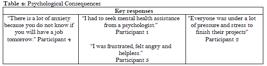
The exploration of participants' experiences during the pandemic delved into the realm of mental health, revealing a profound theme characterised by psychological consequences. The uncertainties, fears, and disruptions brought about by pandemics can engender a spectrum of psychological challenges, and the responses from participants underscored the profound impact of the pandemic on their mental well-being.
A prevailing sentiment among participants was the heightened levels of anxiety permeating their daily lives. Participant 4 succinctly encapsulated this collective sentiment, stating, "There is a lot of anxiety because you do not know if you will have a job tomorrow." The pervasive sense of helplessness and worry about the future, coupled with health and job security concerns, cast a shadow over the mental landscape of quantity surveyors during the pandemic. The uncertainty of the economic climate and the volatile nature of the construction industry amplified these anxieties, fostering an environment of persistent unease.
Participant 1's disclosure about seeking mental health assistance from a psychologist highlights the gravity of the psychological toll experienced by some participants. This proactive approach to addressing mental health underscores the recognition of the importance of psychological well-being in navigating the challenges posed by the pandemic. It also points to a broader need for support systems and resources within the profession to mitigate the psychological impact on quantity surveyors.
Stress emerged as a prevalent psychological challenge, with participants attributing it predominantly to escalated workloads. Participant 5 candidly expressed, "I was frustrated, felt angry and helpless," shedding light on the emotional turmoil induced by the increased demands on quantity surveyors during the pandemic. Participant 2 echoed this sentiment, emphasising that "everyone was under a lot of pressure and stress to finish their projects." Acknowledging these stressors points to the intricate interplay between workload, job demands, and psychological well-being within the QS profession.
These psychological consequences underscore the need for a holistic approach to supporting quantity surveyors during challenging times. Integrating mental health resources, proactive well-being initiatives, and a supportive work environment are crucial components in fostering resilience and coping mechanisms within the profession. This theme contributes to the broader discourse on the psychological dimensions of working in the construction industry during pandemics, shedding light on the often-overlooked aspect of mental well-being within professional contexts.
Theme 4 - financial ramifications of COVID-19 on the profession
In addition to the multifaceted impacts on quantity surveying activities, the research uncovered a compelling theme related to the profound financial repercussions inflicted by the COVID-19 pandemic on the profession. As indicated by previous studies (Zamani, Rahman, Fauzi, and Yusof, 2021), pandemics have overarching effects on operations and finances in the construction industry, with quantity surveyors playing a pivotal role in managing project finances and ensuring success.
The financial strain experienced by quantity surveyors during the pandemic manifested in various dimensions, adding a layer of complexity to the challenges faced by the profession. The study revealed a disheartening trend of considerable salary reductions, with some participants reporting cuts of up to half of their pre-pandemic earnings. This stark reality highlighted the vulnerability of the profession to economic shocks, with salary reductions impacting the livelihoods and well-being of quantity surveyors.
Furthermore, the reluctance of certain quantity surveying firms' insurance providers to honour their obligations exacerbated the financial challenges faced by both employees and professionals in the field. Workforce reductions became an unfortunate necessity for some firms, intensifying the socio-economic impact of the pandemic on the quantity surveying profession.
Payment delays emerged as another significant financial challenge, with clients exploiting the pandemic as a pretext for withholding remittances. This elongation of payment timelines placed an additional burden on quantity surveyors and their firms, disrupting cash flows and creating financial instability. Participant 6's account exemplified the severity of the situation, stating, "I encountered a situation where a client refused to make payment, attributing it to COVID-19." This compelled the participant to make the difficult decision of drastically lowering professional fees to navigate the trying times.
These financial ramifications underscore the susceptibility of the quantity surveying profession to external shocks and highlight the importance of developing resilient financial strategies within the industry. The findings contribute to the ongoing discourse on the economic dimensions of the construction sector during pandemics, emphasising the need for proactive measures to safeguard the financial well-being of quantity surveyors and their firms in the face of unforeseen challenges.
Theme 5 - resilience
Exploring resilience within the quantity surveying profession unveils a critical aspect of navigating the challenges posed by pandemics, offering valuable insights into strategies employed by quantity surveyors to bolster their resilience. In this context, resilience manifests as quantity surveyors' capacity to effectively adapt to changes in project dynamics, be it alterations in scope, design modifications, or unexpected delays. Participants emphasised the need for dynamic adjustments to cost estimates, budgets, and project plans to minimise disruptions to the construction process. This adaptive mindset was succinctly articulated by Participant 6, who highlighted the importance of assessing and managing potential risks to the project's cost, schedule, and quality.
Effective resource allocation emerged as a central tenet of resilience in quantity surveying, with participants stressing the importance of optimising project performance by efficiently distributing materials, labour, and finances. Participant 5 articulated this perspective: "I need to be able to effectively allocate resources such as materials, labour, and finances to optimise project performance." This speaks to the proactive role that quantity surveyors play in mitigating the impact of disruptions on project execution.
Communication and collaboration were underscored as crucial components of resilience, with Participant 3 noting that the uncertainty created conflicts that could have been mitigated through better communication and collaboration. This highlights the importance of interpersonal skills and stakeholder management for quantity surveyors in fostering resilience within project teams.
Beyond adaptive measures, the research participants recommended continuous learning and long-term planning as integral components of building resilience. The adoption of building information modelling (BIM) and the preparation of alternative production plans were identified as proactive strategies to enhance resilience. Participant 1 emphasised the ongoing learning process: "There is still a lot that needs to be learned, and staying up-to-date is crucial." Furthermore, participants stressed the importance of considering the longterm implications of decisions, advocating for a forward-looking approach that involves forecasting potential issues throughout the project lifecycle and implementing pre-emptive strategies.
Regarding new strategies for combating future pandemics in the profession, respondents highlighted the importance of adapting to change, encouraging the workforce, and organising seminars/workshops. These strategies reflect a holistic approach to resilience, encompassing individual adaptability, team motivation, and collective knowledge dissemination as essential elements for preparing the quantity surveying profession to navigate uncertainties in the future.
5. CONCLUSION
This research delves into the multifaceted impacts of the COVID-19 pandemic on the quantity surveying profession within the South African context. The study employed an interpreter's epistemology approach, utilising semi-structured interviews conducted via Microsoft Teams to gather rich qualitative data from experienced quantity surveyors. The findings of this study contribute significantly to the existing body of knowledge by providing a nuanced understanding of the challenges faced, adaptations made, and strategies employed by quantity surveyors in the face of unprecedented disruptions.
The first theme explored the extensive impact of the pandemic on quantity surveying activities, shedding light on challenges such as employment instability, cost overruns, and disruptions in contractual interpretations and site evaluations. The participants unanimously emphasised the compounding effect of COVID-19 on pre-existing challenges within the construction industry, presenting a comprehensive view of the profession's struggles during this global crisis.
The research highlighted the contrasting experiences of working from home versus the traditional office setting. While some found increased efficiency and productivity, others faced challenges due to inadequate resources, emphasising the importance of technological support for remote work in the quantity surveying profession.
The psychological consequences of the pandemic on the mental health of quantity surveyors were also studied. Heightened levels of anxiety, stress, and uncertainties about job security were prevalent among participants, underscoring the need for psychological support and resilience-building strategies within the profession.
Financial ramifications emerged as another critical theme, indicating substantial salary reductions, delayed client payments, and workforce reductions. The financial hardships faced by quantity surveyors underscore the vulnerability of the profession to external crises and the imperative of financial resilience strategies.
Finally, the theme of resilience provided insights into the adaptive measures and proactive strategies employed by quantity surveyors to navigate the challenges posed by the pandemic. The participants emphasised the importance of continuous learning, effective communication, resource optimisation, and long-term planning as integral components of building resilience within the profession.
In conclusion, this research adds depth to understanding the COVID-19 pandemic's impact on the quantity surveying profession and provides practical insights for enhancing resilience and preparedness for future challenges. As the profession continues to evolve, embracing adaptive strategies, fostering a supportive work environment, and prioritising mental health initiatives are imperative to ensure quantity surveyors' sustained growth and resilience in an ever-changing landscape. The lessons gleaned from this study serve as a foundation for future research and as a guide for practitioners and policymakers in fortifying the quantity surveying profession against the uncertainties that lie ahead.
6. RECOMMENDATIONS
For quantity surveyors to enhance their resilience, the following recommendations are put forth for both QS professionals and companies. QSs must keep updated with industry trends, market conditions, and regulation changes. Adaptability to new circumstances is critical to resilience. They have to develop strong communication skills, especially when working remotely.
Recognising the lasting impact of remote work dynamics on the quantity surveying profession, it is recommended that firms invest in robust technological infrastructure. This includes providing remote access to essential software, facilitating seamless communication, and ensuring quantity surveyors access necessary tools for efficient home-based operations. Training programmes on remote work practices and technology use can enhance the profession's adaptability to future disruptions. In light of the financial ramifications revealed in this study, quantity surveyors and firms should engage in meticulous financial planning. This involves creating contingency funds, exploring insurance policies addressing pandemic-related disruptions, and establishing clear contractual terms for unforeseen events. Additionally, industry-wide initiatives can be pursued to advocate for supportive insurance practices during crises to safeguard the financial stability of the quantity surveying profession.
Given the psychological consequences identified, quantity surveyors and their employers must prioritise mental health support. Establishing employee assistance programs, providing access to counselling services, and fostering a supportive work environment can mitigate the negative psychological impacts of future crises. Resilience-building workshops and training can equip quantity surveyors with coping mechanisms to navigate uncertainties and stressors effectively.
Quantity surveyors should embrace continuous professional development to stay abreast of industry trends and technological advancements. Upskilling in digital project management, virtual collaboration tools, and advanced data analytics can enhance the profession's resilience. Professional bodies should promote and facilitate relevant training programs to equip quantity surveyors with the skills to thrive in dynamic and challenging environments.
By implementing these recommendations, the quantity surveying profession can fortify its resilience, enhance preparedness for unforeseen challenges, and foster a sustainable and adaptive future in the face of global uncertainties.
REFERENCES
Arndt, C., Davies, R., Gabriel, S., Harris, L., Makrelov, K., Modise, B., Robinson, S., Simbanegavi, W., Van Seventer, D., and Anderson, L. (2020). Impact of COVID-19 on the South African economy An initial analysis. SA-TIED, Available at: chrome-extension://efaidnbmnnnibpcajpcglclefindmkaj/https://satied.wider.unu.edu/sites/default/files/pdf/SA-TIED-WP-111.pdf
ASAQS, (2022). What is a Quantity Surveyor? https://www.asaqs.co.za/page/what-is-a-quantity-surveyor [Accessed 5 October 2022]
2. LITERATURE REVIEW
- Chigara, B., and Moyo, T. (2022). Factors affecting the delivery of optimum health and safety on construction projects during the COVID-19 pandemic in Zimbabwe. Journal of Engineering, Design and Technology, 20(1), 24-46.
- Gamil, Y. and Alhagar, A. (2020). The Impact of Pandemic Crisis on the Survival of Construction Industry: A Case of COVID-19. Mediterranean Journal of Social Sciences. 11(4), 122.
- Jallow, H., Renukappa, S. and Suresh, S. (2021). The Impact of COVID-19 outbreaks on United Kingdom infrastructure sector. Smart and Sustainable Built Environment. 10(4), 581-593.
- Kniffin, K. M., Narayanan, J., Ansell, F., Antonakis, J., Ashford, S. P., Bakker, A. B., et al. (2021). COVID-19 and the workplace: Implications, issues, and insights for future research and action. American Psychologist, 76(1), 63-77.
- Leung, M.-Y., and Ojo, L. (2021). Exploring The Impact Of Coronavirus (Covid-19) Pandemic On The Construction Industry: Quantity Surveyors' Perspective. BIM View project International Workshops on Impact of Coronavirus on the Construction Industry View project. Retrieved March 4, 2022, from https://www.researchgate.net/publication/356283211
- Ogunnusi, Hamma-Adama, M., Salman, M. and Kouider. (2020). COVID-19 pandemic: The effects and prospects in the construction industry. International journal of real estate studies, 14(2), 120-128
- Ogunnusi, M., Omotayo, T., Hamma-Adama, M., Awuzie, B.O. and Egbelakin, T. 2021. Lessons learned from the Impact of COVID-19 on the global construction industry. Journal of Engineering, Design and Technology. 20(1), 299-320.
- Pamidimukkala, A., and Kermanshachi, S. (2021). Impact of COVID-19 on field and office workforce in the construction industry. Project Leadership and Society, 2, 100018.
- Rokooei, S., Alvanchi, A., and Rahimi, M. (2022). Perception of COVID-19 impacts on the construction industry over time. Cogent Engineering, 9(1).
- Sekyere, E., Bohler-Muller, N., Hongoro, C., Makoae, M. (2020). The Impact of COVID-19 on South Africa
- Subedi, K. R. 2021. Determining the Sample in Qualitative Research. Scholars' Journal, 4, pp, 1 -13.