Exploring the Impact of Religious Beliefs on Job Performance in Nigeria's Construction Sector
Abstract
Religious beliefs are widely recognised as shaping individuals' ethical orientations, behavioural tendencies, and interpersonal interactions. However, their specific influence on job performance within labour-intensive sectors such as construction remains insufficiently examined. This study explores the relationship between religiosity and job performance among construction site workers in selected states of Southwest Nigeria. A structured questionnaire was distributed to 396 construction site managers and supervisors, resulting in 289 completed surveys (73.0% response rate). Following data cleaning, 263 valid responses (66.4%) were subjected to both descriptive and inferential statistical analysis. Key performance indicators assessed included punctuality, quality of workmanship, safety compliance, and teamwork. The Kruskal-Wallis H test was employed to examine differences in performance outcomes across religious affiliations. Results indicated no statistically significant differences in any of the 27 performance variables across religious groups (p > 0.05), suggesting that religiosity does not serve as a determinant of job performance in this context. These findings imply that worker effectiveness in the construction sector is more closely associated with individual competencies and professional practices than with religious identity. The study underscores the value of merit-based workforce evaluation and advocates for inclusive policies that accommodate religious diversity without bias. Implications are offered for industry practitioners, policymakers, and human resource managers seeking to enhance workforce productivity and cohesion in multi-religious construction environments.
Religiosity; Job performance; Construction workers; Southwest Nigeria
1. INTRODUCTION
Human behaviour and workplace attributes are shaped by a complex interplay of cultural, social, psychological, and environmental influences. Among these, religion represents a particularly significant factor, informing individuals' worldviews, ethical orientations, and interpersonal interactions. Religiosity, as a core dimension of personal identity, plays a critical role in shaping attitudes, behaviours, and engagement within professional environments. Across various cultural and industrial contexts, religious beliefs have been shown to influence ethical decision-making, job commitment, and work engagement (Héliot et al., 2020; Schneider et al., 2022). In many instances, religiosity is positively associated with increased job satisfaction and organisational citizenship behaviours, as it fosters a strong sense of moral responsibility and purpose among employees (Wening and Choerudin, 2015; Kutcher et al., 2010). However, the influence of religiosity in the workplace is not uniformly positive; in secular or religiously diverse settings, tensions can emerge when religious expressions conflict with organisational norms or policies (David and Iliescu, 2022). These dualities underscore the complexity of religiosity's role in the professional sphere and highlight the need for a more nuanced understanding of its implications for job performance across different sectors, cultures, and organisational structures.
Within the fields of organisational psychology and human resource management, a growing body of research has explored how religiosity interacts with key workplace outcomes such as job stress, work-life balance, and overall performance (Dewi et al., 2020; Nevi and Peranginangin, 2019). Some studies position religiosity as a coping mechanism that helps employees manage workplace stress and avoid burnout (Bal and Kökalan, 2021). Others suggest that religious commitment may shape leadership perceptions, reinforce job-related attitudes, and enhance personal resilience (Jamal et al., 2021). These effects are particularly relevant in high-risk, emotionally demanding professions such as healthcare and social services, where religiously grounded values have been shown to support a sense of duty and perseverance under pressure (Elsayed et al., 2023). Despite these insights, limited attention has been given to the implications of religiosity in labour-intensive sectors such as construction.
The construction industry provides a distinctive context in which to examine the role of religiosity in workplace performance. Construction work is physically demanding, often carried out in high-risk environments that require strict safety compliance, collaborative teamwork, and psychological resilience. Given these demands, attributes often reinforced by religious beliefs, such as discipline, ethical responsibility, and moral accountability, may be especially valuable in enhancing safety performance and productivity (Umeokafor and Windapo, 2019). Moreover, religiosity may contribute to emotional well-being by mitigating work-related stress and promoting greater job satisfaction (Robbie and Sayyaf, 2022). Religious beliefs can also shape how workers perceive occupational hazards, influencing their attitudes towards risk, responsibility, and task engagement (WDNSM and Wjajm, 2018). Nevertheless, despite these theoretical linkages, there remains a notable lack of empirical research exploring the role of religiosity in shaping worker performance within construction, particularly in the context of developing economies.
In Nigeria, religion plays an integral role in both private and professional life, significantly influencing workplace norms and employee behaviours across multiple sectors (Dowd, 2016). Religious identity often permeates workplace interactions, yet its specific effects on construction worker performance, safety adherence, and productivity remain largely undocumented in empirical literature (Nevi and Peranginangin, 2019; Gröschl and Bendl, 2016). This oversight is especially striking given Nigeria's religiously plural, labour-intensive construction environment, where complex interpersonal and organisational dynamics are shaped by both spiritual and structural factors. The paucity of research in this area represents a critical gap in knowledge that this study seeks to address.
This study aims to provide a clearer understanding of how religious values intersect with professional practices in high-risk, multicultural, and multi-religious work settings by investigating the influence of religious beliefs on job performance in Nigeria's construction sector. Specifically, the study examines the extent to which religiosity influences workplace commitment, ethical behaviour, and occupational safety culture among Nigerian construction workers. In doing so, it contributes to a broader conversation on how to reconcile religious diversity with operational efficiency, offering evidence-based insights for industry stakeholders, human resource professionals, and policymakers. The findings are expected to inform strategies for promoting inclusive, productive, and ethically grounded workplace environments in construction and similarly demanding sectors.
2.1. Workers' Religious Beliefs, Job Performance, and Workplace Behaviour
Workplace behaviour is shaped by a complex array of socio-cultural and psychological influences, with religiosity emerging as a particularly salient factor. Religious beliefs are known to affect ethical reasoning, decision-making, interpersonal relationships, and general workplace conduct (Umeokafor and Windapo, 2019). Employees who embed religious values into their daily professional routines tend to exhibit heightened accountability, integrity, and discipline, qualities that have been linked to improved job performance and stronger workplace cohesion (David and Iliescu, 2022). Empirical studies consistently suggest a positive correlation between religiosity and key organisational outcomes such as motivation, ethical behaviour, and commitment to job roles (Kutcher et al., 2010).
However, this body of research has largely concentrated on corporate, educational, and service-oriented sectors. The role of religiosity in physically demanding and high-risk industries, such as
construction, remains underexplored. The construction sector depends heavily on attributes like teamwork, precision, compliance with safety standards, and resilience under pressure, areas where religious ethics may exert a significant, yet understudied, influence. Religious workers, for example, may be more inclined to conform to organisational norms and demonstrate high levels of cooperation, diligence, and dependability, factors crucial for maintaining productivity and ensuring site safety (Gyekye and Haybatollahi, 2012).
In addition to shaping behaviour, religiosity has been associated with psychological resilience and stress management. Scholars have shown that religious beliefs can serve as a buffer against occupational burnout and emotional strain, especially in demanding work environments (Bal and Kökalan, 2021). Within the construction industry, where workers routinely face physical exertion, time constraints, and unpredictable site conditions, faith-based coping mechanisms, such as prayer, meditation, or spiritual community involvement, may support emotional regulation and foster commitment to work (Robbie and Sayyaf, 2022; Nevi and Peranginangin, 2019). These practices have been linked to reduced anxiety, increased endurance, and greater perseverance under pressure.
Religiosity is also positively associated with workplace engagement and job satisfaction. Employees who find personal meaning through their religious beliefs are more likely to display dedication and a strong sense of purpose in their roles (Jamal et al., 2021). This is particularly relevant in construction settings, where mental and emotional resilience are vital for sustaining performance. Recent studies confirm that religious commitment enhances professional effectiveness in high-stress occupations (Elsayed et al., 2023) and contributes to a healthier work-life balance, which can reduce absenteeism and enhance focus on site-related tasks (Dewi et al., 2020).
Furthermore, workplace policies that respect religious diversity, such as allowing flexible prayer times or providing designated spaces for worship, have been shown to reduce conflict and improve morale (Schneider et al., 2022). In multi-religious, labour-intensive sectors like construction, such inclusive practices may foster harmony, teamwork, and mutual respect (WDNSM and Wjajm, 2018). Evidence from countries including Ghana and Indonesia indicates that religiously observant workers often demonstrate superior ethical conduct, stronger safety compliance, and greater task ownership compared to their peers (Gyekye and Haybatollahi, 2012; Robbie and Sayyaf, 2022).
Nevertheless, the potential benefits of religiosity can be undermined by workplace discrimination or exclusion based on religious identity. Employees who perceive bias or marginalisation may experience lower job satisfaction, diminished psychological safety, and decreased morale, factors that are associated with higher turnover intentions (Héliot et al., 2020). Scholars emphasise the need for religiously inclusive human resource policies and leadership approaches to mitigate these risks and foster a supportive work environment (WDNSM and Wjajm, 2018).
Despite increasing interest in the relationship between faith and work, significant gaps remain in understanding how religiosity influences job performance in the African construction context. Most existing studies originate from Western, Middle Eastern, or Asian settings, offering limited insight into the religious and cultural dynamics unique to African labour environments. In Nigeria, where religion plays a prominent role in everyday life and social relations, examining the interplay between religiosity and work performance is particularly pertinent. This study addresses this gap by empirically exploring the influence of religiosity on job performance among Nigerian construction workers. This research contributes to the growing literature on faith in the workplace and offers culturally grounded insights for enhancing productivity, cohesion, and inclusivity within the construction sector by focusing on a multi-religious and labour-intensive workforce in a developing economy.
2.2 Construction Site Workers' Characteristics and Performance Indicators
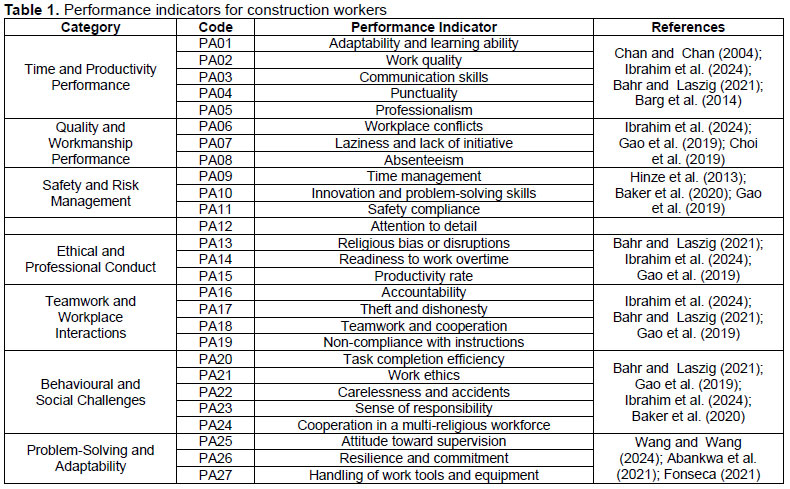
Construction site worker performance is a multifaceted concept influenced by several interrelated factors, including time management, productivity, workmanship quality, safety compliance, ethical conduct, teamwork, behavioural tendencies, and adaptability (Gyadu-Asiedu, 2014; Chan and Chan, 2004). Among these, time efficiency and productivity are considered particularly critical, as punctuality, task completion rates, and effective allocation of working hours directly impact project delivery timelines (Ibrahim, Zayed, and Lafhaj, 2024). The construction sector has long struggled with productivity challenges, often attributed to deficits in human capital, insufficient motivation, and inconsistent managerial oversight (Bahr and Laszig, 2021). Workers who demonstrate personal initiative and high levels of enthusiasm tend to achieve better outcomes, thereby underscoring the importance of individual discipline and commitment in enhancing construction performance (Barg et al., 2014).
Workmanship quality is another crucial determinant of worker performance. It encompasses attention to detail, competent tool handling, and strict adherence to technical specifications. Research has shown that individual personality traits, particularly conscientiousness, significantly influence the quality of output and the consistency of safety behaviours (Gao et al., 2019). In high-risk construction settings, where even minor errors may lead to structural failures or accidents, precision and care in task execution are essential. These behaviours are often rooted in ethical standards, which may, in part, be shaped by religious or moral convictions. Safety compliance and risk management represent additional pillars of effective site performance. Workers' consistent adherence to safety protocols and their proactive engagement in hazard prevention efforts are central to sustaining a stable and secure work environment. Although recent advancements in predictive analytics and artificial intelligence offer new tools for site risk monitoring, their success ultimately depends on human behaviour and decision-making (Hinze, Thurman, and Wehle, 2013; Baker, Hallowell, and Tixier, 2020). Employees who display high levels of self-discipline and conscientious attributes frequently associated with religious or value-based upbringing tend to perform more reliably in safety-critical tasks (Gao et al., 2019). Thus, the moral frameworks guiding workers' perceptions of risk and responsibility play a potentially significant role in safety culture.
Ethical behaviour and professionalism further shape construction project outcomes. Traits such as accountability, integrity, and responsibility not only foster trust among team members but also contribute to an efficient and cooperative workplace. Conversely, ethical lapses, including dishonesty, negligence, and unprofessional conduct, can lead to project delays, workplace disputes, and cost overruns (Bahr and Laszig, 2021). These issues highlight the necessity of cultivating a values-driven workforce. Moreover, teamwork remains indispensable, as most construction activities are collaborative in nature. Effective team performance relies on clear communication, mutual respect, and the ability to work harmoniously in religiously and culturally diverse groups (Ibrahim, Zayed, and Lafhaj, 2024).
Despite the importance of these performance dimensions, construction sites frequently contend with behavioural issues that compromise outcomes. Problems such as absenteeism, low motivation, interpersonal conflict, and religious bias can significantly hinder workflow and team cohesion (Bahr and Laszig, 2021). More severe infractions, including theft, dishonesty, and persistent non-compliance with organisational norms, pose serious risks to project continuity and safety. Addressing these challenges requires robust supervisory structures, targeted behavioural interventions, and potentially, the integration of values-based training frameworks. Conversely, positive behavioural traits such as adaptability, resilience, and a willingness to learn are becoming increasingly vital in today's evolving construction landscape. With the growing adoption of digital technologies and novel construction methodologies, workers who can rapidly adapt and apply new skills are better positioned to contribute meaningfully to project success (Wang and Wang, 2024; Abankwa et al., 2021). A capacity for learning from past incidents and maintaining a growth-oriented mindset is also linked to stronger safety culture and continuous performance improvement (Fonseca, 2021).
These multiple indicators, summarised in Table 1, offer a structured framework for evaluating worker performance across diverse religious affiliations. While each dimension has been the subject of prior research, the role of religiosity in shaping construction worker performance across ethical, behavioural, and operational domains remains insufficiently examined, particularly within African contexts. This study seeks to address this gap by investigating how religious beliefs influence site-based performance in Nigeria, a country characterised by significant religious and cultural diversity. This study, therefore, contributes to a deeper understanding of the intersections between faith, ethics, and productivity in labour-intensive construction environments.
2.3 Conceptual Framework
Religiosity, defined as the degree to which individuals adhere to and internalise religious beliefs and values, serves as a powerful socialising influence, particularly in developing economies where religion functions not merely as a private belief system but as a central cultural institution. It shapes moral awareness, informs ethical conduct, and governs interpersonal relationships both in private and professional spheres. Scholars such as Vitell et al. (2005) and Parboteeah et al. (2008) have highlighted the significant role of religious beliefs in influencing ethical decision-making and accountability across various sectors. In the construction industry, characterised by its labour intensity, high-risk environment, and reliance on teamwork, the potential for religiosity to influence job performance requires deeper investigation.
Religious teachings commonly promote virtues such as honesty, diligence, humility, and responsibility. When these values are internalised by construction workers, they provide a moral compass that can enhance commitment to quality, safety compliance, and time management. This value-driven behaviour can be explained through Moral Identity Theory (Aquino and Reed, 2002), which posits that individuals who consider moral traits central to their identity are more likely to act in ethically consistent ways. In construction contexts where supervision is often minimal and tasks are deadline-driven, such moral anchoring is essential. It encourages behaviours such as punctual attendance, careful use of equipment, conflict avoidance, and a strong sense of personal and collective responsibility.
However, the influence of religiosity does not occur in isolation. It interacts with the broader social context, particularly through identity-based dynamics. Social Identity Theory (Tajfel and Turner, 1986) suggests that individuals classify themselves and others into in-groups and out-groups based on shared identity markers, including religion. In religiously diverse construction teams, this can create the potential for intergroup tensions or performance disruptions. Yet, the construction site also serves as a crucible for occupational identity formation, shaped by shared professional goals, interdependent task roles, and collective values embedded in the nature of construction work.
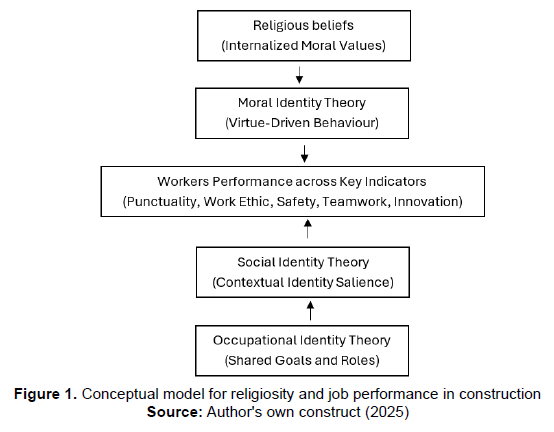
In this environment, discipline, coordination, and precision become unifying principles that transcend individual religious affiliations. The demands of construction work, adherence to safety protocols, meeting deadlines, responsiveness to supervision, and cooperation within diverse teams, foster a professional ethos in which occupational identity takes precedence over religious identity. This dynamic is especially pronounced in project-based construction settings where success is contingent upon mutual interdependence rather than individual belief systems. The interaction of these variables, that is, religiosity, moral identity, social identity, and occupational expectations, is illustrated in Figure 1. The framework depicts how internalised religious values influence moral identity, which in turn shapes job performance, moderated by the social and occupational environment.
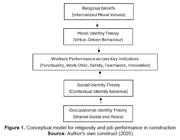
The conceptual framework provides a powerful lens for understanding how religiosity, moral identity, social context, and occupational engagement converge to influence construction worker performance. At the apex, religiosity instils internalised moral values that serve as a bedrock for ethical and reliable behaviour. These values inform the development of a moral identity, which drives individual virtues such as accountability, safety consciousness, punctuality, and innovation. However, these virtues are not merely expressions of personal belief; they are continually reinforced or moderated by the contextual realities of the workplace. Through social identity processes, the salience of religious identity may fluctuate depending on the degree of alignment with broader group norms. In high-functioning construction teams, occupational identity becomes the dominant schema, integrating diverse religious perspectives into a cohesive operational culture. The absence of significant variation in performance outcomes across religious lines, as revealed in the empirical findings, underscores the success of this integrative process.
This synthesis carries important implications for construction management and human resource development. First, it highlights the potential of leveraging religiosity not as a source of division, but as a latent driver of moral commitment and task ownership. Secondly, it affirms the importance of cultivating a strong occupational identity among workers, which can help to neutralise identity-based divisions and foster cohesion. Thirdly, it supports the view that construction sites are not merely technical spaces but socio-cultural ecosystems where belief systems, team dynamics, and task structures interact in complex but manageable ways. Managers and project leaders should thus consider frameworks that accommodate workers' moral and cultural identities while reinforcing shared occupational values that promote high performance and collective accountability. In doing so, they will not only enhance productivity but also foster inclusive and ethically grounded work environments.
3. METHODOLOGY
This study focuses on construction sites located in the southwestern Nigerian states of Lagos, Ogun, and Oyo. These states were purposively selected due to their relatively liberal social environments and high levels of religious diversity and tolerance. Such characteristics make them appropriate for examining the influence of individual religiosity on job performance without the risk of interference from institutional religious policies or sectarian tensions. Lagos, in particular, serves as Nigeria's commercial hub and is known for its multicultural and multi-religious composition, which supports workplace interactions that are less likely to be shaped by dominant religious ideologies (Ogbu, 2014). Ogun and Oyo similarly reflect a pattern of religious pluralism, providing a balanced setting in which to observe how personal religious beliefs may influence job-related behaviour and performance in a typical construction environment.
The study further excludes construction sites that are owned, managed, or sponsored by religious organisations. Workplaces affiliated with religious institutions often enforce specific faith-based work ethics, behavioural codes, and organisational cultures that may not represent the broader norms of the construction industry (Sampson, 2012). Including such sites could introduce institutional bias, as employee behaviour in those settings may be more strongly shaped by organisational religious expectations than by personal religiosity. The research aims to assess the independent role of individual religiosity in shaping workplace conduct, job satisfaction, and performance outcomes within the construction sector by concentrating solely on secular construction sites.
This study adopted a quantitative research design to investigate the influence of religiosity on job performance among construction workers. Quantitative methods are particularly appropriate for generating generalisable findings within construction management research, as they allow for empirical testing of relationships among variables in complex site environments. Due to the dynamic and transient nature of construction sites, as well as the logistical challenges of engaging site operatives directly, the study targeted construction managers and site supervisors as the primary respondents. These individuals play critical roles in overseeing daily activities, enforcing safety and productivity standards, and interacting with workers of various religious backgrounds. Their strategic vantage point makes them well-positioned to provide objective insights into how religious beliefs and practices may influence worker performance.
The study population consisted of construction managers and supervisors operating within selected construction sites located in religiously liberal states in Nigeria. These states were purposefully selected based on their religious diversity and tolerance, which provided an appropriate context for examining the potential influence of religiosity on worker behaviour without dominant cultural or doctrinal bias. A purposive sampling technique was adopted to ensure the inclusion of only those professionals with direct supervisory responsibilities over construction operatives. Importantly, the study excluded projects owned, managed, or sponsored by religious organisations in order to avoid institutional bias that might skew perceptions or expectations related to worker religiosity. A total of 396 structured questionnaires were distributed on-site. Of these, 289 were retrieved, yielding a response rate of 73.0%. Following data cleaning procedures to remove incomplete or inconsistent entries, 263 valid responses were retained for statistical analysis, resulting in a final usable response rate of 66.4%.
Data were collected using a structured questionnaire designed specifically for this study. The instrument comprised closed-ended questions organised into two main sections. The first captured the demographic characteristics of the respondents (e.g., experience, qualification, religious affiliation), while the second focused on their perceptions of how workers' religiosity impacted five key performance dimensions, namely: work ethic, punctuality, teamwork, productivity and overall job performance. Each item was measured on a 5-point Likert scale ranging from 1 (Strongly Disagree) to 5 (Strongly Agree). In order to interpret the strength of perceived performance levels, the study categorised mean Likert scores into the following bands, consistent with standard practices in social science research: Very High: 4.505.00; High: 4.00-4.49; Moderate: 3.00-3.99; Low: 2.00-2.99; Very Low: 1.00-1.99. These classifications align with interpretations used in previous workforce performance and construction behaviour studies (e.g., Chan and Chan, 2004; Barg et al., 2014) and were employed to facilitate practical insights relevant to site management and human resource strategy.
The instrument was reviewed by domain experts in construction management and social science research for face validity, and pilot-tested to confirm clarity, reliability, and consistency. Data collection occurred over a clearly defined period, during relatively low-activity phases on-site, to avoid disruption to construction activities and enhance participation rates. Questionnaires were distributed and retrieved in person by trained field assistants, who also provided clarifications where required. Participation was strictly voluntary, and consent was obtained prior to engagement.
Although the study relied on supervisory assessments, introducing the potential for observer bias, this method was justified on pragmatic and methodological grounds. The construction labour market in Nigeria is characterised by high turnover, informality, and variable literacy levels, which complicates direct engagement with workers for self-reporting purposes. Site managers and supervisors, as individuals responsible for daily workforce monitoring, were deemed reliable proxies for assessing job performance. This approach aligns with established practices in construction and safety performance research (e.g., Gyekye and Haybatollahi, 2012). The study adhered strictly to the ethical standards of empirical research in the built environment, as required by institutional and academic guidelines. Informed consent was obtained from all participants, who were assured of their right to withdraw at any point without consequence. Data confidentiality and anonymity were fully maintained, and participation was free from coercion or inducement. Importantly, the research instrument and approach were religiously neutral, focusing on workplace behaviours rather than doctrinal beliefs, to avoid misinterpretation or offence. Ethical approval for the study was obtained from the relevant university ethics committee prior to data collection.
The quantitative data were analysed using IBM SPSS Statistics Version 27. The study initially sought to use the Exploratory Factor Analysis (EFA) to analyse the results; however, the Kaiser-Meyer-Olkin (KMO) measure of sampling adequacy was found to be below the acceptable threshold for factor analysis, indicating that the data were not suitable for EFA (Shrestha, 2021). This suggests insufficient shared variance among the variables to reliably extract meaningful latent factors. As a result, conducting EFA would likely produce unstable or uninterpretable factor structures, undermining the validity of any dimension reduction attempts. Given this limitation, the study employed the Kruskal-Wallis H test as an alternative inferential method. Since the primary objective was to assess whether significant differences in job performance indicators existed across distinct religious groups, rather than to identify underlying latent constructs, the Kruskal-Wallis test, a non-parametric method, is well-suited for comparing three or more independent groups on ordinal or non-normally distributed continuous variables, which aligns with the nature of the performance data collected. The Kruskal-Wallis test was chosen to test for significant differences in job performance perceptions across religious affiliations.
4. RESULTS AND DISCUSSION
This section presents the findings based on responses from construction site supervisors and managers, analysed in alignment with the study's objectives.
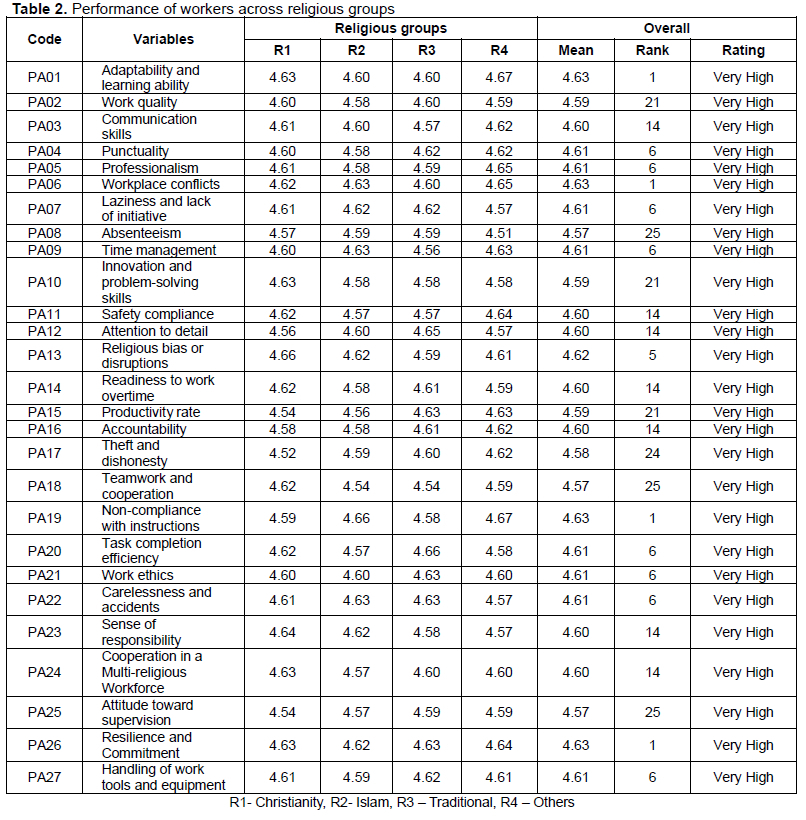
The findings of this study, as seen in Table 2, revealed a compelling narrative about the influence of religiosity on construction workers' job performance. As perceived by supervisors across a religiously diverse workforce, religiosity emerges not as a source of division or disruption, but rather as a subtle, underlying driver of positive workplace behaviours. The data suggest that religious beliefs, regardless of their specific traditions, tend to reinforce values such as discipline, accountability, resilience, cooperation, and ethical conduct. These behavioural attributes, in turn, manifest in high levels of job performance across all key dimensions of construction work. This view aligns with the conclusions of Haruna et al. (2020), who observed that religious values often promote socially desirable behaviours among workers, leading to improved cooperation and task efficiency in labour-intensive sectors.
One of the most prominent themes arising from the analysis is the alignment between religiosity and adaptability. Workers appear to be highly responsive to change and capable of adjusting to the dynamic demands of the construction environment. This suggests that religious values may cultivate an openness to learning and personal growth, qualities that are critical in an industry characterised by shifting project scopes, evolving safety protocols, and multidisciplinary collaboration. This finding corroborates Graca and Brandao's (2024) assertion that individuals with strong religious orientations often exhibit higher levels of psychological resilience and adaptability in stressful work settings.
One of the most compelling themes in our findings deals with how workers relate to one another on-site. Far from triggering tension, religious differences appear to unite rather than divide -teamwork and camaraderie shine through across religious lines. This dynamic suggests a shared ethic rooted in mutual respect and cooperation, transcending doctrinal divides. It is possible that common moral values - think patience, humility, kindness - help build inclusive relationships and keep conflicts to a minimum. This finding aligns with Jiménez et al.'s (2019) study, which showed that within-country religious diversity can enhance the performance of private participation infrastructure projects, suggesting that diverse teams can function effectively when managed properly. From a managerial perspective, this points to the potential of religiously diverse teams to function harmoniously when organisational cultures prioritise respect and professionalism Performance variables linked to punctuality, absenteeism, and task completion reveal further insights into the self-regulatory influence of religiosity. Workers are consistently described as dependable, consistent, and time-conscious, traits that align with religious teachings on duty, integrity, and stewardship. These behavioural patterns not only contribute to timely project delivery but also reduce supervision overhead, thereby enhancing managerial efficiency. The implication is clear: a workforce grounded in internal moral accountability may require less external enforcement, allowing supervisors to focus on higher-level strategic and technical oversight. This echoes the findings of Bassous (2015), who highlighted that intrinsic religious motivation can be a stronger determinant of workplace discipline than formal monitoring systems.
Moreover, the findings suggest that religiosity may serve as a protective factor against negative behaviours such as dishonesty, theft, and carelessness. Workers are reported to demonstrate high levels of honesty, attentiveness, and compliance with safety procedures. These behaviours are particularly significant in construction, where safety breaches and tool misuse can have severe human and financial consequences. It appears that religious values internalised by workers contribute to a culture of responsibility and conscientiousness, qualities that are difficult to instill through policy alone. This aligns with Alao and Dairo (2024), who argued that faith-based ethical grounding enhances employees' moral reasoning and fosters safer and more compliant behaviours on construction sites. However, this finding contrasts with Alhassan and Ugwuoke (2018), who suggested that religiosity may be limited in moderating unethical practices where organisational accountability mechanisms are weak or inconsistent.
Notably, the influence of religiosity is not limited to passive virtues but extends to proactive attributes such as innovation, initiative, and problem-solving. Workers are not only following rules but are also contributing creatively to project goals. This challenges the assumption that religiosity might breed fatalism or discourage critical thinking. Instead, the data suggests that religiously inclined workers can blend moral discipline with practical ingenuity, thereby enhancing overall project performance. This view aligns with Ebitari (2024), who posited that spiritual belief systems, when harmonised with professional ethics, can motivate workers to contribute constructively and take initiative, especially in mission-driven or labour-intensive tasks.
From a strategic decision-making standpoint, these findings have important implications. They invite construction managers, project leaders, and policy makers to reframe the way religiosity is perceived and integrated into organisational practices. Rather than viewing religious expression as a private matter to be tolerated, or a potential source of conflict to be minimised, it can be understood as a latent asset, one that, if respected and managed sensitively, may enhance workforce stability, ethical culture, and team resilience. This resonates with the proposition by Héliot et al. (2020) that inclusive HR practices that accommodate religious identity can improve organisational citizenship behaviours and reduce workforce turnover.
The consistency of high performance across all religious groups also raises questions for future research and management practice. It suggests that no religious tradition is superior in shaping work ethics; rather, it is the presence of an internalised belief system, and its congruence with shared workplace values, that matters most. This insight is vital in pluralistic societies and multicultural project environments where respect for religious diversity is not only an ethical imperative but also a pathway to operational excellence. This finding supports the theoretical position of Ajala (2013), who maintained that spirituality and work values converge more effectively when institutional norms reinforce ethical inclusivity rather than doctrinal conformity.
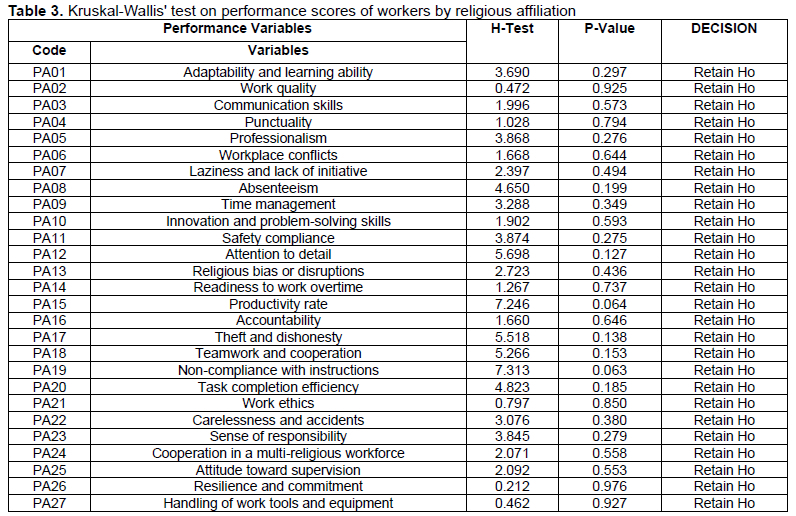
To determine whether religious affiliation has a significant influence on construction workers' job performance, the Kruskal-Wallis H test was employed across twenty-seven performance-related variables. This non-parametric test was selected due to the ordinal nature of the dataset and the unsuitability of the data for multivariate techniques such as exploratory factor analysis (EFA), as indicated by an inadequate Kaiser-Meyer-Olkin (KMO) value below the recommended 0.6 threshold (Wahab, 2022; Shrestha, 2021).
The test results revealed no statistically significant differences in any of the performance indicators when compared across religious groups, as all p-values exceeded the conventional 0.05 significance level. Although a few variables approached marginal significance, such as productivity rate (H = 7.246, p = 0.064), non-compliance with instructions (H = 7.313, p = 0.063), and attention to detail (H = 5.698, p = 0.127), none met the threshold for statistical significance. This finding aligns with Weaver and Agle (2002), who argued that religiosity does not always produce differential behavioural outcomes across groups but tends to support a shared ethical orientation that manifests similarly across religious boundaries.
Core performance dimensions such as work quality, punctuality, safety compliance, teamwork and cooperation, and work ethics showed particularly high p-values, suggesting a strong consistency in performance across religious affiliations. This corroborates the position of Van der Walt and De Klerk (2014), who found that workplace spirituality contributes to job satisfaction and performance without being dependent on specific religious denominations. Similarly, this finding echoes the work of Olowookere et al (2021), who observed that in Nigerian work settings, shared cultural values often moderate doctrinal differences, resulting in comparable work behaviours across religious lines.
Variables relating to interpersonal conduct and ethical behaviour, including indicators such as theft and dishonesty, religious bias or disruptions, and cooperation in multi-religious teams, also exhibited no significant differences across religious affiliations. This supports the assertion by Weaver and Agle (2002) that religiosity, while shaping internal moral codes, does not necessarily produce observable behavioural divergences in formal organisational contexts where external norms and job roles are clearly defined. It also reinforces Pace's (2014) view that religiosity influences attitudes more than it determines unique behavioural outcomes, particularly in structured and regulated environments like construction sites. These findings suggest that while religiosity may shape individuals' personal ethical frameworks, it does not statistically influence observable job performance among construction workers in the sampled states. This outcome is consistent with Mitroff and Denton's (1999) conclusion that spiritual or religious identities are often subsumed under broader organisational cultures that emphasise professionalism and task completion over personal belief systems.
Furthermore, the uniformity of performance outcomes across religious groups strengthens the argument advanced by Miller and Ewest (2013) that competency-based management, rather than identity-based evaluation, is a more equitable and effective framework for performance assessment. This view supports the move toward inclusive workplace policies that value behaviour and results over religious or demographic identity markers. The fact that we found no significant religious differences challenges the common assumption that religious diversity tends to cause inconsistency or conflict on construction sites. Instead, our data suggests that secular, standardised operational norms - especially in cosmopolitan and religiously diverse areas like Lagos, Ogun, and Oyo States - help foster consistent workplace behaviors regardless of faith. This observation is in line with the research by Adeyemi and Aigbavboa (2020), whose study in Lagos and Ondo States found that religion or tribe were not primary drivers of workplace conflict; rather, factors like favoritism, role ambiguity, and unequal professional experience mattered more in causing disagreement among construction professionals.
These insights hold important implications for construction managers, human resource professionals, and policymakers. They affirm previous arguments by Van Buren and Agle (1998) that religious affiliation should not be used as a proxy for work ethics or job competence. Instead, objective, task-oriented indicators should guide performance evaluation. This also resonates with broader human resource management literature, which encourages inclusive workforce strategies as a pathway to equity, cohesion, and enhanced productivity in diverse teams (Van der Walt and De Klerk, 2014; Ali, Gibbs, and Camp, 2018).
5. CONCLUSION
This study examined the influence of religiosity on job performance among construction workers in selected states of Southwest Nigeria. Drawing on data from site managers and supervisors across secular construction sites, the findings indicate that religious affiliation does not significantly affect key performance indicators such as punctuality, work quality, safety compliance, or teamwork. Inferential analysis revealed no statistically significant differences in performance across religious groups, suggesting that individual professionalism, technical competence, and adherence to workplace standards are more influential determinants of productivity than personal religious beliefs.
These findings hold several important implications for both practice and policy. From an organisational standpoint, the results advocate for a competency-based approach to workforce management. Employment practices, including recruitment, performance appraisal, and promotion, should be grounded in merit and measurable job-related competencies rather than shaped by assumptions about religious commitment. Such a shift supports greater fairness, transparency, and productivity within construction firms. Beyond organisational relevance, the study contributes to broader social discourse around religious pluralism and workplace inclusion. In a religiously diverse country like Nigeria, these findings challenge stereotypes that associate job effectiveness with faith-based identity. Promoting the understanding that religious affiliation does not inherently predict performance encourages interfaith tolerance and supports national cohesion. As such, the research reinforces the value of inclusive employment policies that bridge religious divides while promoting workplace equity.
However, this study is not without its own limitations. First, it was conducted in relatively liberal and urbanised states, namely Lagos, Ogun, and Oyo, where religious influence on work practices may be more moderate. This restricts the generalisability of the findings to more conservative or faith-centric regions of Nigeria. Second, the reliance on supervisor-reported performance assessments introduces the possibility of subjective bias, which may not fully reflect workers' self-perceptions or objective performance. Furthermore, construction projects affiliated with religious institutions were intentionally excluded to avoid institutional bias; consequently, the results may not apply in such contexts where faith-based ethics are formally embedded in organisational culture.
In order to overcome these limitations, future studies should consider a wider geographic coverage, particularly in areas where religious institutions have a stronger presence. Using varied data collection methods such as self-report surveys, direct performance observations, or a mix of qualitative and quantitative approaches could provide a deeper understanding of how religiosity affects workplace dynamics. Longitudinal research could also shed light on how temporary religious events, like fasting periods or festivals, influence short-term productivity and employee attitudes.
Drawing from the findings of this study, several practical steps are recommended. Construction firms should adopt clear and objective performance measures that are applied fairly to all workers, regardless of their religious beliefs. Training and development efforts should focus on promoting safety, improving skills, and encouraging ethical behaviour through continuous learning. Considering the religious diversity often present on construction sites, employers should create inclusive policies that promote mutual respect and tolerance. This could involve cultural sensitivity workshops, team-building activities that bring together employees of different faiths, and opportunities for interfaith collaboration. Where possible, reasonable religious accommodations such as flexible prayer times or designated worship areas can be provided, as long as they do not affect productivity or safety on site.
Conclusively, this study highlights the importance of merit-based workforce strategies in the construction sector and warns against relying on religious identity as a measure of job performance. In order to strengthen workforce cohesion and improve productivity, organisations and policymakers should focus on evidence-based human resource practices that prioritise competence, inclusiveness, and fairness. Further research into socio-cultural factors such as ethnicity, leadership style, organisational culture, and workplace ethics will provide deeper insights into workforce dynamics and help drive more effective human capital development across industry.
REFERENCES
Abankwa, D. A., Li, R. Y. M., Rowlinson, S., & Li, Y. (2021). Exploring individual adaptability as a prerequisite for adjusting to technological changes in construction. In Collaboration and Integration in Construction, Engineering, Management and Technology: Proceedings of the 11th International Conference on Construction in the 21st Century, London 2019 (pp. 601-605). Springer International Publishing.
2. LITERATURE REVIEW
- Adeyemi, B. S., & Aigbavboa, C. O. (2020). Conflict factors investigation among construction professionals in Nigeria. Journal of Engineering, Design and Technology, 18(5), 1121-1137.
- Ajala, E. M. (2013). The impact of workplace spirituality and employees' well-being at the industrial sector: The Nigerian experience. The African Symposium, 13(2), 3-13.
- Alao, O. J., & Dairo, A. O. (2024). The intersection of faith and morality: Exploring the role of religious ethics in Nigeria. Lead City Journal of Religions and Intercultural Communication, 2(2), 185-204.
- Alhassan, A., & Ugwuoke, W. O. (2018). Religiosity, institutions and corruption in Africa. Journal of Economics and Sustainable Development, 9(18), 150.
- Aquino, K., & Reed II, A. (2002). The self-importance of moral identity. Journal of Personality and Social Psychology, 83(6), 1423-1436.
- Bahr, M., & Laszig, L. (2021). Productivity development in the construction industry and human capital: A literature review. arXiv preprint arXiv:2104.00129.
- Baker, H., Hallowell, M. R., & Tixier, A. J. P. (2020). AI-based prediction of independent construction safety outcomes from universal attributes. Automation in Construction, 118, 103146.
- Bal, Y., & Kökalan, Ö. (2021). The moderating effect of religiosity on the relationship between burnout and job satisfaction. Frontiers in Psychology, 12, 750493.
- Barg, J. E., Ruparathna, R., Mendis, D., & Hewage, K. N. (2014). Motivating workers in construction. Journal of Construction Engineering, 2014(1), 703084.
- Bassous, M. (2015). What are the factors that affect worker motivation in faith-based nonprofit organisations? VOLUNTAS: International Journal of Voluntary and Nonprofit Organizations, 26(1), 355-381.
- Chan, A. P., & Chan, A. P. (2004). Key performance indicators for measuring construction success. Benchmarking: An International Journal, 11(2), 203-221.
- Chan, A. P., Chan, D. W., Chiang, Y. H., Tang, B. S., Chan, E. H., & Ho, K. S. (2004). Exploring critical success factors for partnering in construction projects. Journal of Construction Engineering and Management, 130(2), 188-198.
- Choi, B., Lee, G., Jebelli, H., & Lee, S. (2019). Assessing workers' perceived risk during construction tasks using a wristband-type biosensor. arXiv preprint arXiv:1908.05133.
- Dewi, S. S., Madjid, A., & Fauzan, A. (2020). The role of religiosity in work-life balance. Budapest International Research and Critics Institute (BIRCI-Journal): Humanities and Social Sciences, 3(3), 2363-2374.
- Dowd, R. A. (2016). Religious diversity and religious tolerance: Lessons from Nigeria. Journal of Conflict Resolution, 60(4), 617-644.
- Ebitari, W. (2024). Workplace spirituality and employee performance in a dynamic work environment. International Journal of Research and Innovation in Social Science, 8(7), 2309-2317.
- Elsayed, W., Sokolovskiy, K., & Gavrilova, Y. (2023). Religious practices in the effectiveness of social service workers: A subjective assessment. Public Organization Review, 23(4), 1385-1398.
- Gao, Y., Gonzalez, V. A., Yiu, T. W., & Cabrera-Guerrero, G. (2019). Non-linearity identification for construction workers' personality-safety behaviour predictive relationship using neural network and linear regression modeling. arXiv preprint arXiv:1912.05944.
- Graça, L., & Brandão, T. (2024). Religious/spiritual coping, emotion regulation, psychological well-being, and life satisfaction among university students. Journal of Psychology and Theology, 52(3), 342-358.
- Gröschl, S., & Bendl, R. (2016). Managing religious diversity in the workplace: Examples from around the world. Routledge.
- Gyadu-Asiedu, W. (2014). Construction project performance measurement: A review of the philosophies, concepts and paradigms. ADRRI Journal, 5(5), 74-91.
- Gyekye, S. A., & Haybatollahi, M. (2012). Workers' religious affiliations and organisational behaviour: An exploratory study. International Journal of Organisational Behaviour, 17(4), 1-18.
- Héliot, Y., Gleibs, I. H., Coyle, A., Rousseau, D. M., & Rojon, C. (2020). Religious identity in the workplace: A systematic review, research agenda, and practical implications. Human Resource Management, 59(2), 153173.
- Hinze, J., Thurman, S., & Wehle, A. (2013). Leading indicators of construction safety performance. Safety Science, 51(1), 23-28.
- Ibrahim, A., Zayed, T., & Lafhaj, Z. (2024). Enhancing construction performance: A critical review of performance measurement practices at the project level. Buildings, 14(7), 1988.
- Jiménez, A., Jiang, G. F., Petersen, B., & Gammelgaard, J. (2019). Within-country religious diversity and the performance of private participation infrastructure projects. Journal of Business Research, 95, 13-25.
- Kutcher, E. J., Bragger, J. D., Rodriguez-Srednicki, O., & Masco, J. L. (2010). The role of religiosity in stress, job attitudes, and organisational citizenship behaviour. Journal of Business Ethics, 95, 319-337.
- Miller, D. W., & Ewest, T. (2013). The present state of workplace spirituality: A literature review considering context, theory, and measurement/assessment. Journal of Religious & Theological Information, 12(1-2), 29-54.
- Mitroff, I. I., & Denton, E. A. (1999). A study of spirituality in the workplace. Sloan Management Review, 40, 83-92.
- Nevi, R., & Peranginangin, J. (2019). Effect of religiosity, job stress, and job attitude on performance. Jurnal Organisasi dan Manajemen, 15(1), 82-97.
- Ogbu, O. N. (2014). Is Nigeria a secular state? Law, human rights, and religion in context. Transnational Human Rights Review, 1 , 1-25.
- Olowookere, E. I., Agoha, B. C., Omonijo, D. O., Odukoya, J. A., & Elegbeleye, A. O. (2021). Cultural nuances in work attitudes and behaviors: Towards a model of African work culture. Academic Journal of Interdisciplinary Studies, 10(2), 259-270.
- Pace, S. (2014). Effects of intrinsic and extrinsic religiosity on attitudes toward products: Empirical evidence of value-expressive and social-adjustive functions. Journal of Applied Business Research, 30(4), 1227-1238.
- Parboteeah, K. P., Hoegl, M., & Cullen, J. B. (2008). Ethics and religion: An empirical test of a multidimensional model. Journal of Business Ethics, 80(2), 387-398.
- Robbie, R. I., & Sayyaf, R. T. F. (2022). Impact of religiosity, work-related stress on job performance and workload as a moderating variable. International Journal of Social Science and Business, 6(2), 156-164.
- Sampson, I. T. (2012). Religious violence in Nigeria: Causal diagnoses and strategic recommendations to the state and religious communities. African Journal on Conflict Resolution, 12(1), 103-134.
- Schneider, R. C., Carroll Coleman, D., Howard Ecklund, E., & Daniels, D. (2022). How religious discrimination is perceived in the workplace: Expanding the view. Socius, 8, 23780231211070920.
- Tajfel, H., & Turner, J. C. (2004). The social identity theory of intergroup behavior. In Political Psychology (pp. 276293). Psychology Press.
- Umeokafor, N., & Windapo, A. (2019). The influence of religious consciousness on construction health and safety practices and performance. Journal of Construction in Developing Countries, 24(1), 23-47.
- Van Buren III, H. J., & Agle, B. R. (1998). Measuring Christian beliefs that affect managerial decision-making: A beginning. International Journal of Value-Based Management, 11(2), 159-177.
- Vitell, S. J., Paolillo, J. G., & Singh, J. J. (2005). Religiosity and consumer ethics. Journal of Business Ethics, 57(2), 175-181.
- Wahab, N. J. A. (2022). The use of exploratory factor analysis (EFA) for testing the validity of knowledge sharing instruments. Journal of Business Innovation, 7(1), 28-35.
- Wang, D., & Wang, P. (2024). Effect of employee resilience on organisational resilience in construction projects: Considering the role of project tasks. Engineering, Construction and Architectural Management, 31(11), 42364254.
- Weaver, G. R., & Agle, B. R. (2002). Religiosity and ethical behavior in organisations: A symbolic interactionist perspective. Academy of Management Review, 27(1), 77-97.
- Wening, N., & Choerudin, A. (2015). The influence of religiosity towards organisational commitment, job satisfaction, and personal performance. Polish Journal of Management Studies, 11, 1-10.
- WDNSM, T., & Wjajm, L. (2018). Religiosity and engagement: Clarifying the relationship. International Journal of Commerce and Management Research, 4(1), 52-57.
Olukolajo Michael Ayodele
Department of Estate Management, School of Environmental Technology, Federal University of Technology
Akure, Nigeria
Email address:

Revised: 07-06-2025; 11-08-2025
Accepted:15-10-2025