Identifying the interests of stakeholders in large construction projects: Based on Justification theory of Boltanski and Thévenot
Abstract
In large construction projects, many stakeholders are involved, often with different interests. They look at the interests through the lenses of their conflicting worldviews, leading to the formation of different worlds that often have tensions among them. For example, to be viable, the projects must find a compromise between competition and collaboration. Hence, success in developing and implementing large construction projects requires analyzing the justifications of the world of stakeholders, identifying conflicts and creating agreements among them. Thus, the main purpose of this paper is to use Boltanski and Thévenot's theory to review the justifications of stakeholders' various and understand the tensions and compromises in large construction projects. The research approach is exploratory qualitative, realized using a multiple case study. In this process, five cases were selected as five large construction projects from the four countries of Iran, Turkey, India and Ethiopia and were analyzed based on the data extracted from written, visual, and audio sources. The results indicate that while six stakeholder groups are identified in the sources, content analysis and clear evidence reveal that the industry, construction, and market groups dominate in large construction projects. In other words, the stakeholders often justify their benefits and losses through the lens of these three worlds. In addition, the research discusses tensions and possible compromises in large construction projects. The results of this research improve the insight and knowledge of project managers and contribute to the success of large construction projects. However, it faces limitations in terms of methodology and data adequacy.
Justification theory; civic; inspired; domestic; fame; industrial; market worlds
1. INTRODUCTION
In recent decades, construction projects have become very important in the economic and budgeting systems of countries; and naturally earn a large part of the budget of countries (Prasad and Vasugi, 2017). Some of these projects are very large and so-called mega-projects, and complexity is one of their inherent features (Brockmann and Girmscheid, 2007) so that their impacts on various environmental aspects of countries have been approved by experts (Flyvbjerg, 2014). The construction and maintenance of road networks, for instance, is one of the important factors in the economic, social, and industrial development of any country. Road networks open the door to progress in different regions of the countries and provide the context for regional development by improving trade, industry, agriculture, and tourism (Sahoo and Dash, 2009; Srinivasu and Rao, 2013). Other infrastructure projects such as dams, tunnels, power plants, towers, bridges, large residential and commercial complexes, sports stadiums, etc., have similar features and effects. Hence, large construction projects in all countries are important so that in addition to attracting a significant portion of government budgets, they are usually one of the sources of ethnic, local, political, national, and international conflicts. For example, the conflicts between Egypt, Sudan, and Ethiopia over the Grand Ethiopian Renaissance Dam (GERD) (Al-Anani, 2022) or the conflict between Turkey, Syria, and Iraq for similar reasons (KHRP and Campaign, 2002). Additionally, by defending the projects, the local people, representatives, and some political groups want to allocate more funds and speed up their implementation. On the other hand, construction projects have stubborn opponents who are stakeholders of the projects, such as environmental organizations, environmentalists, local residents, neighboring provinces, and some politicians. Each of them who has its justifications, sometimes disrupting the project implementation process.
In addition to external stakeholders, many large construction projects involve many specialized teams often with varying interests. These differences form different perspectives and worlds in team management (Suryani, Rustiana, Muhsin, and Rahmaningtyas, 2020). Although some team managers emphasize the soft aspects of human resources in projects to achieve their own interests, their main approach is the hard aspects. In other words, some managers in project teams emphasize quantitative, computational, business, and market aspects like other economic factors, while others emphasize concepts such as communication, motivation, leadership, and culture (Suryani et al., 2020; Truss, Gratton, Hope-Hailey, McGovern, and Stiles, 1997). Although project management is a branch of public management and seems to go beyond the classical school and claims that manpower is its main asset, there are conflicts in practice. So, success in designing, and implementing large construction projects requires analyzing the justifications of internal and external stakeholders, identifying the conflicts, and creating agreements. Luc Boltanski and Laurent Thévenot (1991), in the book entitled On Justification: Economies of Worth, identified these oppositions and agreements with the titles of "tension and compromises.
Luc Boltanski and Laurent Thévenot's ideas, which have been at the forefront of France's new pragmatic sociology and have had a wide-ranging impact on the theoretical and content fields of the social sciences in recent years, have focused on differences and justifications in social life. At the heart of their theory are six specific types of "worlds" of justification that social actors use during disputes. The interaction of these worlds creates a variety of matrices of conflict, compromise, or cooperation in different situations, which are discussed in the next section. This theory helps understand the justifications of different groups and identify potential tensions and compromises. Accordingly, in this study, Boltanski and Thévenot's theory is the main basis for the justifications of various stakeholders in large construction projects.
Based on what has been mentioned, the main purpose of this article is to use Boltanski and Thévenot's theory to study and analyze infrastructures and large construction projects from the perspective of different worlds to create new insights and knowledge for managing large construction projects. Then, according to the outputs of the theory, the dominant worlds are identified, and the existing tensions as well as possible compromises between the dominant views, are presented. Accordingly, the research seeks to answer the following questions: 1) How are the large construction projects seen or described through the lens of Boltanski and Thévenot's six worlds? 2) Based on the justifications, what are the dominant worlds in the projects? 3) What are the tensions between the worlds? 4) Finally, to improve the performance of the project, what possible compromises should be made between the two worlds?
To analyze the issue more accurately, and create a more realistic picture, the study focuses on several large construction projects in various countries as cases. These projects, which have general and social aspects and are compatible with the logic of Boltanski and Thévenot's theory. The research questions have been addressed using the specification of these cases and the opinions of several project stakeholders. Hence, the structure of the paper begins with an introduction and problematization. Then, Boltanski and Thévenot's theory is introduced as the theoretical basis of the research. In the next section, the research methodology, including the approach, strategy, and methods, is discussed. The fourth section is devoted to analysis and discussion. At the end of this section, a framework based on the tensions and compromises among the worlds of large construction projects is developed. Finally, the conclusion of the study is presented.
2.1 Tension and compromise in large construction projects
Large construction projects are characterized by their deep fragmentation, with various stakeholders and disciplines brought together as virtual teams in many instances for one-off projects (Underwood and Khosrowshahi, 2005). Thus, the success of a construction project depends on a few conflicts and effective collaboration among the multiple stakeholders during various project phases (Fellows and Liu, 2012). This is especially important in complex projects with multiple stakeholders whose ambitious goals and interests' conflict. These differences often stem from different perspectives that come from conflicting worlds.
In general, humans justify their actions to others based on the content of their different worlds, instinctively using their own experiences to appeal to principles they hope to uphold (Boltanski and Thévenot, 2006a). They usually justify their actions to get more benefits from the projects and avoid more responsibility (Morina, 2020). Naturally, these actions do not benefit the projects but only cause more damage, resentment and mistrust, and cause disruption of the stakeholders in the way of the projects.
Despite its importance in the success of large projects, few studies have been conducted on it. However, in the few studies conducted (Bérubé and Gauthier, 2017; Cohendet and Simon, 2007; DeFillippi, 2015), tensions between stakeholders have been confirmed, although no research has specifically studied them. For example, in one of the special research projects done in this field in recent years, Bérubé and Gauthier (2017) studied the tension in the projects of eleven advertising agencies. "They used Boltanski and Thévenot (1991, 2006) theoretical framework On Justification: Economies of Worth to identify four profiles for the management of creative work based on creative activities and project management activities in the agencies they studied. They identified these agencies' competitive position on the creative market based on how they managed the tension with a compromise between their creative and project management activities. They showed that if an agency wants to change its competitive position on the creative market, it must change how it manages the compromise between its creative and project management activities. In that research, they studied the tension inside a project in an organization that is in competition with other organizations" (Bérubé and Gauthier, 2020). However, the invisible dimensions of the tensions and compromises of the stakeholders of large projects are still unknown. Thus, Boltanski and Thévenot's theoretical framework, "On Justification: Economies of Worth", provides a good framework for its deep study.
2.2. Justification: Economies of Worth
Luc Boltanski and Laurent Thévenot (1991) in the book entitled "On Justification: Economies of Worth," provide a framework for examining individual interaction as the fundamental structure of the need for justification. According to this theory, actors justify their actions by relying on the superior common principles related to the order of worth (Bérubé and Gauthier, 2017). A core element of the theory is that legitimate justifications of what it is right and wrong to say, and to do, follow commonly recognised moral orders (or 'worlds') that dominate the specific social situation. The central point is that different moral orders may be called upon to justify actions. The orders represent a set of social conventions that people can draw on, each with its own set of evaluative criteria and a related conception of "the common good" (Bérubé and Gauthier, 2017; Thorslund and Lassen, 2017). According to the logic of these two authors, the need for justification arises from the fact that tensions and their potential impact have affected social and organizational life in modern societies; therefore, to move forward, a compromise must be made between them (Boltanski and Thévenot, 2006b).
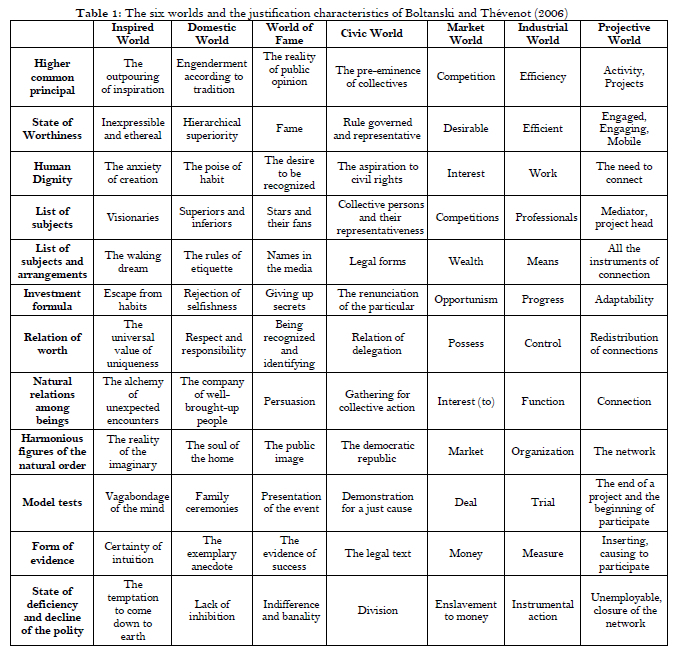
Boltanski and Thevenot identify six orders of worth; each has their characteristics and is linked to particular value systems. The worlds they presented are subdivided into six (although they added another value later): the inspired, the domestic, the world of fame, the civic, the market, and the industrial worlds (Bérubé and Gauthier, 2017). Because they are rarely made explicit in ordinary contexts, they extract these constructs from canonical texts of political philosophies of the common good. Therefore, the influential philosophical policies of these six worlds are, respectively St. Augustine (the inspired), Bossuet (the domestic), Hobbes (the fame), Rousseau (the civic), Adam Smith (the market), and Saint-Simon (Saint-Simon) (Boltanski and Thévenot, 2006b). Table 1 presents the characteristics of each world according to the categories proposed by Boltanski and Thévenot (2006).
They explain "no complex entity can be confined in a single world. Complex entities can be conceived as presenting an amalgam of worlds where tensions emanate when there is confrontation between two worlds. The entities are viable because, by forming compromises, several worlds can coexist. In a compromise, people agree to come to terms, that is, to suspend a clash - a dispute involving more than one world - without settling it through recourse to a test in just one of the worlds" (Bérubé and Gauthier, 2017), but agreements are more difficult to reach when people invoke different orders of worth. One common world addresses typical criticisms to another. For instance, the civic world criticizes inspired world for being impulsive and individualistic, while the inspired world disapproves of the civic world's legalistic and bureaucratic approach (Godechot, 2009).
Boltanski and Thévenot believe that two common worlds can also assuage critical tensions that separate them by finding a compromise on possible common objects and features of the two different worlds. Man in revolt and gestures of protest could be figures of compromise between the civic and the inspired worth. Although it focuses on the possibility of peace and agreement, one should not forget that compromises between orders of worth will always remain precarious and at the mercy of the revival of a deeply based criticism. Through the detailed and careful building of two matrices, the matrix of criticisms and the matrix of compromise, Boltanski and Thévenot go way beyond the technical study of figures of rhetoric. They paint with a sensitive touch the cultural invariants of the quarrels of our time (Godechot, 2009).
1. The market world - The market world values objects (goods and services) and regards "competition" as its higher-order principle (Boltanski and Thévenot, 2006b). This world measures the worthiness of a good by its ease of sale and the worthiness of an actor by material success (e.g., rich, profitable). In contrast, unworthiness refers to stagnating, failing, or losing for individuals and being unwanted for goods. Judgment is established by price, in which a reasonable value is attributed to something or someone, and the proof is furnished in the form of money, "the measure of all things." Market decline or failure can be most clearly associated with poverty and financial loss (Giulianotti and Langseth, 2016). Arguably in this world, price, value, competition and finally, money are more important than anything else. Thus, in this world, quantitative value for money is considered a valid evaluation criterion since actions are motivated by individual desires for rare objects and goods. Competition, rivalry, value, desire, and selfishness are relevant keywords. A market value assessment evaluates the price, which expresses the importance of the object (Thorslund and Lassen, 2017). Although large construction projects are often implemented to meet public and societal needs, they are not viewed in terms of price, cost, and market, but often their indicators have a tangible application in the project.
2. The industrial world - According to Boltanski and Thévenot (2006), 'the ordering of the industrial world is based on the efficiency of beings, their performance, their productivity, and their capacity to ensure normal operations and to respond usefully to needs' (Boltanski and Thévenot, 2006b). Science and technology define the industrial world. Therefore, modern tools, equipment, and advanced production methods influence this world. Moreover, the state of worthiness corresponds to a situation where beings (humans or organizations) are efficient, functional, reliable, controllable, and operational. By contrast, the state of unworthiness refers to situations where reliability is no longer ensured, creating potential incidents, risks, or random events that challenge the capacity to maintain control over organizations. In this world, measurable statistical indicators based on valid tests are used to prove something. Additionally, judgment in the industrial world focuses on the issue of efficient functioning, with evidence involving performance measurement (Patriotta, Gond, and Schultz, 2011). Due to the scientific nature of this world, it requires long-term planning and the presence of experts and specialists. According to the factors in project management, the industrial world is most compatible with the characteristics of large construction projects.
3.The civic world- The civic world can be roughly defined as the political environment of a given community (Boltanski and Thévenot, 2006). It is distinguished by the pre-eminence of the collective over individuals and the search for a higher common good. It points to notions such as civil rights and encompasses political aspirations. The state of worthiness in this world corresponds, for a collective social entity, with being legal, governed, official, or authorized. By contrast, division and a lack of consensus would lead a country or a human group to unworthiness. In this world, people encourage others to join the community and demand formalities, procedures and legal frameworks that define what is best for all. According to Boltanski and Thévenot, forming a group can lead to the formation of social movements. Members of these groups are attached to political ties, citizenship rights and collective identity. In this world, most collective decisions are made regarding the votes and opinions of the masses (Giulianotti and Langseth, 2016). To ensure that the goals of this world are met, indicators such as equality and solidarity are examined.
4.The domestic world- This 'common world' refers to belonging to the same household conceived as a territory in which the relation of domestic dependence is inscribed. In this world personal relationships are key elements of justice: "it is through reference to generation, tradition, and hierarchy that order can be established among beings of a domestic nature" (Boltanski and Thévenot, 2006). In this world, objects are not understood according to their own value, but essentially, they are understood according to how much they contribute to establishing hierarchical relations between people, and necessarily, according to the degree to which they facilitate the registration of value and therefore the identification of people during encounters. The inner world is ruled by people with patriarchal personalities, and members follow the same customs as family members. Also, their relationship is based on a close hierarchy, and esteem and reputation assess the value. In this world, judgment flows from the higher figure, granting different levels of trust in others through appreciation, praise, criticism, or even contempt. The evidence to support this judgment is provided by anecdotes, examples, and cases (Giulianotti and Langseth, 2016) and family ceremonies could represent tests of worth.
5.The inspired world- Boltanski and Thévenot (2006) present the inspired world as relatively fragile and unstable and defined by 'the outpouring of inspiration', when spontaneous and transformative experiences ignite profound emotions (excitement, terror, fascination, etc.). They argue that inspiration is driven by love and passion, the 'desire to create' where imagination 'runs wild' (Giulianotti and Langseth, 2016). In the inspired world, the relationship with the divine is the most appreciated characteristic of individuals (Shachar, Hustinx, Roza, and Meijs, 2018), and uniqueness and creativity define value (Friedland and Arjaliès, 2017). So, in this world, value is seen as an immediate relationship with an external source from which all possible value derives. This value is based on obtaining a state of grace and is therefore completely independent of recognition by others. In particular, it arises in the personal body when asceticism prepares it, especially through emotions. To ensure the realization of the values of this world, passion and enthusiasm and proof of it, involvement and emotional expression can be examined (Boltanski and Thévenot, 2006). Just as this world focuses on passion, creativity, dreams, passion, emotions, thrills, etc. (Thorslund and Lassen, 2017), in a real project team, passion, motivation, collaboration, creativity and efficiency are inevitable necessities. Therefore, there is a relative correspondence between the characteristics of the project team and those of the world.
6. The World of Fame - According to Boltanski and Thévenot (2006), this world poses an analytical challenge; however, most evaluations it contains are subtly, and not very clearly expressed (Boltanski and Thévenot, 2006). They believe that "the reality of public opinion" should present this world. That is, when the presence of qualified persons legitimizes the environment, they should be presented to the public, and this requires the disclosure of certain secrets and personal information to the public. The aim is to influence or persuade public opinion (Giulianotti and Langseth, 2016). In this world, value comes exclusively from the opinions of others, and to some extent, audience reactions determine success. Worthy beings are therefore those who stand out and are visible, attract attention, and become recognized and famous (Thorslund and Lassen, 2017). Clues like popularity, audience, and recognition are used to examine it, and semiotics are used to prove it.
3. RESEARCH METHOD
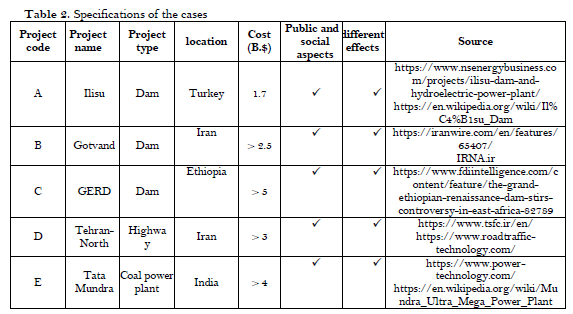
According to the research purpose and questions, the nature of this study is an exploratory qualitative type. In addition, to achieve the study's goal, the researcher seeks to answer the questions by elaborating and applying Boltanski and Thévenot's theory and using the strategy of multiple case studies. This strategy was chosen to provide a more tangible and understandable analysis of different worlds (Bérubé and Noël, 2011) in the field of large construction projects. This strategy consists of a research objective because the case study is an appropriate method for emerging fields of research (Bérubé and Noël, 2011), and it allows the researcher to create a bridge between the research literature and real information in the project environment to ensure deep coordination and connection between theory and practice. Furthermore, since construction projects are diverse, the researcher needs more than one case to identify the factors (Bell, Bryman, and Harley, 2022). As table 2 illustrates, five major construction projects across various countries, focusing on their public and social dimensions and the resulting economic, social, political, and environmental impacts as real cases to be studied. Most public construction projects' largeness and complexity emphasize these cases (Baccarini, 1996; Brockmann and Girmscheid, 2007; Flyvbjerg, 2014). To ensure the selected projects align with the research topic, they were selected based on six criteria: (1) large construction projects, (2) cost more than $1 billion, (3) various project teams, (4) located in different countries, (5) public and social aspects, and (6) having different effects.
A two-part study process has been adopted to collect the required data and information. In the first section, various types of reports, articles, documents, interviews, and videos available about the cases on sites and databases were extracted and examined based on the characteristics of Boltanski and Thévenot's six worlds. To ensure the accuracy of the information, the researcher tried to extract data from the official databases. In the second section, project teams are studied as internal stakeholders of large projects through the lens of the six worlds of Boltansky and Tehnut. For this purpose, due to the rich literature of this section, a systematic review is used.
In addition, since this research is fragmented and divergent, a retrospective approach has been used to find the latest sources. Thus, most reputed keywords in past studies have been considered, and to have more valid results, automated and manual searching options were used for each bibliographic database. The databases were selected with attention to coverage of the literature and level of overlaps (Kousha and Thelwall, 2008). According to the purpose and research questions, 129 sources were selected using the snowball technique. Accordingly, based on the studied concepts, databases were searched, and the next source was selected according to the available references. The selection of sources continued to the extent that while drawing the main foundation of the discussion, it became clear to the researcher that using more sources does not represent new dimensions of the studied perspectives and the theoretical concepts have become repetitive.
Moreover, the content analysis method has been used to explore different worlds in the cases and to identify their reproducibility to achieve a new insight. In general, determining and refining texts is not standard in content analysis, but experts believe that studying all texts (in a domain) is very long and complex (Krippendorff, 2018). So, for content analsis, the researcher limited the texts to a manageable structure. Accordingly, first, a summary of the selected sources was prepared and then a separate document was compiled for each of the six worlds, and the research process continued based on these documents. That is, by combining resources related to each world, six separate documents were prepared and the coding process on these documents continued, the results of which the next section presents. Attention was paid to believability to ensure the accuracy of the results. That is, to what extent do the data and analytical processes focus on the research context (Polit and Beck, 2004)? To this end, attempts have been made to make the relevant sources based on a correct understanding of Boltanski and Thévenot's six worlds theory.
4. DATA ANALYSIS
4.1 Data processing: descriptive
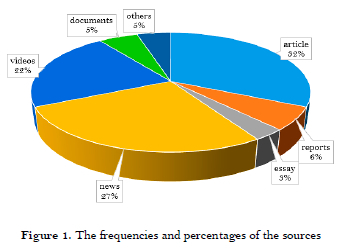
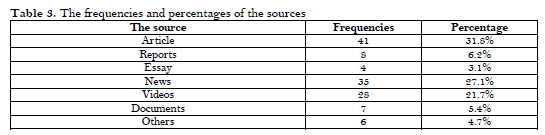
As mentioned in the previous section, this study uses a combination of different sources to examine large construction projects through the lens of the six worlds of Boltanski and Thévenot's theory. Table 3 and Figure 1 show the frequencies and percentages of each source.
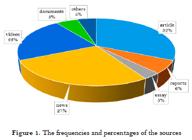
As can be seen, the highest frequency (32%) is related to articles; most of them are about project teams, project management performance, and Boltanski and Thévenot's theory of justification. News (27%) and videos (22%) rank second and third, almost all of which are about selected cases. Other low-frequency sources, often about cases, also provide good complementary information.
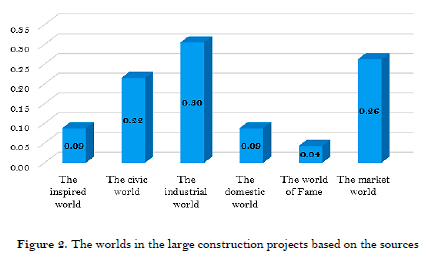
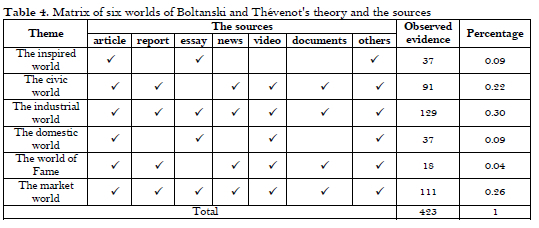
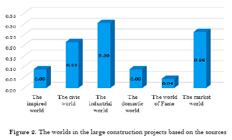
Furthermore, this section presents the results of content analysis related to the six worlds in the field of large construction projects. The conceptualization process of reviewing the texts was carried out at several levels. First, terms, expressions, words, and semantic units extracted from the texts were conceptually summarized, followed by formatting each into codes. Codes sharing similar meaning were grouped into broader categories, corresponding to the six worlds outlined in Boltanski and Thévenot's theory. In other words, the researcher has considered the six worlds, including industry, market, civic, inspired, fame, and domestic, as the main themes that have a high level of abstraction and are more general than other concepts. Based on the extracted information, the matrix of the main themes, the six worlds, and the sources, including articles, reports, essays, news, videos, etc., were prepared. In this matrix, the check mark indicates whether there are facts explicitly or implicitly indicating each of the six worlds in the various sources studied. As Table 4 and Figure 2 show, in general sources of facts have been found about each of the six worlds, but the "industrial, civic, and market" worlds had more frequencies, while the others had fewer. The researcher has used higher frequencies to preserve major worlds in large construction projects.
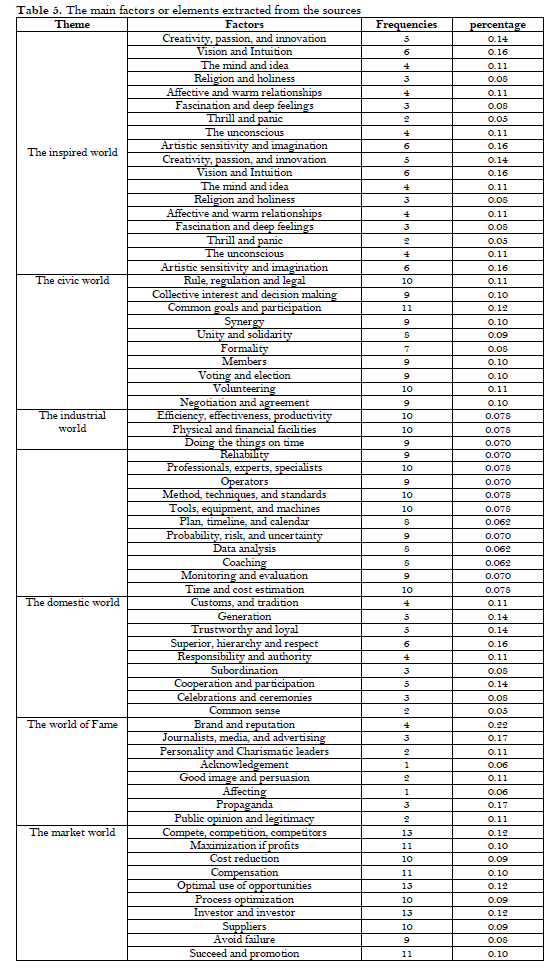
The next level is assigned to the factors and elements. The same process was performed to find them. The factors are less abstract than the six worlds. Accordingly, as Table 5 illustrates, 60 factors from the sources were identified, which combined according to the degree of homogeneity with the six worlds.
Although by increasing the number of sources and expanding the scope of the research, indicators can be reached at the next level, to avoid prolonging the discussion, this research is limited to two levels of themes (worlds) and factors.
4.2. Findings and discussion
The data and information analysing showed that six worlds of Boltanski and Thévenot's theory were mentioned in the sources, but three worlds had a frequency of more than 70%. As a result, "industrial", "civic" and "market" worlds were selected as the main themes of this research. In other words, these three worlds or perspectives are closer to stakeholders' thought on large construction projects. Examining the results with the logic of Boltanski and Thévenot's theory also shows a good agreement between them.
4.2.1. Industrial world in the large construction projects
According to the extracted sources about two main groups studied, namely stakeholders and project teams in large construction projects, the industrial world is highly adapted to large construction projects. From this perspective, they have focused more on the hardware factors of the projects, which ultimately lead to progress in implementation or hinder the timely execution of projects.
From the stakeholders' point of view, the timely completion of projects has been very important, and projects delays are a destructive factor. They believe that although these projects are carried out following the standards and schedule performed by experts and the project control is done using common techniques around the world, some projects' delays can be justified due to different reasons. For example, "Gotvand" can be justified because of Iranian economic sanctions (Kazemi, Kim, and Kazemi, 2020), in "Tata Mundra" due to requirements of international funding and loans (Dhar, 2021), and in "GERD" because of big conflicts among Ethiopia, Sudan, and Egypt (Aljefri, Fang, Hipel, and Madani, 2019a). However, due to the importance of maintaining and optimizing financial resources to advance the project's goals, the need for management to prevent the loss of resources in any way is evident. Delays in the implementation and operation of projects and the resulting losses have an immense share in wasting economic resources and capital (Arantes, da Silva, and Ferreira, 2015); for example, large amounts of government debt to contractors result from delays in project implementation. In addition, project delays also have social effects (Ametepey, Gyadu-Asiedu, and Assah-Kissiedu, 2017). It causes dissatisfaction among the people and expands regional conflicts. People in other provinces and regions often protest the large budgets allocated to these projects, as well as the transfer of resources to these areas. They want to implement similar projects in their regions.
Also, most of these projects are public (Garemo, Matzinger, and Palter, 2015), so due to access to governmental resources and having various facilities, the most advanced and heaviest mechanise, and modern methods, techniques, and standards are used in these projects. Furthermore, in these projects, many experts work in different fields. The presence of experts who constantly monitor and update the processes identifies obstacles and problems before they occur, and this plays an important role in reducing costs and increasing efficiency in projects. Opponents point to design, implementation, and management problems in these projects that pose major challenges. Large construction projects require unique knowledge, skills, and experience in designing, which developing countries often lack. In the Tehran-North freeway projects, for example, due to harsh environmental conditions, foreign contractors have played an important role in various stages (Greer and Batmanghelid, 2020). Thus, lack of professional expertise, misunderstanding of scientific-technical requirements, wrong decisions, and ignoring the opinions of experts and stakeholders during the decision-making process cause problems in the project. Also, political, and managerial problems play an important role in the late completion of these projects. Bureaucracy, corruption, lack of political support, as well as project management challenges are some of the problems that reduce the efficiency and productivity of large construction projects in the countries where the studied projects are located. All the above are among the indicators emphasized in the industrial world.
In addition, from the project teams' perspectives, large construction projects can justify the industrial world. First, the industrial world is based on science and technology. According to the project experts, today, the trial-and-error period in projects is over. Therefore, all activities are performed based on precise standards and accurate calculations, following modern science and technology. Project teams are constantly improving their knowledge to keep up to date with their science and technology; an essential aspect of working on a large and complex construction project. This process, in project teams, is often done by developing and implementing a knowledge management system (Kashif and Kelly, 2013; Poh and Erwee, 2004). Second, implementing large construction projects requires heavy and modern equipment, tools, and machines (Peurifoy, Schexnayder, Schmitt, and Shapira, 2018), which Project teams use depending on the type and location of the project. Additionally, these teams, work with a specialized and trained workforce (Everitt, 2020). So, a professional workforce and modern machinery increase the efficiency, effectiveness, and productivity of the project team, which is a competitive advantage. Furthermore, all team actions in large construction projects are carried out according to a set schedule. Due to interdependence and business continuity, being ahead or behind on the plan will cause much damage to the project. Hence, the specialists manage time in the project (AlNasseri and Aulin, 2015; Chin and Hamid, 2015). To this end, data extraction and analysis remain ongoing to pre-emptively address any deviations and uphold quality standards; in the event of non-compliance, corrective actions are defined.
4.2.2. Market world in the large construction projects
Analyzes of the market world are also presented based on the views of two groups of internal and external stakeholders of large construction projects. Today, one of the major challenges for governments in developing countries, such as India, Iran, Ethiopia etc., is the underdevelopment of rural areas and small towns, usually further away from the provincial capitals. Issues such as poverty, rising agricultural machinery prices, declining productivity of small farms, declining trade, and generally rising costs of living and the demand for higher quality living in these areas have led people to seek new resources to earn income, however, the development of rural areas is one of the main pillars of development in countries (Bertolini, 2019; Terluin, 2003). Hence, the development of infrastructure plays an important role in developing these areas so that the studies show various projects are currently being designed, implemented, or operated there. Ethiopian authorities have linked the operation of the Grand Ethiopian Renaissance Dam to the country's development because they could generate electricity for more than half of the country through the dam (Bearak and Raghavan, 2020a). Also, the "Tata Mundra Coal Power Plant" project in India plays a similar role. According to sources, the project generates 4,150 MW of electricity, which promotes the businesses and the quality of life of millions of people in different parts of the country (Hart, 2021). Reviewing the documents indicate population growth and urbanization in different parts of Iran have led to increased demand for infrastructure projects. For example, to enable fast, safe, and cheap communication between the provinces, cities, and regions and to complete the transportation corridors from south to north, there is a need to build highways. Once completed, these projects will reduce the average distance, energy consumption, depreciation, and accidents, and increase travel speeds and local and national revenues, as well as boost trade, facilitate access to the agricultural market, develop the quality of distribution service, boom in tourism, create jobs and so on (Dadvar Khani, Mousavi, Oroji, and Alizadeh, 2015).
In contrast, those who associate these projects with the development of large areas of the countries, there are individuals, groups and countries strongly opposed to the projects. This group not only does not consider these projects as a factor of development, but also considers them as the cause of the destruction of many regions of the countries. They believe that humans are cut off from nature and are on an unstable path that will certainly lead to environmental degradation at the sites of large construction projects. This group believes these projects do not create economic dynamism as advertised, but rather destroy agricultural lands and livestock centers by seizing and destroying the main fabric of the areas. According to them, large construction projects, such as freeways, cause environmental degradation, and air, water, soil, and noise pollution, and lead to the destruction of forests, pastures, landslides, destroying people's property and residential areas and changing indigenous culture. Analysis of the arguments of internal and external proponents and opponents of the projects shows that competition is the main cause of these objections. Sudan and Egypt, for example, want a greater share of the Nile River, which originates in Ethiopia (Aljefri, Fang, Hipel, and Madani, 2019b). Also, the people of Iraq and Syria are opposed to cutting off the water of the Tigris and Euphrates rivers in Turkey to fill the Ilisu dam (Al-Madhhachi, Rahi, and Leabi, 2020). In India, many areas around the power plant oppose its operation because it works with coal and pollutes the environment (Letkemann, Bétournay, Patel, Patel, and Diduck, 2021). Gotvand Dam in Iran has also had many negative effects. According to documents, not only has it destroyed the environment, but it has also caused long-term conflicts between the provinces.
Looking through the lens of the market world, stakeholders within large projects, including specialized teams, play different roles. To participate in large projects, these teams must bid and compete with their competitors (Manzoni, Morris, and Smyth, 2009). For this purpose, teams prepare business plans that specify all costs and revenues. Therefore, first, involving in a large project for a team must have a financial and economic justification. This justification is important for the organization, the employer as well as the team members because they directly benefit from the revenue generated by the team. In addition, project team leaders ensure the financial capacity and credibility of large project employers before entering a contract. To this end, the employer's records, and financial situation as well as the project suppliers are assessed. So, if governments support these projects, project teams will enter with more confidence. Also, the performance of the project teams is very important and determines their values. The teams that perform the most in the final project are more valuable in terms of project management, employer, and audience. For example, few project teams can build underwater tunnels. So, by competing for a project, these teams will look for projects that have a higher financial and economic benefit. In addition, the result of their work is publicity for the project team, the organization and on a larger scale for the country. The pages of many magazines and websites are dedicated to the presentation of their work. These teams are also profitable. Their goal is to do things with the least amount of time and cost (Manzoni et al., 2009). With this strategy, they prevent possible losses and failures of the project team.
4.2.3. Civic world in the large construction projects
Rule-of-law is a feature of large projects. These projects are designed, implemented, and operated in accordance with the law. Depending on the size of the project, national, provincial, or local laws determine the scope of the project. For example, the decisions made about the projects studied in this research were national decisions made in accordance with the national laws of the countries. In addition, transnational (international) laws were required for GERD in Ethiopian, Ilisu dams in Turkey, as well as Tata Mundra Coal Power Plant project in India because each of these projects has had transnational stakeholders, and international law must be considered to resolve disputes and meet their needs while the two projects of Gotvand Dam and Tehran-North freeway have been done based on the national and provincial laws. In addition, large project management is not possible without the use of internal rules and regulations. Thus, all operational activities in large projects are carried out based on the rules and regulations. For example, it is not possible to be present at a project site without following safety rules and regulations. Any spending on these projects, also, requires permission from the national or local parliament.
Another important point about large construction projects is that they have great potential to create a strong political leverage, and it strengthens nationalist sentiments in the countries. The Grand Ethiopian Renaissance Dam, for instance, has stoked intense nationalistic fervor in both Ethiopia and Egypt. Ethiopians see building the dam as a fundamental right, one that could bring electricity to the more than half of Ethiopians who don't have access at home, and Egyptians see their fate potentially falling into foreign hand (Bearak and Raghavan, 2020b). On the other hand, the Turkish government is using the Ilisu Dam as a political tool to pressure Syria, Iraq, and Iran to gain more concessions. According to experts, the closure of water to these countries will turn many of them into deserts and affect the lives of millions of people by creating sandstorms (Al-Madhhachi et al., 2020; Thaman, 2021). Although the construction of these projects must be done based on international treaties and agreements and with respect to the rights of other countries, some of them consider it their sovereign right. For example, the Turkish government, relying on its water strategy, claims that the construction of a dam upstream is a sovereign right of the government and considers it an internal matter. Therefore, it is not a party even to international conventions, such as the 1997 UN Convention on the Exploitation of Common Waters, and in this respect, does not consider itself bound by any international obligations (Resalat, 2021). Studies show that countries use negotiation tools, one of the indicators of the civic world, to reduce tensions, prevent war, and reach agreements, although their effectiveness has not been the same. For example, the conflict between Egypt and Ethiopia over the GERD in 2020 escalated to the point that many politicians considered war between the two countries inevitable, but with the mediation of some countries, they chose negotiation (AlJazeera, 2021). However, Turkey, Syria, Iraq, and Iran have not yet held any talks in this regard, because Turkey considers the construction of the dam an internal matter and does not consider it negotiable.
Internal stakeholders of large projects such as project teams are also justified through the lens of the civic world. Construction project teams comprise participants from different organisations that come together to form temporary organisations targeting the common objective of delivering a project (Baiden, Price, and Dainty, 2006). According to Sydow et al. (2004), Project teams involve individuals who join the project for discrete periods (as compared to stable teams) and have multiple responsibilities for the team and outside it [i.e., multi-team membership]. This makes the dynamics between team members even more challenging (Sydow, Lindkvist, and DeFillippi, 2004). The teams of owner, architect, designer, contractor, and subcontractor already work under various procurement models (Ibrahim, Costello, and Wilkinson, 2013). Pettersen et al. (2015) believe, project teams are groups of people responsible for complex tasks over a limited period and are typically cross-functional, consisting of members who have complementary skills and come from different disciplines and functional areas in the organization. Thus, they have formed members who have the potential to positively influence project outcomes.
4.3. The tensions and compromise among the worlds
The previous sections point out that based on examples extracted from sources, the justifications of the three worlds, industrial, civil, and market, are more influenced than others in large construction projects. Analyzes show various compromises and tensions in justifications made between these dominant worlds in large projects. In other words, the justifications of each world seek to make themselves more effective than others.
Given the nature of large construction projects, there is cooperation among the three influential worlds, namely industry, market, and civic. First, when project management talks about cost, time, quality, productivity, etc., they consider employee rights, which are part of the civic world, in projects. In human resources, it is said that the task of project management is to do whatever is in the best interest of the human being so that it may be effective for production purposes. It is because of these justifications that management experts talk about the paradigm shift in the workplace (Freitas, 2018; Robertson, 1981), in which the human resource in successful projects and organizations thinks about flexibility, new challenges, and contributing to tangible work outcomes instead of focusing on stereotypes, like job title, full-time status, etc. In this situation, workforces are becoming more specialized, independent, mobile, collaborative, and digitally connected (Metasys, 2021). The project managers have realized that hiring such agile and skilled employees leads to cost savings and productivity increases in the organizations.
Accordingly, from the results of the justifications of the three worlds, industrial, civic, and market, in large construction projects, two distinct approaches are considered. First, the hard aspect emphasizes quantitative, computational, commercial, and market aspects rationally, like other economic factors, and is consistent with business-based philosophy. According to this approach, the project team staff should be managed in such a way that they can value and create a competitive advantage for the project and the organization. This perspective, as in the "X" theory of McGregor (Lawter, Kopelman, and Prottas, 2015; McGregor, 1960) and the Taylor School of Scientific Management (Su, 2017), is based on the concept of extreme strategic control and the drawing of an economic model of human, Second, the soft aspect of human resources where mutual benefit (labor and management) is the focus. According to this approach, employees should be treated as valuable assets and their commitment, adaptation and skills should be considered a source of competitive advantage for the organization or team (project). The soft approach originates from concepts such as communication, motivation, leadership, etc. and emphasizes the key role of culture. This approach emphasizes theories such as the theory of "Y" McGregor (McGregor, I960) and is equivalent to the concept of high commitment in the work system as articulated by Walton (Lowe and Oliver, 1991; Xiao and Björkman, 2006). According to Walton, it is possible to build a high level of trust in the organization with commitment, instead of interdict and external pressures on the individual (Lowe and Oliver, 1991).
Even though project management is a branch of general management, and it has gone beyond the classical school and claims that manpower is its main and valuable capital, in practice there are some conflicts. On the one hand, project management based on the soft perspective is concerned with the well-being of staff on project teams. In this approach, which is in line with the thinking of the HR school and supported by employees and societies, PM claims that it respects all rights of employees (material and spiritual), and the goals of the project and employees are in the same direction. On the other hand, the project management tries to maximize the utilization of its employees by justifying its actions using different human resource systems. According to this view, the main goal is the efficiency of the project, and it should be achieved even with pressure on employees. So, team members are meant to achieve project goals. As can be seen, the behavior of project managers often does not reflect what they say in different situations, for example, when they are surveyed in research and what they do in the project team environment. Therefore, there is a big gap in project management behavior, referred to by experts as a "behavioral gap" (Richards, 2012), serves as the source of justification and tension (Boltansky and Tehnut (1999) in large construction projects. Other notable cases are as follows:
1. The civic world criticizes the market world for its "market individualism" and for representing citizens as "customers" or consumers. Therefore, a large construction project is criticized for being too commercial (Dobson, Behar, Ramsden, Crudgington, and Heulin, 2020; Hoffman, 2000). In the process of large construction projects, the commodification of public lands and services, expelling, silencing, and marginalizing poor citizens to pave the way for redevelopment are usual. Although these measures are justified for the project from a market point of view, they are considered undesirable from the perspective of the civil world.Contrary to the contradictions between the market and civil worlds, there is a great compatibility between the market and industrial worlds. The industrial world is looking for efficiency and productivity (Cummins and Weiss, 2013; Greene, Khalaf, Sickles, Veall, and Voia, 2015), which ultimately reduces costs and increases profits, as by the market world. In this way, the industrial world uses tools, systems, techniques, and standards that are approved by the market world and give strength to compete in the market. In addition, the industrial world tries to do things on time, based on schedules. It can take advantage of the existing opportunities in time.
2. From an industrial perspective, the project team has significant challenges with other worlds. The main priority in the industrial world is efficient work and timely project delivery. Project management with this tendency endangers the security of people in the project, which is contrary to the logic of the civic world. On the other hand, as mentioned earlier, in large construction projects, the environment and even people's assets are often destroyed. It may seem normal from the industrial world's point of view, while from the civil world perspective, social responsibility must be considered, and any harassment of the people must be avoided. Various steps can be taken to create a compromise. First, large-scale construction projects are carried out following safety standards. According to the standards, the project will not start until the security of the project is ensured (Said and El-Rayes, 2010). To this end, all the equipment necessary for safety will be made available to employees. Second, according to custom and law, if an individual's property is damaged because of the project, the damage must be compensated, and their consent must be obtained. To this end, budgets are considered in large construction projects. Third, project management systems are used in large construction projects (Memon, Rahman, Zainun, and Abd Karim, 2014; Said and El-Rayes, 2010). Based on these systems, the performance of the project team and its factors are regularly assessed, and corrective actions are defined if necessary.
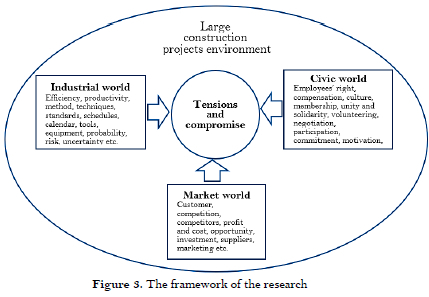
3. Looking at the team through the world of the market also creates contrasts with the civic world. The project team in the market world focuses on finance and associated metrics (profit and efficiency). In other words, for project management, team performance is essential. To achieve efficiency, teamwork must be done in the shortest time and at the lowest cost. It is natural that with this vision, much pressure is put on the team members and the human aspects of the project team are not considered, which is contrary to civic visions. On the other hand, many large development projects are national projects. By implementing these projects, the national interests of the country are considered and not the interests of a specific group or individual. Therefore, conflicts of interest create tension in large construction projects. In addition, there is a basic principle that wherever there is money, there is a possibility for corruption (Woodruff, 2013). In other words, from the perspective of the market world, which sees everything in money and profit, resource owners in large projects have the potential to corrupt, while in the civic world, where team and organizational goals prevail over individual goals, the focus is on empathy and intrinsic motivation. Various steps can be taken to compromise. First, some jobs in large construction projects are considered difficult and dangerous. Compensation for such jobs should be different from normal activities. Also, rest times, as well as days off, and their vacation should be different from normal jobs so that employees in these jobs can recover both physically and mentally (Su-xian, Fan, and Yin-ru, 2014). Second, all stakeholders in large construction projects must justify their positive effects. They should be aware of their role in creating positive developments and be proud of it. Third, the transparency of the systems in the project, the continuous reporting to the public, and the public oversight by the media (Sohail and Cavill, 2008) etc. can greatly prevent abuse. Figure 3 illustrates the tensions and compromises among the three worlds of the large construction projects environment.
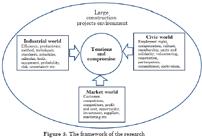
These three dominant worlds, determined by the participants, form the core of the framework. Due to the nature of large projects, the industrial world, the market, and the civil world interact, but because of conflicts of interest there are tensions, too. These tensions originate from the indicators used to introduce the three worlds. For instance, realizing one indicator in the industrial world (efficiency) may conflict with another indicator in the civic world (employee rights).
5. CONCLUSION
The main purpose of this paper was to show some general issues in large construction projects with Boltanski and Thévenot's theory. That is, to show how different worlds are justified by the stakeholders of a large construction project, how conflicts are formed based on these justifications, and how these conflicts can be resolved. To make the discussion more tangible, five major construction projects from several countries, each with strong public and social aspects and economic, political, and environmental implications, were selected as cases. Based on the sources, it can be concluded that the justifications of the three worlds- industry, market, and civic - by internal and external stakeholders in the large construction projects are consistent with the logic of project management. In other words, considering the combination of human and material aspects in projects, looking at it through the lens of these three worlds is justified. This is why paradigm shifts in project management have taken place for a long time; that is, the tendency towards an optimal combination of hard and soft aspects in projects instead of focusing only on the hard aspect. Looking through the lens of these worlds creates tensions that can be reached by relying on project management theories. Thus, although in previous decades project management inspired by the classical management style was more closely related to the industrial and markets worlds and justified its actions based on their indicators, today civic justifications have found a stronger place in project management. First, in most countries where legal institutions claim that the public interest is important, they recognize the basic tenets of the civil world in all areas. Hence, the use of civic world indicators in the field of project management shows that it is on par with the industrial and market worlds. Second, tensions between the civil, market, and industrial worlds should reduce the focus on profitability in large construction projects which are primarily public and aim to increase public welfare. If the logic of profit and loss is the criterion in these projects, probably no public projects should be done. So, in the implementation of large construction projects, the public interest or public good is the criterion for action.
Furthermore, the results of this research contribute to the development of project management literature, especially in large construction projects. Recognizing the different perspectives of stakeholders leads to effective management of large projects. Also, the precise identification of the six worlds satisfies the internal and external stakeholders of large construction projects from the social, cultural, and even political aspects. Finally, the systematic identification of different points of view in the projects' teams which this paper provides, helps to resolve differences and manage conflicts in large projects.
Expanding the scope of resource review in this research can lead to achieve the most accurate results on the subject. Also, the application of field method in some large construction projects causes the opinions of project management experts on the justifications of the six worlds to be extracted and analyzed. In this case, the results of different methods can be compared. Similar research can be done in other public and social fields, such as health, the military, the arts, and so on. Their results can provide stronger explanations of the six worlds in the fields under study. At last, in this study, six worlds of Boltanski and Thévenot's theory have been studied, while they later added another world, a projective world. Thus, adding a projective world to future studies will probably offer a newer combination of justifications in project management.
REFERENCES
Al-Anani, K. (2022). The grand ethiopian renaissance dam: limited options for a resolution. Arab Center Washington DC, 16.
Alexpuscasu, (2020). Project team synergy: how to deliver high performance. Online available in: http://apepm.co.uk/project-team-synergy/
AlJazeera. (2021). Egypt, Sudan and Ethiopia talks over Nile dam fail. Online. Available in: https://www.aljazeera.com/news/2021/4/6/sudan-says-ethiopias-moves-on-nile-dam-violate-international-law
2. LITERATURE REVIEW
- Aljefri, Y. M., Fang, L., Hipel, K. W., and Madani, K. (2019a). Strategic analyses of the hydropolitical conflicts surrounding the grand Ethiopian renaissance dam. Group Decision and Negotiation, 28(2), 305-340.
- Aljefri, Y. M., Fang, L., Hipel, K. W., and Madani, K. (2019b). Strategic analyses of the hydropolitical conflicts surrounding the grand Ethiopian renaissance dam. Group Decision and Negotiation, 28, 305-340.
- Al-Madhhachi, A.-S. T., Rahi, K. A., and Leabi, W. K. (2020). Hydrological impact of ilisu dam on Mosul Dam; the river Tigris. Geosciences, 10(4), 120.
- AlNasseri, H., and Aulin, R. (2015). Assessing understanding of planning and scheduling theory and practice on construction projects. Engineering Management Journal, 27(2), 58-72.
- Ametepey, S. O., Gyadu-Asiedu, W., and Assah-Kissiedu, M. (2017). Causes-effects relationship of construction project delays in Ghana: focusing on local government projects. Paper presented at the International Conference on Applied Human Factors and Ergonomics.
- Arantes, A., da Silva, P. F., and Ferreira, L. M. D. (2015). Delays in construction projects-causes and impacts. Paper presented at the 2015 International Conference on Industrial Engineering and Systems Management (IESM).
- Baccarini, D. (1996). The concept of project complexity-a review. International journal of project management, 14(4), 201-204.
- Baiden, B. K., Price, A. D., and Dainty, A. R. (2006). The extent of team integration within construction projects. International journal of project management, 24(1), 13-23.
- Bearak, M., and Raghavan, S. (2020a). Africa's Largest Dam Powers Dreams of Prosperity in Ethiopia-and Fears of Hunger in Egypt. The Washington Post, 15.
- Bearak, M., and Raghavan, S. (2020b). Africa's Largest Dam Powers Dreams of Prosperity in Ethiopia-and Fears of Hunger in Egypt. Washington Post. https://www.washingtonpost.com.
- Beaudoin Canada. 2017. Construction project management. Online. Available in: https://beaudoincanada.com/en/
- Bell, E., Bryman, A., and Harley, B. (2022). Business research methods: Oxford university press.
- Bertolini, P. (2019). Overview of income and non-income rural poverty in developed countries. Presentation. Retrieved, 5, 2020.
- Bérubé, J., and Gauthier, J.-B. (2017). Compromise between creative activities and project management activities: a contingency factor. The Journal of Modern Project Management, 5(2).
- Bérubé, J., and Gauthier, J.-B. (2020). Coopetition in projects in cultural industries. The Journal of Modern Project Management, 7(4).
- Boltanski, L., and Thévenot, L. (2006a). On justification: Economies of worth: Princeton University Press.
- Boltanski, L., and Thévenot, L. (2006b). On justification: Economies of worth (Vol. 27): Princeton University Press.
- Brockmann, C., and Girmscheid, G. (2007). Complexity of megaprojects. Paper presented at the CIB World Building Congress: construction for development: 14-17 May 2007, Cape Town International Convention Centre, South Africa.
- Cohendet, P., and Simon, L. (2007). Playing across the playground: paradoxes of knowledge creation in the videogame firm. Journal of Organizational Behavior: The International Journal of Industrial, Occupational and Organizational Psychology and Behavior, 28(5), 587-605.
- Conexpoconagg. 2021. Construction Equipment Trades. Online available in: https://www.conexpoconagg.com/construction-xpos?utm_source=googleandutm_campaign=search_ceca2023_int_off-yearandutm_medium=cpcandutm_term=construction%20expoandgclid=Cj0KCQjwlOmLBhCHARIsAGiJg7kretiQgckgyeZe62IU4L5B3dPlt0b7wvkQxzj QLewUzNQSeBHN1FMaAvncEALw_wcB
- Cummins, J. D., and Weiss, M. A. (2013). Analyzing firm performance in the insurance industry using frontier efficiency and productivity methods: Springer.
- Dadvar Khani, F., Mousavi, S. S., Oroji, H., and Alizadeh, M. (2015). Assessment of the Impacts of Constructing Tehran-North Highway on the Rural Areas of Kan-Souleghan. Human Geography Research, 47(2), 391-410.
- DeFillippi, R. (2015). Managing project-based organization in creative industries. The Oxford handbook of creative industries, 268.
- Dhar, S. (2021). Tata Mundra Project: time to end world bank immunity-CADTM.
- Dobson, J., Behar, C., Ramsden, C., Crudgington, A., and Heulin, C. (2020). Maximising social value from infrastructure projects. Institution of Civil Engineers and Useful Projects.
- Everitt J. (2020). An Introductory Guide to Project Management for HR. Online available in: https://www.wrike.com/blog/project-management-for-hr-guide/
- Fellows, R., and Liu, A. M. (2012). Managing organizational interfaces in engineering construction projects: addressing fragmentation and boundary issues across multiple interfaces. Construction management and economics, 30(8), 653-671.
- Flyvbjerg, B. (2014). What you should know about megaprojects and why: An overview. Project management journal, 45(2), 6-19.
- Garemo, N., Matzinger, S., and Palter, R. (2015). Megaprojects: The good, the bad, and the better. McKinsey and Company.
- Godechot, O. (2009). Book Review: Luc Boltanski and LaurentThévenot (translated by Catherine Porter) On Justification: Economies of Worth Princeton University Press, Princeton and Oxford, 2006,£ 23.95 pbk, 400 pp. ISBN: 0-691-12516-3. Cultural Sociology, 3(1), 193-195.
- Greene, W. H., Khalaf, L., Sickles, R., Veall, M., and Voia, M.-C. (2015). Productivity and efficiency analysis: Springer.
- Greer Lucille, Batmanghelidj Esfandyar. 2020. Last Among Equals: The China-Iran Partnership in a Regional Context. Online. Available in: https://www.wilsoncenter.org/sites/default/files/media/uploads/documents/MEP_200831_OCC%2038%20v3%20%281%29.pdf.
- Hart, A. J. (2021). A critical analysis of sustainable resettlement in the context of International Development and Hydropower: University of Johannesburg (South Africa).
- Kashif, M., and Kelly, K. (2013). Knowledge management and sharing within project teams: A qualitative study of Ericsson. In. Kazemi, A., Kim, E.-S., and Kazemi, M.-H. (2020). Identifying and prioritizing delay factors in Iran's oil construction projects. International Journal of Energy Sector Management.
- Kirytopoulos, K., Voulgaridou, D., and Voulgaridou, V. (2010). Too many cooks spoil the broth, or maybe not? Paper presented at PMI® Global Congress 2010-EMEA, Milan, Italy. Newtown Square, PA: Project Management Institute. https://www.pmi.org/learning/library/project-group-decision-making-process-6797
- Kousha, K., and Thelwall, M. (2008). Sources of Google Scholar citations outside the Science Citation Index: A comparison between four science disciplines. Scientometrics, 74(2), 273-294.
- Krippendorff, K. (2018). Content analysis: An introduction to its methodology: Sage publications.
- Lawter, L., Kopelman, R. E., and Prottas, D. J. (2015). McGregor's theory X/Y and job performance: A multilevel, multi-source analysis. Journal of Managerial Issues, 84-101.
- Lencioni Patrick, (2015). Overcoming The Five Dysfunctions of a Team. Online available in: http://careercompasscanada.com/wp-content/uploads/2015/04/The-Five-Functions-of-a-Team-Model.pdf
- Letkemann, A., Bétournay, C., Patel, B., Patel, K., and Diduck, A. P. (2021). Holding international finance institutions accountable for environmental injustice: A case study of the Tata Mundra power plant in Gujarat. In Advancing Environmental Justice for Marginalized Communities in India (pp. 154-170): Routledge.
- Liquidplanner (2021). Why You Should Get Your Team to Challenge the Status Quo. Online available in: https://www.liquidplanner.com/blog/why-you-should-get-your-team-to-challenge-the-status-quo/
- Lowe, J., and Oliver, N. (1991). The high commitment workplace: Two cases from a hi-tech industry. Work, Employment and Society, 5(3), 437-450.
- Manzoni, B., Morris, P., and Smyth, H. (2009). Equipping project teams to win tenders: an insight into Italian architecture projects. Paper presented at the 25th Annual ARCOM Conference, Nottingham, UK.
- McGregor, D. (1960). Theory X and theory Y. Organization theory, 358(374), 5.
- Memon, A. H., Rahman, I. A., Zainun, N. Y., and Abd Karim, A. T. (2014). Web-based risk assessment technique for time and cost overrun (WRATTCO)-A framework. Procedia-Social and Behavioral Sciences, 129, 178-185.
- Metasys (2021). The Future of Work is Based on Projects, Not Roles. Online. Available in: https://www.metasysinc.com/metasys-blog/the-future-of-work-is-based-on-projects-not-roles
- Morina P. (2020). Justifying Your Actions Won't Build Relationships, But This Tactic Will. Online Available in: https://medium.com/the-ascent/justifying-your-actions-wont-build-relationships-but-this-tactic-will-c47a89401a51
- Patriotta, G., Gond, J. P., and Schultz, F. (2011). Maintaining legitimacy: Controversies, orders of worth, and public justifications. Journal of Management Studies, 48(8), 1804-1836.
- Peurifoy, R., Schexnayder, C., Schmitt, R., and Shapira, A. (2018). Construction planning, equipment, and methods, 324. In: New York: McGraw-Hill.
- Poh, L.-G., and Erwee, R. (2004). Knowledge creation and integration in project teams: A Study of international telecommunications companies in Singapore. Journal of Management and World Business Research, 1(1), 23-44.
- Polit, D. F., and Beck, C. T. (2004). Nursing research: Principles and methods: Lippincott Williams and Wilkins.
- Prasad, K., and Vasugi, V. (2017). Significant factors causing delay in construction projects-A review. Paper presented at the Proceedings of Global Conference on Advances in Science.
- Resalat (2021). "Erdogan's water attacks" . Online. Available in: https://resalat-news.com/?p=54347
- Richards, C. (2012). The behavior gap: Simple ways to stop doing dumb things with money: Penguin.
- Shenhar, A. (2000). Creating competitive advantage with Strategic Project Leadership™. Paper presented at Project Management Institute Annual Seminars and Symposium, Houston, TX. Newtown Square, PA: Project Management Institute. https://www.pmi.org/learning/library/competitive-advantage-strategic-project-leadership-554
- Srinivasu, B., and Rao, P. S. (2013). Infrastructure development and economic growth: Prospects and perspective. Journal of business management and Social sciences research, 2(1), 81-91.
- Stuckenbruck, L. C. (1979). The Matrix Organization. Project Management Quarterly, 10 (3), 21-33. https://www.pmi.org/learning/library/matrix-organization-structure-reason-evolution-1837
- Su, Y. (2017). Taylor scientific management theory carding and significance of organization management. Social Sciences, 6(4), 102-107.
- Suryani, N., Rustiana, A., Muhsin, M., and Rahmaningtyas, W. (2020). Diversity perspectives in teamwork: Is the difference Importance? International Journal of Research in Business and Social Science (2147-4478), 9(1), 24-30.
- Su-xian, Z., Fan, Z., and Yin-ru, H. (2014). Project-based Employees' Job Characteristics, Work, Family Conflict, and Need for Recovery Relations in Construction Industry. Industrial Engineering Journal, 17(5), 59.
- Sydow, J., Lindkvist, L., and DeFillippi, R. (2004). Project-based organizations, embeddedness and repositories of knowledge. In (Vol. 25, pp. 1475-1489): Sage Publications Sage CA: Thousand Oaks, CA.
- Thorslund, C. A., and Lassen, J. (2017). Context, orders of worth, and the justification of meat consumption practices. Sociologia Ruralis, 57, 836-858.
- Truss, C., Gratton, L., Hope-Hailey, V., McGovern, P., and Stiles, P. (1997). Soft and hard models of human resource management: a reappraisal. Journal of Management Studies, 34(1), 53-73.
- Woodruff, D. M. (2013). The Link Between Money and Corruption Is More Insidious Than We Thought. Online available in: https://www.businessinsider.com/personal-finance/how-likely-people-are-to-be-corrupted-by-money-2013-6
- Woodruff, D. M. (2013). After neoliberal constitutionalism: Financial crisis and state resurgence in Russia and Argentina. In Moments of Truth (pp. 47-59): Routledge.