The influence of the built environment on drug misuse and abuse
Abstract
Drug misuse and overdoses (DMO) continue to rise in the United States and around the world. As the COVID-19 pandemic lockdown brought America to a standstill, the drug overdose epidemic took a sharp turn for the worse. Poorly built environments have been said to pose greater risks for substance use. The inequitable race and socioeconomic status distribution of the built environment might be tipping drug overdose and deaths toward minority populations. This review examined the contribution of the built environment to drug misuse and overdose to identify further research and policy needs. Databases like PubMed and Google Scholar were searched for peer-reviewed empirical studies in the English language published from 2010 to March 2021. MeSH search terms were built environment, overdose, drug, and drug overdose. Using the PRISMA flow diagram of article selection, title, and abstract screening plus text narrative synthesis of included articles were done. The built environment features making it more conducive to initiating and maintaining DMO included disinvestment, geographical context (urban versus rural), spatial characteristics of the built environment, easy access to drugs, low access to interventions, and built-environment-associated environmental and social stressors. Built environment features play some roles in drug misuse problems. Policies and programs are needed that place the built environment at the centre of health, drug overdose prevention, and harm reduction, provide increased treatment facilities for addicted persons, ensure stricter opioid prescription measures, and address poverty as well as hopelessness due to disinvestment.
Built environment; public health; Drug overdose; Drug misuse; Preventive measures
1. INTRODUCTION
Ever since the rise of the environmental justice (EJ) movement in the United States, environmental injustices have continued to become overt across the globe, including new narratives beyond what conventional EJ studies and movements have focused on over the years. The non-equitable distribution of industrial cum other environmental burdens and benefits, with minority and socially disadvantaged communities being the "sacrificial lamb", is at the core of these foci. Research showed a straightforward relationship between more "traditional" environmental justice studies on disparities in exposure to industrial hazards and research on disparities in exposure to environmental features that may encourage substance use and addictive behaviours (Mennis et al., 2016). One such environmental characteristic is the built environment.
Drug misuse, including fatal and nonfatal overdoses, continues to rise both in the US and the world (Jalal et al., 2018). For example, 246 million people aged 15-64 were estimated to have used illicit drugs in 2013 around the world (Guimarães et al., 2018). Overdose deaths have been accelerating over the years (Jalal et al., 2018), and for the first time, the US deaths exceeded 100,000 deaths in a 12-month period ending April 2021 (Centre for Disease Control and Prevention, 2021a).
The built environment has been shown to influence many aspects of health, ranging from obesity to mental health (Evans, 2003; Eward et al., 2019; Mennis et al., 2016). It affects such factors as accessibility to environmental amenities, including recreational opportunities, clean air, healthy food, and reduced or heightened vulnerability to natural hazards, including flooding. The opioid epidemic has further brought to the fore the role of the built environment. This environment in which people live and work, specifically the man-made structures, features, and facilities (which constitute the built environment), influences the extent of health risks that residents get exposed to (Mennis et al., 2016). The housing situation and the neighbourhood seem to be important in influencing drug use in a community (Hembree et al., 2005). Wide disparities exist in the built environments of neighbourhoods, with black and minority populations living in poorer neighbourhoods compared to the dominant populations. Large racial/ethnic differences exist in the quality of built environments, with Blacks and Hispanics mainly living in inner cities while Whites are more likely to live in suburbs (Howell and Timberlake, 2014). This is a consequence of multiple structural obstacles, especially in the United States. Such obstacles include redlining, unfair lending practices, and disinvesting in low economic-class neighbourhoods.
The environment within which individuals live has been theorised to affect human development (Brooks-Gunn et al., 1993), health (Renalds et al., 2010), and habits, including drug use and misuse (Mason et al., 2009, Galea et al. 2005a). As the COVID-19 pandemic lockdown and social isolation brought America to a standstill, the drug overdose epidemic took a sharp turn for the worse. Overdose deaths have been accelerating over the years (Jalal et al., 2018), and for the first time, the US deaths exceeded 100,000 deaths in a 12-month period ending April 2021 (Centre for Disease Control and Prevention, 2021a). It has been shown that certain environments pose greater risks for substance use (Mennis and Mason, 2011). A poorly built environment is one of such environmental risks. Its inequitable distribution concerning race and socioeconomic status (Mennis et al. 2016) might be one factor that tips drug overdose and deaths towards minority populations. There is, therefore, a need to review and unmask factors that enhance the contribution of the built environment to drug misuse and overdose. The findings will identify areas for further research and inform policy.
2. RESEARCH QUESTIONS
This review attempts to answer the following questions.
• What factors enhance the contribution of certain built environments to drug misuse and overdose?
• What are some research and policy implications of these factors and their impacts on drug misuse and overdose?
• What are realistic preventive measures to enhance drug overdose prevention and harm reduction?
3. RESEARCH METHODOLOGY
This paper reviews the role of the built environment on drug use, misuse, and abuse as reported in peer-refereed articles published from 2010 to 2021. The review was confined to the built environment and its role in (association with) drug misuse/overdose. Different combinations of Medical Subject Headings (MeSH) terms in PubMed were used to search for articles. The search was restricted to English-language primary research articles reporting on studies conducted on the built environment in relation to some aspect of drug use, misuse, abuse, or overdose. The MeSH term "built environment" is defined as "the man-made physical elements of the environment (e.g., homes, buildings, streets, open spaces, and infrastructure)", as well as substance /drug misuse or overdose. The definition of substance/drug, for the purpose of this review, is "any psychoactive compound with the potential to cause health and social problems, including addiction" (McLellan, 2017). This could be legal (e.g., alcohol and tobacco), illegal (e.g., heroin and cocaine), or controlled by prescription (e.g., hydrocodone or oxycodone opioids). Alcohol was specifically excluded from the search criteria because the focus of the review was on prescription and illicit drugs. The definitions of the other search terminologies were: drug overdose defined as injury to the body (poisoning) that happens when a drug is taken in excessive amounts and could be fatal or nonfatal (Centers for Disease Control and Prevention, 2021b); and drug misuse defined as the use of illegal drugs and/or the use of prescription drugs in a manner other than as directed by a doctor, such as use in greater amounts, more often, or longer than told to take a drug or using someone else's prescription (Centers for Disease Control and Prevention, 2021b). Additional eligibility criteria were the year of publication of the articles, 2010-2021, and only studies conducted anywhere in the United States were selected. The population covered will be the United States population.
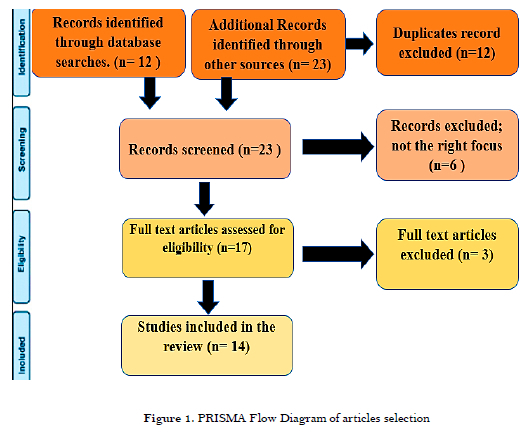
The following keyword search strategy was used to obtain articles published between 2010-2021. The term "built Environment" as a MeSH major topic yielded 12,234 publications, "overdose" yielded 15,713 hits, "drug overdoses", 11,724, and a combination of "built environment" AND "drug overdose", 12 hits. Additional publications were obtained using Google Scholar to give a total of 35 articles. A final total of 14 relevant articles were selected for this review based on a close review of the abstracts.
4. FINDINGS AND DISCUSSION
A variety of factors or characteristics associated with the built environment may make it more conducive to initiating and maintaining the abuse or misuse of drugs. Such characteristics or factors include disinvestment, easy access to drugs, low access to interventions, and built environment-associated environmental and social stressors. These and other factors are discussed in this paper.
4.1
Geographical context (urban versus non-urban)One basic feature of the built environment that has been shown to be related to substance misuse problems is the spatial characteristics based on the geographic context of the environment. Major differences were shown to exist in the elements of the built environment between urban and rural communities in their impact on drug overdose. There has been a disproportionate effect of opioid overdose in rural areas, particularly during the pandemic. Chichester et al. (2020) used a spatial analysis approach called risk terrain modelling to examine the geographic relationship between the spatial location overdose events and features of the environment. They found, in determining what features of the physical and built environment conveyed risk for fatal opioid overdose in Alabama, USA, that while in urban areas, drug problems were more related to proximity to transitional living facilities, liquor vendors, inpatient treatment centres, express loan establishments, and burned structure sites, in rural areas opioid overdoses were influenced more by proximity to community features like location of public schools, public parks, and bus stops.
The urban versus non-urban built environments may present different risks for drug use. An ethnographic study in California examined "how the places in which people live affect patterns and practices of opioid use as well as efforts to provide opioid-related services" (Showalter, 2020). The author reported that in non-urban built environments, "personal and professional relationships overlap in ways that augment surveillance and stigma but can also facilitate leniency and progressive policy change". Increased stigma in non-urban environments may, for example, accentuate the use of drugs under riskier and more isolated circumstances (Showalter, 2020).
4.2
Spatial characteristics of the built environmentAnother spatial characteristic that has been shown to contribute to the increased number of drug misuse incidents is the proportion of parks (Li et al., 2019). The study by Li et al. (2019) related emergency-related overdose calls to map overdose incidents in the various census tracts in Cincinnati, Ohio. Their findings indicated that the highest numbers of heroin-related overdoses were positively associated with downtown development, manufacturing and commercial zones, and the proportion of parks. In the state of Massachusetts, the odds of having opioid-related mortality have also been shown to increase with the number of federally qualified health centres (Flores et al., 2020). Using neighbourhood street-level built environment visual characteristics and spatialised expert narratives, Amiruzzaman et al. (2021) have been able to put forward a predictive model for the likelihood of crime, including those involving drugs in neighbourhoods.
4.3
Urban blight and decayNeighbourhoods with higher rates of urban blight tend to have more fatal overdoses than other neighbourhoods (Johnson and Shreve, 2020). Urban blight is the visual indicator of physical disorder (e.g., abandoned buildings, the presence of garbage and/or graffiti, building conditions in disrepair, etc.) are common characteristics of a poorly built environment. In the Johnson and Shreve (2020) study on the city of Philadelphia, they constructed a built environment index that was a measure of unregulated space amenable to illegal drug use and/or distribution - it ranged from -1.42 to 4.32. The higher scale values indicated ZIP code-years with a greater prevalence of unsafe and vacant housing conditions, and such higher index values were associated with increased drug use and overdoses. These dilapidated and vacant buildings often become hubs for drug activities and have therefore been shown to be associated with alcohol misuse, tobacco smoking, as well as other drug misuse activities (Klein, 2017; Johnson and Shreve, 2020). A higher prevalence of drug markets in a given ZIP code may also serve as a source of drugs for people who use drugs (Johnson and Shreve, 2020).
In Flint and Genesee County, Michigan, one of the factors strongly correlated with the rate of opioid overdose deaths was the percentage of vacant properties, a characteristic of the built environment (Sadler and Furr-Holden, 2019). This was also identified in Chicago, IL, where the key built environment drivers for drug hot zones were vacant buildings and vacant lots where drug-related crime occurred frequently (Xia et al., 2021).
Another way urban blighted and decayed built environments play a role in drug misuse, overdose, and deaths is through elevated residents' perceived stress. Research shows that living in such an environment increases the likelihood of feeling more stressed, as physical disorders have been shown to be environmental stressors (Downey and Van Willigen, 2005). As such, residents seek substance use/misuse as an escape route from the stress they feel (Boardman et al., 2001).
4.4
Community disadvantages, including disinvestment and deindustrialisationThe environmental conditions of a community and nearby localities affect the likelihood of drug overdose and mortality. Community disadvantages like high levels of economic disenfranchisement showed more drug overdose (Hannon and Cuddy, 2006; Johnson and Shreve, 2020). Community disadvantages may affect both urban and rural areas. The disinvestment in the community leads to other individual-level features that are associated with drug misuse, like low educational level and poverty, as well as neighbourhood-level factors, such as high unemployment rates, that often lead to hopelessness and mental illness. This is called "deprivation amplification", "the additive effect of neighbourhood-level disadvantage on health, as an extra burden to individual-level poverty" (Mennis et al., 2016). There is a positive association between opioid-related deaths and the percentage living in poverty and having food insecurity (Flores et al., 2020).
Another study found that path analyses show that the association between income inequality and the rate of drug overdose mortality was primarily explained by an indirect effect through the level of environmental disorder and the quality of the built environment in a neighbourhood. (Nandi et al., 2006). In their study, Nandi et al. (2006) used the level of cleanliness of neighbourhood sidewalks as a proxy for the level of environmental disorder and the percentage of buildings in dilapidated condition as a proxy for the quality of the built environment.
Substance use problems not only stem from the disenfranchisement in these certain built environments but also from police arrest activities for low-level offences in these neighbourhoods. This problematic policing has been found to be associated with increased overdose mortality. People who use drugs may naturally avoid the police instead of calling for needed help towards harm reduction during cases of drug overdose because of previous records of higher police arrests in such localities. Research shows that a high arrest rate for misdemeanours was associated with higher overdose mortality (Bohnert et al., 2011).
4.5
Multiple other environmental and social stressorsThere is a direct connection between the micro-level risk environment and the geographic concentration of overdose (McLean, 2016). The hopelessness, joblessness, and lack of opportunity prevalent in disinvested and deindustrialised environments have been identified as some of the factors driving the use and misuse of drugs (McLean, 2016). The resulting high unemployment rates and poverty often lead to hopelessness and mental illness. McLean (2016) appropriately entitled his paper "There's nothing here: Deindustrialisation as a risk environment for overdose", to explain this feeling of emptiness and hopelessness. On its own, poor-quality housing seems to increase psychological distress (Evans, 2003). Indeed, higher levels of resident depression have been shown to exist in areas that had less desirable built environments (Weich et al., 2002; Galea et al., 2005b). Living in blighted and decayed built environments increases the likelihood of feeling more stressed, as physical disorders have been shown to be environmental stressors (Downey and Van Willigen, 2005). The incessant stress and hopelessness experienced by individuals living in impoverished areas may be a trigger for the abuse of drugs as a coping mechanism (Boardman et al., 2001), leading to higher drug overdoses seen in poorer neighbourhoods (Galea et al., 2003).
4.6
Access to drugsBuilt environments with easy access to drugs pose a higher risk for drug initiation, use and maintenance. Such environments include those with a higher concentration of alcohol stores and tobacco outlets. Ezell et al. (2021) interviewed people who use drugs from New York City and rural Illinois and demonstrated how respondents navigated built environments to acquire drugs. In the rural setting, drug use acquisition is more streamlined compared to the urban setting. These differences have implications for public health interventions.
Environments with unregulated space, such as dilapidated and vacant buildings, are amenable to illegal drug use and/or distribution (Johnson and Shreve, 2020). Such dilapidated and vacant buildings often become hubs for drug misuse activities (Klein, 2017; Johnson and Shreve, 2020). The lack of opportunity and the resultant joblessness and hopelessness prevalent in disinvested and deindustrialised environments encourage the opening of risky drug outlets (McLean, 2016).
4.7
Environmental barriers to preventive interventionsA community's built environment, in terms of access to facilities and transportation, may affect the prevention of drug use and rates of overdoses. The number of fast-food restaurants, distance to hospitals, and distance to opioid treatment programs were negatively associated with suspected drug overdose cases and heroin-related emergency calls (Li et al., 2019). Abbas et al., 2021 studied the characteristics of pharmacies in New York City in relation to their likelihood to have naloxone in stock. They found out that pharmacies that provided a private area, a private window or a private room for consultations were more likely to stock naloxone compared to those that did not. Hence, the built environment of pharmacies influenced harm reduction and, therefore, overdose fatalities in neighbourhoods. In San Francisco, "greater distance to the nearest naloxone distribution site (up to a distance of4000 m) was associated with a lower count of naloxone reversals" (Rowe et al., 2016). Distribution sites had been selected based on the perceived need and earlier geocoding of heroin overdose deaths. In this study, naloxone distribution centres tended to be located in or near census tracts with "higher income inequality, lower percentage black or African American residents, more drug arrests, higher population density, more overdose deaths, and more reversal events".
5. CONCLUSION
In this review of recent literature on the role of the built environment on drug use, certain characteristics of the built environment shown to increase the risk for drug use initiation, maintenance, and overdoses have been identified. Such characteristics include geographical contexts (urban versus non-urban) with rural close-knit communities, increasing the likelihood of stigma and leading to riskier use. Spatial characteristics, including proximity to public parks, transitional living facilities, liquor vendors, inpatient treatment centres, express loan establishments, public schools, bus stops, manufacturing, and commercial zones, increase the risk of use. Urban blight and decay, including abandoned buildings, the presence of garbage and/or graffiti, building conditions in disrepair, and dilapidated and vacant buildings, increase the risk of access and use. Usually, urban blight and decay arise from disinvested and deindustrialised communities, leading to decay and abandoned buildings with the accompanying joblessness, poverty, hopelessness, stress, and related mental illnesses, and these increase the risk of access and use. Additional multiple social and other environmental stressors arise from poor quality housing and physical disorder due to abandoned and dilapidated buildings. Built environments with higher concentrations of alcohol stores and tobacco outlets, dilapidated and vacant buildings are amenable to easy access to drugs. Finally, built environments with environmental barriers to preventive interventions, including limited access to facilities, including hospitals, opioid treatment programs, and naloxone outlets, increase the risk of use.
The review revealed areas that need further research. For example, what would be the effect of renovating dilapidated and rundown areas and repurposing such buildings on drug use? This is important to study because, in many cities, rundown downtowns and formerly minority areas are increasingly being repurposed. Additionally, the review points to the need for policies that place the built environment at the centre of health, in particular, policies that deal with drug overdose prevention as well as overdose harm reduction, such as the location of naloxone distribution outlets in at-risk environments. This would be an extension or application of the "health in all policies" thinking that is gaining ground in public health. Policies that ensure stricter measures as regards the prescription of opioids and, at the same time, provide increased treatment facilities for addicted persons. There is a need for interventions that address the poverty and hopelessness due to disinvestment and lack of opportunities in communities, including those in the post-industrial periphery.
Abbas, B., Marotta, P. L., Goddard-Eckrich, D., Huang, D., Schnaidt, J., El-Bassel, N., and Gilbert, L. (2021). Socio-ecological and pharmacy-level factors associated with naloxone stocking at standing-order naloxone pharmacies in New York City. Drug and Alcohol Dependence, 218, 108388.
Amiruzzaman, M., Curtis, A., Zhao, Y., Jamonnak, S., and Ye, X. (2021). Classifying crime places by neighbourhood visual appearance and police geonarratives: a machine learning approach. Journal of Computational Social Science, 1-25.
Boardman, J. D., Finch, B. K., Ellison, C. G., Williams, D. R., and Jackson, J. S. (2001). Neighbourhood disadvantage, stress, and drug use among adults. Journal of health and social behaviour, 151-165.
REFERENCES
- Bohnert, A. S., Nandi, A., Tracy, M., Cerdá, M., Tardiff, K. J., Vlahov, D., and Galea, S. (2011). Policing and risk of overdose mortality in urban neighbourhoods. Drug and alcohol dependence, 113(1), 62-68.
- Brooks-Gunn, J., Duncan, G. J., Klebanov, P. K., and Sealand, N. (1993). Do neighbourhoods influence child and adolescent development? American journal of sociology, 99(2), 353-395.
- Centres for Disease Control and Prevention (2021a). National Center for Health statistics' Provisional Drug Overdose Death Counts, November 2021 release: https://www.cdc.gov/nchs/nvss/vsrr/drug-overdose-data.htm Accessed 11/27/2021.
- Centres for Disease Control and Prevention. (2021b). National Center for Injury Prevention and Control: Commonly used terms. Retrieved from https://www.cdc.gov/opioids/basics/terms.html
- Chichester, K., Drawve, G., Giménez-Santana, A., Sisson, M., McCleskey, B., Dye, D. W., Walker, J., Mrug, S. and Cropsey, K. (2020). Pharmacies and features of the built environment associated with opioid overdose: A geospatial comparison of rural and urban regions in Alabama, USA. International Journal of Drug Policy, 79, 102736.
- Downey, L., and Van Willigen, M. (2005). Environmental Stressors: The Mental Health Impacts of Living Near Industrial Activity. Journal of Health and Social Behavior, 46(3), 289-305.
- Ezell, J. M., Ompad, D. C., and Walters, S. (2021). How urban and rural built environments influence the health attitudes and behaviours of people who use drugs. Health and Place, 69, 102578.
- Flores, M. W., Lê Cook, B., Mullin, B., Halperin-Goldstein, G., Nathan, A., Tenso, K., and Schuman-Olivier, Z. (2020). Associations between neighbourhood-level factors and opioid-related mortality: A multi-level analysis using death certificate data. Addiction, 115(10), 1878-1889.
- Galea, S., Ahern, J., Rudenstine, S., Wallace, Z., and Vlahov, D. (2005b). Urban built environment and depression: a multilevel analysis. Journal of Epidemiology and Community Health, 59(10), 822-827.
- Galea, S., Ahern, J., Vlahov, D., Coffin, P. O., Fuller, C., Leon, A. C., and Tardiff, K. (2003). Income distribution and risk of fatal drug overdose in New York City neighbourhoods. Drug and alcohol dependence, 70(2), 139-148.
- Galea, S., Rudenstine, S., and Vlahov, D. (2005a). Drug use, misuse, and the urban environment. Drug and alcohol review, 24(2), 127-136.
- Guimarães, R. A., Souza, M. M. D., Caetano, K. A. A., Teles, S. A., and Matos, M. A. D. (2018). Use of illicit drugs by adolescents and young adults of an urban settlement in Brazil. Revista da associação médica brasileira, 64(2), 114-118.
- Hannon, L., and Cuddy, M. M. (2006). Neighbourhood ecology and drug dependence mortality: an analysis of New York City census tracts. The American journal of drug and alcohol abuse, 32(3), 453-463.
- Hembree, C., Galea, S., Ahern, J., Tracy, M., Piper, T. M., Miller, J., Vlahov D. and Tardiff, K. J. (2005). The urban built environment and overdose mortality in New York City neighbourhoods. Health and Place, 11(2), 147-156.
- Howell, A. J., and Timberlake, J. M. (2014). Racial and ethnic trends in the suburbanisation of poverty in US metropolitan areas, 1980-2010. Journal of Urban Affairs, 36(1), 79- 98.
- Jalal, H., Buchanich, J. M., Roberts, M. S., Balmert, L. C., Zhang, K., and Burke, D. S. (2018). Changing dynamics of the drug overdose epidemic in the United States from 1979 through 2016. Science, 361(6408).
- Johnson, L. T., and Shreve, T. (2020). The ecology of overdose mortality in Philadelphia. Health and Place, 66, 102430.
- Klein, R. (2017). Why Clearboarding Is Better Than Plywood for Securing Vacant Buildings- Security Coverage. Facilitiesnet. Retrieved November 24, 2021, from https://www.facilitiesnet.com/security/contributed/Why-Clearboarding-Is-Better-ThanPlywood-for-Securing-Vacant-Buildings--39326
- Li, Z. R., Xie, E., Crawford, F. W., Warren, J. L., McConnell, K., Copple, J. T., Johnson, T. and Gonsalves, G. S. (2019). Suspected heroin-related overdoses incidents in Cincinnati, Ohio: A spatiotemporal analysis. PLoS medicine, 16(11), e1002956.
- Mason, M. J., Mennis, J., Coatsworth, J. D., Valente, T., Lawrence, F., and Pate, P. (2009). The relationship of place to substance uses and perceptions of risk and safety in urban adolescents. Journal of Environmental Psychology, 29(4), 485-492.
- McLean, K. (2016). There's nothing here: Deindustrialisation as risk environment for overdose. International Journal of Drug Policy, 29, 19-26.
- McLellan, A. T. (2017). Substance misuse and substance use disorders: why do they matter in healthcare? Transactions of the American Clinical and Climatological Association, 128, 112.
- Mennis, J., Stahler, G. J. and Mason, M. J. (2016). Risky substance uses environments and addiction: A new frontier for environmental justice research. Int. J. Environ. Res. Public Health, 13,607.
- Mennis, J., and Mason, M. J. (2011). People, places, and adolescent substance use: Integrating activity space and social network data for analysing health behaviour. Annals of the Association of American Geographers, 101(2), 272-291.
- Messer, L. C., Maxson, P., and Miranda, M. L. (2013). The urban built environment and associations with women's psychosocial health. Journal of Urban Health, 90(5), 857-871.
- Nandi, A., Galea, S., Ahern, J., Bucciarelli, A., Vlahov, D., and Tardiff, K. (2006). What explains the association between neighbourhood-level income inequality and the risk of fatal overdose in New York City? Social science and medicine, 63(3), 662-674.
- Renalds, A., Smith, T. H., and Hale, P. J. (2010). A systematic review of built environment and health. Family and Community Health, 33(1), 68-78.
- Rowe, C., Santos, G. M., Vittinghoff, E., Wheeler, E., Davidson, P., and Coffin, P. O. (2016). Neighbourhood-level and spatial characteristics associated with lay naloxone reversal events and opioid overdose deaths. Journal of Urban Health, 93(1), 117-130.
- Sadler, R. C., and Furr-Holden, D. (2019). The epidemiology of opioid overdose in Flint and Genesee County, Michigan: implications for public health practice and intervention. Drug and alcohol dependence, 204, 107560.
- Showalter, D. (2020). Steps toward a theory of place effects on drug use: risk, marginality, and opportunity in small and remote California towns. International Journal of Drug Policy, 85, 102629.
- Weich, S., Blanchard, M., Prince, M., Burton, E., Erens, B. O. B., and Sproston, K. (2002). Mental health and the built environment: Cross-sectional survey of individual and contextual risk factors for depression. The British Journal of Psychiatry, 180(5), 428- 433.
- Xia, Z., Stewart, K., and Fan, J. (2021). Incorporating space and time into random forest models for analysing geospatial patterns of drug-related crime incidents in a major US metropolitan area. Computers, Environment and Urban Systems, 87, 101599.