Premature pavement failure of a Superpave asphalt mix – a unique failure mechanism
Abstract
Research outputs undertaken in temperate climates require adaptation and customisation before they can be applied to tropical conditions. This often requires the use of research trial sections with a revised technology. The construction and performance monitoring of trial sections takes time, often spanning several years. However, the demands of road agencies can mean that there is insufficient time to undertake the necessary trials. In such cases, large scale projects are often undertaken with inflated factors of safety. This frequently results in higher execution costs and no guarantees of adequate performance. This paper examines the circumstances under which the application of Superpave asphalt mix design technology in a major road project in Uganda (a tropical country) resulted in premature pavement failure, which started within two years of completion. The Superpave asphalt mix design method was developed under the Strategic Highways Research Programme in the United States of America (a temperature region), funded by AASHTO. Defects were first observed on the project road (Mbarara to Katuna) during the works execution and within the one-year defects liability period. To assess the performance of the sections, detailed visual condition surveys were undertaken; asphalt cores were used to test for strength, water sensitivity, and volumetric characteristics in the laboratory. Deflection measurements and analysis were also carried out. The results showed that the pavement failure was confined to the asphalt surfacing. The Superpave asphalt mix did not perform as expected, due to the difference in climatic, traffic, and construction characteristics Adjustments should have been made, based on findings from trial sections, to make the surfacing suitable for tropical conditions. Ultimately, tropical countries should engage in coordinated and targeted applied research that places emphasis on the adaptation of technologies.
Superpave; premature pavement failure; pavement performance in tropics
1. INTRODUCTION
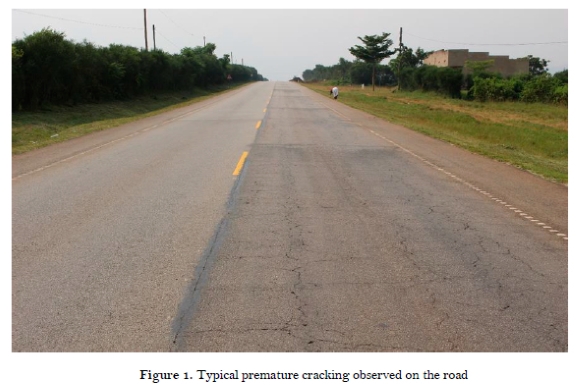
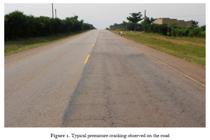
On 22nd August 2011, the reconstruction of the Mbarara - Ntungamo - Rwentobo - Kabale - Katuna section of the Northern Corridor Route in Uganda began. The completed works/road was handed over to UNRA on 21st July 2016. Widespread defects (mostly cracks - a typical appearance is in Figure 1) had been observed during the defect's liability period and in some cases even whilst works were still ongoing. The Transport Research Laboratory (also known as TRL Limited) was engaged by the Uganda National Roads Authority (UNRA) on 2nd November 2020 to ascertain the technical causes of the observed premature pavement failures.
The prevalence of premature failures was a major concern to UNRA and road sector stakeholders. This assignment involved an in-depth study of premature pavement failures to determine the root causes of the failures and recommend solutions which can be applied to future highway development and maintenance projects.
A quality assurance inspection report by the UNRA Quality Control Unit in April 2016 indicated that isolated and interconnected cracks were observed during the defect's liability period. Remedial measures were undertaken by the contractor at points where the cracks were identified. The fact that the cracks appeared very early on in the life of the pavement means that they are associated with the production or construction process or a poor mix design - not traffic loading.
This paper presents the results to illustrates the causes, and mechanism of the premature failures that were established. It is hoped that other countries will learn from this experience in order to reduce losses in road provision and preservation.
2. BITUMEN GRADING SYSTEMS
2.1 Penetration grading system
In the penetration grading system, the bitumen is classified based on the values of the penetration test. The penetration test is conducted on a sample of the binder at 25 0C. The bitumen is considered a semi solid material. Requirements for penetration graded asphalt are provided in ASTM D946, BS EN 12591, and other specifications. The challenge faced with using the penetration grading system is that the penetration test is an empirical test, and it is hard to infer the performance of the binder at higher and lower temperatures from the test result. The method is also not sufficient for controlling the temperature susceptibility of bitumen (Chattaraj, 2011). Thus, penetration-graded bitumen is more prone to rutting than viscosity-graded bitumen because of the wider range of deformation resistance at high service temperatures (Chin, 2009). However, when the penetration grading system is used together with bitumen softening point specifications and local knowledge, good performance can be achieved.
2.2
Viscosity grading systemIn addition to the penetration test at 25°C, the principal tests for the viscosity grading system are the absolute viscosity at 60 °C and the kinematic viscosity at 135 °C. The absolute viscosity is determined on the original (as-supplied) asphalt binder sample, while the kinematic viscosity test is conducted on aged binder residue. The tests for the viscosity grading system are considered to be representative of the maximum pavement temperature in summer (60 0C), the temperature during the production of hot mix asphalt (135 0C) and the annual average service temperature (25 0C). Thus, it is possible to predict the performance of binders at high temperatures. However, the viscosity grading system poses the challenge of a lack of low-temperature properties and the lack of a long-term ageing procedure (Van de Ven et al., 2004). The requirements for viscosity-graded asphalt are provided in ASTM D3381, BS EN 15322 and other specifications.
2.3
The Performance Grading System (Superpave)The performance grading (PG) system measures asphalt binder performance under the expected climatic conditions, pavement temperature as well as ageing conditions. The PG system uses a common set of tests to measure the physical properties of the binder, which are directly related to the field performance of the pavement at its service temperatures. The tests are conducted on the original asphalt binder, the aged asphalt binder after hot mix asphalt production and the long-term aged binder. The binder selected needs to meet traffic speed and load conditions.
The physical properties of the binder need to be determined at a temperature based on the climate where the binder is to be used (Shell, 2015). Therefore, a binder of PG XX-YY grade is designed to be used in an environment where the average 7-day maximum pavement temperature is XX 0C, and the minimum pavement design temperature is -YY 0C. The PG system ensures that the binder properties are sufficient to resist the main distress mechanisms affecting pavement performance, i.e., rutting, fatigue cracking and thermal cracking. For the successful application of the PG system, it is necessary that acceptance limits derived from experience and documented field performance are used (Van de Ven et al., 2004).
3. RESEARCH METHODOLOGY
3.1 General
Based on the defects (premature cracking) that triggered a call for technical investigation, the main tests undertaken included:
• Non-destructive Visual Condition Survey (VCS) involving measurement of cracking, rutting, potholing, patching, and bleeding;
• Extraction of asphalt cores along the pavement study road;
• Excavation of test pits to sample as-built pavement layer soil samples;
• In-situ densities on each pavement layer;
• DCP measurements on subbase layer to 1m depth;
• Recovering bulk samples on each pavement layer;
• Reinstating with asphalt concrete at excavated test pit location;
• Falling weight deflectometer (FWD) tests;
• Axle load surveys;
• Conducting roughness surveys to determine the International Roughness Index (IRI);
• Laboratory tests on unbound materials; and
• Laboratory tests on asphalt cores and recovered binder.
• Much as all the above tests were undertaken, for the purpose of this paper, the VCS, FWD, and asphalt test results regarding voids, and recovered bitumen will be discussed.
3.2
Review of Design and Construction RecordsA review of the pavement design, construction specifications, and quality control records was undertaken. This was to establish the rationale for selection of the pavement structure, materials used, and particularly the selection of the binder type. Additionally, the review was to establish if critical quality control processes had been followed during construction.
3.3
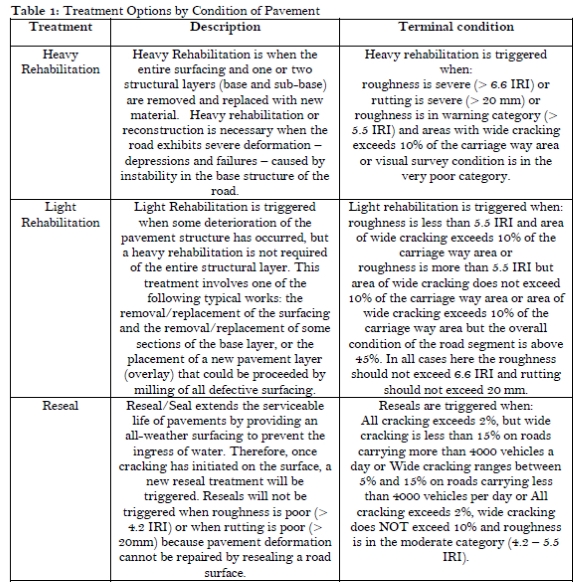
Visual Condition SurveysAccording to the Uganda National Roads Authority Asset Management System, terminal condition, also known as end-of-life condition, is determined in relation to the treatment option that can be applied. This is presented in Table 1. The lowest/cheapest treatment could be considered as the earliest/initial occurrence of premature pavement failures. Roughness and rutting were still much below the requirements for rehabilitation except for isolated spots. For cracking however, the levels observed require some form of rehabilitation.
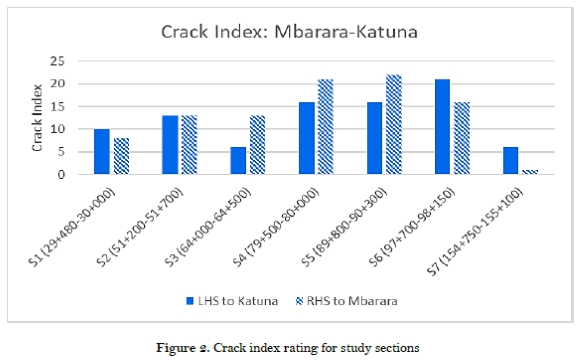
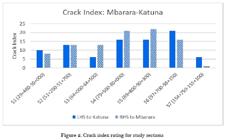
The main defect observed was cracking. Rutting, potholing and patching were minimal and not yet near the warning stage. The general cracking index on a scale of 0 (no cracking) to 25 (severe cracking) along the study road is shown. The index is the product of the extent (0-5) of the section of the road covered by the cracks and the severity of the cracks (0-5). More details on the index are provided in TRL's Overseas Road Note 18 (TRL Ltd, 1999).
• km 0 - km 40 had mostly linear non -non-continuous cracks (Crack Index 5-10);
• km 40 - km 60 had mostly interconnected cracks and occasional linear non -non-continuous cracks (Crack Index 10-15);
• km 60 - km 65 had mostly linear non -non-continuous cracks (Crack Index 5-10);
• km 65 - km 95 had mostly severe crocodile cracks with several un-aesthetic slurry patches (crack Index 15-25); and
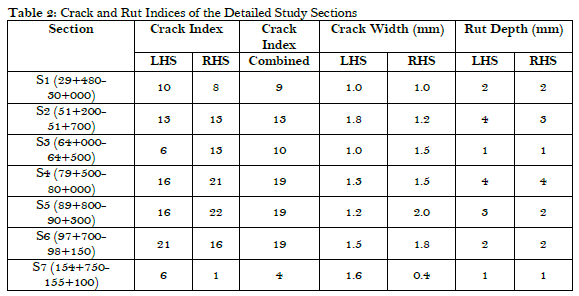
• km 95 - km 155 had mostly linear non -non-continuous cracks (Crack Index 5-10). Representative sections were selected for each of the above conditions of the study road for the detailed study. A summary of the visual condition of the detailed study sections is shown in Table 2 below.
3.4
FWD SurveysFalling weight deflectometer tests were undertaken at 50-metre intervals along the outer wheel path of both lanes on the detailed study sections. The drop weight used was 40 kN on a loading plate of 151 mm radius. The outer wheel path represents the location of maximum distress since there is less lateral pavement support, and often, it is in the zone of moisture ingress (TRL, 1999; and AASHTO, 1993). The inner wheel paths were not measured due to the safety hazards this would pose to the surveyors and road users during the survey.
3.5
Asphalt TestsThese asphalt cores and asphalt slabs were taken from each of the detailed study sections. These were used to undertake the following laboratory tests:
• Air voids in the asphalt;
• Indirect tensile strength;
• Binder content;
• Binder recovery tests (penetration, softening point, and viscosity); and
• Tests on recovered aggregates.
4. FINDINGS FROM THE REVIEW OF DESIGN AND COSNTRUCTION DOCUMENTS
The project's pavement design report described the process used in selecting the appropriate Superpave binder. This was done using the Superpave LTPPBind software version 3.1. This is a tool developed as part of the Superpave system. It uses a database that contains climatic data from over 8000 weather stations in North America and also integrates other satellite-based data sources to estimate climatic information of locations all over the world (Ahmad et al., 2017). An example of such a data source is Modern Era Retrospective-Analysis for Research and Applications (MERRA). MERRA is a physics-based reanalysis model that combines computed model fields (e.g., atmospheric temperatures) with ground-, ocean-, atmospheric-, and satellite-based observations that are distributed irregularly in space and time (Schwartz, et al., p.33, 2015).
The application of such a tool in a tropical setting such as Uganda would require verification of its accuracy and subsequent calibration. Lekea and Steyn (2023) show the importance of using location-specific data to calibrate such models. However, for the design of the Mbarara - Katuna road, this was not done.
The LTPPBind software and the Superpave design guideline (Asphalt Institute, 2001) at the time of design then led to the choice of a very hard binder (PG 76-10) to resist rutting. Whether by the Performance Grading system or the Penetration Grade system, the use of a hard binder requires some considerations before application to a tropical environment. The practice in a number of countries, even in temperate climates (Europe, Australia, South Africa), has been to confine hard binders to the binder course or base course moreover with high bitumen contents (SABITA, 2019; TRL Ltd, 2015; Austroads, 2013). In fact, a study by Mukunde et al. (2020) recommends that the appropriate binder for the Mbarara - Katuna area is PG 58-10. Adding two grades up to account for heavy traffic and slow speeds would be PG 70-10.
In fact, the Superpave system itself does not provide for the lowest pavement surface temperature higher than -10°C. While this is applicable to temperate countries, such a low temperature for Uganda (a tropical country at the Equator) should have raised concern.
Ultimately, the contractor sourced a bitumen grade manufactured by Orlen Asfalt and sold it as 20/30 pen grade. This bitumen conformed to the requirements of PG 76-10. The design engineer then cautioned that Penetration Grade 20/30 binder was 'sometimes brittle and may not possess sufficient flexibility to withstand large movements or reflective cracks. Nevertheless, this bitumen was used.
The 20/30 Pen bitumen is not recommended by key manufacturers such as Shell (2015) and even Orlen Asfalt for use in wearing courses. Orlen Asfalt (p.51, 2014) writes, "Paving Grade Bitumen 20/30 is the hardest paving-grade bitumen from the range currently manufactured by ORLEN Asfalt. Its high softening point and high sensitivity to low-temperature cracks render it recommendable solely for the binder course and high-modulus asphalt concrete base in regions with suitable climates. Courses with bitumen 20/30 should not be left over winter without applying a subsequent (covering) course". Despite this caution, this bitumen was used in the wearing course of the Mbarara - Katuna road. These are tropical conditions (high ambient temperature) where rapid oxidation of bitumen occurs (Shell, 2015).
The choice of 20/30 (even if it was classified as PG 76-10) contributed to premature failures during and soon after the defects liability period and even during construction. It was, therefore, a poor technical choice. A research trial section followed by in-depth review should have been carried out, leading to the reassessment of the approach and perhaps specifications for these works.
5. TEST RESULTS AND DISCUSSION
5.1
Cracking and ruttingAs reported in section 1 above, the main defect observed was cracking. Table 2 shows the Crack Index and Rut Index of the sections. A graph of the crack index of the sections studied is shown in Figure 2 below. Rutting, potholing and patching were minimal and not yet near the warning stage (refer to criteria in Table 1).
5.2
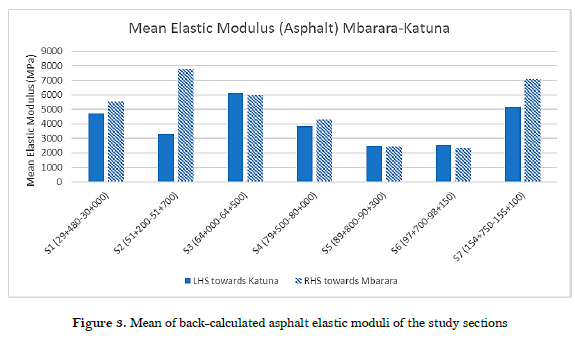
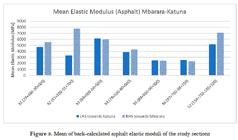
F WD ResultsThe results of the FWD analysis are shown in Figure 3 below. For most sections (except S2), there is no significant difference in the computed elastic moduli between the LHS and the RHS lanes. There are, however, significant differences between the asphalt layer moduli of the different sections. There is a strong association between the elastic moduli of the asphalt layer and the visual condition (Figure 3 and Table 1) of the sections. Generally, the higher the Crack Index, the lower the asphalt moduli. This strong association is either due to the weakening of the asphalt as a result of the cracking or defects in the asphalt at the time of construction causing the cracking. To establish which caused the other, the characteristics of the asphalt in the different sections were studied by testing and analysis of cores taken from in-between the wheel paths. Cores from in-between the wheel paths represent an area of the road surface that were not subjected to traffic loading. These cores represent a state that is "as-constructed" and has undergone some environmental deterioration. The environment being a constant variable between the sections means any differences in property are largely due to differences in the "as-constructed" asphalt. It is known from Shell (2015), TRL (2002), and others that high voids in the asphalt mix, high ambient temperatures, and the presence of oxygen contribute to embrittlement and cracking of asphalt. Therefore, the air voids of the asphalt cores and the penetration and softening point of the recovered binder were studied.
5.3 Air voids and indirect tensile strength
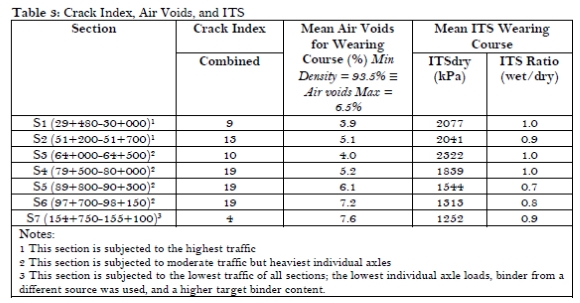
Table 3 presents crack indices, air voids, and indirect tensile strength (ITS) of the sections. The air voids and ITS are averages of the values of several cores taken from these sections. There is a strong association between the air voids of the asphalt-wearing course and the crack index of each section. The higher the air voids, the higher the crack index. Moreover, the design air voids (4%) have been achieved in only two sections (S1 and S3) and these sections exhibit the lowest Crack Index. There is an exception in section S7. This section is subjected to the lowest traffic of all sections, the lowest individual axle loads, and a higher target binder content. High air voids in the mix accelerate binder oxidation and embrittlement. The problem is worse for binders that have already undergone degradation during storage and asphalt production. It is even more severe for hard-grade binders. An embrittled binder cracks easily under strain caused by vehicle axles.
The results of the indirect tensile strength tests (ITS) for the wearing course show that the ITS values are lowest for the highly voided sections. High air voids allow water ingress into the wearing course and subsequent weakening of the layer. A combination of water in the voids and traffic stresses weakens the bitumen-aggregate adhesion. This leads to reduced asphalt strength, as indicated by lower ITS values for more voided sections. A weakened wearing course cracks more easily.
It is apparent that the nominal specification for compaction of asphalt surfacings (minimum of 93.5% of the theoretical maximum density, equivalent to a maximum of 6.5% air voids) contained in the Uganda Ministry of Works Housing and Communications General Specification for Road and Bridge Works, (MoWHC, 2005) that was specified and used in the contract for the works is not appropriate for Superpave surfacings. This is the case even when the specification has been achieved, as in the case of Mbarara - Katuna. This is because further compaction of Superpave mixes (or rut-resistant mixes) under traffic action (secondary compaction) is low, and the air voids at the time of construction remain almost unchanged throughout the life of the road. This means that achieving the design density (air voids of 4%) in service at which the mix performs best becomes very difficult.
Moreover, the low level of secondary compaction means that the prevailing voids filled with bitumen (and hence the effective bitumen film) is lower than required, and hence this means that in-service oxidation and consequential hardening of the binder happens more quickly. The hardened bitumen then cracks more easily under the traffic induced stresses.
The high residual air voids also mean that the surfacing is susceptible to water ingress. Pavement water ingress, especially in a tropical country like Uganda, is highly detrimental since pore pressure can easily develop under vehicle tyres. The pore pressure accelerates any induced cracking and weakens the bitumen-aggregate adhesion. These two factors (in-service binder oxidation and high permeability) explain why, as observed in this study, there is a strong link between high crack indices and high air voids.
Notable highway research authorities (e.g. the Asphalt Institute (1994) of the USA and TRL (2002) in the UK) have shown conclusively that for asphalt-wearing courses to perform well, an air void level of very close to 4.0% is critical. This is further corroborated by the fact that Table 3 Clearly shows that in this study the better performing sections had air voids of 4% or less. At that level, the surfacing overcomes air and water intrusion, helping to resist aging and cracking. Therefore, given that Superpave mixes are specified for their rut resistance, a correspondingly higher density at compaction should thus have been specified to ensure durability. Alternatively, and preferentially, the surfacing should have been covered with a surface dressing (chip seal) immediately after construction - as discussed in TRL's Overseas Road Note 19: A guide to the design of hot mix asphalt in tropical and sub-tropical countries paragraph 8.13.
5.4 Penetration and Softening Point
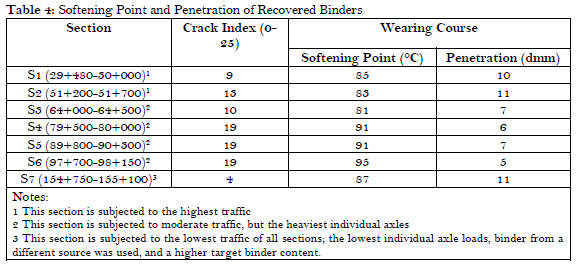
Degradation of binder occurs through loss of volatiles (mostly during production) and oxidation (during production and in service). This degradation leads to embrittlement, which in turn leads to low strain thresholds and consequently results in cracking upon traffic load application. The bitumen used for the works is penetration grade 20/30 an average penetration 26 dmm, and a softening point of 60 °C and, conforming to the requirements of EN 12591:2009. It also met the requirements of Superpave performance grade PG 76-10. Quality control tests conducted by the Contractor on samples supplied gave an average penetration of 12.6 dmm and a softening point of 80 °C after being subjected to the long-term ageing test in the pressure ageing vessel (PAV). As shown in Table 4, the softening point of samples taken from the road are well above 80 °C, and the penetrations are much lower than 12.6 dmm. Additionally, Table 4 shows that the higher the softening point of the samples recovered, the higher the Crack Index of the road section. Also, generally, the lower the penetration, the higher the Crack Index of the road section. On this road, the high softening point (representing ageing) of the samples has been recorded in less than 6 years (normally expected after 15 years in service), indicating a gross mishandling of the asphalt during production and construction. This is supported by the Shell Handbook (Shell, 2015 pp.580), which shows that over 80% of ageing occurs during mixing, storage, transport, and application through oxidation. Oxidation leads to embrittlement of the binder. The cracks then form easily in the wearing course, where it is subject to direct contact stresses from the vehicle wheel. We note at this point that cracks were first observed before the end of the 12 month defects liability period and for some sections whilst works were still ongoing. Scrutiny of construction records shows that the mixing temperature for the mix design used on site was 180-185 °C, whereas the binder manufacturer's recommended temperature was 165-175 °C. Overheating of the binder during mixing causes significant oxidation and subsequent embrittlement.
According to EN 12591:2009, when subjected to the pressure ageing vessel test (PAV), the retained penetration for this binder after the Rolling Thin Film Oven Test (RTFOT) should be greater than 55% (14 dmm), with an increase in softening point of less than 8 °C (68 °C). Given that the RTFOT test is often harsher than the normal occurrence during asphalt production, the values shown in Table 4 obtained from samples taken from the road could only have occurred if degradation during production occurred. Even if another 5 dmm (on top of 14 dmm in production) were allowed for oxidation/embrittlement in service, the lowest values obtained should have been around 9 dmm with a softening point of about 75 °C.
6. CONCLUSION
The Superpave system is strongly dependent on the correct identification of the maximum and minimum temperatures for the environment in which the road is built. This, in turn leads to the appropriate selection of binder to be used for the works. The Superpave system was developed on data on roads and trials in the United States of America (USA), a largely temperate country that experiences severe freezing conditions. Moreover, models are used to predict applicable temperatures in various conditions and to select the appropriate binder. In applying Superpave to tropical environments, it is first of all necessary to develop high and low temperature zonal maps based on in-country data (not relying on models only). These maps should be based on measured pavement temperatures at a depth of 20 mm below the surface and correlated to air temperatures for use on other sites. It is also essential to study the behaviour of binders and the performance of the technology through trial sections before large-scale application. This is the approach adopted in South Africa and Tanzania to a lesser extent.
Ultimately, the premature failure of the Mbarara - Katuna road was a result of a cascade of events. It began with the selection of a technology new to Uganda without conducting trials and preparing the necessary bitumen zoning maps. This was followed by the selection of a bitumen grade on the basis of data not tailored to or calibrated for Uganda (tropical) conditions. This led to the choice of a binder, which was very hard. This bitumen was then applied to the wearing course, where, in normal circumstances, it would have been used in the binder course or base course. The handling of this bitumen during asphalt production and construction further compromised it. The construction resulted in high air voids that were much higher than the design air voids. Under tropical conditions of high ambient temperature, the bitumen oxidised rapidly and became brittle. The low strain tolerance then led to early cracking under load.
It was therefore necessary for Uganda to have first produced temperature zoning/mapping, conducted research (technology transfer) trials, and tried other alternatives before the application of Superpave on a large scale.
Specific recommendations to remedy the defects are milling and replacing the wearing course on all sections that exhibit severe cracking and crack sealing, followed by a double surface dressing (using pre-coated aggregates) on sections that exhibit minor cracking. It was recommended that 40/50 pen or 60/70 pen bitumen should be used for the asphalt mix and 150/200 pen bitumen for the surface dressing.
AASHTO. (1993). Guide for Design of Pavement Structures. American Association of State Highway and Transportation Officials, Washington, D.C. USA.
Ahmad R., Menendez J. R., and Kargah-Ostadi, N. (2017). Long-Term Pavement Performance Bind Online User Guide, Report No. FHWA-HRT-17-010, Federal Highway Administration, Washington, DC.
Asphalt Institute. (1994). Mix design methods for asphalt concrete and other hot-mix types. Manual Series MS-2, Sixth Edition. Lexington, Kentucky, USA: Asphalt Institute.
Asphalt Institute. (2001). Superpave Mix Design. Superpave Series No. 2 (SP-02). Asphalt Institute. Lexington, KY.
ASTM D3381. (2009). Standard Specification for Viscosity-Graded Asphalt Cement for Use in Pavement Construction. ASTM International: Pennsylvania, USA.
ASTM D946. (2020). Standard Specification for Penetration-Graded Asphalt Binder for Use in Pavement Construction. ASTM International: Pennsylvania, USA.
Austroads. (2013). EME Technology Transfer to Australia: An Explorative Study. Austroads, Sydney, Australia.
BS EN 12591. (2009). Bitumen and bituminous binders. Specifications for paving grade bitumen. British Standard Institution: London, UK.
BS EN 15322. (2009). Bitumen and bituminous binders. Framework for specifying cut-back and fluxed bituminous binders. British Standard Institution: London, UK.
7. ACKNOWLEDGEMENT
We acknowledge the contribution of the Uganda National Roads Authority for financing the study and providing the necessary personnel, equipment, records and data.
REFERENCES
- Chattaraj R. (2011). Bitumen Grading system-from penetration grading to viscosity grading-A step towards better quality control. Indian Highways 2011, 39(2).
- Chin C. (2009). Performance graded bitumen specifications, in "Proceedings of the 13th Road Engineering Association of Asia and Australasia (REAAA) Conference" Incheon, Korea, September 23-26, 2009.
- Lekea A. and vdM Steyn W. J. (2023). Performance of Pavement Temperature Prediction Models. MDPI Journal of Applied Sciences. Appl. Sci. 2023, 13(7), 4164; https://doi.org/10.3390/app_13074164