Identifying the challenges hindering successful implementation of Just-in-Time management system on construction projects in Nigeria
Abstract
The Nigerian construction industry continues to face persistent challenges such as poor material control, escalating costs, and frequent project delays. Although the Just-in-Time (JIT) management system has demonstrated significant success in manufacturing by minimizing waste and improving efficiency, its adoption in construction remains limited within the Nigerian context. This study investigates the major challenges hindering the effective implementation of JIT in construction projects across Edo and Delta States, Nigeria. A quantitative research approach was employed using structured questionnaires randomly distributed to 324 registered construction professionals. Out of these, 203 valid responses were collected, representing 62.65%, and were analysed. Descriptive statistics and exploratory factor analysis were used to identify and categorize implementation challenges. Sixteen key challenges were identified, with inadequate planning, financial constraints, and supply chain disruptions emerging as the most critical. Factor analysis grouped these challenges into three major components: Planning Factors, Financial Factors, and Delay Factors. The study revealed that inadequate planning, financial constraints, and supply chain disruptions are the main challenges hindering project execution in the study area. To improve JIT readiness, the study advocates for strengthened planning mechanisms, increased supplier collaboration, investment in logistics infrastructure, and targeted professional training. Future research should focus on developing a localized JIT framework and exploring digital technologies such as BIM and IoT as enablers of lean material delivery.
Just-in-Time (JIT); Material Logistics; Lean Construction; Supply Chain; Nigeria
1. INTRODUCTION
The construction industry is widely recognized as one of the most resource-intensive sectors, characterized by complex project delivery processes, high capital requirements, and heavy dependence on materials, equipment, and skilled labour (Fagbenle et al., 2023). Effective material management has a direct influence on cost, time, quality, and overall project performance (Gbadamosi and Oyewobi, 2022). However, construction projects are often plagued by issues such as material wastage, excessive storage costs, delays in delivery, theft, poor inventory management, and logistical inefficiencies. These challenges contribute significantly to project cost overruns and schedule delays (Albert et al., 2025a). To address these inefficiencies, the adoption of lean construction principles has gained prominence in recent decades. One of the key lean tools applied in construction is the Just in Time (JIT) philosophy, originally developed in the manufacturing sector, particularly by Toyota in the 1970s (Ballard, 2020; Aibinu and Jagboro, 2021; Alaloul et al., 2022). JIT emphasizes the timely delivery of resources in the exact quantity and quality required, thereby minimizing waste, reducing inventory holding costs, and streamlining workflow (Demirkesen et al., 2022). When applied to construction, JIT aims to ensure that materials and components are delivered to the site precisely when they are needed, reducing storage space requirements and improving site productivity (Ahmad et al., 2022). The increasing complexity of construction projects, coupled with rising material costs and limited site storage, makes the application of JIT particularly relevant in modern project delivery (Albert et al., 2025b; Gao et al., 2023). Moreover, in rapidly urbanizing cities and regions where land scarcity and project timelines are critical, JIT provides a practical solution for optimizing resources while maintaining project efficiency (Gadde and Dubois, 2020). Despite its potential benefits, the successful implementation of JIT in construction requires effective supply chain collaboration, accurate scheduling, reliable suppliers, and robust communication channels (Durdyev et al., 2020; Bhattacharya and Chatterjee, 2022).
Furthermore, along with the challenge of delays and the pressure to become more sustainable, the biggest challenges facing construction teams, especially those in Nigeria and other developing countries include materials shortages and a lack of appropriate skills and expertise (Raza and Zhong, 2024). Luckily, these are all things that JIT can help mediate through improved project management. With more efficient communication between parties, along with greater monitoring and a pull approach to resources, this JIT approach can reduce scheduling conflicts and boost productivity and efficiency. Given that time is of great essence very expensive in a construction project, its absence can create a multitude of problems. By promoting greater collaboration between stakeholders and focusing on an efficient approach that minimizes construction waste, the JIT technique can help project teams reduce construction times and turn their projects around faster (Kumar et al., 2022). As construction stakeholders continue to seek innovative approaches for enhancing project performance, understanding the role of JIT in material management, cost control, time savings, and productivity improvement has become essential.
Most existing studies on Just-in-Time (JIT) in construction have focused on explaining its concept and benefits, largely drawing from its success in manufacturing, where processes are more predictable and controlled (Ballard, 2020; Demirkesen et al., 2022). In construction, researchers have highlighted how JIT can improve material delivery, reduce waste, and enhance project efficiency, while also pointing out common challenges such as poor logistics, unreliable suppliers, weak communication, and labour issues (Alaloul et al., 2022; Raja and Muthuswamy, 2022; Monem, 2024). However, much of this research is based on developed countries, where infrastructure, supply chains, and technology systems are relatively stable. As a result, many of the findings do not fully reflect the realities of construction projects in developing countries. In addition, a lot of the studies remain theoretical or fragmented, often discussing challenges separately without showing how they actually play out together on real construction sites.
This creates an important gap in understanding how JIT works in practical, everyday construction settings in Nigeria, where issues like poor infrastructure, inconsistent material supply, financial constraints, and weak coordination among stakeholders are common (Gbadamosi and Oyewobi, 2022; Raza and Zhong, 2024). There is still limited empirical evidence showing how these challenges combine and affect project outcomes such as cost, time, and productivity, especially in fast-growing urban areas where space and time are limited. Also, not enough attention has been given to the role of stakeholder collaboration and readiness, which are essential for JIT to succeed. To address these gaps, this study provides real, context-based evidence from Nigerian construction projects, offering a clearer understanding of the challenges involved and helping to develop more practical and locally suitable JIT strategies.
This study, therefore, investigates the challenges of Just-in-Time management system in construction projects, with a focus on its impact on minimizing waste, improving efficiency, and achieving better project outcomes. The hypothesis for this study is that there are no major challenges hindering the successful implementation of a Just-In-Time management system in construction projects in Nigeria.
2.1. Challenges of JIT in construction projects
The Just-in-Time (JIT) methodology, originally developed in manufacturing, has been increasingly adopted in construction to minimize waste, improve efficiency, and optimize resource utilization. However, construction projects face unique challenges that make JIT implementation difficult. These challenges range from unpredictable project conditions to logistical issues, supplier reliability, labour constraints, and technology limitations (Raja and Muthuswamy, 2022).
1. Unpredictable Project Conditions: Construction projects are highly susceptible to external factors such as weather conditions, regulatory modifications, and labour availability. Adverse weather, including heavy rainfall, extreme temperatures, or hurricanes, can delay material deliveries and disrupt site operations (Azis et al., 2023). Additionally, sudden changes in government policies, building codes, and safety regulations can necessitate design modifications, leading to material order delays and inefficiencies. Labour strikes or workforce shortages further complicate JIT implementation, making it essential for firms to develop adaptive risk management strategies that account for these variables.
2. Coordination and Communication Issues: Successful JIT implementation in construction requires seamless coordination among various stakeholders, including contractors, suppliers, and logistics providers. Poor communication can lead to material delivery mismatches, project delays, and cost overruns (Monem, 2024). To mitigate these risks, firms should adopt digital collaboration tools such as Building Information Modeling (BIM) and cloud-based project management software (Oladinrin et al., 2022). An integrated project communication framework can enhance transparency, reduce errors, and facilitate real-time decision-making, ensuring JIT efficiency.
3. Logistical Challenges: The success of JIT depends on efficient supply chain logistics. Transport delays due to traffic congestion, inefficient routing, or inadequate infrastructure can disrupt material flow, affecting construction timelines (Nolz, 2021). To address this, construction firms should leverage advanced logistics management systems, including real-time vehicle tracking, Geographic Information Systems (GIS)-enabled route planning, and drone-based delivery monitoring (Wang et al., 2023). These technologies can enhance supply chain visibility and minimize transportation inefficiencies.
4. Supplier Reliability: A critical component of JIT is the timely delivery of materials, which is heavily reliant on supplier consistency. Variations in supplier performance, production delays, or logistical failures can lead to material shortages and workflow disruptions (Li and Taylor, 2021). To mitigate this risk, construction firms should implement supplier evaluation programs that assess performance based on criteria such as delivery accuracy, lead time consistency, and quality compliance (Chileshe and Rameezdeen, 2022). Long-term contracts with reliable vendors, combined with real-time tracking of supplier performance metrics, can enhance supply chain reliability.
5. Project Complexity: The complexity of construction projects, particularly large-scale and high-rise developments, poses significant challenges to JIT implementation. Such projects involve multiple stakeholders, interdependent workflows, and highly specialized materials that require precise timing (Albert et al., 2025c). Poor synchronization between design, procurement, and execution phases can lead to supply chain inefficiencies. To overcome these challenges, firms should utilize advanced project management methodologies such as Lean Construction and Integrated Project Delivery (IPD) (Azhar et al., 2023). These strategies enable better coordination and resource optimization in complex construction environments.
6. Labour Availability and Scheduling: JIT in construction relies on an adequate and well-coordinated workforce to execute tasks as materials arrive. However, skilled labour shortages, high employee turnover, and scheduling conflicts can disrupt project timelines (Fagbenle et al., 2023). Workforce optimization strategies, such as predictive labour demand forecasting, employee cross-training, and automated scheduling tools, can help ensure labour availability aligns with JIT requirements. Additionally, integrating robotics and prefabrication techniques can reduce reliance on on-site labour, improving project efficiency.
7. Storage and Space Constraints: One of the primary advantages of JIT is minimizing on-site inventory; however, certain materials require temporary storage before installation, leading to space constraints. Construction sites in urban areas often have limited storage capacity, making material handling challenging (Oyedele et al., 2021). To address this, firms can adopt Just-in-Sequence (JIS) storage solutions, where materials are delivered in the precise order of usage, reducing unnecessary stockpiling. Off-site warehousing and consolidation centers can also be utilized to streamline storage management and prevent site congestion (Han et al., 2022).
8. Lack of technology integration: Despite advancements in digital construction technologies, many firms still rely on traditional procurement and supply chain management methods, limiting JIT implementation (Gbadamosi and Oyewobi, 2022). The adoption of smart construction technologies such as AI-driven demand forecasting, block chain-based procurement systems, and Internet of Things (IOT)-enabled tracking solutions can enhance JIT effectiveness (Sacks et al., 2023). These innovations facilitate real-time monitoring, predictive analytics, and automated decision-making, reducing material waste and improving overall project efficiency.
While JIT offers numerous benefits in reducing material waste and improving construction efficiency, its implementation faces several challenges. Addressing unpredictable project conditions, enhancing communication among stakeholders, improving logistics, and ensuring supplier reliability are critical to overcoming these obstacles. Additionally, leveraging technology and innovative scheduling techniques can enhance the effectiveness of JIT in construction. Future research should focus on developing industry-specific JIT frameworks that consider the dynamic nature of construction projects.
9. Risk of Delays and Disruptions: Unforeseen circumstances such as supplier failures, economic downturns, or site constraints can disrupt JIT operations (Albert et al., 2025c). Robust contingency planning, dual-supplier sourcing, and real-time risk monitoring can mitigate these risks.
10. Cultural Resistance to Change: Traditional construction firms may resist adopting JIT due to ingrained practices and reluctance to change. Effective change management programs, training sessions, and pilot projects can help facilitate JIT adoption (Munywoki, 2018).
2.2 Research Gap and Position of the Current Study
The literature on Just-in-Time (JIT) in construction is largely rooted in its origins in manufacturing, where production systems are more stable, processes are standardized, and supply chains are well coordinated (Wang et al., 2026; Abdulraheem, 2018). As a result, much of the construction-focused research tends to present JIT in a largely idealized and prescriptive way, emphasizing its potential to reduce waste, improve material flow, and enhance project efficiency. Although commonly cited challenges such as logistical inefficiencies, unreliable suppliers, and communication gaps are widely acknowledged (Freichel et al., 2022), they are often discussed in isolation, without fully exploring how they interact within the realities of construction projects.
A key limitation in this body of work is its strong reliance on evidence from developed countries, where infrastructure is relatively reliable, digital systems are more advanced, and supply chains are better integrated. These conditions are often taken for granted, making it difficult to apply such findings directly to developing contexts like Nigeria. In practice, construction projects in Nigeria operate under far more uncertain conditions, including poor infrastructure, fragmented supply chains, inconsistent material availability, and financial constraints (Esan et al., 2025). Despite this, existing studies rarely question whether JIT, as currently conceptualized, is truly adaptable to such environments.
In addition, much of the existing research remains more conceptual than empirical, with limited real-world evidence showing how JIT-related challenges actually unfold on construction sites or how they collectively influence project outcomes such as cost, time, and productivity. By focusing on individual barriers rather than their combined effects, the literature tends to overlook the complex and interconnected nature of construction systems, particularly in resource-constrained settings.
Against this background, there is a clear need for more context-sensitive and empirically grounded research that reflects the day-to-day realities of implementing JIT in the Nigerian construction industry. While earlier studies have identified issues such as inadequate planning, financial limitations, and supply chain disruptions, these factors are rarely examined together as part of a broader system. Moreover, critical elements such as stakeholder readiness, trust, and collaboration especially within Nigeria's fragmented construction supply chain remain underexplored, even though they are essential for JIT to work effectively (Nnaji et al., 2025; Gbadamosi and Oyewobi, 2022).
3. METHODOLOGY
This study used the quantitative research design approach, with the help of questionnaires comprising a preformatted, well-structured set of information that bordered on the challenges of JIT in Edo and Delta, Nigeria. Quantitative research emphasizes measuring variables that can be expressed numerically and analysed using statistical methods (Duckett, 2021). A questionnaire survey was developed for registered construction professionals (Architects, Builders, Engineers, Quantity Surveyors, and Project managers) within the construction industry in Edo and Delta states who formed the sample frame for the study. This study focuses on Edo and Delta States because they offer two contrasting but highly relevant environments for examining the challenges of implementing Just-in-Time (JIT) in Nigerian construction. Delta, with its oil-driven industrial activities and complex logistics, often faces supply delays and fragmented supplier networks. Edo, on the other hand, is experiencing fast urban growth supported by inland and peri-urban supply chains. By studying both states together, the research captures a broad range of real supply-chain and site conditions that shape JIT adoption. Narrowing the scope to these two locations also makes data collection manageable while still producing findings that are useful for other southern Nigerian states with similar characteristics. To provide an equal chance for every member of the research population, the random sampling procedure was used. Random sampling was adopted in this study because it gives every construction professional within the selected population an equal chance of being included, thereby reducing selection bias and improving the representativeness of the sample. This strengthens the validity and generalizability of the findings on the challenges affecting the implementation of Just-in-Time (JIT) in Nigerian construction projects. According to Saunders et al. (2019), random sampling helps ensure that the characteristics of the chosen participants closely mirror those of the wider population, making the results more reliable. Similarly, Creswell and Creswell (2018) emphasize that probability-based sampling techniques, such as simple random sampling, enhance objectivity and allow for more accurate statistical inferences. Using random sampling in this study therefore supports a more credible assessment of JIT-related challenges across construction professionals in the selected states.
The questionnaire was administered to registered engineers, architects, builders, quantity surveyors and project managers in the construction sectors in Edo and Delta states. The structured questionnaire contained a sequence of questions divided into two sections. Section A gathered demographic information from the respondents and Section B assessing the challenges of Just-In-Time in Construction Projects by using a five-point Likert scale in rating the opinions of respondents. Collins (2010) recognised that Likert scales are useful for gathering participants' views on different statements. To ensure the validity of the research instrument, a pilot survey was carried out involving four industry professionals and two academic lecturers. The purpose was to evaluate whether the challenges of Just-In-Time in Construction Projects, as identified in the literature, is applicable to the Nigerian context. Findings from the pilot survey confirmed that the identified variables are relevant and clearly understood by the professionals. The help of colleagues and friends were employed in the distribution and collection of the questionnaire after properly putting the respondents through the contents of the questionnaire. Three hundred twenty-four (324) of the construction professionals in Edo and Delta states, were adopted as the sample size for this study, out of which 203 of them credibly responded, representing 62.65% response rate. The data collected were analysed for the study using SPSS 23.0, utilising various statistical methods and tools, including frequency distributions (percentages), mean score, exploratory factor analysis and the T-test. Mean score analysis was employed to rank the relative importance of the identified JIT implementation challenges, as mean values provide a clear and reliable way of summarising respondents' perceptions in survey research (Likert, 1932; Field, 2018). Exploratory Factor Analysis (EFA) was used to reduce the variables into meaningful underlying components, consistent with recommendations by Hair et al. (2019) and Pallant (2020) that EFA is suitable for identifying latent constructs when theoretical groupings are not fully established. Additionally, the independent samples t-test was applied to determine whether significant differences existed between respondent groups, as the t-test is appropriate for assessing mean differences between independent samples and ensuring that observed variations are statistically meaningful (Field, 2018; Gravetter and Wallnau, 2017).
4.1 Demographic Information of the Respondents
This section shows the demographics of the respondents to the study. For the professional Designation of the respondents, 27.1% of the respondents are architects, 15.3% are quantity surveyors, 18.2% are builders, 33.0% are engineers while only 6.4% are project managers. This is indicative that the respondents are relevant professionals in the construction industry. Regarding their academic qualification, B.Sc./B.Tech degree holders make up 51.2% while HND holders are 31.5%. M.Sc./M.Tech holders constitute 8.9%, OND holders being 7.4% while those that have bagged their Ph.D. are 1.0% of the respondents. It shows that all the respondents are educationally sound in construction, hence relevant for the research purpose. Furthermore, for the years of experience of the respondents, 49.3% of the respondents have 1-5 years of experience, 34.5% possess 6-10 years and 9.3% have 11-15 years of experience. However, 5.9% of the respondents possess 16-20 years while 1.0% has more than 20 years of experience. This shows that the respondents are well knowledgeable about construction. Also, is the rating scale of the organization where the respondents work. 31.0% of the respondents are small-scaled organisations, 35.5% are medium-scaled, 12.3% are large-scaled while 16.3% are regional organizations. Only 4.9% are multinational organizations. For the type of projects the respondents have participated in, 25.1% of them have participated in TETFund projects, 22.2% in NDDC projects while 37.9% participated in SUBEB projects. 12.8% of the respondents have participated in State government projects while 2.0% partook in Local government projects. This is indicative that the respondents participated in projects that are relevant to this study. Finally, on the number of projects where JIT is being utilised, 18.7% of the respondents have used JIT in less than 5 construction projects, 10.9% in 6-10 construction projects while 51.7% have used JIT in 11-15 projects. 5.4% of the respondents used JIT in 16-20 construction projects while 13.3% of the respondents have used it in 21-30 construction projects. This shows that the respondents are well knowledgeable about JIT and have applied same to the construction projects in which they have participated in.
4.2 Challenges hindering JIT in Construction Projects
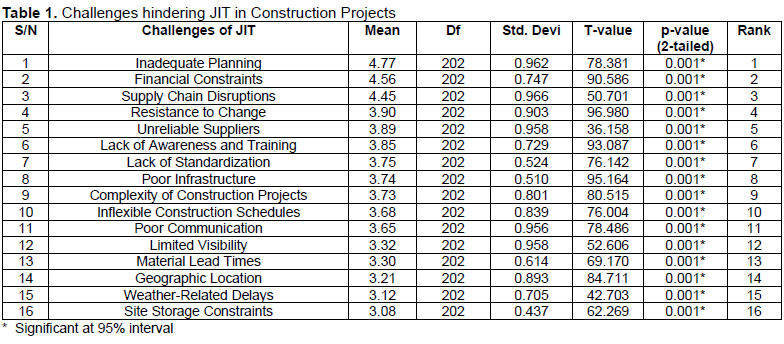
The Table 1 shows the challenges hindering JIT in construction projects. The variable, "Inadequate Planning" ranks the most with the highest mean (M=4.77) which indicates that inappropriate planning of construction projects is a key challenge in the incorporation of JIT in construction projects. This is followed by "Financial Constraints" (M=4.56); "Supply Chain Disruptions" (M=4.45); "Resistance to Change" (M=3.90); "Unreliable Suppliers", (M=3.89); "Lack of Awareness and Training" (M=3.85); "Lack of Standardization" (M=3.75); "Poor Infrastructure" (M=3.74); "Complexity of Construction Projects" (M=3.73) while "Inflexible Construction Schedules", (M=3.68) comes next in that order.
Moreso, "Poor Communication" is ranked next with mean value (M=3.65), followed by the variable, "Limited Visibility" with mean (M=3.32); "Material Lead Times" with mean (M=3.30); "Geographic Location" (M=3.21), "Weather-Related Delays" with mean (M=3.12) and "Site Storage Constraints" with mean (M=3.08). However, in terms of the significance level, all the variables have a high T-values (Min=36.158; Max=96.980) with p-values (<.001). This indicates that the various constructs for the challenges of JIT are all statistically significant.
For this hypothesis, since all the p-values (<0.001) for all the variables in this construct is less than the significance level (p=0.05), the null hypothesis which states that, "There are no major challenges hindering the successful implementation of Just in Time management system in construction projects in Edo State and Delta State" is rejected while the alternative hypothesis which states that "There are major challenges hindering the successful implementation of Just in Time management system in construction projects in Edo State and Delta State" is accepted. By implication, it means that despite the good impacts accruing from the adoption of JIT in construction projects, there are still diverse challenges/hindrances to its full implementation in the study area.
4.3 Factor Analysis of the Challenges of JIT in Construction Projects
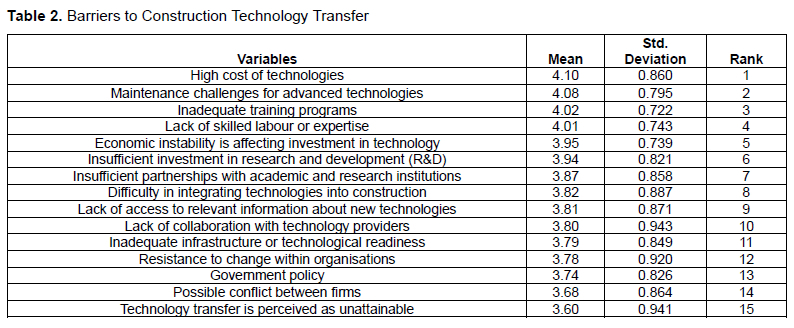
The Table 2 shows the KMO and the Bartlett test for the challenges of JIT. The KMO measure indicates whether the data provided for the factor analysis is suitable for the factor analysis. The Bartlett's test of sphericity shows if the data under consideration can be used for factor analysis. The KMO coefficient is 0.711 (71.1%) which is above the required 0.70 (70%). This shows that the factors or barriers are very sufficient for factor analysis to be done. Also, the p-value of the Bartlett's test of sphericity (0.004) falls within the required 5% significance level of (p<0.05) at a degree of freedom of 120 and an approximate chi square of 465.137. This shows that exploratory factor analysis is adequate for the identified data for the challenges of JIT.
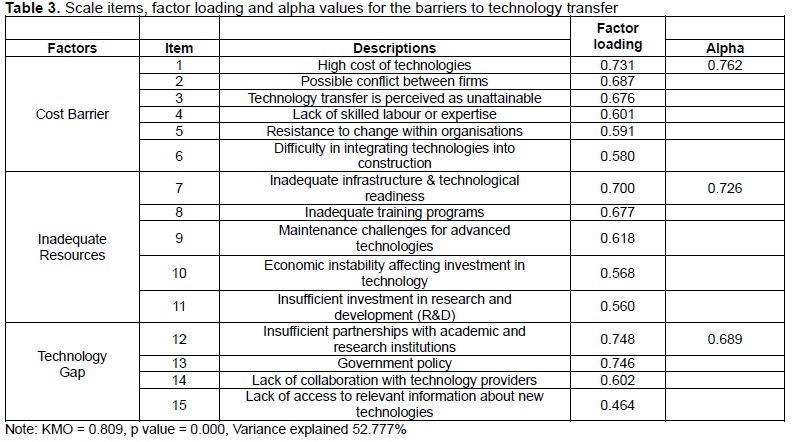
Table 3 shows the total variance explained of the challenges of JIT in the construction industry with the Principal Component Analysis (PCA) extraction method. It shows the presence of three components with initial eigenvalues, explaining the 6.896%, 41.513% and 18.912% variances respectively.
The Table 4 shows the rotated component matrix of the various challenges of JIT in the construction industry. After four iterations, the rotation converged in relation to the initial eigenvalue. The highlighted matrices indicate the constraints that has the least variation in relation to the initial eigenvalue.
5. DISCUSSIONS OF FINDINGS
Despite the fact that JIT offers numerous benefits and impacts the construction sector in diverse ways, there exists several hindrances to its full implementation. In this study, the findings indicates several of these challenges of which inappropriate planning is the very important of them all. The lack of adequate planning, especially at the onset of construction is always the determinant to using JIT in such construction project, which oftentimes, leads to a lot of variations. In support, Li and Taylor, (2021) indicated that variations in supplier performance, production delays or logistical failures can lead to material shortages and workflow disruptions. On another hand, some of the clients are very adamant in insisting on the traditionally crude means of supply of materials and coordination of work processes. This hamper the chances of JIT being implemented in such setting, given that the client has the final decision.
Gbadamosi and Oyewobi (2022) reiterated this fact by stating that despite advancements in digital construction technologies, many firms still rely on traditional procurement and supply chain management methods, limiting JIT implementation. This is a major challenge in fostering the use of JIT in construction projects. Additionally, financial constraints limits the adoption of JIT in construction projects as its adoption involves a lot of capital. Fagbenle et al. (2023) reiterates further that skilled labour shortages, high employee turnover, and scheduling conflicts can disrupt project timelines, which are offshoots of poor financial capacity. Also, poor communication can hamper JIT implementation, in which the study of Monem (2024) corroborated by stating that poor communication can lead to material delivery mismatches, project delays, and cost overruns. These challenges in addition to others are discovered by the findings of this study, hinders the smooth adoption of JIT in construction projects, hence contributing to the several inadequacies experienced in the sector.
6. CONCLUSIONS
This study investigated the challenges hindering the successful implementation of the Just-in-Time (JIT) management system in construction projects within Edo and Delta States, Nigeria. The findings revealed that, although JIT is widely acknowledged for its potential to minimize material waste, reduce storage costs and improve project efficiency, its practical adoption within the Nigerian construction industry remains constrained by multiple barriers.
Among the 16 investigated factors, inadequate planning emerged as the most critical challenge, followed by financial constraints and supply chain disruptions. Other major impediments such as resistance to change, unreliable suppliers, poor communication, lack of awareness and training, and infrastructural limitations further aggravate implementation difficulties. The results confirm that while JIT offers substantial benefits, its application in construction requires a supportive operational ecosystem, strong stakeholder collaboration, and deliberate organizational readiness.
Therefore, successful adoption of JIT in construction should not be perceived merely as a logistics strategy but as a transformational shift in planning, culture and supply chain relationships. Without these foundational elements, JIT may remain a theoretical concept rather than a practical reality in the Nigerian construction sector.
6.1 Implications of the study
The study generated some practical implications. Contractors and project managers must prioritize early-stage planning, demand forecasting and structured coordination mechanisms to facilitate synchronized material flow. Suppliers should move towards reliability-focused partnerships rather than transactional delivery models. Policymakers and regulatory agencies have a crucial role in strengthening transport and storage infrastructure, implementing standardized procurement frameworks and incentivizing lean construction adoption. Furthermore, professional bodies should introduce training and certification programmes on JIT and lean logistics to improve awareness across industry practitioners. With regards to theoretical implications, the study reinforces that JIT implementation in construction cannot simply be replicated from manufacturing environments without context-specific modification. The dynamic nature of construction characterized by site variability, weather sensitivity and fluctuating labour availability calls for flexible and hybrid JIT models tailored to developing economies. The findings also expand the body of knowledge on lean construction adoption by classifying JIT challenges into Planning, Financial, and Delay-related factors, thereby offering a structured framework for targeted intervention.
6.2 Limitations of the study
This study is limited by its geographical focus on Edo and Delta States, which may restrict the generalizability of the findings to other regions with different construction conditions. The use of self-reported questionnaire data may also introduce respondent bias. Additionally, the cross-sectional research design prevents tracking how JIT challenges evolve over time. The study examined perceived challenges but did not directly measure actual project performance outcomes or technological readiness levels. Finally, the perspectives of key stakeholders such as suppliers, logistics operators, and policymakers were not included, which may have limited the breadth of insights into the wider supply chain.
6.3 Recommendations for further studies
Future research can extend this study in the following directions:
1. Development of a Nigerian-adaptive JIT framework: Researchers should design a contextual implementation model that incorporates risk buffers for delays and supply uncertainties.
2. Technology-Driven Solutions for JIT Coordination: Further studies should examine how Building Information Modelling (BIM), Internet of Things (IoT), GPS logistics tracking and block chain-based procurement can enhance real-time communication and delivery synchronization.
3. Comparative analysis across project types and regions: JIT readiness can be assessed across public vs private, building vs infrastructure, or Lagos vs non-Lagos regions to determine scalability potentials.
4. Cost-benefit assessment of JIT in Construction: Empirical evaluation of financial savings versus implementation costs will provide convincing evidence for adoption among hesitant stakeholders.
5. Behavioural studies on resistance to change: Since cultural resistance ranked high, qualitative research involving interviews or case studies is recommended to explore psychological and organizational barriers to change.
REFERENCES
2. LITERATURE REVIEW
- Abdulraheem, A. O. (2018). Just-in-time manufacturing for improving global supply chain resilience. International Journal of Engineering Technology Research Management, 2(11), 58-75.
- Ahmad, M., Rehman, Z., & Khan, S. (2022). Digital supply chain management in construction projects. Journal of Construction Engineering and Management, 148(4), 10-24.
- Aibinu, A. A., & Jagboro, G. O. (2021). The effects of construction delays on project delivery in the Nigerian construction industry. International Journal of Project Management, 39(2), 167-181.
- Alaloul, W. S., Liew, M. S., & Zawawi, N. A. W. (2022). Supply chain management in the construction industry: Addressing challenges with just-in-time principles. Journal of Construction Engineering and Management, 148(5), 402-2023.
- Albert, I., Ighodaro, I. J., Obaju, B. N., & Shaibu, A. (2025a). Application of just-in-time delivery in the construction industry: A case study of Lagos State. COOU African Journal of Environmental Research, 6(2), 1-13.
- Albert, I., & Ighodaro, I. J. (2025b). Impacts of the just-in-time management system in construction projects in Nigeria. UNIZIK Journal of Engineering and Applied Sciences, 5(3), 2851-2859.
- Albert, I., Shakantu, W., & Osadola, O. A. (2025c). Applying lean production approach to optimise materials management in the Nigerian construction industry. International Journal of Builders in Academia, 1(1), 47-59. https://doi.org/10.36615/ijba/5202.10.0150
- Azhar, S., Khalfan, M., & Maqsood, T. (2023). Integrated project delivery and lean construction: A systematic review. Construction Management and Economics, 39(3), 212-230.
- Azis, A., Hamzah, N., & Rahman, M. (2023). The impact of weather conditions on construction project scheduling: A case study analysis. International Journal of Construction Research, 55(4), 67-82.
- Ballard, G. (2020). The Last Planner System: A production control approach. Lean Construction Journal, 16(1), 23-35.
- Bhattacharya, S., & Chatterjee, A. (2022). Digital project driven supply chains: A new paradigm. Supply Chain Management: An International Journal, 27(2), 283-294.
- Chileshe, N., & Rameezdeen, R. (2022). Supplier reliability assessment in construction procurement: A risk-based approach. Journal of Supply Chain Management, 19(1), 55-73.
- Collins, A. B. (2010). English-medium higher education: Dilemma and problems. Eurasian Journal of Educational Research, 10(39), 97-110.
- Creswell, J. W., & Creswell, J. D. (2018). Research design: Qualitative, quantitative, and mixed methods approaches (5th ed.). SAGE Publications.
- Demirkesen, S., Sadikoglu, E., & Jayamanne, E. (2022). Investigating effectiveness of time studies in lean construction projects: Case of Transbay Block 8. Production Planning and Control, 33(13), 1283-1303.
- Duckett, L. J. (2021). Quantitative research excellence: Study design and reliable and valid measurement of variables. Journal of Human Lactation, 37(3), 456-463.
- Durdyev, S., Ismail, M., & Nadeem, S. (2020). Application of lean construction techniques to improve project delivery in the construction industry. Journal of Construction Engineering and Management, 146(5), 40-200.
- Esan, A. A., Olowa, T. O. O., Amuda-Yusuf, G., & Adebiyi, R. T. (2025). Addressing supply chain challenges in the Nigerian construction industry: The role of government policies and regulations. Faculty of Natural and Applied Sciences Journal of Applied and Physical Sciences, 2(3), 98-105.
- Fagbenle, O., Adebayo, A., & Lawal, T. (2023). Skilled labor shortages and the implications for construction project efficiency. International Journal of Project Management, 41(5), 90-106.
- Field, A. (2018). Discovering statistics using IBM SPSS statistics (5th ed.). SAGE Publications.
- Freichel, S. L., Rütten, P., & Wörtge, J. K. (2022). Challenges of supply chain visibility in distribution logistics: A literature review. Ekonomski Vjesnik: Review of Contemporary Entrepreneurship, Business, and Economic Issues, 35(2), 453-466.
- Gadde, L. E., & Dubois, A. (2020). Partnering in the construction industry: Problems and opportunities. Journal of Purchasing and Supply Management, 16(4), 254-263.
- Gao, H., Wu, S., & Tang, C. (2023). Last Planner System for efficient subcontractor management in lean construction. Journal of Civil Engineering and Management, 29(2), 200-216.
- Gbadamosi, Y., & Oyewobi, L. (2022). Technology adoption in construction supply chains: Barriers and solutions. Smart Construction Journal, 12(3), 45-61.
- Gravetter, F. J., & Wallnau, L. B. (2017). Statistics for the behavioral sciences (10th ed.). Cengage Learning.
- Hair, J. F., Black, W. C., Babin, B. J., & Anderson, R. E. (2019). Multivariate data analysis (8th ed.). Cengage Learning.
- Han, S., Lee, H., & Park, J. (2022). Off-site warehousing strategies for urban construction projects. Journal of Logistics and Transportation Research, 37(6), 78-95.
- Kumar, R. (2011). Research methodology: A step-by-step guide for beginners. Research Methodology.
- Kumar, P., Ahmed, M., & Singh, R. (2022). AI and IoT for material inventory optimization in just-in-time construction. Engineering, Construction, and Architectural Management, 29(3), 355-370.
- Likert, R. (1932). A technique for the measurement of attitudes. Archives of Psychology, 140, 1-55.
- Monem, B. (2024). Evaluating the effectiveness of lean construction management in minimizing waste and enhancing environmental performance across the construction supply chain. Journal of Lean Production, 21, 45-56.
- Munywoki, J. (2018). Just-in-time adoption and operational performance of cement companies in Kenya [Unpublished doctoral dissertation]. University of Nairobi.
- Nnaji, E. T., Okafor, C. N., Ezeani, O. C., & Umeh, I. C. (2025). Review of lean construction practices for enhancing project delivery in Anambra State, Nigeria. Ayden Journal of Engineering and Applied Sciences, 13(2), 9-21.
- Nolz, P. C. (2021). Optimizing construction schedules and material deliveries in city logistics: A case study from the building industry. Flexible Services and Manufacturing Journal, 33(3), 846-878.
- Oladinrin, O., Adeniyi, K., & Adewuyi, T. (2022). Digital collaboration tools for effective communication in construction projects. International Journal of Construction Technology, 18(2), 34-47.
- Oyedele, L., Olawale, Y., & Adebayo, S. (2021). Space management challenges in just-in-time construction. Journal of Urban Construction, 16(2), 67-84.
- Pallant, J. (2020). SPSS survival manual (7th ed.). McGraw-Hill Education.
- Raja, S. A., & Muthuswamy, P. (2022). Pandemic, war, natural calamities, and sustainability: Industry 4.0 technologies to overcome traditional and contemporary supply chain challenges. Logistics, 6(4), 81-92.
- Raza, M. H., & Zhong, R. Y. (2024). Integration of additive manufacturing, lean and green construction: A conceptual framework. Procedia CIRP, 128, 180-185.
- Sacks, R., Eastman, C., & Liston, K. (2023). Prefabrication and modular construction for just-in-time implementation. Building and Environment, 220, 108-176.
- Saunders, M., Lewis, P., & Thornhill, A. (2019). Research methods for business students (8th ed.). Pearson Education.
- Wang, L., Zhang, Y., & Chen, R. (2023). AI-driven logistics in construction: Enhancing just-in-time efficiency. Journal of Smart Construction, 10(4), 78-96.
- Wang, Z., Hu, X., Wei, A., Yang, W., & Dong, Z. (2026). A blockchain-based system for just-in-time in construction supply chains. Built Environment Project and Asset Management, 16(2), 377-395.
Idowu Albert
Department of Building, Federal University of Technology Akure, Nigeria
Email address:

Revised: 13-04-2026
Accepted: 23-05-2026