Human resource practices and social cohesion beyond the workplace in a remote work environment: A systematic review
Abstract
BACKGROUND: The shift to remote work, driven by technological advances and crises like COVID-19, has changed traditional workplaces, raising questions about how organisations contribute to social cohesion in communities where they no longer maintain a physical presence. PURPOSE OF THE STUDY: This study aims to assess the impact of human resource practices on social cohesion beyond the workplace in remote work environments. DESIGN/METHODOLOGY/APPROACH: This systematic review, adhering to Preferred Reporting Items for Systematic Reviews and Meta-Analyses guidelines, synthesises literature from 2015 to 2025 to assess the impact of human resource practices on social cohesion beyond the workplace in remote work environments. A comprehensive search across databases, including Scopus, Web of Science, Google Scholar, and Business Source Complete, identified 5337 records, of which 25 articles met the inclusion criteria. FINDINGS: Thematic synthesis revealed that the implementation of human resource practices such as e-recruitment and selection, work-life balance initiatives, green pay reward systems, flexible work arrangements, diversity and inclusion programs, green performance management, and green training and development positively influences social cohesion beyond the workplace in remote work environments. Conversely, challenges such as economic disembedding, reduced consumer spending, increased socio-economic disparities, work and information overload may weaken organisational community engagement and disrupt local economies. RECOMMENDATIONS/VALUE: The findings underscore the need for human resource practices that integrate hybrid engagement models, corporate-community partnerships, and digital tools to sustain community involvement. MANAGERIAL IMPLICATIONS: Policymakers and business leaders must explore innovative approaches to bridge the gap between digital and physical engagement to maintain strong local economic and social networks. JEL CLASSIFICATION: J24; J81
Community engagement; economic inclusion; human resource practice; remote work; social cohesion
1. INTRODUCTION
The shift towards remote work has significantly transformed the modern workplace, influencing how organisations engage with employees, stakeholders, and the broader community. While a lot of research (Choudhury et al., 2021; Mäkikangas et al., 2022; Brown & Leite, 2023; Anakpo et al., 2023; Gibbs et al., 2023; Makowski, 2023; Fatima et al., 2024; Doargajudhur et al., 2024) has explored the effects of remote work on employee productivity, engagement, and well-being, limited attention has been given to its impact on social cohesion beyond the workplace. Social cohesiveness is the strength of relationships, trust and a shared goal in a society. It is very important for economic stability, civic participation and social well-being (Fonseca et al., 2019).
Social cohesion beyond the workplace encompasses several critical areas, that is, inclusion, which ensures that remote work does not marginalise certain groups, promoting equal access to professional and community engagement opportunities (Ranganai et al., 2022). Community engagement reflects the extent to which organisations and employees contribute to local initiatives, volunteerism, and civic activities, despite physical decentralisation (Contreras et al., 2020). Social capital refers to the maintenance of strong interpersonal networks that foster trust, reciprocity, and collective support among individuals and groups (Siddiqa, 2024). While work-life balance examines how remote work influences personal relationships and individuals' ability to engage meaningfully in community life (Soroui, 2021; Ozimek, 2020). Finally, economic contribution highlights the role of remote work in sustaining local economies through spending, employment, and investment, particularly in regions benefiting from workforce decentralisation (Lord, 2020; Annamalah & Paraman, 2023; Khan, 2024). These dimensions demonstrate that the impact of human resource practices reaches beyond the organisation and its employees, influencing a broader range of stakeholders such as families, communities, and society. This perspective corresponds with stakeholder theory, which stresses the importance of organisations considering the interests and welfare of everyone affected by their activities (Freeman, 1984; Donaldson & Preston, 1995).
Traditionally, organisations have contributed to social cohesion through corporate social responsibility initiatives, community engagement programmes and localised economic contributions (Freze et al., 2023). However, the widespread adoption of remote and hybrid work models raises critical questions about how organisations maintain their role in fostering community connections when physical office spaces diminish. Hence, human resource practices play a central role in addressing these challenges by implementing policies that encourage virtual social integration, maintain employee engagement with local communities, reduce carbon footprints, and promote corporate contributions to external social networks (Voegtlin & Greenwood, 2016; Adegoke et al., 2024).
Given these dynamics, this systematic review seeks to examine the impact of human resource practices on social cohesion beyond the workplace in a remote work environment. By synthesising existing literature, this study will explore how human resource practices have adapted to external engagement challenges, assessing the benefits and challenges associated with remote work's influence on social cohesion.
The study is guided by the following research question: How human resource practices has contributed to social cohesion beyond the workplace due to the shift towards remote work?
This review adheres to the Preferred Reporting Items for Systematic Reviews and Meta-Analyses (PRISMA) criteria to guarantee a comprehensive and transparent methodology in selecting, analysing, and synthesising relevant studies. The findings will contribute to academic discourse, practical human resource practices, and policy, offering recommendations on how organisations can maintain and enhance their role in fostering social cohesion beyond the workplace despite the physical decentralisation of work environments.
1.1 Theoretical framework
The study is grounded in the stakeholder theory, which asserts that organisations bear responsibilities not only to shareholders but to a wide array of stakeholders, including employees, communities, government, and other groups impacted by organisational actions (Freeman,1984). The theory advocates for recognising and balancing the diverse interests and well-being of all stakeholders, moving beyond a narrow emphasis on profitability and shareholder value (Kalra, 2024).
In the context of remote work, the distinction between work and non-work becomes blurred, with employees' needs and relationships extending beyond the traditional workplace environment (Ganguly et al., 2022). Human resource practices are thus pivotal in addressing these evolving dynamics by enhancing employee engagement and well-being, while promoting social cohesion that spans employees' personal and community spheres (Greenwood & Van Buren, 2010).
By adopting a stakeholder-oriented perspective, this study investigates how HR practices in remote work settings can foster social cohesion beyond organisational boundaries. Specifically, stakeholder theory underpins the exploration of how HRM initiatives can create value by addressing stakeholder concerns related to inclusion, community engagement, environmental stewardship, and regional economic participation. This theoretical lens offers ethical and practical justification for organisations to support social cohesion as part of their broader responsibilities to employees and the wider communities in which they operate (Freeman, 1984).
Through this framework, the analysis examines how HR practices, informed by stakeholder values, can strengthen social connections and contribute to a more cohesive society, particularly amid the expanding prevalence of remote work.
2. METHODS
This systematic review adheres to the Preferred Reporting Items for Systematic Reviews and Meta-Analyses (PRISMA) guidelines, ensuring a transparent and rigorous methodological approach (Page et al., 2021).
2.1 Eligibility criteria
To ensure the relevance and quality of this systematic review, specific inclusion and exclusion criteria were established during the study selection process. Studies were included if they met the following criteria: (1) Empirical studies, systematic reviews, or theoretical papers examining the impact of remote work on organisational contributions to social cohesion beyond the workplace. (2) Articles published between 2015 and 2025 to capture recent developments in the field. (3) Studies written in English to maintain consistency and comprehensibility within the review. (4) Studies focusing on socially responsible human resource management addressing the triple bottom line framework. Conversely, studies were excluded based on the following criteria: (1) Articles not addressing the impact of remote work on organisational contributions to social cohesion. (2) Studies published in languages other than English. (3) Articles published before 2015. (4) Studies focusing solely on socially responsible human resource practices aimed at enhancing organisational performance and reputation without incorporating the triple bottom line framework. (5) Research concentrating on remote work and social cohesion within organisations, emphasising aspects like group cohesion and employee well-being, rather than external community engagement.
Hence, the included studies were grouped based on the human resource practices they investigated and their applicability in remote work environments, especially their impact on social cohesion beyond the workplace. This thematic categorisation facilitated a structured analysis of how various human resource practices influence community integration in the context of remote work. Additionally, the synthesis considered studies that highlighted both the benefits and limitations of remote work on social cohesion beyond the workplace, providing a comprehensive understanding of the multifaceted effects of remote work on external community engagement.
2.2
Information sources and search strategyA comprehensive literature search was conducted across databases, including Scopus, Web of Science, Google Scholar, and Business Source Complete. The search strategy employed a combination of keywords and Boolean operators, such as:
• "Remote work" AND "social cohesion"
• "Social responsibility human resource management" AND "remote work"
• "Social responsibility human resource practice" AND "social cohesion"
• "Work-life balance" AND "social cohesion"
• "HRM policies" AND "remote work"
These terms were selected to capture a broad spectrum of literature pertinent to the research question.
2.3
Study selectionThe study adhered to the Preferred Reporting Items for Systematic Reviews and Meta-Analyses (PRISMA) guidelines to ensure a transparent and thorough study selection process (Page et al., 2021). Therefore, a thorough and transparent process was employed to determine the eligibility of studies for inclusion. In this regard, two independent reviewers conducted the study selection; each reviewer independently assessed the titles and abstracts of all retrieved records to identify studies that potentially met the inclusion criteria (Booth, 2016; Robson et al., 2019). Furthermore, the records deemed potentially eligible, full-text articles were retrieved and independently evaluated by both reviewers to confirm their eligibility (Lunny et al., 2017). Any disagreements between the reviewers regarding study inclusion were resolved through discussion. In instances where the two primary reviewers disagreed on the inclusion or exclusion of a study, a third, independent reviewer was consulted to review the case. The third reviewer assessed the disagreement and made the final decision regarding the study's eligibility, in accordance with the criteria outlined by Gärtner et al. (2018). To enhance efficiency and accuracy in the screening process, EndNote X7.1 software was used to organise citations and remove duplicate records before screening.
By adhering to this structured approach, we aimed to minimise bias and enhance the reliability of the study's systematic review, ensuring that the study findings are grounded in a comprehensive and methodologically sound analysis of the existing literature (Fan et al., 2022; Schreiber & Cramer, 2024).
2.4
Data extraction and synthesisA structured data extraction form was employed to systematically collect pertinent information from each included study, such as study design, population, interventions, outcomes, and key findings (Booth, 2016; Lunny et al., 2017). The extracted data were then subjected to thematic synthesis using Atlas. ti 24, allowing for the identification and analysis of recurring themes related to social cohesion beyond the workplace (Thomas & Harden, 2008). This approach facilitated a comprehensive understanding of how remote work influences organisational contributions to social cohesion beyond the workplace with the adoption of human resource practices.
2.5
Data analysisIn this systematic review, thematic synthesis was employed to analyse qualitative data from the selected studies, utilising ATLAS.ti 24 software to facilitate the process. Initially, the data were thoroughly reviewed to ensure deep familiarity, followed by the systematic application of codes to relevant data segments, capturing significant features pertinent to the research question. These codes were then examined to identify patterns, leading to the development of descriptive themes that encapsulate the core messages within the data. Subsequently, these themes were refined and interpreted to form analytical themes, providing deeper insights into how human resource practices influence organisational contributions to social cohesion beyond the workplace in a remote work environment. The use of ATLAS.ti 24 enhanced the rigour and transparency of this analysis by enabling efficient organisation, coding, and retrieval of data, as well as facilitating the visualisation of coding patterns and relationships within the data (Soratto et al., 2020).
3. RESULTS
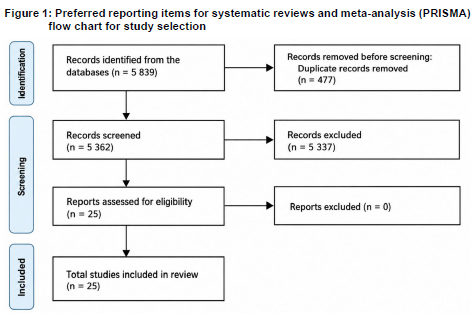
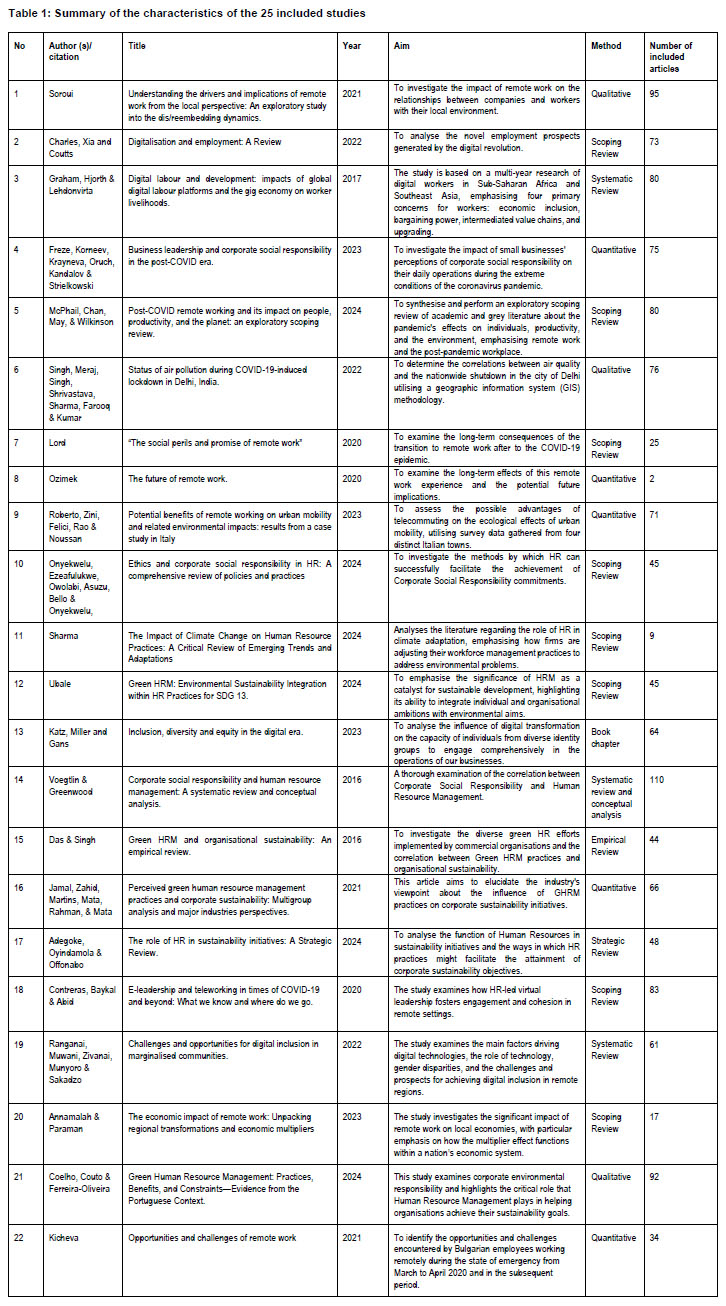
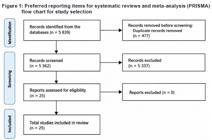
The search and selection process for this systematic review is detailed in Figure 1, the PRISMA flow diagram. Initially, 5,839 records were identified through database searches. After removing duplicates, 5 362 unique records remained. These were screened based on titles and abstracts, resulting in the exclusion of 5 337 records deemed irrelevant due to reasons such as not addressing the impact of remote work on organisational contributions to social cohesion, being published before 2015, or focusing solely on internal social cohesion without considering external community integration. The full texts of the remaining 25 articles met all inclusion criteria and were included in the final qualitative synthesis. An overview of the characteristics of these included studies is presented in Table 1. This approach ensured a focused and relevant selection of studies to address the research objectives (Page et al., 2021).
3.1 Overview of included studies
A summary table provides details on the study authors, titles, year of publication, aim of the study, methodology and the number of included articles.
3.2
Quality assessment of selected review articlesThe methodological quality of the included studies was assessed using the Mixed Methods Appraisal Tool (2018 version), because the review included a variety of research designs (Hong et al., 2018). Each study was evaluated by two reviewers to ensure objectivity and minimise bias. The assessment focused on key criteria specific to each study design, such as the appropriateness of the research question, adequacy of data collection methods, consideration of confounding factors, and the integration of qualitative and quantitative components in mixed-methods studies. Any discrepancies between reviewers were resolved through discussion or consultation with a third reviewer (Gärtner et al., 2018). This rigorous appraisal process ensured that only studies meeting a high methodological standard were included, thereby strengthening the reliability and validity of the review's findings.
3.3
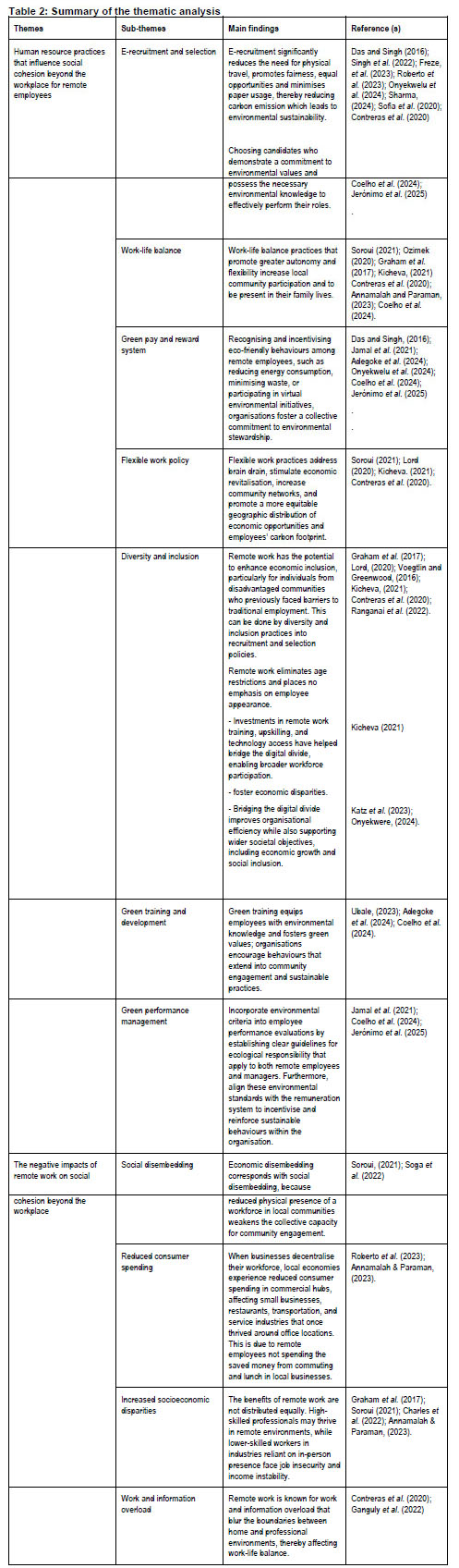
Thematic analysis of the findingsThe results section presents findings from the twenty-five (25) selected studies, organised around key themes identified during data analysis: (1) human resource practices that influence social cohesion beyond the workplace for remote employees with five sub-themes, and (2) the negative impacts of remote work on social cohesion beyond the workplace with three sub-themes. In examining these impacts, the study focuses on how specific HR practices such as work-life balance initiatives, e-recruitment and selection processes, green pay, and reward systems, flexible work practices, diversity and inclusion policies and green performance management can mitigate challenges and enhance social cohesion beyond the workplace. Conversely, remote work has been associated with negative effects on social cohesion, including social disembedding, reduced consumer spending, increased socio-economic disparities, work and information overload. These findings emphasise the need to revise HR practices to address these challenges effectively. Table 2 provides a summary of the thematic analysis from the reviewed study.
3.3.1 Human resource practices that influence social cohesion beyond the workplace for remote employees
First, e-recruitment and selection have been identified as crucial HR practices that foster social
cohesion beyond the workplace, largely due to their positive impact on environmental sustainability. Research (for example, Das & Singh, 2016; Sofia et al., 2020; Onyekwelu et al., 2024) indicates that digital recruitment minimises the need for physical travel, reduces paper consumption, and limits face-to-face interactions, thereby decreasing carbon emissions and promoting cleaner air and environmental health (Contreras et al., 2020; Sharma, 2024; Singh et al., 2022; Roberto et al., 2023; Coelho et al., 2024). Moreover, e-recruitment enhances fairness and inclusion by removing barriers related to geography, gender, and age, thus enabling wider access to employment opportunities (Roberto et al., 2023; Jerónimo et al., 2025). Additionally, Coelho et al. (2024) and Jerónimo et al. (2025) highlight the significance of prioritising candidates who possess environmental awareness and green skills.
Second, work-life balance practices that encourage autonomy and flexibility in work-life balance are commonly reported to improve employees' capacity to engage in family activities and participate in community events. Multiple studies (for example, Soroui, 2021; Ozimek, 2020; Graham et al., 2017; Kicheva, 2021; Annamalah & Paraman, 2023; Coelho et al., 2024) have indicated that the time saved from commuting enables remote workers to spend more time at home, provide care for elderly relatives, and become more active in local community efforts. Additionally, Contreras et al. (2020) emphasised that the flexibility offered by remote work allows employees to address family matters more effectively, as they can work from any location at any time, thereby enhancing the family environment.
Third, green pay and reward systems have been recognised as effective methods for promoting environmentally responsible behaviour among remote employees. Several studies (such as, Das & Singh, 2016; Jamal et al., 2021; Adegoke et al., 2024; Jerónimo et al., 2025) emphasise that acknowledging and incentivising activities like reducing energy consumption, minimising waste, and engaging in virtual environmental programs encourages a collective commitment to environmental care. Organisations that embed sustainability within their performance and reward frameworks help to reinforce eco-friendly values throughout their workforce (Onyekwelu et al., 2024; Coelho et al., 2024). Moreover, Jerónimo et al. (2025) observed that these practices enhance shared environmental responsibility both within and beyond organisational boundaries.
Fourth, flexible work policies have demonstrated significant social and economic advantages that extend beyond the workplace. Studies (such as Lord, 2020; Soroui, 2021; Kicheva, 2021) indicate that flexible arrangements help prevent brain drain by enabling professionals to stay in their home regions while pursuing remote employment opportunities. This decentralisation contributes to local economic growth and increases demand for goods and services in rural and non-urban areas. Additionally, flexible work supports the strengthening of local community networks and encourages a more equitable distribution of jobs across different geographic locations (Soroui, 2021; Lord, 2020). It also promotes environmental sustainability by lowering the carbon emissions associated with commuting (Contreras et al., 2020; Lord, 2020).
Fifth, diversity and inclusion practices within remote work settings have greatly enhanced employment opportunities for individuals from disadvantaged or marginalised groups. Numerous studies (e.g., Graham et al., 2017; Lord, 2020; Voegtlin & Greenwood, 2016; Kicheva, 2021; Contreras et al., 2020; Ranganai et al., 2022) highlight that incorporating inclusive policies into hiring and selection procedures has expanded workforce participation by overcoming traditional obstacles related to location, disability, gender, and socio-economic status. Kicheva (2021) also pointed out that remote work eliminates age restrictions and places no emphasis on employee appearance. Furthermore, investments in remote work training, skill development, and access to digital technologies have helped close the digital gap, especially for underrepresented populations (Katz et al., 2023; Onyekwere, 2024). These initiatives not only foster workplace fairness but also advance broader societal goals like economic empowerment and social inclusion (Onyekwere, 2024).
Sixth, the green training and development programme provides employees with environmental knowledge and encourages sustainable values that extend beyond the workplace. Research (for example, Jamal et al., 2021; Coelho et al., 2024; Jerónimo et al., 2025) highlights that integrating environmental awareness into training initiatives helps cultivate eco-friendly behaviours among employees. These behaviours frequently lead to increased community involvement in sustainability efforts and support wider environmental objectives.
Seventh, green performance management entails incorporating environmental criteria into employee assessments to encourage ecological responsibility at every organisational level. Research (Jamal et al., 2021; Coelho et al., 2024; Jerónimo et al., 2025) emphasises the need for clearly defined sustainability metrics applicable to remote staff and managers. Organisations must align performance expectations with environmental objectives and link these to reward systems; this can promote sustainable behaviours and embed environmental accountability into daily work routines (Jerónimo et al., 2025).
3.3.2 The negative impacts of remote work on social cohesion beyond the workplace
Social disembedding represents a negative consequence of remote work on social cohesion outside the workplace. According to Roberto et al. (2023) and Annamalah and Paraman (2023), the decreased physical presence of employees within local communities reduces opportunities for informal interactions, shared experiences, and civic participation.
A further adverse effect of remote work on social cohesion is the reduction in consumer spending. As organisations decentralise their workforce, local economies, especially in business districts, experience a drop in revenue. Small businesses, restaurants, transport services, and other industries that previously thrived around office areas are particularly impacted (Roberto et al., 2023; Annamalah & Paraman, 2023). This downturn results from remote employees no longer incurring expenses related to commuting, meals, or other incidental purchases near their workplaces, leading to decreased economic activity and reduced support for community-based businesses (Annamalah & Paraman, 2023).
Additionally, increased socioeconomic disparities have become a significant negative consequence of the transition to remote work. Although highly skilled professionals frequently gain advantages from flexible remote working options, workers in lower-skilled roles that demand physical presence, such as those in hospitality, retail and maintenance, experience increased job insecurity and financial instability (Graham et al., 2017; Soroui, 2021; Charles et al., 2022; Annamalah & Paraman, 2023).
Lastly, Contreras et al. (2020) and Ganguly et al. (2022) highlighted that remote working often leads to a lack of work-life balance, as work and information overload blur the boundaries between home and professional environments.
4. DISCUSSION
The discussion interprets the results, highlights key implications, and provides recommendations regarding human resource practices that influence social cohesion beyond the workplace for remote employees.
4.1 Human resource practices that influence social cohesion beyond the workplace for remote employees
While remote work poses challenges to social cohesion, it also presents several opportunities. The human resource practices implemented by an organisation play a crucial role in fostering social cohesion beyond the workplace. Key practices include work-life balance initiatives, e-recruitment and selection, green pay and reward systems, flexible work policies, diversity and inclusion strategies and green performance management. However, remote work has a negative impact towards social cohesion beyond the workplace. Hence, the call for human resource practices that can improve this situation.
4.1.1 E-recruitment and selection
Digital recruitment demonstrates how HR can generate shared value for various stakeholders. It reduces carbon emissions, expands the talent pool, and reflects an organisation's commitment to environmental responsibility (Das & Singh, 2016; Sofia et al., 2020; Onyekwelu et al., 2024). From a stakeholder theory perspective, organisations broaden their accountability to include communities benefiting from cleaner air and more equitable access (Kalra, 2024; Greenwood & Van Buren, 2010). However, reliance on internet connectivity and digital devices raises concerns about digital inequality, as candidates from regions with poor connectivity may still face exclusion (Charles et al., 2022). Therefore, future HR policies should integrate e-recruitment with initiatives that improve digital access and foster community partnerships to address this unintended bias.
4.1.2 Work-life balance
Remote work has redefined how employees allocate their time and engage with their communities, largely due to the implementation of work-life balance practices that promote greater autonomy and flexibility. Organisations have reinforced this shift by adopting flexible work arrangements, wellness programs, and clear boundaries between work and personal life, ensuring employees can fully benefit from remote work's time-saving advantages. As a result, employees are more empowered to participate in community engagement initiatives, such as volunteering and local events, thereby strengthening social cohesion outside the workplace (Soroui, 2021; Ozimek, 2020). By fostering a healthy work-life balance, remote work not only enhances individual well-being but also cultivates stronger community ties, reinforcing the social fabric that connects people beyond their professional identities (Contreras et al., 2020). Moreover, the ability to structure work around personal and social commitments allows employees to be more present in their family lives and communities (Graham et al., 2017; Soroui, 2021). This adaptability fosters stronger social capital, as employees can maintain and deepen interpersonal relationships that might otherwise be strained by rigid work schedules and long commutes (Lord, 2020). Nevertheless, these benefits rely heavily on supportive management; without clear workload boundaries, flexibility can lead to an "always-on" culture that undermines the social cohesion it aims to foster (Contreras et al., 2020; Kicheva, 2021).
4.1.3 Green pay and reward system
Das and Singh (2016) highlighted the adoption of green human resource practices as a way of protecting the environment. In this regard, the implementation of green pay and reward systems within remote work environments can significantly enhance social cohesion beyond the workplace by integrating sustainability into reward management practices. By recognising and incentivising eco-friendly behaviours among remote employees, such as reducing energy consumption, minimising waste, or participating in virtual environmental initiatives, organisations foster a collective commitment to environmental stewardship (Das & Singh, 2016; Jamal et al., 2021; Adegoke et al., 2024; Onyekwelu et al., 2024). This shared purpose not only strengthens bonds among employees but also extends into their communities, promoting broader societal engagement in sustainable practices (Jerónimo et al., 2025; Coelho et al., 2024). However, care must be taken to avoid "green fatigue" where superficial rewards cause disengagement.
4.1.4 Flexible work arrangements
Implementing flexible work practices plays a pivotal role in addressing the brain drain by enabling professionals to remain in their home regions while accessing global employment opportunities (Lord, 2020; Kicheva, 2021). This shift helps revitalise regional communities by stimulating local economies, increasing demand for goods and services, and fostering community stability (Soroui, 2021). This supports a fundamental principle of stakeholder theory: generating value for society (Donaldson & Preston, 1995). Additionally, the physical decentralisation of work has encouraged remote employees to build professional and social connections within their local communities. This has led to the formation of regionally based networks where individuals share knowledge, skills, and experiences, reinforcing social cohesion through reciprocal innovation and learning (Soroui, 2021). By facilitating a more balanced geographic distribution of economic opportunities, remote work reduces urban-rural disparities and fosters a stronger sense of belonging and community resilience. Moreover, studies have shown that transitioning from on-site to full-time remote work can lead to a reduction in an employee's carbon footprint (Contreras et al., 2020; Singh et al., 2022; Freze et al., 2023; Roberto et al., 2023).
4.1.5 Diversity and inclusion
Remote work has the potential to enhance economic inclusion, particularly for individuals from disadvantaged communities who previously faced barriers to traditional employment (Graham et al., 2017; Lord, 2020; Kicheva, 2021). This was facilitated by HR practitioners who integrated diversity and inclusion practices into recruitment and selection policies to create a more equitable digital workforce (Voegtlin & Greenwood, 2016). These efforts have expanded job access for underrepresented groups, including individuals from low-income backgrounds, people with disabilities, and ethnic minorities (Ranganai et al., 2022). Additionally, investments in remote work training, upskilling, and technology access have helped bridge the digital divide, enabling broader workforce participation (Katz et al., 2023; Onyekwere, 2024). It is important to note that by enabling marginalised populations to engage in professional networks, skills development, and income-generating activities, remote work empowers individuals who were previously excluded from economic participation. This expanded access contributes to a more balanced distribution of economic opportunities, strengthening community stability and trust, thereby fostering cohesion by reducing economic disparities. Furthermore, the increased workforce participation, particularly among women, stimulates local and national economies through higher tax contributions and consumer spending, reinforcing economic sustainability and social integration (Lord, 2020). Nonetheless, recruitment and selection extends beyond recruitment; ongoing support, accessible technology, and inclusive virtual norms are essential to convert entry into genuine belonging. Without these, stakeholder expectations of fairness remain unmet (Katz et al., 2023; Onyekwere, 2024).
4.1.6 Green training and development
Green training equips employees with environmental knowledge and fosters green values. Organisations encourage behaviours that extend into community engagement and sustainable practices (Ubale, 2023; Adegoke et al., 2024; Jerónimo et al., 2025). This ripple effect reflects the stakeholder theory notion that internal policies can generate external benefits (Kalra, 2024). However, long-term evaluations of community-level outcomes remain limited; further research would strengthen the business case for sustained investment in green training.
4.1.7 Green performance management
Incorporating ecological key performance indicators (KPIs) into appraisals aligns individual incentives with collective environmental objectives, embedding sustainability into decision-making processes (Jamal et al., 2021; Jerónimo et al., 2025). This approach moves HR management beyond rhetoric to tangible accountability, thereby enhancing stakeholder confidence (Greenwood & Van Buren, 2010). However, there is a potential challenge in metric overload, where excessive environmental KPIs may overshadow core performance measures. In this regard, organisations may use a balanced scorecards that integrate sustainability alongside other key indicators.
4.2 The negative impacts of remote work on social cohesion beyond the workplace
4.2.1 Social disembedding
Economic disembedding corresponds with social disembedding, as the reduced physical presence of a workforce in local communities weakens the collective capacity for community engagement (Soroui, 2021). Traditionally, organisations and employees contribute to social cohesion by participating in local economies, engaging in community-based initiatives, and fostering informal social interactions in their immediate environments. However, the shift towards remote work has disrupted these traditional mechanisms by reducing employees' daily presence in shared public spaces, diminishing workplace-driven community interactions, and altering patterns of local economic participation. Stakeholder theory highlights this as a relational deficit: moral and strategic responsibilities become harder to fulfil when interaction decreases (Kalra, 2024). Initiatives such as virtual community service days and geo-targeted volunteering platforms could help restore these connections.
4.2.2 Reduced consumer spending
When businesses decentralise their workforce, local economies experience reduced consumer spending in commercial hubs, affecting small businesses, restaurants, and service industries that once thrived around office locations. Additionally, the erosion of workplace-driven social networks may weaken local innovation hubs, civic engagement, and collaborative learning opportunities, further fragmenting social cohesion beyond the workplace (Roberto et al., 2023). Therefore, the reduced consumer spending poses challenges not only to local economies but also to the social fabric of communities that rely on the vibrancy of these economic and social interactions.
4.2.3 Increased socioeconomic disparities
The benefits of remote work are not distributed equally. High-skilled professionals may thrive in remote environments, while lower-skilled workers in industries reliant on in-person presence (for example, retail, hospitality, and maintenance) face job insecurity and income instability (Graham et al., 2017; Soroui, 2021; Charles et al., 2022; Annamalah & Paraman, 2023). This can widen socioeconomic gaps, leading to diminished community engagement and weaker social cohesion as certain groups become economically and socially marginalised (Graham et al., 2017; Soroui, 2021; Charles et al., 2022).
4.2.4 Work and information overload
Constant connectivity erodes employees' psychological detachment from work, reducing their capacity for civic engagement (Contreras et al., 2020; Ganguly et al., 2022). From a stakeholder perspective, overwork negatively impacts not only employees but also their families and communities (Lord, 2020; Contreras et al., 2020).
This emphasises the need for human resource practices that integrate digital engagement with localised community participation, ensuring that organisations continue to foster meaningful external relationships despite the decline of physical office spaces.
5. MANAGERIAL IMPLICATIONS
The shift to remote work has reshaped how employees interact with their communities, creating challenges and opportunities for social cohesion. While remote work enhances flexibility and work-life balance, it can also reduce face-to-face community engagement. HR practitioners, policymakers and corporate leaders play a pivotal role in mitigating these effects. Implementing flexible work arrangements can enable employees to engage more actively in civic and community life. Furthermore, inclusive e-recruitment and selection practices can expand access to jobs across regions, fostering economic inclusion and local development. To counter risks of disconnection and socio-economic fragmentation, organisations should integrate HR policies that promote hybrid engagement models, community partnerships, and digital platforms for social involvement. Thoughtfully designed HR practices can transform remote work from a potential barrier into a catalyst for building more connected and resilient communities.
6. LIMITATIONS FOR THE REVIEW
This systematic review acknowledges some limitations, such as the inclusion of only English-language studies, which may have led to language bias, potentially omitting relevant research published in other languages. Additionally, focusing solely on peer-reviewed journals excludes grey literature, which might offer valuable insights. Given the rapidly evolving nature of remote work, especially in response to global events like the COVID-19 pandemic, some findings may quickly become outdated, highlighting the need for ongoing research to capture current trends and practices.
7. CONCLUSION
The transition to remote work has reshaped the way organisations interact with their external communities, influencing social cohesion in multifaceted ways. This systematic review explored the impact of human resource practices on social cohesion beyond the workplace, within a remote work environment. A significant finding is the increasing emphasis on green HR initiatives such as e-recruitment, green pay and reward system, green training and development, and green performance management tied to ecological goals. These practices not only enhance organisational efficiency but also deliver social and environmental benefits to external stakeholders, including families, communities, and the natural environment. By integrating sustainability into routine HR activities, organisations show a commitment to creating shared value, consistent with stakeholder theory principles. Additionally, policies promoting work-life balance, diversity and inclusion, and flexible working arrangements were found to bolster social capital, regional fairness, and wider inclusion. Nonetheless, the review also identified challenges associated with remote work, such as social disembedding, decreased consumer spending, widening socioeconomic inequalities, and work-related information overload. These findings reflect the need to create HR policies that are environmentally responsible, socially inclusive, and economically adaptable, ensuring that remote work approaches.
To mitigate the challenges associated with remote work, organisations must adopt human resource practices that foster corporate-community partnerships, promote hybrid engagement models, and ensure work-life balance to sustain civic participation. Furthermore, organisations can establish a formal "right to disconnect" policy and incorporate well-being key performance indicators. Policymakers and managers must also explore innovative approaches to bridge the gap between digital and physical engagement to maintain strong local economic and social networks. Future studies ought to investigate the long-term, tangible impacts of green HRM initiatives on community outcomes, as well as examine ways to better incorporate digital equity and social justice into strategies for managing remote workforces.
Disclaimer
The views and opinions expressed in this article are those of the author and do not necessarily reflect the official policy or position of any affiliated agency of the author.
Conflict of interest: The author declare no conflict of interest with respect to the research, authorship and publication of the article.
Data availability: The study is based on data derived from available published studies, all of which are cited in the reference list.
Ethical clearance and informed consent statement: Ethical clearance for this systematic review was obtained from the University of South Africa, College of Economics and Management Sciences, ERC Human Resource Department (Reference Number: 11735).
Funding: No funding was received for this study.
REFERENCES
- Adegoke, A.A., Oyindamola, K.A. & Offonabo, N. (2024). The role of HR in sustainability initiatives: A strategic review. International Journal of Research in Engineering Science Management, 7(5), 31-7.
-
Anakpo, G., Nqwayibana, Z. & Mishi, S. (2023). The impact of work-from-home on employee performance and productivity: a systematic review. Sustainability, 15(5), 4529. https://doi.org/10.3390/su15054529
» https://doi.org/10.3390/su15054529 -
Annamalah, S. & Paraman, P. (2023). The economic impact of remote work: Unpacking regional transformations and economic multipliers. Journal of Applied Economic Sciences, 3(81), 160-168. https://doi.org/10.57017/jaes.v15.3(81).03
» https://doi.org/10.57017/jaes.v15.3(81).03 -
Booth, A. (2016). Searching for qualitative research for inclusion in systematic reviews: A structured methodological review. Systematic Reviews, 5, 1-23. https://doi.org/10.1186/s13643-016-0249-x
» https://doi.org/10.1186/s13643-016-0249-x -
Brown, A. & Leite, A.C. (2023). The effects of social and organizational connectedness on employee well-being and remote working experiences during the COVID-19 pandemic. Journal of Applied Social Psychology, 53(2), 134-152. https://doi.org/10.1111/jasp.12934
» https://doi.org/10.1111/jasp.12934 - Charles, L., Xia, S. & Coutts, A.P. (2022). Digitalization and employment. International Labour Organization Review.
-
Choudhury, P., Foroughi, C. & Larson, B. (2021). Work-from-anywhere: The productivity effects of geographic flexibility. Strategic Management Journal, 42(4), 655-683. https://doi.org/10.1002/smj.3251
» https://doi.org/10.1002/smj.3251 -
Coelho, J.P., Couto, A.I. & Ferreira-Oliveira, A.T. (2024). Green human resource management: Practices, benefits, and constraints-evidence from the Portuguese context. Sustainability, 16(13), 5478-5505. https://doi.org/10.3390/su16135478
» https://doi.org/10.3390/su16135478 -
Contreras, F., Baykal, E. & Abid, G. (2020). E-leadership and teleworking in times of COVID-19 and beyond: What we know and where do we go. Frontiers in Psychology, 11, 590271. https://doi.org/10.3389/fpsyg.2020.590271
» https://doi.org/10.3389/fpsyg.2020.590271 - Das, S.C. & Singh, R.K. (2016). Green HRM and organizational sustainability: An empirical review. Kegees Journal of Social Science, 8(1), 227-236.
-
Doargajudhur, M.S., Huzooree, G., Hosanoo, Z., Lichy, J. & Dell, P. (2024). Green IT and BYOD: Driving sustainability, job performance, and well-being in remote work. International Journal of Organizational Analysis. 34(4), 1209-1225. https://doi.org/10.1108/IJOA-08-2024-4768
» https://doi.org/10.1108/IJOA-08-2024-4768 -
Donaldson, T. & Preston, L.E. (1995). The stakeholder theory of the corporation: Concepts, evidence, and implications. Academy of Management Review, 20(1), 65-91. https://doi.org/10.2307/258887
» https://doi.org/10.2307/258887 -
Fan, D., Breslin, D., Callahan, J.L. & Iszatt-White, M. (2022). Advancing literature review methodology through rigor, generativity, scope and transparency. International Journal of Management Reviews, 24(2), 171-180. https://doi.org/10.1111/ijmr.12291
» https://doi.org/10.1111/ijmr.12291 -
Fatima, H., Javaid, Z.K., Arshad, Z., Ashraf, M. & Batool, H. (2024). A systematic review on the impact of remote work on employee engagement. Bulletin of Business and Economics, 13(2), 117-126. https://doi.org/10.61506/01.00306
» https://doi.org/10.61506/01.00306 -
Fonseca, X., Lukosch, S. & Brazier, F. (2019). Social cohesion revisited: A new definition and how to characterize it. Innovation: The European Journal of Social Science Research, 32(2), 231-253. https://doi.org/10.1080/13511610.2018.1497480
» https://doi.org/10.1080/13511610.2018.1497480 - Freeman, R.E. (1984). Strategic management: A stakeholder approach. Pitman: Boston.
-
Freze, T., Korneev, A., Krayneva, R., Oruch, T., Kandalov, W. & Strielkowski, W. (2023). Business leadership and corporate social responsibility in the post-COVID era. Economies, 11(3), 98-113. https://doi.org/10.3390/economies11030098
» https://doi.org/10.3390/economies11030098 -
Ganguly, A., Joseph, J.M., Dutta, S. & Dey, K. (2022). Exploring the employer-employee relationship: a management versus employee perspective of the vicissitudes in the virtual workplace. Global Business Review, 26(6), 1664-1693. https://doi.org/10.1177/09721509221086353
» https://doi.org/10.1177/09721509221086353 -
Gärtner, F.R., Bomhof-Roordink, H., Smith, I. P., Scholl, I., Stiggelbout, A. M. & Pieterse, A. H. (2018). The quality of instruments to assess the process of shared decision making: a systematic review. PloS one, 13(2), e0191747. https://doi.org/10.1371/journal.pone.0191747
» https://doi.org/10.1371/journal.pone.0191747 -
Gibbs, M., Mengel, F. & Siemroth, C. (2023). Work from home and productivity: Evidence from personnel and analytics data on information technology professionals. Journal of Political Economy Microeconomics, 1(1), 7-41. https://doi.org/10.1086/721803
» https://doi.org/10.1086/721803 -
Graham, M., Hjorth, I. & Lehdonvirta, V. (2017). Digital labour and development: impacts of global digital labour platforms and the gig economy on worker livelihoods. Transfer: European Review of Labour and Research, 23(2),135-162. https://doi.org/10.1177/1024258916687250
» https://doi.org/10.1177/1024258916687250 -
Greenwood, M. & Van Buren III, H.J. (2010). Trust and stakeholder theory: Trustworthiness in the organisation-stakeholder relationship. Journal of Business Ethics, 95(3), 425-438. https://doi.org/10.1007/s10551-010-0414-4
» https://doi.org/10.1007/s10551-010-0414-4 -
Hong, Q.N., Fàbregues, S., Bartlett, G., Boardman, F., Cargo, M., Dagenais, P., Gagnon, M.P., Griffiths, F., Nicolau, B., O'Cathain, A. & Rousseau, M.C. (2018). The Mixed Methods Appraisal Tool (MMAT) version 2018 for information professionals and researchers. Education for Information, 34(4), 285-291. https://doi.org/10.3233/EFI-180221.
» https://doi.org/10.3233/EFI-180221 -
Jamal, T., Zahid, M., Martins, J.M., Mata, M.N., Rahman, H.U. & Mata, P.N. (2021). Perceived green human resource management practices and corporate sustainability: Multigroup analysis and major industries perspectives. Sustainability, 13(6), 3045-3061. https://doi.org/10.3390/su13063045.
» https://doi.org/10.3390/su13063045 -
Jerónimo, H.M., Tigre, F.B., Henriques, P.L. & Lourenço, M. C. (2025). Green work-life synergy? Exploring pathways from green HRM to organizational environmental performance. Review of Managerial Science, 19(11), 3379-3405. https://doi.org/10.1007/s11846-025-00855-4
» https://doi.org/10.1007/s11846-025-00855-4 - Kalra, P. (2024). Corporate social responsibility and stakeholder theory: An integrated review. Journal of Management & Entrepreneurship, 18(1), 30-40.
- Katz, J.H., Miller, F.A. & Gans, R. (2023). Inclusion, diversity and equity in the digital era. Management Consulting in the Era of the Digital Organization, 117-142.
- Khan, S. (2024). Cultural diversity and social cohesion: perspectives from social science. Physical Education, Health and Social Sciences, 3(1), 40-48.
-
Kicheva, T. (2021). Opportunities and challenges of remote work. Izvestiya. Journal of Varna University of Economics 65, (2), 145-160. https://doi.org/10.36997/IJUEV2021.65.2.145
» https://doi.org/10.36997/IJUEV2021.65.2.145 -
Lord, P. (2020). The social perils and promise of remote work. Journal of Behavioral Economics for Policy, 4, 63-67. https://doi.org/10.2139/ssrn.3613235
» https://doi.org/10.2139/ssrn.3613235 -
Lunny, C., Brennan, S.E., McDonald, S. & McKenzie, J.E. (2017). Toward a comprehensive evidence map of overview of systematic review methods: paper 1-purpose, eligibility, search and data extraction. Systematic Reviews, 6(1), 1-27. https://doi.org/10.1186/s13643-017-0617-1
» https://doi.org/10.1186/s13643-017-0617-1 -
Mäkikangas, A., Juutinen, S., Mäkiniemi, J.P., Sjöblom, K. & Oksanen, A. (2022). Work engagement and its antecedents in remote work: A person-centered view. Work & Stress, 36(4), 392-416. https://doi.org/10.1080/02678373.2022.2080777
» https://doi.org/10.1080/02678373.2022.2080777 -
Makowski, P. (2023). Remote leadership and work engagement: a critical review and future directions. European Journal of Business and Management Research, 8(4), 1-7. https://doi.org/10.24018/ejbmr.2023.8.4.1835
» https://doi.org/10.24018/ejbmr.2023.8.4.1835 -
McPhail, R., Chan, X.W., May, R. & Wilkinson, A. (2024). Post-COVID remote working and its impact on people, productivity, and the planet: an exploratory scoping review. The International Journal of Human Resource Management, 35(1), 154-182. https://doi.org/10.1080/09585192.2023.2221385
» https://doi.org/10.1080/09585192.2023.2221385 -
Onyekwelu, N.P., Ezeafulukwe, C., Owolabi, O.R., Asuzu, O.F., Bello, B.G. & Onyekwelu, S.C. (2024). Ethics and corporate social responsibility in HR: A comprehensive review of policies and practices. International Journal of Science and Research Archive, 11(1), 1294-1303. https://doi.org/10.30574/ijsra.2024.11.1.0216
» https://doi.org/10.30574/ijsra.2024.11.1.0216 -
Onyekwere, L.A. (2024). Digital divide in remote work among employees and organizational effectiveness in South-South Nigeria. South Asian Research Journal of Humanities and Social Sciences, 6(4), 142-155. https://doi.org/10.36346/sarJhss.2024.v06i04.002
» https://doi.org/10.36346/sarJhss.2024.v06i04.002 -
Ozimek, A. (2020). The future of remote work. Available at SSRN 3638597. https://doi.org/10.2139/ssrn.3638597
» https://doi.org/10.2139/ssrn.3638597 -
Page, M.J., McKenzie, J.E., Bossuyt, P.M., Boutron, I., Hoffmann, T.C., Mulrow, C.D., Shamseer, L., Tetzlaff, J.M., Akl, E.A., Brennan, S.E., Chou, R., Glanville, J., Grimshaw, J.M., Hróbjartsson, A., Lalu, M.M., Li, T., Loder, E.W., Mayo-Wilson, E., McDonald, S., McGuinness, L.A., Stewart, L.A., Thomas, J., Tricco, A.C., Welch, V.A., Whiting P. & Moher, D. (2021). The PRISMA 2020 statement: An updated guideline for reporting systematic reviews. British Medical Journal, 372-380. https://doi.org/10.31222/osf.io/v7gm2
» https://doi.org/10.31222/osf.io/v7gm2 -
Ranganai, N., Muwani, T.S., Zivanai, L., Munyoro, B. & Sakadzo, N. (2022). Challenges and opportunities for digital inclusion in marginalised communities. Digital Transformation for Promoting Inclusiveness in Marginalized Communities (pp. 72-94). IGI Global Scientific Publishing. https://doi.org/10.4018/978-1-6684-3901-2.ch004
» https://doi.org/10.4018/978-1-6684-3901-2.ch004 -
Roberto, R., Zini, A., Felici, B., Rao, M. & Noussan, M. (2023). Potential benefits of remote working on urban mobility and related environmental impacts: Results from a case study in Italy. Applied Sciences, 13(1), 607-627. https://doi.org/10.3390/app13010607
» https://doi.org/10.3390/app13010607 -
Robson, R.C., Hwee, J., Thomas, S.M., Rios, P., Page, M.J.& Tricco, A.C. (2019). Few studies exist examining methods for selecting studies, abstracting data, and appraising quality in a systematic review. Journal of Clinical Epidemiology, 106(2019), 121-135. https://doi.org/10.1016/j.jclinepi.2018.10.003
» https://doi.org/10.1016/j.jclinepi.2018.10.003 - Schreiber, F. & Cramer, C. (2024). Towards a conceptual systematic review: Proposing a methodological framework. Educational Review, 76(6), 1458-1479.
- Sharma, M. (2024). The Impact of climate change on human resource practices: A critical review of emerging trends and adaptations. Journal of Management and Public Policy, 16(1), 25-33.
- Siddiqa, A. (2024). Exploring the dynamics of social capital in contemporary society. Physical Education, Health and Social Sciences, 2(1), 48-55.
-
Singh, H., Meraj, G., Singh, S., Shrivastava, V., Sharma, V., Farooq, M., Kanga, S., Singh, S.K. & Kumar, P. (2022). Status of air pollution during COVID-19-induced lockdown in Delhi, India. Atmosphere, 13(12), 2090-2106. https://doi.org/10.3390/atmos13122090
» https://doi.org/10.3390/atmos13122090 -
Sofia, D., Gioiella, F., Lotrecchiano, N. & Giuliano, A. (2020). Mitigation strategies for reducing air pollution. Environmental Science and Pollution Research, 27(16), 19226-19235. https://doi.org/10.1007/s11356-020-08647-x
» https://doi.org/10.1007/s11356-020-08647-x -
Soga, L.R., Bolade-Ogunfodun, Y., Mariani, M., Nasr, R. & Laker, B. (2022). Unmasking the other face of flexible working practices: A systematic literature review. Journal of Business Research, 142, 648-662. https://doi.org/10.1016/j.jbusres.2022.01.024
» https://doi.org/10.1016/j.jbusres.2022.01.024 -
Soratto, J., Pires, D.E.P.D. & Friese, S. (2020). Thematic content analysis using ATLAS.ti software: Potentialities for research in health. Revista Brasileira de Enfermagem, 73(3), e20190250. https://doi.org/10.1590/0034-7167-2019-0250.
» https://doi.org/10.1590/0034-7167-2019-0250 -
Soroui, S. T. (2021). Understanding the drivers and implications of remote work from the local perspective: An exploratory study into the dis/reembedding dynamics. Technology in Society, 64(2021), 101328-101338. https://doi.org/10.1016/j.techsoc.2020.101328
» https://doi.org/10.1016/j.techsoc.2020.101328 -
Thomas, J. & Harden, A. (2008). Methods for the thematic synthesis of qualitative research in systematic reviews. BioMed Central Medical Research Methodology, 8, 1-10. https://doi.org/10.1186/1471-2288-8-45
» https://doi.org/10.1186/1471-2288-8-45 - Ubale, V. W. (2023). Green HRM: Environmental sustainability integration within HR practices for SDG 13. Pangaea International Journal of Advanced and Applied Research, 1(4), 1-11.
-
Voegtlin, C. & Greenwood, M. (2016). Corporate social responsibility and human resource management: A systematic review and conceptual analysis. Human Resource Management Review, 26(3), 181-197. https://doi.org/10.1016/j.hrmr.2015.12.003
» https://doi.org/10.1016/j.hrmr.2015.12.003