Perceived barriers influencing the formation of entrepreneurial intention
Abstract
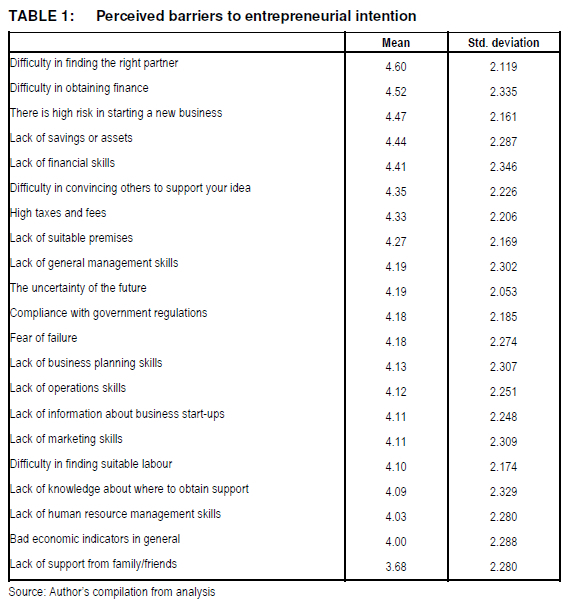
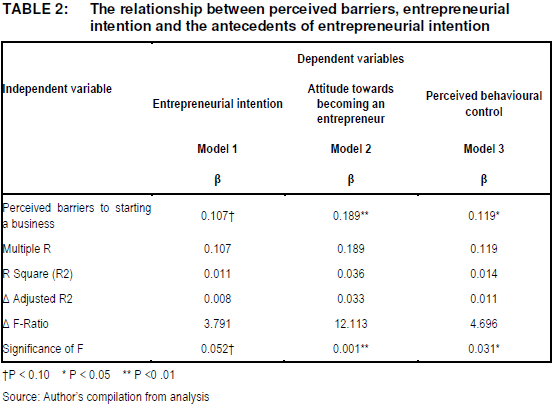
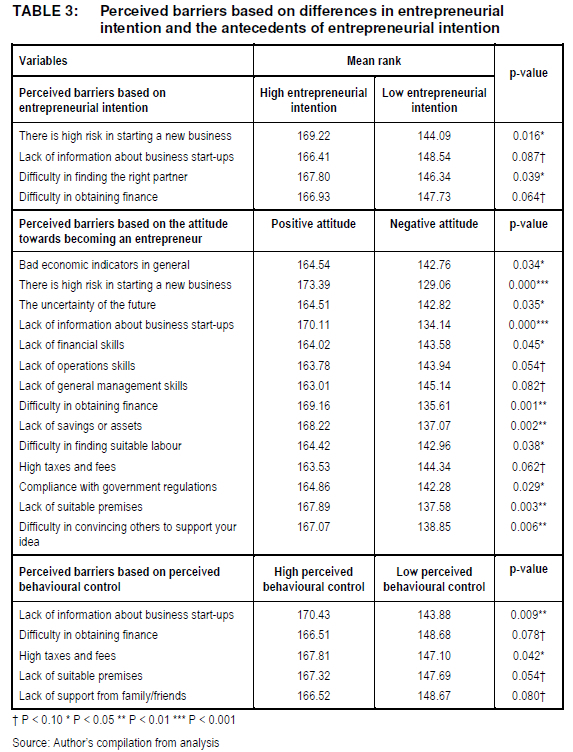
The underlying research for this article investigates the barriers to starting a business among 329 final-year commerce students in Limpopo. The study uses the theory of planned behaviour to determine the relationship between perceived barriers, entrepreneurial intention and the determinants of entrepreneurial intention, namely the attitude towards becoming an entrepreneur and perceived behavioural control. The study was carried out by means of a survey using a structured questionnaire. SPSS was used to analyse the data. The findings revealed 12 top barriers to starting a business among the respondents. Perceived barriers had a significant but very weak relationship with entrepreneurial intention, the attitude towards becoming an entrepreneur and perceived behavioural control. The results revealed significant differences in perceived barriers between the respondents who had high and low entrepreneurial intention, positive and negative attitude towards becoming an entrepreneur and high and low perceived behavioural control. The study contributes to the body of knowledge by moving beyond the identification of perceived barriers to demonstrating the relationship between these barriers and entrepreneurial intention and its antecedents. Therefore, it has extended the applicability of the theory of planned behaviour in examining how perceived barriers influence the formation of entrepreneurial intention in a South African context.
barriers to entrepreneurship; entrepreneurial intention; Limpopo; South Africa