Investigating industrial upgrading and business sustainability in the textile manufacturing industry in Zimbabwe
Abstract
The textile manufacturing industry in Zimbabwe has faced many challenges, which caused contraction of the industry. The main aim of this study was to establish how industrial upgrading could help to control market failures, improve competitiveness and sustainability to stimulate and enhance sustainable economic growth through the development of a structural model. The causal research strategy was used and the data collection tools used was focus group discussions (FGDs), questionnaires and personal interviews. Stratified random sampling method was used to select the sample size of 325 respondents in Kadoma, Glendale and Harare. Structural equation modelling (SEM) was employed and implemented through confirmatory factor analysis and estimation of the model. The results showed that the measurement model fits the data satisfactorily, and the proposed model fits well to the observed data as demonstrated by the goodness of fit indices CFI 0.86, TFI 0.84 and RMSEA 0.07. The study provided evidence that industrial upgrading could redress market failures in the textile manufacturing industry and that there is a positive correlation between industrial upgrading, competitiveness and sustainability. The study revealed that industrial upgrading could restore competitiveness in the textile manufacturing industry in Zimbabwe. On the way forward, the article is valuable to the policymakers, academics and other researchers, among others. The stakeholders will be able to apply the model to determine which specific influences are the most important for their respective business.
Business sustainability; competitiveness; industrial upgrading and textile-manufacturing-industry
1. INTRODUCTION
Zimbabwe has been experiencing an unprecedented number of economic challenges in the past decade, and this is evidenced by the underperformance of businesses across industries in the country (Mazikana, 2017). Massive deindustrialization and contraction of the companies have reached catastrophic levels, especially in the clothing and textile manufacturing industry. The textile manufacturing industry has been affected by a massive influx of cheap substandard imports; reducing the country to a simple exchange base in the region (Mastamet-Mason & Nyoni 2018). According to the Confederation of Zimbabwe Industries (2019), the contribution of the manufacturing to gross domestic product has progressively declined to 12% in 2019 from a peak of 25% between 2008-2018 and the country projected negative economic growth of 6.5% in 2019. Local industries are unable to compete globally, and it is increasingly becoming difficult to ignore the number of organisations closing down; escalating figures of unemployment and the general slowdown of the economy (Bonga 2019; Sithole, Sithole & Chirimuta 2018). Zimbabwe, like other developing nations, is not spared from high levels of unemployment, and the unemployment rate is 95% (Sinthumule & Mkumbuzi, 2019).
The Zimbabwean economy has endured financial and regulatory mismanagement, continuing cash deficiencies, high unemployment, little investment and reserves, manufacturing sluggishness, decreasing agricultural production, and soaring national and foreign debt (Kanyenze, Chitambara & Tyson 2017). The macroeconomic environment requires policies that correct this industrial setting because it is not that appealing to foreign investors, hence reduced number of foreign investors in the country (Bonga 2019). The African Development Bank Group (2018) reported that Zimbabwe's economy collapsed because of a protracted period of policy mistakes and international isolation from the rest of the world (Ojakorotu & Kamidza 2018). Industries have faced poor macroeconomic administration that has riddled the country, and a decreased supply of goods owing to the extensive price controls, which resulted in the hyperinflationary environment (World Bank 2019).
Zimbabwean companies have experienced business shrinkage characterised by company closures and the general decline in the textile manufacturing industry. The problems encountered in the country include general economic slowdown, rapid de-industrialisation and massive company closures (World Bank 2017). Over the years, the manufacturing capacity has weakened, and the trend suggests that local manufacturing organisations are failing to compete successfully with the cheap imported products (Dhliwayo 2014; Monyau & Bandara 2015). Individual nations, for example, South Africa, Zambia and Botswana, appear to be experiencing growth in the business while the manufacturing industry in Zimbabwe is contracting (African Development Bank 2014). In South Africa, companies such as Foschini, Mr Price and Truworths have successfully reduced reliance on cheap suppliers like China in favour of local manufacturers. They have decreased lead time of producing a garment to just 42 days, whereas international supply chains naturally average between 150 and 180 days (Theunissen 2020).
The continued rapid deindustrialisation threatens to make the country a mere trading outpost in the global market, and the textile-manufacturing industry has not been spared (Confederation of Zimbabwe Industries 2018). This has resulted in high unemployment rates (Confederation of Zimbabwe Industries 2015). The researcher sought to establish how industrial upgrading could help control market failures in the textile manufacturing industry to stimulate enhanced sustainable economic growth in the industry. The textile manufacturing industry is currently operating below capacity, and there is a lack of competitiveness of local products in the country (Dhliwayo 2014). The textile manufacturing industry is seriously threatened by imports that have flooded the local market. The government needs to address the macroeconomic disproportions that have caused deep regression in the structural transformation of the economy that has led Zimbabwe away from political stability and long-term economic prosperity (Kanyenze et al. 2017; Sithole et al. 2018).
A survey conducted by Odero (2018) highlighted a significant contraction in the manufacturing industry. A study by African Development Bank (2018) highlighted that the growth in the manufacturing and services industries are expected to continue to be restrained because of liquidity constraints. The two (2) studies provide evidence that there is a severe threat to the manufacturing industry's competitiveness and the reduced competitiveness of local products on the export market. The country cannot continue without a solution and the economic free fall. There is a need for organisations to come up with homegrown solutions to control market failures, increase production capacity, and contribute meaningfully to the economy (Mazikana, 2017). Strategies must be found on how to enhance economic growth and how organisations can increase productivity to compete with cheap imports from low-cost countries that have flooded the Zimbabwean textile industry (Mastamet-Mason & Nyoni 2018). The presence of cheap textile products imported from low-cost countries in Asia and second-hand clothing imported from developed countries impedes the growth of the textile manufacturing industry (Dhliwayo 2014; Monyau & Bandara 2015). The overall effect is that textile-manufacturing companies can be forced out of the market and it has become imperative that managers have to focus on strategies that enhance industrial expansion in their economies (Maloney & Nayyar 2018). According to Sithole et al. (2018), the current strategies employed in Zimbabwe's textile manufacturing industry are rigid, and the textile organisations have to become innovative by using methods that encourage growth by updating available skills to improve competitiveness in the industry. Therefore, the main aim of the study is to establish how industrial upgrading reduce market failures and enhance business sustainability in the textile manufacturing industry.
The following section presents the literature review of the study.
2.1 Business sustainability
Business sustainability is a multi-faceted concept with diverse viewpoints that can be achieved through the focused efforts on activities and processes in an organisation (Stead & Stead 2014). Schulz and Flanigan (2016) postulate that business sustainability is the formation of resilient organisations through a combined system of economic, social and environmental networks. In the past, sustainability development was related only to the environmental issues of an organisation. Brundtland Commission Report (World Commission on Environment & Development 1987) defined sustainable development the ecological and social performance of the current era without endangering the ability of future groups to meet their environmental and social needs. Sustainable development issues have evolved (Caraiani, Lungu, Dascalu & Colceag 2018). The historic Brundtland-Report gave way to the insight of sustainability by providing two (2) notions, which are the concept of needs and limitations. However, Hiller Connell and Kozar (2017) revealed that sustainability guarantees that an organisation to be feasible over an extended-term into the future. Sustainability consists of the management of the triple bottom line and embraces decision-making that concurrently takes into consideration economic, social and environmental concerns (Azevedo & Barros 2017; Bostrom & Micheletti 2016; Elkington 1997).
Mattingly (2015) and Hiller Connell and Kozar (2017), acknowledged that most organisations need to embrace the sustainability concept including governance and management processes, strategies and operations and auditing and reporting systems throughout their business processes. In their study, Schulz and Flanigan (2016) embraced business sustainability as it is crucial for the resilience of organisations over time where they are better positioned to respond to internal and external shocks of the business environment. Susanti (2017) proposes that organisations need to employ win-win-win strategies to become more responsive to competitive and strategic challenges, which are a growing concern in the world. The triple bottom line has the capability of endorsing more considerable societal value in a country (Hiller Connell & Kozar 2017; Schulz & Flanigan 2016; Slaper & Hall 2011).
Business sustainability ensures that the organisation can survive and progress into the future and by continually measuring sustainability performance over time, organisations can strengthen both their core business practices and their external communication (Caraiani et al. 2018). Industrial upgrading in the organisation reorganises the production system, applying new superior functions and improves the sustainability development to an organisation, this is achieved when better products are produced more efficiently; contributing to the sustainable growth of an organisation (Bamber, Daly, Frederick & Gereffi 2018; Cortes 2017).
Sustainability provides entirely new ways of creating and capturing value, beyond those offered just by developing greener technology or cleaner production systems, making sustainability a central element not only of the product but for the business itself (Yang, Vladimirova & Evans 2017). The upgrading of core technological competence of the enterprise will enhance market competitiveness and by establishing a more well-known product which requires the improved ability of knowledge transformation and creation (Dewen 2013).
2.2 Industrial upgrading
Economic upgrading is also known as industrial upgrading (Tian, Dietzenbacher & Jong-A-Pin 2016). Industrial upgrading has four (4) stages, namely process, product, functional and intersectoral upgrading, and firms can improve efficiency by moving from inferior value-added functions to sophisticated value-added service (Gereffi 2015). The notion of industrial upgrading is about gaining attractiveness in advanced value-added progressions (Marcato & Baltar 2017).
Sub Saharan African countries are performing below capacity equally in terms of total flows and their standing in the global value chains, and more should be done to stop deindustrialisation in the region (Frederick & Daly 2019; International Monetary Fund 2015). Industrial upgrading focuses on making better products efficiently, and if implemented, generating an increased value addition of operations in a business (Gereffi 2015). Value addition is a function of productivity. Industrial upgrading also increases the firm's production levels (Bamber et al. 2018). Business competitiveness improves the market position of an organisation which brings about efficiency. The triple bottom line generates profits which are every organisation's core business and create synergies that build a sustainable organisation which can survive in the long term by building resilience (Barrientos, Gereffi & Rossi 2018). Industrial upgrading pursues to attain a sophisticated degree of processing as well as superior value-added products and advanced technological processes, to stimulate the upgrading of manufacturing systems through technology, innovation and transformation of traditional industries (Tian et al. 2016). Industrial upgrading is a high degree of processing, high-tech processing to promote the advancement of industrial structure through technology and high expertise (Schulz & Flanigan 2016).
2.3
Product upgradingProduct upgrading aims at improving product quality and increasing value additions for consumers. The yearning for improved value addition, superior quality products and consequently, more profitable products of an organisation have led organisations to search for strategies that offer these results (Gereffi 2015). To remain competitive in the fast-changing environment, manufacturers must be able to improve their products continue to adjust to new tendencies and achieve higher profits.
2.4
Process upgradingProcess upgrading is concerned with increasing efficiency of the production system in the transformation of inputs to outputs. Process upgrading is, therefore, concerned with the redeployment of the human capital and the development of new technologies (Lema, Pietrobelli & Rabellotti 2019). Upgrading is not a one-directional process because exterior forces such as changes in the business environment or parent businesses decisions may result in partial loss of formerly gained commissions (Elteto, Magashazi, Szalavetz & Tury 2015). The prospects to improve products depend on a variety of reasons. The firm's potential for improvement can be influenced by the firm's specific attempts, activities and the environment in which firms' function. Three (3) characteristics crucially shape the firm's environment: the collective competence of the cluster in which it operates the pattern of governance of the value chain in which firms participate, and the strange features that describe learning and advancement patterns in distinct segments (Lema et al. 2019). The study investigates industrial upgrading using all four elements.
2.5
Functional upgradingBamber et al. (2018) explained that functional upgrading takes place where local firms improve their competences in marketing and sales functions and procurement processes, to increase the overall skill content of activities. The superior position can be either product design or marketing of a product. Expansion of production triggers functional upgrading in other organisations. Functional upgrading can be when the whole companies' manufacturing may be efficiently eliminated; consequently, altering the construction of the value chain or manufacturers can obtain or remodel productive volume in higher-value stages to acquire the best product's value (Blazek 2016; Gereffi 2015). Functional upgrading is improving the range of functions performed or changing the mix of operations towards higher value by abandoning existing tasks in the textile manufacturing company.
2.6
Intersectoral upgradingIntersectoral upgrading includes decomposing processes into other value chains, and it is connected to altering the production mix toward making goods and services with an increased added value. The expansion of a country's economy often moves across sections from agriculture and natural resource mining to light manufacturing of goods such as textiles, and then toward more state-of-the-art products and the service industries (Tian et al. 2016).
2.7
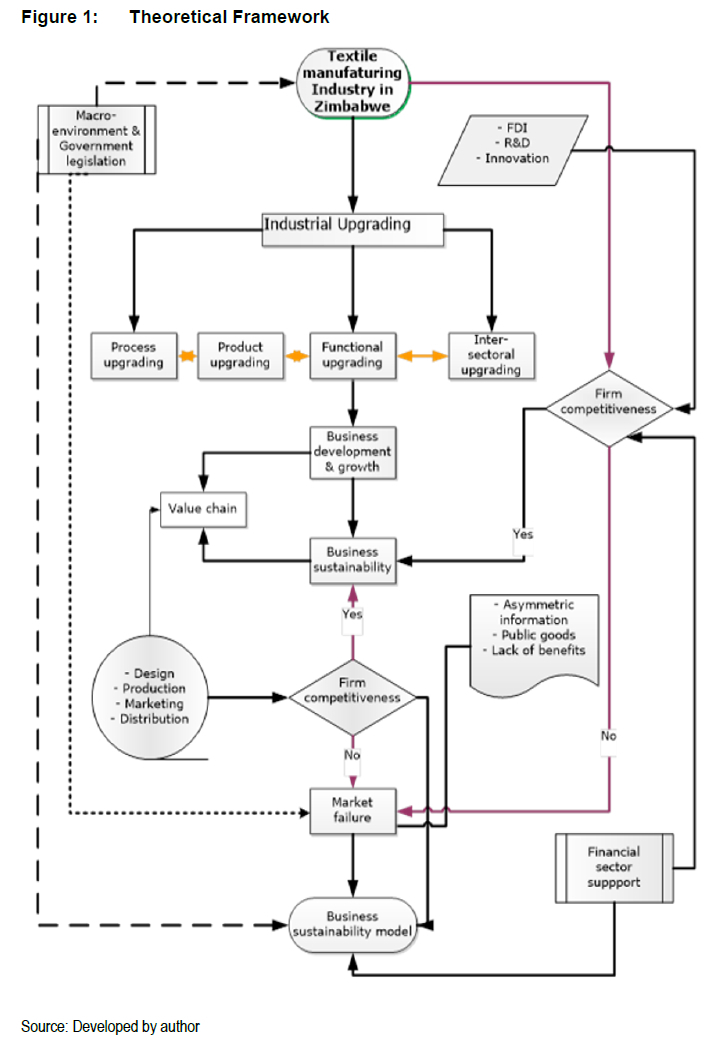
Theoretical frameworkThe proposed theoretical framework, Figure 1, illustrates pertinent theoretical views that are compared with the central theme guiding this study. Industrial upgrading was evaluated in using four (4) dimensions, which are process, product, functional and intersectoral upgrading. Thus, causal relationships exist where instrumental variable techniques for endogenous (influenced by other variables) variables can be applied. Each dimension on the framework was assessed for a likely contribution towards business sustainability and competitiveness.
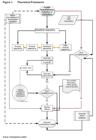
The theoretical framework in Figure 1 depicts how industrial upgrading can achieve business sustainability, enhance competitiveness and reduce market failures. The study evaluated and examined the theory and derived the link of associations among variables. The other variables are competitiveness and business sustainability. Factors causing market failure in the textile manufacturing industry are information asymmetry, public goods and lack of supportive policies in the industry. The latent variables were measured by variables which are valid in the Zimbabwean textile-manufacturing industry. Figure 1, is the theoretical framework the study was it used to assess the causal relationships of industrial upgrading, competitiveness, market failures and sustainability. The macro-environment in the textile manufacturing industry is the environment in which foreign direct investment (FDI), innovation, research, and development take place, and which improves the effectiveness of the industry (Jain & Rautela, 2018; Nyoni 2018). Market failure happens when the market has failed to align incentives and knowledge to produce an optimal consequence; this usually happens in deteriorating industries. Market failure usually causes regional unemployment, which forces the government to intervene to manage decline and limit the scale of momentary problems associated with environmental change (Furton & Martin 2019).
2.8
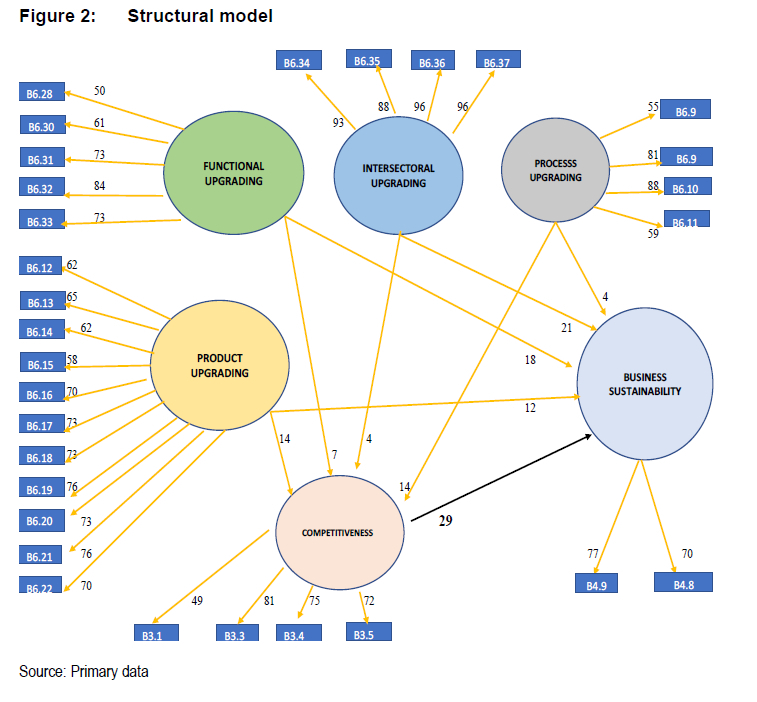
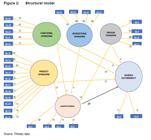
Global value chainCriscuolo and Timmis (2017) maintain that participating in global value chains (GVCs) can inspire production development through a number of channels. The value chain relationship builds responsibility and resource sharing, which enhances productivity and helps to resolve conflicts. The governance, organisation and coordination in the value chain is an essential factor as this enhances profitability in all segments along the value chain and guarantees better quality and safer products (Taglioni & Deborah 2016). The development of marketing strategies be fortified (Chakoma & Chummun 2019). In Figure 2, the Proposed Structural Model depicts the relationships between industrial upgrading, business sustainability, market failures and competitiveness in the manufacturing industry. According to Bris and Caballero (2015), industry competitiveness can attain higher market share through augmented output, which is controlled by industrial upgrading. This creates the ability for companies, industries, and nations to trade better goods and services and therefore, to grow the market share of a company (Barrientos et al. 2018). The factors and challenges that affect the competitiveness of the textile manufacturing industry were explored.
2.9
Market FailureAccording to Mihalache and Bodislav (2019) explain that if markets fail to organise production and allocate goods efficiently, they end up in market failure. A market fails when it is not resourceful and is unable to reach the required outcomes (Jackson & Jabbie 2019). However, the term market failure does not imply that there is no activity in the market, but that the market is not working efficiently and the market is failing to produce wanted goods (Jackson & Jabbie 2019; Mihalache & Bodislav 2019). The textile manufacturing industry in Zimbabwe has experienced some of these and causes the industry not to reach its full potential. Market failure causes such as imperfect information, market power, externalities or public goods were identified in the textile manufacturing industry (Mastamet-Mason & Nyoni, 2018).
3. METHODOLOGY
A causal research design was used to explore industrial upgrading constructs and their association with fostering business sustainability in Zimbabwe, together with the factors that may enhance business sustainability and competitiveness. A causal research design allowed examining and to the exploration of relationships industrial upgrading, market failure, competitiveness and business sustainability. The researcher conducted in-depth interviews with officials (senior managers or supervisors) from the Kadoma, Glendale and Harare. The senior executives and managers were chosen because they are involved in the formulation strategies in the textile manufacturing industries (Chaib Lababidi, Lababidi, Colak & Dayan 2020). The research used a simple random sampling method and selected a sample size of ten (10) key informants reached after data saturation (Saunders, Sim, Kingstone, Baker, Waterfield, Bartlam, Burroughs & Jinks 2018). The informants interviewed included executives in the textiles industry, textiles industry trading partners, textiles industry-related trade unions and regulatory bodies governing the clothing and textile manufacturing industry. Random selection of informants increased the credibility of the study and transparency of the research process (Saunders & Townsend 2018). Key informants were experts who had a more in-depth understanding of the textile manufacturing industry. This section, therefore, briefly deliberates on the measuring instruments used, the selected sampling method and the data analysis procedures that were applied.
3.1 Sampling Procedure
A stratified random sampling technique was applied to build a representative sample of respondents from the 20 organisations in the three (3) geographical areas of Harare, Glendale and Kadoma. Twenty companies from Harare, Glendale and Kadoma with a total employee population of 2088 were therefore selected based on having complete and up to date employee database records kept at Zimbabwe Textile Manufacturers Association (ZiTMA). The companies were also selected based on the distance from the researcher's location, which was reasonable enough to reduce the costs of travelling and other logistics needed to reach out to the respondents (Aschauer, Rosel, Hossinger, Kreis & Gerike 2019). The stratification variable was the position of the respondent at the place of work that had two (2) categories of either being a supervisor or a manager. Stratified random sampling was preferred because of the high precision of estimates. Stratification was based on the employee database of each of the 20 selected organisations registered with the ZiTMA and where within accessible distances of the capital city, Harare. The study administered 325 questionnaires and managed to get back 320 completed and usable questionnaires indicating a satisfactory response rate of 98% (Repousis, Lois & Veli 2019).
3.2
InstrumentsThe study used both quantitative and qualitative data collection (mixed) methods and instruments for this study. The quantitative approach was survey-based to facilitate the generation of the required empirical evidence, which is generalisable in the selected local textile industry for triangulation with qualitative findings. On the other hand, Qualitative methods include key informant, personal interviews and focus group discussions with line managers, supervisors, partners, government officials and senior executives who structure and implement business strategy. The focus group discussion participants were selected using purposive sampling, and three (3) focus group discussions FGDs were held in each of the study locations of Harare, Glendale and Kadoma. Purposive sampling was chosen because of its ability to enable the researcher to identify and select knowledgeable and experienced individuals who were available and willing to disclose experiences and opinions in the textile manufacturing industry (White, Rakotoarisoa, Cox, Close, Kotze & Watrous 2019). FGDs was deemed the most suitable for this study due to the provision of a deeper understanding of sustainability, competitiveness and industrial upgrading and allowed the researcher to capture responses economically (Nyumba, Wilson, Derrick & Mukherjee 2018). Personal Interviews were preferred for this study because of the flexibility of the collection data method, and the other benefit of interviews is the high rate of return (Creswell & Creswell 2018).
3.3
Data analysis techniquesStructural Equation Modelling (SEM) was chosen over other multivariate methods, in this study, SEM was selected for its ability to provide information on how well the model fits data (Dragan & Topolsek 2014). Furthermore, the technique was preferred for its ability to assess and investigate theoretical links, which are mostly linear relationships between research variables (Shi, Lee & Maydeu-Olivares, 2019; Civelek 2018). The results of the study were analysed using through SPSS 25 and Analysis of Moment Structure (Amos 22) software.
4. DISCUSSION OF RESULTS
The following section discusses the structural model, reliability and validity assessment and the results of the study
4.1 Structural model
The structural model demonstrates the relationships amongst the constructs in the study and the final model presented in Figure 2. Model fit measures were obtained, and the unnecessary items that existed in a latent construct were removed to achieve the unidimensional state (Mueller & Hancock 2018).
4.2 Reliability and Validity Assessment
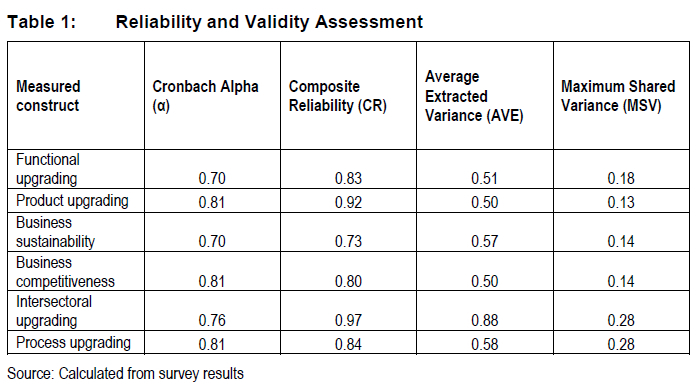
The reliability (consistency of a measure) and validity was assessed through composite reliability and discriminant validity tests. Table 1 summarises the reliability and validity coefficient of scores. The quality of evidence gathered from a sample draws on the quality and reliability of the data collection instruments accepted (Heale & Twycross 2015). Table 1 shows the data validation tests of the six constructs of the study.
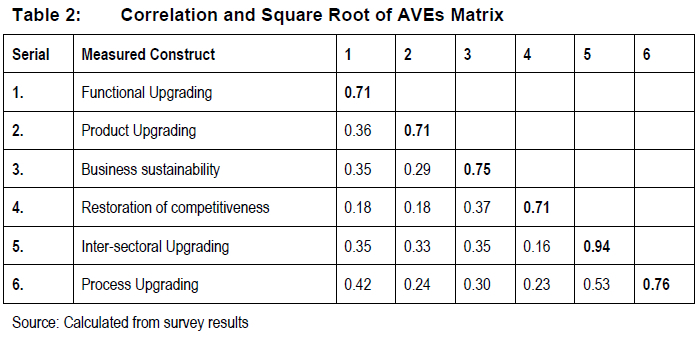
The results in Table 1 indicate that Cronbach's Alpha for the constructs ranged from 0.700.81 and values are within the acceptable range of at least equal to 0.70. Cronbach Alpha was used to assess the reliability of the constructs. According to Taber (2018), good reliability of scales acceptable is a Cronbach's coefficient alpha of 0.70 and above. Therefore, the Cronbach Alpha coefficient presented in Table 1 indicates excellent reliability results that show that the constructs ranged from 0.73-0.97, indicating excellent reliability which is above the set limit. Discriminant Validity was measured using Average Extracted Variance (AVE), and the recommended cut-off is greater than or equal to 0.5. Maximum Shared Variance (MSV) coefficient measures discriminant validity and a coefficient lower that AVE values are considered as acceptable, and the recommended minimum threshold is 0.6 (Heale & Twycross 2015). The results indicate excellent reliability of the scales shown by AVE and MSV above the recommended threshold. Table 2 indicates the correlation and the square root of AVEs matrix used to describe discriminant validity.
Table 2 displays discriminant validity values. The discriminant validity is guaranteed since all the correlation coefficients of all constructs are lower than the figures in bold.
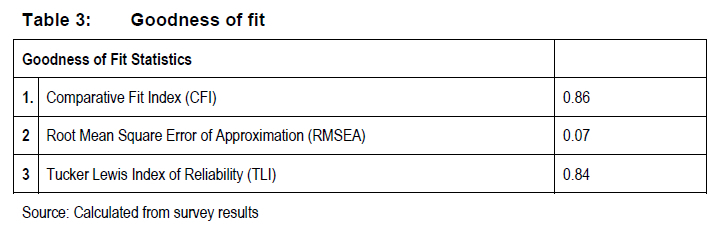
Indicated in Table 3 are the thresholds for the fitness of the measurement model showing that the recommended parameter values thresholds were met. The goodness of fit for the measurement model was verified using the Comparative Fit Index (CFI) and Tucker Lewis Index (TLI) and Root Mean Square Error of Approximation (RMSEA). Literature suggests that CFI and TLI >0.8 and small RMSEA < 0.05 (Mueller & Hancock 2018; Rose, Markman & Sawilowsky 2017). The overall structural model shows a good fit indicated by these indices CFI 0.86, TLI 0.84 and RMSEA 0.07, as shown in Table 3. The model explained about 100% (CD=1.00) of the variation in business sustainability, competitiveness and industrial upgrading.
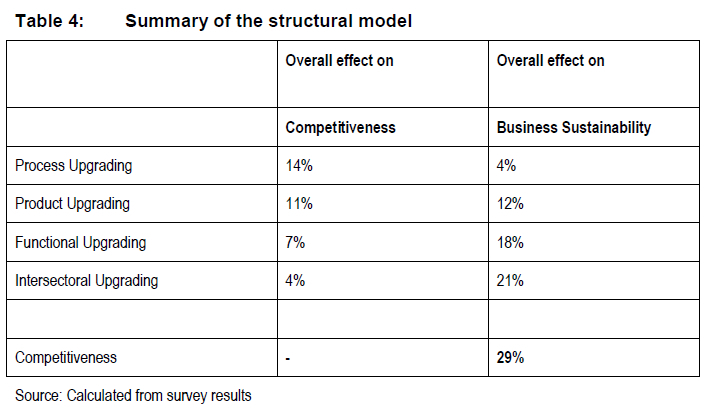
Table 4 shows a summary of the structural model, where the most significant contributor to restoring competitiveness is process upgrading (14%), and the least contributor is intersectoral upgrading (4%). The results indicate that intersectoral upgrading is the key contributor to improving organisational competitiveness; an improvement in competitiveness improves business sustainability.
Business sustainability results show that Intersectoral Upgrading is the highest contributor to business sustainability, while Process Upgrading was the least contributor (4%) to business sustainability. The results indicate that industrial upgrading improves this, in turn, improves the overall position of the organisation, which becomes a sustainable organisation, which can survive in the future.
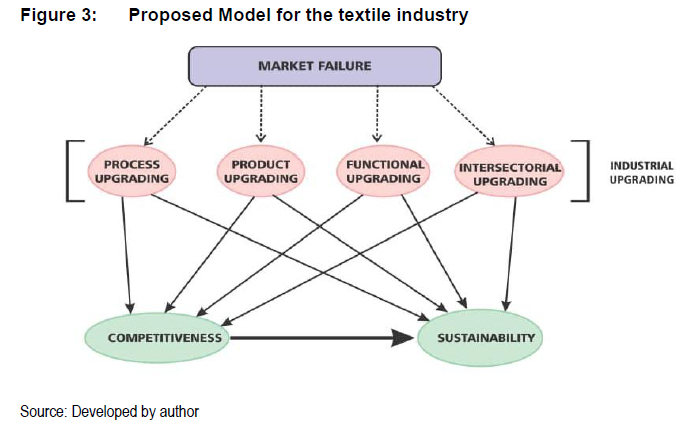
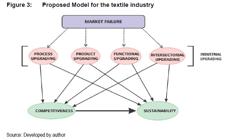
Figure 3 shows a proposed model that suggests how the textile manufacturing industry can become more competitive and sustainable in Zimbabwe. In terms of macro and micro levels, an enterprise's competitiveness is dictated by its ability to modernise, the ability to meet the needs of the market, and flexibility to challenges from competitors.
4.3 Results of the study
Causal relationships were explored to determine how industrial upgrading can increase business sustainability and competitiveness in the textile manufacturing industry in Zimbabwe. Based on the analysis of the research data of the study, there is a positive correlation between industrial upgrading, competitiveness and sustainability.
4.3.1 Process Upgrading Increases Competitiveness of a textile manufacturing company
Results show that Process Upgrading with a beta coefficient of 0.144 and p-value of 0.036 (below 0.05) has a positive and significant influence on restoring competitiveness. The results pointed out that process upgrading increases the competitiveness of an organisation.
As Process Upgrading increases by one standard deviation, competitiveness goes up by 0.144. The results provided evidence that Process Upgrading increases the effectiveness of production either through the improved organisation of the manufacturing process or the usage of better-quality machinery. Previous research had pointed out that Process Upgrading increases the efficiency of production in an organisation (Charles 2019).
4.3.2 Product Upgrading Increases the Competitiveness of a textile manufacturing company
The individual component of industrial upgrading indicates that the standardised estimate path coefficient for the hypothesised relationship shows that Product Upgrading has a positive and significant influence on restoring competitiveness. This is shown a beta coefficient value of 0.108 and a p-value of 0.036; however when the product upgrading increases by one standard deviation the competitiveness goes up 0.108 of its standard deviation. The results show that Product Upgrading increases the competitiveness of a textile manufacturing company. By improving the product line and quality of a product, this has a direct effect on restoring the competitiveness of an organisation. Elteto et al. (2015) made similar observations on how the four types of industrial upgrading were linked and derived from each other.
4.3.3 Functional Upgrading Increases Competitiveness of a textile manufacturing company
Study results also show that Functional Upgrading has a significant effect on restoring competitiveness. This is demonstrated by the beta coefficient value of 0.073 and p-value 0.045 less than the threshold of 0.05. The result shows a positive and significant relationship, which indicates that an increase in Functional Upgrading by one standard deviation, competitiveness goes up by 0.073, and they validate the hypothesised relationship. The results show that Functional Upgrading controls the level of restoring organisational competitiveness in an organisation. The results reveal that the development of capabilities or acquisition of new functions (mix of products) increases the competitiveness of a company shown by an increase in value addition which in turn increases the competitiveness of an organisation. Functional upgrading increases competitiveness in the form of acquiring new superior functions in the organisation. Previous studies by Mohan (2018) pointed out that industry policies incentivised functional upgrading, and they encouraged a competitiveness profile in value-added packaged products, which stimulated forward linkages helping to trigger broad-based economic development.
4.4 Business Sustainability
The following section presents the relationships identified in this study:
4.4.1 Process Upgrading Improves Business Sustainability of a textile manufacturing company
The hypothesised relationship shows that Process Upgrading has a positive and significant effect on business sustainability. This is indicated by a beta coefficient of 0.045 and p-value of 0.026, which is less than 0.05. Therefore, when Process Upgrading increases by one standard deviation, Business Sustainability increases by 0.026 of its standards. The result reveals that an increase in process upgrading manages to improve business sustainability. The result shows a positive relationship with sustainability upgrading processes leads to an escalation of local institutional ability (Pipkin & Fuentes 2017). The results give evidence that process upgrading is altering inputs into outputs more proficiently, thereby reducing manufacturing costs caused by production inefficiencies in an industry (Elteto et al. 2015).
4.4.2 Product Upgrading Improves Business Sustainability
Results show that Product Upgrading with a beta coefficient of 0.120 and p-value of 0.009 has a significant influence on business sustainability. The results indicate that as Product Upgrading increase by one standard deviation Business Sustainability increases by 0.12. The results reveal that Product Upgrading improves the level of business sustainability in an organisation.
4.4.3 Functional Upgrading Improves Business Sustainability
The standardised estimated path coefficient for the hypothesised relationship indicates that Functional Upgrading has a significant relationship with business sustainability. The relationship was indicated by the beta coefficient value of 0.182 and a p-value (0.004) less than 0.05. Studies by Alavi, Moshiri and Sattarifar (2016) and Elteto et al. (2015), highlight that functional upgrading enables product upgrading and can lead to additional blue-collar employment. The findings revealed that Functional Upgrading increases the growth of the business. The discussions made by Mohan (2018), show that functional upgrading is a strategy of economic empowerment when equipped with supportive policies, can succeed in improving livelihoods and triggering economic growth in an industry.
4.4.4 Inter-Sectorial Upgrading show positive effect on Business Sustainability
The standardised estimated path coefficient for the hypothesised relationship indicates that Intersectoral Upgrading has an insignificant relationship with business sustainability. The results are indicated by the beta coefficient value of 0.206 and a p-value (0.05) which is equal to 0.05 thresholds. The results reveal that through Intersectoral Upgrading as a firm obtains added skill, knowledge, or know-how exact to the new product, it improves the performance of the business by applying the new capabilities and this has an immediate impact on the level of business sustainability of the organisation.
4.4.5 Competitiveness has a Positive Effect on Business Sustainability
The reported standardised estimate path coefficient for the hypothesised relationship shows that Restoring competitiveness has a significant favourable influence on Business Sustainability. This is indicated by the beta coefficient value of 0.286 and p-value of (0.002) lower than 0.05, meaning that when competitiveness increases by one standard deviation, Business Sustainability increases by 0.286. The governments and public agencies must promote industrial cohesion to kindle the upgrading of the modern interface (Li, Xue & Huang 2018).
4.4.6 Predictor of Business Sustainability for the textile manufacturing companies
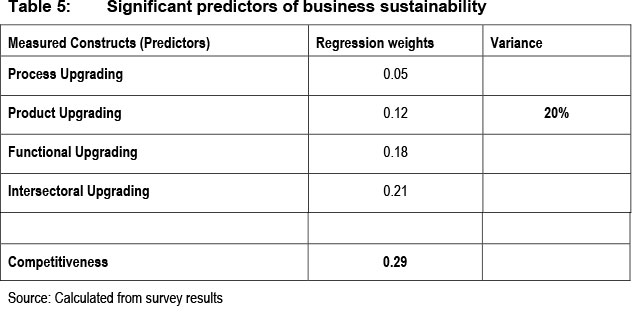
The objective of the study was to evaluate how the textile manufacturing companies can restore competitiveness and analyse how industrial upgrading could achieve business sustainability. The relationship between industrial upgrading and business sustainability was measured by a variable such as a Process Upgrading, Process Upgrading, Functional Upgrading and Intersectoral Upgrading. According to Table 5, the five variables predict business sustainability; these are Intersectoral Upgrading, Product Upgrading, Process Upgrading, Functional Upgrading and competitiveness.
The highest predictor is restoring competitiveness indicated by the regression weight of 0.29, with the lowest in regression weights being process upgrading 0.05. The impact of this variable is high; recording a figure of 20% variance explained of business sustainability. If companies can boost business sustainability, they should develop a measure that improves Intersectoral Upgrading, Product Upgrading, Process Upgrading, Functional Upgrading, and competitiveness in the organisation. An improvement on inter-sectoral Upgrading, Product Upgrading, Process Upgrading, Functional Upgrading, and competitiveness will improve business sustainability by 20%. The organisation should aim at improving their processes, product and functions of the business to enhance the performance of the company. Industrial upgrading increases efficiency, thereby fostering competitiveness, which presents itself as the capability of firms to sell products and services and improve market standing. Andreoni (2016) demonstrate how the competitiveness of firms rely on the business environment and the level of sophistication of organisational operations in addition to inter-enterprise cooperation. The creation of an enabling business environment can be assessed from the position of policy and an institutional perspective.
The proposed structural model to assist the textile manufacturing industry in Zimbabwe indicates that there is a relationship between industrial upgrading, competitiveness and business sustainability. The relationship suggests that the moment that industrial upgrading is chosen as a strategy; it improves the performance of the organisation (Mohan 2018). The performance then improves the competitiveness and sustainability of the company. When market failure is corrected, it improves the competitiveness of the industry (Marcato & Baltar 2017)
5. SUMMARY OF FINDINGS
The following section presents the summary of findings
5.1
Industrial Upgrading has a positive effect on business sustainabilityIndustrial upgrading was evaluated using four dimensions Figure 3, and each dimension was assessed for the magnitude of its likely contribution towards business sustainability. For every unit change in Functional Upgrading, business sustainability is expected to increase by 18%. Every unit increase in Product Upgrading is likely to increase business sustainability by 12%, while Intersectoral Upgrading is only anticipated to increase business sustainability by 21%. Directly, Process Upgrading is expected to improve business sustainability by 4% for every unit increase; however, it directly restores competitiveness by 14%. Then when competitiveness is restored, it improves Business Sustainability by 29% by every unit increase. The results show that industrial upgrading achieves business sustainability. The factors, which had high loadings (> .60), were efficient production of existing products and services and more capabilities for product and service diversification and attraction of foreign direct investment. For every unit increase, inefficient increased business sustainability by 70%; as diversification & foreign direct investment increased by a unit, business sustainability increased by 77%.
5.2
Industrial Upgrading Increases CompetitivenessIndustrial upgrading was evaluated in four dimensions were assessed for the magnitude of its likely contribution towards restoring competitiveness. For every unit change in Functional Upgrading, business competitiveness is likely to increase by 7%. Every unit increase in Product Upgrading is likely to increase business competitiveness by 11%, while Intersectoral Upgrading is only likely to increase business competitiveness by 4%. Directly, Process Upgrading is likely to improve business competitiveness by 14% for every unit increase. The results show that when competitiveness is restored, it then improves Business sustainability by 29% by every unit increase. The results show that industrial upgrading increases competitiveness. The factors which had high loadings (> .60) increased productivity, increase in the industrial expansion adapting to market changes and structure and adoption of high technology. For every unit increase in the industrial expansion increased business sustainability by 81%; as adapting to market changes and system increased by a unit, business sustainability increased by 75%. For every increase in the unit of adoption of high technology, business sustainability increases by 72%. For every increase in productivity, competitiveness increases by 49%. The overall results indicate that industrial upgrading increases competitiveness which in turn improves business sustainability by 29%.
According to data, the factors that characterise Process Upgrading were a high degree of processing, sophisticated product lines and reduction of delivery times. If these drivers are improved, then business sustainability is achieved. Factors driving Product Upgrading were making products more efficiently and cheaply, moving into sophisticated product lines and meeting the demands of the buyers. Reorganising the production system was also mentioned as one of the drivers. Factors driving Functional Upgrading were found to be as follows: more integrated production system, specialising and use of market niches. Another driver is designing, marketing and branding stages of the value chain.
Factors affecting the intersectoral upgrading drivers are moving horizontally into the new supply chain, which requires similar knowledge and skill and moving into new productive activities. The four types of industrial upgrading often overlap or derive from one another. Industrial upgrading can be voluntary, where subsidiaries fulfil more intricate tasks. However, functional upgrading can be realised in other functions (Elteto et al. 2015). Product and process upgrading are strongly interrelated, and when a firm upgrades through product and process, it upgrades within its production system. When an organisation upgrades beyond production, it is functional (Kummritz, Taglioni & Winkler 2017; Marcato & Baltar, 2017).
6. MANAGERIAL IMPLICATIONS
Managers are encouraged to increase the effectiveness of the production system either by improving the organisation of the manufacturing process using better-quality textile machinery. Companies in the textile manufacturing industry need to continually update and advance their technology, to keep abreast with production efficiency for the growth of the industry. The technology update can help expand market share and generate business on the global market. Continuous improvement of the product mix is required for textile manufacturing companies to increase value for money for the customers and to improve the competitiveness of the organisations in the industry. The textile companies need to develop a new mix of products or by improving the product line and quality of a product to succeed and trigger economic growth in an industry.
An organisation's competitiveness is dictated by its ability to modernise, the ability to meet the needs of the market, and flexibility to challenges from competitors. Adapting to market changes and continuous investment in textile technology expands the business sustainability of an organisation. The textile industry managers should obtain added skill, knowledge, or expertise to develop their products, which improves the performance of the business by applying the new capabilities and this has an immediate impact on the level of business sustainability of the organisation. Managers should encourage industrial cohesion to stimulate the upgrading by improving production efficiency, thereby reducing manufacturing costs caused by production inefficiencies in the textile manufacturing industry. When the cost of production is reduced, the industry can compete with products from low-cost countries. Managers in the textile manufacturing industry should reduce product delivery times to achieve optimal performance in the textile manufacturing industry. Textile products should be produced more efficiently, economically, and effectively meeting the demands of the buyers.
7. RECOMMENDATIONS
This study focused on how industrial upgrading can help contain market failures and enable companies to gain sustainable economic growth. Based on the findings of this study, the following recommendations are presented:
There is need for the textile manufacturing industry managers to engage the government on protective policies, which can nurture the development of the industry for the industry to be in a position to compete successfully with foreign players in the market. There is a severe need for the textile manufacturing industry to continuously engage the government and advocate for tariff reduction on imported raw materials and protective policies to improve the competitiveness of the textile manufacturing industry. The textile-manufacturing managers have to advocate for policies, which can protect the industry from competing with cheap inferior quality products. Importation of textile products needs to be monitored so that all products that can be made in the country are prohibited from entering the country. The textile manufacturing industry needs to adopt manufacturing policies that change its industry construction and promote financial growth. In addition, local businesses need to employ inventive and critical advertising tactics and get closer to the prevailing persuasive marketing strategic practices which are appropriate for the dominant economic and political setting (Mastamet-Mason & Nyoni, 2018). Given this reality, one of the most practical solutions would be to continuously encourage industrial upgrading in the textile manufacturing industry to improve the industry's performance and enhance industrial development (Wang, Lu, & Hung 2020). This may protect the industry and ensure that it achieves sustainability in the future.
8. CONCLUSION
The broad objective of the study managed to establish how industrial upgrading achieves business sustainability in the textile manufacturing industry in Zimbabwe. The study statistically discovered that industrial upgrading could help to control market failures, improve competitiveness and business sustainability in the textile manufacturing industry to stimulate and enhance sustainable economic growth. Significant findings of the research reveal that industrial upgrading increases the competitiveness of the organisation, thereby increasing the sustainability of an organisation.
REFERENCES
2. LITERATURE REVIEW
-
AFRICAN DEVELOPMENT BANK. 2014. Southern Africa Quarterly Overview and Analysis. Technical report, African Development Bank, Harare. [Internet:https://www.afdb.org/fileadmin/uploads/afdb/Documents/Project-and-Operations/Southern_Africa_Quarterly_Report_2nd_Quarter-2014_Issue_No.13_-11_2014.pdf; downloaded on 11 September 2020.
» https://www.afdb.org/fileadmin/uploads/afdb/Documents/Project-and-Operations/Southern_Africa_Quarterly_Report_2nd_Quarter-2014_Issue_No.13_-11_2014.pdf -
]
» https://www.afdb.org/fileadmin/uploads/afdb/Documents/Publications/African_Economic_Outlook_2018_-_EN.pdf -
]
» https://doi.org/10.7312/noma18050-009 -
ALAVI SE, MOSHIRI S & SATTARIFAR M. 2016. An Analysis of the efficiency of the monetary and fiscal policies in Iran economy using IS-MP-AS model. Procedia Economics and Finance 36:522-531. (DOI:https://doi.org/10.1016/S2212-5671(16)30066-1.
» https://doi.org/10.1016/S2212-5671(16)30066-1 -
)
» http://dx.doi.org/10.3926/jiem.1996 - )
-
ASCHAUER F, ROSEL I, HOSSINGER R. KREIS HB & GERIKE R. 2019. Time use, mobility and expenditure: an innovative survey design for understanding individuals' trade-off processes. Transportation 46(2):307-339. (DOI:https://doi.org/10.1007/s11116-018-9961-9.
» https://doi.org/10.1007/s11116-018-9961-9 -
)
» https://mpra.ub.uni-muenchen.de/94759/1/MPRA_paper_94759.pdf -
)
» https://www.imd.org/uupload/imd.website/wcc/Fundamentals.pdf -
BAMBER P, DALY J, FREDERICK S & GEREFFI G. 2018. The Philippines: A Sequential Approach to Upgrading in Manufacturing Global Value Chains. En Nathan D, Tewari M & Sarkar S. Eds. Development with Global Value Chains. Upgrading and Innovation in Asia (pp 107-131). Cambridge: Cambridge University Press. (DOI:https://doi.org/10.1017/9781316221730.
» https://doi.org/10.1017/9781316221730 -
)
» https://doi.org/10.1002/jsc.2325 -
BLAZEK J. 2016.Towards a typology of repositioning strategies of GVC/GPN suppliers: the case of functional upgrading and downgrading. Journal of Economic Geography. (DOI:https://doi.org/10.1093/jeg/lbv044.
» https://doi.org/10.1093/jeg/lbv044 -
)
» http://country.eiu.com/article.aspx?articleid=523703036 -
]
» https://drive.google.com/file/d/1iauCFXHjs3XX-JfQYWSk6twk48lURK5t/view -
BOSTROM M & MICHELETTI M. 2016. Introducing the sustainability challenge of textiles and clothing. Journal of Consumer Policy 39(4):367-375. (DOI:https://doi.org/10.1007/s10603-016-9336-6.
» https://doi.org/10.1007/s10603-016-9336-6 - )
-
]
» https://ideas.repec.org/p/hal/journl/hal-01134863.html -
CARAIANI C, LUNGU CI, DASCALU C & COLCEAG F. 2018. The Triple Bottom Line (TBL) Approach from the Accounting and Performance Measurement Perspective. In Operations and Service Management: Concepts, Methodologies, Tools, and Applications. IGI Global. (pp 785-808). (DOI:https://doi.org/10.4018/978-1-5225-3909-4.ch037.
» https://doi.org/10.4018/978-1-5225-3909-4.ch037 - )
-
)
» https://doi.org/10.21845/comp/2015/1/1 -
CHAKOMA I & CHUMMUN BZ. 2019. Forage seed value chain analysis in a sub-humid region of Zimbabwe: perspectives of smallholder producers. African Journal of Range and Forage 36(2):56-89. (DOI:https://doi.org/10.2989/10220119.2018.1546229.
» https://doi.org/10.2989/10220119.2018.1546229 -
)
» https://doi.org/10.1007/s11127-018-0623-4 - CHARLES D. 2019. Enhancing and Capturing More Value from the Caribbean Community's Value Chains. Newcastle, UK: Cambridge Scholars Publishing.
-
CIVELEK M. 2018. Essentials of Structural Equation Modelling. Lincoln: University of Nebraska Lincoln-Zea Books. (DOI:https://doi.org/10.13014/k2sj1hr5.
» https://doi.org/10.13014/k2sj1hr5 - )
- ]
-
CONFEDERATION OF ZIMBABWE INDUSTRIES. 2018. Manufacturing Survey Report: The Annual CZI Manufacturing Industry Survey. [Internet:https://www.financialgazette.co.zw/wp-content/uploads/2019/05/CZI-MAGAZINE.pdf; downloaded on 02 November 2020.
» https://www.financialgazette.co.zw/wp-content/uploads/2019/05/CZI-MAGAZINE.pdf - ]
-
]
» https://doi.org/10.3390/su10093039 -
CORTES A. 2017. A Triple Bottom Line Approach for Measuring Supply Chains Sustainability Using Data Envelopment Analysis. European Journal of Sustainable Development 6(3):119-119. (DOI:https://doi.org/10.14207/ejsd.2017.v6n3p119.
» https://doi.org/10.14207/ejsd.2017.v6n3p119 -
)
» http://www.eco.unicamp.br/docprod/downarq.php?id=3557& tp=a -
CRISCUOLO C & TIMMIS J. 2017. The Relationship between Global Value Chains and Productivity. International Productivity Monitor, Centre for the Study of Living Standards 32(2):61-83. [Internet:http://www.csls.ca/ipm/32/Criscuolo_Timmis.pdf; downloaded on 02 November 2020.
» http://www.csls.ca/ipm/32/Criscuolo_Timmis.pdf -
]
» http://store.ectap.ro/articole/1388.pdf -
]
» www.africaeconomicoutlook.org - DHLIWAYO CL. 2014. Monetary Policy Statement for 2013. Harare: Reserve Bank of Zimbabwe (RBZ).
-
)
» https://www.afdb.org/fileadmin/uploads/afdb/Documents/Generic-Documents/country_notes/Zimbabwe_country_note.pdf - ELKINGTON J. 1997. Cannibals with Forks: The Triple Bottom Line of 21st Century Business. Conscientious Commerce. Oxford, UK: Capstone Publishing.
-
)
» https://doi.org/10.22237/jmasm/1493597040 -
FREDERICK S & DALY J. 2019.Pakistan in the Apparel Global Value Chain. Duke Global Value Chains Centre, Duke University. [Internet:https://gvcc.duke.edu/wp-content/uploads/Pakistan_Apparel_GVC_Report_2019.pdf; downloaded on 20 September 2020.
» https://gvcc.duke.edu/wp-content/uploads/Pakistan_Apparel_GVC_Report_2019.pdf - ]
-
)
» https://doi.org/10.1177/0013164418783530 - GEREFFI G. 2015. Global value chains, development and emerging economies. Global Value Chains, Development and Emerging Economies.
- HEALE R & TWYCROSS A. 2015. Validity and reliability in quantitative studies. Evidence-based nursing. Trilogue: Higher Education.
-
HILLER CONNELL KY & KOZAR MJ. 2017. Introduction to a special issue on sustainability and the triple bottom line within the global clothing and textiles industry. Fashion and Textiles 4. (DOI:10.1186/s40691-017-0100-6.
» https://doi.org/10.1186/s40691-017-0100-6 -
)
» https://doi.org/10.1007/s11165-016-9602-2 - JACKSON E & JABBIE M. 2019. Understanding market failure in the developing country context. In Decent Work and Economic Growth: Encyclopaedia of Sustainable Development Goals. Cham, Switzerland: Springer Nature.
-
KANYENZE G, CHITAMBARA P & TYSON J. 2017. The outlook for the Zimbabwean economy. Supporting Economic Transformation, London. [Internet:http://set.odi.org/wp-content/uploads/2017/08/SET-Outlook-for-Zimbabwe-Economy_Sep2017.pdf; downloaded on 20 August 2020.
» http://set.odi.org/wp-content/uploads/2017/08/SET-Outlook-for-Zimbabwe-Economy_Sep2017.pdf - ]
- LEMA R, PIETROBELLI C & RABELLOTTI R. 2019. Innovation in global value chains. In Handbook on Global Value Chains. Edward Elgar Publishing.
- )
-
MALONEY WF & NAYYAR G. 2018. Industrial policy, information and government capacity. The World Bank Research Observer 33(2):189-217. (DOI:https://doi.org/10.1093/wbro/lkx006.
» https://doi.org/10.1093/wbro/lkx006 - )
- ]
- MASTAMET-MASON A & NYONI AB. 2018. The prevalence of the second-hand clothing trade in Sub-Saharan Africa: lessons for the textiles and apparel industries in the region - Chapter 12:200. In the Arts and Indigenous Knowledge Systems in a Modernized Africa.
-
MATTINGLY JE. 2015. Corporate social performance: A review of empirical research examining the corporation-society relationship using Kinder, Lydenberg, Domini social rating data. Business & Society 3:54. (DOI:https://doi.org/10.1177/0007650315585761.
» https://doi.org/10.1177/0007650315585761 - )
-
MAZIKANA AT.2017. Zimbabwe is Currently Experiencing a De-Industrialization Trend. Discussing the Causes of De-Industrialization in Zimbabwe and Offering Suggestion on How the Country Can Reverse the Trend. (DOI:http://dx.doi.org/10.2139/ssrn.2929593.
» http://dx.doi.org/10.2139/ssrn.2929593 - )
- ]
- MOHAN S. 2018. Value Chain Upgrading for Competitiveness and Sustainability: A Comparative Study of Tea Value Chains in Kenya, Sri Lanka and Nepal. Geneva: International Centre for Trade and Sustainable Development (ICTSD).
- ]
- MUELLER R & HANCOCK G. 2018. Structural equation modelling. In The Reviewer's Guide to quantitative methods in the social sciences. Routledge: Sage Publications.
- NYONI T. 2018. Box-Jenkins ARIMA approach to predicting net FDI inflows in Zimbabwe. Munich: University Library.
-
NYUMBA T, WILSON K, DERRICK C & MUKHERJEE N. 2018. The use of focus group discussion methodology: Insights from two decades of application in conservation. Methods in Ecology and Evolution 9(1):20-32. (DOI:https://doi.org/10.1111/2041-210x.12860.
» https://doi.org/10.1111/2041-210x.12860 - )
- ]
-
OJAKOROTU V & KAMIDZA R. 2018. Look East Policy: The Case of Zimbabwe-China Political and Economic Relations since 2000. India Quarterly 74(1):17-41. (DOI:https://doi.org/10.1177/0974928417749642.
» https://doi.org/10.1177/0974928417749642 - )
-
PIPKIN S & FUENTES A. 2017. Spurred to Upgrade: A Review of Triggers and Consequences of Industrial Upgrading in the Global Value Chain Literature. World Development Elsevier 98(C):536-554. (DOI:https://doi.org/10.1016/j.worlddev.2017.05.009.
» https://doi.org/10.1016/j.worlddev.2017.05.009 - )
-
REPOUSIS S, LOIS P & VELI V. 2019. An investigation of the fraud risk and fraud scheme methods in Greek commercial banks. Journal of Money Laundering Control. (DOI:https://doi.org/10.1108/jmlc-11-2017-0065.
» https://doi.org/10.1108/jmlc-11-2017-0065 - )
- )
-
SAUNDERS B, SIM J, KINGSTONE T, BAKER S, WATERFIELD J, BARTLAM,B, BURROUGHS H & JINKS C. 2018. Saturation in qualitative research: exploring its conceptualisation and operationalisation. Quality & quantity 52(4):1893-1907. (DOI:https://doi.org/10.1007/s11135-017-0574-8.
» https://doi.org/10.1007/s11135-017-0574-8 - )
-
SCHULZ SA & FLANIGAN RL. 2016. Developing competitive advantage using the triple bottom line: A conceptual framework. Journal of Business & Industrial Marketing 31(4):449-458. (DOI:https://doi.org/10.1108/jbim-08-2014-0150.
» https://doi.org/10.1108/jbim-08-2014-0150 - )
- )
-
SINTHUMULE NI & MKUMBUZI SH. 2019. Participation in community-based solid waste management in Nkulumane suburb, Bulawayo, Zimbabwe. Resources 8(1):30. (DOI:https://doi.org/10.3390/resources8010030.
» https://doi.org/10.3390/resources8010030 - )
-
SITHOLE L, SITHOLE MJ & CHIRIMUTA C. 2018. Marketing challenges experienced by small-to-medium enterprises over formal clothing industries in Harare, Zimbabwe. Cogent Social Sciences 4(1):1488234. (DOI:https://doi.org/10.1080/23311886.2018.1488234.
» https://doi.org/10.1080/23311886.2018.1488234 - )
-
SLAPER TF & HALL TJ. 2011. The triple bottom line: What is it, and how does it work. Indiana Business Review 86(1):4-8. [Internet:http://web.mit.edu/afs.new/athena/course/2/2.813/www/readings/TripleBottomLine.pdf; downloaded on 20 October 2020.
» http://web.mit.edu/afs.new/athena/course/2/2.813/www/readings/TripleBottomLine.pdf - ]
-
STEAD JG & STEAD WE. 2014. Building spiritual capabilities to sustain sustainability-based competitive advantages. Journal of Management, Spirituality & Religion 11(2):143-158. (DOI:https://doi.org/10.1080/14766086.2013.832359.
» https://doi.org/10.1080/14766086.2013.832359 - )
- SUSANTI T. 2017. Developing competitive, sustainable manufacturing in the Indonesian textile industry. Duke University . (Doctoral dissertation.
- )
- )
- TAGLIONI D & DEBORAH W. 2016. Making global value chains work for development. Washington DC: The World Bank.
-
THEUNISSEN G. 2020. 'Made in SA, not China.' Why Foschini, Mr Price and Truworths now want local clothes. Business Insider South Africa. [Internet:https://www.businessinsider.co.za/foschini-mr-price-truworths-are-moving-away-from-chinese-imports-2020-10; downloaded on 17 October 2020.
» https://www.businessinsider.co.za/foschini-mr-price-truworths-are-moving-away-from-chinese-imports-2020-10 - ]
-
TIAN K, DIETZENBACHER E & JONG-A-PIN R. 2016. Measuring Industrial Upgrading in Global Value Chains: A Latent Variables Approach. (DOI: https://doi.org/10.1080/09535314.2019.1610728.
» https://doi.org/10.1080/09535314.2019.1610728 - )
-
WANG SX, LU WM & HUNG SW. 2020. Industrial upgrading efficiency and free markets in emerging economies: A two-stage meta-frontier approach. Managerial and Decision Economics 41(6):1084-1095. (DOI:https://doi.org/10.1002/mde.3172.
» https://doi.org/10.1002/mde.3172 - )
-
WHITE MC, RAKOTOARISOA T, COX NH, CLOSE KL, KOTZE J & WATROUS A. 2019. A mixed-method design evaluation of the SAFE obstetric anaesthesia course at 4 and 12-18 months after training in the Republic of Congo and Madagascar. Anaesthesia and analgesia 129(6):1707. (DOI:https://doi.org/10.1213/ane.0000000000004329.
» https://doi.org/10.1213/ane.0000000000004329 - )
- WORLD BANK. 2017. The state in the economy. Zimbabwe economic update: no. 2. Washington, DC: World Bank Group.
- WORLD BANK. 2019. Zimbabwe Overview. Washington, DC: World Bank Group.
-
YANG M, VLADIMIROVA D, & EVANS S. 2017. Creating and Capturing Value through Sustainability: The Sustainable Value Analysis Tool A new tool helps organisations discover opportunities to create and capture value through sustainability. Research-Technology Management 60(3):30-39. (DOI:https://doi.org/10.1080/08956308.2017.1301001.
» https://doi.org/10.1080/08956308.2017.1301001