The dimensions of perceived risk among youth consumers of mobile money
Abstract
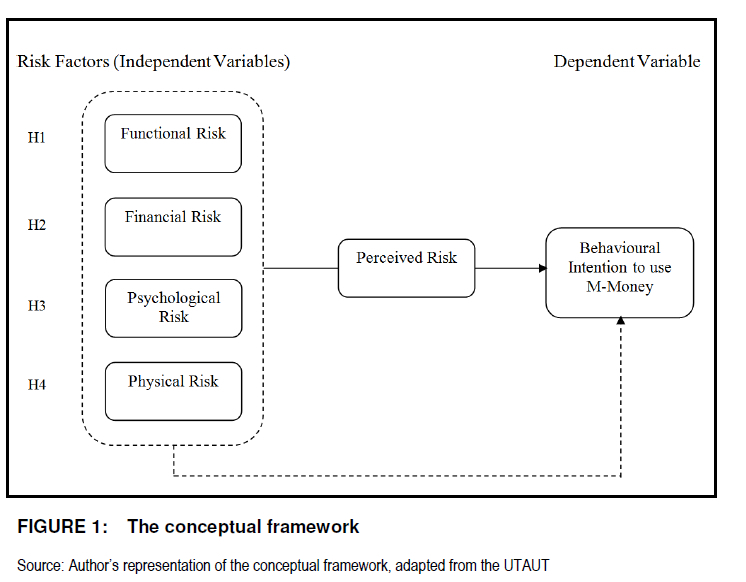
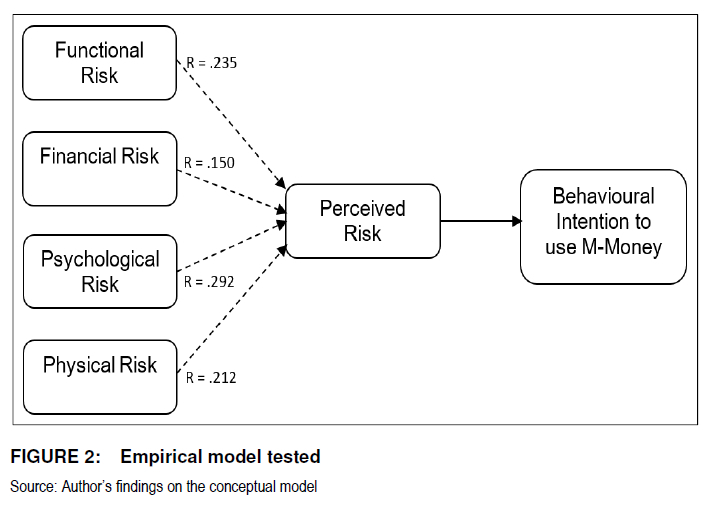
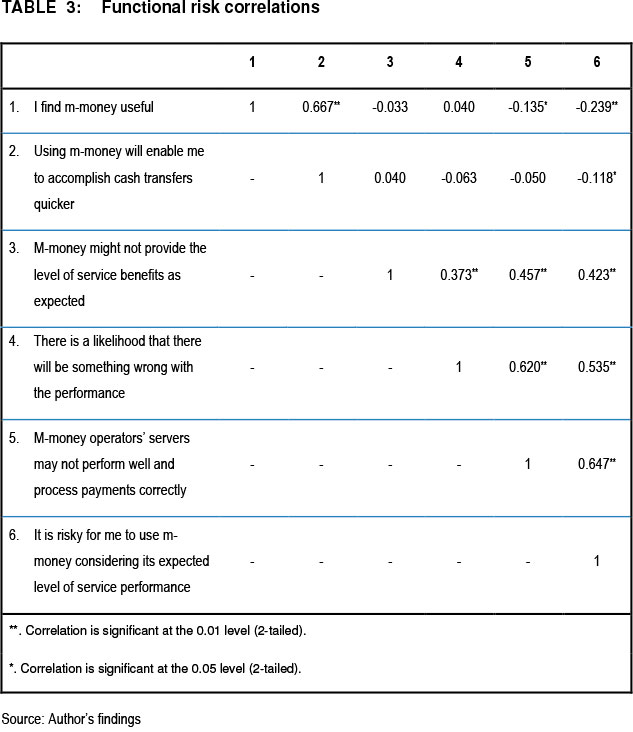
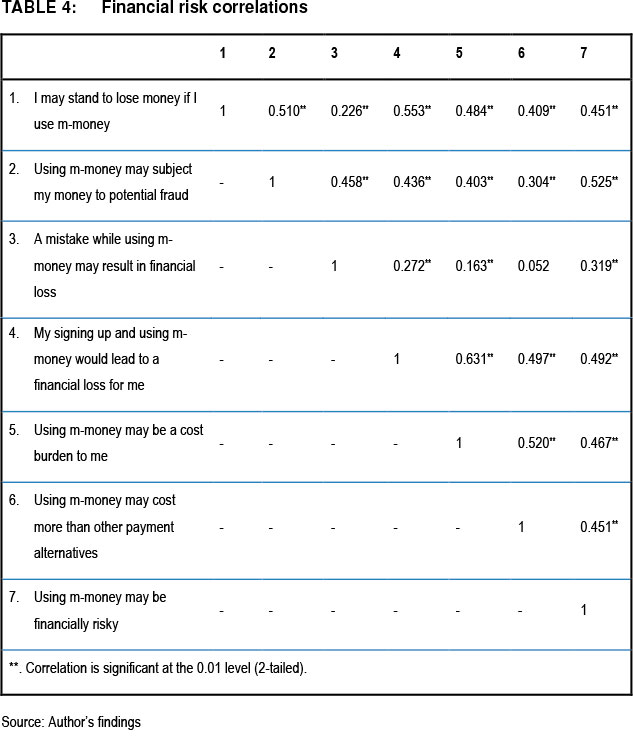
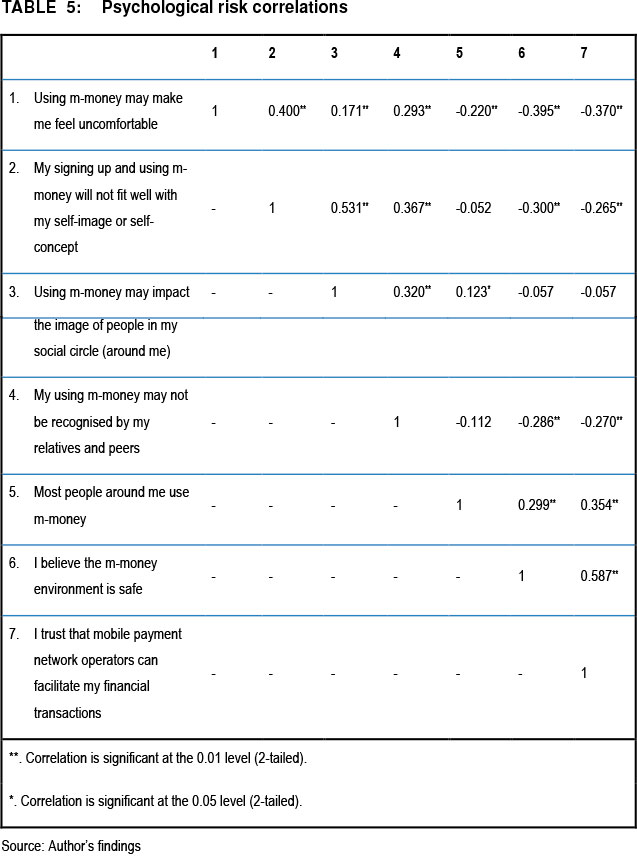
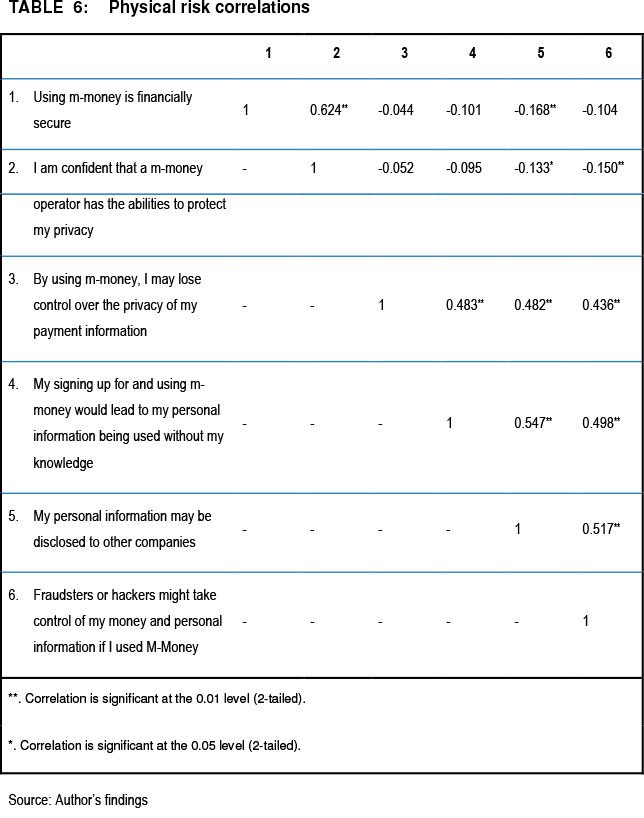
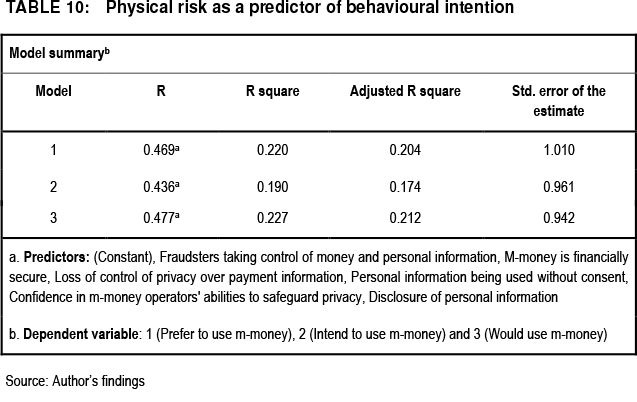
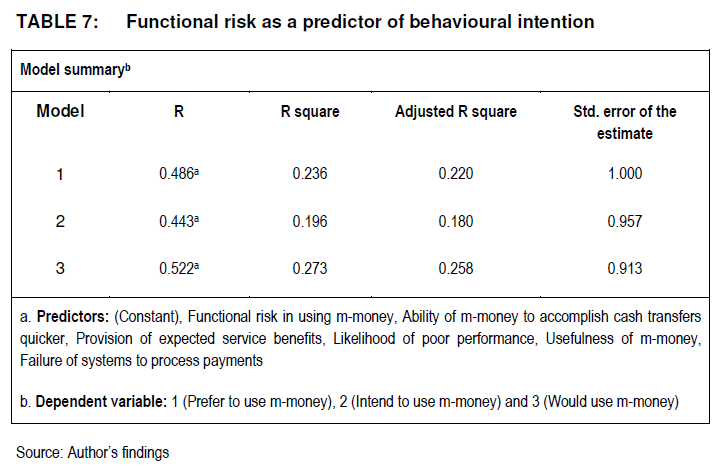
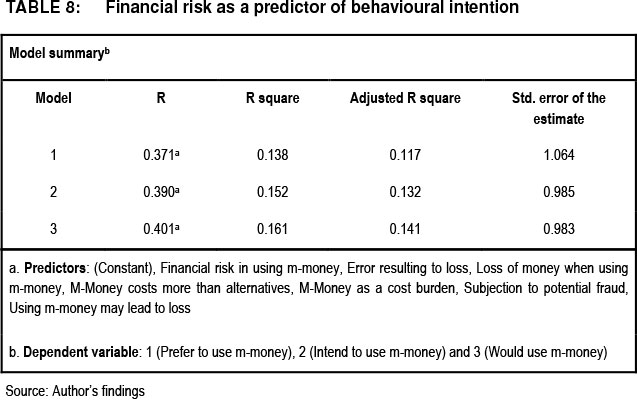
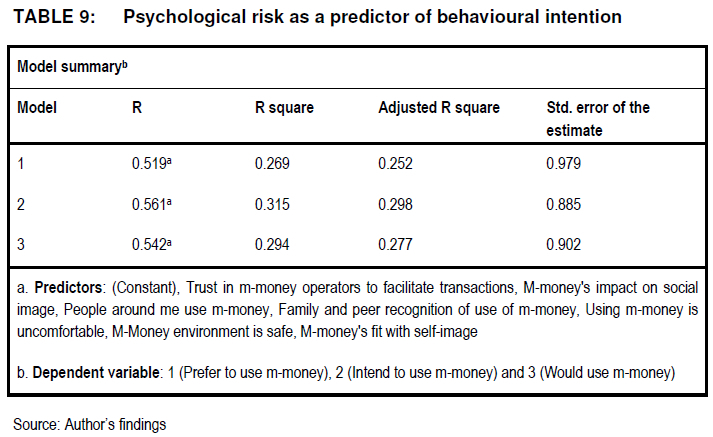
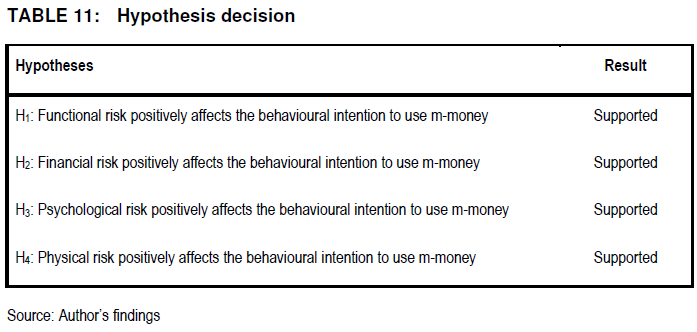
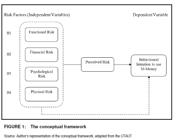
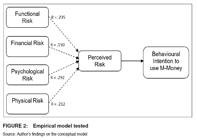
M-money has re-defined convenience and affordability of financial services by enabling users to perform peer-to-peer transfers, bill payments, airtime purchases and cash remittances among others. This study essentially adds on to the developing field of technology acceptance research, demonstrating the role perceived risk through its dimensions, plays in the youth's behavioural intention to use m-money. Using a descriptive research design, and a quantitative research approach, a field survey was used to obtain data from the respondents, and an analysis carried out using multiple linear regression and Pearson's correlation coefficient. The study underlying this article reveals that the dimensions of perceived risk have a weak positive correlation to the behavioural intention to use m-money. As such, it may be assumed that respondents are risk-averse owing to their lack of knowledge of m-money as a payment channel. However, psychological risk shows the most significant antecedence on the Unified Theory of Acceptance and Use of Technology (UTAUT) guided conceptual framework, pointing toward subjective risk and network externalities as key issues negating m-money uptake among university students located in Durban, South Africa.
mobile money; perceived risk; perception management; risk; youth
 Thumbnail
 Thumbnail