An evaluation of the relationship between government bond yields, exchange rates and other monetary variables: The South African case
Abstract
Over the past few decades, governments have increasingly used bonds to acquire revenue to finance development and infrastructure projects. Several internal and even external factors influence the bond price as well as the bond yield rate. Developing countries use government bonds to finance developmental projects, but their bond yield rates are relatively high compared to developed countries, resulting in high levels of debt repayments. This study has the primary aim to analyse the relationship between the government bond yield and several macro-economic variables, including the exchange rate, repurchase rate, inflation and government debt. The study used South Africa as a proxy for developing countries. A quantitative methodology was used through the estimation of an econometric model using monthly time series data from 1994 to 2020. Government bond yield was selected as the dependent variable with independent variables including the exchange rate, the repo rate, inflation and government debt. Both long- and short-run relationships were found between the variables using the Johansen co-integration and vector error correction model (VECM) methods. These long-run results are important as they indicate that a depreciating exchange rate, rising interest rates and inflation, as well as rising debt levels, lead to increasing bond yields, which lead to increasing debt repayments. In conclusion, the results of the study indicated that a stable macro-economic environment is required for economic growth, while volatile exchange rates and yields do negatively affect growth; rising inflation does lead to rising repo rates, depreciating exchange rates; inflation should be contained within the inflation targets; and lastly, policy certainty is important to keep rates and yields stable, which could lead to investor confidence. JEL Classification: E4; H2; H6
Government bonds; macro-economics; monetary variables and South Africa
1. INTRODUCTION
Governments have used government bonds across the world as an important tool to raise funds and to influence monetary and fiscal policy (Chen & Bartle 2017:12). Income from government bonds is essential for public expenditure to support economic development and growth (Chen & Bartle 2017:10). Government bonds and the yields associated with bonds have an impact on most macro-economic variables. This study has its focus on government bond yields and the relationships with related variables such as the exchange rate, interest rates represented as the repurchase rate, inflation or consumer price index, and lastly, levels of government debt (Coroneo, Giannone & Modugno 2016:472). These variables have been selected as they are all important interrelated macro-economic variables that can cause changes in the monetary and fiscal position of a specific government. For example, the bond yield rate determines the level of interest the government must pay on the debt, and the size of debt affects bond prices and yields. Also, aspects such as the exchange rate and interest rates changes affect bond yields. An analysis of the academic literature indicates limited research in this field of research, especially relating to developing countries. The objective of this research is, therefore, to add to the research field by testing the relationship between the government bond yield rates and macro-economic variables as mentioned for South Africa, which is a developing country with rapidly rising debts and volatile exchange rates.
The study is important as perceptions of the effectiveness and quality of governance are reflected in the bond yield rate, as well as in the exchange rate, which, in turn, could affect the economy and other variables such as inflation and interest rates. Results from this study could have implications for governments of developing countries across the world. The majority of governments of developing countries are struggling with low growth, a budget deficit and rising debt (Checherita & Rother 2010:9). This situation translates to volatile exchange rates and rising inflation and interest rates as well as rising bond yields, having a negative impact on the monetary and fiscal environment. From this problem statement, the research question under investigation in this study is: What are the relationships between government bond yields and other macro-economic and monetary variables in a developing country? In this analysis, a number of econometric methods are estimated, which include an analysis of both long- and short-run relations and Granger causality tests.
2.1 Definitions and concepts
The bond market can be classified as a flexible debt investment guarantee that certifies a rooted income for a certain period of time and is normally issued by a government or a private company (Hassan 2013:11; Sattar 2013:1). Government bonds act as a debt tool assurance issued by a government as a tool to finance some of its capital expenditure (Bratislav, Meceski & Srbinoski 2012:188). Bonds differ from the other types of investments because the investors provide capital to the issuer of the bond; however, the issuer has to pay the original amount borrowed plus the interest at a fixed rate, also known as yield (Baker & Mansi 2002:1368). The magnitude and growth of bond markets are highly influenced by the financing styles of organisations and authorities (Sharma 2001:1405). The financing styles of organisations are mostly based on the comprehensive financial settings in these nations, which are the intertwining links between government, banks and companies (Sharma 2001:1405). Due to the dynamic relationships between banks and government, the financing needs of organisations were more focused on other mediums such as equity where the risks are diversified, rather than focusing primarily on the bond market.
Bonds play an essential role in diversified portfolios; however, it should be noted that any investment carries some degree of risk (Stifel Nicolous & Company 2012:1). According to a study by Legg Mason Investor Services (2018:1), the risks associated with bonds include aspects such as interest rate risks, prepayment risks, credit risks, default risk, as well as liquidity risk. Bond markets in a developing country such as South Africa are still at an early stage of development; however, the advancements of these markets are needed to uplift the financial markets (Mu, Phelps & Stotsky 2013:121). The expansion of bond markets is based on various important pillars, which include the macro-economic environment, primary, secondary and money markets, the investor's foundation and the debt market structures (South African Reserve Bank (SARB) 2018:2). The refinement in the market foundations and regulations is pivotal for the development of the bond market (Ong 2005:19).
Although bonds are mainly traded by its prices, the complex design of liquidity that the markets have, they are normally evaluated in connection with their yields (Jonasson & Papaioannou 2018:45). Choudhry (2019:321) explains that the price is an important component in order to evaluate the buying or selling price of bonds; however, the yield on a bond is needed in order to compare the performances of bonds. The reason is that the price of bonds does not act as an exceptional indicator, because there are countless bonds with distinct coupons, issuers and periods to maturity (Choudhry 2019:321). The yield of government bonds, therefore acts as an indicator that depicts the fair value of the bond price (Afonso, Arghyrou & Kontonikas 2012:13). The yield curve is mostly established from a similar group of bonds such as government bonds or corporate bonds because they represent distinct groupings of risk (Place 2000:12). Place (2000:12) further reiterates that government bond yields display the rigidity of monetary policy, differentiate yields in different countries, evaluate values between government bonds, acknowledge the implicit forward rates and assist investors in assessing the various risks associated with the bonds.
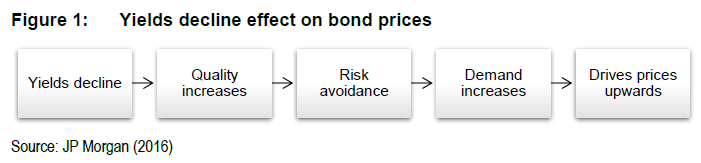
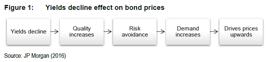
Prices in bond markets are relatively unpredictable due to various factors, which include the supply and demand for bonds within a country's fiscal policy framework (Mega & Widayat 2019:100; Schuknecht, Von Hagen & Wolswijk 2009:375). The results of frail fiscal policy or high credit risk are usually demonstrated in the increasing cost of borrowing, which can also be illustrated in the benchmark (Schuknecht et al. 2009:376). The relationship between bond market prices and yields can be illustrated in Figure 1. JP Morgan (2016) explains the inverse relationship between yield-to-maturity and the prices of bonds. Whenever the yield rate diminishes, the quality of bonds grows which results in lower-risk assets and consequently, increases the demand that drives the prices of bonds upwards.
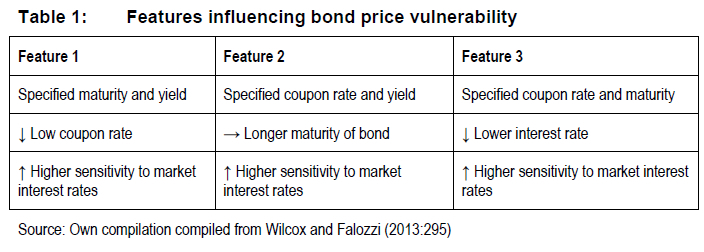
In some scenarios, the bond prices are strained by internal factors such as a change in the bond rating and demand from shareholders. In contrast, the external factors include fluctuations in the overall activities in the macro-economic environment such as changes in exchange rates, inflation rates and interest rates (Mega & Widayat 2019:100). Legg Mason Investor Services (2018:3) states that interest rates fluctuate regularly and whenever they do, so does the value of bonds and yield. The relationship between bond prices and interest rates is inverted, meaning that low interest rates are associated with high bond prices, and vice versa (Mega & Widayat 2019:100; Zaloom 2009:247). The time period of the bond should always be considered as the platform for measuring the bond yield, and therefore the more prolonged the potential timespan of bond maturity, the more substantial the risk for fluctuations in the value of the bond (Legg Mason Investor Services 2018:3). According to the Investor Bulletin published by the U.S. Securities and Exchange Commission (2015:1), interest rate risks are unavoidable, especially for bonds with a long-run fixed coupon rate such as government bonds. For example, if the SARB introduces a 1% decrease in the interest rate, it will result in a higher fixed-rate bond price and eventually, a lower fixed-rate bond yield. Malkiel (1962:200) explained that even Keynes did not pay much attention to the relationship between bond yields and prices; however, he did predict that a drop in bond prices, correlated with a hike in interest rate, will counterbalance the yield rate significantly. The market value of a bond is fixed by four important elements, which include the principal amount of the bond, the coupon interest rate paid, the effective interest rate and the number of years to maturity (Malkiel 1962:200). The price of a bond is dependent on the market interest rate, and therefore this variable plays a critical role in the yield of government bonds (Wilcox & Falozzi 2013:293). Three important features influence the vulnerability to adjustments in interest rates. They can be described in Table 1, which stipulates that the lower the initial coupon rate is, the longer the maturity of the bond and low interest rates are subject to a higher sensitivity in market interest rates (Wilcox & Falozzi 2013:295).
The SARB, as an independent monetary policy institution, manages policy through a variety of open market functions through the allocation of bills, allocating funds between markets and the state, altering interest rates (repo rate) and overseeing money market swaps (SARB 2020a). The function of a monetary institution is, therefore, to have a monopoly over the supply and control of money (Handa 2002:267). One of the monetary policy instruments utilised by central banks is open market transactions to increase the monetary base by purchasing or trading its securities in exchange for money, thereby enlarging or reducing the supply of money (Fourie & Burger 2009:351).
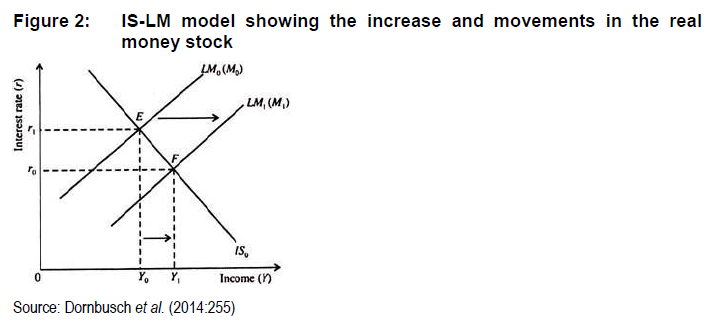
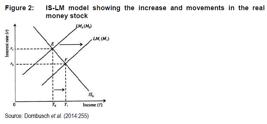
The chain reactions of applied policy instruments might be misleading in the sense of macro-economic theory because the economy does not work in a mechanically predictable way (Fourie & Burger 2009:353). Open market activities by a central bank can be illustrated by the IS-LM curve (Figure 2), whereby the purchases of bonds by government diminish the sum of bonds accessible in the market, which increases their price, and results in a lower yield (r → r0) (Dornbusch, Fischer & Startz 2014:254). Dornbusch et al. (2014:254) further state that a lower interest rate could result in a smaller fragment of its wealth in securities (bonds) and a larger fraction in the form of assets (money) (equilibrium move from to ). A lower yield causes investment spending to increase from to depending on how sensitive the money demand is to the interest rate (Dornbusch et al. 2014:255). The transmission mechanism is the perfect example of how changes in monetary policy affect the aggregate demand. The growth in real balances causes portfolio disequilibrium, meaning people are holding more money than they want, which, in turn, causes a change in yields and asset prices (Dornbusch et al. 2014:258). The initial change in interest rates causes a change in aggregate demand and total output in the economy.
2.2 Theoretical foundation
Market expectations and the analysis of government bond yields are based on new macroeconomic theory such as the rational expectations equilibrium model (Breedon 1995:160). According to Dornbusch et al. (2014:574), the rational expectations theory places emphases on the role of prediction and the importance of equilibrium where markets clear immediately and aspects such 'external effects' do not apply. The expectations theory is critical in modern economics because people use all pertinent knowledge in forming expectations of certain economic variables (Dornbusch et al. 2014:575). Economists and policymakers mostly use the expectations theory as a tool to forecast the movements in certain macro-economic variables (Russell 1992:37). Term structures are utilised as a point of reference to explain the expectations theory and can be defined as the correlation in the group of yields with similar probability, liquidity features, but differ in terms of maturity (Irturk 2006:3). The assumption made concerning the expectation theory is that when short-term interest rates are inflated, the yield curve tends to decline, and vice versa (Russell 1992:41). The expectations theory is more applicable to economic variables such as interest rates and consumer price inflation (CPI) and bonds in the financial markets, whereby the rates of return are based on current market conditions as opposed to conditions compared to prior years (Russell 1992:41). The relevance of the expectations theory in terms of government bonds is the fact that the yields are 'forward-looking' with 'anticipated' future spot rates (Thomas & Abderrezak 1988:154).
Another theory, the efficient market hypothesis (EHM), also known as the 'random walk' theory, is based on the principle that macroeconomic variables such as consumer price inflation or interest rates fluctuate constantly. As a result, it is improbable to return to trend (Dornbusch et al. 2014:576). The EMH deals with some of the most profound problems in financing, such as the reasons why prices in bond markets change, and how it takes place (Clarke, Jandik & Mandelker 2001:1). The EMH is based on the principle that investors are unable to predict or forecast the value of the future yields of their investment decisions (Clarke et al. 2001:1). Specifically, even though investors' techniques tend to predict future yields, the advantage gained does not exceed additional costs such as research and business costs, and therefore it is tough to outrival the market unless the investor invests in higher-risk assets (Clarke et al. 2001:2; Gabriela 2015:442). The EHM presumes that small-scale companies with insignificant assets generally obtain more inflated yields than those of larger companies (Degutis & Novickytè 2014:8) and can be a useful theory to explain why investors make certain decisions at a certain point in time; however, it remains difficult to examine and have the same outcome, mostly due to the changes in the macro-economic environment (Gabriela 2015:442).
Irving Fischer, an American economist, developed a famous equation that was based on the relationship between nominal interest rates and the expected rate of inflation Schwebach and Zorn (1997:84), and Phillips (1998:125) affirmed the important work of Fischer and included the determination of rates concerning financial markets, which include savings, portfolio earmarking and inflation targeting. The concept is based on the calculation of the real interest rate from current interest rates and inflation (Hördahl 2008:28). The sole obstacle faced by the theory over a period of time is the constant unavailability of quantifying changes in inflation (Cooray 2002:2).
Equation (1) is a mathematical illustration of the Fischer equation in modern economics:

The symbol illustrated in equation (1) can be defined as  (real rate of interest) and
 can be regarded as the anticipated price changes, also known as inflation. In contrast, the symbol m is denoted as the bond to maturity (Phillips 1998:131). The Fischer equation is an appropriate theory in terms of financial empirical analyses and modelling mechanism for inflation expectations in light of risk portions associated with the type of yield coefficient (Balfoussia & Wickens 2005:21).
2.3 Overview of empirical studies
The analysis of empirical studies related to the study is divided in two sections, firstly the relationship between government bonds and the exchange rate and secondly between government bonds and other macro-economic and monetary variables. In terms of empirical studies on the relationship between government bond yields and the exchange rate, exchange rates are regarded as a dominant instrument in monetary policy. It influences inflation rates and total output, especially in small open economies. Stapleton and Subrahmanyam (1981) state that yields on government bonds are mostly affected by exchange rate volatility and country risk as well as factors such as default and duration that are relevant in the pricing of domestic bonds.
Lace, Mačerinskienė and Balčiūnas (2015:150) studied the relationship between the Euro/US dollar exchange rate and the government bond yields in Germany, and the linear regression indicated that the model could calculate 6 per cent of the daily EUR/USD exchange rate. The study further indicated that whenever the government bond yield increases, the dollar tends to devalue against the euro (Lace et al. 2015:150). The study indicated that an increase in the European government bond yield resulted in the strengthening of the euro, and an increase in the US 10-year bond yields strengthens the value of the USD (Lace et al. 2015:151). In a similar study conducted in a developing country, India, examined the relationship between the USD and the Indian rupee and government bond yields (Shanmugam & Raghu 2017:1). The analysis indicated that there is a long-run relationship between the government bond yields to the USD/INR exchange rate in India. Gagnon (2009) examined exchange rate shocks and depreciation in developed countries and the subsequent reaction of government bond yields. The results indicate that inflationary expectations are the most important determinant of changes in bond yields. High and rising inflation, while rapid currency depreciation is in progress, could result in rising bond yields. Dudzich (2020) assessed the relationships between exchange rate volatility and government bonds in emerging markets. Borrowing for developmental projects is a problem of emerging markets and could lead to rising foreign debt and a negative impact on economic growth leading also to financial instability and monetary policy problems. Main findings indicate that more stable real exchange rates lead to a positive government bond market. A study by Ngaruiya and Njuguna (2017:17), on the Nairobi stock exchange in Kenya, indicated that there is a positive link between exchange rates and bond prices, which was confirmed in a regression; however, there was no confirmation between bond yields and exchange rates. Gadanecz, Miyajima and Shu (2018) assessed the impact of the exchange rate in determining government bond yields in emerging markets including countries such as Brazil, Peru, Indonesia, Malaysia and Turkey. The results of the study indicated that the exchange rate influences government bond yields in terms of volatility and depreciation. The volatility impacts of exchange rate are reduced when foreign ownership of bonds is high, with relatively high levels of capital account openness and high levels of exchange rate flexibility. Gadanecz, Miyajima and Shu (2014), in a different study also on emerging markets focusing on countries such as Brazil, Chile, China, India, Russia, South Africa, Thailand and Turkey, and found that a depreciating local currency could lead to rising government bond yields, while other factors affecting the bond yield rates include interest rates, inflation and sovereign credit risks. Uncertainty in the economy negatively affects the local currency leading to volatility and also yield rates usually increase.
Secondly, the relationship between government bonds and other macro and monetary variables are assessed. Claessens, Klingebiel and Schmukler (2007) analysed the relationships between government bonds and institutional and macroeconomic factors. The main findings of the study were that both institutional quality and macroeconomic factors are related to the government bond market in both developed countries (including Australia, France, Japan, Germany and Norway) and emerging economies (including Argentina, Chile, China, and South Africa). The size of an economy is the main factor affecting the bond market, while economies with well-developed financial systems, have larger domestic currency bond markets. Other factors that affect the government bond market are inflation, fiscal burden, and capital account openness.
Theory predicts that there is a positive link between government bond yields and the national interest rates (Cecchetti 1988:1116). Manganelli and Wolswijk (2009) found that Euro region government bond yields are related to short-term interest rates as well as to the level of incentives for investors to take a risk. From a theoretical point of view, declining interest rates are related to lower government bond yields. Tarditi (1996), after an analysis of the relationship between inflation and government bond yields, found the existence of a positive relationship, while Kumar and Baldacci (2010) found that bond yields rise under rising inflation expectations and bond yields rise with rising fiscal deficits. Afonso and Rault (2015) analysed the behaviour of long-run government bond yields in OECD countries using a dynamic panel approach. Results indicate that investors consider country differences arising from specific factors such as inflation, budgetary and current account imbalances, real effective exchange rates and liquidity. Afonso (2010), using panel data for 14 EU countries from 1998 to 2008, found that bond yields tend to increase in positive growth environments and with decreasing government debts. Favero, Giavazzi and Spaventa (1997) analysed the determinants of the interest rate differentials on government bonds in relatively high yield countries such as Italy, Spain, Sweden and Germany. They identified three components of total yield differentials, namely expectations of exchange rate depreciation, market assessment of default risk, and lastly different taxation treatment of long-term yields.
Presbitero, Ghura, Adedeji and Njie, (2016) assessed the ability of African countries to issue sovereign government bonds in developing countries. There has been a wave of sovereign bond issuances in Africa from 1995 to 2014. The study found that the determinants for countries to issue bonds are the size of the economy, higher levels of per capita GDP, lower levels of public debt, and more effective government. Platz (2016) analysed the use of municipal government bonds in developing countries for sustainable development. Regional governments need to issue bonds to finance large-scale capital investments but raising finance through such mechanisms remains rare and complex. Simu (2018) analysed the determinants of the Indonesian government bond prices and yields for the period from January 2015 to June 2016. The result indicates that yields have significant positive effect to government bond price; while maturity has significant negative impacts on the government bond price.
Olaniyan and Ekundayo (2019) tested the impact of government bonds on the capital market and economic growth in the Nigerian market for the period 2010 to 2017. Results indicate that issue and value of government bonds' positively and significantly affect the capital market leading to growth in the Nigerian stock exchange. Recommendations from the study indicates the promotion of the issue of more government bonds and finance should be channelled to productive sectors to promote an all-inclusive growth in the Nigerian economy. Gadanecz et al. (2014) found that weak fiscal positions lead to higher bond yields, while policy stability results in more stable bond yield rates. Akram and Das (2015) found that changes in short-term interest rates, changes in the rate of inflation and the rate of economic activity are leading drivers in changes government bond yields in India. This result indicates that higher government debt deficits may not exercise upward pressures on government bond yields in India.
In summary, a weakening and depreciating local currency could lead to lower government bond prices and, on the other hand, rising government bond yields through interest rate shocks, while changes in the exchange rate cause changes in the yield rates. The relationship between the bond yields and interest rates (repo rate) is positive, meaning lower interest rates will lead to lower bond yields. The same relationship exists between bond yields and inflation, which means that government bond yields and inflation rates may either be positive or negative. Lastly, rising government debt, which is caused by weak fiscal positions, also has a positive relationship with bond yields.
3. METHODOLOGY
A quantitative research methodology is utilised to study the relationships between government bond yields (also known as the R186), and other macroeconomic variables such as the exchange rate, repo rate and control variables, inflation and government debt. The time sample utilised in this study is based on monthly data from January 1994 to April 2020. The data were acquired from the SARB (2020:b, c & d) and Statistics South Africa (StatsSA) (2020). The simplest form of the model can be expressed in equation (2).

Where Govbyd represents the government bond yield; Exchr represents the exchange rate; Repor represents the repo rate; CPI indicates the inflation rate; and Govdt represents government debt. The model will be transformed into a log-linear functional equation, as stated below in equation (3):

Transforming the data to natural logs is mostly done to handle skewed data, especially if the data have a variety of data structures (Feng, Wang, Lu, Chen, He & Lu 2014:105). The research instrument employed in the econometric model is the vector autoregression (VAR) to evaluate the linkage between time-series data established on its own lags and the other variables part of the equation (Alexandru, Caragea & Dobre 2013:61). The basic VAR model consists of coordinated Τ endogenous variables whereby Yk = (Yk...,Ytk...,YTk...). The VAR operation can then be depicted in equation (4) (Alexandru et al. 2013:60; Zivot & Wang 2006:384).

In order to test what econometric model will be utilised in the study, i.e. ARDL cointegration equation or the Johansen cointegration equation, unit root tests are applied in the study. Nkoro and Uko (2016:64) state that an autoregressive distributed lag (ARDL) cointegration equation is most suitable when the variables in the equation are desegregated in non-identical order, i.e. a combination of I(0) and I(1). The Johansen cointegration is utilised when the unit root testing indicates stationarity at first difference for all the variables in the equation (Wassell & Saunders 2000:6). Establishing and confirming the order of integration I(0) or etc., numerous unit root tests can be utilised to test the integration, which includes the ADF test (Dickey & Fuller 1979) as well the PP (Phillips & Perron 1988). The augmented Dickey-Fuller test is illustrated in equation (5) (Arltova & Fedorova 2016:49):

Where dt =  , and ρ = 0,1 accommodates predetermined parts of the model utilised.
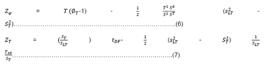
To test for stationarity in the PP (Phillips & Perron 1988), unlike the standard ADF (Augmented Dickey-Fuller) test, the Phillips and Perron test addresses aspects such as heteroscedasticity and serial correlation (Arltova & Fedorova 2016:49). Equations (6) and (7) are a presentation of the PP stationary test.
Where:
 thus the tDF is illustrated as the test statistic of the DF test,
 is the OLS estimator and γjr can be regarded as the maximum likelihood estimator and q is the number of lag covariates. If st is not correlated, then
 , the restricted diffusion of the test statistics is therefore not reliant on autoregressive variables of process. The test statistics are continuously diminished to test statistics.
Succeeding the outcome of the unit root testing, the next step is to determine the optimal lag length criteria for the model by utilising the VAR (vector auto-regression) model; however, depending on the outcome of the unit root testing, the cointegration test will be followed. The Johansen cointegration will be utilised in order to determine the cointegrating vectors for the numerous variables (Dwyer 2015:1). According to Johansen, there are two kinds of tests to confirm the cointegration of variables in the long run, which include the trace statistics and the maximum eigenvalue test, and can be illustrated in equations (8) and (9) (Österholm & Hjalmarsson 2007:5):

The results of both the trace statistic and the eigenvalue indicate whether there are any longrun relationships between the variables. The results can be evaluated using evaluating the values for both the trace statistics and eigenvalue and whether the values are larger than the critical values at 5%. Following the long-run equation, the next step is to evaluate the short-run estimates for the variables via the VECM. Pairwise Granger causality tests need to be estimated after the VECM, to determine causality among variables.
4. EMPIRICAL ANALYSIS
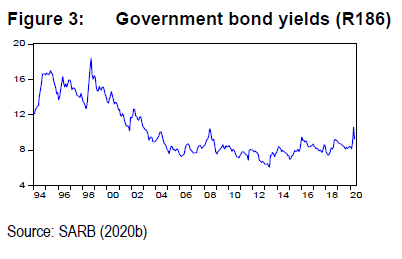
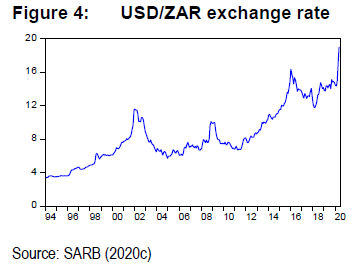
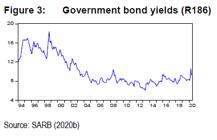
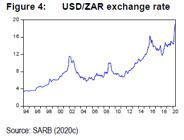
Figure 3 represents government bond yields, also known as the R186, from January 1994 to April 2020. The bond yield was relatively high at the beginning of the study period and peaked at 16.99% in May 1995. Since that period, the yield rate had declined to the lowest point of 6.09% in May 2013. The yield rate has, however, steadily increased again since then and, in April 2020, it reached 9.23%. Figure 4 illustrates the USD and rand exchange rate over the same period. A higher USD/ZAR exchange rate value indicates that the rand is depreciating against the USD. The local currency started in January 1994 at its lowest point over the total period at R3.41 to the USD. The rand then depreciated up to April 2002 to a value of R11.08 to the USD. It recovered up to 2005 to R5.97, but since then followed a volatile projectory to April 2020 with a value of R19.04 to the USD. The visual presentation seems to indicate some co-movements between the two variables. The four spikes in the exchange rate in 2002, 2008/2009, 2016 and in 2020 are also clearly visible in the movements in the bond yield rates.
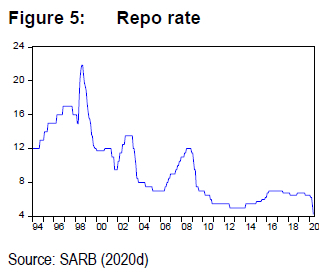
Figures 5 and 6 indicate the trends in the repo rate and CPI, respectively, since 1994. The graph for the repo rate shows some similarity with both bond yields and the exchange rate with similar shocks. The repo rate peaked in September 1998 at 21.85%, also in 2002 at 13.5% and in 2008 at 12.0%. The repo rate in April 2020 was at a low point of 4.25%. The CPI trend line has shown a steady incline since 1994.
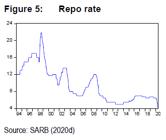
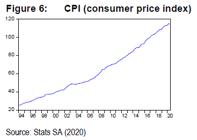
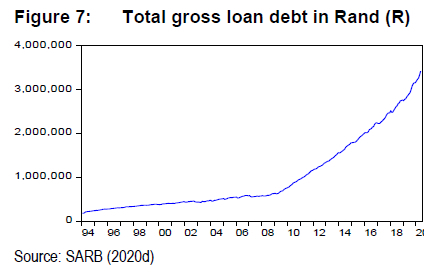
Figure 7 indicates the national gross loan debt in all forms of its debt instruments, which include both national and foreign debt incurred by the South African government. The gross loan debt levels were moderate from 1994 to 2008; however, after 2009, the total gross loan debt in rand increased exponentially from R632.0 billion to R3 425.0 billion at an annual increase of 40.2% per annum.
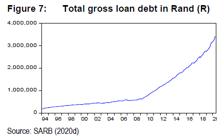
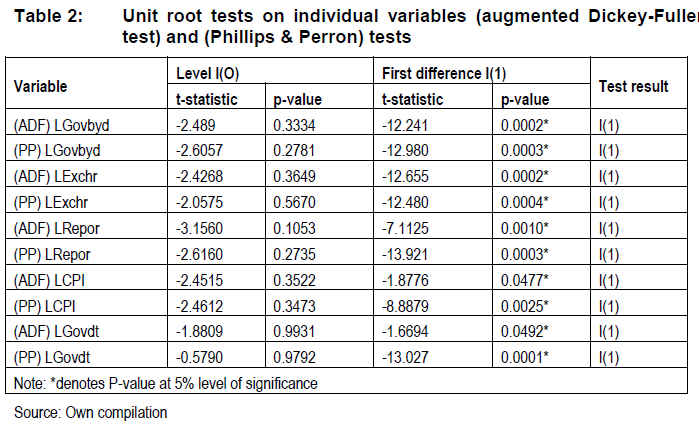
Table 2 illustrates the results of the unit root tests. The ADF (Augmented Dickey-Fuller) test and the PP (Phillips-Perron 1988) test were used. The main result from the tests is that all variables are stationary at The null hypothesis of non-stationarity can be rejected at first difference for LGovbyd, LExchr, LRepor, LCPI and LGovdt. This result allows the use of the Johansen cointegration model to test for long-run relationships among the variables.
The next step in the process was to establish the VAR lag order selection criteria, and the following test criteria were used: Schwarz information criterion (SIC), the Hannan-Quinn criterion (HQC), the Akaike information criterion (AIC) and the likelihood ratio (LR) test. Utilising the Akaike information criterion (AIC), the value of excluding the inadequate form limitation is minimal, and it is also sufficient since it presents significant outcomes in choosing the most applicable VAR model. The optimal number of lags to be utilised in this study is four lags, as indicated in the VAR lag order selection criteria.
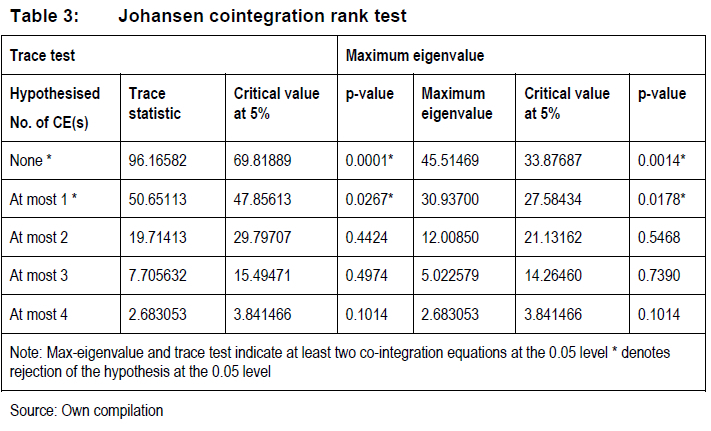
The Johansen cointegration test to evaluate the cointegrating relationship among variables, in the long run, is listed as Table 3. The results of the Johansen cointegration indicate at least two cointegrating equations for both the trace test and the max-eigenvalue statistic at 0.05 level. Furthermore, the null hypothesis of no cointegration, i.e. (r=0) can therefore be rejected at the 5% level because the trace statistics are higher than the critical numerical value at 5% (96.16582>69.81889) and (50.65113>47.85613) and similarly with the maximum eigenvalue test.
The existence of cointegrating relationships between variables in the model and therefore, a long-run equilibrium can be established in the following log-linear functional equation (9):

Equation (9) illustrates the long-run relationship between government bond yields (R186) as the dependent variable with exchange rates (LExchr), repo rate (LRepor), inflation (LCPI), and government debt (LGovdt). Firstly, the relationship between the LGovbyd and LExchr suggests that a 1 percent increase in the LExchr could lead to a 0.29 per cent increase in LGovbyd. Similarly, an increase in the LRepor of 1 per cent could result in a 0.48 per cent rise in LGovbyd, which indicates a positive long-run relationship between the two variables. Interestingly, there is a negative relationship between LGovbyd and LCPI, meaning that a 1 per cent increase in the LCPI could lead to a 1.27 per cent decrease in the R186. Lastly, a 1 per cent increase in LGovdt could give rise to a 0.45 per cent increase in LGovbyd, stipulating a positive link between the two variables in the long run.
As explained in the literature, there is a positive relationship between inflation rates and government bond yields, as indicated by Cecchetti (1988) and the results of the long-run equation indicated a similar result. Lace et al. (2015) indicated that when the yield of government bond increases, the currency will tend to devaluate against the dollar. The longrun equation indicated a similar result, which showed that a depreciating currency, i.e. weakening exchange rate, will cause the bond yield to increase. Numerous studies have illustrated that the relationship between inflation rates and government bond yields is positive, i.e. rising inflation will cause government bond yields to rise (Kumar & Baldacci 2010; Tarditi 1996). Francová (2017) illustrated that there is, however, a negative relationship between inflation rates and government bond yields and the long-run equation showed similar results. Gadanecz et al. (2014) found that a fragile fiscal position will lead to higher bond yields and the long-run equation indicated a similar outcome.
Tarditi (1996), after an analysis of the relationship between inflation and government bond yields, found the existence of a positive relationship, while Kumar and Baldacci (2010) found that bond yields rise under rising inflation expectations and bond yields rise with rising fiscal deficits. Afonso (2010), using panel data for 14 EU countries from 1998 to 2008, found that bond yields tend to increase in positive growth environments and with decreasing government debts. A time-series regression by Francová (2017:1914) indicated a negative relationship between government bond yields and inflation rates, and the long-run equation showed similar results.
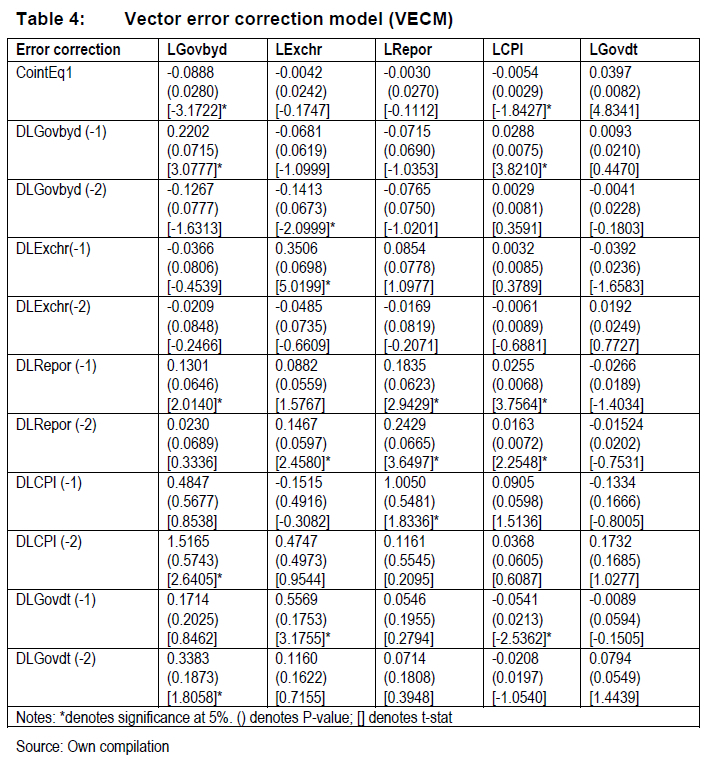
Following the long-run analysis, the next step in the methodology was to evaluate the short-run relationships between the variables using the VECM. Asari, Baharuddin, Jusoh, Mohamad, Shamsudin & Jusoff (2011:51) indicate that a significant and negative number in the cointegration equation 1 stipulates that any short-run variation between the dependent and independent variables is indicative of a significant long-run relationship among the variables. Table 4 illustrates the VECM and indicates that the co-integrating equation for LGovbyd presents the confirmation of a long-run relationship with the independent variables with a negative coefficient of -0.0888 and a t-value of -3.1722, which is a statistically significant level of 5%, meaning that equilibrium is re-established over time. Short-run results highlighted from the VECM analysis include a significant positive impact of LGovbyd in the first lag on the dependent variable with a 0.22 coefficient; also the LRepor in the 1st lag has a positive, significant impact on the dependent variable with a coefficient of 0.13; interestingly, the results indicate that LCPI in the 2nd lag has a positive significant impact on the dependent variable; and lastly, LGovdt, also in the 2nd lag, has a positive and significant impact on the dependent variable.
Table 5 is a presentation of the results of the Granger causality test. This explanation has its focus on the short-run causal relationships of the dependent variable with the independent variables. All of the independent variables have causal relationships with the dependent variable, LGovbyd, except for LGovdt. Both LExchr and LRepor do cause changes in the LGovbyd; while a bi-directional causal relationship exists between LCPI and LGovbyd. Results of causality between the independent variables also exist and are reported in Table 5.
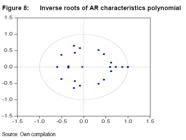
Lastly, several diagnostic tests were estimated to determine the stability of the models used in the study, including tests for serial correlation, heteroscedasticity, normality and inverse roots of AR characteristics polynomial test. The hypothesis for the diagnostic tests can be defined as follow:
ΗO: Errors are not serial correlated and no evidence of heteroscedasticity, not normally distributed
Η1: Errors are serially correlated and heteroscedasticity and normally distributed
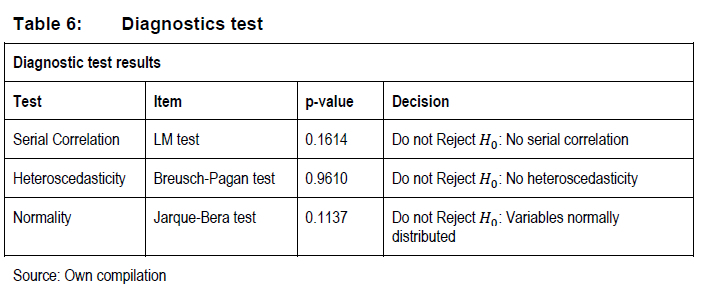
As shown in Table 6, it is shown that the p-value is above 0.05 for all of the variables, meaning the null hypothesis could be accepted, meaning that there is no serial correlation and no heteroscedasticity.
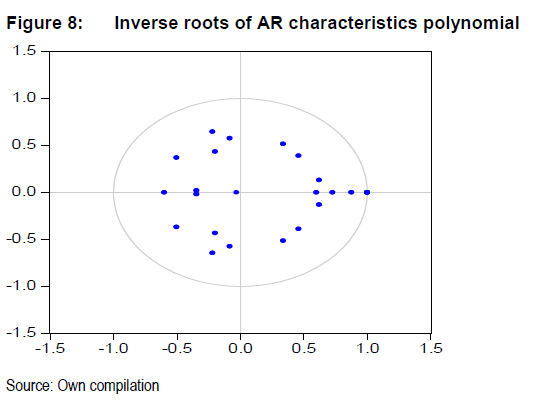
Figure 8 illustrates the inverse roots of the AR characteristics polynomial, which illustrates that all of the values are inside the unit circle. The approximate VECM is stable only if all the coefficients lie within the unit portion of the unit circle, and we can comprehend that all the coefficients are stable within the model (Simawu, Mlambo & Murwirapachena 2014:1428).
5. CONCLUSION
The levels of government bond prices and yields affect the broad economic and also monetary and fiscal policy environment of any economy. This study had the overall objective to test the impact of various macro-economic variables on the government bond yield rate. It is important to understand the relationships and the impact on the yield rate as the rate has an impact on government debt, for example. From the literature review section, the following important results from empirical studies are noted. A depreciating and volatile exchange rate could lead to lower government bond prices and requiring rising yield rates. The relationship between the bond yields and interest rates (repo rate) is positive, meaning lower interest rates will lead to lower bond yields. The same relationship exists between bond yields and inflation, which means that government bond yields and inflation rates may either be positive or negative. Countries with stable exchange rates displayed higher yield spreads and lower inflation rates. Rising government debt, which is caused by weak fiscal positions, also has a positive relationship with bond yields due to the rising risks levels. Yields on government bonds are mostly affected by exchange rate volatility and country risk, institutional quality, size of the economy, financial market diversity, as well as factors such as default and duration that are relevant in the pricing of domestic bonds.
The main results from the analysis include: a long-run cointegration relationship was established between the variables included in the study, and long-run coefficients indicated the exchange rate (+0.30), repo rate (+0.48), CPI (+1.27) and government debt (+0.45). These long-run results are crucial as they indicate a depreciating exchange rate, rising interest rates and inflation as well as rising debt levels that lead to increasing bond yields, which, in turn, results in a negative impact on debt repayments. In the short run, government bond yield on the 1st lag affects the yield rate; also, the repo rate on the 1st lag affects the yield rate, CPI affects the yield rate on the 2nd lag, and lastly, government debt affects yield rates on the 2nd lag. These results confirm similar results from the long-run results indicating the significant relationships between variables included in this study. More short-run results from the Granger causality analysis indicated that all of the independent variables do cause changes in the yield rate and changes in the repo rate do affect the repo rate. The objectives of the study were achieved, and all types of relationships were determined and explained.
The limitations of the study were that other possible variables could have been included in the model. For example, government bond prices could have been included, but the bond prices will form part of a follow-up study where the relationship between prices and yields will be the focus of analysis. Other variables, such as economic growth and financial markets as well as more fiscal variables, could be included in future studies. It is also anticipated that several comparative studies will be conducted in the future between countries of different levels of development. As stated, this study field with a focus on government bonds has not been overly researched, and the potential exists for more in-depth studies in this field. It was fascinating to note the chain reactions or domino effect between the variables included in the study. The transmission starts with one or more of the independent variables or even an exogenous shock that could lead to exchange rate volatility affecting the yield rate. Rising yield rates could, in turn, then also impact on the independent variables such as government debt. Lastly, some policy recommendations: (1) a stable macro-economic environment is required for economic growth, while volatile exchange rates and yield do negatively affect growth; (2) rising inflation does lead to rising repo rates and depreciating exchange rates, and therefore inflation should be contained within the inflation targets; (3) policy certainty is important to keep rates and yield stable, leading to investor confidence; (4) quality and good effective governance are requirements for stable bond markets; and (5) diversified and well developed financial markets are needed for successful use and implementation of bonds markets as a tools to finance infrastructure for growth and development.
REFERENCES
2. LITERATURE REVIEW
-
AFONSO A & RAULT C. 2015. Short-and long-run behaviour of long-term sovereign bond yields. Applied Economics 47(37):3971-3993. (DOI:https://doi.org/10.1080/00036846.2015.1023940; downloaded on 15 August 2020.
» https://doi.org/10.1080/00036846.2015.1023940 -
)
» http://dx.doi.org/10.2139/ssrn.2223140 -
)
» https://doi.org/10.1080/01603477.2015.1090294 -
AFONSO A. 2010. Long-term government bond yields and economic forecasts: evidence for the EU. Applied Economics Letters 17(15):1437-1441. (DOI:https://doi.org/10.1080/13504850903049627; downloaded on 17 August 2020.
» https://doi.org/10.1080/13504850903049627 -
)
» https://www.researchgate.net/profile/Marketa_Arltova2/publication/308972405_Selection_of_Unit_Root_ Test_on_the_Basis_of_Length_of_the_Time_Series_and_Value_of_AR1_Parameter/links/57fc009a08ae329c3d497fc3/Selection-of-Unit-Root-Test-on-the-Basis-of-Length-of-the-Time-Series-and-Value-of-AR1-Parameter.pdf -
)
» https://doi.org/10.1111/1468-5957.00474 -
ALEXANDRU C, CARAGEA N & DOBRE A. 2013. Vector Autoregressive models using "R", SEA Practical Application of Science 1(1):59-67. [Internet:https://www.researchgate.net/profile/Nicoleta_Caragea3/publication/261404131_Vector _Autoregressive_Models_Using_R/links/5847d94d08ae2d217572eb71/Vector-Autoregressive-Models-Using-R.pdf; downloaded on 15 August 2020.
» https://www.researchgate.net/profile/Nicoleta_Caragea3/publication/261404131_Vector _Autoregressive_Models_Using_R/links/5847d94d08ae2d217572eb71/Vector-Autoregressive-Models-Using-R.pdf -
]
» https://doi.org/10.1016/j.sbspro.2012.05.019 -
]
» https://doi.org/10.1086/261580 -
ASARI F, BAHARUDDIN N, JUSOH N, MOHAMAD Z, SHAMSUDIN N & JUSOFF K. 2011. A vector error correction model (VECM) approach in explaining the relationship between interest rate and inflation towards exchange rate volatility in Malaysia. World Applied Sciences Journal 12(3):49-56. [Internet:http://citeseerx.ist.psu.edu/viewdoc/download?doi=10.1.1.390.8762&rep=rep1&type=pdf; downloadedon 03 September 2020.
» http://citeseerx.ist.psu.edu/viewdoc/download?doi=10.1.1.390.8762& rep=rep1& type=pdf -
]
» https://icma.org/sites/default/files/308902_Infrastructure%20Financing%20-%20A%20Guide%20for%20Local%20Government%20Managers.pdf -
)
» https://doi.org/10.1111/j.1467-9396.2007.00682.x -
BALFOUSSIA C & WICKENS M. 2005. Inflation prediction from the term structure: the Fisher equation in a multivariate SDF framework. Greece: Money Macro and Finance Research Group. (37th Annual Conference, September.) [Internet:https://fmwww.bc.edu/RePEc/mmfc05/paper16.pdf; downloaded on 12 August 2020.
» https://fmwww.bc.edu/RePEc/mmfc05/paper16.pdf -
]
» http://mobile.businessandeconomics.mq.edu.au/__data/assets/pdf_file/0017/220643/6-2002Cooray.PDF -
)
» https://etalpykla.lituanistikadb.lt/object/LT-LDB-0001:J.04~2015~1447771572718/J.04~2015~1447771572718.pdf -
BREEDON F. 1995. Bond prices and market expectations of inflation. Bank of England Quarterly Bulletin 35(2):160-65. [Internet:https://www.bankofengland.co.uk/-/media/boe/files/quarterly-bulletin/1995/bond-prices-and-market-expectations-of-inflation.pdf; downloaded on 16 August 2020.
» https://www.bankofengland.co.uk/-/media/boe/files/quarterly-bulletin/1995/bond-prices-and-market-expectations-of-inflation.pdf - ]
-
)
» http://www.jerrydwyer.com/pdf/Clemson/Cointegration.pdf -
CHECHERITA C & ROTHER P. 2010. The impact of high and growing government debt on economic growth. An empirical investigation for the euro area, European Central Bank Working Papers, no 1237. [Internet:https://www.ecb.europa.eu/pub/pdf/scpwps/ecbwp1237.pdf; downloaded on 06 July 2020.
» https://www.ecb.europa.eu/pub/pdf/scpwps/ecbwp1237.pdf -
]
» https://doi.org/10.3969/j.issn.1002-0829.2014.02.009 -
]
» https://doi.org/10.11118/actaun201765061911 - CHOUDHRY M. 2019. Analysing and interpreting the yield curve. 2nd Ed. New Jersey: John Wiley & Sons.
-
)
» https://doi.org/10.1016/j.jimonfin.2008.08.008 -
CLARKE J, JANDIK T & MANDELKER G. 2001. The efficient markets hypothesis. Expert financial planning: Advice from industry leaders 7(3/4):126-141. [Internet:http://ww.e-m-h.org/ClJM.pdf; downloaded on 15 July 2020.
» http://ww.e-m-h.org/ClJM.pdf -
]
» http://ideas.repec.org/p/rza/wpaper/391.htm -
]
» http://cseweb.ucsd.edu/~airturk/others/Term_Structure_of_Interest_Rates.pdf -
CORONEO L, GIANNONE D & MODUGNO M. 2016. Unspanned macroeconomic factors in the yield curve. Journal of Business & Economic Statistics 34(3):472-485. (DOI:https://doi.org/10.1080/07350015.2015.1052456; downloaded on 12 July 2020.
» https://doi.org/10.1080/07350015.2015.1052456 -
)
» https://www.imf.org/~/media/Files/Publications/WP/2018/wp1874.ashx -
]
» https://doi.org/10.1016/j.intele.2016.02.006 -
DICKEY DA & FULLER WA. 1979. Distribution of the Estimators for Autoregressive Time Series with a Unit Root. Journal of the American Stat. Association 74(1):427-431. (DOI:https://doi.org/10.1080/01621459.1979.10482531; downloaded on 26 August 2020.
» https://doi.org/10.1080/01621459.1979.10482531 -
)
» https://doi.org/10.2307/1880816 -
DUDZICH V. 2020. Relationships between exchange rate regime, real exchange rate volatility and currency structure of government bonds in emerging markets. Review of Economic Perspectives 20(1):3-22. (DOI:https://doi.org/10.2478/revecp-2020-0001; downloaded on 27 July 2020.
» https://doi.org/10.2478/revecp-2020-0001 -
)
» https://doi.org/10.47672/aje.135 -
]
» https://www.infona.pl/resource/bwmeta1.element.ID-92e33a6f-eaa2-4544-894a-102fddf97125 -
FAVERO CA, GIAVAZZI F & SPAVENTA L. 1997. High yields: the spread on German interest rates. The Economic Journal 107(443):956-985. (DOI:https://doi.org/10.1111/j.1468-0297.1997.tb00002.x; downloaded on 15 July 2020.
» https://doi.org/10.1111/j.1468-0297.1997.tb00002.x -
)
» https://www.imf.org/en/Publications/WP/Issues/2016/12/31/Testing-for-Cointegration-Using-the-Johansen-Methodology-when-Variables-are-Near-Integrated-21015 -
)
» http://korora.econ.yale.edu/phillips/pubs/art/p1173.pdf - FOURIE FC & BURGER P. 2009. How to think and reason in Macroeconomics. 3rd ed. Claremont: Juta & Co.
-
)
» https://files.stlouisfed.org/files/htdocs/publications/review/92/07/Structure_Jul_Aug1992.pdf -
GABRIELA GA. 2015. The efficient market hypothesis: Review of specialised literature and empirical research. Procedia Economics and Finance 32:442-449. (DOI:10.1016/S2212-5671(15)01416-1; downloaded on 03 July 2020.
» https://doi.org/10.1016/S2212-5671(15)01416-1 -
)
» https://doi.org/10.1016/j.ejpoleco.2009.02.004 -
GADANECZ B, MIYAJIMA K & SHU C. 2014. Exchange rate risk and local currency sovereign bond yields in emerging markets. Bank for International Settlements, working paper no 474. [Internet:https://www.bis.org/publ/work474.pdf; downloaded on 23 August 2020.
» https://www.bis.org/publ/work474.pdf -
]
» http://dx.doi.org/10.2139/ssrn.3000783 -
GADANECZ B, MIYAJIMA K & SHU C. 2018. Emerging market local currency sovereign bond yields: The role of exchange rate risk. International Review of Economics & Finance 57:371-401. (DOI:https://doi.org/10.1016/j.iref.2018.02.004; downloaded on 25 August 2020.
» https://doi.org/10.1016/j.iref.2018.02.004 -
)
» https://doi.org/10.19030/iber.v13i6.8931 -
)
» https://www.resbank.co.za/Lists/News%20and%20Publications/Attachments/8324/Presentation%20L%20Myburgh.pdf - HANDA J. 2002. Monetary economics. 2nd Ed. New York: Routledge.
-
]
» https://wwwrs.resbank.co.za/webindicators/EconFinDataForSA.aspx -
HÖRDAHL P. 2008. The inflation risk premium in the term structure of interest rates. BIS Quarterly Review 2338, September. [Internet:https://ssrn.com/abstract=1517269; downloaded on 25 August 2020.
» https://ssrn.com/abstract=1517269 -
]
» https://www.cs.odu.edu/~dlibug/ups/rdf/remo/rba/rbardp/rdp9608.pdf -
]
» https://www.stifel.com/docs/pdf/disclosures/bonds/newsletter.pdf -
JP MORGAN. 2016. The relationship between yields and prices. [Internet:https://am.jpmorgan.com/blob-gim/1383243044660/83456/the-relationship-between-yields-and-prices.pdf; downloaded on 27 June 2020.
» https://am.jpmorgan.com/blob-gim/1383243044660/83456/the-relationship-between-yields-and-prices.pdf -
]
» https://www.sec.gov/files/ib_interestraterisk.pdf - ]
-
KUMAR MMS & BALDACCI ME. 2010. Fiscal deficits, public debt, and sovereign bond yields (No. 10-184). International Monetary Fund. [Internet:https://www.imf.org/external/pubs/ft/wp/2010/wp10184.pdf; downloaded on 26 July 2020.
» https://www.imf.org/external/pubs/ft/wp/2010/wp10184.pdf -
]
» https://doi.org/10.1007/978-0-387-32348-0_11 - )
-
LEGG MASON INVESTOR SERVICES. 2018. Asset Class: Risk, Rates and Ratings. [Internet:https://www.leggmason.com/content/dam/legg-mason/documents/en/insights-and-education/brochure/understanding-bonds-risks-rates-ratings.pdf; downloaded on 01 June 2020.
» https://www.leggmason.com/content/dam/legg-mason/documents/en/insights-and-education/brochure/understanding-bonds-risks-rates-ratings.pdf - ]
- )
-
MANGANELLI S & WOLSWIJK G. 2009. What drives spreads in the euro area government bond market?. Economic Policy24(58):191-240. (DOI:https://doi.org/10.1111/j.1468-0327.2009.00220.x; downloaded on 05 August 2020.
» https://doi.org/10.1111/j.1468-0327.2009.00220.x - )
-
MEGA A & WIDAYAT W. 2019. Effects of bonds interest rate, rating and maturity time toward bond's yield. Manajemen Bisnis 9(1):99-106. (DOI:https://doi.org/10.22219/jmb.v9i1.9446; downloaded on 16 August 2020.
» https://doi.org/10.22219/jmb.v9i1.9446 - )
-
MU Y, PHELPS P & STOTSKY JG. 2013. Bond markets in Africa. Review of Development Finance 3(3):121-135. (DOI:https://doi.org/10.1016/j.rdf.2013.07.001; downloaded on 03 August 2020.
» https://doi.org/10.1016/j.rdf.2013.07.001 - )
- )
-
NKORO E & UKO AK. 2016. Autoregressive Distributed Lag (ARDL) cointegration technique: application and interpretation. Journal of Statistical and Econometric Methods 5(4):63-91. [Internet:http://www.scienpress.com/Upload/JSEM/Vol%205_4_3.pdf; downloaded on 23 July 2020.
» http://www.scienpress.com/Upload/JSEM/Vol%205_4_3.pdf - ]
- ]
-
ONG MLL. 2005. An anatomy of corporate bond markets: Growing pains and knowledge gains. International Monetary Fund. [Internet:https://www.imf.org/en/Publications/WP/Issues/2016/12/31/An-Anatomy-of-Corporate-Bond-Markets-Growing-Pains-and-Knowledge-Gains-18348; downloaded on 21 June 2020.
» https://www.imf.org/en/Publications/WP/Issues/2016/12/31/An-Anatomy-of-Corporate-Bond-Markets-Growing-Pains-and-Knowledge-Gains-18348 - ]
- ]
- PHILLIPS PC & PERRON P. 1988. Testing for a unit root in time series regression. Biometrika 75(2):335-346.
- ]
-
PLACE J. 2000. Basic bond analysis. Bank of England. [Internet:http://janroman.dhis.org/finance/Interest%20Rates/Handbook%20In%20Bonds.pdf; downloaded on 25 July 2020.
» http://janroman.dhis.org/finance/Interest%20Rates/Handbook%20In%20Bonds.pdf - ]
-
PLATZ D. 2016. Promoting municipal bonds in developing countries-a realistic donor strategy towards sustainable development? Development Finance Agenda 2(2):4-5. [Internet:https://journals.co.za/content/defa/2/2/EJC190678; downloaded on 21 August 2020.
» https://journals.co.za/content/defa/2/2/EJC190678 - ]
-
PRESBITERO AF, GHURA D, ADEDEJI OS & NJIE L. 2016. Sovereign bonds in developing countries: Drivers of issuance and spreads. Review of Development Finance 6(1):1-15. [Internet:https://doi.org/10.1016/j.rdf.2016.05.002; downloaded on 15 July 2020.
» https://doi.org/10.1016/j.rdf.2016.05.002 - ]
- ]
-
SATTAR M. 2013. What are bonds? [Internet:https://www.academia.edu/40438610/WHAT_ARE_BONDS; downloaded on 05 June 2020.
» https://www.academia.edu/40438610/WHAT_ARE_BONDS - ]
- )
-
SCHWEBACH R & ZORN T. 1997. A Simple Derivation of the Fisher Equation under Uncertainty. Journal of Financial Education 23:84-87. [Internet:www.jstor.org/stable/41948267; downloaded on 26 June 2020.
» www.jstor.org/stable/41948267 - ]
- )
-
SHARMA K. 2001. The underlying constraints on corporate bond market development in Southeast Asia. World development 29(8):1405-1419. (DOI:https://doi.org/10.1016/S0305-750X(01)00043-2; downloaded on 15 July 2020.
» https://doi.org/10.1016/S0305-750X(01)00043-2 - )
- )
-
SIMU N. 2018. Determinants Of Indonesian Government Bonds Price. [Internet:https://dosen.perbanas.id/docs/wp-content/uploads/2020/02/02.-Artikel-IJEBMR_02_314.pdf; downloaded on 26 July 2020.
» https://dosen.perbanas.id/docs/wp-content/uploads/2020/02/02.-Artikel-IJEBMR_02_314.pdf - ]
- )
-
SOUTH AFRICA RESERVE BANK (SARB). 2020a. Monetary Policy Implementation. [Internet:https://www.resbank.co.za/MonetaryPolicy/MonetaryPolicyOperations/Pages/MonetaryPolicyOperations-Home.aspx; downloaded on 13 May 2020.
» https://www.resbank.co.za/MonetaryPolicy/MonetaryPolicyOperations/Pages/MonetaryPolicyOperations-Home.aspx - ]
-
SOUTH AFRICAN RESERVE BANK (SARB). 2020b. Online statistical query (historical macroeconomic time series information) - Yield on loan stock traded on the stock exchange: Government bonds - 5 to 10 years. [Internet:https://www.resbank.co.za/Research/Statistics/Pages/OnlineDownloadFacility.aspx; downloaded on 31 June 2020.
» https://www.resbank.co.za/Research/Statistics/Pages/OnlineDownloadFacility.aspx - ]
-
SOUTH AFRICAN RESERVE BANK (SARB). 2020c. Rand per US dollar (Weights are based on the banks' foreign exchange transactions). [Internet:https://www.resbank.co.za/Research/Rates/Pages/SelectedHistoricalExchangeAndInterestRates.aspx; downloaded on 31 June 2020.
» https://www.resbank.co.za/Research/Rates/Pages/SelectedHistoricalExchangeAndInterestRates.aspx - ]
- ]
-
STAPLETON RC & SUBRAHMANYAM MG. 1981. Uncertain inflation, exchange rates, and bond yields. Journal of Banking & Finance 5(1):93-107. [Internet:https://www.researchgate.net/profile/Marti_Subrahmanyam/publication/4965386_Uncertain_inflation _exchange_rates_and_bond_yields/links/5b70f42345851546c9fc55d1/Uncertain-inflation-exchange-rates-and-bond-yields.pdf; downloaded on 27 July 2020.
» https://www.researchgate.net/profile/Marti_Subrahmanyam/publication/4965386_Uncertain_inflation _exchange_rates_and_bond_yields/links/5b70f42345851546c9fc55d1/Uncertain-inflation-exchange-rates-and-bond-yields.pdf - ]
- ]
-
STATISTICS SOUTH AFRICA (STATS SA). 2020. P0141 - Consumer Price Index (CPI), April 2020. [Internet:http://www.statssa.gov.za/publications/P0141/CPIHistory.pdf; downloaded on 30 June 2020.
» http://www.statssa.gov.za/publications/P0141/CPIHistory.pdf - ]
- ]
-
THOMAS L & ABDERREZAK A. 1988. Anticipated Future Budget Deficits and the Term Structure of Interest Rates. Southern Economic Journal 55(1):150-161. (DOI:https://doi.org/10.2307/1058863; downloaded on 16 June 2020.
» https://doi.org/10.2307/1058863 - )
- ]
-
WASSELL CS & SAUNDERS PJ. 2000. Time series evidence on social security and private saving: the issue revisited. (Unpublished Manuscript). [Internet:http://www.cwu.edu/business/sites/cts.cwu.edu.business/files/Soc%20Sec%20Final%20Draft.pdf; downloaded on 27 July 2020.
» http://www.cwu.edu/business/sites/cts.cwu.edu.business/files/Soc%20Sec%20Final%20Draft.pdf - ]
-
ZALOOM C. 2009. How to read the future: the yield curve, affect, and financial prediction. Public Culture 21(2):245-268. (DOI:https://doi.org/10.1215/08992363-2008-028; downloaded on 08 July 2020.
» https://doi.org/10.1215/08992363-2008-028 - )