The role of locally-owned Small, Medium and Micro enterprises on poverty reduction, Rustenburg South Africa
Abstract
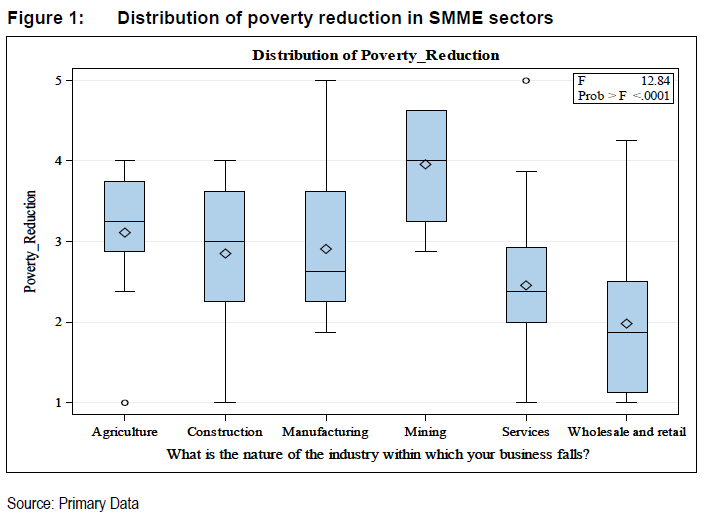
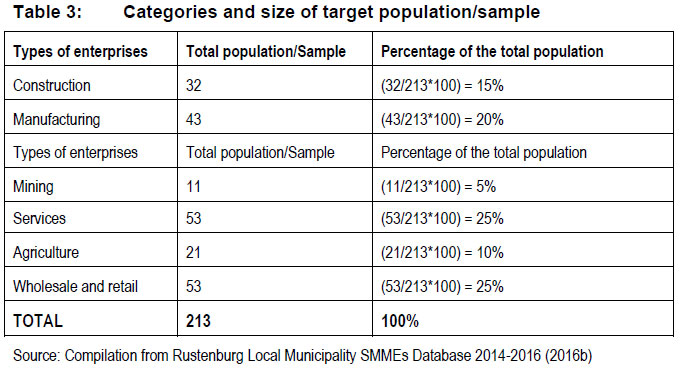
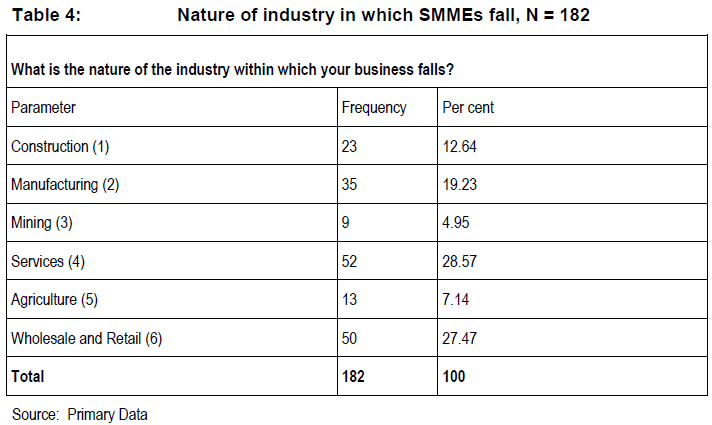
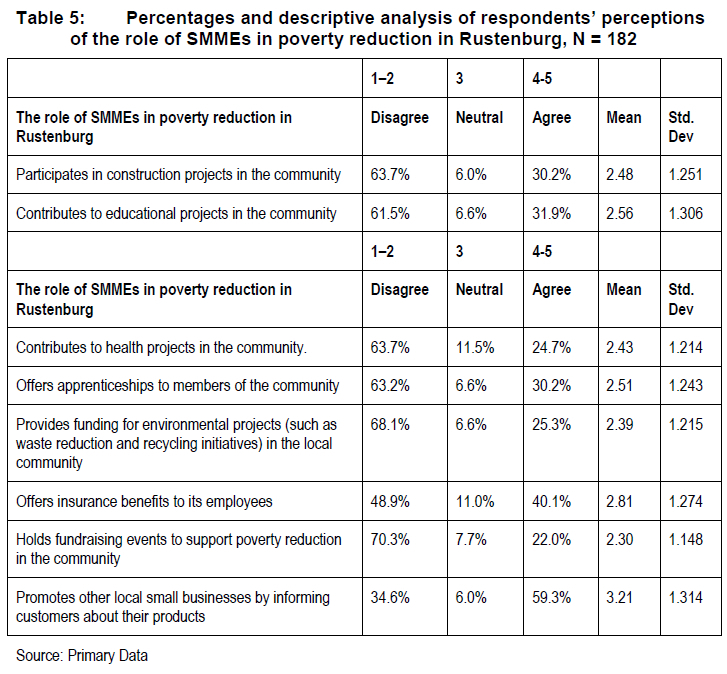
This study sought to find out how locally-owned Small, Medium and Micro Enterprises (SMMEs) in Rustenburg had contributed towards poverty reduction. The study employed a descriptive research design and a quantitative approach which used self-administered questionnaires to collect data. Out of the 213 distributed questionnaires, one hundred and eighty-two (182) were returned, thus constituting an 85% response rate. Statistical techniques used to analyse data included frequency analysis, analysis of variance (ANOVA), Pearson's correlation test, and Tukey's studentised range test. Empirical findings showed that SMMEs in the mining, manufacturing, construction, and agriculture sectors contributed more to poverty reduction than SMMEs in the services, wholesale and retail sectors. Recommendations were twofold: (1) that government should provide practical development training and sufficient funding to enhance the operations of SMMES and (2), to improve the regulatory framework that governs the SMMEs sector countrywide. This study focused on the role of locally-owned SMMEs operating in Rustenburg. Further studies could be conducted on the role of poverty reduction by foreign-owned SMMEs.
Locally-owned SMMEs; poverty reduction; regulatory framework; Rustenburg & training and funding
 Thumbnail