The role of locally-owned Small, Medium and Micro enterprises on poverty reduction, Rustenburg South Africa
Abstract
This study sought to find out how locally-owned Small, Medium and Micro Enterprises (SMMEs) in Rustenburg had contributed towards poverty reduction. The study employed a descriptive research design and a quantitative approach which used self-administered questionnaires to collect data. Out of the 213 distributed questionnaires, one hundred and eighty-two (182) were returned, thus constituting an 85% response rate. Statistical techniques used to analyse data included frequency analysis, analysis of variance (ANOVA), Pearson's correlation test, and Tukey's studentised range test. Empirical findings showed that SMMEs in the mining, manufacturing, construction, and agriculture sectors contributed more to poverty reduction than SMMEs in the services, wholesale and retail sectors. Recommendations were twofold: (1) that government should provide practical development training and sufficient funding to enhance the operations of SMMES and (2), to improve the regulatory framework that governs the SMMEs sector countrywide. This study focused on the role of locally-owned SMMEs operating in Rustenburg. Further studies could be conducted on the role of poverty reduction by foreign-owned SMMEs.
Locally-owned SMMEs; poverty reduction; regulatory framework; Rustenburg & training and funding
1. INTRODUCTION
Small, medium and micro-enterprises (SMMEs) are viewed as the cornerstone of economic development through employment creation and poverty reduction (Global Entrepreneurship Monitor (GEM) 2017:26; Sobrinho 2016). Katua (2014), quoted by Dhanah (2016:10) concur that in recent years, developing countries have realised that SMMEs are their gateway to stimulate their economic growth and address the severe poverty that they are faced with. Leboea (2017:30) asserts that the high incidence of poverty is one of the predominant features of low income developing countries. According to Sobrinho (2016:1), countries such as China, the United Kingdom (UK) and the United States of America (USA) have made remarkable progress in terms of employment creation and poverty reduction due to their supportive policies of SMMEs. Like other countries, the South African Government has also put measures in place to promote the SMME sector as it is faced with a serious dilemma of an increase in unemployment and poverty levels (Lekhanya 2015:413).
Rustenburg Local Municipality is one of the local municipalities in South Africa which is experiencing the challenge of a high poverty level and its related negativities. Out of a total population of 581 000 people, about 162 000 are estimated to be living in poverty, Rustenburg Local Municipality Draft Integrated Development Plan Review for 2015-2016 (2016a:2).
2. PROBLEM STATEMENT
According to Muriithi (2017:37), SMMEs are regarded as instruments to solve socioeconomic problems since they act as catalysts for economic activities. Due to the contribution of SMMEs to economic development, the South African Government has been focusing on implementing programmes to promote SMMEs in order to reduce poverty (Lekhanya 2015:413). To assist with this initiative mines around Rustenburg invested R12 million in SMMEs' development programmes over the last three years in order to sustain SMMEs in Rustenburg Local Municipality (Eunomix Research 2016:10). Despite these concerted efforts, the level of poverty is still high in Rustenburg (Rustenburg Local Municipality 2016a:2; Statistics SA 2016:8). Leboea (2017:30) asserts that despite the high rate of entrepreneurial activity in developing countries, the major problem is that most businesses are not making any impressive impact in poverty reduction among people. It was against this background, that this study was conducted in order to establish the extent to which locally owned SMMEs contribute to poverty reduction in the Rustenburg Local Municipality.
3. AIM OF THE STUDY
The purpose of the study was to investigate the role of entrepreneurship on the economic development of Rustenburg in South Africa, using poverty reduction as a measure and the extent of their contribution so as to recommend appropriate policies to support the SMMEs sector.
4. RESEARCH QUESTIONS
• What is the role of locally-owned small, medium and micro enterprises on poverty reduction in Rustenburg, South Africa?
• To what extent do locally-owned small, medium and micro enterprises contribute to poverty reduction in Rustenburg?
5.1 Overview of the background and nature of SMMEs
Berisha & Pula (2015:18) assert that despite the similarities in the roles that SMMEs play in various economies, there is no universal definition of SMMEs. As it is the definition of SMMEs is country specific. The criteria for defining SMMEs are mainly based on the levels of capitalisation, sales turnover and employment, which differ from country to country (Muriithi 2017:37). Countries with improved economies such as the United Kingdom and the United States use higher values of capitalisation, annual sales turnover and number of employees than developing countries, such as Nigeria and South Africa (Hefer, Cant & Wiid 2015). In the South African context, the definition of SMMEs includes formally registered and informal businesses. These businesses range from medium-sized enterprises, such as established family businesses with a workforce of over 100 people to informal micro-enterprises (Small Enterprise Development Agency (SEDA) 2016:5).
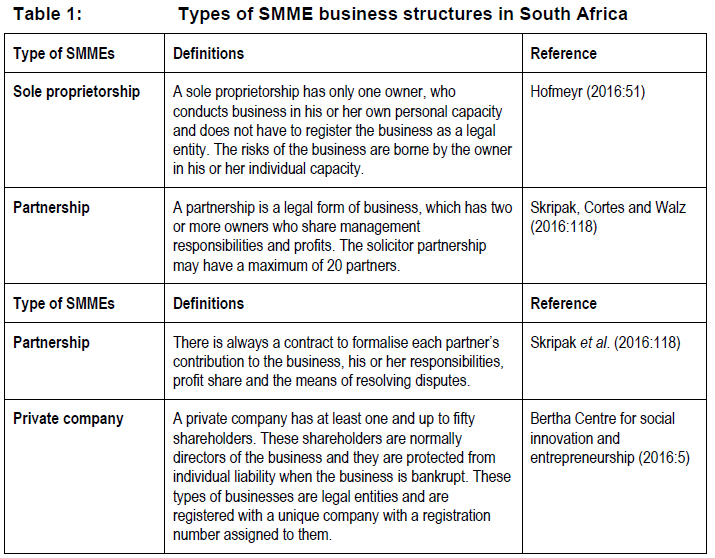
According to the Republic of South Afria (National Small Business Act 102 of 1996), (the original Act), micro enterprises are business entities operated by owners and their families with less than five employees and a turnover of less than R150 000 per year. Very small enterprises are informal businesses that have access to technology, and they employ less than ten paid employees, except mining, electricity, manufacturing, and construction sectors which have 20 employees. Small enterprises are formally registered businesses with fixed business premises. These small enterprises have a complex management structure and they employ up to 50 employees. Medium enterprises which are characterised by a decentralised management structure employ up to 200 employees. The focus of this study was registered SMMEs as these businesses were easily traceable. There are basically three types of SMMEs as indicated in Table 1.
Before determining the extent to which SMMEs contribute to poverty reduction in Rustenburg, it becomes important to examine the concept of poverty in order to put the article in its proper context.
5.2 The nature of poverty
According to Martin and Petersen (2018:205), there is no universal definition of poverty. Poverty has a different meaning depending on the perspective you want to view the concept from. Jansen, Moses, Mujuta and Yu (2015:151) assert that poverty generally refers to a lack of monetary or non-monetary resources. In monetary terms, poverty is linked to insufficient income to purchase basic necessities for survival. In non-monetary terms, poverty is associated with poor access to public services and personal assets, social isolation, poor education, poor health, and exposure to crime. Jansen et al. 2015:151) further assert that social exclusion which is one element of poverty is the deprivation and downgrading of the specific groups within society. For instance, individuals may be excluded from permanent employment, formal housing, good health, education, democratic participation, and membership of social groups. As a result, social exclusion can escalate the poverty levels of individuals. Todaro and Smith (2015:226), also refer to "absolute poverty" which is a situation of being unable or only barely able to meet the subsistence essentials of food, clothing and shelter. This type of poverty is mostly found in African countries. While poverty can be defined from various perspectives, in this study, poverty referred to the deprivation, social exclusion and inequality in the distribution of resources.
Singh (2018:81) identifies various factors that lead to poverty with unemployment being the main factor. Others include poor or no employment access, a family member losing employment, large initial household size and lack of education. Mncayi (2016:33) contends that in South Africa, several other factors that cause poverty are a lack of skills and social capital necessary to attract employment, a lack of education and skills of new entrants to the labour force and ongoing corrupt activities, especially in the public sector. Poverty has a serious socio-economic and social impact towards individuals, and more has to be done in order to reduce its impact. SMMEs are identified as the solution to the poverty epidemic that South Africa specifically and the world at large are facing (Sobrinho 2016:1). Ifeoma, Purity and Yusuf (2018:80) concur that entrepreneurship promotes income empowerment in an economy and provides a new approach for fighting poverty and stimulating economic growth in developing countries.
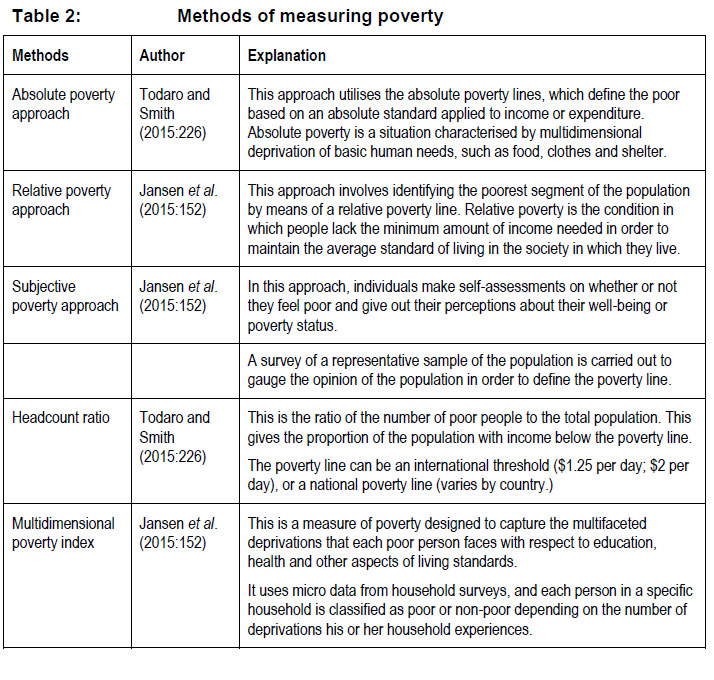
The next concept that needs to be exposed is the measurement of poverty so as to be able to gauge the extent and impact of entrepreneurship on poverty reduction in Rustenburg. Various methods of measuring poverty are indicated in Table 2.
Despite the various approaches to measuring poverty indicated in Table 2, the subjective approach was the selected measure of poverty as it was found to provide a comprehensive spectrum of the poverty status of respondents (Jansen et al. 2015:154).
SMMEs have contributed significantly to poverty alleviation over the past half century but despite these significant improvements, the scourge of poverty rages on in developing countries. More than 1.2 billion people live on an income of less than $1.25 per day (Todaro & Smith 2015:216). According to Harmse (2013:16) in South Africa, almost 20% of the population is living in extreme poverty at an income of less than $1.25 per day. It is thus important for developing countries to re-examine policies of reducing poverty in their respective countries. Todaro and Smith (2015:216) explained why it is important to focus on poverty reduction:
• Poverty can lead to a slower-growing economy. Therefore, enhancing the income levels of the poor stimulates an overall increase in the demand of the domestic products.
• A reduction in poverty in the economy is a powerful material and psychological incentive that could attract public participation in the development process of the local economy.
The conclusion that can be drawn is that people who live in poverty are denied opportunities to become entrepreneurs or SMME owners who can reduce their own level of poverty.
6. RESEARCH METHODOLOGY
6.1
Research designBryman, Bell, Hirschsohn, Dos Santos, Du Toit, Masenge, Van Aardt and Wagner (2017:100) define a research design as a framework used to collect and analyse data. This study adopted a descriptive research design. According to Leedy and Ormrod (2015:29), a descriptive research design enables the researcher to analyse various cases from the study participants, thereby obtaining sufficient information. It also allows the researcher to focus on the exact characteristics under consideration; and gather quantitative information that will be analysed statistically. The selection of this research design was influenced by the need to critically investigate the role that SMMEs play in reducing poverty in Rustenburg from the owners' perspectives.
6.2
Research approachBryman et al. (2017:30) assert that there are two approaches to research, namely, the quantitative and qualitative approaches. According to the same authors, a quantitative approach is a distinctive research approach that emphasises quantification in the collection and analysis of data. By contrast, a qualitative research usually emphasises words rather than quantification in the collection and analysis of data. For this particular study, a quantitative approach was employed in determining the extent to which SMMEs contributed to poverty reduction in Rustenburg and to allow for testing the association between SMMEs.
6.3
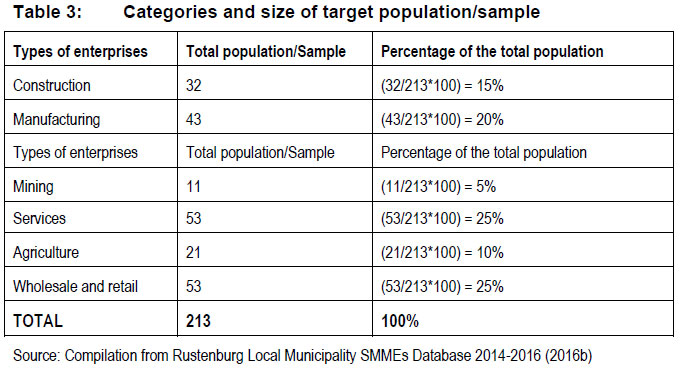
Population and sampleThe population for this study was 223 registered SMMEs as the focus was only on Rustenburg, in the North West, Rustenburg Local Municipality SMMEs database 2014-2016 (2016b). Two hundred and thirteen of these SMMEs took part in the main study while 10 SMMEs were used in the pilot study. The unit of analysis were SMME owners or managers. Table 3 indicates the types of SMMEs that formed the main study.
6.4
Data collectionA validated questionnaire with five-point Likert-type scale questions was used as a data collecting instrument. The five-point Likert-type scale questions consisted of the range of responses between 1 and 5; 1 being the lowest (Strongly Disagree) and 5 being the highest (Strongly Agree). Respondents were able to indicate their degree of agreement or disagreement about the role that SMMEs play in poverty reduction of Rustenburg. A pilot study preceded the full-scale data collection exercise in order to measure the feasibility of the study, check ambiguous questions and instructions, and for testing the measuring instrument (De Vos, Strydom, Fouche & Delport 2016:73). The following ethical considerations were followed before the commencement of the study. Permission was first obtained from the UNISA Research Ethics Review Committee to conduct the study. Respondents were made aware that participation was voluntary, and that they were free to withdraw from the study at any time without any penalties. Verbal consent had to be obtained from the respondents before the questionnaires were distributed. Throughout the study, respondents were protected from undue physical or psychological harm by maintaining the confidentiality and anonymity of their responses. Data was collected over a period of one month using two hundred and thirteen (213) copies of self-administered questionnaires. One hundred and eighty two (182) completed questionnaires were returned, thus translating to an 85% response rate.
6.5
Data analysisData was analysed using descriptive and inferential statistics. According to Leedy and Ormrod (2015:29), descriptive statistics involve condensing information about a set of measures while inferential statistics are techniques for making statements and decisions on the basis of numerical information relating samples to populations. Bairagi and Munot (2019:175) assert that descriptive statistics are the basis upon which inferential statistics are built. The Statistical Analysis Software (SAS) was used to analyse the data.
Inferential statistics were also used in this study. The general linear model and ANOVA were used in the study where the general linear model was used to measure the extent and strength of the relationship between SMMEs and poverty reduction (Saunders, Lewis & Thornhill 2016:534). Both primary and secondary data were used as data sources, where primary data was obtained from the SMME owners.
In research, it is important that validity is observed. To ensure validity of the study, the questionnaire was first reviewed by the supervisor after which the questionnaire was piloted in order to validate the questions and to ensure that it measured what it was intended to measure. The statistician also tested the results of the pilot study for consistency before the questionnaires were distributed. A Cronbach alpha value of 0.800 for poverty reduction was a sign that the questionnaire was reliable as a data collecting instrument.
7. ANALYSIS AND DISCUSSION OF FINDINGS
The research question that guided the study was to find out the role of locally-owned small, medium and micro-enterprises (SMMEs) on poverty reduction in the Rustenburg Local Municipality as perceived by SMME owners.
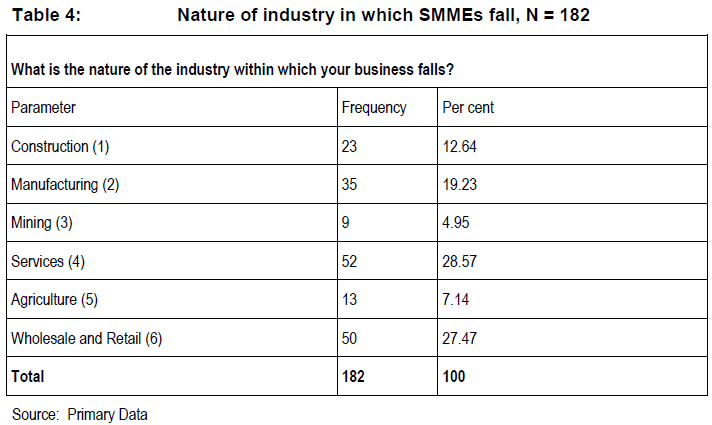
An analysis of the entrepreneurial activities that SMMEs are involved in was first established and these are shown in Table 4. Table 4 presents the nature of industry in which SMMEs operate.
Results in Table 4 show that SMMEs in Rustenburg offer the following: services, manufacturing, construction and agriculture respectively. The SMMEs sector in Rustenburg is diverse. These findings tally with those of a study by Maloka (2013:75), which found out that SMMEs are in different economic sectors ranging from the manufacturing to the service sectors.
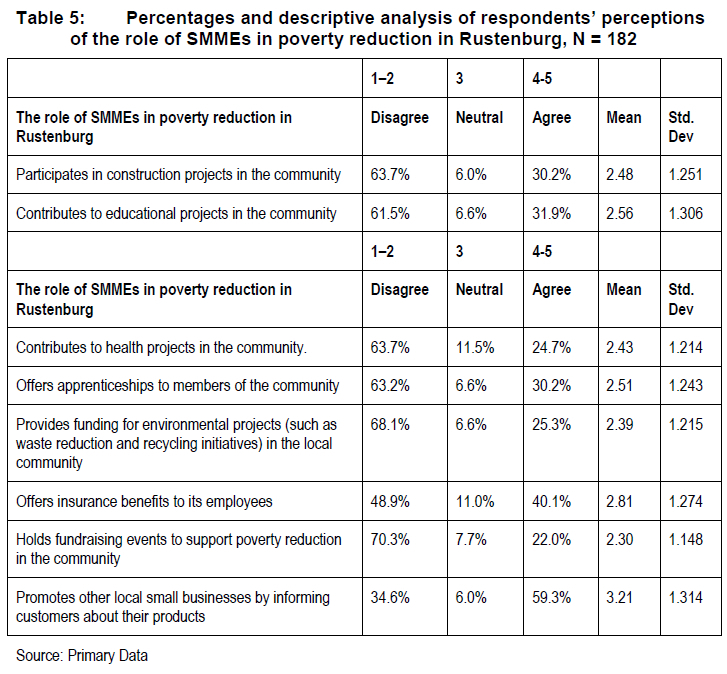
Table 5 shows the respondents' perceptions of the role of SMMEs in poverty reduction in Rustenburg.
Table 5 shows that most SMMEs promote other local small businesses by advertising their products to customers (59.3%). Only 40.1% of SMMEs offer insurance benefits to their employees. Findings also revealed that their contribution to construction, education and health projects in the communities is low, shown by 30.2%, 31.9%, 24.7% respectively. Their involvement in offering apprenticeships, providing funding for environmental projects, holding fundraising events to support communities is also minimal, as shown by 30.2%, 25.3%, and 22.0% respectively. The mean values for most of the statements are less than 3, indicating that most SMME owners disagreed with the statements provided. This was also supported by the standard deviations of more than 1 for all the statements meaning that respondents differed more on all statements provided. The implication was that most SMMEs are not directly involved in reducing poverty.
The validity of the items that measured poverty reduction was constructed in the form of factor analysis.
7.1 Factor analysis results
According to Maskey, Fei and Nguyen (2018:91), factor analysis is a technique that is used to decrease a large number of variables into a smaller number of factors. During the factor analysis process, the highest common variance is extracted from all given variables and grouped into a common score. The purpose of factor analysis is to determine the underlying structure among variables of the study.
Three factors were extracted by using the principal axis factoring method with the aid of the Statistical Analysis Software (SAS) version 9.4 programme. The variables were initially decreased from 27 to 26 by removing the non-loadings defined as items with loadings of < 0.30. The following extracted factors represent:
• Poverty reduction (factor 3).
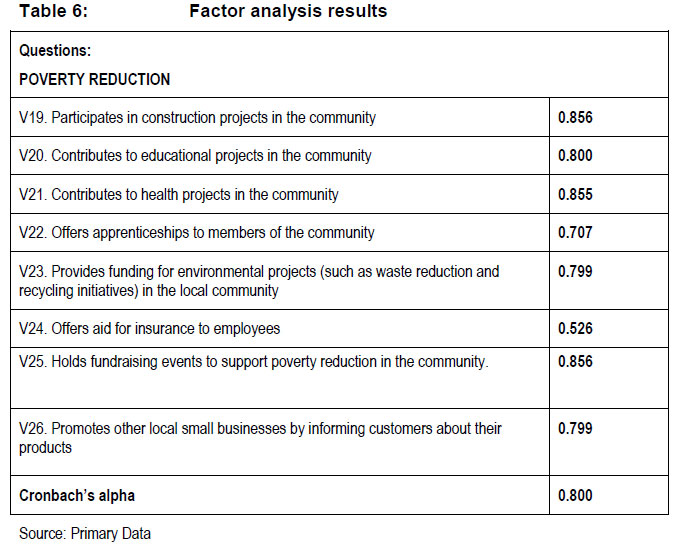
The factor loadings are presented in Table 6.
A Cronbach alpha's value of 0.90 implies that 90% of the data is reliable. An instrument is deemed reliable if Cronbach's Alpha is at least 0.7 for the questionnaire variables (Saunders et al. 2016:714).The Cronbach's alpha value for poverty reduction was 0.800, shown in Table 6, meaning that the data was considered reliable.
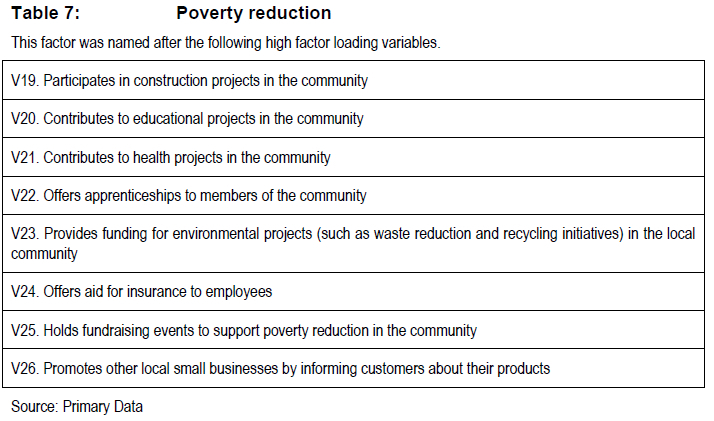
Based on the factor loadings, the three factors have been named. See Table 7 for poverty reduction information.
Based on Table 7, it is evident that variables such as participation in construction projects, contributing to educational and health projects, and holding fundraising events to support poverty reduction, are highly loaded when compared to other variables. This means that their influence on poverty reduction is high. All variables have significant influence on poverty reduction as they all have a loading of >0.30.
7.2 Goodness of fit
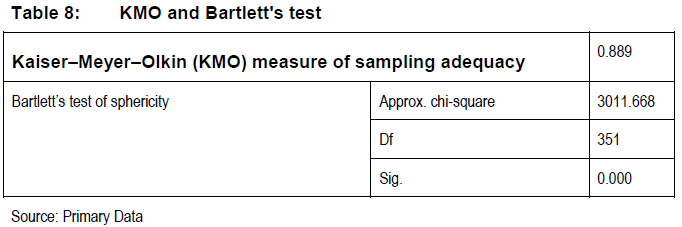
Table 8 presents the KMO and Bartlett's test of the study.
Kaiser-Meyer-Olkin (KMO) test is a measure of how well suited the research data are for factor analysis. The test measures sampling adequacy for each variable in the model and for the complete model. The lower the proportion, the more suited the data is for factor analysis. KMO returns values between 0 and 1 and values of less than 0.6 indicate that the sampling is not adequate and that remedial action should be taken. KMO values between 0.6 and 1 indicate that the sampling is adequate whereas values close to zero mean that there are large partial correlations compared to the sum of correlations. In other words, there are widespread correlations, which are a large problem for factor analysis. This study obtained KMO value of 0.889, which is an indication that the sampling was adequate.
Goodness of fit test was conducted in this study by using Bartlett's test in order to determine whether the sample data represented the data the research expected to find in the actual population. As shown in Table 8, the data collected yielded a chi-squared distribution (χ2 = 3011.668) with p-value = 0.000. Therefore, this research has a chi-squared distribution (χ2 > 0) and a p-value of 0.000 for an α = 0.05 level of significance. This shows a highly significant difference, meaning that the sample data represented the data the research expected to find in the actual population.
7.3 Analysis of Variance
The analysis of variance (ANOVA) is a statistical technique that determines significant differences in scale-level dependent variables by nominal-level variable, which has two or more categories.
General Linear Model (GLM) was used to compute the ANOVA for SMME sectors and poverty reduction with the intention of determining which of the SMME sectors contribute more to poverty reduction compared to other SMME sectors. GLM was also used to compute the R-squared values, which were then used to determine the strength of the variance (difference) among SMME sectors in terms of their contribution to poverty reduction. The findings relate to the secondary question, which aimed at determining the extent to which SMMEs contribute to poverty reduction in Rustenburg.
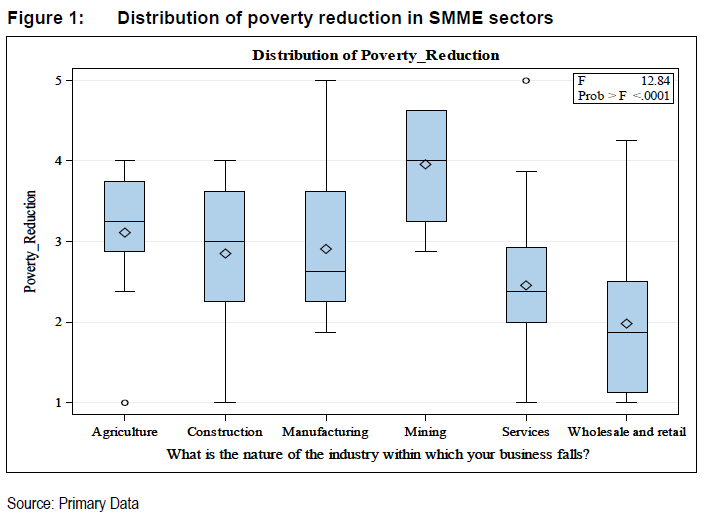
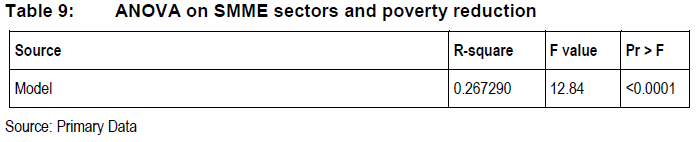
Table 9 and Figure 1 represent the ANOVA on SMME sectors and employment generation.
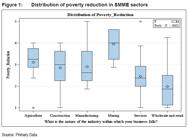
Table 9 shows a p-value of less than 0.05 (significant level), suggesting that there are differences in SMME sectors with regard to their contribution to poverty reduction. The R-square value is 0.267, implying that the extent of the differences (variance) is 27%.
Still on the extent to which SMMEs contribute to poverty reduction in the Rustenburg Local Municipality, results revealed that SMMEs in the mining, manufacturing, construction, and agriculture sectors contributed more to poverty reduction than SMMEs in the services, wholesale and retail sectors.
The results in Table 9 are also complimented by the multiple comparison test reflected in Figure 1, which compares the mean values between the SMME sectors. It is evident from the figure that services, and wholesale and retail sectors have the lowest mean scores, meaning that the contribution of these sectors to poverty reduction in Rustenburg is minimal compared to other SMME sectors. Findings also show that SMMEs explain 27% of the variance of poverty reduction and the remaining 73% can be attributed to the factors that did not form part of this study.
7.4 The Tukey's studentised range test on SMMEs contribution to poverty reduction
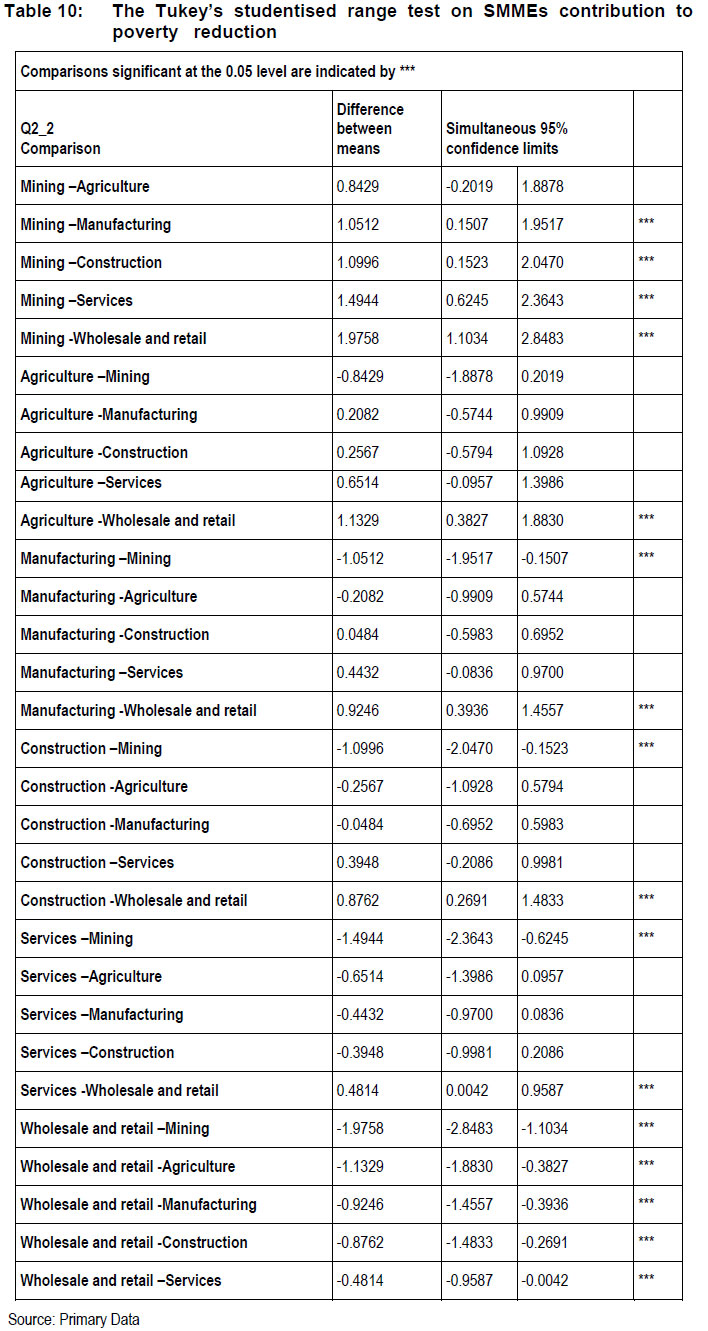
Table 10 compares the means scores of each SMME sector whether they differ significantly in terms of their contribution to poverty reduction. The three asterisks indicate that the means for the listed groups differ significantly. The findings also relate to the secondary research question, which aimed at determining the extent to which SMMEs contribute to poverty reduction in Rustenburg.
As shown in Table 10, the mean scores of SMMEs in manufacturing (1.0512), construction (1.0996), services (1.4944), wholesale and retail (1.9758) are significantly different from the mean score of SMMEs in the mining sector. Table 10 also indicates significant differences between the mean score of the wholesale and retail sector with the mean scores of SMMEs in the sectors of agriculture (1.1329), manufacturing (0.9246), construction (0.8762), and services (0.4814).
Table 10 shows that the mean scores of SMMEs in mining, wholesale and retail differ significantly with mean scores of SMMEs of the other listed sectors. This significant difference means that the SMMEs in the mining, and wholesale and retail sectors contribute more to poverty reduction than other listed SMME sectors. Therefore, these findings suggest that the effect of SMMEs in mining, wholesale and retail in terms of their contribution to poverty reduction is significantly greater than the effect of the other listed SMME sectors.
8. RECOMMENDATIONS
The following recommendations were made by the study. If implemented, these can enhance the operations of SMMEs in Rustenburg to further reduce poverty.
Governments' support of SMMEs seems to be inadequate as the level of unemployment and poverty are still escalating in South Africa despite the implementation of supporting mechanisms by the government for SMMEs.
Also, SMMEs operate in a highly regulated environment, causing them to face constraints that hinder their growth and survival. Although the study focused on Rustenburg specifically, perhaps a review of the regulatory framework countrywide would enhance the entrepreneurial operations of not only SMMEs in Rustenburg but South Africa at large.
9. LIMITATIONS OF THE STUDY
Like every study, some limitations were experienced. One of these limitations was that the given responses were not verified and thus, they remain perceptions. In addition, some of the respondents were unwilling to complete the questionnaires out of fear that their confidential information might be leaked to their competitors. To address this limitation, they were given verbal and written assurance that the study was for academic purposes only and that it would be treated with confidentiality. Also, the study did not reach all areas surrounding the Rustenburg Local Municipality owing to resource constraints. To ensure sufficient time to conduct the study, the researcher, as an employee of an academic institution, utilised his study leave entitlement. In addition, the researcher used some funding from the University of South Africa (UNISA) Postgraduate Fellowship Funds.
10. FURTHER RESEARCH
The focus of this study was on the role played by locally-owned SMMEs operating in Rustenburg. Further studies could be conducted on the role of poverty reduction by foreign-owned SMMEs.
11. CONCLUSIONS
The following practical implications can be drawn from the study. As it has been revealed by this study that most SMMEs play a pivotal role in poverty reduction in Rustenburg, it is now incumbent upon the government to create a conducive environment to enhance the SMME activities. This can be done through an increase in investment in SMMEs' practical development training and provision of sufficient funding.
These findings also create awareness to practising and emerging entrepreneurs, government and other stakeholders of the critical role that SMMEs play in the socioeconomic development of South Africa as well as the extent of their contribution to poverty reduction. As a result, these findings may promote entrepreneurial activities in the country as well as motivate government to review the policies pertaining to the regulatory framework that governs the SMMEs sector.
REFERENCES
5. LITERATURE REVIEW
- BAIRAGI V & MUNOT M. 2019. Research methodology: A practical and scientific approach. London: CRC Press.
-
BERISHA G & PULA J. 2015. Defining Small and Medium Enterprises: A critical review. Academic Journal of Business, Administration, Law and Social Sciences 1(1):17-28.[Internet: https://www.researchgate.net/profile/Gentrit_Berisha/publication/276294683_Defining_Small_and_Medium_Enterprises_a_critical_review/links/5556724708ae6fd2d82363a3.pdf; downloaded on 11 November 2019.
» https://www.researchgate.net/profile/Gentrit_Berisha/publication/276294683_Defining_Small_and_Medium_Enterprises_a_critical_review/links/5556724708ae6fd2d82363a3.pdf - ]
- BERTHA CENTRE FOR SOCIAL INNOVATION & ENTREPRENEURSHIP. 2016. A guide to legal forms for social enterprises in South Africa: University of Cape Town. (Graduate School of Business.
-
)
» https://eunomix.com/cmsAdmin/uploads/eunomix-research_-the-impact-of-platinum-mining-inrustenburg_march2016_001.pdf - DHANAH D. 2016. Small businesses and job creation in South Africa. Cape Town: University of Cape Town. (MCom-dissertation.
-
)
» https://doi.org/10.19030/iber.v14i2.9110 -
]
» https://doi.org/10.9790/487X-2002108087 - DE VOS A, STRYDOM H, FOUCHE C & DELPORT C. 2016. Research at grass roots for the social sciences and human service professions. 4th ed. Pretoria: Van Schaik.
-
GLOBAL ENTREPRENEURSHIP MONITOR (GEM). 2017. GEM Consortium's 18th Annual Global Survey of entrepreneurial activity across multiple phases of the business process. [Internet: https://www.gemconsortium.org/report; downloaded on 15 June 2015.
» https://www.gemconsortium.org/report - ]
- HARMSE L. 2013. South Africa's Gini coefficient. Causes, consequences and possible response. Pretoria. (MBA dissertation.
- )
-
)
» https://doi.org/10.1016/j.ajsl.2018.06.006 -
HOFMEYR CD. 2016. Doing business in South Africa: Cliffe Dekke Hofmeyr (CDH) Report. [Internet:https://www.cliffedekkerhofmeyr.com/export/sites/cdh/en/news/publications/downloads/Doing-Business-in-South-Africa-2016-Edition.pdf; downloaded on 10 August 2019.
» https://www.cliffedekkerhofmeyr.com/export/sites/cdh/en/news/publications/downloads/Doing-Business-in-South-Africa-2016-Edition.pdf -
]
» https://www.researchgate.net/publication/315516536_AFRICAN_SMALL_AND_MEDIUM_ENTERPRISES_SMES_CONTRIBUTIONS_CHALLENGES_AND_SOLUTIONS - )
-
JANSEN A, MOSES MM, MUJUTA S & YU D. 2015. Measurements and determinants of multifaceted poverty in South Africa. Development Southern Africa 32(2):151-169. (DOI:https://doi.org/10.1080/0376835X.2014.984377.
» https://doi.org/10.1080/0376835X.2014.984377 - )
-
KATUA NT. 2014. The role of SMEs in employment creation and economic growth in selected countries. International Journal of Education and Research 2(12):461-472. [Internet: https://www.ijern.com/journal/2014/December-2014/39.pdf; downloaded on 18 November 2019.
» https://www.ijern.com/journal/2014/December-2014/39.pdf -
]
» https://vtechworks.lib.vt.edu/bitstream/handle/10919/70961/Chapter_5_Forms_of_Business_Ownership.pdf - LEBOEA S. 2017. The factors influencing SMEs failure in South Africa. Cape Town. (MCom dissertation.
- )
-
LEKHANYA LM. 2015. Public outlook on small and medium enterprises as a strategic tool for economic growth and job creation in South Africa. Journal of Governance and Regulation 4(4):412-418. (DOI:10.22495/jgr_v4_i4_c3_p7.
» https://doi.org/10.22495/jgr_v4_i4_c3_p7 - )
- )
-
MARTIN AG & PETERSEN M. 2018. Poverty Alleviation as an Economic Problem. Cambridge Journal of Economics 43(1):205-221. (DOI:https://dx.doi.org/10.2139/ssrn.2924048.
» https://dx.doi.org/10.2139/ssrn.2924048 - )
- )
-
MNCAYI NP. 2016. The Determinants of Employment Status of Young Graduates. Magister Commercii 1-181. (April.) [Internet:https://repository.nwu.ac.za/bitstream/handle/10394/17038/Mncayi_NP.pdf?sequence=1&isAllowed=y; downloaded on 18 November 2019.
» https://repository.nwu.ac.za/bitstream/handle/10394/17038/Mncayi_NP.pdf?sequence=1&isAllowed=y - ]
- ]
- REPUBLIC OF SOUTH AFRICA. 1996. National Small Business Act No. 102 of 1996. Pretoria: Government Printers.
- )
- RUSTENBURG LOCAL MUNICIPALITY. 2016b. SMMEs database for Rustenburg Local Municipality (20142016.
- )
-
SINGH R. 2018. The Cause of Unemployment in Current Market Scenario. Vivechan International Journal of Research 9(1):81-86. [Internet: http://ijrimsec.com/assoc_art/volume9_1/Ch_8.pdf; downloaded on 18 November 2019.
» http://ijrimsec.com/assoc_art/volume9_1/Ch_8.pdf - ]
- ]
-
SMALL ENTERPRISE DEVELOPMENT AGENCY (SEDA). 2016. Annual Report [Internet:www.seda.org.za/Annual%20Reports/seda%20Annual%20Report%2016-17.pdf; downloaded on 14 May 2016.
» www.seda.org.za/Annual%20Reports/seda%20Annual%20Report%2016-17.pdf - ]
-
STATISTICS SA. 2016. Quarterly Labour Force Survey, Quarter 1. [Internet:www.statssa.gov.za/publications/P0211/P02111stQuarter2016.pdf; downloaded on 25 October 2015.
» www.statssa.gov.za/publications/P0211/P02111stQuarter2016.pdf - ]
- TODARO S & SMITH S. 2015. Economic development. 12th ed. New York: Pearson-Prentice Hall.