Sex differences and work engagement: a study across 27 South African companies
Abstract
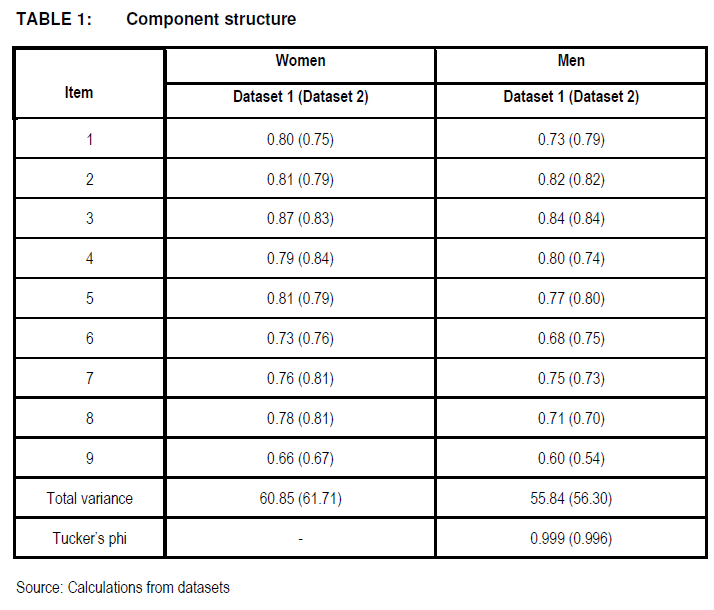
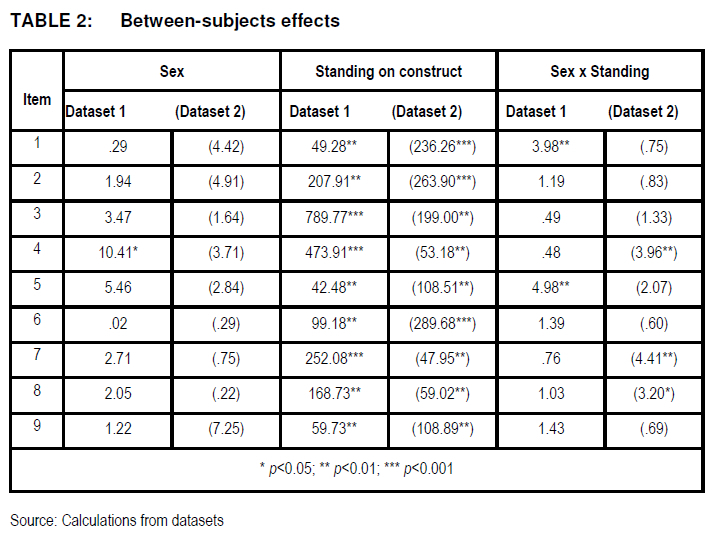
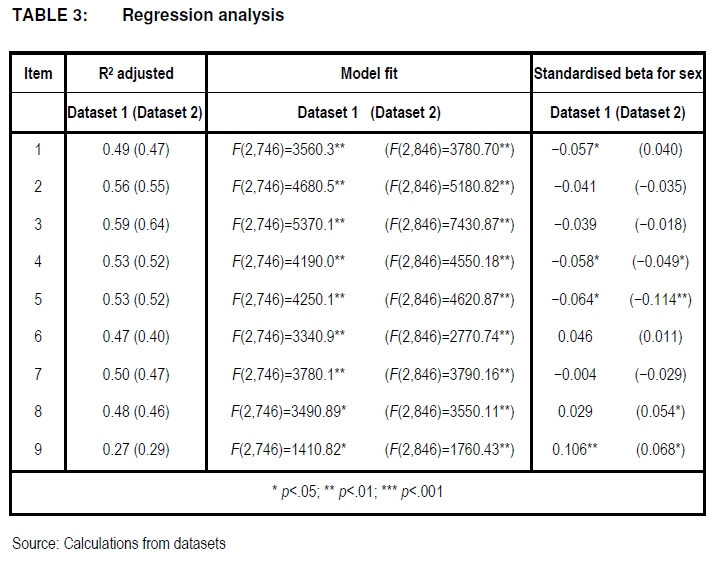
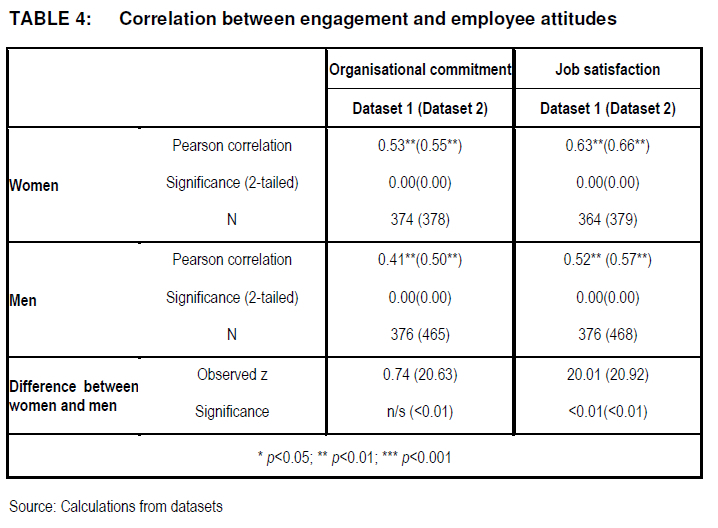
According to literature, employees who display vigour, dedication and absorption in their work are deemed to be engaged, resulting in increased productivity. Engagement, as well as the unbiased measurement thereof, may therefore be considered as a matter of interest and importance in the workplace. The Utrecht Work Engagement Scale (UWES-9) is the most widely used self-report measure of engagement and has been validated in many countries. However, no empirical studies aimed at identifying sex-specific outcomes associated with the UWES-9 could be found. The aim of this research was to determine whether sex differences in work engagement exist, including sex-based differences in the psychometric properties of the UWES-9. A cross-sectional survey design was used. Data were collected independently on two occasions, as to assess whether the findings can be replicated. Initially, employees from 10 companies (N1=750) were surveyed. During the second research session, employees from 17 companies (N2=864) participated. In both cases men and women were almost equally represented. In the case of the first sample, at an item level, sex bias was detected in four of the nine items of the UWES-9. However, the factorial structure of the UWES-9 for men and women appeared similar. Correlation coefficients between UWES-9 scores and other related constructs differed along sex lines. Men obtained practically significant higher mean scores than women on the UWES-9. Similar, but not identical, findings were reported with the second sample. The results indicated sex bias at item level, but structural equivalence at scale level was found. Men scored higher than women on the scale and the overlap between UWES-9 scores and other measures taken at the same time was statistically larger for women compared to men. Users of the UWES-9 are cautioned against conducting mean score comparisons across gender lines and using the instrument in correlative studies as the measured constructs may have different meanings for men and women.
employee engagement; gender; sex; UWES-9; work engagement