An empirical investigation into customers' attitude towards usage of cell phone banking in Gauteng, South Africa
Abstract
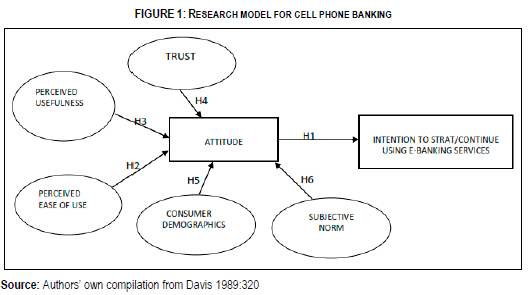
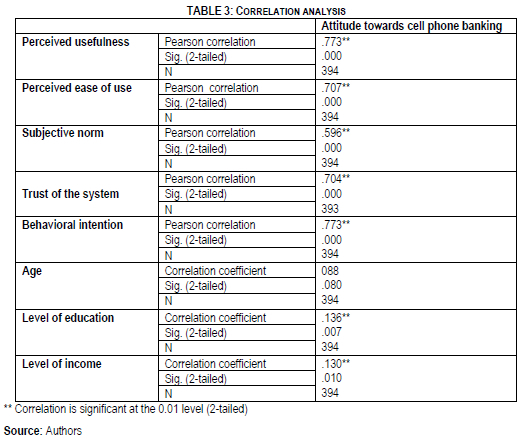
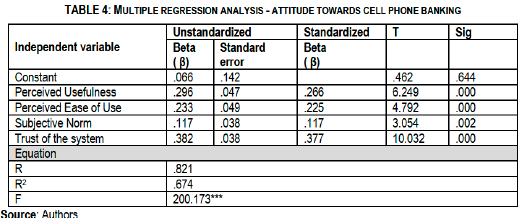
The need to reduce operational costs and meet the increasing expectations of customers while remaining competitive has forced banks to deploy information technologies into the provision of banking services. The adoption rate of some of these electronic banking services is, however, not as good as initially hoped for. This study expanded the Technology Acceptance Model by including trust, subjective norm and demographic variables to understand the factors that influence retail banking customers' attitude towards cell phone banking services. Data was collected from retail banking customers in Gauteng, South Africa, using a self filling structured questionnaire. A total of 394 usable responses were received. Result of the analysis show that perceived usefulness, perceived ease of use, trust and subjective norm are all significantly related to attitude towards cell phone banking. Trust was, however, found to have the strongest predictive power on customers' attitude towards cell phone banking than all the other variables. Furthermore, attitude was found to contribute significantly to customers' intention to start using/continue using cell phone banking services. These findings have wider implications on efforts aimed at encouraging more customers to make use of cell phone banking and these have been highlighted in the paper.
cell phone banking; electronic banking; retail banking; South Africa; technology acceptance model
 Thumbnail