Modelling the drivers of green buying behaviour of millennials in an emerging economy
Abstract
PURPOSE OF THE STUDY: Despite growing concerns about environmental problems and the growth in sustainable consumption globally, the African continent is arguably lagging behind when it comes to green consumption. Due to the dearth of literature on the green buying behaviour of African millennials, little is known about the drivers of the green buying behaviour of this cohort. Thus, the purpose of this study is to propose and test a hypothetic model delineating the drivers of the green buying behaviour of millennials in South Africa. DESIGN/METHODOLOGY/APPROACH: The study was underpinned by a positivist paradigm and a quantitative approach was implemented. A cross-sectional design, in which data from 324 valid responses was collected using a structured online survey from QuestionPro, was employed. Structural equation modelling (SEM) using IBM SPSS Amos 26 was used for data analysis and hypothesis testing. FINDINGS: The findings revealed that social influence, product knowledge and behavioural intention had a positive and significant influence on green buying behaviour and that environmental attitude, social influence, product knowledge and perceived price had a positive and significant influence on behavioural intention. RECOMMENDATIONS/VALUE: By presenting insights from an understudied consumer cohort, namely, millennials in an emerging African economy, this study contributes to the body of literature that informs the understanding of green purchasing behaviour. MANAGERIAL IMPLICATIONS: The study has practical implications for a consumer segment that has not been adequately explored in South Africa. Marketing managers are presented with an opportunity to tap into a lucrative market, namely, the millennials. This means that marketing managers should not only make green products available on store shelves in critical masses but should also invest in developing customised marketing communication strategies to create more awareness of these products. JEL CLASSIFICATION: M31
Behavioural intention; Environmental attitude; Environmental awareness; Green buying behaviour; Perceived price; Millennials; Product knowledge; Social influence
1. INTRODUCTION
The advent of climate change has arguably resulted in a shift in consumers' consumption behaviour towards more sustainable patterns. Consistent with this trend, research and literature on sustainable and green consumption has proliferated on a global scale (Jaiswal & Kant, 2018; Cheung & To, 2019; Rausch et al., 2021), including in South Africa (Dilotsotlhe & Inseng, 2020; Koloba, 2020; Maziriri, 2020). The aforementioned literature on the phenomenon of green consumption indicates that consumers have become more sensitised to the well-being of the environment and the need to preserve it. Consumers are, therefore, interested in green products, as confirmed by several scholars (Nguyen et al., 2019; Pham et al., 2019; Patel et al., 2020; Wang, Wong et al., 2020; Ashinze et al., 2021). The explosion of literature on sustainability is an indication of the importance of the topic generally and in the scholarly community. Recent literature suggests that sustainable consumption is important because it may help marketers to supply healthier and more ethical products while also helping the environment (Biswas, 2020).
While the appreciation of green products in developed markets has steadily increased, along with considerable growth in the scholarly literature, the situation is arguably different on the African continent (Ndofirepi & Matema, 2019). In particular, literature on the green buying behaviour of African millennials is scant. As such, little is known about green consumption and the determining factors in this massive and important market segment. Though there are several definitions of green products in the literature, in general, they are defined as products that have the potential to protect the environment and have little impact on it. Moreover, these are products that are environmentally friendly, and their production processes do not exert much negative influence on the environment (Ansu-Mensah, 2021).
Due to its size and manifest buying power prospects, the millennial market segment in the African continent cannot be overlooked by policymakers, marketers, and scholars alike. For instance, a report by the United Nations (2018) reveals that Africa is the only region in the world where the youth is increasing and is expected to constitute 51% of the total population by 2050. This will result in a young and fast-growing middle class, which will inevitably want a higher standard of living, leading to greater consumption (World Economic Forum, 2021). Therefore, this gap in the literature justifies that specific research on the green buying behaviour of millennials in the African context is carried out. Thus, this paper aimed to investigate the determinants of the green buying behaviour of millennials in South Africa.
This section provides the literature review of works on the green buying behaviour of millennials, the theoretical lens underpinning this study and the research model and hypothesis development. A discussion on the key constructs which make up the research model ensues.
2.1 Millennials' green buying behaviour
Green buying behaviour refers to behaviour that directly benefits the environment as part of the transition to sustainability, such as buying green products (Wang-Wong et al., 2020). A global plethora of research examines the phenomenon of green buying behaviour generally, but research that specifically focuses on the millennial market from emerging economies in the African context is scant.
More recently, a global movement has emerged towards what has been called the millennial moment, which signifies when the millennial generation will dominate the political and economic spheres of society (Naderi & Van Steenburg, 2018). Therefore, scholars, practitioners, and policymakers in the African continent need to appreciate that the millennial consumer segment can no longer be ignored. Creating green marketing policies and strategies that are relevant for the millennial generation requires an understanding of the factors that influence the customer behaviour of this generation (Chaudhary & Bisai, 2018).
From a marketing perspective, millennials are a technologically savvy generation that is confident and more independent than other generations. This generational cohort is not only aware of the environmental consequences of their actions but they are also motivated to contribute to a more sustainable lifestyle (Licsandru & Cui, 2019). Although there is no consensus in the literature on the exact year that millennials were born, the term 'millennials' in this paper refers to people who were born between 1980 and 2002 (Kaifi et al., 2012). As research that specifically focuses on the millennial market in emerging economies in the African context is scant, it is vital to study the drivers of the buying behaviour of millennials from the perspective of an emerging African economy such as that of South Africa.
2.2 Underlying theory
The theory of planned behaviour (TPB) serves as the theoretical framework for this study. It was developed by Ajzen (1985) as a revision of the theory of reasoned action (TRA) formulated by Fishbein and Ajzen (1975). The TPB asserts that intention is the most important determinant of whether to engage (or refrain from engaging) in a certain behaviour (Ajzen, 1991).
According to the TPB, a person's attitude affects whether or not they intend to engage in a particular behaviour based on their overall evaluation of the behaviour. In this nexus, the actual behaviour is believed to be a kind of behavioural control and the direct result of behavioural intention. A person's subjective norm is their perception of the influence of important individuals on them to perform the behaviour, while their perceived level of behavioural control refers to the extent of control they feel over the behaviour, as determined by the opinions of important referents (Ajzen, 2005). In a nutshell, the TPB combines affective, cognitive, and conative components to assess a person's propensity to engage in certain behaviours (Ajzen, 2005; Dilotsotlhe, 2021).
The TPB has been used widely, and extensions have been made by several scholars of consumer behaviour to gain a better understanding of the influence of the three components on product buying behaviour from a psychological perspective. Numerous studies have proven the relevance and the robustness of the theory, which shows that it can be applied to many different industries and situations (Taufique & Vaithianathan, 2018; Ting et al., 2019; Zhang et al., 2019; Liao et al., 2020; Yarimoglu & Gunay, 2020).
However, like its predecessor, the TPB has limitations. For instance, the theory places significant focus on the relationship between intention and behaviour, which suggests that situational consistency remains an important predictive factor (Razali et al., 2020). The TPB is also often criticised for its lack of clarity on how belief structures relate to the antecedents of intention. Ajzen (1991) admits, however, that despite these limitations, the TPB is open to the inclusion of additional constructs that can show a significant variation in intention as well as behaviour when compared to other constructs. Thus, in this paper, the drivers of the green buying behaviour of millennials are modelled from an emerging market perspective using the TPB as the theoretical framework.
2.3 Research model and hypothesis development
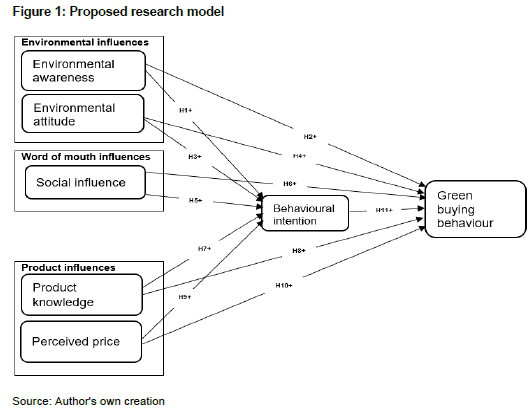
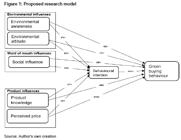
Based on the literature reviewed, certain variables namely - environmental awareness, environmental attitude, social influence, product knowledge, perceived price, and behavioural intention - were identified to develop the research model explaining green buying behaviour; these variables are depicted in Figure 1. Each variable is described and operationalised in the sections that follow.
2.3.1 Environmental awareness
Environmental awareness is defined as the knowledge and understanding of the problems associated with the environment (Du et al., 2018). Green consciousness has been shown to influence human behaviour in several ways, such as by reducing unsustainable consumption behaviours and helping consumers establish preferences for items that conform to environmental standards (Ahmed et al., 2020).
Environmental awareness is distinguished not only by its psychological aspects but also by the feelings and experiences associated with a particular behaviour (Ogiemwonyi, 2022).
Therefore, a strong sense of self-belief and moral duty to adopt the necessary measures to minimise the negative effects of non-sustainable actions develops when consumers are aware of the possible consequences of such actions (Ojo & Fauzi, 2020). This means that consumers are more inclined to adopt environmentally friendly (green) consumption behaviour when they have a better awareness of environmental issues. It should be stressed that knowledge of green products and environmental awareness are closely related constructs (Shahzad et al., 2021).
A similar argument is made by Dursun et al. (2019), who claim that objective environmental knowledge can be used to encourage changes towards sustainable consumption habits and remove the psychological barriers that young consumers face when engaging in pro-environmental behaviour. Accordingly, it is postulated in this paper that millennials' behavioural intention and green buying behaviour are positively influenced by environmental awareness. The following hypotheses are formulated:
H1: Environmental awareness has a positive significant impact on behavioural intention.
H2: Environmental awareness has a positive significant impact on green buying behaviour.
2.3.2 Environmental attitude
The attitude of an individual is recognised in the literature as one of the key factors determining behaviour (Trivedi et al., 2018; Otto et al., 2019; Faize & Akhtar, 2020; Kaur et al., 2022). Ajzen (1991) asserts that attitude is based on a judgement of whether a specific behaviour is desirable or not. As attitudes play an important role in influencing behaviour, particularly as it relates to the actual purchase and consumption of items, attitudes towards the environment are therefore valuable in terms of increasing consumers' knowledge regarding environmentally friendly products (Dhir et al., 2021). This means that a consumer's ability to create strong positive attitudes towards environmentally friendly products could lead to a considerable increase in their willingness to purchase these goods (Liu et al., 2020).
However, despite the gap between attitudes and behaviour that has been acknowledged in the literature, evidence indicates that a causal relationship exists between the two variables. For instance, most recent studies (Nguyen et al., 2019; Dhir et al., 2021; Shimul et al., 2022) have demonstrated a causal link between consumers' attitudes and their consumption behaviour in terms of green products. Other studies (Sadiq et al., 2021; Zheng et al., 2021) in India and Bangladesh suggest that a key determinant of intention is attitude as it influences consumers' behavioural decisions. The following hypotheses, based on the above discussion on environmental attitude, are proposed:
H3: Environmental attitude has a positive significant impact on behavioural intention.
H4: Environmental attitude has a positive significant impact on green buying behaviour.
2.3.3 Social Influence
Most consumer behaviour scholars agree that individuals and/or groups have a profound influence on society in terms of their traditions and cultural trends. This implies that social factors have a significant impact on how people or groups act generally. Social influence is defined as the social pressure exerted by members of a particular group; because of this pressure, members of the group change their attitudes to meet the demands that are generally recognised as valid by society (Ajzen, 1991). It is worth noting that social influence has been studied and conceptualised from various perspectives, none of which necessarily contradict one another. For example, the TPB provides a conceptualisation of subjective norms that helps to explain how society influences people's behaviour, which is exactly what social influence is (Chen et al., 2018).
Based on this perspective, studies on green customers consider consumer social influence and attitudes towards green products. For instance, Ojo and Fauzi (2020) contend that social influence might have a significant impact on a person's willingness to buy green products. According to the findings of relevant studies, consumers' views about products are influenced by the perceptions of their social groups (Chen et al., 2018; Hu et al., 2019; Rezaei et al., 2020). The above argument clearly indicates that people act in a certain way depending on their preferences or attitudes towards a particular product, as well as their desire to win the approval of their significant others or to gain social recognition. Based on this discussion, the hypotheses are as follows:
H5: Social influence has a positive significant impact on behavioural intention.
H6: Social influence has a positive significant impact on green buying behaviour.
2.3.4 Product knowledge
Consumer awareness of environmentally friendly products is part of green product knowledge, and this knowledge can help in the development of certain beliefs related to environmental issues (Kim & Stepchenkova, 2019). Naseem et al. (2022) stress that consumers' perception and evaluation of green products are particularly dependent on their level of knowledge regarding these products. Biswas (2020) maintains that educating people about the environment has been linked to increased awareness of the environment in these people and, consequently, increases their motivation to act appropriately. Consumers can decrease information asymmetry and increase their likelihood of making informed buying decisions by evaluating green items holistically (Liobikienė & Poškus, 2019).
Studies have found that knowledge of green products is associated with consumers' attitudes towards purchasing these products. For instance, it was demonstrated in a study by Yue et al. (2021) how customers' understanding of product labels affects their green behaviour. Likewise, studies conducted in the South African context have found that consumers are more inclined to purchase green products if they know the product labels (Issock et al., 2018). Based on the above arguments, consumers who are more knowledgeable about green products will be more environmentally conscious and responsible. As such, the following hypotheses are posited:
H7: Product knowledge a positive significant impact has an impact on behavioural intention.
H8: Product knowledge has a positive significant impact an impact on green buying behaviour.
2.3.5 Perceived price
The consensus in the literature is that price is a measure of how much money consumers are willing to spend on a particular product or service (Fahy & Jobber, 2019). Price is widely regarded as the consumers' general assessment of the scope and extent of the benefits that accrue from purchasing a product and/or service. In addition to determining the benefits and efficacy that accrue to consumers from using a product, the price can also be defined as the amount of time and effort consumers devote to using a particular product and/or service (Nkoyi et al., 2019). Although there are concerns about the higher prices of green products, the literature shows that using these products has advantages over using conventional items and people are therefore prepared to pay more for these products (Ashinze et al., 2021). Consumers are thus motivated more by the perceived value of green products than by their actual pricing.
Generally, consumer perceptions of the value of green products are influenced by perceived price; the higher the perception of value, the more likely consumers are to purchase green products (Kumar et al., 2021). Previous research (Irfan et al., 2020; Ashinze et al., 2021) has shown that behavioural adoption is directly and significantly associated with price. The results of earlier studies show that consumers are more inclined to buy green products based on their expectations of sustainability, attitudes towards the environment and preferences regarding product choice (Luo et al., 2022). It can therefore be concluded that perceived price plays a key role in the process of consumer purchasing as it serves as an important indicator of consumer judgements and determines whether consumers are inclined to make a purchase (Wang et al., 2019). Based on the aforementioned literature on perceived price, the hypotheses are as follows:
H9: Perceived price has a positive significant impact on behavioural intention.
H10: Perceived price has a positive significant impact on green buying behaviour.
2.3.6 Behavioural intention
Behavioural intention is one of the fundamental elements of TBP, as mentioned previously. According to Hamzah and Tanwir (2021), green customers are regarded as people who identify with and use green products. The authors maintain that these consumers may also be referred to as responsible shoppers because they make purchases that have a positive influence on the environment. Chin et al. (2018) argue that behavioural intention is a consumer's predisposition to buy green products based on personal preferences, thereby better satisfying the needs of the consumer. Amoako et al. (2020) suggest that having a favourable attitude towards green products increases the likelihood of forming a green behavioural intention to engage with these products. This is confirmed by recent studies (Pham et al., 2019; Sadiq et al., 2021; Zheng et al., 2021), which have shown that consumers' attitudes play a significant role in their intention to perform the specified behaviour.
While there is consensus among the above-mentioned scholars that attitudes affect a consumer's intention to purchase green products, other scholars (Patel et al., 2020; Wang, Li et al., 2020) contend that behavioural intention is an important factor in determining buying behaviour. This is in line with the central principle of the TPB, namely, that an individual's behavioural intention is shaped by a combination of three fundamental factors, namely, attitude, subjective norm, and perceived behavioural control, while the proximal predictor of actual human behaviour is behavioural intention. Accordingly, in this paper, the causal relationship between behavioural intention and green purchase behaviour is theorised, as depicted in Figure 1. Thus, the following hypothesis is proposed:
H11: Behavioural intention has a positive significant impact on green buying behaviour.
3. METHODOLOGY
This section presents the investigative methodology employed for this empirical study. The key elements of methodology - philosophical position and research paradigm, target population and sampling approach, the research instrument and data collection and analysis - are briefly discussed in the subsequent sections.
3.1
Philosophical position and paradigmResearch philosophy is defined as the overarching term that relates to the development of knowledge and the nature of that knowledge, providing the overarching paradigm within and from which researchers operationalise their inquiry (Saunders et al., 2012). A paradigm is a particular way of viewing the world and a framework of assumptions that reflects a shared set of philosophical beliefs about the world; the chosen paradigm places strict guidelines and principles on how the research should be conducted (Burns & Burns, 2008). As knowledge regarding the modelling of the drivers of the green buying behaviour of millennials in an emerging economy should be based on facts and that facts are empirically and systematically established through recognised scientific methods, the researchers decided to frame the investigation within a positivist paradigm, which is associated with quantitative research methods.
3.2
Target population and sampling approachA target population consists of every possible consumer who possesses the information sought by the research study; a sample refers to a subset of the target population (Burns & Bush, 2014). While the debate on who constitutes this generational cohort continues in the literature, in this paper, the characterisation by Jain and Dutta (2019) that the millennial generation comprises individuals who were born between 1980 and 2000 is preferred. As they are thought to be the most active, knowledgeable, and sensitive generation in terms of their purchasing behaviour and decisions, millennial consumers have been carefully chosen as the unit of analysis in this empirical study (Francis & Sarangi, 2022).
As covariance structural equation modelling (SEM) was the analysis method of choice, the sample size was determined using the recommendations made by Hair et al. (2014). They recommend a minimum of 300 respondents for a complex model with seven constructs. As the proposed research model has seven latent variables, a sample size of 324 respondents was considered adequate for carrying out data analysis.
3.3
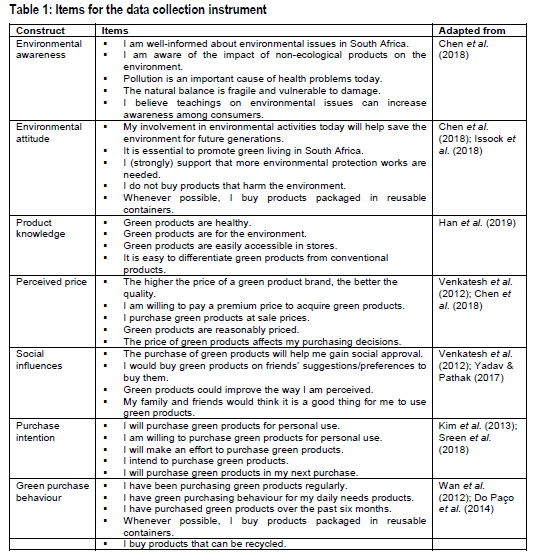
Research instrument, data collection and analysisThe research instrument for the study consisted of designing an online questionnaire using the QuestionPro platform and making use of all its features to create the best possible questionnaire design. The first section of the survey consisted of questions related to the demographic profile of the respondents, including variables such as age, educational background, and province of residence. The second section comprised a five-point Likert scale, with '1' denoting 'strongly disagree' and '5' denoting 'strongly agree', to assess the level of disagreement with each of the statement items measuring the seven constructs. In total, the second section contained 35 Likert scale statements. The scale items used and the sources from which they were adapted are shown in Table 1. Using QuestionPro's customizable templates, branching logic, and skip functionalities, the survey was meticulously structured to enhance clarity, engagement, and ease of response comprehension. To ensure a well-represented sample, the survey was exclusively disseminated to Millennials via targeted online platforms and social media channels frequented by this demographic. Stringent measures were implemented to maintain the confidentiality and anonymity of respondents' data. The survey was active for a specified period, purposefully designed to gather a substantial volume of responses from the targeted demographic.
During the process of data analysis, the captured data were analysed, described, and interpreted systematically. The data included the demographic profiles of the respondents and other descriptive statistics. The main data analysis was carried out using SEM with IBM SPSS AMOS 26. SEM represents a flexible and comprehensive methodology for representing, estimating, and testing a theoretical model to explain as much of its variance as possible (Ramlall, 2017).
Primarily, the purpose of the analysis in SEM is to evaluate the structural relationships of the variables specified in the research model. The procedure for data analysis followed the traditional SEM two-step approach, namely, confirmatory factor analysis (CFA) and the assessment of the structural model. For the CFA and reliability and convergent validity, discriminant validity was assessed; for the structural model analysis, the standardised regression path (β) and coefficient of determination (R2) were used. The results of the analysis are presented in the following section.
This section will present the results of the empirical study, which will include a description of the sample, confirmatory factor analysis, structural model, and hypothesis testing.
4.1 Description of the sample
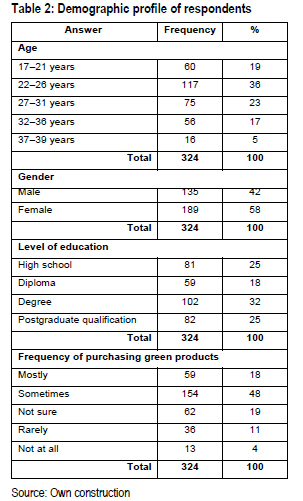
Based on the frequencies and percentages depicted in Table 2, the study sample was balanced demographically. The results show that most study participants were between the ages of 22 and 26 years (n = 117; 36%). The results further show that female participants (n = 189, 58%) were predominant over male participants (n = 135; 42%). Concerning the level of education, most respondents had a degree (n = 102; 32%).
In the online survey, respondents were asked to indicate how often they bought green products; the results show that nearly half of them (48%) did so sometimes. This was followed by those who were not sure whether they bought green products (19%). A total of 11% of respondents indicated that they rarely bought green products, and 4% responded 'not at all' to the question of how often they bought green products.
4.2 Confirmatory Factor Analysis
SEM using IBM SPSS Amos version 26 was the preferred data analysis method. A two-stage procedure was followed - an assessment of the measurement model, followed by an assessment of the structural model. During the first phase, CFA, using the maximum likelihood estimation, was carried out to assess the fit indices, construct reliability and validity. The analysis revealed that, although they were close to the required thresholds, the fit indices of the initial model did not meet all the acceptable criteria, for instance, about four items, namely. EA1, EAT5, BI5, and GPB5 had low factor loadings. As such, the concerned items had to be removed from the initial measurement model so that it could be improved.
After the four items were removed, the modified measurement model showed acceptable fit indices based on the common thresholds (Malhotra et al., 2017): the chi-square/degree of freedom (CMIN/DF = 1.617), the root mean square error of approximation (RMSEA = 0.044), the normed fit index (NFI = 0.917), the comparative fit index (CFI = 0.966), the Tucker-Lewis index (TLI = 0.962) and the goodness-of-fit index (GFI = 0.890). The CFA proceeded to assess the psychometric properties of the measurement model to confirm the structure of the scale through construct reliability, convergent validity, and discriminant validity tests based on the recommendations of Hair et al. (2014).
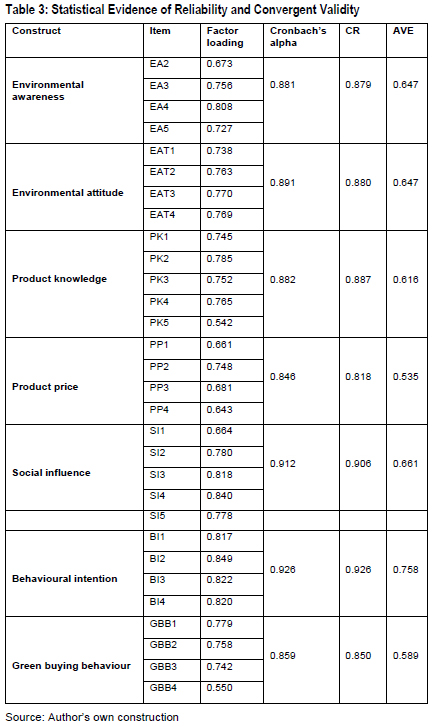
The reliability of the latent constructs was determined using Cronbach's alpha, and the convergent validity was assessed by considering the item factor loadings, the average variance extracted (AVE) and the composite reliability (CR). The results in Table 3 show that the reliability of the scale was confirmed in that all Cronbach's alpha readings were above the threshold of 0.7. Convergent validity was established in that the factor loadings were above 0.5, the CR score was above 0.7, and the AVE was above 0.5, in line with the guidelines in the methodology literature (Hair et al., 2014; Malhotra et al., 2017).
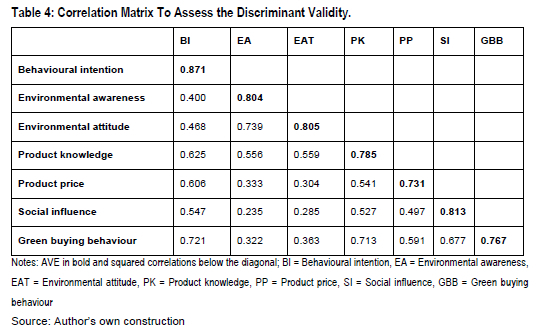
The Fornell-Larcker criterion was also used to assess the discriminant validity by comparing correlations between all pairs of constructs with the square root of the AVE of each construct (Malhotra et al., 2017). The results in Table 4 indicate that there is no discriminant validity concern between any of the constructs because the square root of the AVE of all the constructs is above the inter-construct correlation value of the constructs (Malhotra et al., 2017).
4.3. Structural model and hypothesis testing
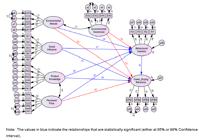
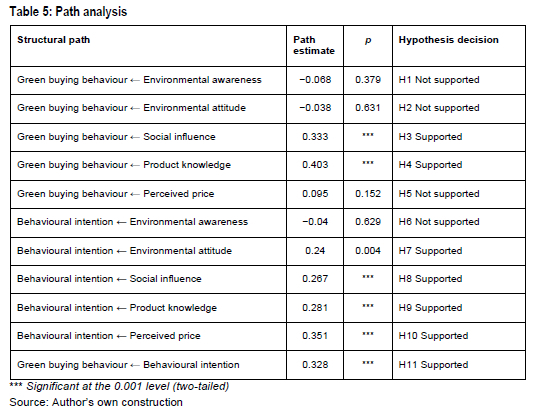
In the second phase, the hypothesised causal relationships between the latent constructs were tested through a structural model, once again using the maximum likelihood estimation performed in Amos version 26. The results of the empirical assessment of the research model theorised in this paper are reported in Table 5 and depicted graphically in Annexure A (the full hybrid structural model). Before testing the causal relationships stated in the hypotheses, the fit of the model was assessed.
The results indicate satisfactory fit indices for the structural model (chi-square = 836.950; p = .000; df = 387), as follows: CMIN/DF = 2.163; GFI = .860; AGFI = 0,832; NFI = .887; TLI = .927; CFI = .935; RMSEA = .060. Thus, the structural model fits the data satisfactorily and the analysis can therefore proceed with the hypothesis testing. The structural model shows that the model explains up to 42% (R2 = 0.425) of the variance of behavioural intention, and 64% (R2 = 0.644) of the variance of green buying behaviour, which are considered to be moderate predictive power, and acceptable
The results of the hypothesis testing are summarised in Table 5 and the statistical significance of the hypothesised relationships is indicated. Path estimates indicate the strength and the direction of the relationship; p values demonstrate the significance of the predictive effect; and hypothesis decisions are made based on p values being significant at the 0.001 level (two-tailed).
Table 5 shows that of the 11 causal relationships hypothesised in this study, seven are statistically significant, and the hypotheses that inform them are therefore supported. These are the relationships between the following: social influence and green buying behaviour, product knowledge and green buying behaviour, environmental attitude and behavioural intention, social influence and behavioural intention, product knowledge and behavioural intention, perceived price and behavioural intention, and behavioural intention and green buying behaviour.
5. DISCUSSION OF THE FINDINGS
While it was initially hypothesised that environmental awareness would have a positive and statistically significant influence on green buying behaviour, the results did not support this hypothesis. This means that improving environmental awareness among millennials in South Africa will not necessarily translate into an improvement in their green buying behaviour. This contradicts the findings of an earlier study, which showed that environmental awareness was a direct predictor of green purchasing behaviour (Du et al., 2018).
However, the link between environmental awareness and green purchasing behaviour should not be overlooked, even though this hypothesis was not supported in this study. This is based on the fact that although consumers may have increased environmental awareness, factors such as the unavailability of green products can negatively influence their behaviour (Rustam et al., 2020). Therefore, it can be concluded that while millennials in South Africa are somewhat aware of environmental issues, their awareness does not necessarily translate into pro-environmental behaviour. This may be because not many green items are available.
Environmental awareness was also found not to have a significant influence on the behavioural intention to purchase green products among South African millennials, which contradicts the findings of a recent study by Ogiemwonyi (2022) conducted in Nigeria. Again, it can be argued that while millennials in South Africa are somewhat aware of environmental issues, their awareness does not always translate into the formation of the behavioural intention to buy green products. This is similar to the conclusion that was drawn regarding the relationship between environmental awareness and green buying behaviour.
As environmental attitude is widely cited as an influential determinant of green consumption in existing literature (Trivedi et al., 2018; Otto et al., 2019; Faize & Akhtar, 2020; Kaur et al., 2022), this study hypothesised that it, too, would have a positive and statistically significant influence on the green buying behaviour of South African millennials. However, contrary to the findings of the aforementioned literature, the results here revealed that environmental attitude does not have a significant influence on green buying behaviour. H3 is, therefore, not supported. This means that improving environmental attitudes will not necessarily translate into an improvement in green buying behaviour.
The results revealed that environmental attitude has a positive and statistically significant influence on the behavioural intention of South African millennials towards purchasing green products. This is consistent with a previous study which theorised a similar relationship. For example, a study conducted in Dhaka by Zheng et al. (2021) found that attitude was a significant predictor of behavioural intention. This means that while there is no evidence supporting the attitude-behaviour nexus, contrary to this study, it may be concluded that the more positive the attitude of South African millennials towards the preservation of the environment, the greater their behavioural intention towards buying green products will be.
It was hypothesised that social influence would have a positive and statistically significant impact on both behavioural intention and green buying behaviour. This is premised on the fact that the marketing literature posits that consumers are influenced by those around them (Chen et al., 2018; Hu et al., 2019). The findings showed that social influence did, in fact, have a positive and significant impact on both behavioural intention and green purchasing behaviour. These findings confirm the findings of previous studies. For instance, in their study, Ojo and Fauzi (2020) found that consumers are guided by social norms to engage in pro-environmental behaviours and that social influence is a predictor of behavioural intention (Chen et al., 2018; Rezaei et al., 2020). Regarding South African millennials, it can be concluded that the higher the social influence, the greater the chances that their behavioural intention towards buying green products, as well as their green buying behaviour, will increase. H5 and H6 are, therefore, both supported.
It was also posited that product knowledge would have a positive and statistically significant influence on the behavioural intention and green purchasing behaviour of South African millennials as in previous studies, it is a direct predictor of green purchasing behaviour (Issock et al., 2018; Naseem et al., 2022). The results confirmed that product knowledge has a positive and significant influence on behavioural intention and green buying behaviour. H7 and H8 are therefore supported. This confirms the findings of previous studies conducted internationally (Liobikienè & Poskus, 2019; Naseem et al., 2022) and in South Africa (Issock et al., 2018). This suggests that when millennials' product knowledge increases, their behavioural intention also increases, as does their predisposition to purchase green products. It can, therefore, be concluded that knowledge of green products plays a crucial role in influencing behavioural intention as well as the actual green buying behaviour of millennials in South Africa.
It was also hypothesised that the perceived price would have a positive and statistically significant influence on both the buying intention and actual green buying behaviour of millennials. This was premised on the assumption in the literature that green products are generally priced higher than traditional products as these products have the attribute of being environmentally friendly (Chen & Chang, 2012). The findings revealed that perceived price has a positive and significant influence on millennials' behavioural intention to purchase green products. H9 is, therefore, supported. This means that millennials are more likely to purchase green products when they have favourable price perceptions.
However, the results revealed that perceived price has no significant influence on millennials' green buying behaviour. This means that striving to make the price perceptions of millennials more positive will not necessarily translate into an improvement in their green buying behaviour. Given that there is consensus in the intention-behaviour nexus literature that intention is a proximal predictor of behaviour, this is an interesting and surprising finding. The conclusion that can be drawn from the price-intention relationship is that South African millennials are more inclined to buy green products if they have a positive price perception of them.
Based on the results, however, a contrary conclusion can be drawn regarding price perceptions and the actual buying behaviour of millennials towards green products, which makes these findings interesting. It should be noted, nonetheless, that previous studies on the phenomenon of green buying behaviour reached a similar conclusion, namely, that consumers preferred environmentally friendly products even if they were more expensive. This is based on the principle that the benefits of using these products outweigh the price, and the higher price perceptions, therefore, do not affect consumers' green buying behaviour (Yue et al., 2020; Ansu-Mensah, 2021; Ogiemwonyi, 2022; Yang et al., 2022).
The final hypothesis focused on the intention-behaviour relationship, which has gained substantial empirical support from studies conducted since the TRA was developed. In line with previous studies, it was theorised that behavioural intention would have a positive and statistically significant influence on the green buying behaviour of millennials in South Africa. The results confirmed that behavioural intention has a positive and significant influence on the green buying behaviour of millennials in South Africa. H11 is, therefore, supported. This means that the higher the behavioural intention, the higher the likelihood that millennials in South Africa will show favourable buying behaviour towards green products. This supports findings from other studies. For instance, a recent study by Wang, Li et al. (2020) found that behavioural intention had a positive impact on consumers' green purchasing behaviour.
6. THEORETICAL AND MANAGERIAL IMPLICATIONS
6.1
Theoretical contributionAt the beginning of this paper, the authors highlighted that despite the global proliferation of research on green consumerism, the literature on green buying behaviour from the perspective of millennials in an emerging economy such as South Africa was scant. It was argued that this implied that little was known about green consumption and the driving factors thereof in this important market sector. By presenting insights from an understudied consumer cohort, namely millennials in an emerging African economy, this study contributes to the body of literature that informs the understanding of green purchasing behaviour.
This study also extended previous modifications to the TPB by adding the drivers of the green buying behaviour of millennials from an emerging market perspective using the TPB. This study made an additional contribution by demonstrating the robustness, explanatory power, and relevance of the TPB in studying the green buying behaviour of millennials from an emerging market perspective.
6.2
Managerial and policy implicationsThis study also has several managerial and policy implications for marketers and policymakers alike. The findings of this study revealed that environmental attitude, social influence, product knowledge and perceived price had a positive and statistically significant impact on behavioural intention. To improve the environmental attitude, increase product knowledge, encourage favourable word of mouth, and alter price perceptions, marketers must put in a greater effort through targeted marketing initiatives. As a result, the prospect of millennials buying green products will be greater. When considering the actual green buying behaviour, the findings revealed that social influence, product knowledge and behavioural intention were important factors. Furthermore, marketing managers must focus their campaigns on enhancing product knowledge, promoting positive word of mouth, and luring the millennial generation of consumers into the actual buying of green products.
Again, it is clear that marketing managers have to gear their marketing campaigns towards increasing product knowledge, fostering favourable word of mouth and enticing the millennial consumer cohort to convert their behavioural intention to the actual buying of green products. However, marketing managers must exercise caution as, especially to customers who lack environmental awareness, exaggeration may convey the appearance that a product is being greenwashed. In essence, marketers must carefully consider the necessity of implementing acceptable, transparent marketing strategies and environmentally friendly methods.
Generally, it is evident from the study's findings that marketing managers in South Africa have the opportunity to tap into an important new market, namely, the millennial consumer segment. This means that marketing managers should think not only about making a critical mass of environmentally friendly products available on store shelves but also about investing in the development of innovative marketing communication strategies. Once this is done effectively, it has the potential to enhance revenue streams and enable retail stores to gain a competitive edge over those that are less concerned about the environment.
The study findings also have policy implications. The South African government has made great strides in developing environmental policy. For instance, one of the goals of the government's White Paper on Environmental Management Policy (Department of Environment Affairs and Tourism, 1997) is to promote education and the empowerment of South Africa's people. This goal was set specifically to increase people's awareness of and concern for, environmental issues and to assist in developing the knowledge, skills, values, and commitment necessary to achieve sustainable development. The insights from this study can help shape the country's ongoing environmental policy interventions.
7. LIMITATIONS AND FUTURE RESEARCH RECOMMENDATIONS
Although this study provides useful insights into the driving factors of the green buying behaviour of South African millennials, it has some limitations which should be addressed in future research. The main limitation of this study is its cross-sectional design, which implies that the findings are limited to a particular point in time. It is recommended that future research use a longitudinal research design to investigate the changes in the factors influencing the green buying behaviour of African millennials over longer periods.
As in some previous studies, the findings of this study also revealed an attitude-behaviour gap. The attitude-behaviour gap is a phenomenon with which consumer behaviour scholars have been grappling for years. It describes the discrepancy between consumer attitudes and actions. For example, a customer may have a favourable attitude towards sustainable consumption, but this attitude may not be reflected in their actual purchasing behaviour, which was the case in this study. It might be useful for future studies to utilise a phenomenological research design. Phenomenology studies what people experience, focusing on their lived experience of a phenomenon. As such, this type of study could provide important insights into the attitude-green buying behaviour nexus and unravel the meaning of consumers' lived experiences regarding this relationship.
8. CONCLUSION
The overarching aim of this study was to propose and test a hypothetic model delineating the drivers of the green buying behaviour of millennials in South Africa. From the analysis of the literature, it was determined that environmental consciousness and sustainability are growing as more people globally become cognizant of environmental issues and the need to protect the environment. The results revealed that environmental attitude, social influence, product knowledge and perceived price had a positive and statistically significant impact on behavioural intention, while environmental awareness had a negative impact on behavioural intention.
It was also found that social influence, product knowledge and behavioural intention had a positive and statistically significant impact on green buying behaviour, while environmental awareness and environmental attitude had a negative impact on green buying behaviour. Furthermore, perceived price did not have a significant impact on the green buying behaviour of millennials. Overall, this study contributes to the theory of emerging millennial behavioural patterns in South Africa and has managerial and policy implications concerning the buying of environmentally friendly products.
REFERENCES
2. LITERATURE REVIEW
-
Ahmed, N., Li, C., Khan, A., Qalati, S.A., Naz, S. & Rana, F. 2020. Purchase intention toward organic food among young consumers using theory of planned behavior: role of environmental concerns and environmental awareness. Journal of Environmental Planning and Management, 64(5):796-822 [https://doi.org/10.1080/09640568.2020.1785404].
» https://doi.org/10.1080/09640568.2020.1785404 - Ajzen, I. 1985. From intentions to actions: a theory of planned behavior. In Kuhl, J. & Beckmann, J. (eds). Action control: from cognition to behavior. Berlin: Springer. pp. 11-39.
-
Ajzen, I. 1991. The theory of planned behavior. Organizational Behavior and Human Decision Processes, 50(2):179-211 [https://doi.org/10.1016/0749-5978(91)90020-T].
» https://doi.org/10.1016/0749-5978(91)90020-T - Ajzen, I. 2005. Attitudes, personality and behavior. 2nd ed. Maidenhead, UK: McGraw-Hill Education.
-
Amoako, G.K., Dzogbenuku, R.K. & Abubakari, A. 2020. Do green knowledge and attitude influence the youth's green purchasing? Theory of planned behavior. International Journal of Productivity and Performance Management, 69(8):1609-1626, July issue [https://doi.org/10.1108/ijppm-12-2019-0595].
» https://doi.org/10.1108/ijppm-12-2019-0595 -
Ansu-Mensah, P. 2021. Green product awareness effect on green purchase intentions of university students: an emerging market's perspective. Future Business Journal, 7(48):1-13 [https://doi.org/10.1186/s43093-021-00094-5].
» https://doi.org/10.1186/s43093-021-00094-5 -
Ansu-Mensah, P. 2021. Green product awareness effect on green purchase intentions of university students': an emerging market's perspective. Future Business Journal, 7(1):Article 48 [https://doi.org/10.1186/s43093-021-00094-5].
» https://doi.org/10.1186/s43093-021-00094-5 -
Ashinze, P.C., Tian, J., Ashinze, P.C., Nazir, M. & Shaheen, I. 2021. A multidimensional model of sustainable renewable energy linking purchase intentions, attitude and user behavior in Nigeria. Sustainability, 13(19):1-16 [https://doi.org/10.3390/su131910576].
» https://doi.org/10.3390/su131910576 -
Biswas, A. 2020. A nexus between environmental literacy, environmental attitude and healthy living. Environmental Science and Pollution Research, 27(6):5922-5931 [https://doi.org/10.1007/s11356-019-07290-5].
» https://doi.org/10.1007/s11356-019-07290-5 - Burns, A.C. & Bush, R.F. 2014. Marketing research. 7th ed. Upper Saddle River, NJ: Prentice Hall.
- Burns, R.B. & Burns, R.A. 2008. Business research methods and statistics using SPSS. London: Sage.
-
Chaudhary, R. & Bisai, S. 2018. Factors influencing green purchase behavior of millennials in India. Management of Environmental Quality, 29(5):798-812 [https://doi.org/10.1108/M EQ-02-2018-0023].
» https://doi.org/10.1108/M EQ-02-2018-0023 -
Chen, C.-C., Chen, C.-W. & Tung, Y.-C. 2018. Exploring the consumer behavior of intention to purchase green products in belt and road countries: an empirical analysis. Sustainability, 10(3):1-18 [https://doi.org/10.3390/su10030854].
» https://doi.org/10.3390/su10030854 -
Chen, Y. & Chang, C. 2012. Enhance green purchase intentions: the roles of green perceived value, green perceived risk, and green trust. Management Decision, 50(3):502-520 [https://doi.org/10.1108/00251741211216250].
» https://doi.org/10.1108/00251741211216250 -
Cheung, M.F.Y. & To, W.M. 2019. An extended model of value-attitude-behavior to explain Chinese consumers' green purchase behavior. Journal of Retailing and Consumer Services, 50:145-153 [https://doi.org/10.1016/j.jretconser.2019.04.006].
» https://doi.org/10.1016/j.jretconser.2019.04.006 -
Chin, J., Jiang, B.C., Mufidah, I., Persada, S.F. & Noer, B.A. 2018. The investigation of consumers' behavior intention in using green skincare products: a pro-environmental behavior model approach. Sustainability, 10(11):1-15 [https://doi.org/10.3390/su10113922].
» https://doi.org/10.3390/su10113922 -
Department of Environment Affairs and Tourism. 1997. White paper on environmental management policy. [Internet: https://www.dffe.gov.za/sites/default/files/legislations/environemtal_management 0.pdf; downloaded on 25 July 2022].
» https://www.dffe.gov.za/sites/default/files/legislations/environemtal_management 0.pdf -
Dhir, A., Sadiq, M., Talwar, S., Sakashita, M. & Kaur, P. 2021. Why do retail consumers buy green apparel? A knowledge-attitude-behaviour-context perspective. Journal of Retailing and Consumer Services, 59:1-11 [https://doi.org/10.1016/Uretconser.2020.102398].
» https://doi.org/10.1016/Uretconser.2020.102398 -
Dilotsotlhe, N. & Inseng, H.D. 2020. Examining drivers of green appliance adoption using two theories among middle class consumers. Journal of Business and Retail Management Research, 14(3):62-77 [http://dx.doi.org/10.24052/JBRMR/V14IS03/ART-07].
» http://dx.doi.org/10.24052/JBRMR/V14IS03/ART-07 -
Do Paço, A., Alves, H., Shiel, C & Filho, W.L. 2014. An analysis of the measurement of the construct "buying behaviour' in green marketing. Journal of Integrative Environmental Sciences, 11(1):55-69 [https://doi.org/10.1080/1943815X.2014.894082].
» https://doi.org/10.1080/1943815X.2014.894082 -
Du, Y., Wang, X., Brombal, D., Moriggi, A., Sharpley, A. & Pang, S. 2018. Changes in environmental awareness and its connection to local environmental management in water conservation zones: the case of Beijing, China. Sustainability, 10(6):1-24 [https://doi.org/10.3390/su10062087].
» https://doi.org/10.3390/su10062087 -
Dursun, İ., Turner Kabadayı, E. & Tuğer, A.T. 2019. Overcoming the psychological barriers to energy conservation behaviour: the influence of objective and subjective environmental knowledge. International Journal of Consumer Studies, 43(4):402-416 [https://doi.org/10.1111/ijcs.12519].
» https://doi.org/10.1111/ijcs.12519 - Fahy, J. & Jobber, D. 2019. Foundations of marketing. 6th ed. London: McGraw-Hill.
-
Faize, F.A. & Akhtar, M. 2020. Addressing environmental knowledge and environmental attitude in undergraduate students through scientific argumentation. Journal of Cleaner Production, 252:1-8 [https://doi.org/10.1016/j.jclepro.2019.119928].
» https://doi.org/10.1016/j.jclepro.2019.119928 - Fishbein, M. & Ajzen, I. 1975. Belief, attitude, intention, and behavior: an introduction to theory and research. Reading, MA: Addison-Wesley.
-
Francis, A. & Sarangi, G.K. 2022. Sustainable consumer behaviour of Indian millennials: some evidence. Current Research in Environmental Sustainability, 4:1-10 [https://doi.org/10.1016/j.crsust.2021.100109].
» https://doi.org/10.1016/j.crsust.2021.100109 -
Hair Jr, J.F., Sarstedt, M., Hopkins, L. & Kuppelwieser, G.V. 2014. Partial least squares structural equation modeling (PLS-SEM): an emerging tool in business research. European Business Review, 26(2):106-121 [https://doi.org/10.1108/EBR-10-2013-0128].
» https://doi.org/10.1108/EBR-10-2013-0128 - Hair, J.F., Black, W.C., Babin, B.J. & Anderson, R.E. 2014. Multivariate data analysis. 7th ed. Harlow, UK: Pearson.
-
Hamzah, M.I. & Tanwir, N.S. 2021. Do pro-environmental factors lead to purchase intention of hybrid vehicles? The moderating effects of environmental knowledge. Journal of Cleaner Production, 279:1-14 [https://doi.org/10.1016/j.jclepro.2020.123643].
» https://doi.org/10.1016/j.jclepro.2020.123643 -
Han, H., Yu, J. & Kim, W. 2019. An electric airplane: assessing the effect of travellers' perceived risk, attitude, and new product knowledge. Journal of Air Transport Management, 78(1):33-42 [https://doi.org/10.1016/j.jairtraman.2019.04.004].
» https://doi.org/10.1016/j.jairtraman.2019.04.004 - Henseler, J., Ringle, C. M., & Sarstedt, M. (2012). Using partial least squares path modelling in international advertising research: Basic concepts and recent issues. In S. Okazaki (Ed.), Handbook of research in international advertising. Edward Elgar Publishing.
-
Hu, X., Chen, X. & Davison, R.M. 2019. Social support, source credibility, social influence, and impulsive purchase behavior in social commerce. International Journal of Electronic Commerce, 23(3):297-327 [https://doi.org/10.1080/10864415.2019.1619905].
» https://doi.org/10.1080/10864415.2019.1619905 -
Irfan, M., Zhao, Z.-Y., Li, H. & Rehman, A. 2020. The influence of consumers' intention factors on willingness to pay for renewable energy: a structural equation modeling approach. Environmental Science and Pollution Research, 27(17):21747-21761 [https://doi.org/10.1007/s11356-020-08592-9].
» https://doi.org/10.1007/s11356-020-08592-9 -
Issock, P.B.I., Mpinganjira, M. & Roberts-Lombard, M. 2018. Drivers of consumer attention to mandatory energy-efficiency labels affixed to home appliances: an emerging market perspective. Journal of Cleaner Production, 204(3):672-684 [https://doi.org/10.1016/uclepro.2018.08.299].
» https://doi.org/10.1016/uclepro.2018.08.299 -
Jain, A., & Dutta, D. 2019. Millennials and gamification: Guerrilla tactics for making learning fun. South Asian Journal of Human Resources, 6(1):29-44 [https://doi.org/10.1177/232209371879630].
» https://doi.org/10.1177/232209371879630 -
Jaiswal, D. & Kant, R. 2018. Green purchasing behaviour: a conceptual framework and empirical investigation of Indian consumers. Journal of Retailing and Consumer Services, 41:60-69 [https://doi.org/10.1016/j.jretconser.2017.11.008].
» https://doi.org/10.1016/j.jretconser.2017.11.008 -
Kaifi, B.A., Nafei, W.A., Khanfar, N.M. & Kaifi, M.M. 2012. A multi-generational workforce: managing and understanding millennials. International Journal of Business and Management, 7(24):88-93 [http://dx.doi.org/10.5539/ijbm.v7n24p88].
» http://dx.doi.org/10.5539/ijbm.v7n24p88 -
Kaur, B., Gangwar, V.P. & Dash, G. 2022. Green marketing strategies, environmental attitude, and green buying intention: a multi-group analysis in an emerging economy context. Sustainability, 14(10):1-16 [https://doi.org/10.3390/su14106107].
» https://doi.org/10.3390/su14106107 -
Kim, M.S. & Stepchenkova, S. 2019. Altruistic values and environmental knowledge as triggers of pro-environmental behavior among tourists. Current Issues in Tourism, 23(13):1575-1580 [https://doi.org/10.1080/13683500.2019.1628188].
» https://doi.org/10.1080/13683500.2019.1628188 -
Kim, Y.J., Njite, D. & Hancer, M. (2013). Anticipated emotion in consumers' intentions to select eco-friendly restaurants: augmenting the theory of planned behavior. International Journal of Hospitality Management, 34(1):255-262 [https://doi.org/10.1016/j.iihm.2013.04.004].
» https://doi.org/10.1016/j.iihm.2013.04.004 -
Koloba, H. 2020. Purchase intention towards environmentally friendly products among consumers in South Africa: applying the theory of planned behaviour. International Journal of Business and Management Studies, 12(1):34-49 [https://dergipark.org.tr/en/pub/iibms/issue/52544/676803].
» https://dergipark.org.tr/en/pub/iibms/issue/52544/676803 -
Kumar, A., Prakash, G. & Kumar, G. 2021. Does environmentally responsible purchase intention matter for consumers? A predictive sustainable model developed through an empirical study. Journal of Retailing and Consumer Services, 58:1-19 [https://doi.org/10.1016/i.iretconser.2020.102270].
» https://doi.org/10.1016/i.iretconser.2020.102270 -
Liao, Y.K., Wu, W.-Y. & Pham, T.T. 2020. Examining the moderating effects of green marketing and green psychological benefits on customers' green attitude, value and purchase intention. Sustainability, 12(18):1-19 [https://doi.org/10.3390/su12187461].
» https://doi.org/10.3390/su12187461 -
Licsandru, T.C. & Cui, C.C. 2019. Ethnic marketing to the global millennial consumers: challenges and opportunities. Journal of Business Research, 103:261-274 [https://doi.org/10.1016/i.ibusres.2019.01.052].
» https://doi.org/10.1016/i.ibusres.2019.01.052 -
Liobikiené, G. & PoSkus, M.S. 2019. The importance of environmental knowledge for private and public sphere pro-environmental behavior: modifying the value-belief-norm theory. Sustainability, 11(12):1-19 [http://dx.doi.org/10.3390/su11123324].
» http://dx.doi.org/10.3390/su11123324 -
Liu, P., Teng, M. & Han, C. 2020. How does environmental knowledge translate into pro-environmental behaviors? The mediating role of environmental attitudes and behavioral intentions. Science of the Total Environment, 728:1-14 [https://doi.org/10.1016/i.scitotenv.2020.138126].
» https://doi.org/10.1016/i.scitotenv.2020.138126 -
Luo, B., Li, L. & Sun, Y. 2022. Understanding the influence of consumers' perceived value on energy-saving products purchase intention. Frontiers in Psychology, 12:1-13 [https://doi.org/10.3389/fpsyg.2021.640376].
» https://doi.org/10.3389/fpsyg.2021.640376 - Malhotra, N.K., Nunan, D. & Birks, D.F. 2017. Marketing research: an applied approach. 5th ed. New York, NY: Pearson.
-
Maziriri, E.T. 2020. Green packaging and green advertising as precursors of competitive advantage and business performance among manufacturing small and medium enterprises in South Africa. Cogent Business & Management, 7(1):1-21 [https://doi.org/10.1080/23311975.2020.1719586].
» https://doi.org/10.1080/23311975.2020.1719586 -
Naderi, I. & Van Steenburg, E. 2018. Me first, then the environment: young millennials as green consumers. Young Consumers, 19(3):280-295 [https://doi.org/10.1108/YC-08-2017-00722].
» https://doi.org/10.1108/YC-08-2017-00722 -
Naseem, S., Mohsin, M., Zia-Ur-Rehman, M., Baig, S.A. & Sarfraz, M. 2022. The influence of energy consumption and economic growth on environmental degradation in BRICS countries: an application of the ARDL model and decoupling index. Environmental Science and Pollution Research, 29(9):13042-13055 [https://doi.org/10.1007/s11356-021-16533-3].
» https://doi.org/10.1007/s11356-021-16533-3 -
Ndofirepi, T.M. & Matema, S.C. 2019. Exploring green purchasing behaviour among college students in a developing economy. Southern African Business Review, 19(1):1-25 [http://dx.doi.org/10.25159/19988125/4624].
» http://dx.doi.org/10.25159/19988125/4624 -
Nguyen, M.T.T., Nguyen, L.H. & Nguyen, H.V. 2019. Materialistic values and green apparel purchase intention among young Vietnamese consumers. Young Consumers, 20(4):246-263 [https://doi.org/10.1108/YC-10-2018-0859].
» https://doi.org/10.1108/YC-10-2018-0859 -
Nkoyi, A., Tait, M. & Van der Walt, F. 2019. Predicting the attitude towards electronic banking continued usage intentions among rural banking customers in South Africa. South African Journal of Information Management, 21(1):1-8 [https://doi.org/10.4102/sajim.v21i1.1016].
» https://doi.org/10.4102/sajim.v21i1.1016 -
Ogiemwonyi, A. 2022. Factors influencing generation Y green behaviour on green products in Nigeria: an application of theory of planned behaviour. Environmental and Sustainable Indicators, 13:1-14 [https://doi.om/10.1016/j.indic.2021.100164].
» https://doi.om/10.1016/j.indic.2021.100164 -
Ojo, A.O. & Fauzi, M.A. 2020. Environmental awareness and leadership commitment as determinants of IT professionals engagement in green IT practices for environmental performance. Sustainable Production and Consumption, 24:298-307 [https://doi.org/10.1016/j.spc.2020.07.017].
» https://doi.org/10.1016/j.spc.2020.07.017 -
Otto, S., Evans, G.W., Moon, M.J. & Kaiser, F. 2019. The development of children's environmental attitude and behavior. Global Environmental Change, 58:1-6 [https://doi.org/10.1016/j.gloenvcha.2019.101947].
» https://doi.org/10.1016/j.gloenvcha.2019.101947 -
Patel, J.D., Trivedi, R.H. & Yagnik, A. 2020. Self-identity and internal environmental locus of control: comparing their influences on green purchase intentions in high-context versus low-context cultures. Journal of Retailing and Consumer Services, 53:1-10 [https://doi.org/10.1016/j.jretconser.2019.102003].
» https://doi.org/10.1016/j.jretconser.2019.102003 -
Pham, T.H., Nguyen, T.N., Phan, T.T.H. & Nguyen, N.T. 2019. Evaluating the purchase behaviour of organic food by young consumers in an emerging market economy. Journal of Strategic Marketing, 27(6):540-556 [https://doi.org/10.1080/0965254X.2018.1447984].
» https://doi.org/10.1080/0965254X.2018.1447984 - Ramlall, I. 2017. Applied structural equation modelling for researchers and practitioners: using R and Stata for behavioural research. Bingley, United Kingdom: Emerald.
-
Rausch, T.M., Baier, D. & Wening, S. 2021. Does sustainability really matter to consumers? Assessing the importance of online shop and apparel product attributes. Journal of Retailing and Consumer Services, 63(3):1-16 [http://dx.doi.org/10.1016/jJretconser.2021.102681].
» http://dx.doi.org/10.1016/jJretconser.2021.102681 -
Razali, F., Daud, D., Weng-Wai, C. & Jiram, W.R.A. 2020. Waste separation at source behaviour among Malaysian households: the theory of planned behaviour with moral norm. Journal of Cleaner Production, 271:1-10 [https://doi.org/10.1016/jJclepro.2020.122025].
» https://doi.org/10.1016/jJclepro.2020.122025 -
Rezaei, R., Safa, L. & Ganjkhanloo, M.M. 2020. Understanding farmers' ecological conservation behavior regarding the use of integrated pest management - an application of the technology acceptance model. Global Ecology and Conservation, 22:1-18 [https://doi.org/10.1016/j.gecco.2020.e00941].
» https://doi.org/10.1016/j.gecco.2020.e00941 -
Rustam, A., Wang, Y. & Zameer, H. 2020. Environmental awareness, firm sustainability exposure and green consumption behaviors. Journal of Cleaner Production, 268:1-12 [https://doi.org/10.1016/jJclepro.2020.122016].
» https://doi.org/10.1016/jJclepro.2020.122016 -
Sadiq, M., Adil, M. & Paul, J. 2021. An innovation resistance theory perspective on purchase of eco-friendly cosmetics. Journal of Retailing and Consumer Services, 59:1-12 [https://doi.org/10.1016/j.jretconser.2020.102369].
» https://doi.org/10.1016/j.jretconser.2020.102369 - Saunders, M., Lewis, P. & Thornhill, A. 2012. Research methods for business students. 6th ed. Harlow: Pearson Education.
-
Shahzad, M., Qu, Y., Zafar, A.U. & Appolloni, A. 2021. Does the interaction between the knowledge management process and sustainable development practices boost corporate green innovation? Business Strategy and the Environment, 30(8):4206-4222 [https://doi.org/10.1002/bse.2865].
» https://doi.org/10.1002/bse.2865 -
Shimul, A.S., Cheah, I. & Khan, B.B. 2022. Investigating female shoppers' attitude and purchase intention toward green cosmetics in South Africa. Journal of Global Marketing, 35(1):37-56 [https://doi.org/10.1080/08911762.2021.1934770].
» https://doi.org/10.1080/08911762.2021.1934770 -
Sreen, N., Purbey, S. & Sadarangani, P. 2018. Impact of culture, behavior and gender on green purchase intention. Journal of Retail and Consumer Services, 41:177-189 [https://doi.org/10.1016/j.jretconser.2017.12.002].
» https://doi.org/10.1016/j.jretconser.2017.12.002 -
Taufique, K.M.R. & Vaithianathan, S. 2018. A fresh look at understanding green consumer behavior among young urban Indian consumers through the lens of theory of planned behavior. Journal of Cleaner Production, 183:46-55 [https://doi.org/10.1016/j.jclepro.2018.02.097].
» https://doi.org/10.1016/j.jclepro.2018.02.097 -
Ting, C.T., Hsieh, C.M., Chang, H.P. & Chen, H.S. 2019. Environmental consciousness and green customer behavior: the moderating roles of incentive mechanisms. Sustainability, 11(3):1-16 [https://doi.org/10.3390/su11030819].
» https://doi.org/10.3390/su11030819 -
Trivedi, R.H., Patel, J.D. & Acharya, N. 2018. Causality analysis of media influence on environmental attitude, intention and behaviors leading to green purchasing. Journal of Cleaner Production, 196:11-22 [https://doi.org/10.1016/j.jclepro.2018.06.024].
» https://doi.org/10.1016/j.jclepro.2018.06.024 -
United Nations. 2018. World youth report: youth and the 2030 agenda for sustainable development. [Internet: https://www.un.org/development/desa/youth/wp-content/uploads/sites/21/2018/12/WorldYouthReport-2030Agenda.pdf; downloaded on 25 July 2022].
» https://www.un.org/development/desa/youth/wp-content/uploads/sites/21/2018/12/WorldYouthReport-2030Agenda.pdf -
Venkatesh, V., Thong, J.Y.L. & Xu, X. 2012. Consumer acceptance and use of information technology: extending the unified theory of acceptance and use of technology. MIS Quarterly, 36(1):157-178 [https://doi.org/10.2307/41410412].
» https://doi.org/10.2307/41410412 -
Wan, C., Cheung, R. & Shen, G.Q. 2012. Recycling attitude and behaviour in university campus: a case study in Hong Kong. Facilities, 30(13/14):630-646 [https://doi.org/10.1108/02632771211270595].
» https://doi.org/10.1108/02632771211270595 -
Wang, B., Li, J., Sun, A., Wang, Y. & Wu, D. 2020. Residents' green purchasing intentions in a developing-country context: integrating PLS-SEM and MGA methods. Sustainability, 12(1):1-21 [https://www.mdpi.com/2071-1050/12/1/30].
» https://www.mdpi.com/2071-1050/12/1/30 -
Wang, L., Wong, P.P.W. & Narayanan Alagas, E. 2020. Antecedents of green purchase behaviour: an examination of altruism and environmental knowledge. International Journal of Culture, Tourism & Hospitality Research, 14(1):63-82 [https://doi.org/10.1108/IJCTHR-02-2019-0034].
» https://doi.org/10.1108/IJCTHR-02-2019-0034 -
Wang, X., Pacho, F., Liu, J. & Kajungiro, R. 2019. Factors influencing organic food purchase intention in developing countries and the moderating role of knowledge. Sustainability, 11(1):1-18 [https://doi.org/10.3390/su11010209].
» https://doi.org/10.3390/su11010209 -
World Economic Forum. 2021. Insight report: five big bets for the Circular Economy. [Internet: https://www3.weforum.org/docs/WEF_Five_Big_Bets_for_the_Circular_Economy_in_Africa_2021.pdf]; downloaded on 25 July 20221,
» https://www3.weforum.org/docs/WEF_Five_Big_Bets_for_the_Circular_Economy_in_Africa_2021.pdf -
Yadav, R. & Pathak, G.S. (2017). Determinants of consumers' green purchase behavior in a developing nation: applying and extending the theory of planned behaviour. Ecological Economics, 134:114-122 [https://doi.org/10.1016/j.ecolecon.2016.12.019].
» https://doi.org/10.1016/j.ecolecon.2016.12.019 -
Yang, M., Chen, H., Long, R. & Yang, J. 2022. The impact of different regulation policies on promoting green consumption behavior based on social network modeling. Sustainable Production and Consumption, 32: 468-478 [https://doi.org/10.1016/j.spc.2022.05.007].
» https://doi.org/10.1016/j.spc.2022.05.007 -
Yarimoglu, E. & Gunay, T. 2020. The extended theory of planned behavior in Turkish customers' intentions to visit green hotels. Business Strategy and the Environment, 29(3):1097-1108 [https://doi.org/10.1002/bse.2419].
» https://doi.org/10.1002/bse.2419 -
Yue, B., Sheng, G., She, S. & Xu, J. 2020. Impact of consumer environmental responsibility on green consumption behavior in China: the role of environmental concern and price sensitivity. Sustainability, 12(5):1-16 [https://doi.org/10.3390/su12052074].
» https://doi.org/10.3390/su12052074 - Yue, T., Liu, J., Long, R., Chen, H., Li, Q., Liu, H. & Gu, Y. 2021. Effects of perceived value on green consumption intention based on double-entry mental accounting: taking energy-efficient appliance purchase as an example. Environmental Science and Pollution Research, 28(6):7236-7248
-
Zhang, L., Fan, Y., Zhang, W. & Zhang, S. 2019. Extending the theory of planned behavior to explain the effects of cognitive factors across different kinds of green products. Sustainability, 11(15):1-17 [https://doi.org/10.3390/su11154222].
» https://doi.org/10.3390/su11154222 -
Zheng, G.-W., Siddik, A.B., Masukujjaman, M., Alam, S.S. & Akter, A. 2021. Perceived environmental responsibilities and green buying behavior: the mediating effect of attitude. Sustainability, 13(1):1-27 [https://doi.org/10.3390/su13010035].
» https://doi.org/10.3390/su13010035