Gender differences in entrepreneurial intention in the rural provinces of South Africa
Abstract
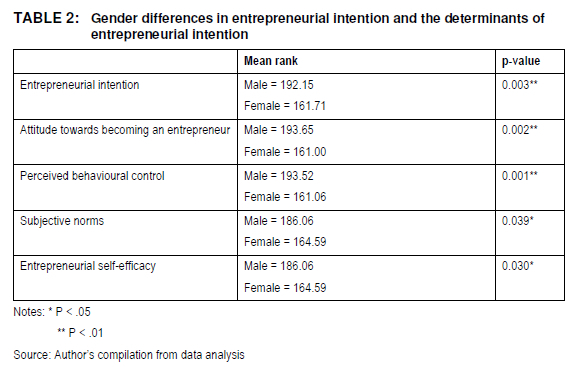
This paper investigates gender differences in entrepreneurial intention and the determinants of entrepreneurial intention based on a sample of 355 final-year commerce students from two rural provinces in South Africa, namely Limpopo and the Eastern Cape. The study is based on the theory of planned behaviour (TPB). The objectives of the study were to test whether the TPB can help explain gender differences in entrepreneurial intention and the determinants of entrepreneurial intention. The findings reveal that the TPB is a valuable tool in explaining gender differences in entrepreneurial intention. Male respondents differed significantly from their female counterparts in entrepreneurial intention and the determinants of entrepreneurial intention. Gender had a significant relationship with entrepreneurial intention, the attitude towards becoming an entrepreneur, perceived behavioural control, subjective norms and entrepreneurial self-efficacy. The originality of this study and its contribution to the body of knowledge lie in it being the first in a South African context to examine gender differences in entrepreneurial intention based on all the widely established theoretical determinants of entrepreneurial intention using the TPB.
entrepreneurial attitudes; entrepreneurial self-efficacy; entrepreneurial support; theory of planned behaviour (TPB)