Green supply chain practices and supply chain performance in the Beverage industry of South Africa
Abstract
Greening corporate initiatives and practices have received increasing research and attention globally. This is due to internal and external stakeholder's pressure that is being placed on organisations. This research study is an endeavour to contribute to the empirical investigations linked to the influence of green supply chain management practices on supply chain performance in the context of the South African beverage industry. The aim of this study was to investigate the influence of green supply chain management practices on environmental performance and supply chain performance in the beverage industry of South Africa. This study considers the influence of internal environment management, investment recovery, eco-design and green purchasing on supply chain performance. A quantitative approach was adopted, with the use of a survey questionnaire to collect information from 373 managers and supply chain management professionals employed by beverage companies in South Africa. The study used simple random sampling method. The data gathered were analysed using the Statistical Package for the Social Sciences (SPSS) version 25.0 and Analysis of a Moment Structures (AMOS) version 25.0. A confirmatory factor analysis was used to validate the measurement scales while structural equation modelling was applied to test the relations between constructs. Results revealed that green supply chain management practices can significantly influence environmental performance and supply chain performance. The study also theoretically presents internal and external stakeholders within the beverage industry with useful insights on key factors that ought to be addressed in order to improve their organisational strategies and also the policies that need to be implemented in the industry. Therefore, the study is essential to internal and external stakeholders in the beverage industry, who wants to improve environmental and supply chain performance.
Eco-design; environmental performance; green purchasing; internal environment management; investment recovery; supply chain performance
1. INTRODUCTION
In South Africa, the beverage industry is perceived to be a major contributor to the economy and gross domestic product (GDP). Internal and external stakeholders in this industry are engaged in environmental collaboration with each other to achieve better environmental and supply chain performance. The aim of this study was to investigate the influence of green supply chain management practices on environmental performance and supply chain performance in the beverage industry of South Africa. Green supply chain management has emerged as a vital organisational practice to achieve the organisation's revenue and market share objectives by reducing environmental risks and impacts, while improving environmental efficiency of the organisation (Abdallah & Al-Ghwayeen 2019). According to Mumtaz, Ali, Petrillo and De Felice (2018:145), green supply chain management focuses on eco-efficiency, recycling technology, environmental management systems, cleaner production and safe delivery of manufactured goods throughout the supply chain. The influence of green supply chain management practices is crucial in the success of the supply chain operations (Jadallah & Bhatti 2020). For an organisation to enhance environmental and supply chain performance, it is critical and relevant for internal and external stakeholders to understand how to implement green supply chain management practices throughout the supply chain (Khan, Tao, Ahmad, Shafique & Nawaz 2020).
A study conducted by Ahmed, Asim and Manzoor (2020) found that green supply chain management practices are fundamental in restraining waste within the manufacturing of products to save water and prevent the discharge of destructive materials into the environment. In this sense, green supply chain management practices are relevant in the supply chain, because they are crucial components for improving supply chain performance of the organisation (Susanty, Sari, Rinawati & Setiawan 2019). The sustainability of environmental impact for the beverage companies in South Africa depends on the green supply chain management practices, which include internal environmental management, investment recovery, eco-design and green purchasing (Habib, Bao & Ilmudeen 2020). In this regard, the use of green supply chain management practices will lead to environmental performance improvements (Saeed & Kersten 2019). This study provides a discussion on green supply chain management practices from a manufacturing industry perspective, which is beneficial to the beverage industry in South Africa.
2. PROBLEM STATEMENT
The South African economy has been performing poorly, thus putting a constraint on manufacturing companies and other enterprises across the country. The poor performance by the South African economy leads to inflation, export decline and price increases on products which affects the beverage industry (National Treasury 2016). Regulations by the South African government have shown several impacts on the beverage industry. One of the regulations is implementing carbon tax on all South African beverage manufacturing facilities based on their carbon dioxide emissions (Distell 2016). On the other hand, the imposed taxation on sugar-sweetened beverages will result in a reduction in beverage consumption, affecting the sales of products (National Treasury 2016). There have been several studies conducted within the beverage industry in South Africa. These include studies by Naudé and Badenhorst-Weiss (2020), Fooks, William, Box and Sacks (2019) and Stacey, Mudaraa, Ng, Van Walbeek Hofman and Edokaa (2019); however, none of them directed attention to green supply chain management.
Several studies were conducted within the mining and construction industry in South Africa on green supply chain management and some of those studies were conducted by Filho, Firpo, Broadhurst and Harrison (2019), Bag, Wood Xu, Dhamija and Kayikci (2019) and Isaac and Bada (2020), but only a few studies were conducted in the beverage industry. Moreover, previous studies have not considered the relationship between green supply chain management practices and environmental performance and supply chain performance as the outcome variable. For this reason, the study was intended to address the above research gap by investigating the influence of green supply chain management practices on environmental and supply chain performance of organisations in the beverage industry in South Africa.
This section discusses the practices of green supply chain management. The study selected these green supply chain management practices due to the fact that they place emphasis on greening the supply chain. Additionally, these practices are key drivers for an organisation to alleviate the environmental impacts and improve supply chain performance.
3.1
Internal environment managementAccording to Chu, Yang, Lee and Park (2017), top management commitment is one of the important driving forces for the organisation to implement green supply chain management and improve environmental performance. Internal environment management allows the top-and mid-level management to cooperate effectively with employees and internal stakeholders to address environmental issues (Fang & Zhang 2018; Masudin 2019; Shahid, Waseem, Khan, Waseem, Hasheem & Shi 2020; Wong, Wong & Boon-itt 2018). The scope of internal environment management is to encourage managers to support environmental practices, environmental management systems and inter-departmental cooperation to adopt green activities (Çankaya & Sezen 2019; Do, Nguyen, Nguyen, Led & Trinh 2019; Khan, Nathaniel & Zhang 2019). In addition, environmental practices can influence top management to be committed to sustainability (Burki, Ersoy & Dahlstrom 2018).
Abualfaraa, Salonitis, Al-Ashaab and Ala'raj (2020) state that pressure from external stakeholders encourages management in the organisation to consider manufacturing green products, which in return stimulate environmental commitments. Fernando, Bee, Jabbour and Thomé (2018) argue that management commitment can inspire other internal stakeholders in the supply chain to adopt green practices in order to move towards sustainability and improve environmental performance. Habib et al. (2020) note that support from top and mid-level managers have a significant influence on continuously improving the environmental performance.
3.2
Investment recoveryInvestment recovery is considered as a green practice that can allow products to be recycled, redeployed and resold (Esfahbodi, Zhang, Watson & Zhang 2016; Wibowo, Handayani & Mustikasari 2018). The handling and controlling of inventory through investment recovery is meant to reduce costs and minimise idle materials and products (Assumpção, de Souza Campos, de Sousa Jabbour, Jabbour & Vazquez-Brust 2019). Investment recovery aims to maximise the organisation's return on idle assets through recycling or selling them (Abdallah & Al-Ghwayeen 2019). In addition to cost savings and profit maximisation, investment recovery helps the organisation deploy surplus assets to other departments or locations of the organisation to avoid the disposition of these surplus assets to scrap yards and landfills (Assumpção et al. 2019).
According to Petjak, Zulauf, Stulec, Seyring and Wagner (2018), investment recovery can decrease waste and internal environmental concerns across the supply chain by selling overload scrap, capital equipment and inventories. Maditati, Munim, Schramm and Kummer (2018) investigated the impact of green supply chain management practices on organisational performance and found that investment recovery can positively affect environmental performance. Habib and Bao (2019) claim that investment recovery can reduce environmental impact and improve profit. The selling of assets and unwanted items can generate revenue for the organisation and minimise storage costs (Cousins, Lawson, Petersen & Fugate 2019).
3.3
Eco-designEco-design emphasises the enhancement of the product design, processes and quality to reduce its impact on the environment (Fang & Zhang 2018; Foo, Lee, Tan & Ooi 2018). According to Mohtashami, Aghsami and Jolai (2019), eco-design aims to design products that encourage environmental awareness and waste management. Jassim, Al-Mubarak and Hamdan (2020) state that eco-design acts as an environmental management system that integrates environmental issues into the procurement processes. Eco-design adoption provides an opportunity for the organisation to improve efficiency of resource use and minimise waste through modifying product sizes and enabling product recycling (Khan & Qianli 2017). According to Gábriel (2016:38), modification of the product size and enabling the product to be recyclable does not compromise the essential product criteria such as cost and performance. Thamsatitdej, Boon-itt, Samaranayake, Wannakarn and Laosirihongthong (2017) found that eco-design allows the organisation to integrate the concept of sustainability throughout the supply chain, which leads to improved environmental performance. Saeed, Jun, Nubuor, Priyankara and Jayasuriya (2018) found that eco-design has a positive relationship with environmental performance. The authors further emphasise that reducing a product's environmental impact positively influences environmental performance. Overall, eco-design is necessary for creating new markets and contributing to product innovation that result in positive outputs (Das 2018; Kim & Chai 2017).
3.4
Green purchasingGreen purchasing is defined as an organisational process that involves the procurement of raw materials to be used in the production process, as well as taking into consideration the aspects concerning the environmental criteria (Abdel-Baset, Chang & Gamal 2019). According to Le (2019), organisations implementing green purchasing can carefully select products and services from the supplier that are less harmful to the environment. The authors further add that it is crucial to involve potential suppliers at the first stage of purchasing of raw materials. By involving the supplier at an early stage, the organisation can avoid purchasing harmful materials that can impact the environment (Altaf, Ali & Weber 2020; Neramballi, Sequeira, Rydell, Vestin & Ibarra 2017).
According to Jassim et al. (2020), collaborating with suppliers can lower environmental impact by purchasing green and recyclable materials from them. Yu, Zhang and Huo (2017) argue that collaborating with suppliers can also help solve environmental issues and improve environmental performance. A study conducted by Al-Ghwayeen and Abdallah (2018) investigated the impact of green supply chain practices on green performance and reveal that green purchasing is positively related to environmental performance. Finally, De Sousa Jabbour, Vazquez-Brust, Jabbour and Latan (2017) assert that green purchasing and environmental performance are related.
3.5
Environmental performanceSinnandavar, Wong and Soh (2018:538) define environmental performance as "the ability of the organisation to minimise effluent waste, air emissions, solid waste and decrease the consumption of toxic materials". The environmental performance measurements such as regulatory compliance, environmental management system and performance measures help improve the supply chain performance by promoting improved environmental prudence, transportation and lower costs (Alexopoulos, Kounetas & Tzelepis 2018). Laari, Ojala and Töyli (2017) state that environmental performance could improve the organisation's image and performance, stakeholder relationships, cost saving, offer better quality products and service to customers. Consequently, the implementation of green supply chain management practices can reduce operational costs and prevent the organisation from being penalised for not following environmental regulations (Bu, Dang, Wang & Liu 2020; Epoh & Mafini 2018; Kazancoglu, Kazancoglu & Sagnak 2018). According to Lee (2019), supply chain performance can be enhanced through green practices, which, ultimately, increase sales and reduce operational costs. In summary, supply chain performance outcomes signify the positive effects of green supply chain management practices by organisations (Dragomir 2018).
3.6
Supply chain performanceSupply chain performance is a systematic process that measures supply chain operations regularly (Lima-Junior & Carpinetti 2019). These authors reveal that supply chain performance is able to endorse cooperation amongst supply chain members and ensure constant improvement of useful processes. According to Mohammed (2019), supply chain performance contains supply chain activities aimed at enhancing product availability, productivity and profitability. It is therefore measured through supply chain activities, which consist of strategic planning, sourcing processes, assembly procedures and delivery schedules (Jia, Zuluaga-Cardona, Bailey & Rueda 2018). Dissanayake and Cross (2018) indicate that stakeholders' input in the organisation help evaluate measures to better the supply chain performance by improving inventory management and reducing manufacturing processing times.
According to Phan, Doan and Nguyen (2019) and Kozarević and Puška (2018), other factors that can lead to supply chain performance include cost reduction, improved speed and time, partnership relationships and a supplier's performance and quality, which contribute to the measurement and sustainability of supply chain performance. Katiyar, Meena, Barua, Tibrewala and Kumar (2017) found that collaborating with trading partners such as customers, suppliers and distributors improves the supply chain performance. Also, the implementation of green supply chain management increases the supply chain performance by reducing environmental impacts and meeting environmental regulations (Rabbi, Ali, Kabir, Mahtab & Paul 2020). Also, supply chain performance improves supplier relations, product quality and reduces environmental impact.
4. THE CONCEPTUALISED RESEARCH FRAMEWORK AND DATA COLLECTION
This section provides the conceptualised research framework and discusses the
methodology, as well as the descriptive statistics of this study.
4.1 Conceptualised research framework
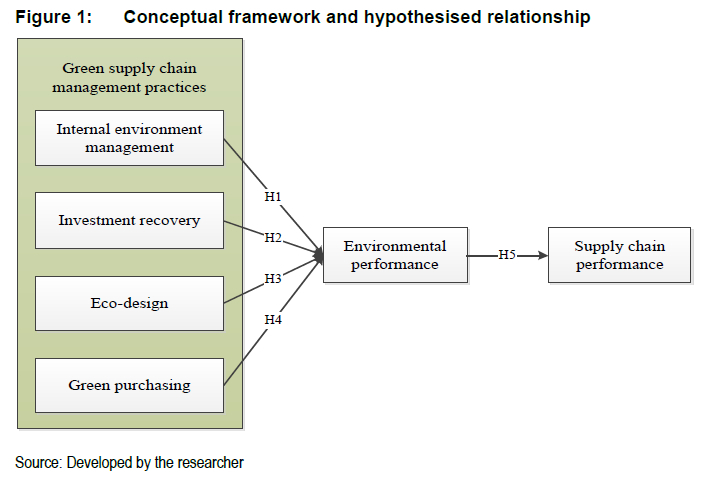
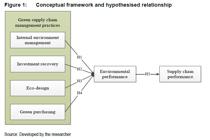
A research framework was conceptualised mainly to examine the relation between four (4) constructs, namely internal environment management, investment recovery, eco-design and green purchasing, and one mediator, which is environmental performance, with one outcome variable, which is supply chain performance. Figure 1 illustrates the research framework of the hypothesised relations between constructs examined in this study.
H
1: There is a positive relationship between internal environment management and environmental performance.H2: There is a positive relationship between investment recovery and environmental performance.
H3: There is a positive relationship between eco-design and environmental performance.
H4: There is a positive relationship between green purchasing and environmental performance.
H5: There is a positive relationship between environmental performance and supply chain performance.
5. METHODOLOGY
A quantitative cross-sectional survey design was considered in this study in order to achieve appropriate, accurate and well-founded outcomes. Ethical issues were also taken into consideration like obtaining a letter and getting consent from the university and the companies to collect the data.
5.1
Target PopulationThe target population for this study was restricted to mangers and supply chain management professionals of beverage companies, which are registered, such as Kingsley Beverages, the South African Breweries, Tiger Brands, Little Green Beverages (Pty) Ltd and Amalgamated Beverages Industries in South Africa. Managers and supply chain professional were the target population because those are the employees who could understand the questionnaire and fill it because of the knowledge and expertise they have. They also occupy senior positions in beverage companies. The population group comprised both female and male employees. Furthermore, this study adopted the quantitative research approach to test relationships between variables, which are internal environment management, investment recovery, eco-design, green purchasing, environmental performance and supply chain performance.
5.2
Measurement InstrumentsThe measurement instruments in this study were adapted from previous literature. The researcher created the questionnaire using the adapted measurement instruments in order to obtain the primary data. In this study, data were collected using a self-administered questionnaire. In this context, the researcher made use of a drop and collect method, since the self-administered questionnaires could be completed without the researcher being present. In this study, the pilot testing was conducted using the adapted data collection instruments. The researcher used the pilot testing to check the validity and reliability of the adapted instruments prior to the main study. In addition, this study undertook a pilot survey test with a view to illustrate that the adapted instruments are understandable, appropriate and practical. Based on the outcome, the pilot survey test results confirmed that the adapted data collection instruments did not contain any confusing items and the respondents found it easy to complete. The questionnaire for this study consisted of six sections. A five-point Likert scale was used. This scale indicated 1=Strongly disagree, 2=Disagree, 3=Moderately agree, 4=Agree and 5=Strongly agree. This study made use of a five-point Likert scale because is less time consuming and can reduce the frustration level of respondents. In this sense, the respondents can easily express how much they disagree or agree with the question. Out of 450 distributed questionnaires, 373 questionnaires were returned and completed, while 77 questionnaires were not returned at all. So this study's response rate for the questionnaires was 83 percent, which indicated a reliable, valid and good response rate for data analysis. This response rate was reliable for analysis and interpretation because it is above the 50 percent minimum threshold mentioned by Nguegan Nguegan and Mafini (2017).
5.3 Descriptive statistics
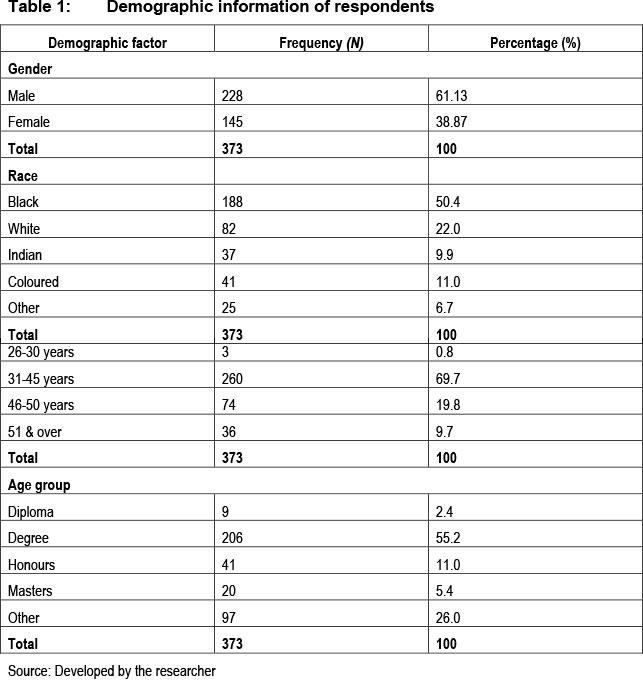
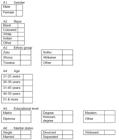
Descriptive statistics in Table 1 provide a summary of the gender, race, age and educational level of the respondents who participated in this study. According to the results, 38.87 percent (n=145) of respondents were female and 61.13 percent (n=228) were male. The results show that more males took part in this study. This could denote that there could be more male managers and supply chain management professionals in the beverage industry in South Africa. Table 1 indicates that most of the respondents were Black: 50.4 percent (n=188); followed by White: 22.0 percent (n=82); Coloured: 11.0 percent (n=41); Indian: 9.9 percent (n=37) and other: 6.7 percent (n=25) respectively. Regarding the age of the respondents, the study found that the majority of respondents were between 31-45 years (69.7%; n=260), followed by (19.8%; n=74) of the age group being between 46-50 years. Moreover, 9.7 percent (n=36) of the respondents were aged 51 and over while 0.8 percent (n=3) were between 26-30 years. These results reveal that there are more middle aged supply chain management professionals of beverage companies in South Africa than older ones. The results presented in Table 1 show that 55.2 percent (n=206) of the respondents are holders of a degree. Approximately 26.0 percent (n=97) of respondents are holders of other qualifications, while 11.0 percent (n=41) of respondents are holders of an honours degree. Moreover, 2.4 percent (n=9) of respondents are holders of a diploma while 5.4 percent (n=20) of the respondents are holders of masters. The results revealed that the majority of managers and supply chain management professionals in the beverage industry are holders of a postgraduate qualification which proves that they are all highly educated.
6. TESTS OF MEASURES AND ACCURACY ANALYSIS STATISTICS
6.1 Reliability results
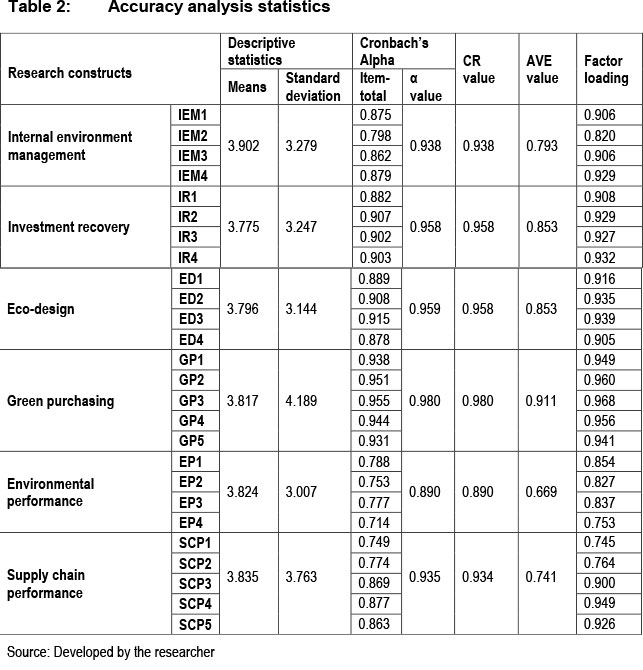
In the current study, reliability was tested through Average Value Extracted (AVE), Cronbach's Alpha (Cronbach's α) and Composite Reliability (CR). Table 2 presents the results of the reliability descriptive statistics, Composite Reliability, Average Value Extracted, Cronbach's test and factor loadings.
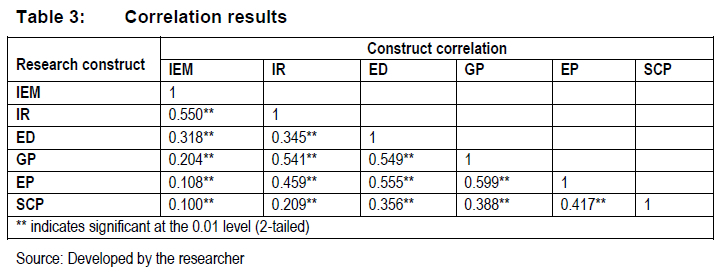
In Table 2, the results indicate that the values of Cronbach's α ranged from 0.890 to 0.980, while Composite Reliability ranges from 0.890 to 0.980. The values indicated are above the required threshold of 0.7 values as suggested by Solans-Domènech, Pons, Adam, Grau and Aymerich (2019). The average variance extracted values range between 0.669 and 0.911, which are above the recommended threshold of 0.5 as recommended by Hair, Risher, Sarstedt and Ringle (2019). In this study, the discriminant validity test was used to assess the correlations between the constructs. The correlation results are depicted in Table 3.
As shown in Table 3, the correlation between IR and IEM has a value of (p=0.550; p<0.01). The correlation between ED and IEM shows a positive relationship (p=0.318; p<0.01), followed by a correlation between ED and IR (p=0.345; p<0.01). Moreover, the inter-factor correlation values between GP and IEM were (p=0.204; p<0.01), GP and IR (p=0.541; p<0.01) as well as GP and ED (p=0.549; p<0.01). A significant relationship exists between EP and IEM (p=0.108; p<0.01), EP and IR (p=0.459; p<0.01), EP and ED (p=0.555; p<0.01) as well as EP and GP (p=0.599; p<0.01). Furthermore, the correlation between SCP and IEM has a value of (p=0.100; p<0.01), followed by a correlation between SCP and IR (p=0.209; p<0.01), SCP and ED (p=0.356; p<0.01), SCP and GP (p=0.388; p<0.01), as well as SCP and EP (p=0.417; p<0.01). Table 5.16 shows that the correlation values between constructs are all below the required threshold of 1.0, as recommended by Bu et al. (2020). Therefore, these results indicate a significant correlation between constructs. The confirmatory factor analysis and model fit indices results are discussed in the following section.
6.2 Confirmatory factor analysis model fit assessment
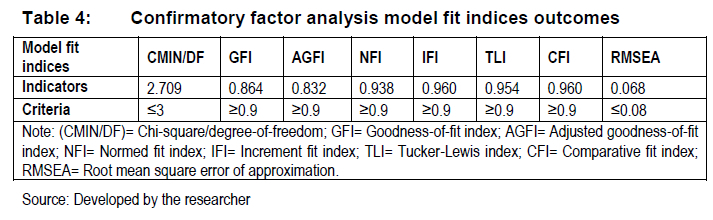
This study used confirmatory factor analysis (CFA) to provide a feasible understanding of the co-variation between observed indicators. For this study, the CFA allowed the researcher to test the hypotheses on relationships between observed variables. The following section provides a summary of the CFA model fit indices adapted in this study. Table 4 illustrates the model fit results and the recommended levels for each fit indices in this study.
Table 4 shows that chi-square/degree of freedom is 2.709. Its value is less than the recommended threshold of <3, which, therefore, indicates acceptable model fit. Furthermore, Table 4 depicts that the values of NFI (0.938); IFI (0.960); TLI (0.954) and CFI (0.960) meet the recommended threshold of 0.9, as suggested by Hu, Li, Xi, Gu and Zhang (2019), which means the data fit the model. However, Table 4 indicates a GFI value of 0.864 and AGFI value of 0.832 (close to the acceptable threshold of 0.9); the adjusted GFI and AGFI are 0.900, which is equal to the recommended threshold of >0.9 mentioned by Hu et al. (2019).
As a result, GFI (0.864) and AGFI (0.832) values fit the model. The value of root mean square error of approximation is 0.068, which is below the standard threshold of 0.08; therefore, the RMSEA value in Table 4 confirms an acceptable model fit.
6.3 Structural equation modelling model fit
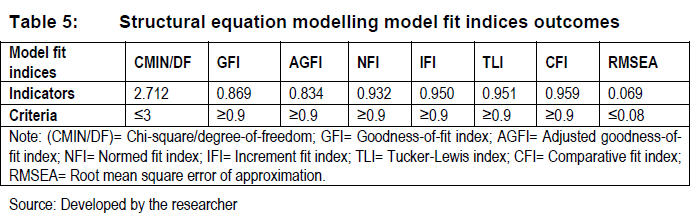
In this study, structural equation modelling (SEM) was used to analyse the structural relationship between hypotheses and measured variables. The SEM was used to test the theory and hypotheses in this study. Table 5 presents the structural modelling model fit indices results for this study.
In the current study, the chi-square/degrees of freedom have a value of 2.712. The chi-square/degrees of freedom value is below the required threshold of 3.0, therefore, it validates a satisfactory model fit. Moreover, Table 5 shows a value of 0.869 for GFI and 0.834 for AGFI (close to the acceptable threshold of 0.9); the adjusted GFI and AGFI are 0.900, which is equal to the recommended threshold of >0.9 mentioned by Solans-Domènech et al. (2019), which means values fit the model. Furthermore, the NFI, IFI, TLI, CFI and RMSEA values were 0.932, 0.950, 0.951, 0.959 and 0.069 respectively. In view of these results, it could be concluded that all the model fit indices meet the recommended threshold of > 0.9 for GFI and AGFI and < 0.08 for root mean square error of approximation. Overall, the results show that the model has a good fit.
6.4 Hypothesis testing results
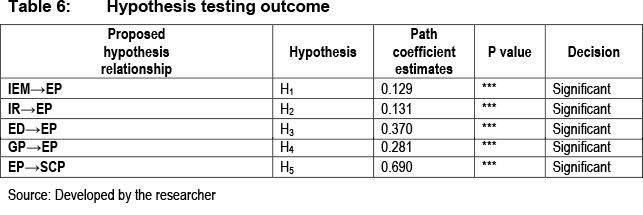
Table 6 depicts the results of the hypothesis testing for this study.
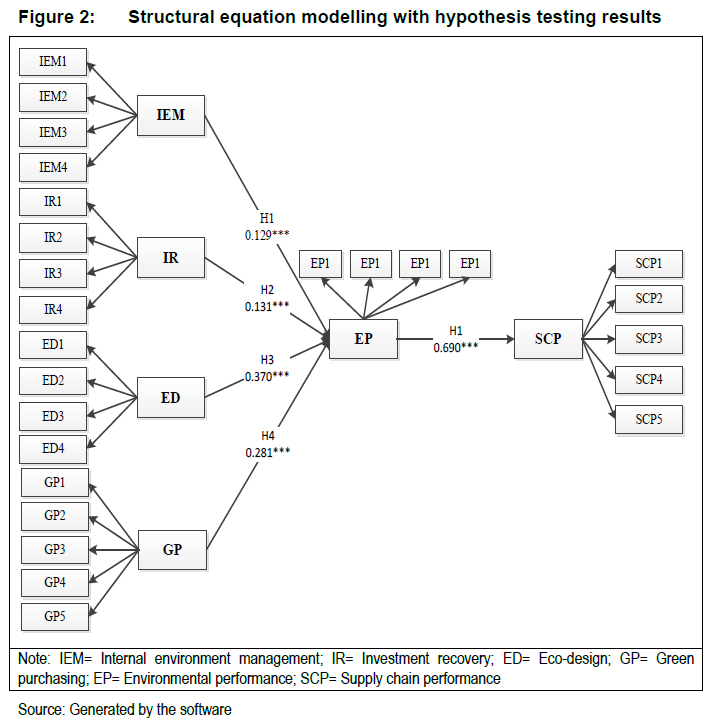
A research framework was conceptualised mainly to examine the relation between four (4) constructs, namely internal environment management, investment recovery, eco-design and green purchasing, and one mediator, which is environmental performance, with one outcome variable, which is supply chain performance. Figure 2 illustrates the research framework of the hypothesised relations between constructs examined in this study.
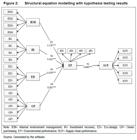
As indicated in Table 6, the levels of all five (5) hypothesis (H1-H5) are supported and significant at p<0.001. Therefore, it can be concluded that all five hypothesis presumed in this study were accepted and supported, as illustrated in Figure 2. The following section discusses the results for each hypothesis proposed in this study.
7. DISCUSSION OF THE RESULTS
In this study, all path coefficient estimates are supported and significant at a level of p<0.001. As portrayed in Table 6, all five hypotheses (H1-H5) were supported. The following section discusses results for each hypothesis depicted in Table 6.
7.1
Results for hypothesis 1Hypothesis one (H1) stated that there is a positive relationship between internal environment management and environment performance. The path coefficient value for H1 is at 0.129. This means that internal environment management has a positive influence on environmental performance. The results of this study correspond with the results of a study conducted by Fang and Zhang (2018) whereby internal environment management is positively associated with environmental performance. The results are also consistent with studies by previous researchers who found that managerial commitment on green management improves environmental performance (Burki et al. 2018), and with the support of top management, an organisation is more likely to pursue environmental practices, which, in turn, generate sales and profit (Do et al. 2019). In the same view, Çankaya and Sezen (2019) assert that internal environment management influences the implementation of green management, thus contributing to green practices and programmes across the organisation. Other studies by Masudin (2019) and Khan, Nathaniel and Zhang (2019) reveal that internal environment management is a key driver for implementing green supply chain management practices and improving environmental performance.
7.2
Results for hypothesis 2With reference to H2, the study hypothesised that investment recovery significantly influences environmental performance. Following the test of H2, a path coefficient value of 0.131 with (p<0.001) was revealed. The results indicate that investment recovery is positively related to environmental performance. Furthermore, the results are supported and significant. In support of the results, a study conducted by Abdallah and Al-Ghwayeen (2019) and Esfahbodi et al. (2016), found that investment recovery is positively related to environmental performance. As suggested by Fang and Zhang (2018), investment recovery enhances environmental sustainability by reducing costs, waste and idle assets throughout the supply chain. Habib et al. (2020) also found that an organisation can generate revenue through selling and recycling idle assets. Thus, the results of this study reveal that perception of investment recovery has a positive effect on environmental performance in the beverage industry.
7.3
Results for hypothesis 3Hypothesis three (H3) stated that eco-design is positively related to environmental performance. After testing H3, a coefficient value of (p=0.370) was obtained. This means that eco-design has a significant and positive influence on environmental performance. The result confirms the existence of the relationship. These results are confirmed by Das (2018) who found that eco-design is positively related to environmental performance. Similarly, the results are consistent with past studies (Assumpção et al. 2019; Wibowo et al. 2018). These authors went further by saying that minimising the consumption of raw materials within the manufacturing process will make the organisation utilise reused and recycled component materials. Shahid et al. (2020) further add that eco-design improves environmental performance at the early stage of product design by reducing waste materials and improving the efficiency of resource use.
7.4
Results for hypothesis 4A positive relationship was hypothesised between green purchasing and environmental performance. The results of H4 indicate that there is a significant relationship between green purchasing and environmental performance (p=0.281; p<0.001). The results indicate that green purchasing is positively related to environmental performance. The results concur with Yu et al. (2017) who revealed that green purchasing has a positive relationship with environmental performance. For Balasubramanian and Shukla (2017), the implication of green purchasing results in better environmentally friendly materials from suppliers and minimisation of harmful materials. Altaf et al. (2020) also found that purchasing eco-friendly materials from suppliers lowers the environmental impact. Additionally, as stated by Lee (2019), partnerships developed through collaboration with suppliers in the manufacturing setting bring into being positive results and improve environmental performance. This is because the buyer and supplier depend on a strong positive relationship.
7.5
Results for hypothesis 5The fifth hypothesis (H5) showed that environmental performance is strongly related with supply chain management. As depicted in Table 3, there was a strong significant relationship between environmental performance and supply chain performance (p=0.690; p<0.001).
These results further confirm that environmental performance has a strong positive influence on supply chain performance. The results are in line with Epoh and Mafini (2018), who found that environmental performance positively influences supply chain performance. In addition, these results support research conducted by Kazancoglu et al. (2018), by validating that environmental performance is positively related to supply chain performance. These authors go further by stating that investing in environmental sustainability leads to improved supply chain performance. From the results of this study, it can be concluded that environmental performance improvement has an influence on supply chain performance within the beverage industry sector. Hypothesis 5 indicated a high path coefficient estimate than others. This is due to the fact that environmental performance is one of the key factors to achieving and improving supply chain performance. The results affirm that the improvement of environmental performance by beverage companies has led to greater performance in the supply chain. Based on the results, it may be implied that beverage companies understand the importance of environmental performance and sustaining it, in order to create a positive effect that will enhance their supply chain performance. It is also evident that the improvement of environmental performance on supply chain performance is dependent on the integration of green supply chain management practices into organisational strategies. Hence, the two (2) research constructs have a strong and positive relationship.
The results of this study provide both theoretical and practical contributions. From a theoretical viewpoint, the study contributes to the green supply chain management literature or research area of sustainability in the context of beverage companies in developing countries such as the Republic of South Africa. Accordingly, the results of this study support the green supply chain management (GSCM) theory of Fang and Xu (2020) and point out the importance of the theory in the entire supply chain. In fact, this study confirms that internal and external stakeholders are the main drivers to implementing green supply chain management practices in the case of the beverage industry. It is, therefore, essential for supply chain management professionals, internal and external stakeholders to apprehend and know the importance of supply chain sustainability.
This study highlights the importance of internal environment management on an organisation. The study also points out that effective green supply chain management practices lead to superior environmental performance in the entire supply chain. When management is committed, employees and other stakeholders are encouraged to participate in the implementation of green management practices.
Practically, it is through investment recovery that beverage companies can sustain the environment and enhance the organisational performance, which is significant for the success of the environmental performance. Also, the study shows that eco-design enables companies to manufacture goods at a low cost whilst staying competitive and maintaining quality. This allows beverage companies to design products that integrate environmental aspects throughout the manufacturing, distribution, consumption and disposal of the product.
Furthermore, the study highlights that green purchasing is vital to improve environmental performance, because it aims to procure components or materials that meet the organisation's eco-friendly goals and environmental objectives. Additionally, green purchasing encourages an organisation to consider evaluating suppliers based on their environmental performance prior to taking any procurement decisions.
The study showed that environmental performance offers benefits such as improved organisation performance, increased competitiveness and a better relationship with stakeholders with regard to solving environmental issues. In most cases, these benefits have a positive impact on organisational performance.
The study revealed that stakeholders' input in the organisation help evaluate measures to better the supply chain performance. Also, collaborating with trading partners such as customers, suppliers and distributors improves the supply chain performance. For that reason, it is important for beverage companies to achieve supply chain performance through green supply chain management practices in order to improve their organisational performance. The study has shown that when top and mid-level management realise the importance of implementing green supply chain management practices there is a possibility that the environmental performance can be improved.
The results show that when the supply chain management professionals in the beverage industry pursue sustainability, they are able to recover their investment across the supply chain in order to improve the environmental performance. An attempt to reduce the environmental impact is likely to lead to the improvement of environmental performance as environmental strategies such as waste reduction and recycling contribute to the sustainability of environmental performance (Wang, Li & Zhao 2018). Thus, the results validate this concept.
This study has shown that eco-design allows supply chain management professionals in the beverage industry to collaborate with suppliers in order to obtain environmentally friendly materials to be used in the design process. In support of the results, it can be said that adopting eco-design at the early stage of the manufacturing process can lead to the minimisation of environmental impact by improving efficiency of material use and reducing waste materials that build a setting conducive to the improvement of environmental performance (Jiang, Chai, Shao & Feng 2018; Xia, Li & Yin 2020).
The study shows that the involvement of suppliers in each stage of the product design can actually embrace the improvement of the environmental performance. Furthermore, based on the results obtained in this study, it can be said that supplier cooperation during the purchasing process is crucial in order to improve the environmental performance.
The study also shows that supply chain management professionals in the beverage industry must sustain the environmental performance in order to enhance their supply chain performance. Therefore, it could be concluded that the sustainability of environmental performance in the beverage industry leads to superior supply chain performance.
8. LIMITATIONS OF THE STUDY
Due to strict access in the beverage industry depots and plants, questionnaires were dropped and collected at a later stage. This meant that the researcher could not monitor how respondents for the current study completed the questionnaires. Moreover, a number of beverage companies were located in remote areas and restricted accessibility. However, through persistence, access was granted to successfully compile this study.
A total of 373 supply chain management professionals in the beverage industry completed the questionnaires from a target of 450. Although the study produced positive results, a sample size of 450 and above could have produced better results. Also, the study focused on six (6) variables and did not include other variables such as waste management systems and reverse logistics. This study adopted a quantitative method, which limited respondents from providing detailed narrative experiences.
9. IMPLICATIONS FOR FUTURE RESEARCH
Future researchers should try other methods of distributing questionnaires, such as electronic mailing, which could save them time and travelling costs. When conducting research on beverage companies, a larger sample size should be considered as it will produce greater reliable and valid results. Additionally, future studies should make use of a qualitative method in order to obtain in-depth information into the influence of green supply chain management practices in the beverage industry. This study focused entirely on the beverage industry to describe the green supply chain management practices; future researchers using the same topic could extend the exploration to other major industries, as well as neighbouring countries.
10. CONCLUSION
This study examined the effect of green supply chain management practices and environmental performance on supply chain performance in the beverage industry in South Africa. After analysis of all the proposed hypotheses, the results affirmed that there is a significant and positive correlation between internal environment management and environmental performance; investment recovery and environmental performance; eco-design and environmental performance; green purchasing and environmental performance; environmental performance and supply chain performance. Based on the results, environmental performance has been concluded as an important factor in enhancing supply chain performance of beverage companies. To achieve supply chain performance, supply chain management professionals in the beverage industry must adopt green supply chain management practices. Through these green supply chain management practices, beverage companies may gain a competitive improvement and advantage in the market. This study is also applicable for other industries where the supply chain management professionals and practitioners desire to attain better environmental and supply chain performance. It is vital, therefore, for beverage companies to collaborate with suppliers throughout the supply chain since the study has shown that partnerships contribute to the organisation's performance.
REFERENCES
3. LITERATURE REVIEW
-
AL-GHWAYEEN WS & ABDALLAH AB. 2018. Green supply chain management and export performance: the mediating role of environmental performance. Journal of Manufacturing Technology Management 29(7):1233-1252. (DOI:https://doi.org/10.1108/JMTM-03-2018-0079.
» https://doi.org/10.1108/JMTM-03-2018-0079 -
)
» https://doi.org/10.1108/BPMJ-03-2018-0091 -
)
» https://doi.org/10.3390/su12030981 -
ABDEL-BASET M, CHANG V & GAMAL A. 2019. Evaluation of the green supply chain management practices: a novel neutrosophic approach. Computers in Industry 108:210-220. (DOI:https://doi.org/10.1016/j.compind.2019.02.013.
» https://doi.org/10.1016/j.compind.2019.02.013 -
)
» https://doi.org/10.1016/j.jclepro.2018.06.302 -
)
» https://doi.org/10.1590/0103-6513.20190047 -
AHMED W, ASIM M & MANZOOR S. 2020. Importance and challenges of green supply chain management in healthcare. European Journal of Business and Management Research 5(2):1-8. (DOI:http://dx.doi.org/10.24018/ejbmr.2020.5.2.249.
» http://dx.doi.org/10.24018/ejbmr.2020.5.2.249 -
)
» https://doi.org/10.1108/SCM-07-2016-0227 -
)
» https://doi.org/10.1016/j.jclepro.2018.06.236 -
ALTAF B, ALI SS & WEBER GW. 2020. Modeling the relationship between organizational performance and green supply chain practices using canonical correlation analysis. Wireless Networks 3:1-18. (DOI:https://doi.org/10.1007/s11276-020-02313-3.
» https://doi.org/10.1007/s11276-020-02313-3 -
)
» https://doi.org/10.3390/su9050764 -
)
» https://doi.org/10.1016/j.jclepro.2018.08.250 -
BAG S, WOOD LC, XU L, DHAMIJA P & KAYIKCI Y. 2019. Big data analytics as an operational excellence approach to enhance sustainable supply chain performance. Resources, Conservation & Recycling 153:1-10. (DOI:https://doi.org/10.1016/j.resconrec.2019.104559.
» https://doi.org/10.1016/j.resconrec.2019.104559 -
)
» https://doi.org/10.1016/j.ijpe.2018.04.027 -
)
» https://doi.org/10.5267/j.uscm.2019.11.003 -
BU X, DANG WVT, WANG J & LIU Q. 2020. Environmental orientation, green supply chain management, and firm performance: empirical evidence from Chinese small and medium-sized enterprises. International Journal of Environmental Research and Public Health 17:1-17. (DOI:https://doi.org/10.3390/ijerph17041199.
» https://doi.org/10.3390/ijerph17041199 -
)
» https://doi.org/10.4102/jtscm.v12i0.393 -
)
» https://doi.org/10.1016/j.cie.2020.106390 -
ÇANKAYA SY & SEZEN B. 2019. Effects of green supply chain management practices on sustainability performance. Journal of Manufacturing Technology Management 30(1):98-121. (DOI:https://doi.org/10.1108/JMTM-03-2018-0099.
» https://doi.org/10.1108/JMTM-03-2018-0099 -
)
» https://doi.org/10.1016/j.enpol.2018.03.043 -
)
» https://doi.org/10.1016/j.eswa.2018.04.013 -
COUSINS PD, LAWSON B, PETERSEN KJ & FUGATE B. 2019.Investigating green supply chain management practices and performance: the moderating roles of supply chain ecocentricity and traceability. International Journal of Operations & Production Management 39(5):767-786. (DOI:https://doi.org/10.1108/IJOPM-11-2018-0676.
» https://doi.org/10.1108/IJOPM-11-2018-0676 -
)
» https://dx.doi.org/10.18096/TMP.2016.01.05 -
)
» https://doi.org/10.1080/23311975.2020.1743616 -
DE SOUSA JABBOUR ABL, VAZQUEZ-BRUST D, JABBOUR CJC & LATAN H. 2017. Green supply chain practices and environmental performance in Brazil: survey, case studies, and implications for B2B. Industrial Marketing Management 66:13-28. (DOI:https://doi.org/10.1016/j.indmarman.2017.05.003.
» https://doi.org/10.1016/j.indmarman.2017.05.003 -
)
» https://doi.org/10.3390/jmse7040096 -
)
» https://doi.org/10.5267/j.msl.2019.12.001 -
DISTELL. 2016. Sustainability report. [Internet:https://www.distell.co.za/Knowledge/pkdownloaddocument.aspx?docid=1159; downloaded on 17 April 2020.
» https://www.distell.co.za/Knowledge/pkdownloaddocument.aspx?docid=1159 -
)
» https://doi.org/10.1016/j.jclepro.2018.03.248 -
)
» https://doi.org/10.1016/j.ijpe.2017.12.007 -
DRAGOMIR VD. 2018. How do we measure corporate environmental performance? A critical review. Journal of Cleaner Production 196:1124-1157. (DOI:https://doi.org/10.1016/j.jclepro.2018.06.014.
» https://doi.org/10.1016/j.jclepro.2018.06.014 -
)
» https://www.researchgate.net/publication/338386274_Green_Supply_Chain_ Performance_and_Environmental_Sustainability_A_Panel_Study/citation/download -
)
» https://doi.org/10.1177/2158244020914637 -
ESFAHBODI A, ZHANG Y, WATSON G & ZHANG T. 2016. Governance pressures and performance outcomes of sustainable supply chain management: an empirical analysis of UK manufacturing industry. Journal of Cleaner Production 155:66-78. (DOI:http://dx.doi.org/10.1016/j.jclepro.2016.07.098.
» http://dx.doi.org/10.1016/j.jclepro.2016.07.098 -
)
» https://doi.org/10.1016/j.orp.2018.07.001 -
)
» http://dx.doi.org/10.5267/j.uscm.2019.8.007 -
FANG C & ZHANG J. 2018. Performance of green supply chain management: a systematic review and meta analysis. Journal of Cleaner Production 183:1064-1081. (DOI:https://doi.org/10.1016/j.jclepro.2018.02.171.
» https://doi.org/10.1016/j.jclepro.2018.02.171 -
)
» https://doi.org/10.1016/j.cie.2019.106191 -
)
» https://doi.org/10.23917/jiti.v18i2.7826 -
FILHO JRA, FIRPO BA, BROADHURST JL & HARRISON STL. 2019. On the feasibility of South African coal waste for production of 'fabsoil', a technosol. Minerals Engineering 146:1-9. (DOI:https://doi.org/10.1016/j.mineng.2019.106059.
» https://doi.org/10.1016/j.mineng.2019.106059 -
)
» https://doi.org/10.1016/j.jclepro.2019.118452 -
)
» https://www.treasury.gov.za/public -
FOOKS GJ, WILLIAMS S, BOX G & SACKS G. 2019. Corporations' use and misuse of evidence to influence health policy: a case study of sugar-sweetened beverage taxation. Globalization and Health 15(56):1-20. (DOI:https://doi.org/10.1186/s12992-019-0495-5.
» https://doi.org/10.1186/s12992-019-0495-5 -
)
» https://doi.org/10.11159/icesdp17.176 -
)
» https://doi.org/10.1108/SCM-04-2017-0133 -
HABIB A & BAO Y &. 2019. Impact of knowledge management capability and green supply chain management practices on firm performance. International Journal of Research in Business and Social Science 8(6):240-255. (DOI:https://doi.org/10.20525/ijrbs.v8i5.548.
» https://doi.org/10.20525/ijrbs.v8i5.548 -
)
» https://doi.org/10.3390/su12031101 -
)
» https://doi.org/10.3390/su11041137 -
HAIR JF, RISHER JJ, SARSTEDT M & RINGLE CM. 2019. When to use and how to report the results of PLS- SEM. European Business Review 31(1):2-24. (DOI:https://doi.org/10.1108/EBR-11-2018-0203.
» https://doi.org/10.1108/EBR-11-2018-0203 -
)
» https://doi.org/10.1016/j.trd.2018.03.015 -
)
» https://doi.org/10.1016/j.socscimed.2019.112465 -
ISAAC K & BADA SO. 2020. The co-combustion performance and reaction kinetics of refuse derived fuels with South African high ash coal. Heliyon 6:1-9. (DOI:https://doi.org/10.1016/j.heliyon.2020.e03309.
» https://doi.org/10.1016/j.heliyon.2020.e03309 -
)
» https://doi.org/10.1080/19397038.2017.1379571 -
)
» https://doi.org/10.3926/jiem.2637 -
JASSIM S, AL-MUBARAK M & HAMDAN A. 2020.The impact of green supply chain management on firm's performance. Journal of Information & Knowledge Management 19(1):1-16. (DOI:https://doi.org/10.1142/S0219649220400262.
» https://doi.org/10.1142/S0219649220400262 -
)
» https://doi.org/10.3390/su12072581 - )
-
JIANG W, CHAI H, SHAO J & FENG T. 2018.Green entrepreneurial orientation for enhancing firm performance: a dynamic capability perspective. Journal of Cleaner Production 198:1311-1323. (DOI:https://doi.org/10.1016/j.jclepro.2018.07.104.
» https://doi.org/10.1016/j.jclepro.2018.07.104 - )
- )
-
KAZANCOGLU Y, KAZANCOGLU I & SAGNACK M. 2018. A new holistic conceptual framework for green supply chain management performance assessment based on circular economy. Journal of Cleaner Production 195:1282-1299. (DOI:https://doi.org/10.1016/j.jclepro.2018.06.015.
» https://doi.org/10.1016/j.jclepro.2018.06.015 - )
- ]
-
KHAN SAR & QIANLI D. 2017. Impact of green supply chain management practices on firms' performance: an empirical study from the perspective of Pakistan. Environmental Science and Pollution Research 24:1-16. (DOI:https://doi.org/10.1007/s11356-017-9172-5.
» https://doi.org/10.1007/s11356-017-9172-5 - )
- )
-
KIM M & CHAI S. 2017.Implementing environmental practices for accomplishing sustainable green supply chain management. Sustainability 9(7):1-17. (DOI:https://doi.org/10.3390/su9071192.
» https://doi.org/10.3390/su9071192 - )
- )
-
LAARI S, OJALA L & TÖYLI J. 2017. The effect of a competitive strategy and green supply chain management on the financial and environmental performance of logistics service providers. Business Strategy and the Environment 27(7):1-12. (DOI: https://doi.org/10.1002/bse.2038.
» https://doi.org/10.1002/bse.2038 - )
- )
-
LEE DH. 2019. Implementation of collaborative activities for sustainable supply chain innovation: an analysis of the firm size effect. Sustainable 11:1-16. (DOI:https://doi.org/10.3390/su11113026.
» https://doi.org/10.3390/su11113026 - )
- )
-
MADITATI DR, MUNIM ZH, SCHRAMM HJ & KUMMER S. 2018. A review of green supply chain management: from bibliometric analysis to a conceptual framework and future research directions. Resources, Conservation and Recycling 139:150-162. (DOI:https://doi.org/10.1016/j.resconrec.2018.08.004.
» https://doi.org/10.1016/j.resconrec.2018.08.004 - )
- )
-
MOHAMMED A. 2019. Towards 'gresilient' supply chain management: a quantitative study. Resources, Conservation & Recycling 155:1-13. (DOI:https://doi.org/10.1016/j.resconrec.2019.104641.
» https://doi.org/10.1016/j.resconrec.2019.104641 - )
- )
-
MUMTAZ U, ALI Y, PETRILLO A & DE FELICE F. 2018.Identifying the critical factors of green supply chain management: environmental benefits in Pakistan. Science of the Total Environment 640:144-152. (DOI:https://doi.org/10.1016/j.scitotenv.2018.05.231.
» https://doi.org/10.1016/j.scitotenv.2018.05.231 - )
- ]
-
NAUDÉ RT & BADENHORST-WEISS JA. 2020. The challenges behind producing a bottle of wine: supply chain risks. Journal of Transport and Supply Chain Management 14:1-15. (DOI:https://doi.org/10.4102/jtscm.v14i0.471.
» https://doi.org/10.4102/jtscm.v14i0.471 - )
- )
-
NGUEGAN NGUEGAN CA & MAFINI C. 2017. Supply chain management problems in the food processing industry: implications for business performance. Acta Commercii 17(1):1-15. (DOI:https://doi.org/10.4102/ac.v17i1.485.
» https://doi.org/10.4102/ac.v17i1.485 - )
- )
-
PHAN TTH, DOAN XT & NGUYEN TTT. 2019. The impact of supply chain practices on performance through supply chain integration in textile and garment industry of Vietnam. Uncertain Supply Chain Management 8:175-186. (DOI:https://doi.org/10.5267/j.uscm.2019.7.006.
» https://doi.org/10.5267/j.uscm.2019.7.006 - )
- )
-
SAEED A, JUN Y, NUBUOR SA, PRIYANKARA HPR & JAYASURIYA MPF. 2018. Institutional pressures, green supply chain management practices on environmental and economic performance. A two theory view. Sustainability 10(5):1-24. (DOI:https://doi.org/10.3390/su10051517.
» https://doi.org/10.3390/su10051517 - )
- )
-
SHAHID HM, WASEEM R, KHAN H, WASEEM F, HASHEEM MJ & SHI Y. 2020.Process innovation as a moderator linking sustainable supply chain management with sustainable performance in the manufacturing sector of Pakistan. Sustainability 12:1-24. (DOI:https://doi.org/10.3390/su12062303.
» https://doi.org/10.3390/su12062303 - )
- )
-
SOLANS-DOMÈNECH M, PONS JMV, ADAM P, GRAU J & AYMERICH M. 2019. Development and validation of a questionnaire to measure research impact. Research Evaluation 28(3):253-262. (DOI:https://doi.org/10.1093/reseval/rvz007.
» https://doi.org/10.1093/reseval/rvz007 - )
- )
-
SUSANTY A, SARI DP, RINAWATI DI & SETIAWAN L. 2019. The role of internal and external drivers for successful implementation of GSCM practices. Journal of Management in Medicine 30(2):391-420. (DOI:https://doi.org/10.1108/JMTM-07-2018-0217.
» https://doi.org/10.1108/JMTM-07-2018-0217 - )
- )
-
WANG S, LI J & ZHAO D. 2018. Institutional pressures and environmental management practices: the moderating effects of environmental commitment and resources availability. Business Strategy and the Environment 27(1):52-69. (DOI: https://doi.org/10.1002/bse.v27.1.
» https://doi.org/10.1002/bse.v27.1 - )
- )
-
WONG WY, WONG CY & BOON-ITT S. 2018. How does sustainable development of supply chains make firms lean, green and profitable? A resource orchestration perspective. Business Strategy and the Environment 27:375-388. (DOI: https://doi.org/10.1002/bse.2004.
» https://doi.org/10.1002/bse.2004 - )
- )
-
YU Y, ZHANG M & HUO B. 2017.The impact of supply chain quality integration on green supply chain management and environmental performance. Total Quality Management & Business Excellence 27:1-16. (DOI:https://doi.org/10.1080/14783363.2017.1356684.
» https://doi.org/10.1080/14783363.2017.1356684
APPENDIX A: QUESTIONNAIRE

Vaal University of Technology
Questionnaire
Thank you for paying attention to this academic questionnaire. The purpose of this study is to investigate the influence of green supply chain management practices and environmental performance on supply chain performance in beverage industry of South Africa. I am kindly asking for your support in completing the questionnaire. The study is only for academic purposes and the information will be reserved confidential. It will take you about 5-10 minutes to complete the whole questionnaire.
SECTION A
GENERAL INFORMATION
The section is asking your background information. Please indicate your answer by ticking  on the appropriate box.
SECTION B
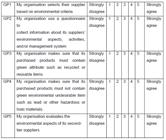
Green purchasing
Below are the statements about green purchasing. You may agree or disagree with each statement by ticking the appropriate number provided where:
Please tick only one number for each statement

SECTION C
Investment recovery
Below are the statements about investment recovery where you are required to indicate the extent to which you agree or disagree with the statement by ticking the appropriate number where:
Please tick only one number for each statement


SECTION D
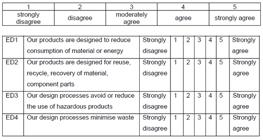
Eco-design
Below are statements about eco-design. You may agree or disagree with each statement by ticking the appropriate number provided where:
Please tick only one number for each statement
SECTION E
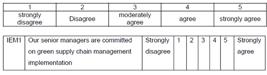
Internal environment management
Below are statements about internal environment management. You can indicate the extent to which you agree or disagree with the statement by ticking the corresponding number in the 5-point scale below.
Please tick only one number for each statement

SECTION F
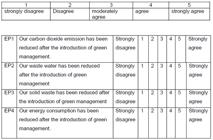
Environmental performance
Below are statements about environmental performance where you are required to indicate the extent to which you agree or disagree with the statement by ticking the appropriate number where:
Please tick only one number for each statement
SECTION G
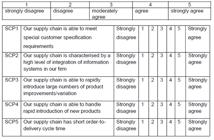
Supply chain performance
Below are the statements about supply chain performance. You may agree or disagree with each statement by ticking the appropriate number provided where:
Please tick only one number for each statement
THE END THANK YOU!!