Prerequisites for the growth of BRICS countries: Lessons from Asian Tigers and policy implications
Abstract
PURPOSE OF THE STUDY: The BRICS is regarded as a formidable bloc with significant growth potential, both politically and economically. Work is currently underway within the bloc to cease trading in US dollars. Therefore, the potential of BRICS countries in shifting the political and economic hegemony of Western countries ought to be investigated in the context of current realities, with a view to recommending ways to catapult it; this paper aims to do so. DESIGN/METHODOLOGY/APPROACH: The paper used the qualitative methodology to realise its objectives. Various secondary data sources, specifically on the growth and development of the so-called 'Asian Tigers', are carefully analysed, with a view to harnessing lessons that BRICS countries can draw from them. FINDINGS: The paper considered two questions: Firstly, what are the necessary lessons for BRICS countries on their growth path? In answering this first question, literature on the so-called Asian Tigers was reviewed. The lessons from the Asian Tigers include harnessing human capital development, and focusing on export-led growth. Secondly, what are the preconditions for BRICS to disrupt the current political and economic hegemony of Western countries? Six pre-conditions were identified, including support for innovation and industrialisation. RECOMMENDATIONS/VALUE: The research provides an exposition of the prerequisites for the growth of BRICS countries. This aspect has not been examined in the available literature on BRICS countries. The findings, therefore, make a unique contribution to a key area of the growth and development of BRICS countries. MANAGERIAL IMPLICATIONS: The research findings indicate that policymakers and business leaders in BRICS should anticipate shifts in global governance norms driven by the rise of the BRICS, coupled with threats in the form of trade tariffs, amongst others. There is therefore a need for leadership and institutional capacity building within BRICS countries to address such threats with caution. JEL CLASSIFICATION: E61.
Asian Tigers; BRICS; dedollarisation; economic growth; emerging economies
1. INTRODUCTION
At the 15th Brazil, Russia, India, China, South Africa (BRICS) summit, held in Johannesburg, South Africa, from 22-24 August 2023, the world witnessed what is potentially the biggest shift in the world order in recent times, both economically and politically. Arapova (2019) opines that the idea of expanding BRICS to include other developing and emerging countries was first raised at the 2017 BRICS summit. This expansion finally materialised at the 2023 summit, when the chair, South Africa's President Cyril Ramaphosa, announced the expansion of BRICS into what is now known as BRICS+. As shown in Figure 1, BRICS+ comprises the five BRICS nations and other countries that have been accepted as members of the group. These new countries are Saudi Arabia, Egypt, the United Arab Emirates, Indonesia, Iran and Ethiopia. Several countries are regarded as BRICS Partners, such as Nigeria and Vietnam. These countries have observer status in the bloc.
The expansion of BRICS has been lauded by many, who see it as a rival to the Group of Seven (G7), which comprises the United States of America, the United Kingdom, France, Germany, Canada, Italy, Japan and the European Union. At the opening of the 15th BRICS summit, Russia's President Vladimir Putin emphasised that there was no reversal going forward to what has been termed dedollarisation, citing that going forward, BRICS countries will be dedollarising, that is, working on putting mechanisms in place to trade in their own currencies to stop trading in the US dollar.
In furtherance of dedollarisation, at the end of the 2023 BRICS summit, it was announced that the bloc's finance ministers were tasked with investigating a payments system that would enable the countries to trade in their local currencies. The proposed payments system will be critical, as it aims to reduce member countries' reliance on the US dollar.
The dedollarisation project is seen by many as having the potential to reduce the US's political and economic hegemony, thus laying the ground for this emerging group of countries to become more influential. As emphasised above, the potential growth and dominance of the BRICS bloc signals changes to the political and economic world order, raising critical questions that this article intends to address as follows: 1. What are the necessary lessons to be considered by BRICS countries in their growth path? 2. What are the preconditions for BRICS to disrupt the current political and economic hegemony of Western countries? The potential growth of BRICS countries is well documented, as will be illustrated in the literature section below. Since 2003, Goldman Sachs has been predicting that the BRICS economies could, together, be larger than the G7 countries in US dollar terms over the next 40 years (Mostafa & Mahmood, 2015). This growth potential is, however, threatened by, amongst others, geopolitical issues affecting some of the BRICS countries, such as the ongoing war between Russia and Ukraine, which has resulted in sanctions against Russia by countries such as the United States of America (USA) and European countries.
The 'trade war' waged by the current president of the USA against many countries worldwide, including the BRICS bloc, also poses a threat to the potential growth of the bloc. South Africa's President, Cyril Ramaphosa, in his speech at the recent 80th United Nations General Assembly held in New York, emphasised the importance of diversifying South Africa's trading partners to avoid a heavy reliance on countries such as the USA. At the 2025 BRICS summit, held in Brazil, China's President Xi Jinping called on the bloc to uphold the following: "multilateralism to defend international fairness and justice, openness and win-win cooperation to safeguard international economic and trade order and solidarity, as well as cooperation to foster synergy and development" (Global Times, 2025). Streltsov et al. (2021) confirm the views of the aforementioned BRICS leaders when highlighting that the determination of the BRICS bloc to embark on dedollarisation faces several threats, such as the hegemony of the West on matters of trade, channels of international finance and transport critical for trade, especially crude oil. These threats, therefore, pose challenges for the bloc in finding "alternatives to the society for international interbank financial transactions" (Streltsov et al. 2021:8). Accordingly, the BRICS bloc should work towards long-term cooperation for mutual benefit.
The abovementioned questions, which have not yet been addressed in the existing literature, are therefore necessary to address in the current environment, due to the threats BRICS countries face in realising their full potential. In answering these questions, various secondary sources of information are carefully analysed. This is followed by a brief explanation of the methodology used to answer the two questions above. A review and discussion of the literature are presented, and the article concludes with a summary of key points and areas for future research.
The following section provides an exposition of the necessary literature in answering the two questions above.
The relevant literature on BRICS is presented below to answer the article's research questions.
2.1 BRICS potential
Petropoulos (2013) notes that the BRIC agreement was born in June 2009, at a meeting in Russia among China, Brazil, India and Russia. At this point, the author notes that several low-key meetings had already taken place between these countries. Tsegaye (2021) asserts that the BRICS bloc is presenting a new world order, as it were, with the potential to disrupt the hegemony of the so-called global north from an economic and political perspective and shift it towards the global south. South Africa officially joined the group in December 2010, turning the BRICs into the BRICS. Since then, the group has been meeting annually to identify areas of cooperation, both politically and economically (da Silva & Elia, 2019).
As far back as 2003, Goldman Sachs has been predicting that BRICS economies could, together, be larger than the G7 countries in US dollar terms over the next 40 years (Mostafa & Mahmood, 2015). United Nations (2023) highlights the consistent GDP growth of BRICS countries, which increased from 18% in 2010 to 26% in 2021. It should, however, be acknowledged that the bulk of the growth in the GDP of BRICS countries can be attributed to China, which accounted for more than 70% of that growth in 2021 (see Figure 2).
There is thus consensus that the BRICS bloc has the potential to play a significant role in international relations and in the global economy (Lo, 2016; Nuruzzaman, 2020). Jordaan (2021) emphasises that the unity of the BRICS will be imperative for the bloc to realise its potential. Beeson and Zeng (2018) question the unity of the BRICS in light of China's dominant role within the bloc. Thus far, the bloc has maintained its unity and cooperation, as seen at its annual meetings held in the various member countries on a rotational basis.
Various initiatives by the bloc, such as the New Development Bank (NDB), have thus been implemented (Hooijmaaijers, 2019). da Silva and Elia (2019) highlight that it was at the 2015 BRICS meeting in Brazil that the countries agreed to initiate the establishment of the NDB and a Contingent Reserve Arrangement (CRA). The purpose of BRICS' NDB is to finance sustainable infrastructure development projects in member countries and other emerging and developing economies. This is the bank's main focus under its strategy. One of the bank's conditions for support (loans or guarantees) is that borrowers demonstrate a strong commitment to the funded projects to avoid future implementation challenges. The NDB thus plays an important role in the development of BRICS countries.
The commitment of BRICS countries to the establishment of the NDB is reflected in the extent to which the member countries capitalise it. In 2018, rating agencies Standard & Poor (S&P) and Fitch assigned the NDB a rating of AA+, highlighting that it is well capitalised, has a low risk profile, and adequate liquidity. These positive developments indicate that BRICS countries are committed to capitalising the NDB to finance the implementation of their large, sustainable development projects and, ultimately, their development. The NDB is laying the ground in loosening the hegemony referred to above that Western countries have over countries of the global south, through institutions such as the World Bank. The NDB is an enabler for developing countries to own their own development without the many conditions that typically accompany financing from institutions such as the World Bank. The prospects for the NDB are positive (Sidorova, 2016), with more countries joining BRICS and contributing to its future capitalisation.
Da Silva and Elia (2019) emphasise that the role of BRICS in global governance is that of challenging the status quo, that of the Bretton Woods institutions, the International Monetary Fund (IMF) and the World Bank (Prado and Salles, 2014) through the creation of the NDB as well as strengthening the G20 (all BRICS countries are also G20 members) in global politics. Streltsov et al. (2021) argue that BRICS countries are developing countries with high potential and systemic importance to the world economy, as their national performance has significant implications at both the regional and global levels and can influence the management of the world economy. Streltsov et al. (2021) further highlight that the focus of BRICS countries has been on their growing economic power and development to create agency to compete with the World Bank (Lissovolik & Vinokurov, 2019). Member countries have, as such, signed several trade agreements allowing the use of their local currencies for trade purposes to reduce transaction costs.
Goldman Sachs (2003) projected, at the time that the progress of BRICs (this was before South Africa officially joined the group) will be important to how the world economy evolves, citing that if the economies of BRICs countries can attain their growth potential, they are likely to become a dominant group that would generate spending growth in the decades to come (Cheng et al., 2007). Similarly, Sambo and Kanyane (2020) cite that analysts have speculated that the economies of BRICS countries would be the most dominant by 2050. Streltsov et al. (2021) emphasise that BRICS countries have created a model of economic growth with a global impact, and that the countries have power when considered together as a group, rather than as individual countries. This, the authors argue, is due to the countries' combined populations and resources (Aalm & de Araújo, 2015; StatsSa, 2018; Aslanyürek, 2019). All in all there appears to be consensus on the potential growth of BRICS countries in the coming years.
The BRICS payments system being developed is another important element that aims to provide alternatives to international payment systems such as SWIFT, where countries such as Russia have been excluded due to sanctions imposed following its ongoing war with Ukraine. The payment system would thus play a critical role in addressing issues such as reducing the bloc's reliance on the USD and mitigating the risks of disruptions when sanctions are imposed by Western countries, as has happened in the case of Russia. The payments system would therefore support the economic development of member countries and improve the efficiency and security of cross-border payments (Lee, Sims and Lee, 2025).
In furtherance of answering the first question: What are the necessary lessons to be considered by BRICS countries in their growth path? The growth of the so-called Asian Tigers is considered below.
2.2 Asian Tigers
This section considers lessons for BRICS countries from the so-called Asian Tigers: Singapore, Taiwan, South Korea and Hong Kong (Gwokyalya, 2021). Abdulrasheed and Aminu (2021) and Gwokyalya (2021) assert that, a little while back in the early 1960s, the Asian Tigers were considered third-world or developing countries. These countries have since grown very rapidly, hence the term Asian Tigers (Toma, 2019). Given that most BRICS countries are currently considered emerging economies, lessons from the Asian Tigers are relevant to this research on the potential growth of BRICS countries, especially those countries that are emerging. According to Abdulrasheed and Aminu (2021), the growth of the Asian Tigers is mainly attributed to industrialisation, political and state leadership and long-term development strategies that utilise tools such as technology, education and natural resources (Shobande, 2018).
Gwokyalya (2021) alerts that the development model of the Asian Tigers has been a subject of debate since the 1980s. This thus requires a long-run relationship that seeks to explain the factors that have contributed to the economic growth of the countries, which other developing countries can mimic to achieve similar levels of economic development. Abdulrasheed and Aminu (2021) articulate the features of Asian Tigers that contributed to their success, now referred to as features of developmental states, and these are:
• Private ownership coupled with high levels of interventions by the state;
• Legitimacy through elections;
• Prioritising economic development policies with an emphasis on industrialisation;
• Professional public servants, where there is a clear distinction between politics and administration;
• Public-Private Partnerships (PPPs) to achieve industrial transformation;
• Support for local producers in innovative industries over time;
• Focus on exports, and
• Support for competition within an environment that promotes accountability.
Similarly, Gwokyalya (2021) lists the following as the factors that have contributed to the growth of Asian Tigers:
• Human capital development;
• Focus on export development; and
• Fiscal discipline.
2.3 Deep dive into prerequisites for BRICS development
This section provides a deep dive into the prerequisites for the development of BRICS countries, drawing on insights from the reviewed literature identified as critical prerequisites for economic growth.
2.3.1 Industrialisation and support for innovation
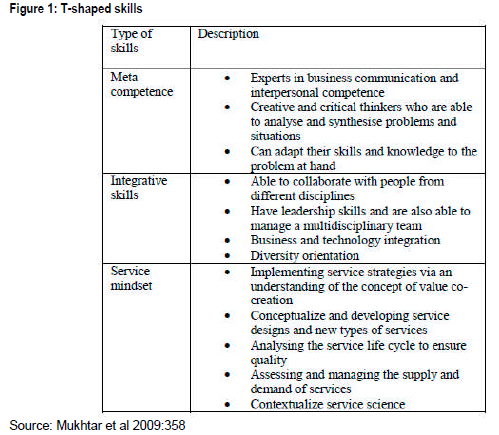
The United Nations (2020) argues that industrial performance in the BRICS bloc is taking place within the context of sustained capability accumulation and policy reforms to support the transformation of economies and institutions. It further explains industrialisation within the context of industrial policies that ought to inculcate various policy areas, such as trade, public procurement, Foreign Direct Investment (FDI), competition and regulation, as well as innovation, science and technology. Streltsov et al. (2021) highlight that for purposes of developing their economies, the BRICS bloc adopted policy initiatives that focus "on the tools of the import substitution industrialisation (ISI) policy" (Streltsov et al., 2021:1). The aforementioned tools relate to, amongst others, export-oriented strategies, targeted controls on imports, grants and high levies. United Nations (2020) contends that BRICS countries have been at the forefront of articulating industrial policies generally, as well as innovation and education policies, aimed at fostering technological capacity. A summary of each country's progress on industrialisation is provided in Table 1.
The Global Innovation Index (GII) is published annually by the United Nations agency, the World Intellectual Property Organization. The index ranks levels of innovation amongst 133 countries and considers the following (World Intellectual Property Organization, 2024):
• Institutions-legislative and regulatory environment;
• Human capital and research-investment in education and research and development;
• Infrastructure-Information and Communication Technology and other infrastructure;
• Market sophistication-credit, investments and trade, and
• Business sophistication-skilled workforce to drive businesses.
The 2024 GII ranks BRICS countries as follows: Brazil-50, Russia-59, India-39, China-11, South Africa-69. When the GII rankings are juxtaposed with the support for innovation by BRICS countries, as shown in Table 2, a link between that support and better rankings can be seen, particularly for China. China invests 2.06% of its GDP in supporting innovative initiatives and ranks 11th globally.
2.3.2 Professional public service
National School of Government (NSG) (2019) references chapter 10 of the Constitution of South Africa, 1996, as the genesis for the need to professionalise the country's public service. A high-level synopsis of attempts to professionalise the public services of each BRICS country is provided in Table 3. From Table 3, it is apparent that BRICS countries are making efforts to put measures in place to professionalise their public sectors.
2.3.3 Public-private partnerships
BRICS [South Africa] (2018) presents BRICS PPP Good Practices. These practices aim to strengthen the sharing of best practices on PPPs amongst BRICS countries. As with other variables, the sophistication of PPP frameworks differs among member countries; thus, a platform that enables countries to share practices and experiences, with the aim of developing best-practice frameworks, is a good starting point. To enunciate the point of different stages that the member states are at in development and specifically on their management of PPPs, as shown in Table 4 below, United Nations (2023) highlights India as having "a robust PPP ecosystem", which is supported by a PPP Appraisal Committee whose responsibility is to ensure the effective evaluation of PPP projects. In addition, internal restructuring took place within India's government departments to ensure effective management and decision-making for and around PPP projects.
2.3.4 Focus on exports
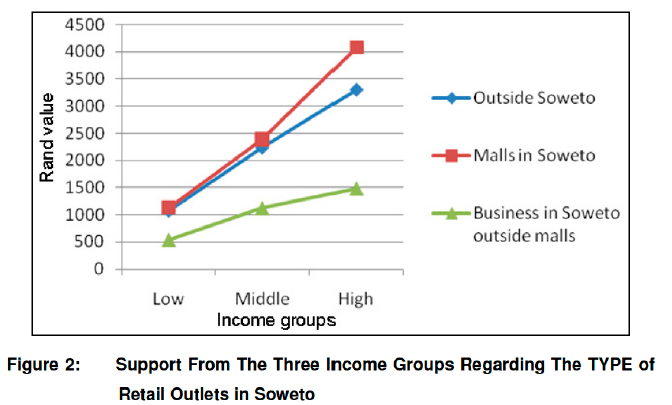
Rahman et al. (2020) highlight that trade is an important aspect of economic analysis at both the domestic and international levels. Rahman et al. further emphasise the importance of good trade relations amongst countries. United Nations (2023) underscores that it was at the 5th BRICS summit, held in 2013 in Durban, South Africa, with the theme: BRICS and Africa: Partnership for Development, Integration and Industrialisation, where the bloc of countries decided to develop a BRICS Trade and Investment Cooperation Framework. Furthermore, Jiang et al. (2023) contend that the posture of BRICS countries, with regard to exports, is "non-alignment and development". To this end, trade within BRICS has improved, and the annual average growth rate has been on an upward trajectory between 2000 and 2005. In 2016, the value of BRICS exports, excluding intra-trade within BRICS, was reported as USD2.71 trillion (17.38% of total global exports), which was notably higher than exports within the European Union (EU), which was reported at 12.75% and those of the United States of America (USA) at 9.31% of total global exports. Jiang et al. (2023) postulate that the actions of BRICS countries have put a spotlight on the importance of multilateral trade mechanisms, which can strengthen diversity and cooperation, ultimately contributing to the world economy. In terms of individual BRICS countries' contributions to intra-trade, Table 5 shows the total exports and imports between BRICS countries (in billion USD). The table shows that China has the lion's share of intra-trade within BRICS countries at 42%, followed by Russia at 20%, India at 16%, Brazil at 15%, and South Africa at 6% (cf. Jiang et al., 2023).
2.3.5 Foreign direct investment
Jadhav (2012) argues that empirical studies have shown a positive relationship between FDI and economic growth (Agrawal, 2015; Nistor, 2015). In their study, Aderemi et al. (2023) found a positive long-run relationship between FDI inflows and human development. Jadhav emphasises the importance of FDI in driving the world's economic growth, urging BRICS countries to implement policies that create favourable conditions for attracting FDI (Maryam & Mittal, 2020). Agrawal (2015) reasons that the growth impact of FDI is dependent on a host country's characteristics. A host country's ability to productively absorb FDI is linked to its GDP per capita. Nistor (2015) argues that FDIs are especially critical for economies with low reserves, as capital and technology are necessary ingredients for stimulating economic growth. In addition, Agrawal (2015) emphasises that some of the ways in which developing countries can attract FDIs are through higher economic growth rates and investment-friendly policies. Some of the benefits attributed to FDI include increased employment opportunities, technological improvements, and skills transfer to host countries (Jadhav, 2012; Agrawal, 2015).
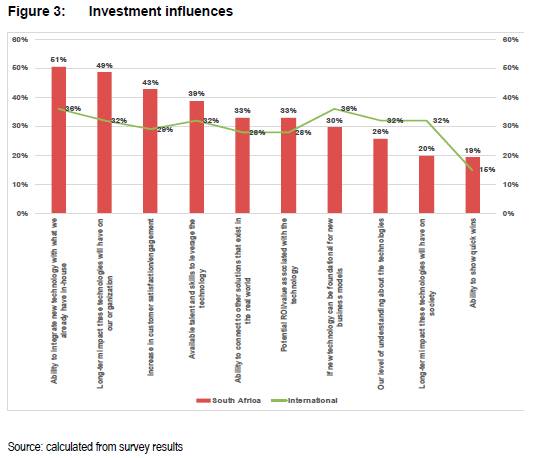
Rashid et al. (2021) posit that the intention of blocs such as BRICS is, amongst others, to cooperate to bolster FDI, trade, share risks and ultimately contribute to each other's economic growth. FDI in BRICS has, as such, been on an upward trajectory, with the United Nations (2023) reporting that it has increased more than fourfold from 2001 (USD84 billion) to 2021 (USD355 billion). Table 6 below shows that although there was substantial growth in the inflows between 2001 and 2011, however, the upward trajectory declined between 2011 and 2021. Annual FDI inflows by member states also differ. Aderemi et al. (2023) assert that FDIs have the potential to catapult countries' growth. Rashid et al. (2021) highlight that several factors affect the flow of FDIs into BRICS countries, including improvements in institutional control over corruption, as well as openness and closeness to customers and markets.
To the detriment of BRICS countries, Rashid et al. (2021) infer that the countries have been found wanting in terms of corruption and political instability, higher levels of nationalisation and limitations in openness. United Nations (2023) underscores work that BRICS countries have put in to address challenges in and around "the changing international investment landscape and the restructuring of global value chains". Measures have thus been taken to improve the investment climate and reform International Investment Agreements (IIAs), in an effort to create an environment for sustainable investment. These measures are mainly focused on harnessing the potential of FDIs to finance sustainable development.
3. METHODOLOGY
The qualitative methodology has been adopted to answer the research questions posed above. Secondary sources of data, such as research articles and so-called grey literature, that is, reports such as those of the United Nations and figures from the Statista database, have been carefully analysed to answer the paper's research questions. In addition to the above sources, a search of the Scopus database was conducted using the following key terms: BRICS countries and economic development. The search returned over 1,200 sources, and 1,000 of these were exported and uploaded to the Vos Viewer application, version 1.6.20, to create the network visualisation presented in Figure 3. The visualisation in Figure 3 shows the strength of association between the key terms. Eight clusters emerged from the analysis of the sources, each showing strongly related, interconnected keywords. The clusters and their key items are provided in Table 7. A high-level explanation of what each cluster emphasises is provided further below.
Cluster 1 emphasises the importance of innovative energy sources and technologies in achieving sustainable development. Cluster 2 highlights the importance of leadership in ensuring that measures are in place to arrest the prevalence of corruption in governance and achieve sustainable development (Rashid et al., 2021). Furthermore, the cluster enunciates the need to implement digitalisation, especially in financial services, which has been found to fast-track financial inclusion. Financial inclusion is positively associated with economic growth, especially in Africa (Arner et al., 2020; Frost, 2020; Van et al., 2021). The NDB is also highlighted as an enabler of BRICS countries in their implementation of sustainable infrastructure projects (Sidorova, 2016). Cluster 3 emphasises financial management and the technologies that support it as critical to the development of BRICS countries. Cluster 4 shows that it is necessary to take advantage of emerging tools, such as Artifical Intelligence (AI), to build capacity for industrial development.
Cluster 5 spotlights the link between employment, inclusive growth and income distribution in addressing income inequality, thereby achieving economic development and growth (Cerra et al., 2021). Cluster 6 emphasises the need to have economic policies in place to avoid, amongst others, economic policy uncertainty and to achieve institutional quality (Qamruzzaman, 2023). The cluster further highlights that the BRICS bloc is constantly facing geopolitical risks (Li et al., 2024). An example of such risks is the constant threats by the current President of the USA to impose tariffs on BRICS countries if they stop trading in US dollars. Strained relations with countries such as the USA have the potential to negatively impact capital flows to BRICS countries and trade relations. Cluster 7 confirms that the continued cooperation of BRICS countries and others, especially those that have shown interest and commitment to the bloc, has the potential to improve exports, imports, investments and FDI between countries (Aderemi et al., 2023; Rashid et al., 2021). The development of the bloc should also align with the United Nations Sustainable Development Goals (SDG Knowledge Hub, 2025).
4. FINDINGS AND DISCUSSION
In recent times, the BRICS bloc of countries has come under the spotlight, with suggestions that its economies will be the most dominant in the world by 2050. Since its inauguration, the BRICS bloc has positioned itself as a global voice advocating a more just and fair acceptance within the international system. Its influence stems from its economic potential, which is seen as challenging that of Western countries, especially the USA. BRICS is certainly strengthening its position in international relations due to its share of global Gross Domestic Product (GDP) and its future potential. This can be seen, for example, in South Africa's invitations to the G7 Leadership summits, which show that developed countries recognise the influence and contributions of emerging economies. It has also been reported that some countries have shown interest in joining the bloc, with some having formally applied.
The consideration for the expansion of BRICS should take into account, amongst other things, the values, political and economic ideologies of the countries being considered for the expansion. Interested countries would need the support of all the countries currently comprising the bloc to become members. The extension of BRICS membership would be beneficial for South Africa in particular, especially if it includes African countries. This would give more African countries access to institutions such as the NDB, which finances infrastructure and sustainable development projects within BRICS countries and other emerging economies.
The BRICS bloc has proposed a global reserve currency for trade purposes, an alternative to the US dollar, seen as a form of dedollarisation. The alternative currency would serve both economic and political purposes. Dedollarisation would reduce the dominance of the US political and economic hegemony and lay the ground for this emerging group of countries to be more influential. Further discussions among member states on the establishment of a common currency occurred at the first in-person BRICS Summit since the COVID-19 pandemic, held in South Africa in August 2023. The discussions around a common currency and a payment system for BRICS continued at the 2024 and 2025 Summits held in Russia and Brazil, respectively.
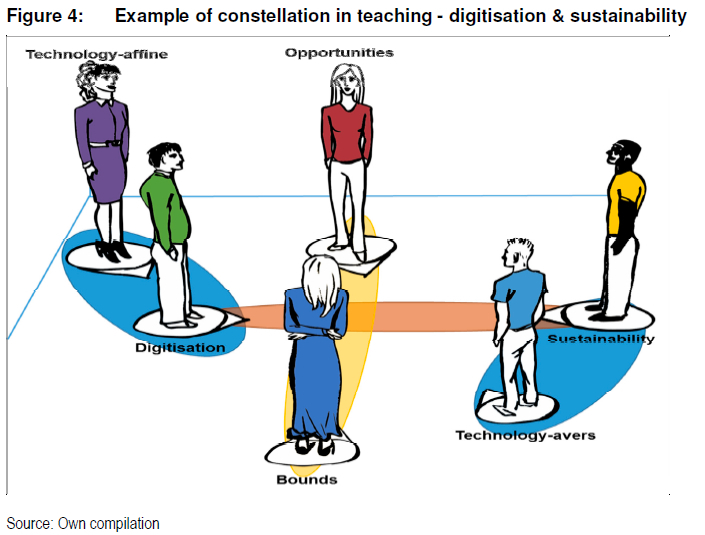
The final analysis shows that BRICS countries are at different stages of development and have performed differently across the prerequisites identified as necessary for their growth (see Table 8). The prerequisites are presented in Figure 4, and they answer the second question: What are the preconditions for BRICS to disrupt the current political and economic hegemony of Western countries? It can also be seen that South Africa is currently lagging on many of these pre-conditions, which can be attributed to factors such as its history and its being the last of the founders to join the bloc. With that highlighted, the BRICS bloc remains a formidable force with the potential to alter the world's political and economic trajectory.
5. MANAGERIAL IMPLICATIONS
The managerial implications of this research point to the need to leverage the BRICS bloc's existing influence. This can be done, amongst others, by increasing cooperation between the current members and countries that have indicated interest in becoming members. At the recent 80th United Nations General Assembly, South Africa's President, Cyril Ramaphosa, emphasised the need for South Africa to diversify its trading partners to avoid a heavy reliance on countries such as the USA, which, in recent times, has been hostile towards most countries in the world when it comes to trade. BRICS expansion and cooperation should contribute to increased trade partnerships and investment opportunities. As highlighted above, the emergence of the NDB is critical to reducing dependence on Bretton Woods institutions such as the World Bank and the IMF. Policy makers and business leaders in BRICS countries should therefore anticipate this shift in global governance norms, which is likely to be accompanied by resistance from countries such as the USA, which has already issued threats to BRICS countries. There is therefore a need for leadership and institutional capacity building within BRICS countries. This is necessary to effectively navigate the emerging geopolitical challenges arising from the rise of BRICS, protect the gains already made by the bloc, and achieve lasting, sustainable development.
6. CONCLUSION
This article painted a picture of the potential of the BRICS bloc in shifting both the world's political and economic order. South Africa chaired the 2023 BRICS summit, held in Johannesburg in August. South Africa's President, Cyril Ramaphosa, announced the expansion of the BRICS at the 2023 summit, now known as BRICS+. The expansion of BRICS has been welcomed, as it is believed the expanded group has the potential to rival the G7. Russia's president attended the 2023 summit virtually, where he emphasised the group's intention to stop using the US dollar for trade purposes, in what has been termed dedollarisation. He cited that BRICS countries are working on putting mechanisms in place to start trading in their own currencies. The BRICS bloc has thus proposed a global reserve currency for trade, an alternative to the US dollar.
In this article, relevant literature was carefully analysed in furtherance of answering the two questions that the article set out to answer: 1. What are the necessary lessons to be considered by BRICS countries in their growth path? In answering this first question, literature on the so-called Asian Tigers was reviewed. Asian Tigers are countries in Asia that were previously considered emerging economies, but have since grown very rapidly. The lessons from the Asian Tigers for BRICS countries include the importance of harnessing human capital development, focusing on export development and maintaining fiscal discipline.
In answering the second question: 2. What are the pre-conditions for BRICS to disrupt the current political and economic hegemony of Western countries? Relevant literature was reviewed, and six preconditions were identified, including support for innovation and industrialisation. The analysis of how the BRICS countries are doing currently on these pre-conditions reveals that they are doing well in some, such as attempts to professionalise their public services, and that performance varies on others, as shown in Table 8 above. The six prerequisites for the growth of BRICS also have policy implications, highlighting areas where the countries are currently not doing well; therefore, policies may need to be amended to legislate for the changes required to achieve the necessary improvements. The findings presented in Table 8 above, which highlight where each country is on each of the pre-requisites, are a useful tool for countries in implementing improvements. Based on the research conducted, the following key recommendations are made for each of the countries: On the one hand, four of the BRICS member countries, Brazil, Russia, India and China have been found to not be doing well on FDIs. The literature provides evidence of a positive relationship between FDI and economic growth. For countries to develop in this regard and attract FDIs, it is critical to have investment-friendly policies in place. South Africa, on the other hand, is not doing well in supporting innovation, as shown by its GII ranking of 59, the lowest among all BRICS nations. The country has policies for innovation in place, such as the Transformative Innovation Policy approach, which aims, amongst others, to build a knowledge economy and develop human capital, by leveraging innovation to address socio-economic challenges. However, these objectives have not yet been achieved.
South Africa's expenditure on innovation as a percentage of GDP is the second lowest amongst the BRICS countries. If the country is to fully realise the objectives of its innovation policies, the expenditure on innovative initiatives must be commensurate. As shown above, China has the highest expenditure on innovation as a percentage of GDP, and the fruits of this investment, as it were, can be seen in China's ranking on the GII at position 11, the highest ranking among all BRICS nations. There is therefore a need for the BRICS nations to learn from each other's best practices to bolster the bloc's overall performance.
Overall, this article has demonstrated that the BRICS bloc has the potential to grow and become a disruptor to the current political and economic world order. One future area of research on this topic could be a longitudinal study tracking the performance of BRICS countries on the prerequisites identified.
Data availability: The data used for this article can be requested from the authors.
Conflict of interest: The author declares that they do not have any conflict of interest with respect to the research, authorship and publication of the article.
Ethical clearance and informed consent statement: The researcher obtained ethical clearance (Reference # 1648) prior to conducting research for this article. The ethics clearance was issued by the University of South Africa's College of Economic and Management Sciences.
Funding: The author did not receive any financial support for research, authorship and publication of the article.
REFERENCES
2. LITERATURE REVIEW
-
Aalm, I.B., & de Araújo, E.C. (2015). Emergence of BRICS as an economic bloc. Transnational Corporations Review, 7(1), 110-120. https://doi.org/10.5148/tncr.2015.7107.
» https://doi.org/10.5148/tncr.2015.7107 -
Abdulrasheed, A., & Aminu, B.I. (2021). An appraisal of developmental crises in Africa: Lessons from the Asian Tigers. Zanfara Journal of Politics and Development, 1(1): 1-21. http://dx.doi.org/10.2139/ssrn.3904872
» http://dx.doi.org/10.2139/ssrn.3904872 -
Agrawal, G. (2015). Foreign direct investment and economic growth in BRICS economies: A panel data analysis. Journal of Economics, Business and Management, 3(4), 421-424. https://doi.org/10.7763/JOEBM.2015.V3.221
» https://doi.org/10.7763/JOEBM.2015.V3.221 - Arner, D.W., Buckley, R.P., Zetzsche, D.A., & Veidt, R. (2020). Sustainability, FinTech and financial inclusion. European Business Organization Law Review, 21(1), 7-35.
-
Aslanyürek, G. (2019). Does non-geographic specific grouping like the BRICS represent a new form of Regionalism? https://www.academia.edu/39786357/Does_non_geographic_specific_grouping_like_the_BRICS_represent_a_new_form_of_Regionalism_REGIONALIST_PERSPECTIVES_ON_WORLD_ORDER_CHALLENGES_AND_RESPONSES
» https://www.academia.edu/39786357/Does_non_geographic_specific_grouping_like_the_BRICS_represent_a_new_form_of_Regionalism_REGIONALIST_PERSPECTIVES_ON_WORLD_ORDER_CHALLENGES_AND_RESPONSES -
Arapova, E.Y. (2019). The BRICS Plus as the first international platform connecting regional trade agreements. Asia-Pacific Social Science Review, 19(2), 30-46. https://doi.org/10.59588/2350-8329.1220
» https://doi.org/10.59588/2350-8329.1220 -
Aderemi, T.A., Opele, A.M., Olanipekun, W.D., & Al-Faryan, M.A.S. (2023). A panel analysis of FDI inflows and poverty reduction in BRICS countries: An implication for the sustainable development goal one. Transnational Corporations Review, 15(4), 35-41. https://doi.org/10.1016/j.tncr.2023.08.003
» https://doi.org/10.1016/j.tncr.2023.08.003 -
Beeson, M. Zeng, J. (2018). The BRICS and global governance: China's contradictory role. Third World Quarterly, 39(10), 1962-1978. https://doi.org/10.1080/01436597.2018.1438186
» https://doi.org/10.1080/01436597.2018.1438186 - da Silva, A.G.M., & Elia, E.C.A. (2019). Reforming the International Financial System? Accessing the depths of New Development Bank's (NDB) Operations. Boletim do Tempo Presente-ISSN 1981: 3384. Boletim do Tempo Presente, Recife-PE. 8(4), 59-74.
-
BRICS (Brasil), (2025). About BRICS. [https://brics.br/en/about-the-brics]
» https://brics.br/en/about-the-brics -
BRICS (South Africa), (2018). Good Practices on Public-Private Partnership Frameworks. https://www.treasury.gov.za/comm_media/press/2018/2018113001%202nd%20Publication%20of%20BRICS%20PPP%20Frameworks.pdf
» https://www.treasury.gov.za/comm_media/press/2018/2018113001%202nd%20Publication%20of%20BRICS%20PPP%20Frameworks.pdf - Cerra, V., Lama, R., & Loayza, N.V., (2021). Links between growth, inequality, and poverty. International Monetary Fund, WP/21/68,1-54.
-
Cheng, H. F. Gutierrez, M., & Mahajan, A. (2007). A future global economy to be built by BRICs. Global Finance Journal, 18(2), 143-156. https://doi.org/10.1016/j.gfj.2006.04.003
» https://doi.org/10.1016/j.gfj.2006.04.003 - Frost, J., (2020). The economic forces driving fintech adoption across countries. The technological revolution in financial services: How banks, fintechs, and customers win together, 838(2), 70-89.
-
Global Times, (2025). Xi calls on BRICS countries to defend multilateralism. https://www.globaltimes.cn/page/202509/1342990.shtml
» https://www.globaltimes.cn/page/202509/1342990.shtml -
Goldman Sachs, (2003). Dreaming with BRICs: The path to 2050. Global Economics Paper No: 99. http://puzzlefinancialadvice.com.au/M/Presentations/070916_The%20BRICS_Goldman_Sachs_Report_Jim_ONeill.pdf
» http://puzzlefinancialadvice.com.au/M/Presentations/070916_The%20BRICS_Goldman_Sachs_Report_Jim_ONeill.pdf - Gwokyalya, B. (2021). Long run economic success factors of the "Asian Tigers". International Journal of Technology and Management, 6(2), 1-9.
-
Hooijmaaijers, B. (2019). China, the BRICS, and the limitations of reshaping global economic governance. The Pacific Review 2021. 34(1), 29-55 https://doi.org/10.1080/09512748.2019.1649298
» https://doi.org/10.1080/09512748.2019.1649298 -
Jadhav, P. (2012). Determinants of foreign direct investment in BRICS economies: Analysis of economic, institutional and political factor. Procedia-Social and Behavioral Sciences, 37(2012), 5-14. https://doi.org/10.1016/j.sbspro.2012.03.270
» https://doi.org/10.1016/j.sbspro.2012.03.270 -
Jiang, F., Chen, C., Lan. Q., & Zhu, Z. (2023). Have China's exports improved the export technology level of the other BRICS countries? An empirical analysis based on data from SITC. International Journal of Emerging Markets, 18(3), 547-566. https://doi.org/10.1108/IJOEM-08-2020-0929
» https://doi.org/10.1108/IJOEM-08-2020-0929 -
Jordaan, A.C. (2021). BRICS - quo vadis? Development Southern Africa, 38(3), 452-468. https://doi.org/10.1080/0376835X.2020.1870932
» https://doi.org/10.1080/0376835X.2020.1870932 -
Lee, B.T.F., Sims, J.P., & Lee, Y.T., (2025). BRICS expansion: Threat or opportunity for ASEAN?. India Quarterly, 81(2), 130-157. https://doi.org/10.1177/09749284251328226
» https://doi.org/10.1177/09749284251328226 -
Lissovolik, Y., & Vinokurov, E. (2019). Extending BRICS to BRICS+: The potential for development finance, connectivity and financial stability. Area Development and Policy, 4(2), 117-133. https://doi.org/10.1080/23792949.2018.1535246
» https://doi.org/10.1080/23792949.2018.1535246 - Li, H., Ali, M.S.E., Ayub, B., & Ullah, I., (2024). Analysing the impact of geopolitical risk and economic policy uncertainty on the environmental sustainability: Evidence from BRICS countries. Environmental Science and Pollution Research, 31(34), 46148-46162.
- Lo, B. (2016). The illusion of convergence-Russia, China and the BRICS. Russie.Nei.Visions 92(2016), 1-27.
-
Maryam, J., & Mittal, A., (2020). Foreign direct investment into BRICS: An empirical analysis. Transnational Corporations Review, 12(1), 1-9. https://doi.org/10.1080/19186444.2019.1709400
» https://doi.org/10.1080/19186444.2019.1709400 -
Mostafa, G., & Mahmood, M., (2015). The rise of the BRICS and their challenge to the G7. International Journal of Emerging Markets, 10(1), 156-170. https://doi.org/10.1108/IJOEM-07-2012-0063
» https://doi.org/10.1108/IJOEM-07-2012-0063 -
National School of Government. (2023). Professionalising the public sector: A South African case. https://www.thensg.gov.za/wp-content/uploads/2023/08/Professionalising-the-public-sector-final-Jan-2019.pdf
» https://www.thensg.gov.za/wp-content/uploads/2023/08/Professionalising-the-public-sector-final-Jan-2019.pdf -
Nistor, P. (2015). FDI implications on BRICS economy growth. Procedia Economics and Finance, 32(2015), 981-985. https://doi.org/10.1016/S2212-5671(15)01557-9
» https://doi.org/10.1016/S2212-5671(15)01557-9 -
Nuruzzaman, M. 2020. Why BRICS is no threat to the post-war liberal world order. International Studies, 57(1), 51-66. https://doi.org/10.1177/0020881719884449
» https://doi.org/10.1177/0020881719884449 -
Petropoulos, S. (2013). The emergence of the BRICS - implications for global governance. Journal of International & Global Studies, 4(2), 37-51. https://doi.org/10.62608/2158-0669.1145
» https://doi.org/10.62608/2158-0669.1145 -
Prado, M.M. & Salles, F.C. (2014). The BRICS Bank's potential to challenge the field of development cooperation. Verfassung und Recht in Übersee/Law and Politics in Africa, Asia and Latin America, 147-197. https://doi.org/10.5771/0506-7286-2014-2-147
» https://doi.org/10.5771/0506-7286-2014-2-147 -
Qamruzzaman, M., (2023). Nexus between economic policy uncertainty and institutional quality: Evidence from India and Pakistan. Macroeconomics and Finance in Emerging Market Economies, 16(3), 389-408. https://doi.org/10.1080/17520843.2022.2026035
» https://doi.org/10.1080/17520843.2022.2026035 -
Rahman, M. Fatima, Z., & Rahman. N. (2020). Quantitative dynamics of intra-BRICS trade. BRICS Journal of Economics, 1(4), 6-23. https://doi.org/10.38050/2712-7508-2020-1-4-2
» https://doi.org/10.38050/2712-7508-2020-1-4-2 - Rashid, M. Chowdhury, A. Talukdar, K.H., & Jye, W.S. (2021). Determinants of FDI inflow in BRICS countries: Role of globalization and corruption control. Journal of Economic Cooperation & Development, 42(4), 171-203.
- Sambo, V.T. Kanyane, M.H. (2020). Ethics and accountability in BRICS countries: Analysing critical issues. Administratio Publica, 28(3), 23-40.
-
Sustainable Development Goals (SDG) Knowledge Hub, (2025). BRICS strengthen cooperation for more inclusive governance. https://sdg.iisd.org/news/brics-strengthen-cooperation-for-more-inclusive-governance/
» https://sdg.iisd.org/news/brics-strengthen-cooperation-for-more-inclusive-governance/ - Sidorova, E.A. (2016). The integration and investment potential of BRICS. World of economics and management. Vestnik NSU: Social and Economics Sciences, Socionet, 16(2), 111-122.
- Shobande, A.O. (2018). Population crises in the age of slow economic growth: Lesson from the Asian Tigers. Journal of Social Studies, Department of Economics, NAU, 15(1), 57-75.
-
Statista, (2024a). Countries & Regions: BRIC Countries. https://0-www-statista-com.oasis.unisa.ac.za/study/14028/bric-countries-statista-dossier/
» https://0-www-statista-com.oasis.unisa.ac.za/study/14028/bric-countries-statista-dossier/ -
Statista, (2024b). Sum of trade exports and trade imports between the BRICS countries and selected countries that allegedly want to join BRICS as of 2022. https://0-www-statista-com.oasis.unisa.ac.za/statistics/1404108/brics-trade-turnover-by-country/
» https://0-www-statista-com.oasis.unisa.ac.za/statistics/1404108/brics-trade-turnover-by-country/ -
Statistics South Africa (StatsSa). (2018). BRICS Joint Statistical Publication. https://www.statssa.gov.za/wp-content/uploads/2018/11/BRICS-JSP-2018.pdf
» https://www.statssa.gov.za/wp-content/uploads/2018/11/BRICS-JSP-2018.pdf -
Streltsov, E.S. Rozhin, A.A., Vosiev, S.S., & Kosnikov, S.N, (2021). The economic potential of the BRICS countries as a challenge to modern world realities. Propósitos y Representaciones, 9(SPE3), 1-9. https://doi.org/10.20511/pyr2021.v9nSPE3.1143
» https://doi.org/10.20511/pyr2021.v9nSPE3.1143 - Toma, S.G. (2019). Learning from the Asian tigers: Lessons in economic growth. Annals-Economy Series, 3/201, 63-69.
- Tsegaye, D.M. (2021). The BRICS and Africa: Political-economic opportunities and challenges. American Journal of Multidisciplinary Research in Africa, 1(3), 1-10.
-
United Nations, (2020). The role of industrial policies in the BRICS economic integration process. https://downloads.unido.org/ot/16/53/16531301/WP_1_2020_FINAL.pdf
» https://downloads.unido.org/ot/16/53/16531301/WP_1_2020_FINAL.pdf -
United Nations, (2023). BRICS Investment Report. https://unctad.org/system/files/official-document/diae2023d1_en.pdf
» https://unctad.org/system/files/official-document/diae2023d1_en.pdf -
Van, L.T.H., Vo, A.T., Nguyen, N.T., & Vo, D.H., (2021). Financial inclusion and economic growth: An international evidence. Emerging Markets Finance and Trade, 57(1), 239-263. https://doi.org/10.1080/1540496X.2019.1697672
» https://doi.org/10.1080/1540496X.2019.1697672 -
World Intellectual Property Organization, (2024). GII 2024 ranks. https://www.wipo.int/gii-ranking/en/
» https://www.wipo.int/gii-ranking/en/