Managing the early stages of SME's sustainability and growth
Abstract
In the seemingly discontinuous modern business environment, a dynamic management of the early stages of a business' development is a pre-requisite for its survival and growth. Using a conceptual analysis as a qualitative research technique, this research analyses the effectiveness of the process of managing the early stages of SMEs' introduction and growth. Theories on business development were thematically evaluated and triangulated with the empirical views on the effectiveness of the process of managing the early stages of SMEs' development and growth in South Africa. Findings revealed not only the business models adopted by the SMEs in the conceptualisation stages to moderate their successful launch in the introduction stage, but also further refinement and reconfiguration of the adopted business concepts in the context of the new changes emerging immediately after the concept's introduction. Such reconfigurations were found to amplify the identification and correction of the early operational, quality, pricing and marketing misfits that often cause the early failures of most SMEs. To ensure SME's early stabilisation and growth, the research concludes with a grid emphasising creativity and market analysis as pre-requisites for the adoption of a good business concept, and further refinement and reconfiguration of the business concept in the context of the new market and industry trends emerging immediately after its introduction.
growth; SMEs; strategies; sustainability
1. INTRODUCTION
Effective management of the early stages of a business' conceptualisation and introduction edifies its early survival and sustainability (Michelacci 2013:207). A successful start-up spurs a business' successes in almost all its later stages of growth and maturity (Michelacci 2013:207). In the pre-conceptualisation and conceptualisation stages, part of the strategy for ensuring an enterprise's early survival and sustainability entails a critical analysis and identification of the most attractive business concept (Giglierano, Vitale & McClatchy 2011:29). Products or services introduced by new businesses based on well researched concepts tend to perfectly match customers' tastes and preference and become successful immediately after their launch (Giglierano et al. 2011:29). This renders it possible for new businesses to generate sufficient initial sales and revenues to cover a substantial amount of the usually high costs of start-up (Giglierano et al. 2011:29).
Despite the moderating effects of the degree of industry and market rivalries, the early survival and growth of a new business is also often bolstered by the further refinement and reconfiguration of the adopted business concept in the context of the new market and industry trends emerging immediately after its introduction (Keil, Markku, Schildt & Shaker 2008:895; Mullins & Komisar 2009:33). Such reconfigurations amplify the identification and correction of the early quality, pricing and marketing strategies' related misfits that usually cause the early failures of most SMEs (Magretta 2013:9).
A number of authors have elucidated on the critical strategies for managing and nurturing a business from start-up to the maturity stage (Keil et al. 2008:895; Mullins & Komisar 2009:33). In most of such studies, a significant number of authors also highlight the major inhibitors of SMEs' sustainable growth to significantly relate to skills, conceptualisation, rivalries, experience, financial management, entrepreneurial culture and limited capital finance (Cant & Wiid 2013:707; Olawale & Garwe 2010:729; Ramukumba 2014:19).
However, only a few later studies seem to have specifically explored how the SMEs' high failure rates in the early start-up stages can be avoided through the identification and application of certain specific strategies in the early stages of a business start-up (Cant & Wiid 2013:707; Olawale & Garwe 2010:729; Ramukumba 2014:19). This research therefore fills such a gap by examining a framework of integrated strategies that can be adopted for managing the often challenging initial early stages of SMEs' start-up. The view that most of the studies focus only on the elucidation of the general theories of a business growth rather than the diagnosis of the causes of the SME's high early failure rates is echoed in most theories on a business development and growth.
A business growth connotes a process through which an enterprise evolves from the nucleus of its conceptualisation to a fully-fledged sustainable enterprise (Mason 2012:66). The foundation of the contemporary theoretical views on the notion of a business development and growth is latent in Griener's (1972:1) theory of a business development (Hotamisli, Kocatepe & Suleyman Demirel 2009:259).
2.1 Griener's (1972:1) theory on a business development
In a theory developed in the 1970s, Griener's (1972:1) foundational theory highlights that there are five phases of a business growth that are correspondingly aligned to five crises that executives experience (Hotamisli et al. 2009:259). These five phases of business growth and their associated crises include growth through creativity (leadership crisis), direction (crisis of autonomy), delegation (crisis of control), coordination (crisis of red tape) and collaboration (crisis of psychological saturation among the employees) (Griener 1972:1; Hotamisli et al. 2009:259). Although the creativity and proactive nature of the entrepreneur drive growth and expansion of the business to the evolutionary phase, further evolution of the business is often constrained by a leadership crisis that tend to arise in the revolutionary phase (Griener 1972:1; Hotamisli et al. 2009:259).
For a business to evolve passed the evolutionary phase, it is critical for business developers to streamline the nature of business operations by putting in place formal management structures and standing operational policies and procedures (Griener 1972:1; Hotamisli et al. 2009:259). If this is not addressed, Griener's (1972:1) theory argues that conflicts arising from lack of role clarity and a leadership crisis may persist to plunge the evolution of the business into a failure and subsequently exit of the industry.
However, if relevant structures and policies are put in place, Griener (1972:1) posits that such structures and policies tend to eliminate leadership and conflicts arising from lack of role and responsibilities' clarity. Subsequently, it therefore drives growth through improved direction and leadership. In the later stage, growth is however still curtailed by the emergence of the crisis of autonomy that arises from the need of the delegation of authority to lower managers by the senior managers who are often not willing to do so (Griener 1972:1; Hotamisli et al. 2009:259). Due to stronger emphasis of specialisation and division of tasks, most of the functional units also tend to work in isolation of each other. This undermines effective communication and effective activities' coordination and control across different departments.
Griener's (1972:1) theory suggests that this can be resolved by reviewing the existing management positions and delegating and empowering the lower level managers and employees. All these instigate further growth, which is referred to as growth through delegation. Improvement in the empowerment of the lower level managers and employees often induces a crisis of control (Griener 1972:1; Hotamisli et al. 2009:259). As tasks are delegated to the lower level managers, senior managers tend to relax and get less involved in routine operations.
Poor communication between the two levels of management also sets in to instigate a crisis of control. All these may lead to conflicts that affect control and undermine the creation of a positive work atmosphere (Griener 1972:1; Hotamisli et al. 2009:259). Griener's (1972:1) theory outlines the establishment of an effective dispute and conflict management system in conjunction with improved communication and management and employees' collaboration in different departments as the prerequisites for dealing with such situations. Improvement of coordination induces growth through delegation.
However, in the later stages, the required higher degree of interaction and coordination with different departments may still induce administrative bureaucracy and red tape. It is on that basis that a crisis of red tape arises. Griener's (1972:1) theory highlights that a crisis of red tape is often addressed by encouraging collaboration between managers and different functional units. Such initiatives are usually accomplished by adopting flexible matrix structures, and training and improving the competencies of managers and employees, and communication, interaction, coordination and collaboration between departments and units.
Griener's (1972:1) theory notes that in growth through collaboration, a crisis of psychological saturation may arise among the employees and undermine the overall efficiency of growth. However, he did not elaborate on what can be done and the next phase of growth. Although Griener's (1972:1) theory elucidates extensively on the structural, management and leadership issues that can constrain the process of a business development, it does not deal with critical issues that must be considered in the pre-conceptualisation and conceptualisation stages to ensure that the business starts well during its launch. Similar weaknesses also seem evident in Adizes' (1979) model on business development (Brush, Grene, Hart & Edelman 2009:144).
2.2 Adizes' (1979) model of business development
Adizes' (1979) model on a business growth highlights management attitudes and styles as critical drivers of an enterprise evolution through different stages of growth (Brush et al. 2009:144). Adizes (1979) explains the chronological stages of growth that businesses undergo to entail ten stages: courtship that deals with the creation of the business proposition, infancy that involves launching the business, early growth and adolescence stage which refer to a period of a business' faster development and undertaking of several activities (Adizes 1979:18; Brush et al. 2009:144). Whereas a prime stage is a period when the enterprise is at its healthiest state, Adizes (1979:18) argues that although stability is a profitable state, it is often a state in which a firm loses edge among rivals.
As contrasted to the aristocracy stage in which the business is strong by virtue of its high level of market and industry consolidation, recrimination is a stage characterised by the executives and owners' doubts, problems and significant threats in the external business environment (Adizes 1979:18; Tam & Gray 2016:18). In bureaucracies, the enterprise often becomes inward looking and more interested in disinvestment and exit than growth, and finally death occurs when the business closes, and falls into bankruptcy or is sold off. Although similar to the steps that Adizes (1979:18) articulates, Scott and Bruce's (1987) model posits the growth stages of a business to evolve through four main phases; inception, survival, growth, expansion and maturity.
As on the other hand, Quinn and Cameron (1983) concluded businesses to go through four main stages of related life cycles; entrepreneurial stage, collectivity stage, formalisation and control stage. In other words, all these demonstrate the extent to which most of the theories elucidate only on the general steps for managing the development and growth of an enterprise rather than the evaluation of the specific strategies for managing the often challenging early stage of the process of business development and growth (Adizes 1979:18; Tam & Gray 2016:18).
Such limitations are also evident in the prior empirical studies conducted on SMEs development in which either most of the authors just describe the general process of a business development, or merely point out the major challenges of the early stages of a business development without elucidating on the specific strategies for managing such challenges (Cant & Wiid 2013:707; Olawale & Garwe 2010:729; Ramukumba 2014:19). This research fills such a gap by specifically focusing on the evaluation of the specific critical strategies that can be adopted for managing the early process of the conceptualisation and introduction of SMEs' business concept to the market. In other words, the study is motivated by the problem summed in the next section.
3. PROBLEM INVESTIGATED
Ineffective strategic management of the early stages of a business development is a major constraint undermining SMEs' conceptualisation and introduction of attractive business models, and the required subsequent reconfiguration and modification to enhance SMEs' survival and successful growth to maturity.
4. PURPOSE OF THE RESEARCH
The main purpose of this research is to ascertain the critical challenges associated with managing the early stages of SME's sustainability and growth, so as to develop the appropriate early stage business development and growth model that SMEs can adopt.
5. METHODOLOGY
In the context of Moore's (1899:59) analytical philosophy, this paper uses conceptual analysis as a principal qualitative research technique (Cronin, Ryan & Coughlan 2008:38). Conceptual analysis was accomplished through systematic literature review of the core models on business growth and development, and prior empirical studies on SMEs' early stage of introduction and growth in South Africa. All these were undertaken in the context of the five critical research questions that entailed the evaluation of (Boghossian 2011:488):
■ What are the critical steps that the SMEs in South Africa undergo when conceptualising and establishing a business?
■ How effectively are all the essential activities accomplished by the SMEs in the early stages of business development and growth in South Africa?
■ Which challenges do the SMEs in South Africa face in the early stages of business development and growth?
■ Which model can be recommended for managing the early stages of business development and growth by the SMEs in South Africa?
In a bid to facilitate in-depth critical analysis and identification of themes and subthemes that provide answers to these five fundamental research questions, a meta-synthesis was used in line with Cronin et al.'s (2008:38) interpretation to enhance theoretical evaluation and analysis according to four main steps:
■ Analysis of critical models and theories on a business development and growth
■ Evaluation of documents and prior empirical studies on the activities accomplished in the early stages of business development and growth undertaken by the SMEs in South Africa. It also entailed the analysis of the challenges associated with the strategies that the SMEs in South Africa use in the early stages of a business' introduction to spur a business to sustainable growth.
■ Comparison of the theoretical views on business development and growth with the perspectives on the approach undertaken by most of the SMEs in South Africa when managing the early stages of a business development and growth. This led to the identification of the major inhibitors of SMEs' early stages of growth and sustainability; and
■ Development of a business development and growth model that can be recommended for managing the early stages of a business development and growth by the SMEs in South Africa
The details of the findings are as follows.
6. RESULTS
In this section, the results are presented according to two main sections:
■ Theoretical perspective: managing SMEs' early stages of growth
■ Empirical studies: managing the early stages of SMEs' growth in South Africa
The details are examined as follows.
6.1 Theoretical perspectives: managing SME's growth stages
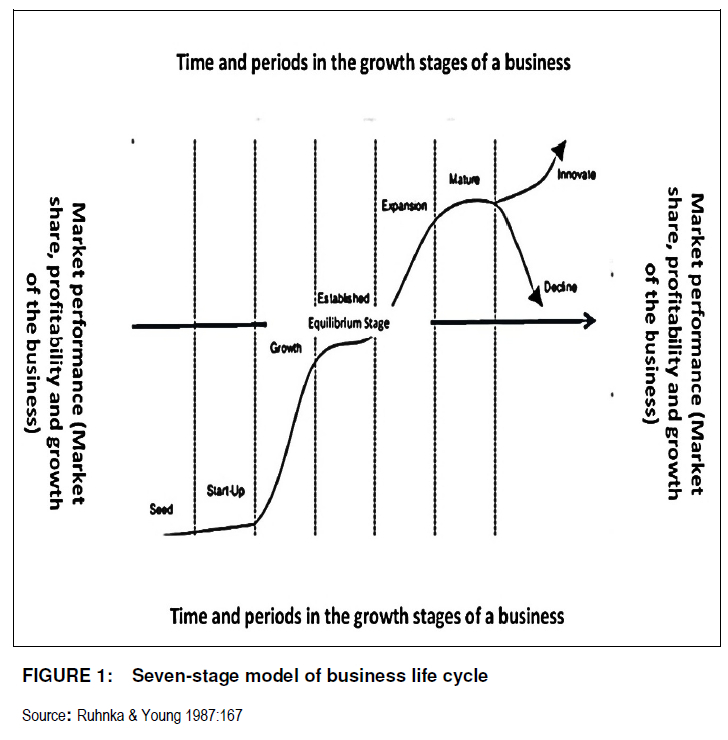
Most theories on a business development and growth support the articulation in Ruhnka and Young's (1987:167) venture capital model that businesses grow through seven critical stages; a seed or conceptualisation stage, start-up stage, and growth, established, expansion, mature and exit stages (Magretta 2013:9; Mason 2012:66; Michelacci 2013:207). The details of these critical steps are illustrated in Figure 1.
The details of these critical seven stages are evaluated as follows.
■ Stage 1: A seed or conceptualisation
The seed or the conceptualisation stage is the thought process of determining what the business must be, the location and how it must be run (Entrialgo, Fernandez & Vazquez 2010:137). It also entails the assessment of the major market and industry motivators in the context of the prevailing business circumstances and the predictable changes that the business will be successful. Thorough market research and analysis are prerequisite for gaining insight into the industry and market trends. Such analysis enables the determining of the prevailing opportunities and gaps as well as the niche that the business can focus on (Entrialgo et al. 2010:137). Part of the thought process that must be accomplished during the seed or conceptualisation stage in the process of business development also involves the assessment of how the skills, experience and passions of the prospective entrepreneur is aligned with the business that he or she intends to develop and nurture (Michelacci 2013:207).
Apart from ensuring the attractiveness of the business model to be adopted, the other activities that are often accomplished in the seed or conceptualisation entails the evaluation of whether firm has a sufficient fund to be obtained either through personal savings, or gearing from the financial institutions to undertake the business venture. This must be accompanied by the evaluation and preparation of the marketing strategies as well as the target market and the suppliers that will be used on commencement of the business. Effective accomplishment of the activities associated with the seed or conceptualisation stage leads to the start-up or birth stage of a business development (Afuah & Tucci 2013:19).
■
Stage 2: Start-up or birthStart-up stage or the birth stage refers to a stage in which the enterprise practically gets into actual business (Afuah & Tucci 2013:19). It is the stage in which the actual production of services and goods commences (Afuah & Tucci 2013:19). If good marketing research was conducted and the business has selected the right business model, it is likely that the new business may not face the challenge of getting quickly established in the market (Allen 2009:16). Unless the necessary measures are put in place, a business that quickly catches the attention of a significant number of consumers may tend to run into operational deficiencies.
Such deficiencies can limit the overall level of operational excellence which is a prerequisite for success in the initial stages of the process of a business development (Allen 2009:1; Faber, Bouwman & Rietkerk 2013:116). In order to avoid falling into such glitches, as the new business starts operation, constant monitoring, evaluations and corrections as well as improvement measures must be undertaken to ensure that all the glitches in the operation are identified and corrected (Michelacci 2013:207). Constant management support through coaching and mentoring as well as investment in marketing activities are prerequisites for ensuring the business begins to establish significant presence in the market and propel itself to growth which is the next stage in the process of a business development (Faber et al. 2013:11).
■
Stage 3: GrowthA growth stage is a situation in the process of business development which is often characterised by the increment in the rate of customer attraction, sales and revenue (Hoof & Thiel 2014:239). Such good performance is often explained by the initial commitment of the enterprise to provide quality products and services and strive continuously to improve customer values (Mason 2012:66). Growth is a stage at which the business begins to dominate the market. It is a stage that all categories of the consumers encompassing early adopters and late adopters will have already been influenced by the overall positive impression of the other consumers to adopt the new products or services (Allen 2009:16). This leads to sales increment that in turn amplifies increment in revenues and profits (Michelacci 2013:207).
However, a challenge usually arises from the increasing economies of scale that must be effectively managed to offset the possibilities of the emergence of diseconomies (Michelacci 2013:207). Dealing more effectively with the likely emergence of cost and efficiency related challenges also requires significant investment in relevant technologies to facilitate process and system's automation. All these can influence the improvement of the efficiency of the operational processes, and subsequently the reduction of costs that in turn induces improvement of a firm's competitiveness on the basis of costs (Pissarides, Singer & Svejnar 2013:503).
In this stage, the growth of an enterprise can also be edified by the application of Porter's (1986) three generic competitive strategies. This can be achieved by improving the focus on using cost, differentiation and focus as the basis for achieving excellent market performance. If the process for managing the growth stage is accomplished more effectively, the business may tend to become steadier and move onto the established stage (Mason 2012:66).
■ Stage 4: Established
In the established stage, businesses experience steady sales, and inflow of revenues and profits (Afuah & Tucci 2013:19). The costs of running the enterprise's operation also tend to be manageable. In this stage, there is significant improvement in the management's effective understanding of all the cost variables associated with its overall business operations.
It is therefore in the established stage that the enterprise can develop new measures to further drive down the overall operational costs, and improve the overall effectiveness of a firm's market performance (Afuah & Tucci 2013:19). The application of effective cost reduction strategies often entails the adoption of waste minimisation strategies such as six-sigma and enterprise resource planning to ensure that the resources used in the production process are optimised to produce as much customer values as possible.
It is in the established stage that the improved level of standardisation of operational procedures, methods and techniques also often occur (Rumelt 2011:109). Improvement in standardisation arises from the fact that over time, the business will have tried different work methods and rules and experienced drawbacks associated with each rule, method and system to subsequently opt for the use of only a particular set of procedures, rules, methods and operation systems (Entrialgo et al. 2010:137).
The improvement in the consistency of operational procedures, methods and systems may also induce the improvement in quality consistency and subsequently the creation of a strong brand image (Entrialgo et al. 2010:137).
If the established stage of the process of business development is well managed, then it becomes possible for the business to accumulate enough revenues and profits that can render it possible for them to pursue expansion (Mason 2012:66).
■ Stage 5: Expansion
In the expansion stage, the overall operation of the business is often characterised by the introduction of new operational measures aimed at pursuing growth in different markets or products (Magretta 2013:9). With new ventures and products or services being added, the process of pursuing growth and expansion must be approached along the requirements in the start-up stage. As the business is being expanded to a new terrain, business managers would need to conduct thorough analysis to ensure that the new markets or the products that they intend to invest in will contribute to the ability of the enterprise to realise further growth (Michelacci 2013:207).
It is also a prerequisite that the developers use the appropriate strategic plan to facilitate maximisation of all the prevailing opportunities. However, risks associated with expansion are often linked to the need for more financial resources for expansion (Magretta 2013:9). If managers conclude that the new expansion ventures cannot be financed through the available funds or using the additional funds raised from the sale of shares or loans from the financial institutions, they can consider mergers and acquisitions (Faber et al. 2013:11).
In certain cases, strategic partnership with other more experienced and like-minded firms can also be undertaken. Strategic partnerships can enable the enterprise amass enough financial resources which can be used in further expansion (Magretta 2013:9).
With all these measures in place, an enterprise may not only be able to pursue successful expansion, but also build competencies that can propel it to move to the maturity which is the next stage in the process of a business development (Rumelt 2011:109).
■
Stage 6: MaturityThe maturity stage is a process in the business development that refers to a stage when the business has achieved all that it had intended (Pissarides et al. 2013:503). However, throughout the stages of the process of business development, an enterprise is often constantly faced with fierce competition (Pissarides et al. 2013:503). Constant investment in research and innovation is therefore a prerequisite for sustaining the competitiveness of an enterprise (Pissarides et al. 2013:503). Unfortunately, after successfully undergoing all the other stages of growth, most managers tend to become complacent and concentrate on the formal management of the business rather than engaging in blue ocean thinking to identify new areas for expansion (Michelacci 2013:207; Allen 2009:16).
It is such complacency that subsequently undermines investment in innovation and creation of appropriate environment that encourages creativity on the new measures that can be used to sustain performance as a superior enterprise or improve performance to another level (Allen 2009:16; Michelacci 2013:207). To avoid complacency at the maturity level, the management must coach, groom and mentor younger employees who are allowed to progress through the management ladders to the executive level (Pissarides et al. 2013:503).
When the business reaches the maturity level, they can always be brought in to inject new ideas on how the business can be taken forward from the maturity level (Allen 2009:16; Michelacci 2013:207;). Improving investment in different alternative markets and diversification are the other strategies which can be used in the maturity stage. If at the maturity stage, the business starts to struggle to maintain sales and profitability, then, it is often a better option to exit before the business starts declining (Mason 2012:66).
■
Stage 7: Decline or exitIt can be psychologically disturbing for one to exit a business that he or she has been in for years (Magretta 2013:9). However, it is important to note that undertaking exit when the business is still thriving is a better strategic decision that enables the owner scoup enormous price to compensate the efforts put over the years. In a bid to avoid being surprised by sudden declines that may prevent the business from scouping good values when exit is finally decided, constant evaluations must be conducted so as to identify the symptoms of decline (Magretta 2013:9). This can enable business managers and owners take a decision to exit before it becomes costly to do so (Bendoly, Bharadwaj & Baradwaj 2012:653). If exit is not preferable, new strategies that lead to the modifications of the existing customer values can be applied for the rebirth of the business (Afuah & Tucci 2013:19; Faber et al. 2013:11).
6.2 Empirical studies: managing the early stages of SMES' growth in South Africa
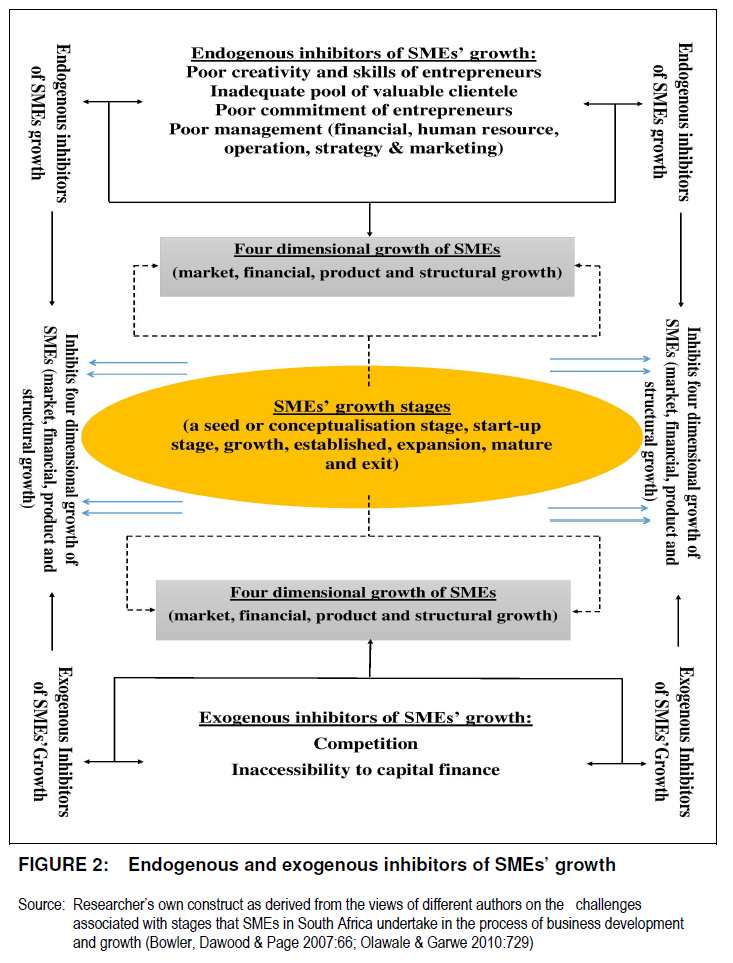
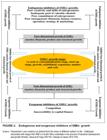
Despite the successes of certain SMEs, empirical facts indicate the ability of most of the South African SMEs to start and gain the momentum to grow sustainably to be constrained by a combination of certain endogenous and exogenous factors (Bowler et al. 2007:66; Cant & Wiid 2013:707; Olawale & Garwe 2010:729; Ramukumba 2014:19;). These inhibitors are illustrated in Figure 2.
6.2.1 Endogenous inhibitors
The major endogenous inhibitors of most of the early stages of SMEs' growth were found to relate to: poor creativity and skill of new entrepreneurs, inadequate pool of valuable clientele, and the commitment of entrepreneurs and management (Olawale & Garwe 2010:729; Slack & Lewis 2011:166).
■ Creativity and skills of entrepreneurs
Creativity and skills were highlighted as some of the major inhibitors that affect most of the entrepreneurs in two stages of the process of developing an enterprise. The first stage is linked to the process of conceptualisation (Olawale & Garwe 2010:729). In the beginning phases of the process of conceptualisation or developing the concept of a business that must be established, most entrepreneurs tend to engage in acts of copying and pasting approaches from the other successful entrepreneurs (Cant & Ligthelm 2003:12).
Engagement in such practices was found to affect thorough analysis and identification of opportunities prevailing in the external business environment (Cant & Ligthelm 2003:12). It also limits effective identification and mitigation of the threats that often affect the sustainability of such businesses in the early stages of their introduction (Business Environment Specialists-SBP 2014:10). As a result of this, some of the entrepreneurs end up emerging and establishing business concepts that they do not understand very well.
Coupled with the challenge of lack of skills, this leads to the problem of ensuring that the business is effectively managed to grow passed the introduction stage (University of Stellenbosch 2014:2). Poor creativity and skills of the entrepreneurs were also found to affect the undertaking of the necessary manipulations and reconfigurations to control costs and ensure that the business operates profitability (Business Environment Specialists-SBP 2014:10).
Also during the early stages of the SMEs' start-up, findings revealed the other challenges are linked to the failure to create unique networks of suppliers that usually set the business apart from rivals because of special pricing and relationship that the business copied could have developed with its customers (Business Environment Specialists-SBP 2014:10). This affects the sustainability of the business. Besides poor creativity and skillfulness of entrepreneurs, empirical facts also indicated poor marketing and creation of a pool of valuable clientele is the other endogenous indicators marring effectiveness of the process for nurturing and developing SMEs through the early stages of growth (Bank Seta 2014:5).
■ Inadequate pool of valuable clientele
Inadequate pool of valuable clientele affects the development and growth of most of the SMEs (Neneh & Van Zyl 2010:19). Reasons for this are often linked to two factors: stronger dependence on certain clients and poor marketing and promotion.
Most of the SMEs were found to have been built in response to the expectation of business dealings from certain clients which are either big businesses or government departments (Bank Seta 2014:5). With significant reliance on only one or just a few clients, the prospects of the growth of such businesses dwindle when the contract signed with a particular client lapses (Neneh & Van Zyl 2010:19).
Most businesses that are built only on the basis of the expectations of business dealings with certain clients are often not accompanied with the outline of the vision and mission about its growth (Neneh & Van Zyl 2010:19). Such approach affects the commitment of the management effort and the necessary financial resources towards marketing and promotion of the enterprise (Bank Seta 2014:5). Even for entrepreneurs who are skilful and understand the business values of marketing, most of them are often more reluctant to commit the time and the necessary financial resources towards marketing and promotion of their businesses by distributing flyers or placing internet or newspaper advertisements (Bank Seta 2014:5; Slack & Lewis 2011:166).
Poor marketing and promotion undermine the attraction of new clients and the building of a pool of loyal customers (Bank Seta 2014:5). It is not only poor marketing and promotion that inhibit the development and growth of the SMEs in the initial early stages of their development, but also the overall commitment of the entrepreneurs (Ncwadi 2005:27).
■ Commitment of entrepreneurs
As the business begins to experience growth, the commitment of the entrepreneurs is often affected (Ncwadi 2005:27). Since the business is already thriving, most of the entrepreneurs tend to stay away from the business and delegate the process for the accomplishment of different critical activities to the often less experienced personnel (Ncwadi 2005:27). This situation arises from the fact that either the entrepreneur will already have been over excited with the amount of profits being generated or could have been negatively affected by the emerging stress and pressure of ensuring that the business continues to be successful (Ncwadi 2005:27).
In either of the situations, quality and efficiency tend to be affected, and undermine the attraction of new customers and the retention of the existing customers (Bowler et al. 2007:66). Reasons are often linked to the fact that the values that could have lured a significant number of customers tend to dwindle (Bowler et al. 2007:66).
Yet, as such values dwindle, customer dissatisfactions also set in to cause the increment in the rate of customer defection that in turn lowers sales, revenue and the overall profitability either in the immediate short run or long run (Bowler et al. 2007:66). With negative customer perceptions about the enterprise, it often takes time and financial resources for the enterprise to rebrand itself and thrive (Ncwadi 2005:27). Besides pressure and stress that cause entrepreneurs to delegate some of their business responsibilities, the other source of the poor commitment of the SMEs also tend to arise from the scale of the operation of the SMEs (Ramukumba 2014:19).
Some of the SMEs operate on a very small and subsistence scale to the extent that even if the business begins to experience significant growth, they are often not bothered about applying the necessary strategies to take the business to the next level (Atkinson 2014:10). For other entrepreneurs, their overall personal ambition and motive may tend to be the determining factor in the level of their motivation and commitment (Atkinson 2014:10).
■ Poor management
Most of the SMEs are often founded as family businesses just to provide the family with the source of income and livelihood. However, such businesses have often surprisingly turned out to thrive beyond expectations (Atkinson, 2014:10). As such level of growth begins to be realised, it is often difficult to get rid of the family members who would have already been entrenched as key workers in different critical units and areas. This affects the formalization of the business. The implications are latent in the fact that the business tends to be run on a more random basis with activities being accomplished as they arise (Olawale & Garwe 2010:729). Lack of a strategic plan undermines the outline of critical vision, mission and activities that must be accomplished to steer the enterprise to the next level of growth.
It also affects the level of resource optimisation (Atkinson 2014:10). As the management spends randomly and charge prices without thorough analysis of the costs of inputs involved, finished goods end up being sold at prices that cannot enable the enterprise to recoup all its fixed and variable costs and retain significant profit margins (Sheers 2011:548). It is such incidents that explain why despite thriving and growing, some of the entrepreneurs find that they are either unable to cover all the costs or are heavily indebted to extent that they do not have excess financial resources for investments to stimulate further growth (Olawale & Garwe 2010:729).
Since the business will have been formulated on the ideology that it is a mere source of family livelihood, such thinking will also creep into the growth stage of the enterprise to affect the effectiveness of financial management (Atkinson 2014:10). Risks of the emergence of the declining human resource commitment are the other drawbacks linked to the over involvement of family members in the management of the business (Corp International 2012:16). Yet, as it is established over time in the human resource theories, committed employees tend to influence the improvement or the consistency of the quality of services and products and the overall level of customer satisfaction. This in turn impacts positively on the increment of sales, revenue and profitability to spur further growth (Ryan 2009:6).
6.2.2 Exogenous inhibitors
It is evident across different prior empirical studies that the major exogenous inhibitors of the SMEs' early development and growth include competition and inaccessibility to capital finance (Mbonyane 2006:19; Mthente 2012:3).
■ Competition
The increasing competition in most of the South African markets and industries affects the early sustainability and growth of the less creative and agile SMEs (Mthente 2012:3). Such increment in competition is attributable to two factors, one of which is the rising unemployment rate that has been driving a significant section of the population to start their own businesses (Mthente 2012:3). This leads to the crowding of different industries and the rising level of competition that drives down the overall market attractiveness. Less capable SMEs are therefore forced to exit the industry due to low revenues to meet their overall overheads and operational costs (Mthente 2012:3).
The second source of competition among the South African SMEs is linked to the globalisation forces and the increasing deregulation and liberalisation in South Africa. Increasingly, this has precipitated the increment in the proliferation of new businesses entering the South African market. To compete successfully, SMEs must be capable of effectively managing their operational costs to provide cost advantages that can be passed to customers in terms of lower prices (Mthente 2012:3).
Unfortunately, most of the SMEs cannot undertake relevant innovations and inventions to improve operational processes and systems to influence the reduction of their overall operational costs (Mbonyane 2006:19). This undermines their overall competitiveness and sustainability during the early stages of introduction (Business Environment Specialist-SBP 2014:10). In addition to competition challenges, the other exogenous inhibitors of the growth of SMEs are explained by the increasing inaccessibility to capital finance (Neneh & Van Zyl 2010:19).
■ Inaccessibility to capital finance
The challenge of insufficient capital finance is reported in most of the studies conducted on the inhibitors of SMEs' growth in South Africa (User 2014:6). Limited capital finance affects the ability of SMEs to undertake the necessary investments that are critical for them to realise the desired level of growth. Most of the SMEs that could have gained significant growth have often been curtailed by lack of capital finance to improve their production capacity (Business Environment Specialist-SBP 2014:10). For SMEs in the non-manufacturing sector, limited capital finance undermines the undertaking of the necessary expansion initiatives that may require establishing new branches and other outlets in the other geographical regions (User 2014:6). The challenge of lack of capital finance is explained by the stringent requirements for credit facilities that most of the commercial banks have put in place. Due to the alarmingly high failure rates among SMEs, most of the SMEs are viewed by most of the commercial credit providers as the major sources of risks. In effect, most credit applications by SMEs either take longer to be approved, or are in most of the cases rejected (User 2014:6).
As the processing of credit applications takes long, SMEs tend to miss growth opportunities presented by sudden market or industry changes. For SMEs that qualify to be awarded credits, challenges often still arise from higher interest rates that reduce most of the savings that SMEs could have used for further growth and development. In a bid to deal with these challenges, the government introduced the development financial institutions such as the Industrial Development Cooperation (IDC), the Development Bank of South Africa (DBSA), Ithala SOC, Thebe Bank and the National Youth Fund (NYD) (Corp International 2012:16).
The purpose of these developmental financial institutions was to provide SMEs and other businesses with easy access to capital finance. Part of the process involved removing all the stringent requirements and interests on all the loan facilities (Business Environment Specialist-SBP 2014:10). However, recent trends reveal that the poor repayment of the borrowed funds and corruption are driving most of the development financial institutions into liquidation (Corp International 2012:16). In effect, most of the development financial institutions have also introduced stringent credit requirements for all applications for loan facilities (Corp International 2012:16).
7. DISCUSSION
For new entrepreneurs to develop their businesses to attain the desired level of sustainable growth, findings imply that the adoption of the appropriate business development and growth model in the early stages of a business' introduction is a prerequisite. However, a challenge was found to arise from the fact that most of the conventional theories on a business development and growth only provide general elucidations on the steps for a business development without providing specific sets of strategies that can be used for preventing and minimising the risk of failures in the usually risky early stages of a business development (Magretta 2013:9; Mason 2012:66; Michelacci 2013:207).
Although Griener's (1972:1) theory elucidates extensively on the structural, management and leadership issues that can constrain the process of a business development, the theory ignored dealing with certain critical issues that often affect the pre-conceptualisation and conceptualisation stages to ensure that the business starts well during its launch. Similar weaknesses were also found to be evident in Adizes' (1979) model on business development, and in Ruhnka and Young's (1987:167) venture capital model that was found to highlight businesses to grow through seven critical stages; a seed or conceptualisation, start-up, growth, established, expansion, mature and exit stages. Ruhnka and Young's (1987:167) venture capital model is a highly regarded model among business developers. However, findings revealed that it is still impracticable for enhancing the development and growth of SMEs in South Africa.
SMEs in South Africa were found to face unique significant challenges in the pre-conceptualisation and conceptualisation stages (Cant & Wiid 2013:707; Olawale & Garwe 2010:729; Ramukumba 2014:19). This affects the vibrancy of the business concepts that most of the SMEs emerge with. Due to poor conceptualisation, some of the businesses were found to just either fail straight away or not exist for over the next 24 months. Contrary to the wider theoretical articulations that after seed or conceptualisation and start-up, the business commences growth straight away, empirical facts from studies conducted on SMEs' growth in South Africa indicated that most of the SMEs tend to follow different growth paths with different stages (Bowler et al. 2007:66; Olawale & Garwe 2010:729). The stages include the pre-conceptualisation stage, conceptualisation stage, start-up, stabilisation and growth.
It is the pre-conceptualisation stage in which the failure to apply the appropriate level of creativity in the context of the prevailing environmental threats and opportunities were noted to be the source of failures at the conceptualisation and start-up stages. Even for certain SMEs that manage to start-up more effectively and reach the stabilisation stage, effective accomplishment of different activities to propel the enterprise to growth was noted to be hampered by a combination of certain endogenous and exogenous inhibitors.
The major endogenous inhibitors of most of SMEs' growth were found in most of the empirical studies to relate to the poor creativity and skilfulness of most of the new entrepreneurs, inadequate pool of valuable clientele, commitment of entrepreneurs and poor management (Bowler et al. 2007:66; Olawale & Garwe 2010:729). As the major exogenous inhibitors of SMEs' early growth were highlighted to be linked to competition and inaccessibility to capital finance (Cant & Wiid 2013:707; Olawale & Garwe 2010:729; Ramukumba 2014:19).
8. MANAGERIAL IMPLICATIONS
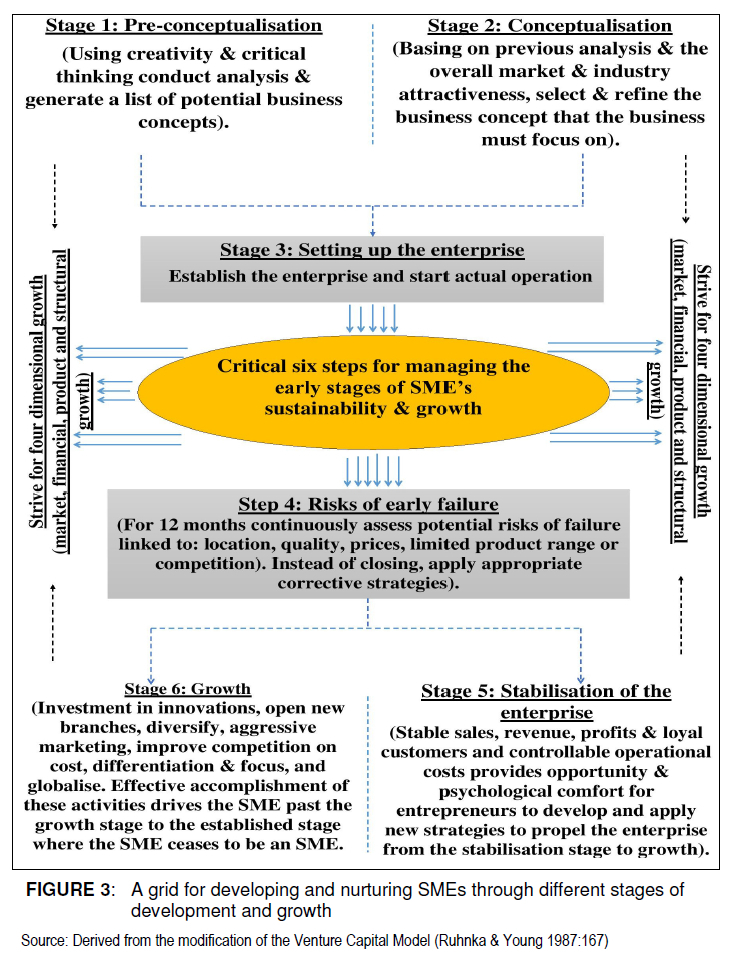
Considering that most of the SMEs were found to face significant challenges in their early stages of introduction and growth, the business development and growth model in Figure 3 provides a modification of Ruhnka and Young's (1987:167) venture capital model to enable its effective adaptation and application to solve the unique challenges that face the early stages of the development and growth of SMEs in South Africa.
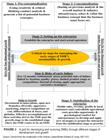
As it is illustrated in Figure 3, the six critical stages that the SMEs must consider when developing and nurturing their businesses through the early stages of growth include:
■ Stage 1: Pre-conceptualisation
Using creativity and critical thinking, it is critical that the analysis is conducted on new events, demographics, income levels, government policies, and failures and successes in similar enterprises.
Such analysis must be accompanied by the evaluation of the industries with shortages and common customer complaints, forecasting of future market and economic trends, international trends and trends in similar countries, and market changes and unfulfilled needs
As it is illustrated in Figure 3, the six critical stages that the SMEs must consider when developing and nurturing their businesses through the early stages of growth include:
■
Stage 1: Pre-conceptualisationUsing creativity and critical thinking, it is critical that the analysis is conducted on new events, demographics, income levels, government policies, and failures and successes in similar enterprises. Such analysis must be accompanied by the evaluation of the industries with shortages and common customer complaints, forecasting of future market and economic trends, international trends and trends in similar countries, and market changes and unfulfilled needs.
In conjunction to developing business conversations with as many strangers and as possible, it is also important to read newspapers, internet information, watch TVs and listen to radios and make the necessary interpretations of different views. All these may enhance the understanding of the industry and market that the SME aims to enter and the gaps that can be filled by developing a new business venture. After completing such analysis, generate a list of potential business concepts and select the best.
Conduct further feasibility analysis on the selected business concept while paying attention to factors such as the required capital finance, attractiveness of the market, the future sustainability of the market, suitability of the location and technology.
The other factors to consider in such evaluation include skills and capabilities to successfully run such a business, competition, government policies and regulations, and related industries or markets for future diversification and growth. Effective accomplishment of the activities in this stage facilitates the refining of the business idea in the conceptualisation.
■
Stage 2: ConceptualisationIn the conceptualisation stage, refine the business concept in terms of the product or service that the business must focus on. Examine how the product or the service will differ from those of the competitors, and the immediate segment and the long term prospective customers that will be the focus of the business.
Conclude the location of the business while taking note of the proximity to consumers, the income and economic status of the consumers in that location, major interests and preferences of the consumers in that location. This must be accompanied by the evaluation of the proximity of the business location to most of the major distributors and suppliers and inputs.
The degree of the location advantage over rivals must be assessed by examining whether costs associated with such a location can easily be recouped through revenues generated from immediate sales. Also assess the overall costs that will be required during the setup stage. Ensure the available funds are sufficient for setting up the business without compromising quality and customer perception about the new enterprise. Effective accomplishment of the activities in the pre-conceptualisation stage and the conceptualisation will certainly minimise the high risks of failures among SMEs when the set-up process commences.
■ Stage 3: Setting up the enterprise
In this step, develop a strategic plan that prescribes how activities must be accomplished and keep on modifying in the context of the constantly emerging new changes in the market and the industry that the business is being established. Secure the necessary equipment and get an experienced consultant or technician to do the setting up of the enterprise.
Ensure the attractiveness of the business premises and the overall positive attitudes and reception to customers. Besides establishing an effective communication system with the suppliers and major prospective customers (internet), also take note of the customers' preferences about the opening and closing hours of the business.
Design and undertake immediate marketing and promotional strategies (the use of flyers, maintenance of a friendly, calm and aggressive sales force, advertisements in newspapers, community papers and the internet, the use of promotional items on the first day of operation and in the first few weeks thereafter). The other strategies will involve ensuring that the set prices are competitive, and interacting with customers to find their views about the products and services, and what else they would like to have.
Take note of the services or products that customers are frequently asking and yet the enterprise does not have, and customer complaints. The beginning phases may be tough and customers may not respond immediately. However, it is better to remain courageous and committed by operating as normal and consistent with the quality of customer services and products. Show confidence and excitement about the enterprise. It is also critical that entrepreneurs must be vigilant to identify and eradicate the symptoms of likely early failures.
■
Stage 4: Risks of early failureIf for 12 months the enterprise is not able to generate the desired sales and profitability, use the records and information generated by the enterprise to assess whether the looming failure is linked to the inappropriateness of the location, the quality of the products, prices, limited product range or competition from rivals. Instead of closing, undertake aggressive marketing and promotional activities. If the risks of early failure still persist, take immediate corrective actions that may include changing the location, reviewing prices, adding more range of products onto the existing ones, improving quality or getting a partner that can inject more funds through the purchase of shares to enable the business improve areas where there are challenges.
Signs of passing the risks of early failures may be reflected in the slight persistent increase in sales, and evidence of frequent repeat purchases and visitation by new customers. These will influence the inflow of revenues to the level which is appropriate for the enterprise to meet all its overheads and retain some percentages as profits. It is through such a process that the enterprise will be able to avoid the risk and early failure and slid into stabilisation.
■
Stage 5: Stabilisation of the enterpriseMost authors argue that from start-up stage, the enterprise starts to experience growth straight away. That is not true. Instead, businesses tend to struggle first past the stage of the risks of early failure into stabilisation. Stabilisation is a stage where the entrepreneur becomes psychologically confident that the business concept is working and that it will survive. Stabilisation is characterised by the consistent inflow of sales, revenue and profits, as well as the inflow of new customers, loyal customers, controllable operational costs, and relative customer awareness of the enterprise.
To instigate growth from this stage, use strategies encompassing effective cost control and management measures to increase the profitability margin. In addition to introducing complementary products and services to expand on the source of revenues, recruit some new experts as employees. Continue with aggressive marketing and promotion as well as the giving of the promotional items. Identify the categories of major customers in terms of social attributes and income and assess how to target more of such categories of customers.
In addition to ensuring the consistency or even improvement of the quality of the existing products and services, conduct constant analysis and strive to stay ahead of the existing and emerging rivals. Develop a vision and formulate strategies for pursuing growth. If effective strategies and commitment are undertaken at this stage, the business will be driven to the growth stage.
■ Stage 6: Growth
Due to the measures undertaken during the stabilisation stage, increment in new customers' attraction, sales and profitability tend to begin rising quite significantly. This is a period that a business experiences enormous increment in sales, revenues, profitability and significant improvement in the competitiveness of the enterprise. Some of the strategies that can be used to stimulate further growth include investment of enormous funds in innovation and inventions to improve the quality of products and services, investment in the expansion of new branches in new geographical locations, and undertaking diversification into new industries and markets. It is only a challenge to manage the development of SMEs upto the growth stage. Once the growth stage is passed, SMEs often get converted into big businesses and use the experience accumulated over the years as the sources of key competencies to manage and thrive through later challenges.
9. CONCLUSION
Even for certain SMEs that manage to start-up more effectively and reach the stabilisation stage, effective accomplishment of different activities to propel the enterprise to growth was noted to be hampered by a combination of certain endogenous (poor creativity and skilfulness of most of the new entrepreneurs, inadequate pool of valuable clientele, commitment of entrepreneurs and poor management) and exogenous inhibitors (competition and inaccessibility to capital finance). The study postulates a grid for developing and nurturing SMEs through the early stages of a business development that include pre-conceptualisation, conceptualisation, set-up, stabilisation and growth. However, this is just a grid outlining a guideline. The successful development and growth of the SMEs will still depend on the overall creativity of the entrepreneurs involved in the development of SMEs. Future research can therefore evaluate the implications of creativity of the entrepreneurs on the successful development and growth of SMEs.
REFERENCES
2. LITERATURE REVIEW
- ADIZES I. 1979. Organisational passages: diagnosing and treating life cycle problems in organisations. Organisational Dynamics 8(1): 3-25.
- AFUAH CL & TUCCI S. 2013. Internet business models and strategies. New York, NY: McGrawHill
- ALLEN A. 2009. Growing and managing an entrepreneurial business. Boston, MA: Houghton Mifflin.
- ATKINSON R. 2014. Challenges facing young entrepreneurs in South Africa. News24, 29 September 2014, 11:26.
- BANK SETA. 2014. Small and micro enterprises (SMEs). Pretoria: Bank Seta.
- BENDOLY E, BHARADWAJ A & BHARADWAJ S. 2012. Complementary drivers of new product development performance: cross-functional coordination, information system capability, and intelligence quality. Journal of Production Operation Management 21 (4): 653-667.
- BOGHOSSIAN P. 2011. Williamson and the a priori and the analytic. Philosophy & Phenomenological Research, 82(1):488-497.
- BOWLER A, DAWOOD MS & PAGE S. 2007. Entrepreneurship and small business management. Pretoria: Juta.
- BRUSH CG, GRENE PG, HART MM & EDELMAN LE. 2009. Resource configuration over the life cycle of ventures. Frontiers of Entrepreneurship Research 1(4):144-196.
- BUSINESS ENVIRONMENT SPECIALIST-SBP. 2014. Examining the challenges facing small businesses in South Africa. Johannesburg: SBP.
- CANT MC & WIID JA. 2013. Establishing the challenges affecting South African SMEs. International Business and Economics Research Journal 12(6):707-716.
- CORP INTERNATIONAL. 2012. 5 biggest challenges facing your small business; empowering you to fulfil your dreams. Johannesburg: Corp International.
- CRONIN P, RYAN F & COUGHLAN M. 2008. Undertaking a literature review: a step by step approach. British Journal of Nursing 17(1):38-43.
- ENTRIALGO M, FERNANDEZ E & VAZQUEZ C. 2010. Psychological characteristics and process: the role of entrepreneurship in Spanish SMEs. European Journal of Innovation Management 3(3):137-151.
- FABER PBH, BOUWMAN TH & RIETKERK MS. 2013. Designing business models for mobile ICT services. Bled, SLO: Bled Electronic Commerce.
- GIGLIERANO J, VITALE R & MCCLATCHY JJ. 2011. Business development in the early stages of commercializing disruptive innovation: considering the implications of Moore's life cycle model and Christensen's model of disruptive innovation. Innovative Marketing 7(2):29-39.
- GREINER LE. 1972. Evolution and revolution as organization grow. Harvard Business Review 50(4): 37-47.
- HOTAMISLI M, KOCATEPE A. & DEMIREL SI. 2009. Larry Greiner growth model in the organization life and a case study. International Symposium on Sustainable Development 3(2):259-264.
- HOOF BV & THIELL M. 2014. Collaboration capacity for sustainable supply chain management: small and medium-sized enterprises in Mexico. Journal of Cleaner Production 67(3):239-248.
- KEIL T, MARKKU M, SCHILDT H & SHAKER AZ. 2008. The effect of governance modes and relatedness of external business development activities on innovative performance. Strategic Management Journal 29(8):895-907.
- MAGRETTA J. 2013. Why business models matter. Boston, MA: Harvard Business Review.
- MASON T. 2012. The venturing imperative. Boston, MA: Harvard Business Review.
- MBONYANE BL. 2006. An exploration of factors that lead to the failure of small businesses in the Kagiso Township. Pretoria: University of South Africa. (College of Economic and Management Sciences) (Minidissertation: M Tech Business Administration).
- MICHELACCI C. 2013. Low returns in R&D due to the lack of entrepreneurial skills. Economic Journal 113(1): 207-225.
- MOORE GE. 1899. The nature of judgment. Philadelphia, PA: Temple University Press.
- MTHENTE RESEARCH AND CONSULTING SERVICES. 2012. Analysis of the needs, state and performance of small and medium businesses in the agriculture, manufacturing, ICT and tourism sectors in South Africa. Johannesburg: SEDA. (Small Enterprise Development Agency).
- MULLINS J & KOMISAR R. 2009. Getting to Plan B: Breaking through to a Better Business Model. Boston: Harvard Business Press.
- NENEH NB & VAN ZYL JH. 2010. Achieving optimal business performance through business practices: evidence from SMEs in selected areas in South Africa. Bloemfontein: University of Free State.
- NCWADI MR. 2005. An exploratory study into the challenges facing the emerging contractors involved in the construction of low cost housing in wells estate and Ikamv'elihle Townships in the Nelson Mandela Metropole, South Africa. World Congress on Housing Transforming Housing Environments through Design September 27-30, 2005, Pretoria, South Africa.
- OLAWALE F & GARWE D. 2010. Obstacles to the growth of new SMEs in South Africa: a principal component analysis approach. African Journal of Business Management 4(5):729-738.
- PISSARIDES F, SINGER M & SVEJNAR J. 2013. Objectives and constraints of entrepreneurs: evidence from small and medium enterprises in Russia and Bulgaria. Journal of Competitive Economics 31 (2):503-531.
- PORTER ME. 1986. Competitive advantage: creating and sustaining superior performance. New York, NY: Free Press.
- QUINN RE & CAMERON KS. 1983. Organizational life cycles and shifting criteria of effectiveness: some preliminary evidence. Management Science 29(1):33-51.
- RAMUKUMBA T. 2014. Overcoming SMEs challenges through critical success factors: a case of SMEs in the Western Cape Province, South Africa. Economic and Business Review 16 (1):19-38.
- RUHNKA JC & YOUNG JE. 1987. A venture capital model of the development process for new ventures. Journal of Business Venturing 2(2):167-184.
- RUMELT RP. 2011. Good strategy/bad strategy. New York, NY: Free Press.
- RYAN E. 2009. Entrepreneur magazine. Johannesburg: Entrepreneur Magazine.
- SCHEERS LV. 2011. SMEs marketing skills challenges in South Africa. African Journal of Business Management 12(2):548-556.
- SCOTT M & BRUCE R. 1987. Five stages of growth in small business. Long Range Planning 20(3):45-52.
- SLACK N & LEWIS M. 2011. Operations strategy. London, UK: Pearson.
- TAM S & GRAY DE. 2016. What can we learn from the organizational life cycle theory? A conceptualization for the practice of workplace learning. Journal of Management Research 8(2):18-30.
- UNIVERSITY OF STELLENBOSCH. 2014. Khayelitsha small business project; needs and challenges of small businesses in Khayelitsha. Cape Town: University of Stellenbosch Business School.
- USER S. 2014. The challenges of small businesses in South Africa. Benoni: Boikana Accountants.