Assessing Electronic Procurement at a State-Owned Enterprise in South Africa
Abstract
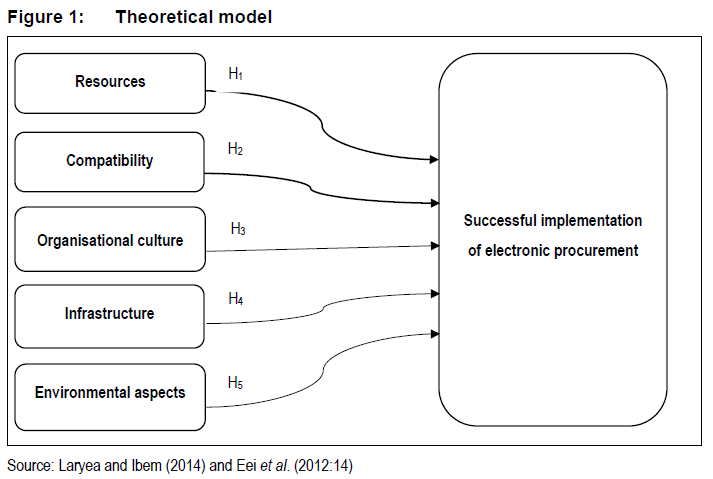
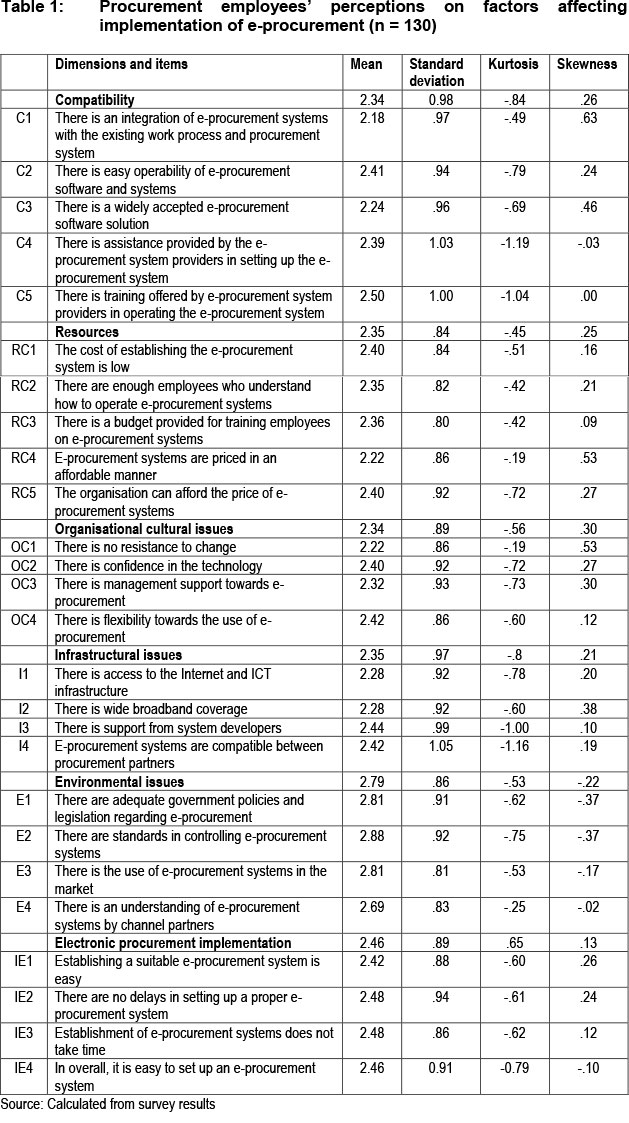
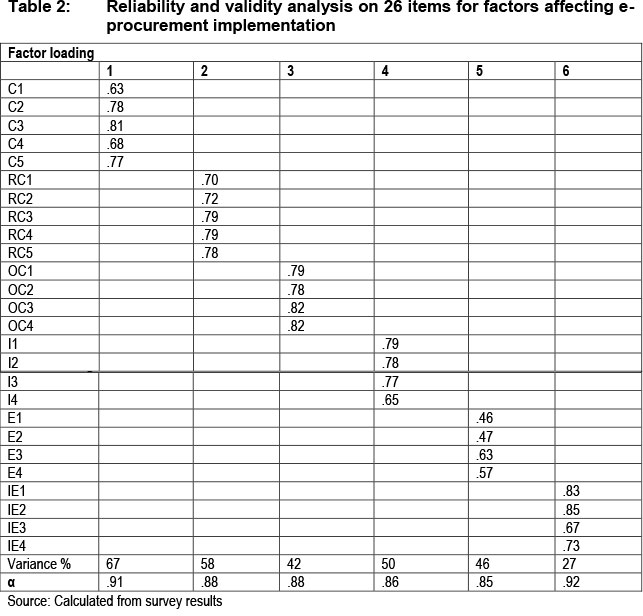
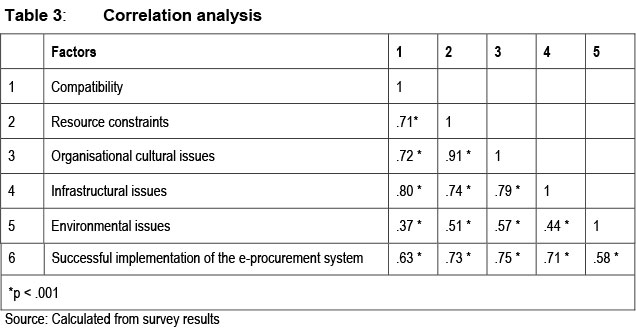
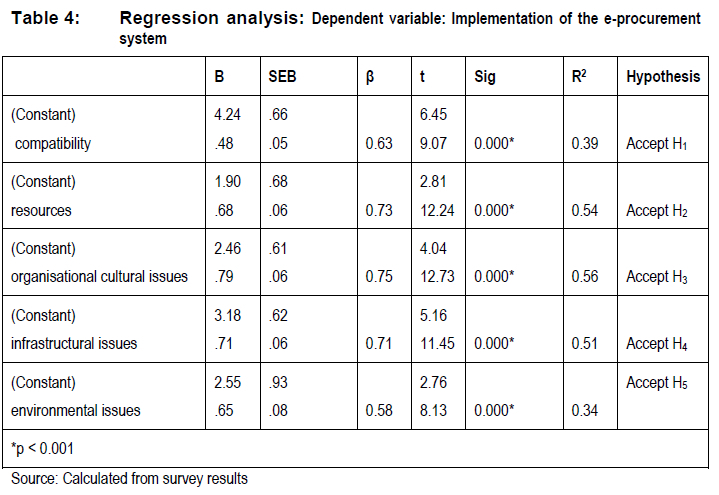
South Africa's state-owned enterprises (SOEs) have been related to maladministration, inefficiency, and abuse of power. In most instances, SOEs procurement departments are in the middle of illegal practices. This research argues that the effective introduction of an electronic procurement system can be one of SOEs strategic tools for fostering openness and accountability and reducing corruption. This study aimed to (i) assess procurement employees' perceptions of factors affecting the implementation of electronic procurement and (ii) investigate the statically significant relationship between factors affecting electronic procurement and the successful implementation of electronic procurement. A quantitative descriptive approach, with the use of a structured questionnaire, was employed to collect data from a sample of 130 procurement employees at a single SOE in South Africa. The Statistical Package for Social Sciences (SPSS) was employed to conduct descriptive and multivariate analyses, including factor analysis, correlations, and regression analyses. Results showed that procurement employees had negative perceptions on factors affecting the implementation of electronic procurement that include compatibility, resources, organisational cultural issues, infrastructural issues, and environmental issues. It was also found that factors affecting electronic procurement have a positive statistically significant relationship with the successful implementation of electronic procurement. This study provides recommendations for improvement to the management of procurement division within SOEs in South Africa.
Compatibility; electronic procurement system; environmental aspects; implementation; infrastructure; organisational culture and resources
 Thumbnail