Modelling a strategic cybersecurity management process
Abstract
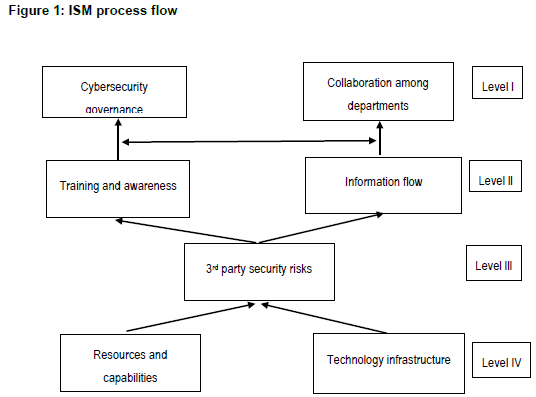
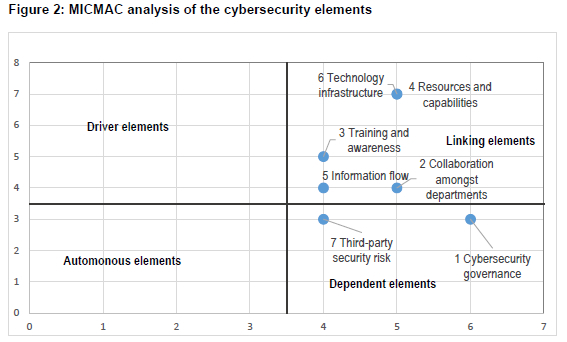
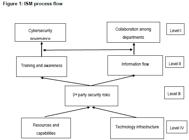
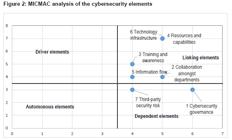
PURPOSE OF THE STUDY: This study models an organisation's strategic cybersecurity management process. Organisations need a responsive strategic cybersecurity process to defend against and manage exposure to dynamic and evolving cybersecurity threats. DESIGN/METHODOLOGY/APPROACH: The modelling process used semi-structured interviews with interpretive structural modelling to link the interrelationships between seven strategic cybersecurity elements into a strategic process. FINDINGS: The results show cybersecurity governance and third-party security risks as the two dependent elements. While the interactive nature of the remaining five elements: technological infrastructure, resources and capabilities, collaboration among departments, secured information flow, cybersecurity training and awareness, classified them as linking elements to support the dependent elements. RECOMMENDATIONS/VALUE: Modelling assists managers in conceptualising non-typical processes that cut across departments or functions to document the link between elements for a more effectively optimised strategic process. The mix between formal (cybersecurity governance) and informal (collaboration among departments) elements assists in optimising the process. Using interpretive structural modelling contributes to the literature on strategic processes modelling in South Africa. MANAGERIAL IMPLICATIONS: Understanding the strategic cybersecurity process and its use of formal and informal elements in an organisation can improve the strategic alignment between the business and cybersecurity for more responsive risk decisions. JEL CLASSIFICATION: D81
Cybersecurity management; cybersecurity process; cybersecurity; interpretive structural modelling; strategic process; strategic process modelling
 Thumbnail
 Thumbnail