Organisational learning in Crime Intelligence: A qualitative review
Abstract
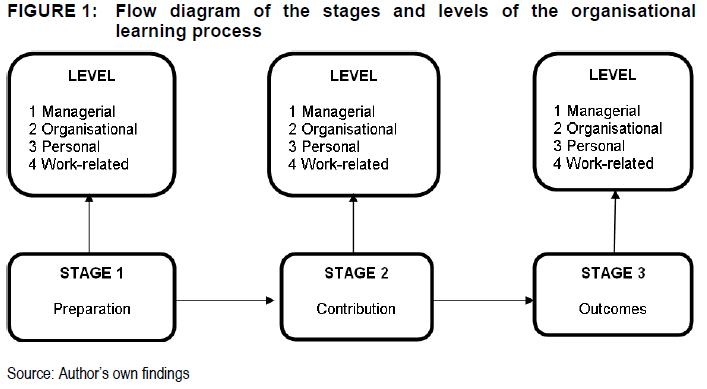
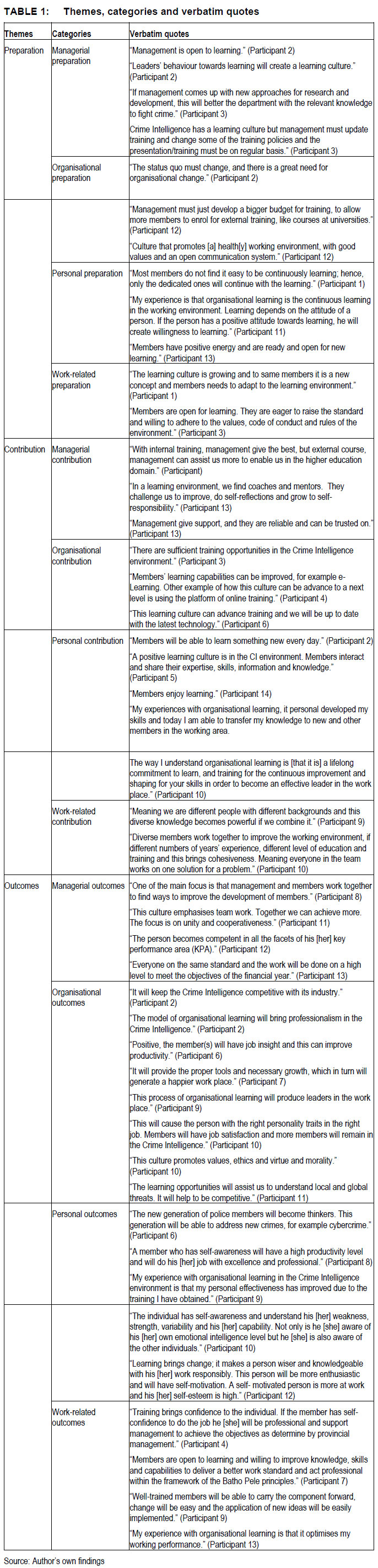
Crime Intelligence is one of the units within the South African Police Service with the purpose to collect, analyse and disseminate information in an effort to anticipate, prevent, and monitor criminal activities. Due to this fact organisational learning can assist police members to create, retain, and transfer knowledge within this unit. The twofold objectives of the study on which this article reports were, firstly, to investigate which stages should be evident during organisational learning and, secondly, to determine at which levels organisational learning should be implemented. A qualitative research approach was used and semi-structured interviews were conducted. Commanders, team leaders and operational members participated in this study. Content analysis was used to identify codes and themes. The findings indicated that preparation, contribution and outcomes were identified consequential stages & managerial, organisational, personal and work-related categories were identified as the specific levels at which organisational learning should be implemented to anticipate, prevent and monitor criminal activities. The contribution to the body of knowledge is that a flow diagram was developed to indicate the specific stages and accompanying levels of the organisational learning process within Crime Intelligence in order to improve the flow of knowledge to combat crime.
Crime intelligence; contribution; organisational learning; outcomes and preparation
 Thumbnail