The role of demographics, Schwartz's individual values and satisfaction on individual environmental performance in South African ISO-certified organisations
Abstract
PURPOSE OF THE STUDY: This study explores how Schwartz's Individual Values (SIVs) and satisfaction factors mediate the relationship between employee demographics and Individual Environmental Performance (IndEP) within South African Bureau of Standards (SABS) ISO 14001-certified organisations. Owing to opposing values, SIVs and satisfaction can have either a positive or a negative impact on sustainable practices, innovation, and environmental performance. The findings contribute to research and existing literature on sustainability, innovation, environmental performance, and values, offering insights for professionals and academics. DESIGN/METHODOLOGY/APPROACH: A correlational design was employed, with data collected from 429 employees through purposive convenience sampling using questionnaires. Measurement tools included the SIV model and the Multidimensional Work Motivation Scale. Data were analysed using Partial Least Squares Structural Equation Modelling (PLS-SEM) via SmartPLS software. FINDINGS: Results revealed that demographic factors significantly predict IndEP. Conservation values were positively linked to age, company tenure, industrial sector, and position, while openness to change correlated with company tenure and position. Self-enhancement aligned positively with company tenure, industrial sector, and position, whereas self-transcendence was negatively related to company tenure but positively to position. Intrinsic satisfaction correlated with company tenure, industrial sector, position, self-enhancement, and self-transcendence, while extrinsic satisfaction was negatively associated with company tenure but positively with position and self-enhancement. IndEP was positively influenced by the industrial sector, position, intrinsic satisfaction, and self-transcendence. RECOMMENDATIONS/VALUE: The study recommends applying the SIV model to understand how motivation and satisfaction mediate demographic impacts on IndEP. Effective organisational management should align motivational factors with values and demographics to improve sustainability, productivity, innovation, and environmental performance. MANAGERIAL IMPLICATIONS: Managerially, targeting specific demographics through customised training that fosters values and satisfaction can create a harmonious work environment, enhancing IndEP and innovation. JEL CLASSIFICATION: I31; M54; O31; Q50; Q51; Q55.
Demographic values; individual environmental performance; ISO 14001-certified organisations; satisfaction factors; Schwartz's individual values
1. INTRODUCTION
The study examines how demographic factors affect individual environmental performance (IndEP) in South African Bureau of Standards (SABS) ISO 14001-certified organisations, focusing on Schwartz's values and satisfaction as mediators. South Africa should address environmental health issues, such as urbanisation, poverty, pollution, land destruction, biodiversity loss and human rights violations, by reducing its carbon footprint, managing water and waste and implementing IndEP measures. The study examines how demographic variables, Schwartz's individual values (SIVs) and satisfaction factors affect the IndEP of SABS ISO 14001-certified organisations. Age, gender, education and occupation have a significant influence on value priorities and outcomes (Silberg et al., 2024). Previous research has explored the correlation between these factors and task performance (Agras & Ates, 2015), social information perception (González-Rodríguez et al., 2016) and job satisfaction, employee performance and working conditions (Nurcahyono & Mardiati, 2019; Sorvali et al., 2022; Szekeres et al., 2019).
The study explores how organisations can enhance employee innovation and environmental performance by identifying values and analysing demographics, satisfaction and SIV relationships. It predicts IndEP through SIVs and satisfaction, revealing a correlation between demographic variables and satisfaction factors. However, predicting SIVs is challenging because of their orthogonal structure.
2.1 Research objective
This section outlines the study's objectives, goals and critical focus areas to guide readers towards the desired outcomes. The study examines how demographic variables influence IndEP and proposes new environmental management initiatives for SABS ISO-certified organisations. It also assesses the mediating role of SIV factors and motivation in this relationship. The study employs Schwartz's theory, which comprises ten circular and orthogonal personal values, to understand individual motivations and behaviours, with a focus on the correlation between demographics and environmental performance. The findings can assist managers, academics and practitioners in improving IndEP, innovation and organisational environmental performance.
2.2 Research question
The study investigates the correlation between demographics and IndEP by answering the research question and testing related hypotheses in South African SABS ISO 14001-certified organisations, offering valuable insights into the research objectives through findings and analyses. The research question generates the hypotheses discussed below and shown in Figure 1. The following research question is posed: To what extent are demographics mediated by SIV and satisfaction factors related to IndEP in South African SABS ISO 14001-certified organisations?
The study presents a conceptual model that illustrates hypotheses and the relationship between demographic variables and IndEP, with motivational and SIV factors serving as mediators to address the research question. Schwartz's theory comprehensively analyses individuals' functional structures and value types, emphasising societal differences (Fischer et al., 2010). Similarly, Arieli et al. (2019) assert that conflicts and compatibilities play a crucial role in shaping and arranging values. Values are socially desirable goals that influence behaviour and shape societal norms, as demonstrated through language and mental representation in social settings and interactions (Schwartz, 2012), which is one aspect of the SIV theory.
2.2.1 Overview of empirical studies
The study reviewed the literature on the variables in the conceptual model provided above. It explored how Schwartz's value theory can promote eco-friendly attitudes and enhance innovation and IndEP by aligning demographics and SIV factors, according to a review of Lindquist and Marcy's (2016) study. This review analyses the Schwartz theory of fundamental human values and insights from Europe (Schwartz, 2012; Sagiv & Schwartz, 2007). Therefore, this study is relevant to organisational behaviour and management.
This study emphasises the importance of understanding varying values to help human resource management professionals improve IndEP and organisational outcomes. Parks and Guay (2009) explore how values and personality affect motivation, whereas Jariya (2012) examines differences in work-related values between Western and Vietnamese managers. Such knowledge can help managers effectively navigate employee needs. Furthermore, Agras and Ates (2015) examined work-related behaviours and human values across different professions and countries, while Wong and Ngai (2021) focused on employee competencies and environmental performance within Fortune 500 corporations. Callaghan (2017) explored academic motivational values at a South African university. Singaravelloo and Kamiab (2016) conducted research on personal values and service quality in commercial banks in Kuala Lumpur, Malaysia. Furthermore, Knafo and Sagiv (2004) explored the relationship between values and occupations among Israeli workers. These studies provide insights into the role of values in individuals' motivation and behaviour.
This research examines the impact of SIV, motivation and behaviour on employee participation in environmental improvement and innovation. It provides insights to enhance environmental efforts and to encourage and promote employee engagement, innovation and performance. The study proposes hypotheses and explores how demographic factors, values and satisfaction influence IndEP owing to opposing SIV.
H1: Self-transcendence and openness to change values are positively and significantly associated with intrinsic satisfaction factors.
H2: Self-enhancement and conservation values are positively and significantly associated with extrinsic satisfaction factors.
Previous studies have investigated the relationships among employee behaviour, motivation and job satisfaction across various industries. For example, job satisfaction mediates the relationship between performance and motivation and enhances job performance in Pakistan's telecom sector (Bashir et al., 2020). Perceived organisational support and proactive personality affect the meaning and creativity of work among hotel managers in Turkey (Akgunduz et al., 2018). These studies offer valuable insights into the complex relationships among these factors.
Studies conducted by Adeoye and Elegunde (2014), Manzoor (2012), Yahyagil and Otken (2011) and Cameron et al. (2006) provide valuable insights into and a deeper understanding of the relationships among compensation management, employee motivation, cultural context, leadership practices and organisational change. These relationships affect motivation, leadership styles, managerial values and organisational effectiveness across different contexts.
Dunggio (2021) found no significant effect of motivation on lecturers' job satisfaction at universities in Gorontalo, Indonesia. However, both research by Alhadi et al. (2019) on students in Yogyakarta, Indonesia, and Saeed and Nasir's (2016) study among teachers in Lahore, Pakistan, show a positive correlation between academic motivation, self-regulation and performance, concluding that motivation positively affects job satisfaction.
This study analyses the predictive power of specific values on IndEP and explores satisfaction factors and values as mediators. The literature is unclear on this; therefore, this study proposes the following hypotheses:
H4: Intrinsic satisfaction factors mediate the relationship between demographic factors and IndEP.
H7: Demographic factors are positively and significantly associated with intrinsic satisfaction factors.
Previous studies have investigated the impact of demographic factors on employee motivation, satisfaction and job performance. For example, demographics predict job satisfaction and motivation at offshore gas production facilities in Malaysia (Met & Ali, 2014) and job performance at pharmaceutical companies in Delhi (Miralam & Ali, 2020). These studies help understand the complex interplay among demographic variables, motivation and workplace outcomes.
Tabatabaei et al. (2013) examined how demographics influence employees' job satisfaction at the Pars Ceram factory in Iran, whereas Hassan and Ogunkoya (2014) explored job performance in the Nigerian insurance industry. Ng and Feldman (2010) offered a meta-analysis of organisational tenure and job behaviours. These reviews indicate that demographics have a significant impact on job performance.
Mundhe (2018) examined how socioeconomic factors shape academic achievement at the University of Mumbai. Dubow et al. (2009) analysed the Columbia County Longitudinal Study data on individual education and occupational success, whereas Gashi et al. (2017) analysed employee values using Schwartz's theory in European countries. These studies help understand the relationship among demographics, employee values and job performance. However, in the present context, it is unclear whether demographics, in the presence of SIV and satisfaction factors, predict IndEP. Hence, this study proposes the following hypotheses:
H3: Demographic factors are positively and significantly associated with IndEP.
H5: Extrinsic satisfaction factors mediate the relationship between demographic factors and IndEP.
H6: Demographic factors are positively and significantly associated with extrinsic satisfaction factors
H8: Demographic factors are positively and significantly associated with Schwartz's individual values.
H9: The effect of demographic factors on IndEP is transmitted through Schwartz's individual values.
The study employs demographic variables in the conceptual model to examine individual values derived from Schwartz's theory and satisfaction factors in predicting IndEP.
Schwartz's values: A mediating factor
This section addresses Schwartz's values and their mediating role in the conceptual model of the study. Values influence creativity among Thai undergraduates (O'Siochru et al., 2023), and prioritising values increases public-sector time and decreases private-sector time (Czupryna et al., 2024). Self-directed individuals with personal autonomy and responsibility are more likely to engage in environmentally friendly practices. Meuleman et al. (2012) examined the relationship between social location and values within a country. This review helps to understand how human values shape behaviour and how Schwartz's values mediate between demographic variables and individual environmental performance.
The role of demographic variables
This section explores how demographic variables predict outcomes in the study. Research by El Refae et al. (2021) at Al Ain University in the United Arab Emirates and by Omori and Bassey (2019) in Cross River State, Nigeria, found that demographic characteristics significantly affect academic and work performance. Demographic variables, including age, gender, education level, industrial sector, occupation and work experience, can influence people's attitudes towards sustainability. ISO-certified organisations can use this information to identify drivers of innovation and environmental performance and to develop strategies that encourage sustainable practices.
Intrinsic and extrinsic satisfaction factors
This section explores how satisfaction factors mediate the influence of demographics and SIV factors on IndEP, providing valuable insights for organisational decision-making and resource allocation. Febriani et al. (2024) found that job satisfaction mediates the relationship between demographic factors and employee turnover in manufacturing in Indonesia. However, Bulilan's (2023) study at Bohol Island State University in the Philippines found that job satisfaction can sometimes lead to better performance. Employees with intrinsic and extrinsic satisfaction can perform better in ISO-certified organisations with sustainable practices. Both internal values and external rewards can motivate people to protect the environment. This study suggests that motivation, job satisfaction and IndEP are interconnected.
Individual environmental performance
This section provides an overview of the critical role and impact of IndEP on an organisation's overall functioning and success. IndEP involves individuals adopting behaviours and actions that minimise environmental impact by conserving resources and preventing pollution, thereby ensuring sustainability. Individuals should adopt eco-friendly practices, conserve energy, reduce waste and recycle to promote sustainability. Understanding individual environmental impacts is crucial to job performance. Sustainability is essential for a sustainable future, as individuals and organisations require significant environmental change and innovation.
The relationship between Schwartz's values, satisfaction, demographic variables and individual environmental performance
This section discusses the interactions among the variables in the conceptual model used in this study, focusing on employees at SABS ISO 14001-certified organisations in South Africa. Adeel et al. (2022) found that work engagement and job satisfaction mediate the relationship between environmental values and the performance of Pakistani universities. Furthermore, Jing et al. (2023) found that higher pollution levels are associated with lower employee satisfaction on Glassdoor's employer review website. Intrinsic satisfaction may lead to more eco-friendly actions, whereas extrinsic rewards may not. It appears that demographic variables also influence IndEP, with younger, more educated individuals exhibiting more eco-friendly behaviour owing to greater environmental awareness and knowledge.
3. METHODOLOGY
This section outlines the methodological approach to address the research question, including hypothesis testing through data analysis for a comprehensive investigation. The researcher employed purposive convenience sampling and collected data via email, with five options provided per item. The responses were converted to numerical data, assigned latent variable codes and verified using Excel and SmartPLS to detect respondent bias, missing values and ensure the accuracy of the analysis.
3.1 Population
The study population comprised employees from 400 ISO-certified organisations across all nine provinces of South Africa, representing multiple industries and sizes. Their distribution and operations were examined using the SABS database.
3.2 Sample
This section clarifies the sample used in this study. The sample comprised 429 employees. Women constituted 54,3% of the respondents, and men 45,7%. The largest age group was 25-29 years, followed by those aged 30-34 and 35-44 years. The smallest group comprised respondents over 50 years of age.
The respondents' current industrial sectors include 8,2% foreign governments, 4% agriculture, 10,3% mining, 11% education, 7,9% electricity and gas, 13,5% information technology and communication, 18,4% wholesale and retail, 6,1% transport and storage, 4,7% manufacturing, 9,3% construction and 6,6% hospitality. Furthermore, 30,8% of the respondents are general workers, 7,5% are operators/frontline employees, 20% are officers/administrators, 19,6% are supervisors/team leaders, 7,5% are middle managers, 8,1% are senior managers, and 6,5% are directors or executives.
Most respondents have worked for their current employers for less than a year. A total of 6,7% have worked for their current employers for less than one year, 5,4% for one year, 8,4% for two years, 10% for three years, 15,2% for four years, 15,6% for five years and 38,7% for six years or more. The respondents' current occupations range from 6,7% for less than a year to 38,7% for over six years.
The study categorised the respondents by educational level into eight groups: doctorate, master's, honours, higher diploma, degree, undergraduate, matric and without matric. The percentages of each category were as follows: without matric (9,6%), matric (29,1%), diploma (23,1%), degree (19,8%), higher diploma (12,8%), honours degree (2,8%) and master's degree (2,8%).
The surveyed mothers' educational levels range from 30% without matric to 40,2% with diplomas, 11,9% with degrees, 6,6% with higher diplomas, 5,3% with honours degrees, 4,4% with master's degrees and 1,6% with doctorates. The study reveals that 27,5% of the surveyed fathers have qualifications lower than matric, while 42% hold matric. Furthermore, 14,2% of the fathers hold diplomas, 10% have degrees, 2,1% hold higher diplomas and honours degrees, 1,5% hold master's degrees and 2.7% hold doctorates.
The respondents' home languages are as follows: 7,5% Xhosa, 2,3% English, 10,5% Afrikaans, 22,1% Sepedi, 13,6% Setswana, 13,8% Tsonga, 6,1% Venda, 8,2% Zulu, 6,8% isiNdebele, 4,4% isiSwati and 4,7% Sesotho.
3.3 Measures
The study surveyed 429 employees from 400 SABS ISO-certified organisations using e-mail questionnaires, assessing intrinsic, extrinsic and motivational factors using Ibrar and Khan (2015), the Multidimensional Work Motivation Scale (Lambooij et al., 2006; Seibert et al., 1999) and the World Values Survey, which reduces the SIV model to ten value variables.
The questionnaire measures variables using codes such as intrinsic satisfaction (ISF11-ISF17), extrinsic satisfaction (ESF18-ESF23), self-transcendence (SIV24-SIV29), conservation (SIV30-SIV33), self-enhancement (SIV34-SIV39), openness to change (SIV38-SIV43) and individual environmental performance (IndEP44-IndEP49). These variables are measured on a five-point Likert scale, with 1 representing 'to a small extent' and 5 representing 'to a great extent', with the midpoint at 2,5.
3.4 Data analysis
Numerical data were analysed to identify patterns and relationships using mathematical calculations and statistical tests. PLS-SEM (SmartPLS) software uses a distribution-free model to analyse non-normally distributed data. This study evaluated hypotheses based on individual values, satisfaction factors, demographic characteristics and IndEP. The model has undergone validity and reliability tests to demonstrate its accuracy (Hair et al., 2012 & Mustafa et al., 2017). Factor loads less than 0,70 require revising the model. Loads above 0,70 are ideal (Ab Hamid et al., 2011).
3.5 Construct reliability
This section focuses on construct validity, which examines the extent to which a measure accurately reflects the theoretical concept, and reliability, which considers consistency and repeatability. The research found that the model was reliable and valid, with high alpha values and convergent validity. A re-analysis improved construct validity, with average variance extracted levels exceeding 0,50 and composite validity exceeding 0,7, indicating excellent validity (Yazdi et al., 2017; Wong, 2013; Reichenheim et al., 2014). Table 1 shows the results of the analysis.
3.6 Discriminant validity
This section examines how specific measures relate to constructs that are theoretically unrelated. The study highlights the importance of uncorrelated elements with high structural specifications (Reichenheim et al., 2014). The following sections discuss the criteria for discriminant validity.
3.6.1 Fornell-Larcker criterion
This section examines the Fornell-Larcker criterion to evaluate the discriminant validity of constructs. Table 2 confirms discriminant validity using the Fornell-Larcker criterion, as the square root of the average variance extracted exceeds the correlation between the latent variables (Fornell & Larcker, 1981; Ab Hamid et al., 2011).
3.6.2 Heterotrait-monotrait ratio of correlations
This section presents hetrotrait-monotrait ratio of correlations as a statistical technique to assess discriminant validity. The study confirmed discriminant validity through hetrotrait-monotrait ratio of correlations analysis (SIV). The analysis is presented in Table 3, where the reflective indicators had a ratio below 0,900.
3.6.3 Cross loading
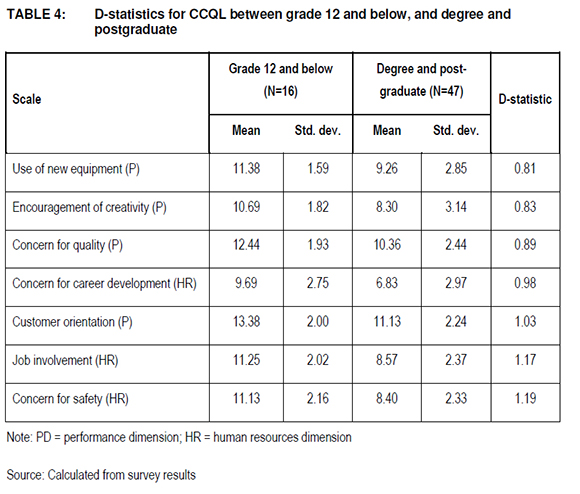
This section addresses the cross-loading criterion for determining whether a construct's indicators load more heavily on opposing constructs. The analysis is presented in Table 4.
Table 4 confirms the discriminant validity of the SIV structure using the cross-load criterion for two latent variables. Therefore, an item loads highly on at most one construct, confirming the item's reliability for this dimension.
3.7 R-squared
This section examines the R-squared (R2), a statistical measure that assesses how well the independent variables explain the variability in the dependent variable, thereby evaluating the predictive accuracy and relevance of the model. The analysis is presented in Table 5.
The study assessed the quality and predictive relevance (R2) of a structural model, finding that intrinsic satisfaction significantly influenced IndEP (66%), while conservation had the least impact (25%). Extrinsic satisfaction (65%), openness to change (40%), self-enhancement (32%) and self-transcendence contributed 29% of the variance.
3.8 Hypotheses testing
This section covers hypothesis testing to determine whether the research results support a specific theory for the population. The study used SmartPLS, t-statistics and bootstrapping to analyse inner and outer models, with multiple sub-samples and standard errors for data normality testing (Wong, 2013).
3.8.1 Direct effects
This section examines the direct relationship between the dependent and independent variables, without considering any mediators. Yazdi et al. (2017) regard all standard path coefficients exceeding 0,1 as statistically significant, a crucial threshold in this study. A path coefficient is regarded as significant if the t-statistic exceeds 1,96, indicating a robust relationship. SmartPLS 3 yields significant associations, underscoring the importance of the findings of this study. It also acknowledges insignificant results, providing valuable insights for future research. Table 6 presents the comprehensive results.
This study's results validate several vital hypotheses. Openness to change is positively associated with age (β = 0,144; ρ = 0,021 < 0,05) and position (β = 0,539; ρ = 0,000 < 0,05). Openness to change is negatively associated with company tenure (β = -0,675; ρ = 0,000 < 0,05). The study did not reject these hypotheses.
Conservation is negatively associated with company tenure (β = -0,472; ρ = 0,020 < 0,05) and negatively associated with employees' industrial sector (β = 0,240; ρ = 0,011 < 0,05) and position (β = 0,374; ρ = 0,002 < 0,05). The study does not reject the hypothesis.
Self-enhancement is negatively associated with company tenure (β = -0,476; ρ = 0,011 < 0,05) but positively associated with employees' industrial sector (β = 0,193; ρ = 0,034 < 0,05) and position (β = 0,446; ρ = 0,002 < 0,05). The study does not reject the hypothesis.
Self-transcendence is negatively associated with company tenure (β = -0,581; ρ = 0,002 < 0,05) but positively associated with position (β = 0,492; ρ = 0,000 < 0,05). The study does not reject the hypothesis.
Intrinsic satisfaction is negatively associated with company tenure (β = -0,502; ρ = 0,008 < 0,05) but positively associated with employees' industrial sector (β = 0,151; ρ = 0,047 < 0,05), position (β = 0,098; ρ = 0,002 < 0,05), self-enhancement (β = 0,589, ρ = 0,000 < 0,05), and self-transcendence (β = 0,330; ρ = 0,007 < 0,05). The study does not reject the hypothesis.
Extrinsic satisfaction is negatively associated with company tenure (β = -0,827; ρ = 0,001 < 0,05) but positively associated with position (β = 0,105; ρ = 0,003 < 0,05), and self-enhancement (β = 0,208, ρ = 0,042 < 0,05). The study does not reject the hypothesis.
IndEP is positively associated with employees' industrial sector (β = 0,198; ρ = 0,037 < 0,05), position (β = 0,161; ρ = 0,021 < 0,05), intrinsic satisfaction (β = 0,508; ρ = 0,047 < 0,05) and self-transcendence (β = 0,153; ρ = 0,024 < 0,05). The study does not reject the hypothesis.
3.8.2 Indirect effects (SIV)
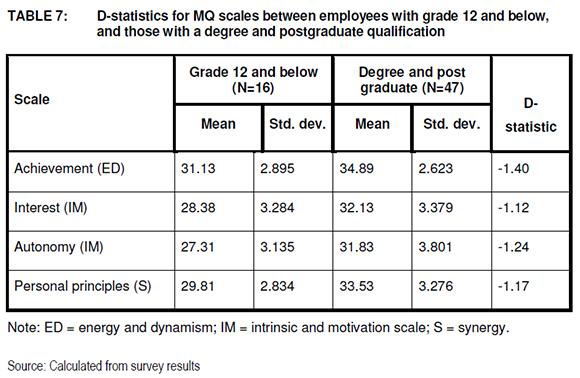
This section addresses the indirect relationship between the dependent and independent variables when a mediator is present. Table 7 below presents the mediating effects and significant associations of the model.
The study found that company tenure is negatively associated with extrinsic satisfaction (β = -0,0280; ρ = 0,014 < 0,05) when mediated by self-enhancement, indicating that the longer employees stay with a company, the less satisfied they are.
Self-enhancement mediates the relationship between occupation and IndEP (β = 0,263; ρ = 0,007 < 0,05). Position correlates with IndEP when mediated by self-enhancement. This study failed to reject the hypothesis.
Self-transcendence mediates the positive association between occupation and intrinsic satisfaction (β = 0,162; ρ = 0,039 < 0,05). Occupation correlates with intrinsic satisfaction when mediated by self-transcendence. This study failed to reject the hypothesis.
This study confirmed the accuracy of construct measurements and evaluated the structural model's predictive power and inter-part connections (Yazdi et al., 2017). The following section discusses the predictive abilities of the model.
3.9 Model based on predictive relevance analysis (SIV)
This section introduces predictive modelling, which uses patterns in input and current and historical data to forecast future events, activities, behaviours and trends. This study uses PLS-SEM to optimise the model's predictive power and quality. The method maximises the explained variance of the latent endogenous variables to determine the model's quality and predictive power using Cohen's criteria (Hair et al., 2014). A higher Q2 value indicates better predictive performance when assessing the prediction error. Endogenous reflective items with Q2 > 0 indicate predictive relevance (Sellitto et al., 2018). Conservation has the lowest predictive value (0,139), while extrinsic satisfaction is the most significant (0,501) (see Table 8).
4. FINDINGS AND DISCUSSION
The results and discussion section provide a comprehensive overview of the outcomes, implications and potential avenues for further research and application. This study provides insights into the factors that influence IndEP. The research reveals that demographic variables, satisfaction factors and SIV factors are critical predictors of IndEP. The findings also shed light on the mediating effects of SIV factors and satisfaction on the relationship between demographics and IndEP. Policymakers, organisations and academics interested in promoting and studying IndEP for innovation, sustainability and enhanced organisational environmental performance can benefit from this study.
The study reveals that age, position and company tenure are associated with openness to change. Therefore, the study agrees with the findings of Sorvali et al. (2022) that older individuals prioritise universalism, whereas, according to Borg (2018), younger individuals prioritise self-direction. Thus, age plays a significant role in organisational change and innovation (Dias et al., 2020; Koivula, 2008; Szekeres et al., 2019), which highlights the need to consider age differences in new initiatives. This finding aligns with Poortinga et al. (2019), who suggest that age-related concerns positively affect organisational change.
The findings of this study indicate that an employee's position and tenure can predict self-transcendence. This aligns with Başar et al. (2022), who found that organisational tenure and occupation affect openness and self-transcendence, while upward job changes predict openness to change (Nieß & Zacher, 2015). It also aligns with Jackalas et al. (2016), who found that employee motivation and service duration vary.
In addition, the findings of this study align with Omori and Bassey's (2019) and Miah's (2018) assertion that experienced employees who share organisational values perform better and stay longer. Furthermore, the findings disagree with the idea that time with the company affects engagement and that industry and occupation affect tenure (Sungmala & Verawat, 2021). Therefore, promoting veterans boosts job satisfaction, loyalty and commitment (Jena, 2015). However, long-serving employees may require more effort to perform (Shaju & Subhashini, 2017).
This study suggests that an employee's industrial sector, position and company tenure are associated with self-enhancement. Employees who prioritise self-interest, environmental awareness and need fulfilment are more likely to achieve promotions, job satisfaction, loyalty and commitment (De Dominicis et al., 2017; Yildirim, 2021). In addition, long-serving employees tend to show greater loyalty and dedication (Jena, 2015; Shaju & Subhashini, 2017). This information can aid in promotion decisions for long-serving employees at IndEP.
Furthermore, the study reveals that position, employees' industrial sector and company tenure are associated with conservation values, supporting the findings by Garcia et al. (2017) that sensitive industries can improve environmental performance and innovation. It agrees that leading companies prioritise self-enhancement, conformity, stimulation and achievement values (Sorvali et al., 2022). It also suggests that aligning values with industry codes of conduct can enhance employee motivation and environmental performance, even though industry type does not affect work engagement (Sungmala & Verawat, 2021).
The relationship between intrinsic satisfaction and job position, company tenure, self-enhancement and self-transcendence was examined in this study. It confirms that job titles affect engagement (Shukla et al., 2015) and that professional experiences affect motivation and job performance (Niles et al., 2020). In addition, it supports the idea that self-transcendence enhances intrinsic satisfaction and sustainability (Yasir et al., 2022) and that benevolence values predict life satisfaction (Maciuszek et al., 2019). Lastly, the study supports the idea that teachers have higher intrinsic motivation (Nasreen & Shah, 2021). However, it contradicts the finding by Weiss et al. (2022) that occupational status does not affect job satisfaction. Improving occupational status can enhance satisfaction and sustainability.
This study supports Hatinoğlu and Ergün's (2020) claim that intrinsic motivation varies across healthcare worker positions, with managerial roles prioritising personal values that negatively affect the workplace (Prentice et al., 2018). The study suggests that human resource management policies can influence employees' openness to change and self-transcendence, with younger employees being more innovative and long-serving employees focusing on others' well-being.
Furthermore, the study found that job position is associated with extrinsic satisfaction, mediated by self-enhancement. It supports Panjaitan and Kustiawan's (2022) claim that occupational self-efficacy affects motivation, job satisfaction and performance. It also supports the claim made by Xu et al. (2022) that work motivation and job satisfaction mediate the relationship between basic needs satisfaction and work engagement. It agrees with Manimegalai and Krishna (2022) that work needs, satisfaction and intrinsic rewards affect engagement performance and with Rokeman et al. (2024) that experience affects job satisfaction. These findings help understand factors that affect job satisfaction and IndEP.
According to this study, an employee's position, company tenure and self-enhancement are associated with extrinsic satisfaction, which can positively affect job performance (Heidarian et al., 2015; Kim et al., 2023). However, it contradicts the claim made by Weiss et al. (2022) that higher occupational status leads to decreased job satisfaction and supports Levontin and Bardi's (2019) claim that power values, goal orientation and self-enhancement influence leadership behaviour and enhance innovative behaviour in workers, benefiting motivation, job satisfaction, leadership behaviour and workplace innovation.
The study reveals that position and company tenure influence self-transcendence, which mediates the relationship between position and intrinsic satisfaction factors. It contradicts Purc and Laguna's (2019) claim of a negative correlation between conservation and self-transcendence values. It supports Papaioannou and Krommidas's (2021) findings that selflessness positively relates to motivation, well-being and also supports Ros (2021) regarding pro-environmental intentions and those of Zelenski and Desrocher (2021) that nature fosters selfless emotions leading to prosocial behaviours, which are helpful for employee well-being, job satisfaction and environmental sustainability.
Also, the study supports the findings of Kim et al. (2023) regarding the positive correlation between mastery goal orientation, self-directed values, universalism and benevolence. It also supports the findings of Niles et al. (2020) that self-transcendence enhances intrinsic satisfaction, and those of Maciuszek et al. (2019) that benevolent values predict life satisfaction. It suggests prioritising future generations by supporting self-transcendence and meeting the needs of intrinsically motivated staff for environmental improvement and the welfare of others (Levontin & Bardi, 2019).
According to this study, organisations should adapt to technological and educational advancements, aligning with Bell and Barkhuizen's (2011) findings. Furthermore, this study finds that organisations should encourage risk-taking and innovation, provide resources for employee development and develop individual competency to address environmental challenges and improve IndEP, thereby enhancing satisfaction and environmental performance, aligning with Pulfrey and Butera's (2016) and Nieves and Quintana's (2018) findings.
The study reveals that job positions, employees' industrial sectors, intrinsic satisfaction factors and self-transcendence are significantly associated with IndEP, aligning with Ugwu and Ugwu's (2017) findings. It also agrees that low salaries, job insecurity (Bhardwaj & Kalia, 2019) and job changes without benefits (Jackalas et al., 2016) negatively affect employee performance, whereas tenure and seniority levels affect motivation (Amegayibor, 2021). These findings provide insight into factors that enhance InEP.
Furthermore, this study supports the view that years of service (Hendrawijaya, 2019), job redesign (Nurcahyono & Mardiati, 2019) and intrinsic motivation (Liaquat et al., 2024) improve employee performance. It challenges the claim made by Al-Ansi et al. (2023) that intrinsic motivation does not significantly affect employee engagement, incentives, promotion or performance, as well as the claim that job satisfaction and performance rely solely on service duration (Berhanu, 2023). It provides evidence of factors that contribute to improved environmental performance among employees.
According to this study, high industrial standards improve performance, aligning with Guerci et al. (2016), as do organisational size and type (Bhardwaj & Kalia, 2019). The study supports Szekeres et al. (2019), who found that job position positively influences satisfaction and disagrees with the notion that company tenure has no negative impact. Furthermore, the study confirms Berhanu's (2023) finding that staff development improves satisfaction and performance. These findings inform policies and practices that support employee satisfaction and environmental performance.
This study also agrees that self-transcendence values have a positive impact on pro-environmental behaviour, organisational engagement, environmental performance, employee innovation and participation, creativity, innovation and service to others. According to Primc et al. (2021), Cohen (2010), Berumen et al. (2016), Purc and Laguna (2019) and Szekeres et al. (2019), these values are associated with universalism, benevolence and openness to change across different work environments.
Self-enhancement affects job position when mediated by intrinsic satisfaction, with longer work hours and positive experiences improving job performance and motivation (Sungmala & Verawat, 2021; Kebede & Goyal, 2019), a finding this study confirms. The study also supports the finding of Liaquat et al. (2024) that task-related green behaviours positively mediate environmental performance, while occupational structure, rewards, responsibility and authority influence employee motivation. It also acknowledges that employee performance and perceptions of work can change over time (see Pepra-Mensah et al., 2017) and that remuneration has a positive impact on employee performance (see Nurcahyono & Mardiati, 2019). These findings can improve motivation and IndEP.
Furthermore, this study supports Berhanu's (2023) assertion that job satisfaction mediates the relationship between academic development and employee job performance. This aligns with Robinson's (2013) study, which emphasises the importance of rewarding innovation, linking environmental performance to employee effort and offering career development opportunities. It also supports El-Hilali and Al-Rashidi's (2015) finding that self-enhancement values should be promoted and that employee innovation and independence should be boosted. This insight can improve productivity, sustainability, IndEP and organisational environmental performance.
This study demonstrates that the employee's industrial sector is associated with IndEP and that intrinsic satisfaction mediates the relationship between self-enhancement and IndEP. It supports the findings of Adeel et al. (2022) that green human resource management practices, work engagement and job satisfaction have a positive impact on environmental performance, as well as the findings of Jobira and Mohammed (2021) and Wang and Seifert (2017) that extrinsic motivation does not improve organisational performance. Furthermore, the study supports the notion that intrinsic motivation influences employee performance, aligning with Berumen et al. (2016) and Shaikh et al. (2018), and that extrinsic rewards do not promote independent decision-making (see Manimegalai & Krishna, 2022). The study recommends that organisations prioritise high self-enhancement values through recognition, promotion and rewards.
The importance of valuing self-enhancement for job satisfaction and innovation, mainly when rewards are involved, is highlighted in this study. This finding contradicts those of Kumari et al. (2021) and Othman et al. (2022) regarding the influence of intrinsic and extrinsic motivation on contextual performance and job satisfaction. However, it supports the finding of Kumari et al. (2021) that rewards and motivation affect employee job performance. Companies should incorporate self-enhancement opportunities into their reward systems to promote job satisfaction, innovation and IndEP.
The conceptual model was used in this study to examine the relationships among demographics, Schwartz values and satisfaction as predictors of IndEP. The study suggests that further research is necessary to determine the value preferences and specific satisfaction factors that drive employees to improve their IndEP. Future studies should include uncertified organisations from various settings and incorporate qualitative research to validate the findings. Moreover, future research should investigate any discrepancies between the hypotheses and the findings and explore the reasons behind environmental activities and innovation.
5. MANAGERIAL IMPLICATIONS
The results of this study demonstrate that effective management can motivate and empower employees by aligning their demographics with organisational values and satisfaction factors, thereby improving performance and innovation and fostering a harmonious work environment.
Organisations can achieve this by tailoring training programmes and policies to match employee satisfaction and SIV factors, promoting sustainability goals and company values and focusing on environmental well-being and performance.
6. CONCLUSION
The conclusion highlights key study findings on how South African ISO-certified organisations can enhance their employees' environmental performance by understanding the link between demographics, values and satisfaction factors. This study found that demographics predict IndEP and SIV factors, and satisfaction factors have a mediating role. The study also suggests that future research should include improved sampling methods, mixed-methods and qualitative approaches and involve both ISO-certified and non-certified organisations, including comparisons with certification bodies other than the SABS.
Declaration of conflict: The author declares no conflict of interest with respect to the research, authorship and publication of the article.
Data availability: The data used for this article is available from T.I.M Nokaneng. 2023. Organisational culture, innovation, and environmental performance in South African ISO 14001 Certified Organisations. PhD Thesis. University of Witwatersrand.
Ethical clearance and informed consent statement: The researcher obtained ethical clearance (clearance certificate number H16/06/28) before data collection and obtained informed consent from all the participants in this study.
Funding: The author did not receive any financial support for the research, authorship or publication of this article.
REFERENCES
2. LITERATURE REVIEW
-
Ab Hamid, M.R., Mustafa, Z., Suradi, N.R.M., Idris, F. & Abdullah, M. (2011). Multi-factor of employee values: a confirmatory factor analytics (CFA) validation. African Journal of Business Management, 5(32), 12632-12640. https://doi.org/10.5897/AJBM11.2224
» https://doi.org/10.5897/AJBM11.2224 -
Adeel M., Mahmood, S., Khan, K.I. & Saleem, S. (2022). Green HR practices and environmental performance: the mediating mechanism of employee outcomes and moderating role of environmental values. Frontiers in Environmental Science, 10(1001100), 1-12. https://doi.org/10.3389/fenvs.2022.1001100
» https://doi.org/10.3389/fenvs.2022.1001100 -
Adeoye, A.O. & Elegunde, A.F. (2014). Compensation management and motivation: cooking utensils for organisational performance. Mediterranean Journal of Social Sciences, 5(27), 88-97. https://doi.org/10.5901/mjss.2014.v5n27p88
» https://doi.org/10.5901/mjss.2014.v5n27p88 -
Agras, S. & Ates, H. (2015). Investigating the predictive abilities of Schwartz's ten universal values on five work performance outcome behaviours. Sciences Research Review, 3(1), 16-31. https://www.researchgate.net/publication/270450858
» https://www.researchgate.net/publication/270450858 -
Akgunduz, Y., Alkan, C. & Gök, Ö. A. (2018). Perceived organizational support, employee creativity and proactive personality: The mediating effect of meaning of work. Journal of Hospitality and Tourism Management, 34(5), 105-114. https://doi.org/10.1016/j.jhtm.2018.01.004
» https://doi.org/10.1016/j.jhtm.2018.01.004 -
Al-Ansi, A.M., Jaboob, M. & Awain, A.M.S.B. (2023). Examining the mediating role of job satisfaction between motivation, organizational culture, and employee performance in higher education: a case study in the Arab region. Education Science and Management, 1(1), 30-42. https://doi.org/10.56578/esm010104
» https://doi.org/10.56578/esm010104 -
Alhadi, S., Saputra, W. N. E., Purwadi, P., Muyana, S., Supriyanto, A. & Fatmawati, D. (2019). Self-regulation of emotion in students in Yogyakarta, Indonesia: Gender Differences. Jurnal Kajian Bimbingan dan Konseling, 4(3), 82-87. https://doi.org/10.17977/um001v4i32019p082
» https://doi.org/10.17977/um001v4i32019p082 -
Amegayibor, G.K. (2021). The effect of demographic factors on employees' performance: a case of an owner-manager manufacturing firm. Annals of Human Resource Management Research, 1(2), 127-143. https://doi.org/10.35912/ahrmr.v1i2.853
» https://doi.org/10.35912/ahrmr.v1i2.853 -
Arieli, S., Sagiv, L. & Roccas, S. (2019). Values at work: The impact of personal values in organisations. Applied Psychology: An International Review, 69(2), 230-275. https://doi.org/10.1111/apps.12181
» https://doi.org/10.1111/apps.12181 -
Başar, P., İlkan, E., Mutair F. & Tahmasby, S. (2022). Analysis of organizational culture: A multiple case study. Journal of Organizational Behavior Research, 7(2), 267-279. https://doi.org/10.51847/1dXHAg0S2q
» https://doi.org/10.51847/1dXHAg0S2q -
Bashir, A., Amir, A., Jawaad, M., Hasan, T. & Wickramaratne, R. (2020). Work conditions and job performance: an indirect conditional effect of motivation. Cogent Business & Management, 7(1), 1-16, August issue. https://doi.org/10.1080/23311975.2020.1801961
» https://doi.org/10.1080/23311975.2020.1801961 -
Bell, E. & Barkhuizen, N. (2011). The relationship between barriers to change and the work engagement of employees in a South African property management company. SA Journal of Industrial Psychology/SA Tydskrif vir Bedryfsielkunde, 37(1), 1-11. https://doi.org/10.4102/sajip.v37i1.935
» https://doi.org/10.4102/sajip.v37i1.935 -
Berhanu, K.Z. (2023). Mediating role of job satisfaction on the relation between staff development and performance. Cogent Education, 10(1), 1-17. https://doi.org/10.1080/2331186X.2023.2207408
» https://doi.org/10.1080/2331186X.2023.2207408 -
Berumen, S.A., Pérez-Megino, L.P. & Arriaza, I.K. (2016). Extrinsic motivation index: a new tool for managing labor productivity. International Journal of Business Science and Applied Management, 11(1), 1-17. https://doi.org/10.6084/m9.figshare.14339330.v1
» https://doi.org/10.6084/m9.figshare.14339330.v1 -
Bhardwaj, B. & Kalia, N. (2019). Contextual and task performance: role of employee engagement and organizational culture in the hospitality industry. VILAKSHAN - XIMB Journal of Management, 18(2), 187-201. https://doi.org/10.1108/XJM-08-2020-0089
» https://doi.org/10.1108/XJM-08-2020-0089 -
Borg, I. (2018). Age- and gender-related differences in the structure and the meaning of personal values. Personality and Individual Differences, 138, 336-343. https://doi.org/10.1016/j.paid.2018.10.013
» https://doi.org/10.1016/j.paid.2018.10.013 -
Bulilan, R.S. (2023). Correlates on job performance, job satisfaction, and demographics of State University Employees. International Journal of English Literature and Social Sciences, 8(3), 183-191. https://doi.org/10.22161/ijels.83.30
» https://doi.org/10.22161/ijels.83.30 -
Callaghan, C.W. (2017). Motivational values and gendered research performance. Acta Commercii, 17(1), 1-14. https://doi.org/10.4102/ac.v17i1.427
» https://doi.org/10.4102/ac.v17i1.427 -
Cameron, K.S., Quinn, R.E., DeGraff, J. & Thakor, A.V. (2006). Competing values leadership: Creating value in organisations. Victoria Square Bodmin: MPG Books Ltd. https://doi.org/10.4337/9781847201560
» https://doi.org/10.4337/9781847201560 -
Cohen, A. (2010). Values and commitment: a test of Schwartz's human values theory among Arab teachers in Israel. Journal of Applied Social Psychology, 40(8), 1921-1947. https://doi.org/10.1111/j.1559-1816.2010.00645
» https://doi.org/10.1111/j.1559-1816.2010.00645 -
Czupryna, M., Growiec, K., Kamiński, B. & Oleksy, P. (2024). Schwartz human values and the economic performance. Journal of Artificial Societies and Social Simulation, 27(1)2, 1-31. http://doi.org/10.18564/jasss.5023
» http://doi.org/10.18564/jasss.5023 -
De Dominicis, S., Schultz, P.W. & Bonaiuto, M. (2017). Protecting the environment for self-interested reasons: altruism is not the only pathway to sustainability. Frontiers in Psychology, 8(259800), 1-13. https://doi.org/10.3389/fpsyg.2017.01065
» https://doi.org/10.3389/fpsyg.2017.01065 -
Dias, N.M.O.C., Vidal, D.G., Sousa, H.F.P., Dinis, M.A.P. & Leite, Â. (2020). Exploring associations between attitudes towards climate change and motivational human values. Anthropogenic Climate Change: Social Science Perspectives, 8(135), 1-20. https://doi.org/10.3390/cli8110135
» https://doi.org/10.3390/cli8110135 -
Dubow, E.F., Boxer, P. & Huesmann, L.R. (2009). Long-term effects of parents' education on children's educational and occupational success: mediation by family interactions, child aggression, and teenage aspirations. Merrill Palmer Quarterly: Journal of Developmental Psychology, 55(3), 224-249. https://doi.org/10.1353/mpq.0.0030
» https://doi.org/10.1353/mpq.0.0030 -
Dunggio, T. (2021). Work motivation on lecturer achievement: job satisfaction as mediating variables. Journal of Management, 25(2), 312-327. https://doi.org/10.24912/jm.v25i2.742
» https://doi.org/10.24912/jm.v25i2.742 -
El Refae, G.A. Kaba, A. & Eletter, S. (2021). The impact of demographic characteristics on academic performance: face-to-face learning versus distance learning implemented to prevent the spread of COVID-19. International Review of Research in Open and Distributed Learning, 22(1), 1-20. https://doi.org/10.19173/irrodl.v22i1.5031
» https://doi.org/10.19173/irrodl.v22i1.5031 -
El-Hilali, N. & Al-Rashidi, L. (2015). The impact of parental involvement, personality traits and organizational support on satisfaction. Procedia - Social and Behavioral Sciences, 177, 408-419. https://doi.org/10.1016/j.sbspro.2015.02.382
» https://doi.org/10.1016/j.sbspro.2015.02.382 -
Febriani, R., Nurhasanah, S. & Hakim, A.R. (2024). Relationships between demographic factors, job satisfaction, and intention to leave among women employees in Indonesia. Problems and Perspectives in Management, 22(1), 1-12. https://10.21511/ppm.22(1).2024.01
» https://10.21511/ppm.22(1).2024.01 -
Fischer, R., Vauclair, C.-M., Fontaine, J.R.J. & Schwartz, S.H. (2010). Are individual-level and country-level value structures different? Testing Hofstede's legacy with the Schwartz Value Survey. Journal of Cross-Cultural Psychology, 41(2), 135-151. https://doi.org/10.1177/0022022109354377
» https://doi.org/10.1177/0022022109354377 -
Fornell, C. & Larcker, D.F. (1981). Evaluating structural equation models with unobservable variables and measurement error. Journal of Marketing Research, 18(1), 39-50. https://doi.org/10.1177/002224378101800104
» https://doi.org/10.1177/002224378101800104 -
Garcia, A.S., Da-Silva, W.M. & Orsato, R.J. (2017). Sensitive industries produce better ESG performance: evidence from emerging markets. Journal of Cleaner Production, 150, 135-147. https://doi.org/10.1016/j.jclepro.2017.02.180
» https://doi.org/10.1016/j.jclepro.2017.02.180 -
Gashi, L.M., Požega, Ž. & Crnković, B. (2017). Employees' individual values as a source of human capital. Economic Research Ekonomska Istraživanja, 30(1), 1057-1072. https://doi.org/10.1080/1331677X.2017.1314788
» https://doi.org/10.1080/1331677X.2017.1314788 -
González-Rodríguez, M., Díaz-Fernández, M.C. & Simonetti, B. (2016). Corporate social responsibility perception versus human values: a structural equation modelling approach. Journal of Applied Statistics, 43(13), 1-20. https://doi.org/10.1080/02664763.2016.1163528
» https://doi.org/10.1080/02664763.2016.1163528 -
Guerci, M., Longoni A. & Luzzini, D. (2016). Translating stakeholder pressures into EP - the mediating role of green HRM practices. International Journal of Human Resource Management, 27(2), 262-289. https://doi.org/10.1080/09585192.2015.1065431
» https://doi.org/10.1080/09585192.2015.1065431 -
Hair, J.F. Jr, Sarstedt, M., Hopkins, L. & Kuppelwieser, V.G. (2014). Partial least squares structural equation modelling (PLSSEM): an emerging tool in business research. European Business Review, 26(2), 106-121, March issue. https://doi.org/10.1108/EBR-10-2013-0128
» https://doi.org/10.1108/EBR-10-2013-0128 -
Hair, J.F., Sarstedt, M., Ringle, C.M. & Mena, J.A. (2012). An assessment of the use of partial least squares structural equation modelling in marketing research. Journal of the Academy of Marketing Science, 40(3), 414-433. https://doi.org/10.1007/s11747-011-0261-6
» https://doi.org/10.1007/s11747-011-0261-6 -
Hassan, B. & Ogunkoya, O. (2014). Demographic variables and job performance: any link? A case of insurance salesmen. Acta Universitatis Danubius, Economica, 10(4), 19-30. http://journals.univ-danubius.ro/index.php/oeconomica/article/view/2420/2175
» http://journals.univ-danubius.ro/index.php/oeconomica/article/view/2420/2175 -
Hatinoğlu, A. & Ergün, D. (2020). The effects of socio-demographic characteristics and working conditions on the work motivations of employees working in health services in Turkey. Revista Argentina de Clínica Psicológica, 29(5), 1848-1859. https://doi.org/10.24205/03276716.2020.1180
» https://doi.org/10.24205/03276716.2020.1180 -
Heidarian, A.R., Jafari Kelarijani, S.E., Jamshidi, R. & Khorshidi, M. (2015). The relationship between demographic characteristics and motivational factors in the employees of social security hospitals in Mazandaran. Caspian Journal of Internal Medicine, 6(3), 170-174. https://www.ncbi.nlm.nih.gov/pmc/articles/PMC4650794/
» https://www.ncbi.nlm.nih.gov/pmc/articles/PMC4650794/ -
Hendrawijaya, A.T. (2019). Demographic factors and employee performance: the mediating effect of employee empowerment. Media Ekonomi dan Manajemen, 34(2), 16-136. https://10.24856/mem.v34i2.962
» https://10.24856/mem.v34i2.962 -
Ibrar, M. & Khan, O. (2015). The impact of reward on employee performance (a case study of Malakand Private School). International Letters of Social and Humanistic Sciences, 52, 95-103. https://doi.org/10.18052/www.scipress.com/ILSHS.52.95
» https://doi.org/10.18052/www.scipress.com/ILSHS.52.95 -
Jackalas, M.B., Martins, N. & Ungerer, L.M. (2016). The impact of demographic variables on organisational culture and employee motivation: evidence from a health insurance company in Botswana. Journal of Contemporary Management, 13(1), 357-384. https://journals.co.za/doi/pdf/10.10520/EJC192032
» https://journals.co.za/doi/pdf/10.10520/EJC192032 -
Jariya, I.A.M. (2012). Western cultural values and its implications on management practices. Southeast Asian Journal of Contemporary Business, Economics and Law, 1, 61-70. http://www.seajbel.com
» http://www.seajbel.com -
Jena, R.K. (2015). An assessment of demographic factors affecting organizational commitment among shift workers in India. Management, 20(1), 59-77. https://hrcak.srce.hr/141589
» https://hrcak.srce.hr/141589 -
Jing, C., Keasey, K. & Xu, B. (2023). Environmental sustainability and employee satisfaction. Economics Letters, 233(111402), 1-5. https://doi.org/10.1016/j.econlet.2023.111402
» https://doi.org/10.1016/j.econlet.2023.111402 -
Jobira, A.F. & Mohammed, A.A. (2021). Predicting organisational performance from motivation in Oromia Seed Enterprise Bale branch. Humanities and Social Sciences Communications, 8(66), 1-7. https://doi.org/10.1057/s41599-021-00742-9
» https://doi.org/10.1057/s41599-021-00742-9 - Kebede, G.H. & Goyal, S. (2019). The relationship between transformational leadership and job performance in Amhara national regional state bureaus, Ethiopia. International Journal of Management, IT & Engineering, 9(3), 183-202.
-
Kim, T., David, E.M., Chen, T. & Liang, Y. (2023). Authenticity or self-enhancement? Effects of self-presentation and authentic leadership on trust and performance. Journal of Management, 49(3), 944-973. https://doi.org/10.1177/01492063211063807
» https://doi.org/10.1177/01492063211063807 -
Knafo, A. & Sagiv, L. (2004). Values and work environment: mapping 32 occupations. European Journal of Psychology of Education, 19(3), 255-273, September issue. https://doi.org/10.1007/BF03173223
» https://doi.org/10.1007/BF03173223 -
Koivula, N. (2008). Basic human values in the workplace. Social Psychological Studies, University of Helsinki, Helsinki, 1-141. https://helda.helsinki.fi/bitstream/handle/10138/23465/basichum.pdf
» https://helda.helsinki.fi/bitstream/handle/10138/23465/basichum.pdf -
Kumari, K., Ali, S. Khan, N. & Abbas, J. (2021). Examining the role of motivation and reward in employees' job performance through mediating effect of job satisfaction: An empirical evidence. International Journal of Organizational Leadership, 10, 401-420. https://doi.org/10.33844/IJOL.2021.60606
» https://doi.org/10.33844/IJOL.2021.60606 -
Lambooij, M., Sanders, K., Koster, F. & Zwiers, M. (2006). Human resource practices and organisational performance: Can the operative behaviours of employees explain the HRM-performance linkage? Management Review, 17(3), 223-240. https://doi.org/10.5771/0935-9915-2006-3-223
» https://doi.org/10.5771/0935-9915-2006-3-223 -
Levontin, L. & Bardi, A. (2019). Using personal values to understand the motivational basis of amity goal orientation. Frontiers in Psychology, 9(2736), 1-19. https://doi.org/10.3389/fpsyg.2018.02736
» https://doi.org/10.3389/fpsyg.2018.02736 -
Liaquat, M., Ahmed, G., Ismail, H., U.l. Ain, Q., Irshad, S., Izhar, S.S. & Mughal, M.T. (2024). Impact of motivational factors and green behaviors on employee environmental performance. Research in Globalization, 8(100180), 1-12. https://doi.org/10.1016/j.resglo.2023.100180
» https://doi.org/10.1016/j.resglo.2023.100180 -
Lindquist, E.A. & Marcy, R.T. (2016). The competing values framework: Implications for strategic leadership, change and learning in public organizations. International Journal of Public Leadership, 12(2), 167-186. https://doi.org/10.1108/IJPL-01-2016-0002
» https://doi.org/10.1108/IJPL-01-2016-0002 -
Maciuszek, J., Polczyk, R. & Tucholska, K. (2019). Direct and indirect relationships between life satisfaction, values, and time perspectives: research on a sample of Polish students. Advances in Cognitive Psychology, 15(2), 133-142. https://doi.org/10.5709/acp-0263-0
» https://doi.org/10.5709/acp-0263-0 - Manimegalai, C. & Krishna, D.S. (2022). Intrinsic, extrinsic rewards and job satisfaction: role of job performance and creative performance. Orlando. pp. 1149-1157. (7th North American International Conference on Industrial Engineering and Operations Management; 12-14 June).
-
Manzoor, Q.A. (2012). Impact of employees' motivation on organisational effectiveness. European Journal of Business and Management, 3(3), 36-44. http://dx.doi.org/10.5296/bms.v3i1.904
» http://dx.doi.org/10.5296/bms.v3i1.904 - Met, M. & Ali, I. (2014). Investigating the moderating effect of demographic factors on the relationship between monetary motivation and employees' job satisfaction at oil and gas offshore production facilities in Malaysia. International Review of Management and Business Research, 3(2), 788-818.
-
Meuleman, B., Davidov, E., Schmidt, P. & Billiet, J. (2012). Social location and value priorities. A European-wide comparison of the relation between social-structural variables and human values. In Gabriel, O. & Keil, S. (eds). Society and democracy in Europe. London: Routledge. pp. 43-67. https://doi.org/10.4324/9780203079812
» https://doi.org/10.4324/9780203079812 -
Miah, M.M. (2018). The impact of employee job satisfaction toward organizational performance: A study of private sector employees in Kuching, East Malaysia. International Journal of Scientific and Research Publications, 8(12), 270-278. https://doi.org/10.29322/IJSRP.8.12.2018.p8437
» https://doi.org/10.29322/IJSRP.8.12.2018.p8437 -
Miralam, M.S. & Ali, N. (2020). Employees' self-efficacy, optimism, hope, resilience and demographic variables as the determinants of job performance. International Journal on Emerging Technologies, 11(3), 336-343. https://doi.org/10.12928/jehcp.v7i2.8540
» https://doi.org/10.12928/jehcp.v7i2.8540 - Mundhe, E.S. (2018). A study of the influence of parents' education and income level on academic performance of the students. Aayushi International Interdisciplinary Research Journal, 5(3), 190-194.
-
Mustafa, G., Glavee-Geo, R. & Rice, P.M. (2017). Teamwork orientation and personal learning: The role of individual cultural values and value congruence. SA Journal of Industrial Psychology, 43(1446), 1-13. https://doi.org/10.4102/sajip.v43i0.1446
» https://doi.org/10.4102/sajip.v43i0.1446 - Nasreen, S. & Shah, M. (2021). Effect of selected demographic variables on teacher motivation in secondary schools of Lahore, Pakistan. Pakistan Journal of Educational Research, 4(4), 290-301.
-
Ng, T.W.H. & Feldman, D.C. (2010). Organizational tenure and job performance. Journal of Management, 36(5), 1220-125. https://doi.org/10.1177/0149206309359809
» https://doi.org/10.1177/0149206309359809 -
Nieß, C. & Zacher, H. (2015). Openness to experience as a predictor and outcome of upward job changes into managerial and professional positions. PLOS One, 10(6): e0131115, 1-14. https://doi.org/10.1371/journal.pone.0131115
» https://doi.org/10.1371/journal.pone.0131115 -
Nieves, J. & Quintana, A. (2018). Human resource practices and innovation in the hotel industry: the mediating role of human capital. Tourism and Hospitality Research, 18(1), 72-83. https://doi.org/10.1177/1467358415624137
» https://doi.org/10.1177/1467358415624137 -
Niles, M.T., Schimanski, L.A., McKiernan, E.C. & Alperin, J.P. (2020). Why we publish where we do: Faculty publishing values and their relationship to review, promotion and tenure expectations. PLOS One, 15(3), e0228914:1-15. https://doi.org/10.1371/journal.pone.0228914
» https://doi.org/10.1371/journal.pone.0228914 - Nurcahyono, B.H. & Mardiati, E. (2019). The effect of demography characteristics, remunerisation, job redesign on employee performance with job satisfaction as mediation. International Journal of Business, Economics and Law, 18(5), 265-272.
-
O'Siochru, C., Blinkhorn, V. & Lundie, D. (2023). Issues of validity: exploring the link between values and behaviour. Journal of Moral Education, 52(1), 108-118. https://doi.org/10.1080/03057240.2022.2147908
» https://doi.org/10.1080/03057240.2022.2147908 - Omori, A. & Bassey, P.U. (2019). Demographic characteristics and workers' performance in public service in Nigeria. International Journal of Research and Innovation in Social Science, 3(2), 141-148.
- Othman, A.K., Abdullah, M.Z., Aziz, N.F. & Tobi, S.N.M. (2022). The influence of intrinsic and extrinsic motivation factors on employee's performance at Pecca Leather Sdn. Bhd. As mediated by job satisfaction. Journal of Entrepreneurship, Business and Economics, 10(2S1), 28-52.
-
Panjaitan, W. & Kustiawan, U. (2022). When occupational self efficacy and intrinsic motivation influence on job satisfaction and job performance. International Journal of Demos, 4(1), 42-53. https://doi.org/10.37950/ijd.v4i1.188
» https://doi.org/10.37950/ijd.v4i1.188 -
Papaioannou, A.G. & Krommidas, C. (2021). Self-transcendence achievement goals and well-being. International Journal of Sport and Exercise Psychology, 19(2), 215-245, October issue. https://doi.org/10.1080/1612197X.2020.1830826
» https://doi.org/10.1080/1612197X.2020.1830826 -
Parks, L. & Guay, R.P. (2009). Personality, values, and motivation. Personality and Individual Differences, 47(7), 675-684. https://doi.org/10.1016/j.paid.2009.06.002
» https://doi.org/10.1016/j.paid.2009.06.002 - Pepra-Mensah, J., Adjei, L.N. & Agyei, A. (2017). Effect of compensation on basic school teachers' job satisfaction in the northern zone: the case of Ghana. Global Journal of Management and Business Research, 17, 51-59.
-
Poortinga, W., Whitmarsh, L., Steg, L., Böhm, G. & Fisher, S. (2019). Climate change perceptions and their individual-level determinants: a cross-European analysis. Global Environmental Change, 55, 25-35. https://doi.org/10.1016/j.gloenvcha.2019.01.007
» https://doi.org/10.1016/j.gloenvcha.2019.01.007 -
Prentice, G., Brady, J. & McLaughlin, C. (2018). Education service quality, value and satisfaction on student customer intentions and behaviour. DBS Business Review, 2(27), 89-112. https://doi.org/10.22375/dbr.v2i0.27
» https://doi.org/10.22375/dbr.v2i0.27 -
Primc, K., Ogorevc, M., Slabe-Erker, R., Bartolj, T. & Murovec, N. (2021). How does Schwartz's theory of human values affect the pro-environmental behaviour model? Baltic Journal of Management, 16(2), 276-297. [https://doi.org/10.1108/BJM-08-2020-0276].
» https://doi.org/10.1108/BJM-08-2020-0276 -
Pulfrey, C. & Butera, F. (2016). When and why people do not accept cheating: self-transcendence values, social responsibility, mastery goals and attitudes towards cheating. Motivation and Emotion, 40(3), 438-454. https://doi.org/10.1007/s11031-015-9530-x
» https://doi.org/10.1007/s11031-015-9530-x -
Purc, E. & Laguna, M. (2019). Personal values and innovative behaviour of employees. Frontiers in Psychology, 10(865), 1-16. https://doi.org/10.3389/fpsyg.2019.00865
» https://doi.org/10.3389/fpsyg.2019.00865 -
Reichenheim, M.E., Hökerberg, Y.H.M. & Moraes, C.L. (2014). Assessing construct structural validity of epidemiological measurement tools: a seven-step roadmap. Cadernos de Saúde Pública / Ministério da Saúde, Fundação Oswaldo Cruz, Escola Nacional de Saúde Pública, 30(5), 927-939. https://doi.org/10.1590/0102-311X00143613
» https://doi.org/10.1590/0102-311X00143613 -
Robinson, O.C. (2013). Values and adult age: Findings from two cohorts of the European Social Survey. European Journal of Ageing, 10(1), 11-23. https://doi.org/10.1007/s10433-012-0247-3
» https://doi.org/10.1007/s10433-012-0247-3 -
Rokeman, M.N.R., Che Kob, C.G. & Untong, M.F. (2024). A conceptual exploration of demographic variables and teachers' job satisfaction in education perspectives. International Journal of Education, Psychology and Counseling, 9(53):508-519. [https://doi.org/10.35631/IJEPC.953038].
» https://doi.org/10.35631/IJEPC.953038 -
Ros, B. (2021). The effect of overseas educational experience on pro-environmental practices: Evidence from Cambodian academic scholars. Journal of Environmental Protection, 12(11), 824-854. https://doi.org/10.4236/jep.2021.1211049
» https://doi.org/10.4236/jep.2021.1211049 -
Saeed, H.M.I. & Nasir, N. (2016). Work environment on job satisfaction with mediating effect of motivation among schoolteachers in Lahore, Pakistan. Journal of Management Engineering and Information Technology, 3(6), 1-5, December issue. https://doi.org/10.5281/ZENODO.250628
» https://doi.org/10.5281/ZENODO.250628 -
Sagiv, L. & Schwartz, S.H. (2007). Cultural values in organisations: insights for Europe. European Journal of International Management, 1(3), 176-190. https://doi.org/10.1504/EJIM.2007.014692
» https://doi.org/10.1504/EJIM.2007.014692 -
Schwartz, S.H. (2012). An overview of the Schwartz theory of basic values. Online Readings in Psychology and Culture, 2(1), 1-20. https://doi.org/10.9707/2307-0919.1116
» https://doi.org/10.9707/2307-0919.1116 -
Seibert, S.E., Crant, J.M. & Kraimer, M.L. (1999). Proactive personality and career success. Journal of Applied Psychology, 84(3), 416-27. https://doi.org/10.1037/0021-9010.84.3.416
» https://doi.org/10.1037/0021-9010.84.3.416 -
Sellitto, M.A., Nunes, F.L. & Valadares, D.R.F. (2018). Factors that contribute to the use of modularisation in the automotive industry: a survey in Brazil. South African Journal of Industrial Engineering, 29(4), 33-44. https://doi.org/10.7166/29-4-1946
» https://doi.org/10.7166/29-4-1946 -
Shaikh, S., Pathan, S. & Khoso, I. (2018). The impact of extrinsic motivation on employees' performance: a comparative analysis of food and textile industries in Sindh, Pakistan. International Business Research, 11(61), 61-66. https://doi.org/10.5539/ibr.v11n12p61
» https://doi.org/10.5539/ibr.v11n12p61 -
Shaju, M. & Subhashini, D. (2017). A study on the impact of job satisfaction on job performance of employees working in the automobile industry, Punjab, India. Journal of Management Research, 9(1), 117-130. https://doi.org/10.5296/jmr.v9i1.10420
» https://doi.org/10.5296/jmr.v9i1.10420 -
Shukla, S., Adhikari, B. & Singh, V. (2015). Employee engagement - role of demographic variables and personality factors. Amity Global HRM Review 5(1), 65-73. https://www.researchgate.net/publication/316622110
» https://www.researchgate.net/publication/316622110 -
Silberg, S., Stehlík, L. & Silberg, M. (2024). Influence of education level, gender, age and seniority of team members on their job satisfaction and organisational behaviour. Valencia. (INTED2024 Conference; 4-6 Mar.). https://doi.org/10.21125/inted.2024.0273
» https://doi.org/10.21125/inted.2024.0273 - Singaravelloo, K. & Kamiab, Z. (2016). The relationship between human values and service quality with the mediating role of motivation: A quantitative study on Malaysian commercial banks. International Journal of Social, Behavioral, Educational, Economic, Business and Industrial Engineering, 10(11), 1-9.
-
Sorvali, J., Liu, X. & Kaseva, J. (2022). Climate change opportunities reduce farmers' risk perception: Extension of the value-belief-norm theory in the context of Finnish agriculture. Frontiers in Psychology, 13(939201), 90-112. https://doi.org/10.3389/fpsyg.2022.939201
» https://doi.org/10.3389/fpsyg.2022.939201 - Sungmala, N. & Verawat, A. (2021). The impact of employee engagement on employee performance: A case study of multinational corporations in Thailand. Journal of Asian Finance, Economics and Business, 8(5), 1091-1097.
-
Szekeres, A., Wasnik, P.S. & Snekkenes, E.A. (2019). Using demographic features for the prediction of basic human values underlying stakeholder motivation. Heraklio. (21st International Conference on Enterprise Information Systems; 3-5 May). https://doi.org/10.5220/0007694203770389
» https://doi.org/10.5220/0007694203770389 -
Tabatabaei, S., Ghaneh, S., Mohaddes, H. & Khansari, M.M. (2013). Relationship of job satisfaction and demographic variables in Pars Ceram Factory employees in Iran. Procedia - Social and Behavioral Sciences, 84(9), 1795-1800, July issue. https://doi.org/10.1016/j.sbspro.2013.07.036
» https://doi.org/10.1016/j.sbspro.2013.07.036 -
Ugwu, C. & Ugwu, M. (2017). Demographic variables and job performance of librarians in university libraries in Southeast Nigeria. Library Philosophy and Practice (e-journal), 2017, 1-24. http://digitalcommons.unl.edu/libphilprac/1553
» http://digitalcommons.unl.edu/libphilprac/1553 -
Wang, W., & Seifert, R. (2017). Pay reductions and work attitudes: the moderating effect of employee involvement practices. Employee Relations, 39(7), 1-18. https://doi.org/10.1108/ER-04-2016-0078
» https://doi.org/10.1108/ER-04-2016-0078 -
Weiss, D., Weiss, M., Rudolph, C.W. & Zacher, H. (2022). Tough times at the top: occupational status predicts changes in job satisfaction in times of crisis. Journal of Vocational Behavior, 139, 1-11. https://doi.org/10.1016/j.jvb.2022.103804
» https://doi.org/10.1016/j.jvb.2022.103804 -
Wong, D.T. & Ngai, E.W. (2021). Economic, organisational, and environmental capabilities for business sustainability competence: Findings from case studies in the fashion business. Journal of Business Research, 126, 440 - 471. https://doi.org/10.1016/j.jbusres.2020.12.060
» https://doi.org/10.1016/j.jbusres.2020.12.060 -
Wong, K.K. (2013). Partial least squares structural equation modelling (PLS-SEM) techniques using SmartPLS. Marketing Bulletin, 24(1), 1-32. https://www.researchgate.net/publication/268449353
» https://www.researchgate.net/publication/268449353 -
Xu, Y., Liu, D. & Tang, S. (2022). Decent work and innovative work behaviour: Mediating roles of work engagement, intrinsic motivation and job self-efficacy. Creativity and Innovation Management, 31(1), 49-63. https://doi.org/10.1111/caim.12480
» https://doi.org/10.1111/caim.12480 -
Yahyagil, M.Y. & Otken, A.B. (2011). Cultural values from managers' and academicians' perspectives: The case of Turkey. Management Research Review, 34(9), 1018-1041. https://doi.org/10.1108/01409171111158974
» https://doi.org/10.1108/01409171111158974 -
Yasir, N., Xie, R. & Zhang, J. (2022). The impact of personal values and attitude toward sustainable entrepreneurship on entrepreneurial intention to enhance sustainable development: Empirical evidence from Pakistan. Sustainability, 4(11), 1-20. https://doi.org/10.3390/su14116792
» https://doi.org/10.3390/su14116792 -
Yazdi, M.T., Motallebzadeh, K., Ashraf, H. & Baghaei, P. (2017). A latent variable analysis of continuing professional development constructs using PLS-SEM modelling. Cogent Education, 4(1), 1-16. https://doi.org/10.1080/2331186X.2017.1355610
» https://doi.org/10.1080/2331186X.2017.1355610 -
Yildirim, A. (2021). Examining the distinction between self-enhancement and self-protection in young adults: the roles of basic need satisfaction and psychological adjustment. Revista Psicologia, 35(2), 1-16. https://doi.org/10.17575/psicologia.v35i2.1718
» https://doi.org/10.17575/psicologia.v35i2.1718 -
Zelenski, J.M. & Desrochers, J.E. (2021). Can positive and self-transcendent emotions promote pro-environmental behaviour? Current Opinion in Psychology, 42, 31-35. https://10.1016/j.copsyc.2021.02.009
» https://10.1016/j.copsyc.2021.02.009