Integrated business model for mitigating e-retail information security risks
Abstract
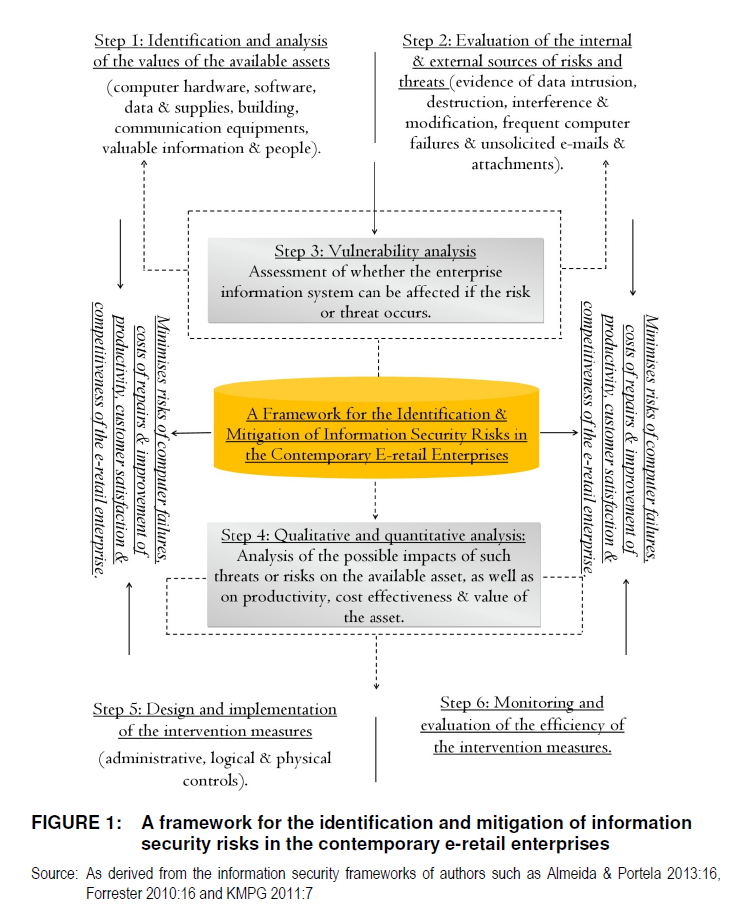
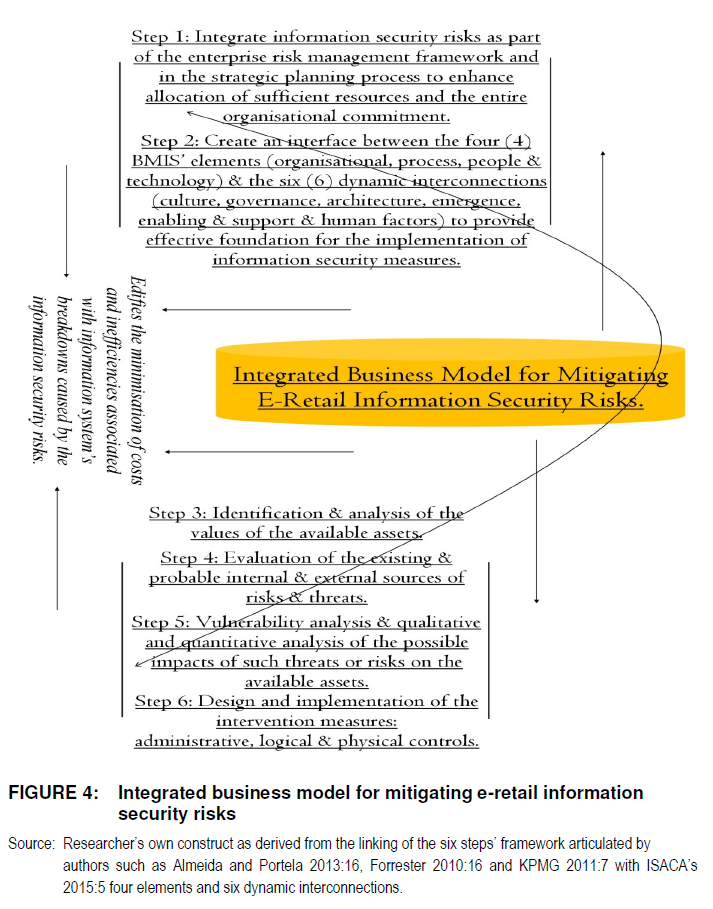
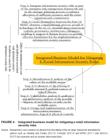
Dynamic nature and sources of information security risks render largely reactive and inflexible approaches less effective for managing e-retail information security risks. This research examines the effectiveness of the strategies used for mitigating e-retail information security risks by the modern e-retail enterprises. It entailed the application of a meta-synthesis as a qualitative research technique to socially construct and triangulate theories on e-retail information security risks with the empirical findings on the approach used by the e-retailers for managing e-retail information security risks in South Africa. The motive of the study was to identify the major paradoxes and the remedial e-retail information security risk management model that can be suggested. Despite wider application of a six steps' framework (assets' analysis, identification of the sources and symptoms of risks, vulnerability analysis, intervention and evaluation) for e-retail information security risk management, lack of accompanying change and transformation of employees' information security behaviours, culture and practices were still reiterated to constrain the emergence and evolution of a dynamic proactive approach for managing the usually dynamic e-retail information security risks. The interpretation of the findings revealed such deficiencies are also often further exacerbated by poor synchronisation of e-retail information security management systems with enterprise-wide risk management frameworks. The study concludes with the suggestion of the e-retail information security risk management model integrating the six steps' framework with the measures for changing and transforming the employees' information security behaviours, culture and practices to enhance the creation of a coherent dynamic proactive approach for effective management of e-retail information security risks as part of the enterprise-wide risk management system.
e-retail; information security risks; integrated business model
 Thumbnail
 Thumbnail
 Thumbnail
 Thumbnail