Applying institutional theory to assess the readiness of public health institutions to use smart technologies: A perspective from South Africa's Public Healthcare Sector
Abstract
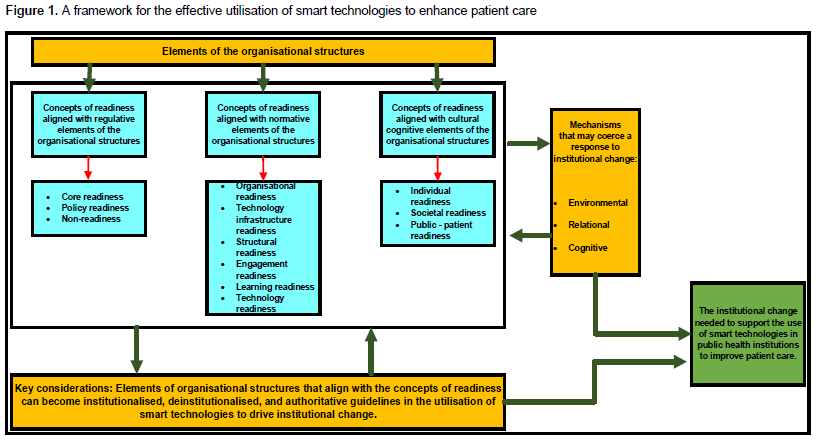
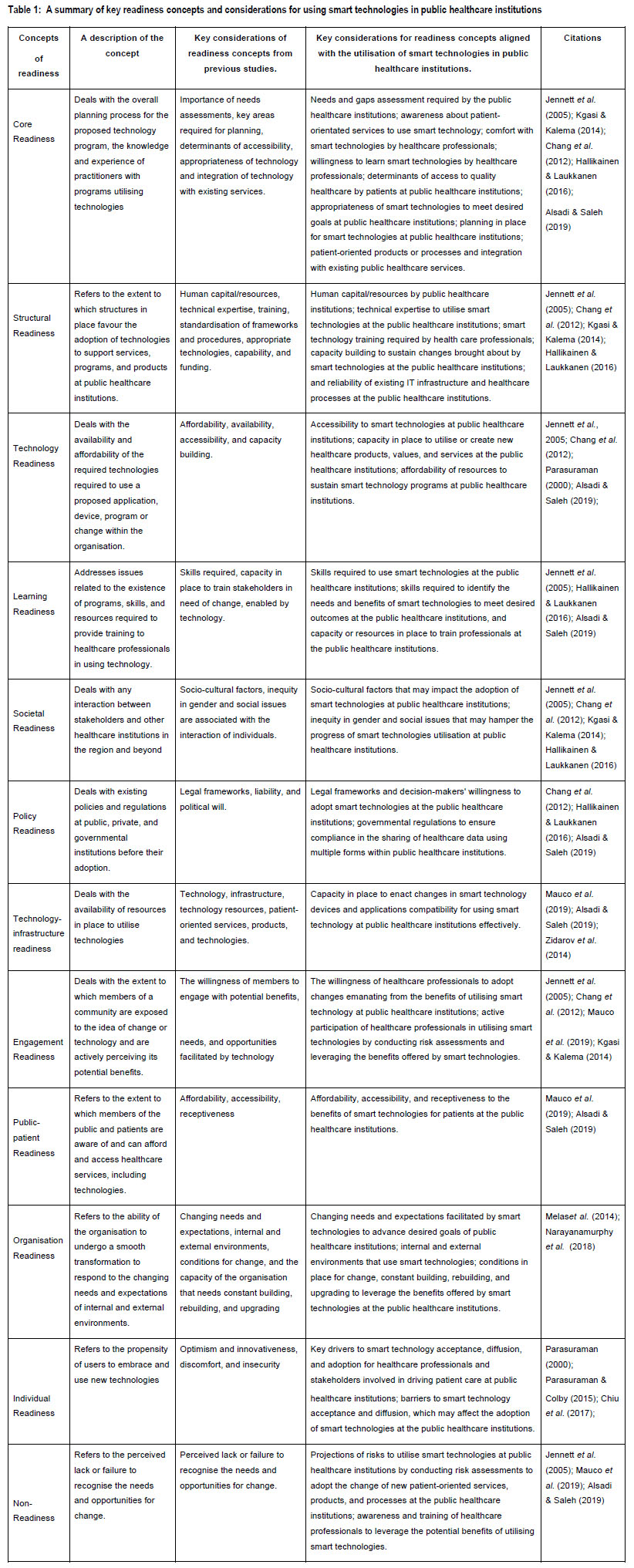
PURPOSE OF THE STUDY: This study investigated the application of Institutional Theory to enhance patient care at public healthcare institutions in South Africa by leveraging smart technologies. DESIGN/METHODOLOGY/APPROACH: This study used the Design Science Research (DSR) paradigm and research methodology to develop a framework for the effective use of smart technologies to enhance patient care in public healthcare institutions. Following a pragmatic research approach, the study employed a single DSR cycle in developing the framework. FINDINGS: The study identified 12 readiness concepts: core readiness, structural readiness, technology readiness, learning readiness, societal readiness, policy readiness, technology infrastructure readiness, engagement readiness, public-patient readiness, organisational readiness, individual readiness, and non-readiness. These concepts were aligned with the elements of organisational structures in Institutional Theory, specifically regulative, normative, and cultural-cognitive elements. The alignment was presented in the framework as a contribution to the existing body of knowledge. The framework's key contribution highlighted how the readiness of public healthcare institutions can be institutionalised to drive institutional change, with the support of environmental, relational, and cognitive mechanisms to facilitate desired institutional changes at public healthcare institutions RECOMMENDATIONS/VALUE: This study provides valuable insights for academics, healthcare practitioners, and stakeholders on addressing limitations in implementing institutional changes to improve patient care using smart technologies in public healthcare institutions. The framework developed in this study integrates organisational structures and readiness concepts, as well as environmental, relational, and cognitive factors to facilitate institutional change and enhance patient care. Further research is needed to evaluate the effectiveness of this framework in different public healthcare settings. Additionally, this study highlights the importance of understanding the role of regulative, normative, and cultural-cognitive elements in the organisational structures of public healthcare institutions to align with readiness concepts for driving desired institutional changes through the adoption of smart technologies. MANAGERIAL IMPLICATIONS: The developed framework can guide healthcare practitioners in using smart technologies to enhance patient care in public healthcare institutions. For managers and policymakers, it is important to consider the alignment of external demands with desired outcomes, the competence of healthcare practitioners in meeting these demands, and managerial stability across different levels of the public healthcare sector. These factors are critical in driving the goals for enhancing patient care JEL CLASSIFICATION: I18; M15; O32
Healthcare; institutional theory; public healthcare institution; readiness; smart technologies
 Thumbnail