Barriers hindering digital adaptability within telecom IT functions amid fast-paced digital changes
Abstract
PURPOSE OF THE STUDY: The objective of the study was to create a strategic management framework that would allow technology leaders to swiftly adopt emergent digital change. Digital transformation is occurring in numerous industries globally, including the telecommunications sector. Therefore, information technology (IT) leaders must leverage this transformation to provide exceptional customer experiences, as well as a distinctive value proposition for the organisation. DESIGN/METHODOLOGY/APPROACH: A qualitative research methodology was employed, involving interviews with 22 participants. The cross-sectional approach was employed to collect, collate, and formulate primary data. FINDINGS: Critical technological developments that facilitate the rapid adaptation and adoption of digital transformation within the IT function have been highlighted. Moreover, ten barriers impeding IT's adoption of digital transformation were identified. Barriers included outdated IT systems, continual technological upgrades, and constrained IT budgets. Factors contributing to the effective implementation and adoption of digital transformation include being well-informed concerning evolving trends and employing innovative and agile work processes, while fostering continuous learning. The strategic management framework was formulated using insights derived from the literature review and study. RECOMMENDATIONS/VALUE: The research findings revealed that barriers to change adoption hinder the IT function's ability to swiftly embrace emerging digital transformation. However, despite the rapid advancement of technology, the capacity of IT to adapt is currently insufficient. Overall, the IT function remains essential as a technology facilitator for the maintenance, optimisation, and enhancement of business support systems (BSS). MANAGERIAL IMPLICATIONS: This study expands current understanding by highlighting the barriers and enablers associated with attaining digital transformation. The proposed framework offers a series of recommendations for IT leaders to efficiently implement digital transformation. JEL CLASSIFICATION: O39.
New business models; organisational culture; organisation transformation; strategy and innovation; technology adoption
1. INTRODUCTION
This research encompasses a global telecommunications firm based in South Africa, conducting operations in Africa. This study examines the context of digital transformation within the South African telecommunications sector, the progression of digital transformation within the industry, and how telecommunications can leverage information technology (IT) capabilities as a strategic advantage. The study also examines significant technology trends, industry drivers, challenges, and opportunities, as well as critical success factors related to digital transformation, organisational transformation, culture, and change adoption.
Information technology is a designated department inside an organisation and is responsible for creating technical solutions that transform how employees or consumers view, manage, and engage with telecommunications services. Accordingly, information technology transformation is essential to implementing digital transformation. Moreover, in order to lead digital transformation throughout the organisation, the IT department must stay abreast of technical innovations, incorporate upcoming digital and telecommunications technologies, and enhance current IT platforms. Also, information technology transformation is essential to digital transformation, requiring the reconfiguration and innovation of technology systems, operational models, processes, culture, and talent to adequately support business protocols and deliver quality services throughout the digital economy.
Currently, the telecommunications sector is leading digital transformation, thus significantly influencing global digitalisation; however, it is also experiencing significant changes in its market environment (World Economic Forum, 2017). Unfortunately, the involvement of telecom operators in enhancing digital business and service models has, thus far, failed to yield new value for the operators themselves. The operators' share of the industry's profit pool has been declining. Hence, the strains on traditional revenues compel operators to examine alternative digital business models to secure a share of the value created by digital transformation (World Economic Forum, 2017). Henriette and Boughzala (2016) asserted that digital transformation prioritises users within the company strategy. As customers demand high-quality products and services, they anticipate that organisations will swiftly adjust to their changing needs. However, in order to fulfil these new expectations, organisations must modify their operational methods and align their products and services with emerging consumption trends. In his keynote address at TM Forum's Digital Transformation World Series in October 2021, Stephane Richard, Chairman and Chief Executive Officer of Orange, argued that the management of IT by telecommunications companies is overly complex, rigid, and costly. Furthermore, he proffered that monolithic core IT systems, along with antiquated processes and technology, constitute a fundamental aspect of the issue and that telecommunications companies are not seeing sufficient rapid transition (Bushaus et al., 2021).
Cosgrove (2018) emphasised the necessity for IT functions to cultivate new digital platforms and capabilities that will enhance existing business operations, tackle emerging challenges, and generate new growth opportunities. Moreover, Cosgrove (2018) posited that many IT functions inside organisations currently lack the necessary competencies to lead digital transformation, thereby suggesting that these functions are ill-equipped to meet the needs of digital business. Berry and Mok (2018) contended that the Chief Information Officer (CIO) has full responsibility for devising and implementing the IT strategy across the organisation and synchronising the IT strategy with the comprehensive business plan, while guaranteeing the necessary capabilities for attaining success.
2.1 Definitions and concepts
Industry professionals articulate and understand digital transformation variably, contingent upon their exposure and knowledge of this topic. Scheibenreif et al. (2018, p. 11) described digital transformation as "the process of leveraging cutting-edge digital technologies and methodologies to establish a resilient new digital business model." Reddy and Reinartz (2017) characterised digital transformation as the application of computer and Internet technologies to improve the efficiency and efficacy of the economic value creation process. This encompasses the overall influence of new technology on our operations, interactions, structures, and wealth creation within this system. Rogers (2016) opined that digital transformation is fundamentally a matter of strategy rather than technology. Although enhancing the IT architecture may be essential, the most critical advancement is related to strategic understanding. Arora et al. (2020) contended that digital transformation should focus on establishing a suitable trajectory for an organisation, allowing it to learn and adapt more rapidly than its current and future competitors. Henriette and Boughzala (2016) argued that digital transformation entails significant alterations to a company's business model, potentially affecting processes, resources, operational methods, and/or company culture.
According to Rogers (2016), digital leaders, including chief information officers (CIOs), have traditionally been responsible for automating and enhancing the processes of established businesses. That said, contemporary digital leadership necessitates the capacity to reimagine and reinvent the business itself. Reimagining a business necessitates a critical examination of its foundational assumptions. Moreover, it necessitates the identification of unrecognised blind spots and a re-evaluation of all facets of the business strategy, including customers, competition, data, innovation, and value. This type of re-evaluation is challenging yet feasible. Brainstorm ITWeb (2019) conducted a profile of South African CIOs to ascertain whether all sectors share common concerns and to gather their perspectives on the true implications of digital transformation. It would appear that all CIOs are clearly endeavouring to adapt to the swift transformations of the digital age. However, even though these CIOs faced similar challenges and prospects involving digital transformation, their conceptions of the idea differed. Table 1 illustrates several of these distinctions.
The prevalent themes that arose from these definitions were business transformation, strategy and innovation, technology adoption, new business models, and organisational culture.
2.1.1 Key technology trends and drivers of digital transformation
The telecommunication industry has experienced revolutionary technological advancement, from the telegraph to sixth-generation (6G) technology and the convergence of information and communication technologies, such as software-defined networking (SDN) and network function virtualisation (NFV). Klein (2008) characterised a technological revolution as the swift substitution of one or more established technologies with a novel and innovative technology. We are presently experiencing an era of rapid technological progress, characterised by the precipitous development and adoption of inventions, resulting in abrupt societal transformations.
The mid-19th century witnessed the advent of the telegraph. Telegraph operators transmitted test messages in Morse code to the next operator, whose receiver was linked to a designated point-to-point connection (Cerf, 2019). Telecommunications have had a unique historical progression throughout the last three centuries, highlighted by Alexander Graham Bell's creation of the inaugural telephone in 1876 (M-STAT, 2015), which profoundly impacted public opinion in the 19th century. Telephony, akin to telegraphy, originated from the amalgamation of several components (Rens, 2001). The emergence of digital technology in the 1970s prompted enhanced transmission and switching capabilities, leading to the subsequent creation of mobile phone features that revolutionised these technologies into a significant industry (Palmberg, 2002). The wireless telecommunications revolution began in the early 20th century, culminating with Guglielmo Marconi being awarded the Nobel Prize in Physics in 1909 for his pioneering contributions to wireless radio communications (Alam, 2011).
The Industrial Revolution encompasses the utilisation of advanced machines to enhance and expedite human labour. Currently, the fourth industrial revolution encompasses robots, automation, and artificial intelligence (AI), among other technologies (Rundle, 2017). Ultimately, the amalgamation of the steam engine with cutting-edge technology catalysed the Industrial Revolution. The amalgamation of computers and distributed networks launched a digital revolution, facilitating universal information generation, sharing, and convenient access (Walter, 2014). Historical revolutions occurred when transformative technologies, such as the steam engine, electricity, computers, and the Internet, were broadly embraced and distributed within society. Hence, Industry 4.0 signifies a new industrial paradigm characterised by the amalgamation of emerging technologies, enabled by the Internet of Things (IoT), resulting in cyber-physical and intelligent systems that enhance value in industrial processes (Siebel, 2019). Frank et al. (2019) defined Industry 4.0 as a new phase of industrial maturity for product firms, distinguished by connectivity facilitated by the industrial Internet of Things (IoT), in which the products and processes of companies are interconnected and integrated to augment value for both customers and internal operations.
The emergence of new digitisation technologies, including Artificial Intelligence (AI), Big Data, the Internet of Things (IoT), and Machine-to-Machine (M2M) communication, has significantly influenced the business processes of organisations across various industries. These technologies facilitate business innovations and create new revenue streams, while also enabling organisations to enhance automation and achieve significant gains in efficiency and effectiveness (Hong & Dietze, 2019). Similarly, digitisation denotes the process through which firms progressively adopt digital technologies to create a cohesive smart enterprise (Frank et al., 2019). Overall, digitalisation is profoundly altering the dynamics of relationships between consumers and corporations. Thus, customer service is evolving from traditional touch points, such as retail stores, to cohesive digital platforms (Lischka et al., 2019).
Artificial intelligence (AI) is regarded as a crucial technology of the digital age, with considerable capacity to enable process automation (Hong & Dietze, 2019). In telecommunications, artificial intelligence is commonly employed in complaint management, particularly through chat-based assistants that handle customer problems (Hong & Dietze, 2019). Individualisation provides an opportunity for telecommunications firms to ensure a uniform client experience (Lischka et al., 2019). Accordingly, the 5G network will customise its services for consumers, delivering infinitely scalable solutions promptly through network slicing (Borowski & Khurana, 2019). The integration of Robotic Process Automation (RPA) solutions, potentially augmented by AI or chatbot capabilities, has led to advanced automation. Smart automation refers to the customisation of solutions aimed at digitising processes to provide sustainable and substantial value within a brief period. This allows organisations to enhance efficiency, decrease costs and human error, while ensuring regulatory compliance (Schmitz et al., 2019). In addition to facilitating Internet access, another prospective avenue for over-the-top (OTT) services in mapping connectivity within mobile networks for consumers arises from technological advancements. An initial illustration is the integrated SIM (eSIM). The eSIM is a programmable SIM card or chip that is permanently embedded inside the device (Krüssel & Gobel, 2019).
2.1.2 Digital transformation barriers
The global economy is evolving rapidly, thus necessitating that organisations consistently enhance and adapt to maintain competitiveness (Anderson, 2015). However, telecommunications companies have not been the sole industry to encounter the challenges of digital transformation over the past decade. Notably, telecommunications companies are among the lagging industries in effectively addressing this issue (Creaner, 2018). As digitalisation advances, it inevitably leads to in-depth changes in many areas of society. The digital revolution is creating almost inconceivable volumes of data, with computing power reaching dizzying heights, such that computers will outperform the human brain by 2045 (Wagner et al., 2019). The challenge lies in balancing the exploitation of legacy technology for current profits, in concert with the exploration of new technologies for future profits (O'Reilly & Tushman, 2011). Roos and Menden (2019) noted that telecommunications companies experience significant challenges due to the complexity stemming from overly adapted ICT systems, overloaded processes, restrictive requirements, and inflexible organisational structures. Hence, the legacy system will face mounting efficiency pressures, while the new system remains in the phase of parallel construction.
2.1.3 Digital transformation enablers
Successful organisations tend to exhibit a sense of paranoia, consistently monitoring external factors to comprehend trends, identify unmet client demands, and detect market inefficiencies (Arora et al., 2020). Therefore, organisations must create flexible frameworks that enhance efficiency and incrementally refine existing operations (exploit), while concurrently enabling the advancement of innovative technologies that continually contest established business models (explore). Organisational structures must be as flexible as client needs (Wagner et al., 2019). Therefore, organisations must engage in continuous learning by adapting through experimentation and enhancing technologies and competencies (Palmberg & Martikainen, 2006). Essentially, agility and flexibility are crucial pillars of a resilient organisation in the digital age and integral elements of a contemporary work paradigm (Wagner et al., 2019). Arora et al. (2020) argued that digital leaders have an adaptable learning engine central to their organisation. The organisation deliberately develops the technology, analytics, skills, and workforce required to recognise value, assess concepts in collaboration with customers, and rapidly adapt according to their feedback. Accordingly, the aim of any digital transition is to develop the ability for learning and adaptation. Roos and Menden (2019) asserted that future organisations will prioritise project-based operations, enhanced agility, interconnection, and a more dynamic structure in contrast to current hierarchical organisations. Thus, expertise in project and programme management, along with IT skills, will become increasingly essential.
2.1.4 Organisational transformation
Telecommunication companies are encouraged to modify traditional structures, cultures, roles, skills, and processes in alignment with IT, which reflects the dynamic processes within the technical system (Creaner, 2018). Organisational transformation may transpire in anticipation of significant alterations within the corporate sector (Pandey & Malik, 2016). In fact, all organisations face a conflict between promoting innovation and opting for conservation; however, stability is crucial for internal cohesion, which can also prevent self-destruction. Moreover, renewal is crucial, as many organisations find it challenging to innovate at the speed required by the market, especially during periods of instability or fierce competition (Baden-Fuller & Volberda, 1997). Anderson (2015) proffered that transformation constitutes a profound alteration, necessitating the adoption of an entirely new methodology while relinquishing outdated practices. Creaner (2018) posited that transformation must commence with a comprehensive understanding of the motivations and perceptions of all key stakeholders, including shareholders, executives, staff, industry partners, regulators, and ultimately, diverse customers. Creaner (2018) delineated 10 distinct transformation journeys, illustrated in Figure 1, regarding what telecommunications companies must undertake to evolve into a digital entity.
Some of the transformation journeys have a technology aspect, while others are more focused on transforming how the business operates (Creaner, 2018).
2.1.5 Organisational culture
An environment that promotes innovation and creativity enhances customer satisfaction, employee engagement, and future growth, although it is notoriously difficult to develop and maintain. However, cultural transformation necessitates a deliberate effort, while creativity specifically demands sustained attention to avoid being undermined by the drivers of innovation and growth (Mesaglio & Fenn, 2016). Meehan et al. (2017) asserted that each organisation possesses its own culture, belief system, and set of values. An optimal culture is crucial for attaining superior business results, as a dysfunctional culture can impede business transformation. Culture embodies the collective comprehension of individuals on operational norms and acceptable conduct, essentially defining "how affairs are conducted in this context." (Meehan et al., 2017, p.3). Arnaiz (2020) and various sociologists argued that culture comprises a collection of patterns, ideas, behaviours, institutions, symbols, and practices that are shared and sustained by a community. Meehan et al. (2017) posited that successful business transformation necessitates the alteration of numerous unconscious and entrenched ideas and assumptions that individuals depend on to direct their behaviour within the workplace. Levi (2011) opined that transforming an organisational culture to one that better supports teams is achievable, albeit it requires considerable time and effort. Wagner et al. (2019) contended that culture and skills constitute the primary impediments to transformation. Thus, altering a complete corporate culture cannot be achieved swiftly and requires multiple strategies along with an extensive programme.
2.2 Theoretical foundation
A theoretical framework is grounded in an established theory within a domain of investigation that encapsulates the essence of the research challenge. It is a framework that constitutes the basis for research development (Adom et al., 2018). Therefore, the theoretical framework will augment the comprehension of current research, enrich the study, and help to contextualise the strategic management framework.
This research was anchored on Kotter's theoretical model of leading change. The model reveals the most critical problems impacting transformation attempts. Kotter (1995) argued that the pace of global change is accelerating, while our capacity to adapt is diminishing. Kotter (1995) examined more than 100 organisations undergoing change and identified eight critical elements of the change process, illustrated in Figure 2, which might result in either a failed effort or, if executed well, facilitate transformation.
Overseeing organisational transformation can be challenging. For example, Kotter (1995) posited that the primary lesson from the most successful situations is that the change process encompasses several stages, each of which typically requires some time to finalise.
3. METHODOLOGY
The research design is exploratory and utilises a qualitative methodology to better understand the varied perspectives of participants. Research design, as defined by Sreejesh et al. (2014), serves as a framework or blueprint for the efficient execution of business research projects. This document outlines the procedures required for the collection, measurement, and analysis of information that assists researchers in structuring and addressing business research problems. Holland et al. (2018) proposed that an exploratory research design is employed to establish foundational knowledge for future endeavours. Sekaran and Bougie (2013) asserted that "an exploratory study is conducted when little is understood about the current situation, or when there is no prior information regarding the resolution of analogous problems or research issues". Sreejesh et al. (2014) proffered that exploratory research is vital in comprehending and analysing significant difficulties related to identifying alternatives that lead to the development of novel ideas.
The researcher utilised inductive reasoning in this study by initially gathering evidence and subsequently analysing it to formulate a conclusion (Melnikovas, 2018). Figure 3 illustrates the research onion pertaining to data collection and analysis. The research onion delineates the various components that are essential for effective data collection and subsequent analysis.
The theoretical model restricted the data collection scope through targeted questions designed to elicit replies for data analysis and interpretation. According to Baker (2012), the theoretical model helps with understanding the concepts that validate the theoretical assumptions, so as to expand knowledge.
The purposive sample strategy was employed to guarantee that IT professionals within the organisation were interviewed, thereby acquiring pertinent data. The IT experts possessed varied backgrounds and skills across multiple sectors, including networks, information technology, security, service management, and digital platforms. The qualitative data were collected using a one-to-one interview method, resulting in 22 research participants being interviewed, which represented 10% of the group's technology employees. The semi-structured interview method was utilised to gather comprehensive information while allowing for adaptability during the interview sessions. Moreover, the data collection was followed by the application of integrity and analysis methods to extract meaningful insights, transforming the data into knowledge that informed the development of a strategic management framework. Annexure 1 contains the open-ended questions used for the data collection.
4. FINDINGS AND DISCUSSION
The six-phase thematic coding process by Braun and Clarke (2012) entails familiarisation with the data, systematic coding, generation of potential themes, review and definition of themes, and critical reflection to ensure comprehensive addressing of the research questions.
Following code clean-up, which involved rejecting and grouping several codes that were pertinent to the study, there were only 18 codes left, down from 368. The organisation's culture contained the highest number of codes, but the chances for digital transformation had the fewest codes. This illustrates that culture can serve as a competitive advantage; nevertheless, if left unregulated, it may hinder efforts to execute digital transformation and overall organisational change. Table 2 depicts the selected final merged codes associated with themes that resulted from the clean-up. Five candidate themes were identified during the thematic analysis:
• Changing business landscape
• Strategic management and leadership
• Change management and adoption
• Culture and talent
• Factors influencing the success of digital transformation
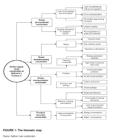
The final thematic map in Figure 4 illustrates the relationships among the candidate themes. Braun and Clarke (2012) argued that this process is essential for ensuring that individual themes are coherent and collectively address the research questions and objectives in a pragmatic manner while also capturing the most relevant features of the data.
The development of themes was analysed by examining and comparing each candidate theme, focusing on quotations and the formation of merged codes. This process led to the revision and finalisation of five primary themes.
Writing theme definitions aids in the creation of a nuanced and intricate analytic narrative (Braun & Clarke, 2012). Table 3 enumerates the definitions for each theme, including the primary concept, scope, bounds, and their interrelations with other themes, as well as their connection to the study question and objectives.
The five principal topics establish a robust foundation for critical analysis and are subsequently examined.
4.1. Findings
4.1.1 Changing business landscape
Telecommunications companies should capitalise on the evolving business environment to maintain relevance. According to Participant 17, "some of the biggest shifts in the last decades have been driven by technology and the Industrial Revolution." Participants identified key technology trends and potential use cases that can enable the IT function and the organisation to successfully adopt digital transformation. Table 4 illustrates key technology trends and potential use cases.
4.1.2 Strategy and leadership
According to Participant 3, "Leadership is not providing adequate support for the new ERP system. Regarding the deployment of the new ERP system, there's a lack of collaboration and a well-defined plan." Participant 18 indicated that "Telcos have one of the best strategies on paper, and implementation is the biggest challenge." Thus, IT leaders should foster a strong enough sense of urgency and be proactive in communicating how the objectives of digital transformation will be achieved.
4.1.3 Change management and adoption
The following 10 barriers hindering IT from adapting and embracing digital transformation emerged from the research study:
1. Technological innovation is hampered by an outdated operating model, legacy mindsets, and traditional ways of working.
2. IT today is monolithic and executes using a waterfall methodology.
3. The current demand process lacks both agility and an iterative approach.
4. The procurement processes are rigid and impact the delivery of IT services.
5. The lack of integration between IT systems slows the adoption of new technologies and affects both customers and staff.
6. IT appears to be trailing behind and not at the forefront of technological advancement.
7. Because of the constantly evolving IT environment, IT is suffering from change fatigue.
8. Obsolete procedures and complex IT infrastructure
9. Insufficient research and development (R&D) centres to promote innovation
10. Lack of willingness for people to adopt emerging technologies
Participant 10 stated, "IT is lagging in executing a significant portion of digital transformation."
4.1.4 Culture and talent
Culture has emerged as the primary obstacle to the adoption of the coming digital transformation. Participant 13 asserted that "The organisation's culture is not prepared to embrace fresh ideas." The study found the following 10 issues impeding organisations' culture:
1. Lack of a digital-first mindset
2. The departmental methods of operation are misaligned
3. Obsolete frameworks obstruct innovative work methodologies
4. Inadequate talent management
5. Reactive mindset, leading to poor planning
6. Insufficient agility and coordination between IT and business
7. Lack of trust in industry best practices
8. Technological solutions are not developed with the client as a priority
9. Apprehension towards transformation
10. Cumbersome governance processes
4.1.5 Success factors impacting digital transformation
The study identified the following strategies for success:
• Remaining informed about upcoming trends
• Coherent vision, cohesive plan, and leadership endorsement
• Embracing agile methodologies and innovative work practices while implementing a streamlined contemporary IT infrastructure
• Adopting a new operating model to lead digital transformation
• Change management strategies
• Interdisciplinary collaboration and sector-wide cooperation with clients, partners, regulators, and like-minded entities
• Bolster cybersecurity measures
4.2 Discussion of findings
The sub-research questions and objectives are examined to address the primary research topic.
4.2.1 What are the key technology trends that will make it possible for the IT Department to quickly adjust to the emerging digital transformation?
Participants acknowledged the rapid acceleration of technological innovation and notable advancements in the industry, including IoT, digitisation, AI, ML, chatbots, RPA, generative AI, AIOps, cloud computing, APIs, 5G, NFV, SDN, blockchain, and softwarisation. The study identified the following possible advantages for the early adoption of technology trends:
• Facilitation of transactions on mobile devices for end consumers
• Streamlining and automating organisational procedures
• Enhancing network connectivity and optimising client experience
• Data analysis and insights
• Facilitating the organisation's innovation in vertical or adjacent areas, such as mining and agriculture
• Promoting a culture of innovation and novel business models
• Accelerated time to market new items
Participant 7 explained that, "The role of IT is to understand the business requirement for new trends, streamline and automate processes to make life easier for customers." Literature indicates that technological developments are crucial for telecommunications to facilitate digital transformation, foster innovation, enhance customer experience, and sustain competitiveness. Klein (2008) observed that a technological revolution is defined by the swift substitution of existing technologies with a novel, innovative technology. Similarly, the current era is characterised by rapid technological advancements, featuring novel innovations that quickly transform and disseminate, leading to substantial societal changes. Hong and Dietze (2019) asserted that the emergence of new digitisation technologies, including AI, Big Data, IoT, and Machine-to-Machine (M2M) systems, influences the business operations of organisations across various industries. Schmitz et al. (2019) posited that the integration of RPA solutions, potentially augmented by AI or chatbot capabilities, leads to intelligent automation.
4.2.2 Why is the pace of embracing emerging digital transformation in the IT departments slow?
Organisational culture is a significant impediment to the implementation of new digital transformation initiatives. The study found areas of resistance to change or the adoption of new technology within the organisation. Participant 11 responded that, "People are not willing to adopt emerging digital transformation due to fear of change." Participant 15 stated that "New technology makes people feel intimidated, because they don't know how it will affect and help them." According to Participant 5, "IT is not fast enough, and this is an organisation-wide problem, for example, the adoption of Adobe Sign took a long time. A change in culture must start at the top." That said, the lack of IT skills to embrace new technologies and inadequate training for employees are two major factors contributing to the slow pace of adoption. Participant 1 indicated that "With the emergence of new technologies, IT workforce require training." According to Participant 3, " Training is essential to meet the demands of new technologies." The research identified four dimensions of change adoption.
1. The capacity of IT personnel to assimilate emerging technology, like generative AI. The IT role includes the implementation of emerging technology to meet the organisation's requirements.
2. The capacity of end users or staff to utilise developing technologies to enhance productivity. IT personnel are included in a larger employee user demographic. IT benefits from utilising its own products and services, either to test new technologies prior to their launch or to demonstrate trust in them.
3. The capacity of leadership to promote and facilitate the deployment of new technology.
4. The capacity of external clients to utilise the organisation's technologies (products and services).
The research participants identified barriers that impede digital adoption in IT, which are necessary to address the evolving needs of the organisation. Participant 6 stated, "We are not breaking new ground. We adopt the ideal technological model once it has been tested and assessed by competitors." Literature indicates that the necessity for continuous transformation of IT to address emerging challenges and leverage new opportunities is perpetual. Hence, telecommunications companies must adapt to technological advancements and leverage emerging digital transformations by implementing new operational methodologies. This requires a cultural transformation among individuals, involving a shift in mindset that abandons outdated practices and embraces continuous learning to maintain relevance. Consequently, the entire organisation must undergo comprehensive change rather than incremental adjustments. Information technology departments possess the capacity to guide the organisation through the ongoing digital revolution; however, the literature review indicates that this transformation will require time.
Krüssel and Gobel (2019) argued that numerous telecom businesses have been compelled to adjust to significant transformations and navigate a steep learning curve in recent years. Arnaiz (2020) posited that digital development signifies a cultural transformation among individuals, characterised by their readiness to experiment, investigate, and ultimately, embrace novel methodologies, while acknowledging a degree of risk. Thus, digitisation is determined not by the availability of technology, but by a cultural shift. Anderson (2015) noted that transformation constitutes a profound alteration, necessitating the adoption of an entirely new methodology, while relinquishing outdated practices.
4.2.3 What opportunities and challenges come with digital transformation, and how can IT functions enable the organisation to gain a competitive edge?
According to Participant 22, "Challenges pose opportunities for us to improve the performance of the business." The study identified seven key digital transformation challenges:
1. Validation of new technology in terms of authenticity and reliability
2. Lack of skills and training for emerging technologies, such as AI
3. Excessive reliance on external consultants and vendor entanglements
4. The business's nature does not necessitate innovation or the disruption of the status quo
5. Budget limitations to pursue digital transformation initiatives
6. Poor strategy execution to deliver new technologies
7. Digital transformation benefits are not immediately visible
The following are key opportunities the organisation can explore to achieve a competitive advantage amid fast-paced digital changes:
• Young employees are technologically adept and adapt to new technology more effectively
• Enhancing network technologies with artificial intelligence and machine learning to optimise client experience
• Timely adoption of innovative business models can yield substantial revenues and provide a competitive advantage
• Strategic partnerships and alliances, such as collaboration with like-minded organisations
• Fifth-generation (5G) and sixth-generation (6G) network technologies provide significant prospects
• Artificial intelligence and chatbots for customer care applications
Participants perceived digital transformation as an evolving shift in the IT landscape aimed at enhancing and automating processes to increase corporate efficiency and customer experience. The Information Technology Department is essential for the maintenance, optimisation, and enhancement of business support systems (BSS). Participant 6 asserted that, "business should be the driving force behind digital transformation. IT serves as an enabler."
The research study and the literature review are in accordance. The literature indicates that traditional telecommunications companies have challenges due to legacy IT systems, antiquated work processes, complexities arising from over-adapted ICT systems, and the necessity to maintain pace with rapid technological advancements. Creaner (2018) noted that telecommunications companies are not the sole industry to encounter the challenges of digital transformation over the past decade. Notably, telecommunications companies are among the lagging industries in effectively addressing this challenge. Roos and Menden (2019) argued that telecommunications companies face considerable difficulties due to the complexity associated with overly adapted ICT systems, cumbersome procedures, strict regulations, rigid organisational structures, siloed thinking, and departmental self-interest. The legacy system will encounter increasing efficiency demands, whereas the replacement system is still in the parallel development phase. Roos and Menden (2019) highlighted that the current OSS/BSS environment at almost all carriers demonstrates excessive flexibility, a lack of standardisation, and inadequate documentation, as well as inferior interface and data management.
4.2.4 How does digital transformation affect people, processes and innovation with the IT function?
The study identified 10 barriers and enablers across multiple departments to assess the impact of change inside the IT function, as illustrated in Table 5. According to the barriers and enablers, IT transformation projects may not succeed if there is a lack of a clear vision, a well-thought-out plan, adequate leadership support, and the use of Kotter's eight steps for leading change (Kotter, 1995). However, this is exacerbated by other barriers, such as limited skillsets for emerging technologies, ineffective change enablement, and not keeping up with the latest technology trends, such as AI. IT change adoption could be accelerated by addressing legacy structures that other departments have noticed and implementing agile and innovative work practices.
Research demonstrates that digital transformation should be a fundamental component of organisational strategy. Essentially, digital transformation necessitates the integration of IT and business competencies, along with cross-functional collaboration across all business units. Therefore, digital transformation initiatives should be guided by a centre of excellence. Lischka et al. (2019) noted that digitalisation must be implemented from the top down and should be an integral element of the telecommunications strategy. The execution of digital transformation efforts must be directed by a central authority. Cross-functional teams are essential for strategic creation and implementation due to the pervasive effects of digitalisation across all levels of the value chain. Davenport and Redman (2020) posited that digital transformation necessitates skilled personnel. Moreover, the organisation should form an effective team across four essential domains: technology, data, process management, and organisational change capability.
4.2.5 What framework or guidelines can assist IT leaders to quickly embrace digital transformation?
The following are essential elements of success that were identified as principles that can facilitate digital transition in the IT department:
• Keeping up-to-date with emerging technologies
• Compelling vision, cohesive plan, and leadership endorsement
• Adopting agile and new ways of work and deploying a simplified modern IT architecture
• Adopting a new operating model to lead digital transformation
• Change management strategies, such as Kotter's eight-step process to lead change (Kotter, 1995).
• Collaboration across functions and industry-wide engagement with customers, partners, regulators, and like-minded organisations.
A strategic management framework was developed to guide digital transformation implementation on an ongoing basis. The researcher established the framework based on success factors and enablers identified in the literature review and study, which serve as guiding principles for IT leaders in the adoption and adaptation of digital transformation. The study revealed 10 barriers to change adoption, which hinder IT functions from quickly embracing digital transformation. To overcome these barriers, it is essential to put the critical success factors and enablers into practice.
A well-structured organisational framework is necessary to promote the adoption of digital transformation (Baker, 2012). The proposed strategic management framework in Figure 5 delineates guidelines for IT leaders to consistently respond to evolving digital transformations.
Since digital transformation affects the entire organisation and several industries, other business units and industries may also be able to use the strategic framework.
5. MANAGERIAL IMPLICATIONS
The study was limited to the IT function. However, further research may improve organisation-wide implementation of the proposed strategic framework and result in a greater understanding and digital adaptability. That said, IT leaders seeking to provide exceptional customer service and help the organisation achieve a competitive advantage, as well as researchers curious about how IT drives digital transformation within the organisation, may find this article useful. Further research could focus on the following topics:
• The influence of emerging digital technologies, particularly AI, on workplace culture and skill development;
• Organisational culture that adopts digital transformation as a competitive advantage.
The entire organisation should embrace emerging digital transformation, which is a transformative change that may have significant advantages.
6. CONCLUSION
The study revealed that IT functions encounter difficulties in swiftly adapting to novel trends and technologies, including digitisation, IoT, RPA, AI, cloud computing, and API integration. This is primarily attributable to various obstacles: the upkeep of legacy IT systems; apprehension involving change or failure; budgetary limits; resource limitations; and inadequate training and skills enhancement. The pace of technological progress is increasing, while, at the same time, the capability of IT functions to adapt is inadequate. The IT function acts as a technology enabler and custodian of digital technologies, which plays a vital role in facilitating digital transformation and supporting organisational change.
The research review suggests that any cultural transformation must be deliberate. The research also recognised areas in which the IT team excelled, such as the implementation of the Microsoft 365 cloud platform, which has been well-received across the organisation. Accordingly, information technology function remains essential as a technological facilitator for the maintenance, optimisation, and enhancement of business support systems (BSS). The literature review demonstrated that digital transformation should be a fundamental component of organisational strategy. In summary, enduring transformation only takes place when individuals augment their thinking and adopt agile methodologies and new work practices to foster an innovative culture.
Conflict of interest: The author(s) declare that they have no financial or personal relationship(s) that may have inappropriately influenced them in writing this article.
Data availability: The data used for this article can be found in Mdladla, B.S. 2025. Digital Transformation: Adaptability Within Telecom IT Departments Amid Fast-paced Digital Changes. PhD Thesis. DaVinci Institute.
Ethical clearance and informed consent statement: The researchers obtained ethical clearance prior to data collection and informed consent from all the participants in this study. Ethical clearance reference number: 01323.
Funding: The journal article publication will be funded by Cape Peninsula University of Technology (CPUT).
REFERENCES
2. LITERATURE REVIEW
- Adom, D., Hussein, E.K. & Agyem, J. A. (2018). Theoretical and conceptual framework: Mandatory ingredients of a quality research. International Journal of Scientific Research, 7(1), 438-441.
- Alam, S. M. (2011). Telecommunication Scenario. Economic Review, 42(5), 6-9.
- Anderson, P. (2015). Management in minutes. Quercus Publishing. London. Amazon Kindle Unlimited.
- Arnaiz, J. M. (2020). Transformation occurs at night: A way to turn your industry inside out. Amazon Publishing Seattle. Amazon Kindle Unlimited.
- Arora, A., Dahlstrom, P., Hjartar, K. & Wunderlich, F. (2020). Fast Time - How digital winners set direction, learn, and adapt. Amazon Publishing Seattle. Amazon Kindle.
-
Baden-Fuller, C. & Volberda, H. W. (1997). Strategic renewal: How large complex organisations prepare for the future. International Studies of Management & Organisation, 27(2), 95-120. https://doi.org/10.1080/00208825.1997.11656709
» https://doi.org/10.1080/00208825.1997.11656709 - Baker, J. (2012). The Technology-Organization-Environment Framework. In: Dwivedi, Y.K. Wade, MR & Schneberger, S.L. (eds.), Information Systems Theory (pp.231-245). Integrated Series in Information Systems, Springer, New York, NY.
-
Berry, D. & Mok, L. (2018). Toolkit: Sample job description for the CIO. https://www.gartner.com/document-reader/document/3893063?ref=solrAll&refval=572396490&
» https://www.gartner.com/document-reader/document/3893063?ref=solrAll&refval=572396490& -
Borowski, J. & Khurana, B. S. (2019). Technology Transformation: Reinvent the Network and Change the Way of Working, Now!. In P. Krüssel (Ed.), Future telco: Successful positioning of network operators in the digital age (pp. 497-583). Springer. https://doi.org/10.1007/978-3-319-77724-5
» https://doi.org/10.1007/978-3-319-77724-5 - Brainstorm ITWeb. (2019). CIO Directory. A guide to South Africa's IT decision-makers. South Africa, Brainstorm.
- Braun, V. & Clarke, V. (2012). Thematic analysis. In Cooper, H. (Ed.), The Handbook of Research Methods in Psychology (pp. 57-71). Washington, DC: American Psychological Association.
-
Bushaus, D., McElligot, T. & Newman, M. (2021). How to lead in the Open API Economy? TM Forum. https://inform.tmforum.org/features-and-opinion/from-pollock-to-mondrian-oda-simplifies-spaghetti-architecture
» https://inform.tmforum.org/features-and-opinion/from-pollock-to-mondrian-oda-simplifies-spaghetti-architecture -
Cerf, V. G. (2019). Back to the future, Part II. Communications of the ACM. (62)7, 6..https://doi.org/10.1145/3338516
» https://doi.org/10.1145/3338516 -
Cosgrove, T. (2018). IT Operations Transformation Primer for 2018. https://www.gartner.com/document/3850470?ref=TypeAheadSearch&qid=f5be5a72c09d98f1959bebe7ed
» https://www.gartner.com/document/3850470?ref=TypeAheadSearch&qid=f5be5a72c09d98f1959bebe7ed - Creaner, M. J. (2018). Transforming the Teclco - developing the instinct for survival in the digital economy. Centernode Publishing. Amazon Kindle.
-
Davenport, T. H., & Redman, T. C. (2020). Digital transformation comes down to talent in 4 key areas. Harvard Business Review. https://hbr.org/2020/05/digital-transformation-comes-down-to-talent-in-4-key-areas
» https://hbr.org/2020/05/digital-transformation-comes-down-to-talent-in-4-key-areas -
Frank, A. G., Dalenogare, L. S. & Ayala, N. F. (2019). Industry 4.0 technologies: implementation patterns in manufacturing companies. International Journal of Production Economics. 210, 15-26. https://doi.org/10.1016/j.ijpe.2019.01.004
» https://doi.org/10.1016/j.ijpe.2019.01.004 -
Henriette, E, Feki, M. & Boughzala, I. (2016). Digital transformation challenges. MCIS 2016 Proceedings (Paper 33). https://aisel.aisnet.org/mcis2016/33
» https://aisel.aisnet.org/mcis2016/33 -
Holland, J., Hatcher, W. & Meares, W. L. (2018). Understanding the implementation of tele mental health in rural Mississippi: An exploratory study of using technology to improve health outcomes in impoverished communities. Journal of Health and Human Services Administration, 41(1), 52-86. https://doi.org/10.1177/107937391804100103
» https://doi.org/10.1177/107937391804100103 -
Hong, C. G. & Dietze, C. (2019). Enabling digital excellence through business process management and process. In P. Krüssel (Ed.), Future telco: Successful positioning of network operators in the digital age (pp. 341-348). Springer. https://doi.org/10.1007/978-3-319-77724-5_30
» https://doi.org/10.1007/978-3-319-77724-5_30 - Klein, M. (2008). The Technological Revolution. Newsletter of Foreign Policy Research Institute, 13(18), 1-6.
- Kotter, J. (1995). Leading change: Why transformation efforts fail. Harvard Business Review, 73(2), 59-67.
-
Krüssel, P. & Gobel, F. (2019). Future telco successful positioning of network operators in the digital age. In P. Krüssel (Ed.), Future telco: Successful positioning of network operators in the digital age (pp. 15-40). Springer. https://doi.org/10.1007/978-3-319-77724-5
» https://doi.org/10.1007/978-3-319-77724-5 -
Lischka, A., Wolfering-Zoerner, M. & Faust, E. (2019). Generating value through Digitalization: Simple and Digital. In P. Krüssel (Ed.), Future telco: Successful positioning of network operators in the digital age (pp. 512-526). Springer. https://doi.org/10.1007/978-3-319-77724-5_33
» https://doi.org/10.1007/978-3-319-77724-5_33 - Levi, D. 2011. Group dynamics for teams. Thousands Oaks, CA: SAGE.
- Melnikovas, A. (2018). Towards an explicit research methodology: Adapting research onion model for futures studies. Journal of Futures Studies, 23(2), 29-44.
-
Mesaglio, M. & Fenn, J. (2016). Drive a creative culture through activities, education and attitude. https://www.gartner.com/document/code/304117?ref=grbody&refval=3619417.
» https://www.gartner.com/document/code/304117?ref=grbody&refval=3619417 -
Meehan, P., Prentice, B., Papegaaij, B., McMullen, L. & Olding, E. (2017). Leading IT cultural change and transformation. https://www.gartner.com/document/3584418?ref=solrAll&refval=182778122&qid=6a779f687955d976c238c4247be1acdd
» https://www.gartner.com/document/3584418?ref=solrAll&refval=182778122&qid=6a779f687955d976c238c4247be1acdd -
M-STAT. (2015). The evolution of telecommunications. https://www.m-stat.gr/the-evolution-of-telecommunications/
» https://www.m-stat.gr/the-evolution-of-telecommunications/ -
O'Reilly, C. A. & Tushman, M.L. (2011). Organizational ambidexterity in action: How managers explore and exploit. California Management Review, 53(5), 5-22. https://doi.org/10.1525/cmr.2011.53.4.5
» https://doi.org/10.1525/cmr.2011.53.4.5 -
Palmberg, C. (2002). Technological systems and competent procurers - the transformation of Nokia and the Finnish telcom industry revisited? Telecommunications Policy. 26(3-4), 129-148. https://doi.org/10.1016/S0308-5961(02)00005-8
» https://doi.org/10.1016/S0308-5961(02)00005-8 -
Palmberg, C., & Martikainen, O. (2006). Diversification in response to ICT convergence - indigenous capabilities versus R&D alliances of the Finnish telecom industry. Emeraldinsight. 8(4), 68-82. https://doi.org/10.1108/14636690610676559
» https://doi.org/10.1108/14636690610676559 - Pandey, R. K. & Malik, T. A. (2016). Study of OD Interventions Leading to Organisational Transformation & Reengineeirng, DAWN, Journal for Contemporary Research in Management, 3(2), 45-58.
-
Reddy, S. K. & Reinartz, W. (2017). Digital Transformation and Value Creation: Sea Change Ahead. Value in the Digital Era. GfK MIR. 9 (1), 11-17. https://doi.org/10.1515/gfkmir-2017-0002
» https://doi.org/10.1515/gfkmir-2017-0002 - Rens, J. G. (2001). Invisible Empire: A History of the Telecommunications Industry in Canada, 1846-1956. McGill-Queen's University Press.
- Rogers, D. L. (2016). The Digital Transformation Playbook. New York, Columbia University Press.
- Roos, S., & Menden, B. (2019). Challenges for HR in the telecommunications Industry: Competence Transformation follows Market Change. In P. Krüssel (Ed.), Future telco: Successful positioning of network operators in the digital age (pp. 528-537). Springer.
-
Rundle, E. (2017). The 5th Industrial Revolution: When it will happen and how. https://devops.com/5th-industrial-revolution-will-happen
» https://devops.com/5th-industrial-revolution-will-happen - Saunders, M., Lewis, P. & Thornhill, A. (2012). Research Methods for Business Students, 6th Ed. Harlow, England: Financial Times, Prentice Hall.
-
Scheibenreif, D., Moyer, R. K. & Aykens, P. (2018). Four definitions make a digital business strategy process more effective. Gartner. https://www.gartner.com/document-reader/document/3874981?ref=solrAll&refval=572378974&
» https://www.gartner.com/document-reader/document/3874981?ref=solrAll&refval=572378974& -
Schmitz, M., Stummer, C. & Gerke, M. (2019). Smart automation as enabler of digitalization? A review of RPA/AI potential and barriers to its realization. In P. Krüssel (Ed.), Future telco: Successful positioning of network operators in the digital age (pp. 483-495). Springer. https://doi.org/10.1007/978-3-319-77724-5_31
» https://doi.org/10.1007/978-3-319-77724-5_31 - Sekaran, U. & Bougie, R. (2013). Research methods for business: A skill-building approach, 6th Edition. John Wiley & Sons Ltd.
- Siebel, T.M. (2019). Digital transformation: Survive and thrive in an era of mass extinction. Rosetta Books: New York.
-
Sreejesh, S., Mohapatra, S. & Anusree, M. R. (2014). Business research methods: Exploratory, descriptive, and causal designs (pp. 25-103). Springer. https://doi.org/10.1007/978-3-319-00539-3_3
» https://doi.org/10.1007/978-3-319-00539-3_3 - Walter, I., 2014, The Innovators. London, Simon & Schuster UK Ltd.
-
Wagner, M., Heil, F., Hellweg, L., & Schmedt, D. (2019). Working in the Digital Age: Not an Easy but a Thrilling One for Organizations, Leaders, and Employees. In P. Krüssel (Ed.), Future telco: Successful positioning of network operators in the digital age (pp. 547-566). https://doi.org/10.1007/978-3-319-77724-5_36
» https://doi.org/10.1007/978-3-319-77724-5_36 -
World Economic Forum. (2017). Digital transformation initiative-telecommunications-industry-white-paper. [http://reports.weforum.org/digital-transformation/wp-content/blogs.dir/94/mp/files/pages/files/dti-telecommunications-industry-white-paper.pdf].
» http://reports.weforum.org/digital-transformation/wp-content/blogs.dir/94/mp/files/pages/files/dti-telecommunications-industry-white-paper.pdf