Protracted strikes and statutory intervention in South Africa's labour relations landscape
Abstract
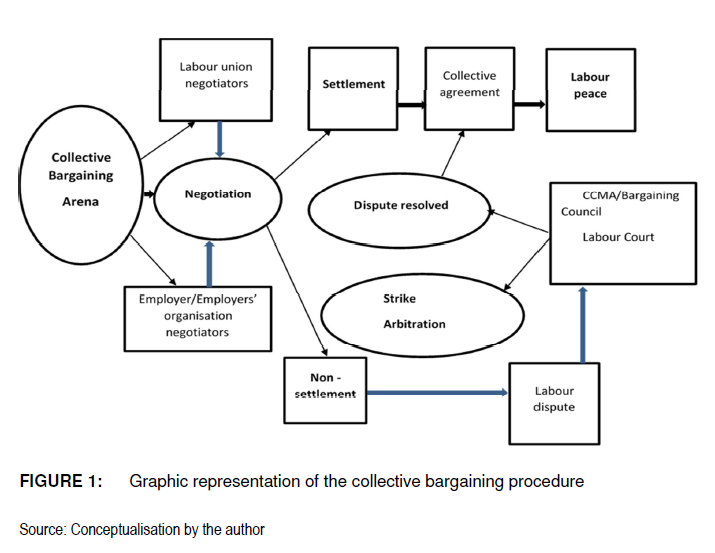
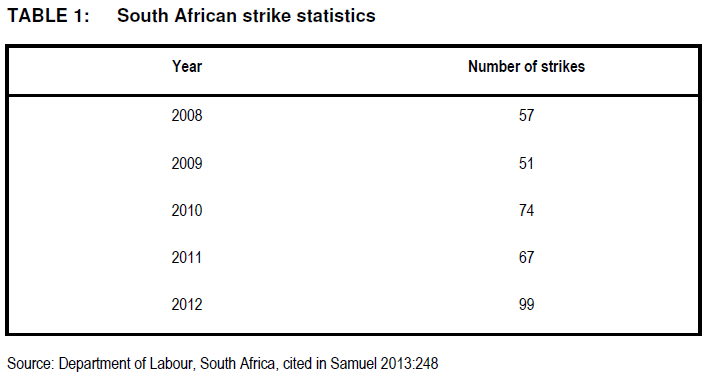
INTRODUCTION This article provides both historical and contemporary characteristics of strike actions that have defined the collective bargaining arena of South Africa's labour relations landscape. PROBLEM INVESTIGATED Contemporary labour legislation appear to overtly protect striking workers and their labour unions from accountability. The constitutionally established principle of 'voluntarism' in the collective bargaining practice prohibits government from intervening in protected strike actions even when such strikes become protracted, violent, and economically crippling. PURPOSE OF THE ARTICLE The article primarily reviews and analyses extant literature and existing legislation in South Africa that inhibits government's ability to intervene in protracted strikes. Based on the review and analysis of secondary data, informed propositions are formulated and presented. METHODOLOGY The conceptual article employs qualitative research strategy using secondary data analysis to arrive at informed propositions. PROPOSITIONS Firstly, there should be compulsory interest arbitration and pre-strike balloting. Secondly, there should be judicial review of the status of procedural strikes that have turned violent. Thirdly, there should be an uncompromising attitude by the courts when adjudicating cases that involve the dismissal of workers found guilty of misconduct during strikes, and labour unions should be held accountable for the violent conduct of their striking members. VALUE OF THE ARTICLE This article provides a theoretical basis upon which existing legislation guiding the conduct of strikes in South Africa could be reviewed by labour and legislative authorities.
collective bargaining; dispute resolution; interest arbitration; labour relations; strike actions
 Thumbnail