Managing work-related musculoskeletal disorders in the virtual office
Abstract
This article reports on a study conducted among virtual office employees (teleworkers) in South Africa. Technological developments drastically changed many traditional office scenarios into virtual offices. The correct use of information and communication technologies at alternative worksites is difficult to manage and to regulate. If ergonomics are not applied, it could result in health problems that could lead to costs for the employer. The problem pertains to the unknown prevalence and extent of work-related musculoskeletal disorders in the virtual office and the consequences thereof for managers of teleworkers. Although telework has been practiced internationally for several decades, it is a new concept in South Africa with only a few large organisations embarking on telework. An empirical study was conducted using two structured questionnaires (one for managers and one for teleworkers) to determine the categories and extent of work-related musculoskeletal disorders in the virtual office environment that could result in claims and legal actions against managers and owners of enterprises. The main findings indicated that managers do not recognise the importance of ergonomics and related illnesses with all its consequences and cost implications in the virtual office environment.
disorders; ergonomics; managers; safety; telework
1. INTRODUCTION
How many managers today know what musculoskeletal disorders are and how to manage such conditions with all its consequences in the virtual working environment? The incorrect usage of technology advances and the non-compliance with ergonomics could result in exposure to many risk factors. Such exposure could lead to work-related musculoskeletal disorders that affect muscles, disks, tendons, nerves, ligaments and joints. Also, the costs resulting from illnesses, disorders and compensation claims could put any organisation under unnecessary financial strain (Strydom 2014:9).
The Safety and Health Assessment and Research for Prevention (SHARP) program, implemented in the United States of America (USA), examined workers' compensation data in 2007. The aim was to demonstrate the impact of work-related musculoskeletal disorders in Washington State workplaces and it was found that work-related musculoskeletal disorders account for 27% of all accepted State Fund workers' compensation claims. These claims are 40% of all compensable claims and work-related musculoskeletal disorders account for 44% of the cost of State Fund workers' compensation claims (SHARP 2007:2).
In a follow up SHARP study on the prioritising of industries for prevention efforts, the Washington State Workers' Compensation Claims Data from 2002 to 2010 were analysed. This study examined which industry groups are at high risk for seven costly and common injury types and establishes a basis for efficient targeting of prevention resources. The seven groups identified were: work-related musculoskeletal disorders, fall from elevation, fall on same level, struck by or against, over-exertion, caught in, under or between, and motor vehicle related claims. For the purposes of this article the focus was on one of the seven identified groups, i.e. work-related musculoskeletal disorders. The SHARP study defined these disorders as sprain, strain, or overexertion, along with a combination of nature of injury, body part, and diagnosis codes indicating cumulative or repetitive injury (SHARP 2013:13).
The technical report issued by the SHARP program in the USA, indicates that there was very limited published research on occupational injury and illness surveillances by industry. There is limited data that characterises the severity of occupational injuries and illnesses related to direct workers compensation costs and work days lost (SHARP 2013:9).
The lack of published research is also evident in South Africa. The Compensation Commissioner's Guidelines for Health Practitioners and Employers to manage Work-related Upper Limb Disorders (2004:8) indicate that no statistics were available for South Africa regarding the impact of work-related upper limb disorders on health care and the economy.
The question leading to this research relates to work-related musculoskeletal disorders in the virtual office in South African businesses and institutes. The diffusion of virtual offices in South Africa is unknown and the extent of health and wellness aspects that could lead to actions against employers needs to be determined. The existence of policies and regulations and compliance with legislation that could serve as guidelines for teleworkers to perform optimally and effectively in e-environments, need to be established. The development of information and communication technologies drastically changed the traditional office scenario into a virtual office. Technology allows employees to work at a worksite that is situated outside of the traditional office, whilst maintaining their status as full-time employees (Hoffmann 2011:32). These technologies have made it easier to work anytime, anywhere, and anyplace.
Due to a general lack of publications and assistance to managers, especially managers of virtual employees, the information provided here regarding work-related musculoskeletal disorders with all its consequences and cost implications should be very useful to these managers. It would not only provide the managers with knowledge of risk factors and categories of musculoskeletal disorders, but would also provide them with the knowledge of the names and locations of the disorders and how ergonomic interventions could prevent these disorders. This knowledge could then be implemented for training purposes of the teleworkers. This could be of considerable value to those who are confronted with such injuries, related compensation claims and other legal actions in the workplace.
2. PROBLEM STATEMENT
The correct use of information and communication technologies at an alternative worksite is difficult to manage and to regulate. If ergonomics are not applied, it could result in health problems that could lead to costs for the employer. The problem pertains to the unknown prevalence and extent of work-related musculoskeletal disorders in the virtual office and the consequences thereof for managers of teleworkers.
3. MAIN AND SECONDARY OBJECTIVES
The main objective is to assist managers in determining the categories and extent of work-related musculoskeletal disorders in the virtual office environment that could result in claims and legal actions against managers, owners of enterprises and enterprises.
The secondary objectives are to:
■ determine the occupational risk factors that the teleworkers are exposed to at the alternative worksites,
■ identify the categories of work-related musculoskeletal disorders teleworkers experience,
■ identify the consequences/costs resulting from work-related musculoskeletal disorders reported,
■ provide managers with the background needed to identify and understand the names and locations of musculoskeletal disorders to deal with related claims and problems;
■ sensitise managers on the importance of ergonomics as a control measure to prevent the development of work-related musculoskeletal disorders.
4.1 The virtual office
The virtual office has been described as any alternative work site other than a traditional office, where incumbents can still do the work associated with a traditional office. Teleworkers are employees who can work at any alternative work site other than a corporate office whilst maintaining their current employment status with an employer (Hoffmann 2011:32). For the purpose of this article the terms telework and virtual office will be used interchangeably as these terms refer to the same concept.
The overall implementation of telework has been successfully accomplished and rapid escalation in telework has been reported in international telework reports (United States Office of Personnel Management 2011:4-5; 2012:8; Weber 2015:13-14). However, the e-environment is fairly new in South Africa where limited research has been done on the implementation of telework. The Compensation Commissioner's Guidelines for Health Practitioners and Employers to manage Work-related Upper Limb Disorders (2004:8) indicate that no statistics are available for South Africa regarding the impact of work-related upper limb disorders on health care and the economy. This is still the case today.
4.2
Work-related musculoskeletal disordersMusculoskeletal disorders are "injuries and disorders that affect the human body's movement or musculoskeletal system", such as the muscles, tendons, ligaments, nerves and discs (Middlesworth 2015:Internet). Such disorders create health challenges for individuals, health systems and social care systems all over the world. It is the most costly work-related European Health problem today, it affects about 45 million employees and it is a continuously increasing problem (Kinge, Knudsen, Skirbekk & Vollset 2015:2).
Research done by Leigh (2011:728-729) in the United States indicated that work-related musculoskeletal disorders are indeed a serious problem that could result in huge costs to employers. Leigh (2011:729) concluded that the medical and indirect costs of occupational injuries and illnesses are sizable and at least as large as the cost of cancer. Workers' compensation covers less than 25% of these costs, as all members of society share the burden. The contributions of work-related injuries and illnesses to the overall cost of medical care and ill health are greater than generally assumed. During the past decade in South Africa there had been an escalating trend of compensation claims paid to providers for occupational injuries and diseases, or for death resulting from such injuries or diseases (Ramutloa 2012:Internet). As this is the case, employers and managers need to realise their responsibilities in this matter.
4.3
Regulatory requirementsThe Occupational Health and Safety Act, 1993 (Republic of South Africa 2004) requires the employer to ensure that the workplace is free of hazardous substances, articles, equipment, and processes that may cause injury, damage or disease. The employer must inform employees of these dangers, how these may be prevented, how to work safely, and provide other protective measures for a safe workplace. It is, however, not expected of the employer to take sole responsibility for health and safety.
The Act is based on the principle that dangers in the workplace must be addressed by communication and cooperation between the employees and the employer. Both parties must pro-actively identify dangers and develop control measures to make the workplace safe. According to the South African Labour Guide (2009:2), the Occupational Health and Safety Act (1993) requires the employer to bring about and maintain, as far as reasonably practicable, a work environment that is safe and without risk to the health of the employees. Boshoff (2013:Internet) supports this view by describing the main objective of the Occupational Health and Safety Act (1993) as a pro-active attempt by government to provide and maintain a safe and healthy work environment to all.
4.4 Occupational risk factors causing work-related musculoskeletal disorders
A safe work environment implies deliberate attempts are made to prevent exposure of the teleworker to risk factors that may cause work-related musculoskeletal disorders. According to the Occupational Safety and Health Administration (2013:Internet) in the United Kingdom, jobs or working conditions presenting multiple risk factors will have a higher probability of causing a musculoskeletal disorder problem. The level of risk depends on the intensity, frequency, and duration of the exposure to these conditions and the individual's capacity to meet the force of other job demands that might be involved.
According to Kang (2015:150) "musculoskeletal disorders are caused by awkward posture, repetitive work, insufficient rest, temperature within working environment, long time work and hard labour". Middlesworth (2015:Internet) states that employees begin to fatigue when they are exposed to musculoskeletal disorder risk factors and distinguish between work-related (ergonomic) risk factors and individual-related risk factors.
According to Occupational Safety and Health Administration (2013:Internet) and Miller (2001:6-10), ergonomic risk factors for musculoskeletal disorders can be split into three general groups:
(1) Ergonomic stresses involve the interaction between the body and the physical environment. Work-related musculoskeletal disorders are caused or aggravated by exposure to the following conditions: repeating an action, uncomfortable working positions, using force, carrying out a task for a long period, poor working environment, underlying effects of the work and conditions and employee's individual differences.
(2) Psychosocial stresses refer to the effects of the organisational or social environment on the employee. Psychosocial factors include fear of losing a job; lack of job control (including workload and pace); lack of social support; and computer breakdowns.
(3) Physiological predisposition arises from the individual employee's physiology, for example: obesity, diabetes, rheumatoid and arthritis. Employees who start a new job are more prone to developing musculoskeletal disorders. One possible reason for this is that employees are not physically conditioned for the particular activities that the new job requires.
According to Ranney (2011:Internet) work can cause pain. He maintains that conditions at work (risk factors) increase the risk of an individual developing a chronic work-related musculoskeletal disorder. Most work-related musculoskeletal disorders develop over time and are caused either by the work itself or by the employees' working environment. Typically, musculoskeletal disorders affect the back, neck, shoulders and upper limbs and less often, they affect the lower limbs (The Compensation Commissioner's Guidelines for Health Practitioners and Employers to manage Work-related Upper Limb Disorders 2004:23; Occupational Safety and Health Administration 2013:Internet).
4.5 The role of ergonomics in regulatory compliance
The Occupational Safety and Health Administration (2013:Internet) maintains that ergonomics is the science of fitting workplace conditions and job demands to the capabilities of the working population. Effective and successful 'fits' assure high productivity, avoidance of illness and injury risks, and increased satisfaction among the workforce.
Although the scope of ergonomics is much broader, the term here refers to assessing those work-related factors that may pose a risk of musculoskeletal disorders and making recommendations to alleviate it. Employers are responsible for providing a safe and healthful workplace for their employees. In the workplace, the number and severity of work-related disorders, as well as their associated costs, can be substantially reduced by applying ergonomic principles. Implementing an ergonomic process has been shown to be effective in reducing the risk of developing work-related musculoskeletal disorders.
The above definition of ergonomics confirms the assumption that organisations need to have rules, regulations and policies in place to ensure the health and wellness of teleworkers.
Regulatory compliance to the Occupational Health and Safety Act could lead to the prevention of costly compensation claims and other legal actions against the organisation.
Ellison (2012:8-11) maintains that most telework guidelines do not include any information on how to ensure that the work environment at home is suitable from a safety perspective. She regards this as interesting since the employer is required to provide a place of employment free from recognised hazards according to the Occupational Safety and Health Administration's general duty clause.
5. METHODOLOGY
An inductive research approach was followed in this study. Descriptive research was employed to describe the telework profile of the participants, to identify the work-related musculoskeletal disorders and the ergonomics, regulations and policies that were applied.
A web-based survey using two questionnaires, one for teleworkers and one for managers of teleworkers, for data collection was conducted. The questionnaires, which consisted of structured and closed questions, were created with the aid of SurveyMonkey™ (2013:Internet).
The questionnaires for managers and teleworkers were similar but differed as follows: Regarding training, managers were asked to indicate the desired topics to be included in a telework training programme, whereas teleworkers were asked to indicate training they actually received. In both cases a list of options was provided.
Regarding the occupational risk factors, managers were requested to identify the factors teleworkers had been exposed to, whereas teleworkers were asked which occupational risk factors they had been exposed to. Only the managers were asked about cost implications of musculoskeletal disorders.
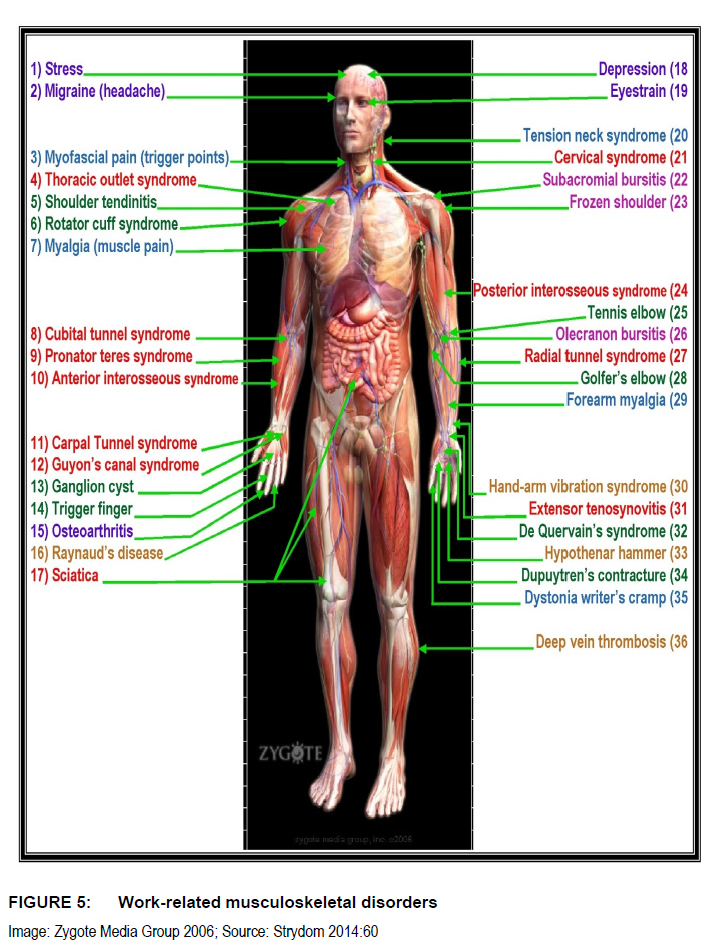
In order to meet the final objective of this study, an image was taken from Zygote Media Group (2006:Internet) and modified (see Figure 5) to indicate the locations of 36 work-related musculoskeletal disorders, categorised into various groups (nerve, tendon, bursa, circulatory, muscle and other) on the image.
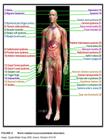
The musculoskeletal disorders were identified through an extensive literature review. The assistance of a medical doctor (Koekemoer 2013:Interview) was obtained to position these disorders on Figure 5 as indicated by the arrows.
Due to the non-probability sampling techniques used, there was no intent to generalise the results. Face-to-face, e-mail and telephonic communication was used to establish contact with participating organisations where the primary data were collected.
The population consisted of four identified teleworking organisations in South Africa, namely ABSA, Grundfos, Telkom and Unisa. These organisations are known to have flexible working arrangements in place and were therefore selected to participate. Only those employees who were involved in telework formed part of the target population. These organisations were purposively selected to participate by making use of convenience sampling.
A contact person from each organisation was requested to send an e-mail with the participant's information letter to all the managers/line managers/supervisors that managed teleworkers and employees who did telework. This letter contained the hyperlinks to the questionnaires. Three hundred and twenty-three questionnaires were distributed to teleworkers and managers of teleworkers, and 163 were completed and received back: 39 from managers and 124 from teleworkers.
Ethical clearance (Ref #: 2013_CEMS_008{2}) was obtained from the Research Ethics Review Committee of the College of Economic and Management Sciences at Unisa. The prescribed application documents were reviewed in compliance with the Unisa Policy on Research Ethics. Permission from the participating organisations was obtained during this process.
6. FINDINGS
Although most questions were posed to both managers and teleworkers, certain questions were posed only to one or the other group due to their relevancy. The results of the managers will be discussed first to show their assessment and position as managers of the issues involved. Thereafter the results of the teleworkers will be discussed.
6.1 Managers of teleworkers
Of the 56 managers known to be managing teleworkers in ABSA, Grundfos and Telkom, 39 (73%) completed the questionnaire. It was not possible to determine how many of the participants from Unisa were managers as there was no formal telework arrangement in place. They were therefore all treated as teleworkers. None of the participants were in top management positions. Most of participants, 65%, were from middle management, followed by supervisors at 21% and the remaining 12% were line managers.
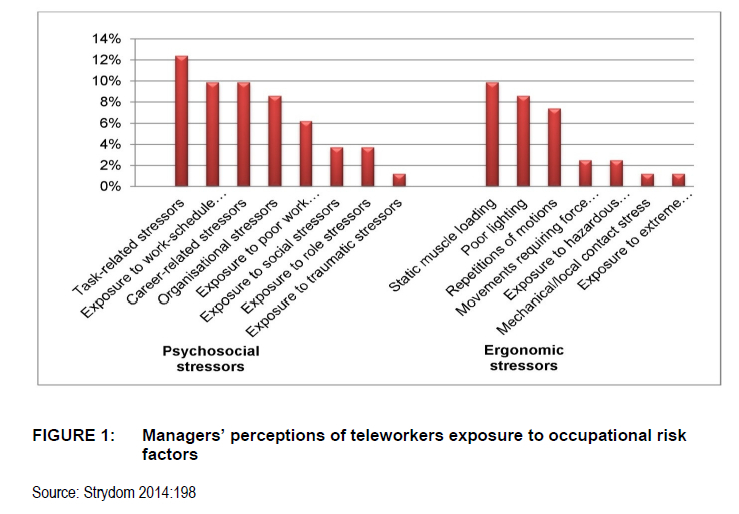
The four organisations represented the industry sectors as follows: most of participants were from the transport, storage and communication sector, represented by Telkom, followed by finance, real estate and business services, represented by ABSA, and then the manufacturing sector, represented by Grundfos, and education, represented by Unisa.The managers were requested to identify occupational risk factors to which teleworkers have been exposed to while teleworking. A list was provided and the managers had to choose from the list. The responses of the participants are reflected in Figure 1.
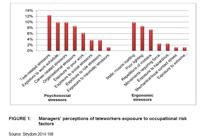
For interpretation purposes the occupational risk factors were categorised into three groups. Physiological predisposition does not appear in the figure, as it only consists of one factor with a 2.5% result. From this categorisation and the exposure rates as indicated, it is evident that the managers rated exposure to psychosocial stressors higher than exposure to ergonomic stressors.
This response from the managers was in contrast with their response to another question on how managers regulate their teleworkers compliance to the acts and policies applicable to teleworkers. The response indicated that only 10% of managers relied on scheduled visits to the alternative work sites. The largest number of managers (75%) indicated that their organisations relied on official policies and agreements with teleworkers to regulate teleworkers compliance with the acts and policies applicable to teleworkers. Some managers (15%) indicated that both these methods were applied to ensure compliance. If only 10% of managers visited their teleworker's home office, it is no surprise that the managers rated the exposure to ergonomic stresses lower. The majority of managers did not "see" the alternative worksite to be able to make judgement on the implementation of ergonomics or exposure to the ergonomic stressors. The managers probably judged the exposure to psychosocial stressors higher as it resorts on a more cognitive level. The response of the managers confirms a lack of knowledge on ergonomic stressors and the implications of non-application of ergonomics.
While the majority of the managers (91.3%) indicated that no work-related musculoskeletal disorders were reported, only 8.7% indicated that disorders were reported by the teleworkers. The non-reporting of disorders supports the assumption that teleworkers lack knowledge on work-related musculoskeletal disorders. Taken the relative short time that telework has been implemented in South Africa and the notion that these disorders develop over a period of exposure, teleworkers may not have developed disorders yet. This strengthens the necessity to develop a tool (as proposed with Figure 5) that could be used to train teleworkers on the various kinds and locations of musculoskeletal disorders.
The managers were also given a list of possible consequences and costs for the organisation resulting from the disorders that were reported and asked to select those relevant to their organisation. A large group of these managers, 70.4% indicated that the consequences and costs due to the disorders reported were none. Medical expenses and workdays lost were selected by 7.4% of the managers, while disruption in productivity, low quality work, paid leave and employee's compensation premiums were selected by 3.7% of them. They also indicated that there were no costs involved for replacement of workers, training, direct compensation or litigation processes due to disorders reported by teleworkers.
This response of the managers that there were no consequences and costs involved correlates with the fact that only 8.7% of managers indicated that there were disorders reported. If teleworkers were trained on the various categories of work-related musculoskeletal disorders, they would have been equipped to identify and realise that if there were discomfort and pain, it could be work-related.
The actions taken by an organisation (or the managers) if a teleworker lodged a compensation fund claim due to disorders suffered was also investigated. Only 9.5% indicated that the organisation provided support and guidance and improved the work environment of the teleworker. A further 14.3% indicated that the organisation put measures in place to prevent similar claims. On the negative side there were managers that indicated that they discouraged teleworkers to lodge claims (9.5%) and 4.8% penalised the teleworker. Although there were some positive responses, a few managers (4.8%) indicated that no support, improvement, prevention or discouragement was given to teleworkers that lodged compensation fund claims. If teleworkers were sensitised about their right to be working in an ergonomically safe environment, there would probably be more compensations claims as well as an improvement on the actions taken by an organisation. Hence the need for training on disorders, the right to claim compensation and to have an improved safe working site.
6.2 Teleworker responses
Out of a population of 267 teleworkers, 124 (46%) completed the questionnaire. The participants of the four selected organisations were represented in the industry sectors as follows: Unisa (education), ABSA (finance, real estate and business services), Telkom (transport, storage and communication) and Grundfos (manufacturing). The most popular telework type among the employees (as with the managers) was found to be the home office environment, with 69% of the participants selecting this option. The next most popular options selected, with 8% each, were a mobile office/non-territorial office/unassigned office/alternative workspace/workplace/worksite and flexitime/flexiwork/flexiplace. The least popular telework arrangement was hoteling (2%). Organisations relied on the teleworkers to provide the facilities that enabled them to do telework.
6.2.1 Occupational risk factors
Participants were requested to indicate their exposure to a number of occupational risk factors while teleworking.
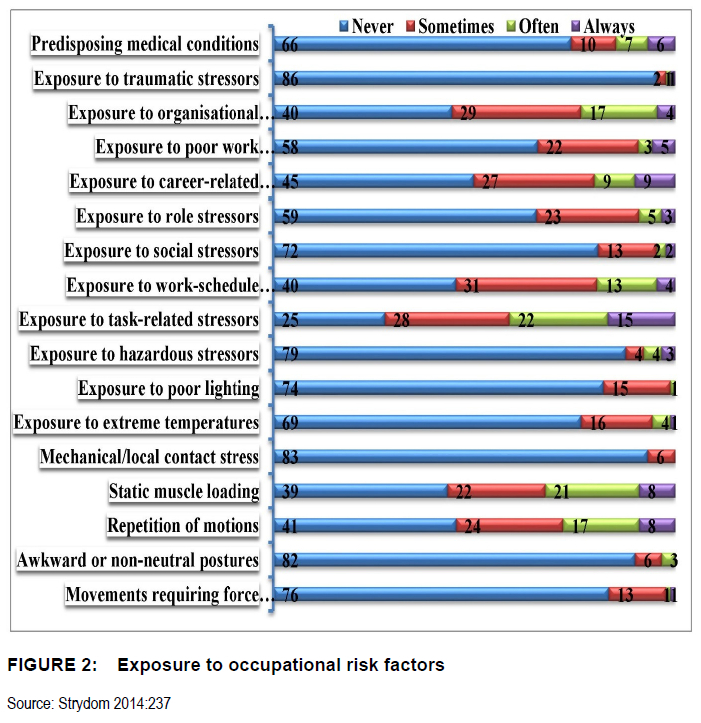
The participants had to indicate the occurrence of their exposure by choosing from a four-point Likert scale of never, sometimes, often and always as reflected in Figure 2.
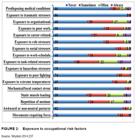
Figure 2 indicates the number of teleworkers (not percentage) choosing each of the four options. As with the managers, the risk factors were categorised into the three groups of ergonomic stressors, psychosocial stressors and physiological predisposition. The largest number of the teleworkers indicated that they were never exposed to the following ergonomic stressors: movements requiring force exertion (83.5%); mechanical/local contact stress (93.3%); poor lighting (82.2%); exposure to extreme temperatures (76.7%) and exposure to hazardous stressors (87.8%).
The teleworkers indicated that they were sometimes exposed to task-related stressors (31.1%) and that they were never exposed to work-schedule stressors (45.5%), career-related stressors (50%), organisational stressors (44.4%), exposure to poor work organisation (65.9%), exposure to social stressors (80.9%), exposure to role stressor (65.6%), and exposure to traumatic stressors (95.5%). Finally they indicated that they were never exposed to predisposing medical conditions (74.2%). The teleworkers responses correlate with that of the managers.
When teleworkers were asked to indicate the training received on policies and guidelines, the only option that reflected a positive response (53.5%) was training on telework policies and guidelines while 43.5% of the teleworkers did not receive any training. Training received on the Occupational Health and Safety Act (No 85 of 1993) was indicated as 40.6% while no training received was indicated as 59.4%. Ergonomics policies and guidelines received the lowest indication of training with 25.3% reported while 74.7% indicated no ergonomics training. This lack of training on ergonomic policies and guidelines correlates with the non-identification of exposure to ergonomic stressors as indicated above by the teleworkers.
6.2.2 Ergonomic 'intervention
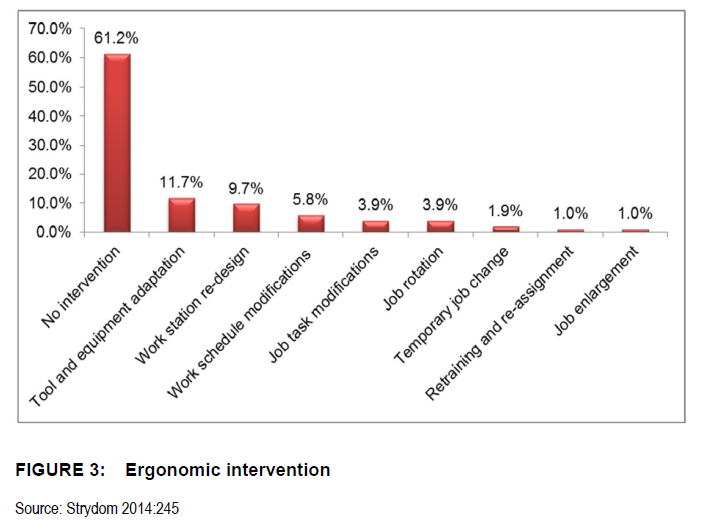
In this section, participants were requested to indicate whether suffering from disorders led to any ergonomic interventions. The responses obtained from the participants are indicated in Figure 3.
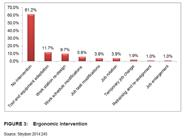
The largest percentage of the teleworkers, 61.2%, indicated that suffering from a work-related musculoskeletal disorder did not lead to any ergonomic intervention. The most popular intervention was tool and equipment adaptation (11.7%) followed by work station redesign (9.7%) and work schedule modifications (5.8%). These changes were made to the equipment and furniture. There were no mentionable interventions made to the job itself. This response corresponds with the notion that ergonomics was not considered to be of high importance to ensure that teleworkers stay healthy while working at an alternative work site.
6.2.3 Work-related musculoskeletal disorders reported
Figure 5 that illustrated the most common work-related musculoskeletal disorders affecting the nerves, tendons, bursae, muscles, blood vessels and spinal discs, was provided to the participants. The participants were asked to indicate if, and how many incidents of work-related musculoskeletal disorders were reported to the employer in the past year.
The majority of teleworkers, 90.2%, did not report any incidents of work-related musculoskeletal disorders to their employers/managers in the past year. Only 9.8% teleworkers indicated that they reported incidents. These teleworkers indicated the number of work-related incidents reported to their employers as one and two disorders (28.6%) each; while 14.3% reported from four to 20 disorders.
6.2.4 Costs and workdays lost due to work-related musculoskeletal disorders
Participants were asked to indicate the total costs per year for medical intervention due to work-related musculoskeletal disorders. The median costs per year per disorder are reflected in Table 1.
Teleworkers reported the disorders with the highest median cost per year as depression and eye strain at R2 000 each followed by tension neck syndrome at a cost of R950, shoulder tendinitis costing R400, stress at R350 and migraine at R120.
Teleworkers suffering from work-related musculoskeletal disorders were requested to indicate the average workdays lost annually due to medical intervention. This section was answered by 29 teleworkers with a high total response count of 202.
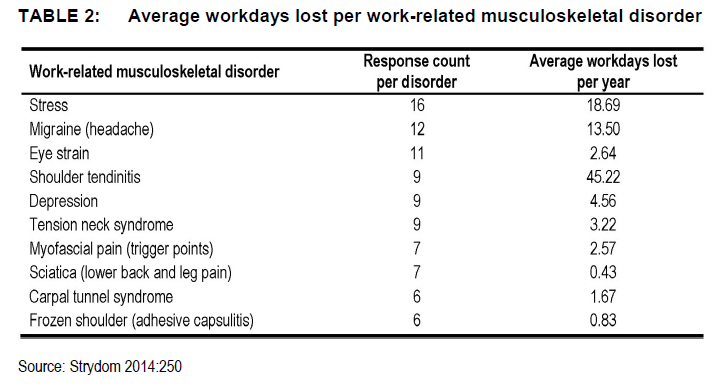
Table 2 provides the average workdays lost as indicated by teleworkers who suffered from work-related musculoskeletal disorders (response counts). The table indicates only ten work-related musculoskeletal disorders that received the highest number of response counts and the average workdays lost annually as indicated by the 29 teleworkers. As this was a multiple response item, teleworkers could select more than one disorder.
Stress was indicated by the largest number of the 29 teleworkers (n = 16) as the disorder that teleworkers suffered from, followed by migraine (n = 12) and eye strain (n = 11). Shoulder tendinitis, depression and tension neck syndrome has each been selected by nine of the teleworkers followed by myofascial pain and sciatica (n = 7) each. Carpal tunnel syndrome and frozen shoulder were selected by six teleworkers each. Shoulder tendinitis has been indicated by nine of the 29 teleworkers to be the disorder that resulted in the highest average workdays lost with a total of 45.2 workdays lost. Stress followed with 18.7 workdays lost (n = 16) and migraine with 13.5 workdays lost (n = 12). Depression caused 4.6 workdays lost (n = 9) followed by tension neck syndrome 3.2 workdays lost (n = 9); followed by eye strain (n = 11) and myofascial pain (n = 7) each with 2.6 workdays lost.
6.2.5 Compensation claims lodged
Participants were asked to indicate if they lodged compensations claims and also to provide reasons for not lodging claims when they were supposed to. They were also requested to indicate the outcome if compensation claims were lodged.
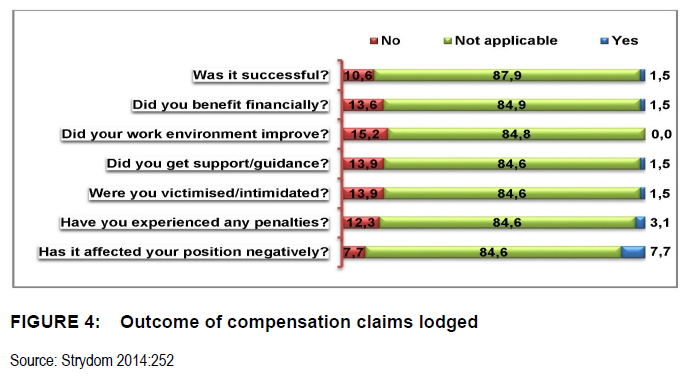
Figure 4 indicates the response percentages of teleworkers to each option provided.
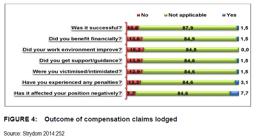
The majority of teleworkers (84.6% - 87.9%) indicated that no compensation claims were lodged. Those who did lodge a compensation claim indicated that:
■ it was not successful (10.6%); it was successful (1.5%);
■ there were no financial benefits (13.6%); there were financial benefits (1.5%);
■ the work environment did not improve (15.2%);
■ no support/guidance from their organisation were received (13.8%), received support from the organisation (1.5%).
However, those teleworkers who did lodge a compensation claim indicated that there was no victimisation (13.8%) while 1.5% indicated that victimisation was present. Some teleworkers did not receive any penalties from their organisations (12.3%) while 3.1% were penalised. Some teleworkers (7.7%) indicated that lodging a compensation claim has affected their position at work negatively while another 7.7% indicated that it did not have a negative effect on their work.
The last section was an open-ended question that requested participants to indicate reasons for not lodging a compensation claim with the Compensation Commissioner according to the Compensation for Occupational Injuries and Diseases Act (No 130 of 1993). The reasons provided were grouped according to themes in order to interpret the data quantitatively.
The theme ignorance refers to the reasons that indicated a lack of knowledge or facts about a situation or a particular subject. The lack of knowledge also implied that the teleworkers did not consider it to lodge a compensation claim for work-related musculoskeletal disorders. A total of 29.2% of the teleworkers indicated that they did not know that they could lodge compensation claims because they did not know that the Act was applicable or did not consider lodging a claim due to a lack of knowledge on the disorders.
Reluctance refers to an unwillingness or lack of enthusiasm to do something. A number of teleworkers (20.8%) indicated that they were unwilling to lodge compensation claims because they did not think it will benefit them at all or, that it would be too much trouble to go through the process while some of the teleworkers simply accepted the disorders as part of the job and therefore were unwilling to lodge compensation claims.
The theme discontentment refers to the belief that things will not be successful, or to the unhappy feeling that a person has when dissatisfied with something. Some teleworkers (12.5%) indicated that although they lodged compensation claims, nothing resulted from it and therefore they were mildly unhappy, dissatisfied and disappointed with their employers.
The insignificance theme refers to those teleworkers (16.7%) who thought that their disorders were minor, not that serious or already covered by their medical aid funds.
The ungrouped theme represents 20.8% of the teleworkers that indicated that it was not applicable to them or that they did not want to provide a reason for not lodging a compensation claim.
7. DISCUSSION
Taken the research results into consideration, the following conclusions were reached:
7.1 Risk factors and compliance with ergonomics
From the categorisation and the exposure rates as indicated in Figure 2, it became evident that the managers rated exposure to psychosocial stressors higher than exposure to ergonomic stressors. This emphasises again that the ergonomic factors (interaction between the teleworkers and the physical environment) were not recognised or realised to be critically important to prevent the development of work-related musculoskeletal disorders.
This is an alarming observation since the teleworker's work site and working habits are not in the normal office environment where it is visible on a daily basis to the managers. When the monitoring of teleworkers was reported on, it was also indicated that visits to the alternative work site was not the preferred method used.
Psychosocial stressors were also considered more important; it was evidenced where managers had to indicate which organisational policies/procedures and government Acts were applied in their organisations and the Ergonomics policy received the lowest percentage of 5.2%. Where managers had to indicate what should be included in a training program, ergonomic policies and guidelines (16.2%) was the third last to be included and regarded as important in training programmes.
Physiological predisposition was not regarded as a problem in terms of exposure. Another alarming indication of the lack of knowledge and training to managers on occupational risk factors (especially the physical ergonomics) is that 8.9% of managers indicated that none of their teleworkers were exposed to occupational risk factors. It was even questionable whether the managers knew the ergonomic vocabulary used.
7.2 Work-related musculoskeletal disorders and ergonomics
The non-reporting of work-related musculoskeletal disorders could be attributed to ignorance and a lack of knowledge by the teleworkers. The development of work-related musculoskeletal disorders is related to the duration and intensity of exposure to risk factors. Taking into account that telework was not practised for a very long period (up to 5 years) it could also be the reason why disorders were not reported. Teleworkers might simply not suffer from work-related musculoskeletal disorders after a relatively short period of teleworking. The 8.7% that reported disorders may be ascribed to the lack of knowledge on the procedure to report disorders or to a lack of knowledge on work-related disorders as training to teleworkers were indicated to be low.
It could be considered alarming that 70.4% of the managers whose teleworkers (8.7%) reported disorders indicated that no consequences and costs resulted from disorders reported. Those teleworkers who did report disorders (8.7%) would have medical expenses (7.4%) and the organisations would lose workdays (7.4%) due to the teleworkers' absence. A large number of managers (91.3%) indicated that no work-related musculoskeletal disorders were reported. These statistics may look differently after a longer period of telework involvement as it is a known fact that disorders develop and increase the longer an employee is exposed to the risk factors.
Although a large group of the teleworkers indicated that they were never exposed to occupational risk factors and there appears to be no problem, organisations seem to be significantly negligent in terms of all aspects of ergonomics. Ergonomic interventions could ensure that teleworkers remain healthy in the alternative work site. It creates a concern that the largest number of teleworkers (62.1%) indicated that suffering from a work-related musculoskeletal disorder did not lead to any ergonomic intervention. The assumption here again is that teleworkers probably did not realise that they were suffering from work-related musculoskeletal disorders. They did not know that they should or could report disorders and, they also did not know what the procedures were to report disorders and to claim compensation.
A total number of 34 teleworkers reported 225 response counts of work-related musculoskeletal disorders. This is confirmation that teleworkers did suffer from work-related musculoskeletal disorders. Eye strain attracted the highest response count (n = 17) of teleworkers, followed by migraine (n = 13), then stress, tension neck syndrome and shoulder tendinitis (n = 12). Depression (n = 11) and sciatica (n = 9) were also indicated as disorders that teleworkers suffered from.
7.3 Managing of work-related musculoskeletal disorders
From the data on cost and workdays lost per work-related musculoskeletal disorders per year, it is evident that organisations cannot afford not to take notice of the negative consequences of work-related musculoskeletal disorders. If telework is going to be implemented on a larger scale in South Africa, it could be unfavourable for productivity if teleworkers are affected negatively by disorders. Organisations must be made aware of the important role that ergonomics should play with regard to health and wellness in the e-environment.
Managing the risk of disorders effectively can result in business benefits for the employer such as increased productivity, fewer days lost to sick leave, lower staff replacement and retraining costs, reduced risk of litigation, lower insurance and compensation costs. Figure 5 was created to assist managers by providing them with an image to identify, give them an indication of the problem and recognise the names and locations of musculoskeletal disorders when dealing with related problems and claims. This image can also be used for training employees and safety representatives.
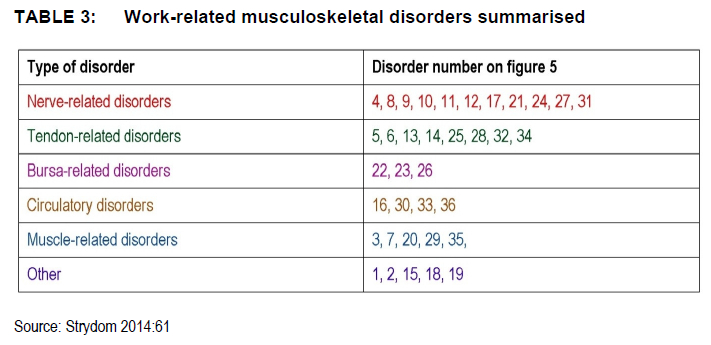
Training may help and encourage employees to identify and report any work-related musculoskeletal disorders. It may serve as a tool to design the job to fit the worker by applying ergonomics that would prevent the development of disorders. Figure 5 shows the location of 36 work-related musculoskeletal disorders, categorised into various groups (nerve, tendon, bursa, circulatory, muscle and other) which affect the hand, wrist, elbow, shoulders, neck and back of employees.
These disorders are caused by work-related conditions such as repetitive and forceful motions, uncomfortable working postures, repetitive work, poor working environment, organisation factors (e.g. temperature, lighting and work pressure, job demands, work breaks), individual differences and susceptibility and lastly non-application of ergonomics principles. These disorders are difficult to diagnose and result in sick leave, low productivity and even legal claims against the employers.
Table 3 provides a summary of the categories of work-related musculoskeletal disorders as illustrated in Figure 5.
8. CONCLUSION
The findings indicated that although the policies, regulations and legislation existed, organisations did not diligently comply with it. The lack of training for the managers and teleworkers on the applicable policies and legislation caused concern. The application of ergonomic specifications on the use of equipment, furniture and services at the preferred home office, is mainly done to avoid ergonomic risk factors that may lead to the development of work-related musculoskeletal disorders.
Although teleworkers suffered from disorders, there was a lack of knowledge on ergonomic interventions and on the processes to claim compensation. Unless organisations implement health and safety strategies and policies, the use of information administration technologies could lead to disorders, absenteeism, stress, depression, lost workdays, low productivity, high employee turnover and costly legal claims.
Managers should not only be aware of ergonomic risk factors, but be familiar with and manage the existence and consequences of musculoskeletal disorders.
REFERENCES
4. LITERATURE REVIEW
-
BOSHOFF T. 2013. Health and safety adds value to business. [Internet: http://www.labourguide.co.za/health-and-safety/378-health-and-safety-adds-value-to-business; downloaded on 8 July 2013.
» http://www.labourguide.co.za/health-and-safety/378-health-and-safety-adds-value-to-business -
]
» http://www.givengain.com/cause_data/images/947/WRULDS_-_Guidelines_of_Compensation_Commissioner_07_2004.Pdf - ]
-
ELLISON JK. 2012. Ergonomics for telecommuters and other remote workers. Environmental and occupational risk management consulting. [Internet: http://www.asse.org/professionalsafety/docs/Jessica-Ellison-Article.pdf;downloaded on 7 August 2014.
» http://www.asse.org/professionalsafety/docs/Jessica-Ellison-Article.pdf;downloaded - ]
-
)
» http://onlinelibrary.wiley.com/doi/10.1111/j.1468-0009.2011.00648.x/abstract - KANG HK. 2015. Study on job stress and status of pain by body part according to work career of dental hygienists. Advanced Science and Technology Letters 88:149-153.
- KOEKEMOER HT. 2013. Positioning of work-related musculoskeletal disorders. (Interview: 4 January, Pretoria; Dr Koekemoer is practising as medical doctor in Prince Albert; email: heinrichkoekemoer@gmail.com.
-
)
» http://www1.chr.up.ac.za/undp/domestic/docs/legislation_31.pdf -
]
» http://lni.wa.gov/Safety/Research/Files/bd_3F.pdf -
MIDDLESWORTH M. 2015. The definition and causes of musculoskeletal disorders: ergonomics plus. [Internet: http://ergo-plus.com/musculoskeletal-disorders-msd/; downloaded on 1 October 2015.
» http://ergo-plus.com/musculoskeletal-disorders-msd/ - ]
-
MILLER H. 2001. Musculoskeletal disorders in the U.S. office workforce. [Internet: http://www.jamarshall.com/images/wp_Musculoskeletal.pdf; downloaded on 18 February 2010.
» http://www.jamarshall.com/images/wp_Musculoskeletal.pdf -
]
» http://www.telework.gov/Reports_and_Studies/Annual_Reports/2010teleworkreport.pdf -
OCCUPATIONAL SAFETY AND HEALTH ADMINISTRATION. 2013. Safety and health topics: ergonomics. [Internet: http://www.osha.gov/SLTC/ergonomics/; downloaded on 9 September 2013.
» http://www.osha.gov/SLTC/ergonomics/ -
]
» https://www.google.co.za/webhp?sourceid=navclient&ie=UTF-8&rlz=1T4SKPT_nZA436ZA437#q=Weber+Telework:+a+successful+business+strategy+ensure+business+continuity -
RAMUTLOA L. 2012. DoL host stakeholders on the state of occupational health and safety (OHS) in South Africa. [Internet: http://www.labour.gov.za/DOL/media-desk/media-statements/2012/dol-host-stakeholders-on-the-state-of-occupational-health-and-safety-ohs-in-south-africa; downloaded on 1 October 2015.
» http://www.labour.gov.za/DOL/media-desk/media-statements/2012/dol-host-stakeholders-on-the-state-of-occupational-health-and-safety-ohs-in-south-africa - ]
-
RANNEY D. 2011. Pain in the workplace. [Internet: http://jubilation.uwaterloo.ca/~ranney/workpain.html; downloaded on 20 July 2011.
» http://jubilation.uwaterloo.ca/~ranney/workpain.html - ]
- ]
-
SAFETY AND HEALTH ASSESSMENT AND RESEARCH FOR PREVENTION. 2007. Injured at work: what workers' compensation data reveal about work-related musculoskeletal disorders. [Internet: http://www.lni.wa.gov/Safety/Research/Files/InjuredAtWork.pdf; downloaded on 23 November 2009.] (Summary of Technical Report number 40-10b-2007.
» http://www.lni.wa.gov/Safety/Research/Files/InjuredAtWork.pdf - )
- )
-
SOUTH AFRICAN LABOUR GUIDE. 2009. What every worker and employer should know about health and safety in the workplace. [Internet: http://www.labour.gov.za/DOL/downloadsdocuments/useful-documents/occupational-health-and-safety/Useful%20Document%20-%20OHS%20%20What%20every%20 worker%20should%20know.pdf; downloaded on 1 August 2013.
» http://www.labour.gov.za/DOL/downloadsdocuments/useful-documents/occupational-health-and-safety/Useful%20Document%20-%20OHS%20%20What%20every%20 worker%20should%20know.pdf - ]
- SHARP see SAFETY AND HEALTH ASSESSMENT AND RESEARCH FOR PREVENTION
- )
-
SURVEYMONKEYTM. 2013. Free online survey and questionnaire design and management software package. [Internet: http://www.surveymonkey.net/MySurveys.aspx; downloaded on 1 February 2013.
» http://www.surveymonkey.net/MySurveys.aspx - ]
- )
-
UNITED STATES OFFICE OF PERSONNEL MANAGEMENT. 2012. Status of telework in the Federal Government. [Internet: http://www.telework.gov/Reports_and_Studies/Annual_Reports/2012teleworkreport.pdf; downloaded on 24 July 2013.] (Report to the Congress.
» http://www.telework.gov/Reports_and_Studies/Annual_Reports/2012teleworkreport.pdf - )
- )
-
ZYGOTE MEDIA GROUP. 2006. 3D male human anatomy. [Internet: http://www.flickr.com/photos/gerwaz/4473612841/; downloaded on 12 September 2013.] (Image.
» http://www.flickr.com/photos/gerwaz/4473612841/