Risk factors threatening the sustainability of crop farming in South Africa
Abstract
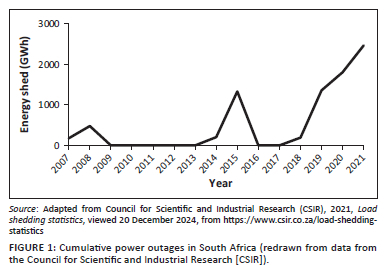
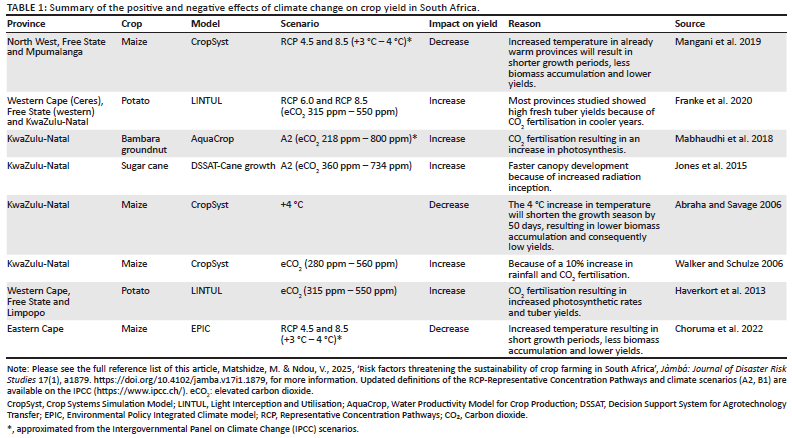
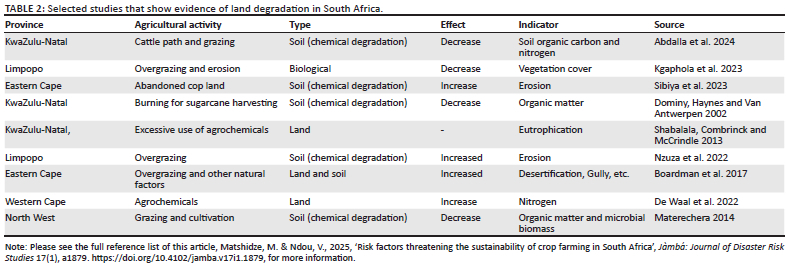
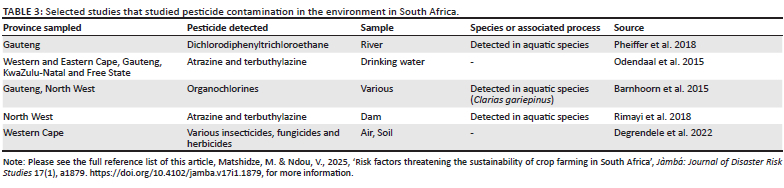
Agriculture is one of the main pillars of the economy in Southern Africa. According to the World Bank, the poverty rate in South Africa at the national level is 55%. Therefore, commercial farming is essential for economic development and poverty alleviation. However, certain factors pose a threat to the long-term viability of commercial crop farming. The aim of this review was to evaluate risk factors threatening commercial agriculture in South Africa. Several anthropogenic and environmental factors, such as climate change, pesticide contamination, land degradation, pests and diseases, were identified as risk factors threatening the sustainability of commercial crop farming in South Africa. Political factors such as the energy crisis and land reform were also identified as areas of great concern. A shift to regenerative agriculture is needed to ensure the sustainability of commercial agriculture because it is presently unsustainable. CONTRIBUTION: Agriculture has a crucial role in South Africa's economy, and the threats identified in this study need to be prioritised to help preserve farmers' livelihoods and the overall economy by reducing financial risks, reducing unemployment and maintaining a consistent supply of agricultural exports
energy; land reform; land degradation; pesticide contamination; sustainable agriculture
 Thumbnail