Disaster risk reduction communication during the Mount Semeru eruption in East Java, Indonesia
Abstract
This research is focused on disaster risk communication management and local community engagement during the Mount Semeru eruption in 2021. The problem faced by the East Java regional government, regency governments and the regional disaster management and mitigation agency (Badan Nasional Penanggulangan Bencana [BNPBD]) is the unavailability of communication protocols and strategies in the event of a disaster and mitigation coordination for follow-up programmes. In communicating disaster risk, the government is considered most appropriate as a risk communicator. CONTRIBUTION: The study examines the risk communication process carried out by the government and the risk messages it conveys and explores the perceptions of stakeholders. Furthermore, it highlights the importance of risk communication for disaster mitigation and as an early warning system and focuses on the role of community involvement in disaster mitigation efforts. The method used is descriptive qualitative with data collection techniques through a review of government documents, literature studies, direct observation by observing government programmes and in-depth interviews with 35 selected informants who live in disaster-prone areas in Lumajang and Jember regencies. The study suggests that, during the Mount Semeru eruptions, both the central and regional governments must carry out risk communication management in handling and responding to the public's need for information related to disasters.
Semeru eruption; risk communication; disaster; community engagement; Mount Semeru; East Java; Indonesia
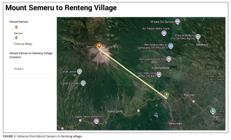 Thumbnail
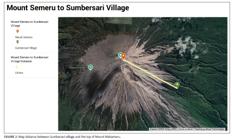 Thumbnail
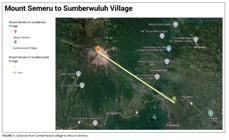 Thumbnail
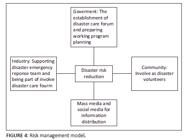 Thumbnail