Twenty years of community-based disaster risk reduction experience from a dryland village in Indonesia
Abstract
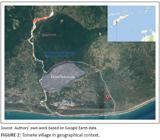
Academics and practitioners often argue indirectly that all the roads to community resilience should be paved with community-based disaster risk reduction (CBDRR) approach. Community-based approach to resilience building has been a discursive material that appeals many disaster management players including international donors, non-governmental organisations and high-level government officials as well as politicians. Some researchers argue that CBDRR is the foundation of disaster risk governance. Unfortunately, globally, there is lack of studies on long-term and real-world experience of CBDRR. This article addresses this research gap by providing insights of CBDRR activities from a village in eastern Indonesia based on long-term studies. The adoption of CBDRR approach in Indonesia took place in the late 1990s and the authors have been part of the early adopters of the framework. Using longitudinal participant observations, this research combined qualitative and quantitative data collected during 1998-2017. It shows the rise and fall of a community responding to disaster risks over time. The article further highlights stories of frustrations and celebrations that surround CBDRR activities implemented by one local community in a dryland village in eastern Indonesia.
 Thumbnail
 Thumbnail
 Thumbnail