Application of livelihood vulnerability index to assess risks for farmers in the Sukoharjo Regency and Klaten Regency, Indonesia
Abstract
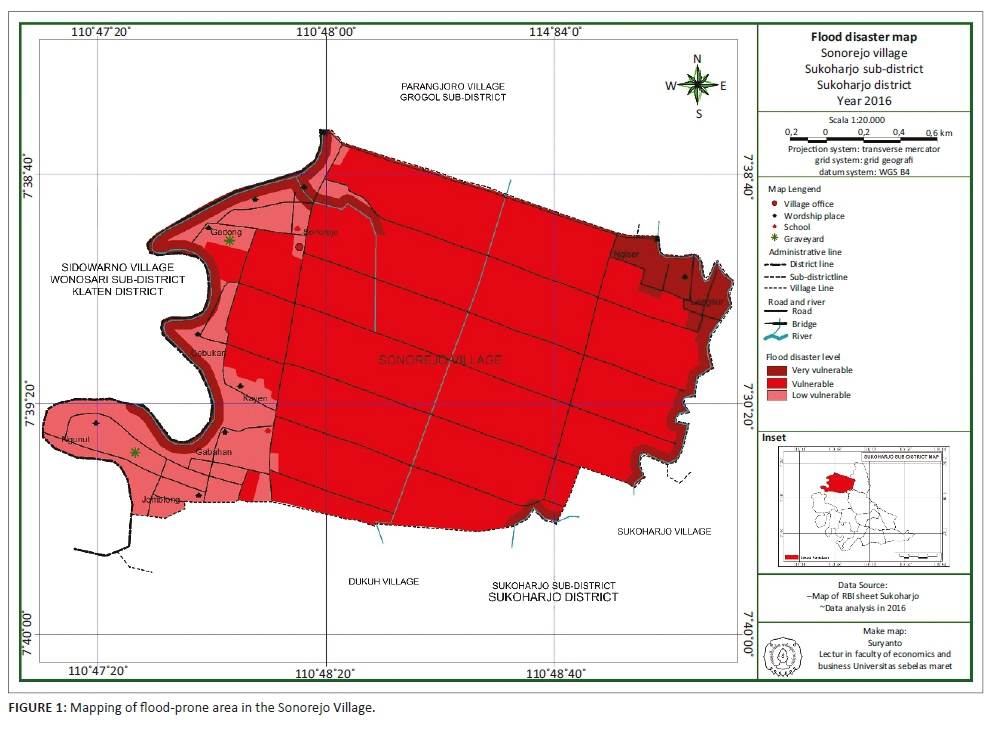
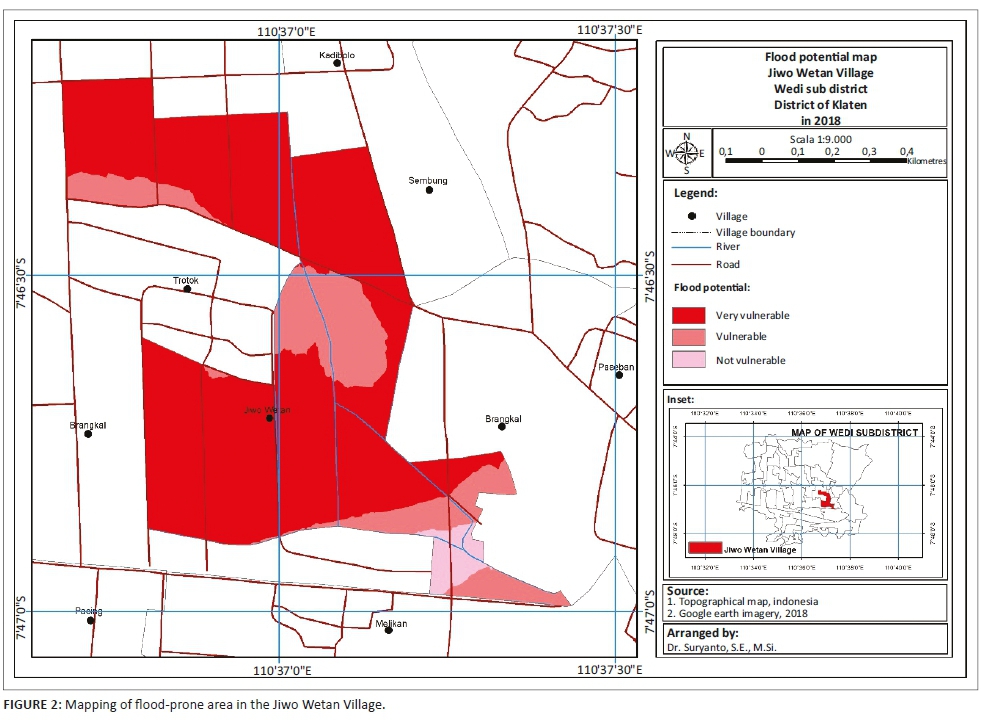
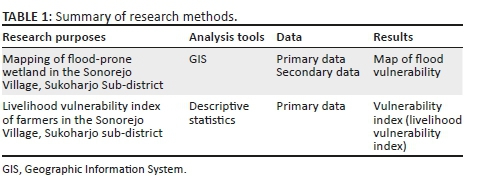
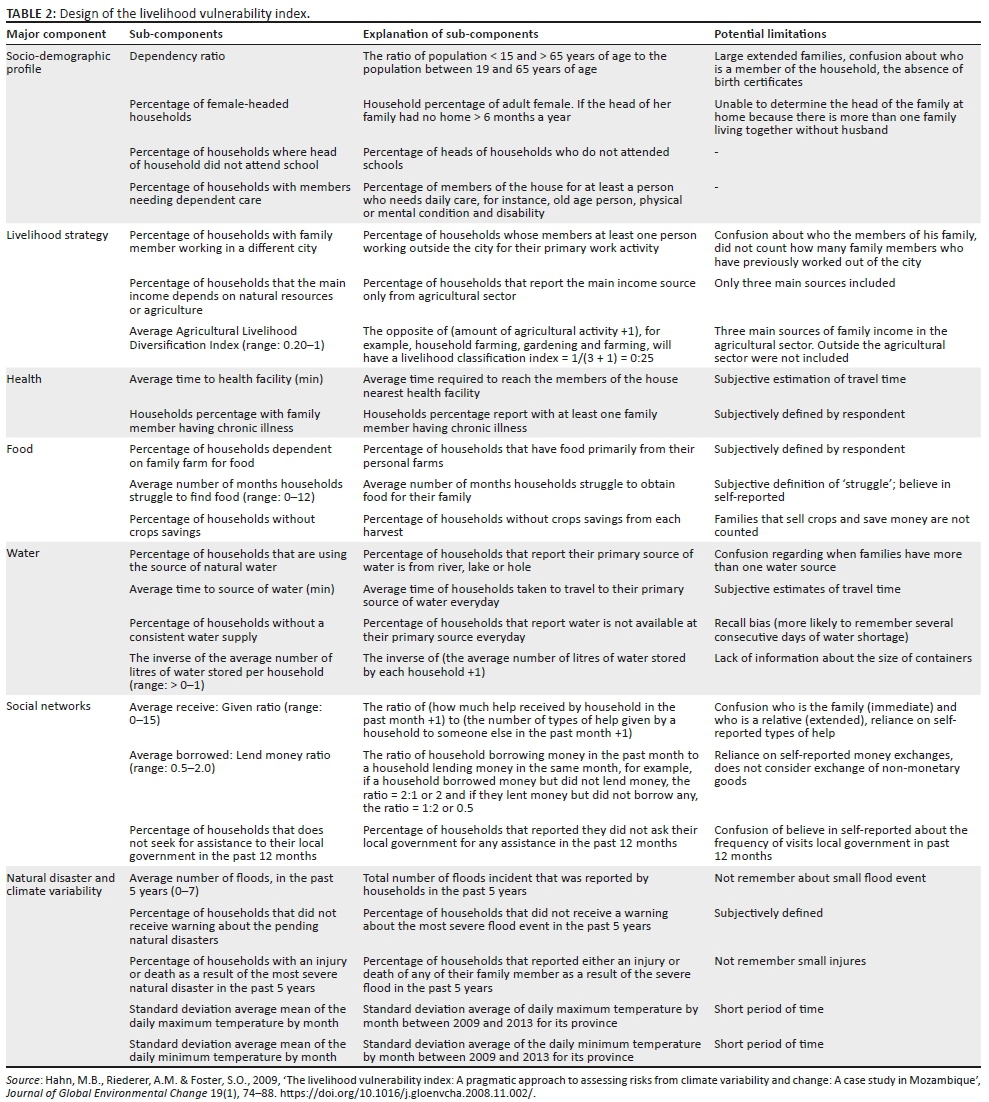
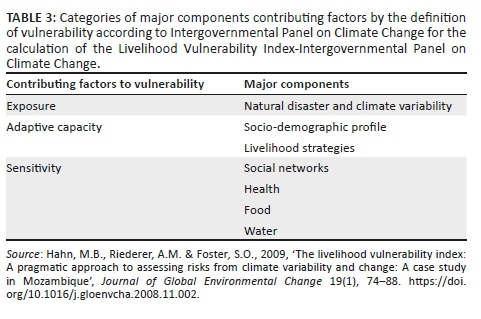
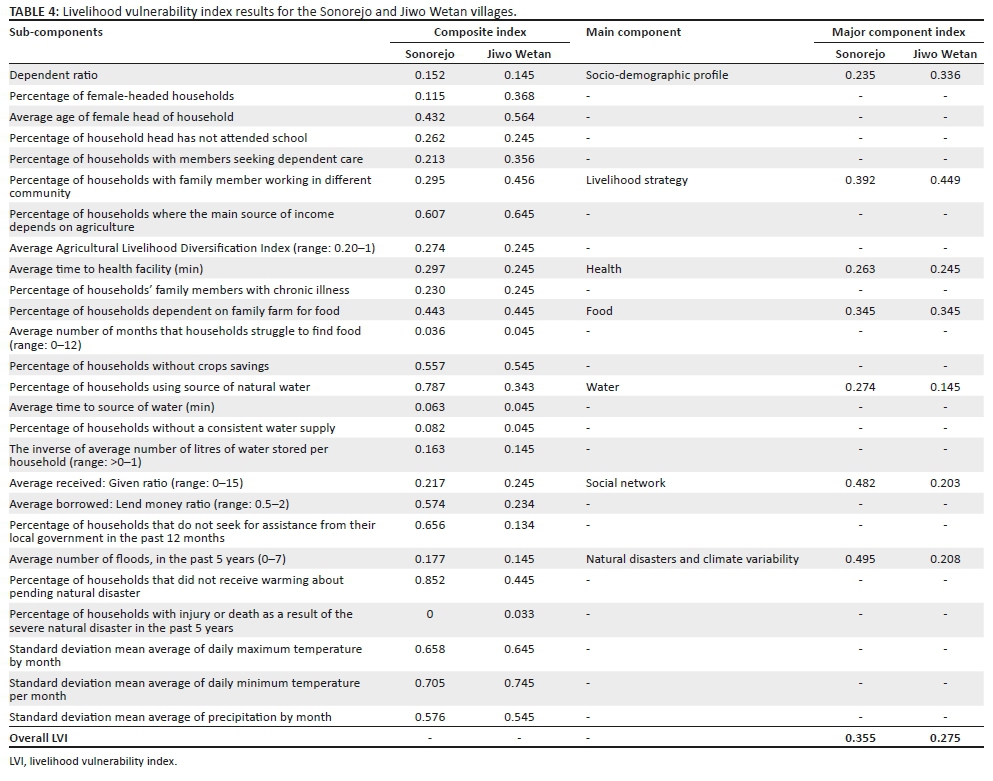
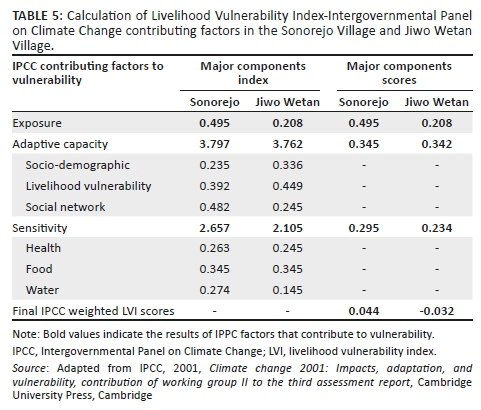
This research tried to compare the level of farmers' livelihood vulnerability to flooding in Sukoharjo and Klaten. Farmers are the most susceptible caused by climate change. The data used in this research are primary data, collected by interviewing 61 respondents who are farmers in the Sonorejo Village, Sukoharjo Regency and 72 respondents in the Jiwo Wetan Village, Klaten Regency. This data obtained by using non-probability sampling technique with purposive methods. Meanwhile mapping for hazard level was analysed by using Geographic Information System (GIS). Descriptive statistic was used for the livelihood vulnerability index's (LVI) and the LVI-Intergovernmental Panel on Climate Change's (IPCC) index calculation. The results show that the farmers' livelihood vulnerability in the Sonorejo Village is medium level because of climate change based on the LVI index value at 0.363 and LVI-IPCC index value at 0.044. Meanwhile, the Jiwo Wetan Village has a lower index in LVI at 0.344 and LVI-IPCC index value at 0.038. Areas with similar physical characteristic and most of its community have a dependence on agriculture tend relatively the same level of vulnerability.
poverty; food security; livelihood vulnerability index; flood; climate change
 Thumbnail
 Thumbnail