Key elements of disaster mitigation education in inclusive school setting in the Indonesian context
Abstract
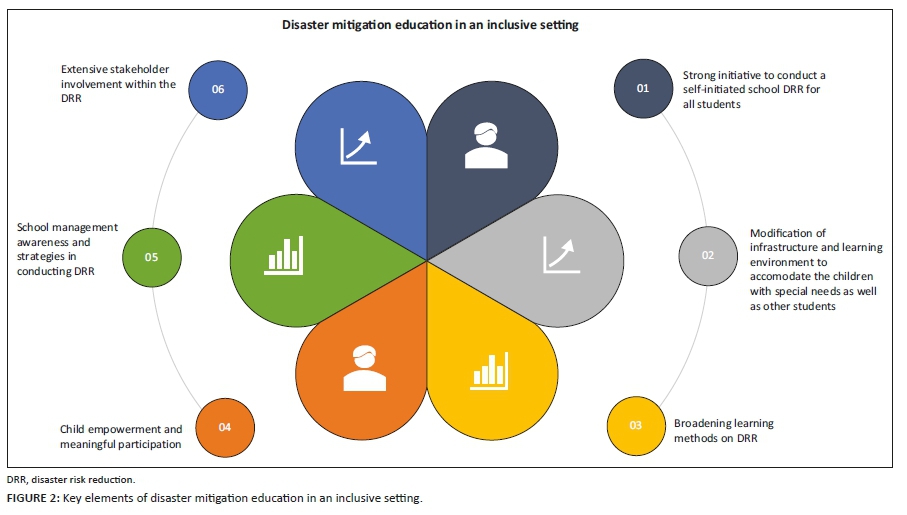
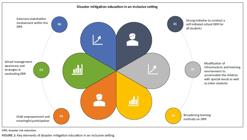
Children with special needs are one of the most vulnerable groups when disasters occur. They are often excluded from any risk reduction conducted during such situations; therefore, introducing disaster mitigation education at the early stage has numerous benefits. This study aims to explore the critical elements of disaster mitigation education, limiting the scope to primary schools in an inclusive setting in Yogyakarta. A qualitative methodology involving focus group discussions and interviews was applied for in-depth exploration and insight into stakeholders' perspectives on education. This study identified six key elements of inclusive disaster mitigation education in schools: (1) strong initiative to conduct self-initiated disaster risk reduction (DRR) education for all students; (2) modification of infrastructure and learning environment to accommodate children with special needs and other students; (3) broadening learning methods in DRR; (4) child empowerment and meaningful participation; (5) school management awareness and strategies for conducting DRR; (6) extensive stakeholder involvement within disaster mitigation education. These elements are expected to improve implementation of such programmes, thereby increasing the quality and accessibility of children's disaster mitigation education, as well as increasing their capacity in the risk reduction process through teacher support.
disaster education; children with special needs; disabilities; inclusive school; mitigation
 Thumbnail
 Thumbnail