Vadose zone infiltration and its implication for groundwater contamination risk assessment in Siloam village, Limpopo province, South Africa
Abstract
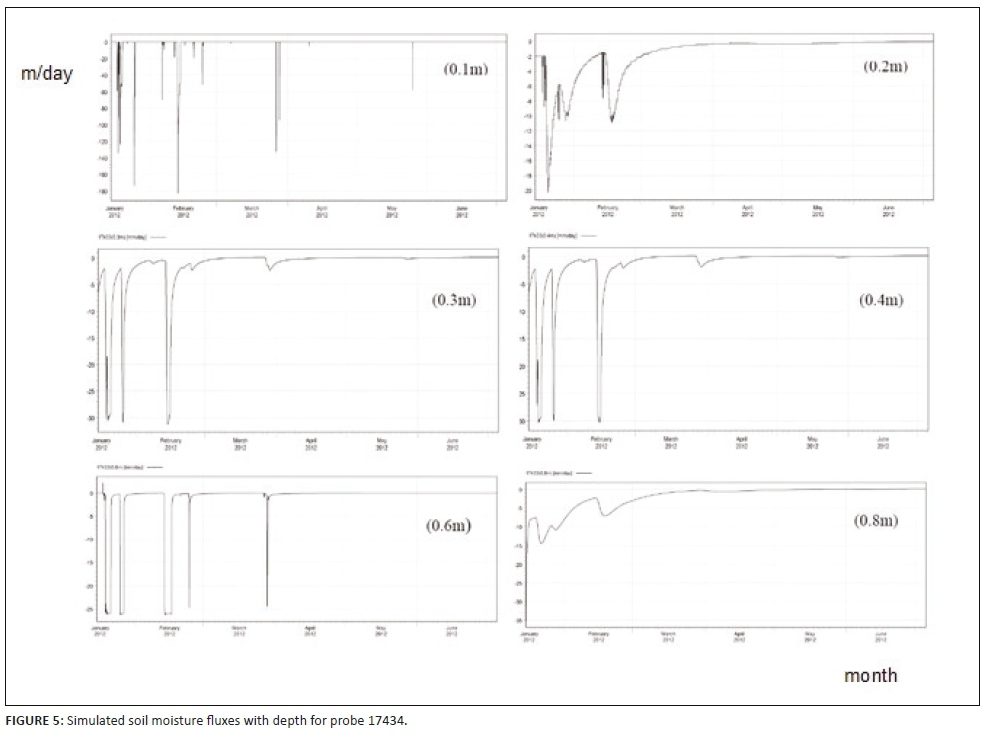
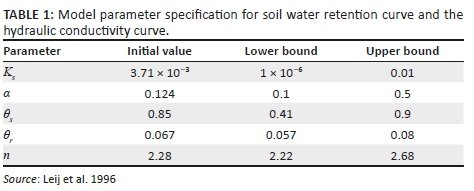
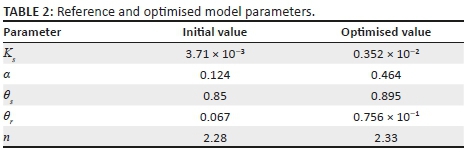
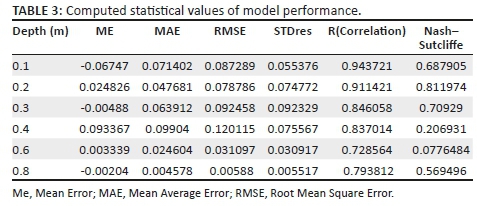
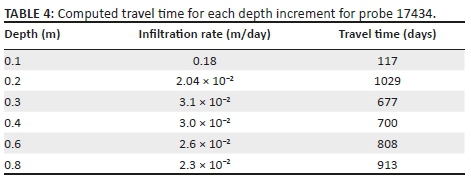
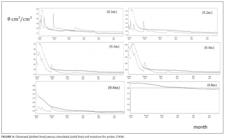
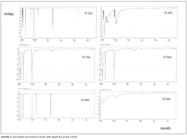
Risk assessment methods and approaches are useful for environmental planning and decision-making when dealing with risk identification and reduction in a changing global context. This is particularly true for arid and semi-arid regions, such as Siloam village, Limpopo province, South Africa, where it is a common practice to apply fertilisers to the soil during planting season for increasing crop yield. Estimates of vadose zone soil moisture fluxes were used to determine the likelihood of applied agricultural fertilisers to reach the groundwater table. This study combines field observations in the study area and a one-dimensional numerical model to explore the moisture fluxes and their implications for contaminant transport in the vadose zone. Model simulations revealed a lag time of 117 days at topsoil and 913 days beyond the root zone for deep percolation of soluble non-reactive inorganic and organic additives to reach the groundwater table. Preliminary results of this study suggest that the vadose zone is permeable and the groundwater is vulnerable to contamination within the evaluated time scale. Given that disaster risks are inevitable, reasonable methods for control and mitigation of agricultural impacts at this site are highly recommended.
Groundwater Vulnerability; Infiltration; Modelling; Siloam Village; Vadose Zone
 Thumbnail
 Thumbnail
 Thumbnail
 Thumbnail
 Thumbnail