Black mirrors and zombies: the antinomy of distance in participatory spectatorship of smart phones
Abstract
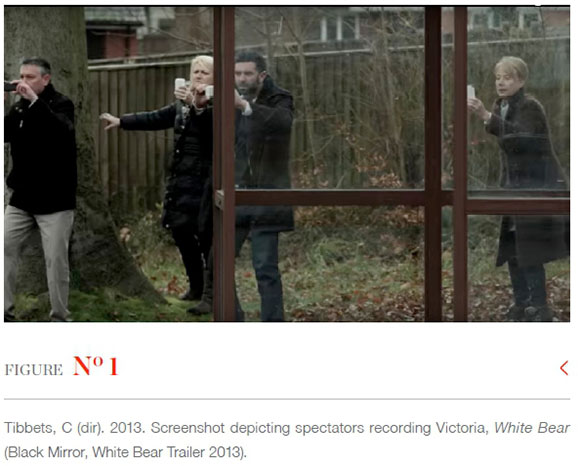
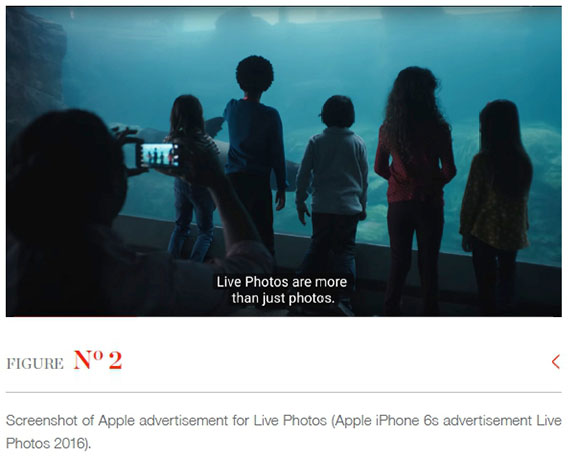
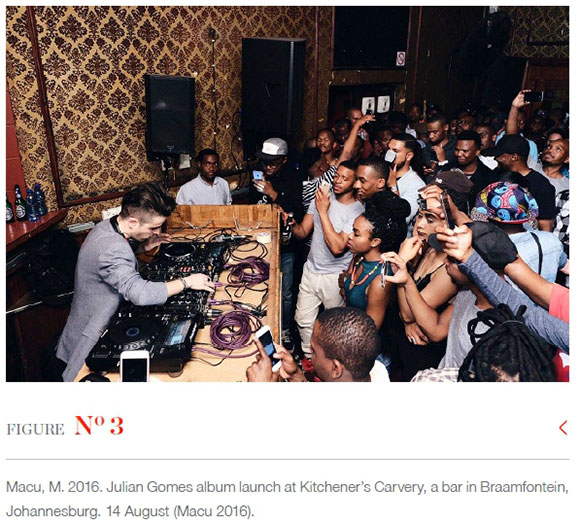
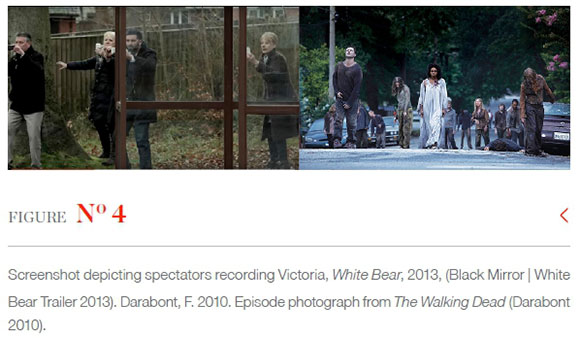
Spectatorship has been investigated in film and media studies, aesthetics and art history, and has gained prominence from the 1990s with the focus on digital media. In this article, I investigate the implications of two notions of contemporary spectatorship for viewing moving images on smart phones, by studying how they are depicted in popular representations: television series, an advertisement and social media. The first notion is participation, with new technologies such as smart phones linked to supposedly more empowered participatory practices than those that preceded these technologies. The second notion is the cinema dispositive, which in current theory is often dismissed as leading to passive spectatorship. I aim to interrogate the complexity and contradictions inherent in both concepts and how they have recently been theorised in film and media studies, by focusing on two aspects that seem to facilitate participation through smart phones. The first is distance, where I investigate whether and how it is reconfigured as a factor that may feature in participatory spectator practices. The second is mobility, where I consider some limitations of the physical body-screen relationship between spectators and smart phones.
Spectatorship; smart phones; participation; cinema dispositive; distance; mobility
 Thumbnail
 Thumbnail
 Thumbnail
 Thumbnail
 Thumbnail