A framework for creating and analysing wordless picturebooks
Abstract
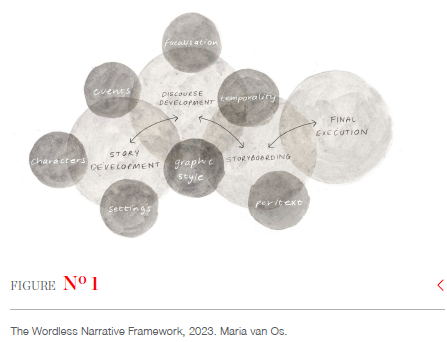
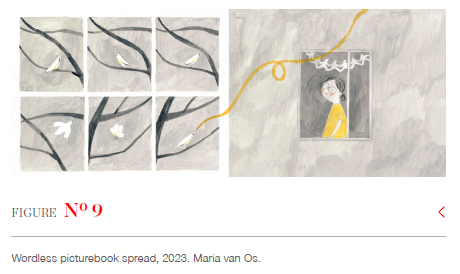
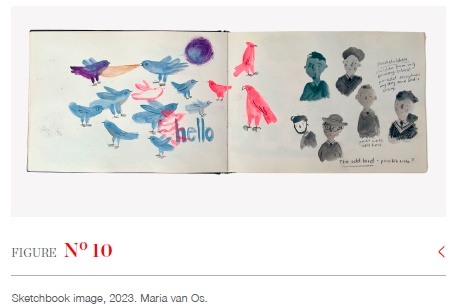
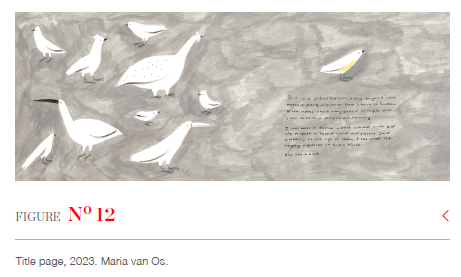
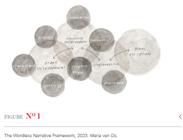
Wordless picturebooks are texts that convey a narrative through a series of images with little or no written information and have gained popularity among academics, readers, and illustrators. These books have evolved from purely educational tools to complex and experimental works, attracting prominent artists and addressing challenging themes. Described as "crossover", wordless picturebooks frequently defy traditional age, addressing and attracting readers of all ages. While research on wordless picturebooks is growing, literature generally focuses on wordless picturebooks as educational tools for a younger readership and the aesthetic qualities of the finished picturebook - rarely examining the complex process of creating a wordless, visual narrative. In this article we reflect on the creation of a wordless crossover picturebook to gain insight into this process from Maria van Os's perspective as a practising illustrator and illustration lecturer. The practice-based approach sheds light on the wordless crossover picturebook as an artefact and the process undertaken by an author-illustrator when creating a wordless narrative. A framework for creating wordless narratives was conceptualised by distilling the findings from the practice and framing them within narrative theory. The framework is intended to aid students, lecturers, and practitioners in creating and analysing wordless picturebooks.
Wordless picturebooks; practice-based research; illustration research; wordless narrative framework
 Thumbnail
 Thumbnail
 Thumbnail
 Thumbnail
 Thumbnail
 Thumbnail
 Thumbnail
 Thumbnail
 Thumbnail
 Thumbnail
 Thumbnail