Perceived weaknesses of post-graduates in a group supervision setup: lived experiences of a small sample of South African students
Abstract
Although research supervision presents various challenges, it is crucial for student success, particularly at the post-graduate level. The aim of this study was twofold. First, we identified the weaknesses of group supervision from the contemporary literature through the lens of SWOT analysis, Tuckman's stages of group development, and Proctor's supervision model. Second, we used insight into these weaknesses to devise improved strategies for instructors to supervise post-graduate computer science students. We followed an integrated methodological approach where data were collected through individual semi-structured interviews, supplemented by informal observations made during supervision activities. Thematic analysis was employed to analyse the collected data and 10 key weaknesses of group supervision were identified. The study makes two key contributions. The first contribution is methodological in nature - sharing and discussing the supervision intervention that was implemented during this study. The second contribution relates to the weaknesses of group supervision that are relevant not only in generic research supervision but also in supervising technical research projects.
computer science education; group supervision interventions; group supervision weaknesses; post-graduate lived experiences; post-graduate supervision
INTRODUCTION
Effective academic research supervision plays a key role in producing high-quality research outputs and in the success of all those being supervised, especially post-graduate students (O'Neil et al., 2016; Soni, 2010). However, supervising tertiary students at all levels of study may present many challenges to supervisors and supervisees (Bacwayo et al., 201 7; Mhlahlo, 2020; Subramanian et al., 2013). Various authors report on a myriad of supervision challenges encountered throughout the supervision process, such as communication gaps, lack of supervision skills, changing of supervisors, the unpreparedness of students for graduate research, the complex transition between undergraduate and post-graduate study, emotional and psychological problems in the student body, loss of enthusiasm for research due to supervision experiences, mode of supervision employed, and growth in the number of graduate students leading to unacceptable staff-student ratios (Buttery et al., 2005; Mahlangu, 2021; McPherson et al., 201 7; Mhlahlo, 2020). The literature also shows that post-graduate education is an advanced pedagogy with emerging supervisors needing extensive training and support (Vereijken et al., 2018). Therefore, enhancing supervision quality is vital for post-graduate programmes and has led to a shift towards co- or team supervision, transferring responsibility from individual researchers to the broader research community (Kálmán et al., 2022).
Consequently, there is a need to continuously seek strategies that can be applied or used with students to overcome the stated challenges. These strategies inherently belong to an umbrella term known as supervision styles, including distant or online supervision, individual supervision and group supervision. Each style has its associated strengths and weaknesses. However, group supervision promises to be a more applicable style because one supervisor can supervise many students at the same time (Naidoo, 2023; Van Biljon et al., 2014). Various supervisors have used group supervision with post-graduate students because of the many advantages. These advantages include peer learning, learning from the mistakes of others, the applicability of feedback to one student on the others, creating a safe space for questions and answers, efficient utilisation of resources (e.g., time), sense of belonging to the academic community, mitigating the feeling of loneliness in the research journey, better monitoring of student progress, students motivating one another within the group, effective mitigation of distorted perceptions and false assumptions, relatively depending less on the supervisor, and effective communication (Mhlahlo, 2020; Van Biljon et al., 2014; Yousefi et al., 2015).
Through our structured supervision intervention, which included regular group discussions, peer-to-peer learning opportunities, and individual feedback sessions, we made requisite efforts for the students we supervised to reap the benefits of group supervision. This paper aimed to identify the weaknesses from the lived experiences of students who experienced this supervision intervention analysed through the theoretical lenses of SWOT analysis, Tuckman's stages of group development, and Proctor's supervision model. Once we understood both the weaknesses reported in the literature and the practical weaknesses evidenced by the lived experiences of students involved in group supervision, we evaluated our intervention to determine its effectiveness (Grassby & Gonsalvez, 2022).
Hence, this study attempts to answer the following research question:
How can the weaknesses of group supervision be addressed to assist supervisors of Computer Science (CS) post-graduate students to improve their group supervision?
To fully answer this question, it was broken down into two subsidiary questions as follows:
• What are the weaknesses of group supervision?
• How does insight into these weaknesses assist instructors in devising improved strategies for supervising post-graduate CS students?
By addressing these research questions, we aim to achieve two goals: first, to understand what the weaknesses of group supervision are pertaining to groups of CS students that consist of honours, MSc and PhD students. Second, to offer supervisors experimenting with group supervision practical advice on handling potential student challenges.
The paper continues with providing the study's theoretical framework and associated weaknesses, followed by presenting the research design and methods, the findings, a discussion of the findings, and a conclusion.
THEORETICAL FRAMEWORKAlthough group supervision is touted as one of the best modes of supervision (Soni, 2010; Valentino et al., 2016), it has several associated weaknesses that may affect supervisors and students. This study focuses on the weaknesses of group supervision using the SWOT analysis framework. Originally developed by Albert Humphrey in the 1960s, SWOT is a strategic planning tool used to identify Strengths, Weaknesses, Opportunities, and Threats in various contexts, including education and professional development. While SWOT analysis typically considers all four dimensions, this study narrows its focus to the weaknesses of group supervision to critically assess the challenges that arise within this mode of supervision. To support the analysis, this study is guided by Tuckman's stages of group development (1965) and Proctor's model of supervision (2008). These theories provide a lens through which the identified weaknesses can be understood in terms of group dynamics, power structures, engagement, and the supervision process.
Tuckman's model describes the five key stages that groups go through: forming, storming, norming, performing, and adjourning. Each of these stages presents challenges that align with the weaknesses identified in the literature. First, the storming stage involves conflicts, competition, and dominance by certain individuals (Borders et al., 2012; Enyedy et al., 2003). Group members may struggle with power imbalances, leading to interpersonal conflicts, reluctance, and disengagement in supervision settings (Repper et al., 2022). Second, while norms begin to form during the norming stage, some students may feel excluded or overlooked due to differences in development levels or learning styles (Proctor, 2008). This stage also reflects the challenge of balancing individual in contrast to group needs (Repper et al., 2022). Third, if the group is not well-structured during the performing stage, it may fail to provide adequate emotional support, fair participation, or high-quality feedback, which affects learning outcomes (Blomberg et al., 2016). Fourth, during the performing stage, where the group is expected to function effectively and independently, challenges may arise if certain members continue to dominate discussions while others remain passive (Hawkins & McMahon, 2020). This imbalance may limit the quality of peer feedback and shared learning, thereby hindering the full potential of group supervision. Furthermore, group members who have struggled to engage in earlier stages may feel even more excluded at this point, reinforcing unequal participation and limiting the effectiveness of collaboration (Borders et al., 2012). Fifth, the adjourning stage, where the group prepares for closure, also presents weaknesses. If the group has not developed strong cohesion or trust, some members may feel that their learning and development remain incomplete (Proctor, 2008). The sudden disbanding of the group may leave members with unresolved issues, emotional detachment, or a lack of closure, particularly if the supervision process did not adequately address individual progress and concerns. Moreover, if the supervision lacked structured evaluation or feedback mechanisms, students may struggle to reflect on their growth or identify areas for future improvement (Lawrence, 2019).
Proctor's (2008) model describes the three key interrelated roles that supervision plays in professional developments such as educational supervision, which are normative/managerial, formative/educative role, and restorative/supportive roles. First, in the normative (accountability) role, members in group settings may feel pressured to conform, leading to fear of judgment, reluctance to participate, or dominance by certain individuals (Hawkins & McMahon, 2020). Second, in the formative (learning and development) role, differences in experience and skill levels can lead to boredom, disengagement, or anxiety if individual needs are not recognised (Proctor & Inskipp, 2001). Third, in the restorative (support and well-being) role, the lack of individualised attention in groups may result in emotional detachment, lack of psychological safety, and feelings of alienation (Repper et al., 2022).
The reviewed literature highlights the significant challenges associated with group supervision, particularly through the lens of Tuckman's stages of group development (1965) and Proctor's Model of Supervision (2008). While group supervision is widely recognised for its benefits, such as peer learning and collaborative engagement, the identified weaknesses underscore the complexities that arise in practice. Issues such as power imbalances, time constraints, emotional disengagement, and varying levels of participation can hinder the effectiveness of supervision. By adopting the SWOT analysis framework, this study systematically examines these weaknesses to provide a structured critique of group supervision. The integration of Tuckman's and Proctor's models offers a theoretical foundation to understand how group dynamics evolve and how supervision roles impact learning, development, and emotional well-being. Ultimately, this literature review establishes the need for a critical reassessment of group supervision practices to enhance their effectiveness and ensure that both individual and collective needs are met in professional and educational settings.
RESEARCH DESIGN AND METHODSResearch design
The study's narrative design employed an integrated-methods research approach grounded in Frameworks for an Integrated Methodology (FraIM) (Plowright, 2011). This methodology strongly supports the notion that a study's philosophical position should be taken as the study evolves or even with the interpretation of results, and not necessarily before starting with the investigation.
In this study, narrative data were collected by asking participants questions about their lived experiences in the supervision group and making observations as various supervision activities were carried out from inception throughout the intervention. The research population comprised nine post-graduate CS students who formed part of the post-graduate supervision group for the 2023 academic year. The group consisted of seven Honours students, one MSc student, and one PhD student. These students were studying at a South African university at the time of the study. The sample for this study consisted of students who voluntarily agreed (six out of nine) to participate in the research activities. The sample selection was both purposeful and convenient (Saunders et al., 2024). The sample was purposeful because the students were members of the post-graduate CS research supervision group who were supervised according to the supervision intervention presented below. The sample was convenient since researchers had easy access to the participants, as some of them mentored the students in the group. The required ethics clearance was obtained and that vulnerable individuals, groups, and populations were protected (Ethical Clearance Number - UFS-HSD2023/1932).
METHODOLOGY
Primary data were collected through individual interviews as part of the 'asking questions' data collection strategy. Each interview (approximately 60 minutes in length) had both close- and open-ended questions on students' experiences with their involvement in the supervision group. Apart from specific questions that students were asked, probing questions were also asked when necessary. The demographic section of the interview protocol included close-ended questions, such as the participant's level of study and gender. Open-ended questions explored participants' reactions to group supervision, their most and least enjoyable aspects, perceived strengths, weaknesses, opportunities, and threats of the supervision, and their general feedback for future improvements. The interview proceedings were audio-recorded with the participants' permission. Before data collection, we had already received ethical clearance for this study to be conducted with the targeted participants.
In addition to formal interviews, researchers made ongoing observations during the supervision activities described below. These observations were not structured as a separate data collection method. Still, they represented continuous monitoring and reflection on student behaviours, engagement, and responses during the 12 group discussion sessions, WhatsApp group interactions , and individual feedback sessions throughout the academic year. Supervisors documented notable patterns of participation, question-asking behaviours, peer interactions, and emotional responses to group dynamics as part of routine supervision notes. These observational insights provided valuable context for understanding how students experienced the supervision process and helped to interpret the formal interview data. The combination of formal interviews and informal observations allowed for a more comprehensive understanding of the students' lived experiences in the group supervision setting.
Supervision intervention
Various supervision activities were carried out from inception throughout the intervention.
Group discussions, workshops and feedback
All post-graduate CS students who fell under the supervision of the researchers were asked if they wanted to join the post-graduate CS supervision research group. The goal of this group was to create a safe environment, a place of belonging, where students could interact with one another and with the supervisors. Furthermore, the group ensured that all of the students were treated equally by receiving the same opportunities and feedback. A total of nine students joined the group. The group consisted of seven Honours students, one MSc student, one PhD student, and two supervisors. The face-to-face group discussions were organised so that each student could give verbal feedback on his/her progress and receive supervisor feedback and advice. The students could also seek clarification or discuss the challenging aspects of their studies or projects. Other students who might have faced similar challenges could then also share how they overcame those problems. These discussions allowed the students to see what the other students were doing and whether they were on track or falling behind. Students could also encourage and motivate each other during these discussions. The supervisors meticulously oversaw all group activities to guarantee the validity of the learning process and the accuracy of advice exchanged among students. This supervision also ensured that students provided only advisory support to their peers without extending assistance beyond this scope. The supervisors also used the group setting to present workshops for the Honours students. These workshops included training on using Grammarly and Mendeley, scientific writing skills, and the technical layout and presentation of the different written manuals (Technical and User manuals) that the students had to submit as part of the Honours project.
Twelve group discussions were held bi-weekly throughout the academic year, with sessions intensifying to weekly meetings during critical project phases such as proposal development and final submissions. The WhatsApp group was used to remind students about these sessions. The students were also requested to indicate if they would be attending a particular session. Each session lasted approximately 60-90 minutes and was conducted in the Computer Science department's Honours Computer Laboratory, providing a consistent and familiar environment for all participants. The timing of these sessions was carefully scheduled to avoid conflicts with other academic commitments, typically taking place on Wednesday afternoons when students had fewer scheduled classes. This regular meeting structure provided continuity while allowing sufficient time between sessions for students to progress on their projects.
Group communication
Ferreira, 2021 highlights the benefits of social media as an academic platform where supervisors and their post-graduate students can interact to enhance the training process and their relationships. Therefore, a WhatsApp group was established for students to facilitate communication, scheduling, collaboration, and problem-solving. This platform aimed to foster a sense of community, enabling interaction between students and supervisors, peer-to-peer learning, and centralised support for individual and group activities.
Peer-to-peer learning
The WhatsApp group enabled supervised peer learning. The Honours students were encouraged to seek help at any time regarding any encountered challenges, saving on inherent travel costs. Any member could offer guidance but not complete the others' work. As PhD and MSc students had technical coding experience, they assisted the Honours students significantly.
Individual feedback sessions
Individual feedback sessions held by supervisors complemented the group meetings. Students were requested to schedule 30-minute to one-hour sessions in advance, aiming for a safe environment without peer judgment. Supervisors gave specific feedback on various submissions that were provided.
• Firstly, detailed feedback was provided on all written submissions, utilising the 'Track Changes' and 'Comments' features of MS Word. Students could then schedule appointments to clarify feedback. Additionally, they could submit final documentation for feedback before assessment, though many students did not utilise this option.
• Secondly, students received feedback on system functionality through live demonstrations that showcased their systems' operation. These demonstrations often exceeded an hour due to live code errors. To mitigate time wastage, students recorded progress videos, limited to 5-8 minutes, watched by supervisors alongside students for feedback sessions.
• Thirdly, students submitted a document detailing their progress since the last video feedback session. It included screenshots and descriptions of new system functionalities, remaining tasks based on initial planning, and plans for upcoming project demonstrations.
Individual assessment opportunities
A final assessment of the developed system and documentation was mandated after multiple feedback sessions. The WhatsApp group informed students about the assessment process, the expectations, and the departmental rubric. Assessments, conducted in two sessions, adhered to departmental guidelines.
• Software system assessment - Students showcased their software systems in a live session with both supervisors. Functionality was compared to proposal documentation using the departmental rubric. If incomplete, students received an extra week to do revisions before the next assessment opportunity.
• Technical and user manual assessment - Students submitted technical and user manuals for their developed systems, which were evaluated using the departmental rubric by supervisors. Students who submitted late were given an extra week for completion.
Data analysis
We analysed interview recordings by first transcribing and cleansing the data following (Creswell & Creswell, (2018) approach. We corrected illogical or repetitive statements during cleansing using the fuzzy validation approach. Parcell and Rafferty (2017: 337) describe this approach as involving 'detecting and modifying, replacing, or deleting incomplete, incorrect, improperly formatted, duplicated, or irrelevant records'. This suggests that researchers using this approach are permitted to correct certain data when a close match or known answer is available. After cleansing the data, we immersed ourselves in it by repeatedly listening to the audio recordings and thoroughly reading the transcripts. We then developed a coding plan guided by the data in relation to the group supervision weaknesses identified in the literature. We used NVivo 14 Professional to analyse the six validated transcripts uploaded into the software. This was achieved by developing codes and themes around emerging supervision weaknesses. We then continuously revised our codes and themes by combining some and/or renaming them. Ultimately, we focused on the frequency of occurrence of each thematic element as reported in the next section.
FINDINGS
In this section, we outline the ten key weaknesses identified and our supervision reflections, highlighting lessons learned and recommendations for effective CS post-graduate group supervision.
Identified weaknesses
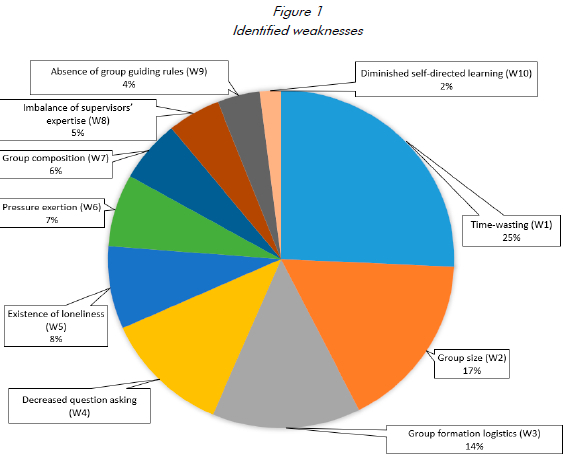
The data revealed 10 key weaknesses related to the CS post-graduate group supervision. These are presented together with the percentage distribution of their occurrence in the data in Figure 1.
Time-wasting (W1) - Several group activities resulted in time-wasting. Twenty-six occurrences of this weakness were identified in all six participants. Participant 2 (P2) expressed this concern by saying:
I think the large group time was sometimes wasted with everyone going through their own experiences and questions.
Participant 3 (P3) also expressed a similar feeling:
I felt like it wasted more time than it saved because we had a lot of meetings all the time.
All meetings were held face-to-face, yet some participants believed virtual options could have been more efficient:
I feel some of the face-to-face meetings, we could have done, let's say on Microsoft Teams for example, which could have saved a lot of time (P6).
This finding aligns with the challenges identified in Tuckman's performing stage, where group activities can become inefficient without proper structure and facilitation. As noted in the theoretical framework, Hawkins and McMahon (2020) and Lawrence (2019) identified time-allocation challenges as a key weakness in group supervision, where activities often take longer than necessary, reducing time available for addressing individual student needs.
Group size (W2) - Our group consisted of nine members. Although this group size was within the literature-suggested range for an effective group (four to 12 participants), as Soni (2010) reported, our data revealed that participants perceived it as a large group with negative impacts. Seventeen occurrences of this weakness were identified in all six participants. P2 articulated this challenge:
The weakness of this approach was that the technical or the blockchain-specific technologies and approaches were kind of neglected to accommodate the similarities between everyone's projects.
Larger groups tended to focus more on administrative aspects than the technical details, as P2 further elaborated :
I didn't experience greater comprehension in the larger group since the meetings were more focused on the documentation ... what we didn't do in the group was to look at people's code.
This statement also indicates more valuable comprehension in smaller clusters compared to the larger group. P3 reinforced this perspective:
The coding part I did that by myself, it had nothing to do with the group ... We didn't speak a lot about the technical stuff in the bigger group.
These findings connect to the restorative role in Proctor's supervision model, where individual technical needs may be overlooked in larger settings. The SWOT analysis framework identifies this as a significant weakness when specific disciplinary needs become secondary to general administrative concerns. Blomberg et al. (2016) similarly cautioned that in larger groups, individual work might receive less attention than general group concerns, with technical specifics often becoming secondary.
Group formation logistics (W3) - This refers to the systematic planning and execution of activities involved in creating, organising, and managing a group. Fourteen occurrences of this weakness were identified in all six participants. The group began with three members working on blockchain projects but expanded to include students from other disciplines, which affected group cohesion and focus. P2 described this evolution:
When we were only a small group of blockchain students, it felt more meaningful for our time ... I enjoyed it a lot since we could focus specifically on the technologies and areas we were doing our projects in. But, when the group grew, it felt like the more technical details were pushed aside and we focused on the similarities between all projects. So, it felt like the blockchain part of it was pushed out to accommodate everyone else's project.
This highlights the importance of addressing logistical issues in group formation, including careful consideration of research area alignment. The data suggest participants were not adequately informed about decisions regarding group expansion. Some members benefited more than others depending on their research alignment with senior students, as P2 noted:
At the start, MSc and PhD students explained the basics of blockchain to us before we became the big group.
Another related issue concerned group identity. The WhatsApp group was initially named 'Blockchain Research', which remained unchanged even after non-blockchain students joined:
Later, everyone was added to the WhatsApp group, and as we speak, the group is still named Blockchain Research (P2).
This naming issue likely affected non-blockchain students' sense of belonging, potentially leaving them feeling peripheral to the group's core identity.
These findings directly connect to Tuckman's stages of group development, which are presented in our theoretical framework. The challenges described reflect difficulties in properly navigating the forming and storming stages when new members with different research interests joined. Tuckman (1965) and Jensen (1977) noted that groups must establish clear identity and purpose during formation. The disruption to the original group identity created challenges in the norming stage, where shared expectations and cohesion should develop. Additionally, Proctor's model highlights the importance of addressing both formative (learning) and restorative (supportive) functions, which became imbalanced when the group expanded without proper restructuring.
Decreased question-asking (W4) - Some members felt uncomfortable asking questions due to the varied composition of the group (Honours, MSc, and PhD students). Twelve occurrences of this weakness were identified across five participants. P1, a PhD student, observed this reluctance among junior members:
The junior portion of the group is still afraid that if they ask something, other group members will think that they don't know something, which is fine. At that level, you're supposed to do something you don't know, so they should ask".
Personal traits also affected participation, as P3 shared:
I am generally a shy person and I don't do well with talking in a group ... for me, I could do one-on-one, but the group thing is not for me. So, if we had the meetings, I would barely say anything, even my supervisor knows.
Beyond shyness and fear of judgment, some members worried about wasting others' time with specific technical questions. P2 remarked:
In the larger group, many people may have felt that they would maybe waste everyone's time if they ask a question that is specifically aimed at the project [e.g., a technical question].
These findings reflect challenges in Tuckman's norming stage and Proctor's restorative supervision function. During the norming stage, as described in our theoretical framework, group members should develop comfort with participation, but power dynamics and hierarchical differences can inhibit this process. The varying academic levels created power imbalances that hindered open communication. Similarly, Proctor's restorative function, which should provide psychological support, was compromised when junior members felt intimidated. Borders et al. (2012) and Enyedy et al. (2003) identified similar patterns of reluctance and disengagement in group supervision contexts.
Participants clearly expressed a need for specialised, personalised support that addressed their specific technical challenges - something that group sessions could not adequately provide. This reflects the limitations of group supervision in fulfilling Proctor's formative function for specialised learning needs. Our findings align with literature Kettle & Glasgow, 2015; Wonnacott, 2012) suggesting that while group supervision offers certain benefits, it should complement rather than replace one-to-one supervision, as students perceive they receive more focused, tailored support in individual sessions. This aligns with the SWOT analysis framework's emphasis on recognising both strengths and weaknesses of supervision approaches.
Existence of loneliness (W5) - Although group supervision aims to reduce loneliness, participants still experienced isolation. Eight occurrences of this weakness were identified across four participants. P2 expressed feeling alone with technical challenges
I sometimes felt like I was alone in my struggle with the technical parts.
P1 provided a quantitative perspective on loneliness reduction:
I think being part of the group supervision may reduce loneliness from 100% to 98%, but it won't reduce it to 50%.
P1 further elaborated:
The group helps a little bit, for maybe one hour, once a week or once in two weeks, but the rest of the time it is very lonely ... because you have to be the one who comes up with the ideas and to do the work, and no one else. The group doesn't pass your project, you pass your project, you complete your thesis.
P3 acknowledged the inherently individual nature of research:
The nature of the Honours project is very individualistic that it doesn't matter whether you are in the group or alone or in a cluster.
The sense of loneliness was further intensified when members could not discuss their technical challenges because others would not understand them:
I think you would have a sense of loneliness if you wanted to talk about something, but you know nobody else is going to understand (P2).
This persistent loneliness highlights a significant weakness in the restorative function of supervision as described in Proctor's model. When group members have dissimilar research topics, the supportive aspects of group supervision are diminished. From the perspective of Tuckman's stages, this indicates challenges in the norming and performing stages, where members should develop a sense of group cohesion and shared purpose. Instead, the diversity of research topics created what the SWOT framework would identify as a structural weakness in the supervision approach. These findings align with research by Proctor (2008) and Proctor and Inskipp (2001) who noted that boredom and anxiety can emerge in groups with diverse research interests. Borders et al. (201 2) and Enyedy et al. (2003) similarly identified that limited engagement can contribute to feelings of alienation despite being in a group setting.
Pressure exertion (W6) - The group setting created pressure on some members, especially when comparing progress with peers. Seven occurrences of this weakness were identified across four participants. P3 described feeling overwhelmed:
For my Honours, I felt so overwhelmed throughout the year ... So, for me, it helped me to calm down because then if I'm in a hyper-anxious state, then I cannot work.
P5 shared how peer suggestions sometimes created pressure and required filtering:
Some of my peers would suggest extravagant ideas although I knew that it was not in my project scope and it would take more time to develop that instead of me just doing what I was supposed to be doing. So, sometimes they would give more input than necessary, but I also had to learn how to filter out things that I needed to take from the inputs received from my supervisors and peers.
Notably, this filtering process represents a double-edged sword in the context of supervision. While P5 developed an important skill in critically evaluating input, this additional cognitive burden potentially contributed to feeling pressure, overwhelmed, and time wastage. This highlights the delicate balance supervisors must maintain between providing comprehensive feedback and overwhelming students with excessive input. From the perspective of Proctor's model, this reflects a tension between the formative (learning) and restorative (supportive) functions of supervision.
This pressure dynamic relates directly to the normative function in Proctor's model, where standards and expectations can create undue stress when not properly managed. In Tuckman's storming stage, competitive dynamics can emerge that exacerbate pressure, particularly when progress is visibly compared across group members. The SWOT analysis would identify this as an internal weakness that undermines the potential benefits of collaborative learning. These experiences align with Hawkins & McMahon (2020) and Lawrence (2019) who identified that establishing strong norms, such as a competitive atmosphere, can create challenges for group members who might feel pressured to perform at the same level as their peers.
Group composition (W7) - This refers to the characteristics of the group, particularly regarding different study levels. Six occurrences of this weakness were identified across two participants. Higher-level students (PhD and MSc) reported contributing more than they received. P1, a PhD student, stated:
Not myself because my research was a little bit detached from what everyone else was doing.
The original data also reveals P1 elaborating:
Well, not myself because my research was a little bit removed from what the nitty gritty that everyone else was doing.
P4, an MSc student, shared a similar experience:
I contributed more than receiving ... I was helping Honours students instead of getting something from the experience ... the discussions weren't very specific to what I was doing because there were very few people in the group that could speak to what I was currently busy with. I could not ask Honours students for advice on the specific things that I was working on.
For these advanced students, group participation primarily involved supporting others rather than receiving needed guidance for their own research. P4 could only seek assistance from supervisors and the PhD student and found limited value in general group discussions.
This imbalance directly relates to the formative aspect of Proctor's model, where educational needs vary significantly across academic levels. The SWOT analysis framework would identify this hierarchical composition as a structural weakness that benefits some participants at the expense of others. Tuckman's group development model shows that the performing stage is compromised for higher-level students who contribute without receiving comparable benefits. These findings support research by Proctor (2008) and Proctor and Inskipp (2001) who noted that groups composed of individuals at different developmental levels can create imbalanced experiences, with some members benefiting significantly more than others.
Imbalance of supervisors' expertise (W8) - Supervisor expertise alignment with student projects created disparities in support. Five occurrences of this weakness were identified across four participants. P5 observed:
I don't think they got as much information as we did. The blockchain students got more information. But for me, I was getting all the information that I needed. But those ones sometimes had to struggle and do all these other things by themselves.
This created an unsupportive environment for some students throughout the supervision process. P3 explained how having a supervisor with subject-specific expertise would have been beneficial:
Had I maybe had a supervisor who specialised in, for example, web development, it would have been easier for me because then it would mean if I had issues that I could not solve, I would be able to say Prof [mentioning the name of the instructor who teaches web development, but name withheld], I am getting this error, maybe you have an idea of why I'm having this problem. For example, I struggled a lot with my database, and there was nothing I could do. I just had to find a way to figure it out.
This experience likely contributed to feelings of frustration and isolation for P3, who recognised that another faculty member might have provided more relevant technical guidance.
This imbalance directly undermines the formative function in Proctor's model by limiting educational support for students whose research areas do not align with the supervisors' expertise. From the SWOT analysis perspective, this represents a significant weakness in the resource allocation of supervision. The disparity in support prevents some students from progressing through the performing stage in Tuckman's model, as they lack the technical guidance needed to advance their projects. These findings align with research by Repper et al. (2022) who highlighted that specific personal needs may go unaddressed in group settings. When supervisor expertise does not align with student research areas, students may experience increased frustration and reduced learning outcomes.
Absence of group guiding rules (W9) - The lack of clear guidelines led to inconsistency in group participation. Four occurrences of this weakness were identified across three participants. P1 observed:
I think people came to the group as and when it suited them or as their circumstances dictated.
Without established guidelines for attendance and participation, engagement varied considerably. P2 expressed views on potential roles:
I don't think Honours students should have any roles in the supervision group. But, I think Masters and PhD students could have more important roles as they already have experience.
This absence of structure directly relates to weaknesses in the normative function of Proctor's supervision model, where clear expectations and accountability should be established. From the SWOT analysis perspective, this represents an internal weakness that undermines the group's potential effectiveness. The lack of structure particularly affected the forming and norming stages described in Tuckman's model, where clear expectations should be established. This oversight of important elements of group development, as outlined by Tuckman (1965) and Tuckman & Jensen (1977) created inconsistent participation patterns. Clearer guidelines could have established expectations around attendance flexibility and defined roles for participants at different academic levels, as suggested by Lawrence (2019) and Clutterbuck et al. (2016).
Diminished self-directed learning (W10) - Group participation sometimes reduced independent problem-solving. Two occurrences of this weakness were identified across two participants. P2 observed:
Many students waited for meetings to ask a question or for someone else to ask something they were wondering about themselves.
The original data provides additional context with P2 elaborating:
A lot of them (students) waited for meetings to ask a question and waited for someone else to ask something they were even wondering about themselves... [one student] waited for other people to do their thing before he asked them how did they do that.
While only two participants explicitly mentioned this weakness, it represents an important consideration for group supervision design. The convenience of getting answers from peers potentially reduced initiative in seeking solutions independently. Though other participants did not directly address this issue, it may reflect a subtle effect that students did not recognise in their own behaviour.
This finding relates to a critical tension within Proctor's formative function of supervision, where learning should be facilitated but not at the expense of developing independent problem-solving skills. From the SWOT analysis perspective, this represents a situational weakness where a potential strength (collaborative learning) becomes a weakness when it creates dependency. Tuckman's model reflects a dysfunction in the performing stage, where group dynamics should ideally enhance rather than diminish individual growth. This finding aligns with concerns Mahlangu (2021) and Mhlahlo (2020) raised about finding the right balance between efficient resource sharing and fostering independent learning skills in supervision contexts.
Supervisor reflection
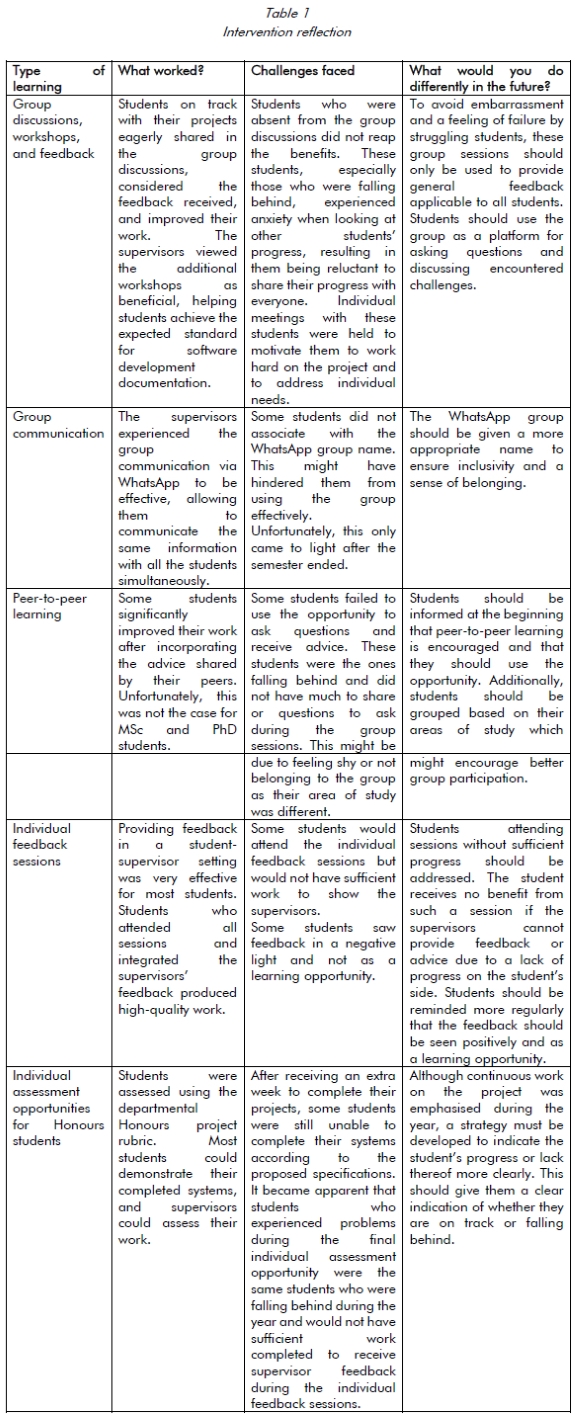
Observations regarding the learning strategies were recorded during the implementation of the intervention. Table 1 summarises the reflection on our intervention.
DISCUSSION OF FINDINGS
This study has revealed several significant findings about the weaknesses of group supervision of post-graduate CS students. Awareness of these weaknesses can be crucial in helping supervisors who employ group supervision strategies to ensure that group supervisees get the most out of their engagement. Overall, it is key for supervisors to be aware of these weaknesses in their supervision journey, irrespective of whether they are supervising purely research studies or technical projects. In addressing the challenges associated with group supervision of post-graduate CS students, this research delves into a multi-layered discussion, drawing insights from both existing literature and real-world experiences. The study findings ultimately point to ten areas of improvement supervisors can engage in, as presented in the following paragraphs.
Effective time management (W1) is pivotal in group supervision, emphasising the importance of setting explicit boundaries for sharing experiences in group meetings and overseeing participant contributions to ensure fair involvement (Borders et al., 2012; Enyedy et al., 2003). An alternative solution to mitigate time wastage related to travel is the utilisation of online meetings. The group meetings and frequency of occurrence may also need to be planned appropriately to avoid wasting time.
The dynamics of group size (W2) posed another challenge. Larger groups may face challenges in providing specialised feedback. This can be addressed by subdividing groups based on research areas, which will allow for more focused discussions and ensure all members benefit from the group experience
Group formation (W3) was identified as a critical aspect that can impact the dynamics and success of a collaborative learning environment significantly. The acknowledgement that the inclusion of students from different disciplines can influence the group's cohesion emphasises the need for thoughtful planning during the formation process. Ensuring that all group members share an equal sense of belonging (Mhlahlo, 2020; Yousefi et al., 2015) is crucial to fostering a supportive and inclusive atmosphere. The research highlights the potential adverse consequences associated with the late addition of students to a group, explicitly noting the emergence of feelings such as not belonging or being deemed unimportant. This observation underscores the importance of considering the timing and dynamics of group formation to foster a sense of inclusion and significance among all members. By adhering to best practices, considering the psychological aspects of group dynamics, and utilising established frameworks like Tuckman's stages (Tuckman, 1965; Tuckman & Jensen, 1977), supervisors can create a more cohesive and effective collaborative learning environment for students from diverse disciplines.
Emphasising the significance of fostering a culture of asking questions (W4) and recognising the potential hurdles posed by shyness and the fear of judgment is crucial. This recognition underscores the need for active encouragement within the group, emphasising the importance of an open and non-judgmental atmosphere. Establishing a culture that values and normalises asking questions can significantly contribute to overcoming these barriers. By doing so, students may feel more comfortable seeking clarification, expressing doubts, and engaging in meaningful dialogue.
The research also revealed that students may experience loneliness (W5) when their research topics differ from those of their peers or when they perceive a discrepancy in progress compared to others in the group. This insight necessitates discussing the importance of addressing students' emotional and psychological well-being and the academic aspects of group supervision. By incorporating a mix of individualised and group-based approaches, supervisors can create an environment that supports academic progress and fosters a sense of community and belonging among students, ultimately enhancing the overall effectiveness of group supervision.
It was found that students may struggle with feelings of pressure and comparison (W6), especially when witnessing the swift progress of their peers in contrast to their own. Addressing this issue is pivotal for cultivating a positive and supportive learning atmosphere. To mitigate peer pressure (Hawkins & McMahon, 2020; Lawrence, 2019), regular reminders to students should emphasise that feedback should be perceived as a constructive learning opportunity rather than a measure for comparison. Furthermore, proposing the completion of progress reports after each session serves as a practical strategy. This structured approach allows supervisors and students to collaboratively assess and align expectations, providing a tangible record of academic progress and reducing the potential for unhealthy competition.
Weaknesses regarding group composition (W7) were also found. When post-graduate CS students with different study levels are grouped together (Proctor, 2008; Proctor & Inskipp, 2001), some students benefit more from the group than others. Students at a higher level of study provide more input and receive less than other students. Therefore, supervisors must ensure that supervisory roles from more senior students are explicitly stated during supervision group formation (Tuckman, 1965; Tuckman & Jensen, 1977).
The possible imbalance of supervisors' expertise (W8) was also revealed, highlighting the potential disparity in the benefits students receive based on the alignment of their research topics with the expertise of their supervisors. It is essential to emphasise the importance of equity and inclusivity within group supervision, acknowledging that students with diverse research topics should have equal access to resources and support. By actively addressing this imbalance, supervisors can contribute to a more inclusive and supportive learning environment, ensuring that all students receive the guidance and resources necessary for their research pursuits.
Feedback regarding the absence of guiding rules (W9) within the supervision group underscores the significance of establishing clear frameworks to enhance the efficacy of group supervision (Bernard & Goodyear, 2019; Linton, 2005). Strategically utilising higher-level participants to take on roles that facilitate sharing skills and experiences with lower-level participants may reduce dependence on the supervisor (Mhlahlo, 2020; Yousefi et al., 2015). This approach must cultivate a collaborative learning environment, potentially alleviating the supervision load and mitigating struggles or loss of enthusiasm among students working on their projects (Mahlangu, 2021; Mhlahlo, 2020).
Lastly, the potential risk of diminished self-directed learning (W10) is highlighted, calling for a balanced approach that encourages peer-to-peer collaboration while maintaining individual accountability. The paper acknowledges the risk of students ceasing to seek answers independently and instead depending on others. To address this issue, supervisors should actively encourage peer-to-peer learning while setting clear boundaries to prevent students from completing work for each other. The aim is to strike a balance that promotes collaborative problem-solving without compromising individual responsibility and self-directed learning.
An important question emerging from this research is whether group supervision primarily benefits supervisors by reducing their workload rather than enhancing student learning. While group supervision does reduce the workload for supervisors by allowing them to work with multiple students simultaneously, our findings indicate that this should not be its primary purpose. According to Proctor's model, supervision must balance normative (managerial), formative (educational), and restorative (supportive) functions. The formative and restorative aspects suffer when the normative function dominates solely to reduce the supervisor's workload. Our findings clearly show that higher-level students (MSc and PhD) contributed more than they received in return, suggesting an imbalance in these functions. This reflects challenges in Tuckman's performing stage, where group dynamics should ideally maximise benefits for all members. Instead, we propose a balanced approach where group supervision is designed to fulfil all three of Proctor's supervision functions while efficiently using supervisor resources, with well-defined roles and expectations for all participants.
CONCLUSION
Due to the constantly growing number of students studying at tertiary institutions, educators are pressured to work with an increasingly larger number of students. This is the case in delivering standard lectures (e.g., teaching) and supervision (especially at the post-graduate level), where each supervisor is almost always expected to supervise more than one student at any time. Therefore, this study has comprehensively explored the weaknesses associated with CS post-graduate group supervision, shedding light on critical issues affecting the collaborative learning environment. This paper has provided valuable insights from the lived experiences of post-graduate CS students in a supervision group. The study's findings have revealed the 10 key weaknesses in group supervision, ranging from time wastage and group size dynamics to issues related to group formation, asking questions, and loneliness. These challenges underscore the intricacies and potential pitfalls that can arise in the collaborative learning process, necessitating a closer examination of the existing practices and frameworks.
The subsequent interpretation of results has led to the formulation of practical recommendations to enhance the effectiveness of CS post-graduate group supervision. These recommendations span various facets, including, but not limited to, time management, group size optimisation, strategic group formation, and fostering a culture that values questions. Additionally, the study highlights the importance of addressing emotional and psychological well-being, mitigating peer pressure, ensuring equity in supervisors' expertise, establishing clear guiding rules, and balancing self-directed learning. The multi-layered discussion and recommendations put forth in this research provide a roadmap for supervisors, institutions, and post-graduate students to navigate the challenges associated with group supervision. By implementing these recommendations, academic instructors can cultivate an environment that supports students' academic progress and fosters a sense of community, inclusivity, and individual well-being.
This study contributes to the ongoing discourse on effective post-graduate supervision methodologies through the theoretical lenses of SWOT analysis, Tuckman's stages of group development, and Proctor's supervision model. It emphasises the need for a dynamic and adaptable approach that considers students' diverse needs and experiences. The findings highlight that group supervision should not be implemented merely as a workload management strategy for supervisors but rather as a deliberately designed educational approach that balances Proctor's normative, formative, and restorative functions. Careful attention to Tuckman's stages of group development, particularly during the formation and integration of new members, is crucial for maximising benefits while minimising the weaknesses identified in this study. Future research should explore how different supervision models might be combined to address the specific needs of students at various academic levels and in different disciplines, particularly in technically focused fields like computer science, where specialised expertise is essential.
REFERENCES
- Bacwayo, K. E., Nampala, P. & Oteyo, I. N. (2017). Challenges and Opportunities Associated with Supervising Graduate Students Enrolled in African Universities. International Journal of Education and Practice, 5(3), 29-39. https://doi.org/10.18488/journal.61/2017.5.3/61.3.29.39
- Bernard, J. M. & Goodyear, R. K. (2019). Fundamentals of clinical supervision. Pearson.
- Blomberg, K., Isaksson, A.-K., Allvin, R., Bisholt, B., Ewertsson, M., Kullén Engström, A., Ohlsson, U., Sundler Johansson, A. & Gustafsson, M. (2016). Work stress among newly graduated nurses in relation to workplace and clinical group supervision. Journal of Nursing Management, 24(1), 80-87. https://doi.org/10.1111/jonm.12274
- Clutterbuck, D., Whitaker, C. & Lucas, M. (2016). Coaching Supervision. A Practical Guide for Supervisees. Routledge. Oxon. United Kingdom.
- Creswell, J. W. & Creswell, J. D. (2018). Research design: Qualitative, quantitative, and mixed methods approaches (5th ed.). Sage Publications. United States of America.
- Enyedy, K. C., Arcinue, F., Puri, N. N., Carter, J. W., Goodyear, R. K. & Getzelman, M. A. (2003). Hindering phenomena in group supervision: Implications for practice. In Professional Psychooogy: Research and Practice 34(3), 312-317. https://doi.org/10.1037/0735-7028.34.3.312
- Ferreira, J. T. (2021). Reflecting on the viability of Twitter as tool in the postgraduate supervision process. Frontiers in Education, 6, 1-9.
- Grassby, S. & Gonsalvez, C. (2022). Group supervision is a distinct supervisor competency: empirical evidence and a brief scale for supervisory practice. Australian Psychologist, 57(6), 352-358. https://doi.org/10.1080/00050067.2022.2107890
- Hawkins, P. & McMahon, A. (2020). Supervision in the Helping Professions: Vol. 769.08 cc (5th ed.). McGraw Hill. Open University Press. Berkshire, UK.
- Kettle, M. (2015). Achieving effective supervision - Evidence summaries to support social services in Scotland. www.iriss.org.uk
- Linton, J. M. (2005). Group Supervision: A Review of Practices and Models in Training. Michigan Journal of Counseling: Research, Theory, and Practice, 33(1), 10-16. https://doi.org/10.22237/mijoc/1122854520
- Mahlangu, V. P. (2021). Exploring Challenges of Supervising Postgraduate Students in Open Distance Learning in Higher Education Settings. New Challenges to Education: Lessons from Around the Wordd BCES Conference Books, 19. Sofia: Bulgarian Comparative Education Society.
- McPherson, C., Punch, S. & Graham, E. (2017). Transitions from undergraduate to taught postgraduate study: Emotion, integration and ambiguity. Journal of Perspective in Applied Academic Practice, 5(2), 42-50.
- Mhlahlo, A. (2020). Reflecting on supervision experiences: Honours students' research projects in development studies at the Nelson Mandela University. South African Journae of Higher Education, 34(2). https://doi.org/10.20853/34-2-3565
- Naidoo, v. (2023). Students experiences with postgraduate research cohort supervision. Aeternation Interdiscipeinary Journal for the Study of the Arts and Humanities in Southern Africa, 41. https://doi.org/10.29086/2519-5476/2023/sp41a03
- Parcell, E. S. & Rafferty, K. A. (2017). Interviews, Recording and Transcribing. In The SAGE Encyceopedia of Communication Research Methods. SAGE Publications, Inc. https://doi.org/10.4135/9781483381411.n275
- Plowright, D. (2011 ). Using mixed methods: Frameworks for an integrated methodoeogy. Sage Publications.
- Proctor, B. (2008). Group Supervision: A Guide to Creative Practice (B. Proctor, Ed.; 2nd ed.). Sage. New York, United States of America.
- Proctor, B. & Inskipp, F. (2001). Group supervision' in Scaife, J. Supervision in the Mental Health Professions: A Practitioner's Guide. Routledge. London, United Kingdom.
- Repper, J., Liz Walker, Syena Skinner & Mel Ball. (2022). Preparing Organisations for Peer Support: Creating a Cueture and Context in which peer support workers thrive. Preparing Organisations for Peer Support. ImROC Briefing paper 1 7, Centre for Mental Health and Nottinghamshire Healthcare NHS Foundation Trust, Nottingham.
- Saunders, M. N. K., Lewis, P. & Thornhill, A. (2024). Research Methods for Business Students. Pearson. Harlow, United Kingdom.
- Soni, A. (2010). Educational Psychology Work in Children's Centres: A Realistic Evaluation of Group Supervision with Family Support Workers. https://www.researchgate.net/publication/266352259
- Subramanian, J., Anderson, V. R., Morgaine, K. C. & Thomson, W. M. (2013). Effective and ineffective supervision in postgraduate dental education: A qualitative study. European Journal of Dental Education, 17, e142-e150.
- Tuckman, B. W. (1965). Developmental Sequence in Small Groups. Psychological Bulletin, 63, 384-399.
- Valentino, A. L., LeBlanc, L. A. & Sellers, T. P. (2016). The Benefits of Group Supervision and a Recommended Structure for Implementation. Behavior Analysis in Practice, 9(4), 320-328. https://doi.org/10.1007/s40617-016-0138-8
- Van Biljon, J., van Dyk, T. & Naidoo, L. (2014). Towards Increasing Supervision Capacity: The Pyramid Cohort Supervision Model. In Conference of the Southern African Computer Lecturers' Association (SACLA 2014), 166-174.
- Vereijken, M. W., van der Rijst, R. M., van Driel, J. H. & Dekker, F. W. (2018). Novice supervisors' practices and dilemmatic space in supervision of student research projects. Teaching in Higher Education, 23(4), 522-542.
- Yousefi, A., Bazrafkan, L. & Yamani, N. (2015). A qualitative inquiry into the challenges and complexities of research supervision: viewpoints of postgraduate students and faculty members. Journal of Advances in Medical Education & Professionalism, 3(3), 91.
Date of Review Outcome: 28 March 2025
Date of Acceptance: 21 February 2025