Higher education in Iraqi Kurdistan: Rethinking psychological principles in student-centred learning approach
Abstract
The student-centred approach has become more popular in recent years. The learners' responsibility for learning involves them directly in the learning process and promotes social behaviours, including collaboration, meaningful communication, freedom of choice, and teamwork. Students should develop their knowledge through dialogue, critical thinking, and problem-solving. However, due to various circumstances, teachers may struggle to overcome obstacles while utilizing the student-centred approach in educational settings. This struggle is particularly evident in developing nations like the Kurdistan Region of Iraq (KRI). Despite the regional ministry of higher education implementing rules requiring new instructors to take pedagogical courses before beginning their teaching careers, teachers in KRI cannot hide that it is difficult to grasp all the concepts. This research sheds light on the struggles and opportunities of student-centred learning in KRI. The findings demonstrate that although there is a lack of psychological concepts, instructors attempt to incorporate what they have learned in their pedagogy courses. However, there is no information in the educational curriculum concerning the psychological principles required for student-centred learning. This study suggests that decision-makers investigate this problem and incorporate these ideas into subsequent instructional courses.
higher education; psychological principles; emissions; social interaction; communication; Kurdistan Region of Iraq (KRI); student-centred learning
INTRODUCTION
In higher education, teacher-centred instruction, or more specifically, the traditional teaching style, has dominated for a long time. However, learner-centred teaching strategies have replaced teacher-centred approaches in higher education over the past few decades. In a learner-centred classroom, students actively participate in their learning and have more control over what they learn, how, and when (Diastuti et al., 2024). This indicates that students are actively engaged in learning and take ownership of their education. Instead of emphasizing how teachers teach, learner-centred instruction focuses on how students learn (Emaliana, 2017). In a learner-centred classroom, teachers abandon lecture notes and PowerPoint presentations in favour of a more dynamic, engaging, and collaborative teaching method (Agrahari, 2016). Furthermore, the most effective learners for learner-centred education are more independent and self-directed learners, actively choosing what, how, and when to learn and create their own learning experiences (Putra et al., 2024). This is why the constructivist theory is reflected in, and forms the foundation of, the learner-centred approach (Kaymakamoglu, 2018).
The teacher-centred method historically dominated higher education in developing countries like Iraq, particularly in the KRI, until the beginning of the 21st century. However, there is now a growing global trend toward modifying student learning strategies. According to KRI's Ministry of Higher Education regulations, recent master's and PhD graduates must take a training course to meet the requirements for teaching in higher education and conducting student-centred learning. This is a step in the right direction toward transforming passive learning from a teacher-centred approach to active learning from a student-centred approach (Rauf & Shareef, 2022). Unfortunately, despite the efforts and education of the foreign-trained training instructors, the psychological principles of learning, which are crucial in this process, are disregarded in this course.
This study, conducted by alumni of the pedagogy course, aims to highlight the lack of psychological principles and explores this issue through discussions with several alumni currently engaged in teaching. The goal is to eventually introduce these ideas so that they can be included in subsequent iterations of the pedagogy course in the area. Therefore, the primary objective of this research is to discuss the key psychological principles involved in the teaching and learning process in the context of KRI's learner-centred learning method. To reach this goal, the study raises the following questions: (a) How does the KRI Ministry of Higher Education approach learner-centred learning, and what are the fundamental psychological principles that can be applied in their education approach? (b) How do instructors who have completed the training course handle psychological concepts in their lessons? (c) How do psychological concepts foster a safe learning environment at KRI institutes of higher education? To accomplish this, the study reviewed a large body of literature. In addition, workshops were held for numerous teachers who had completed the pedagogy course and were already using the student-centred approach.
Switching from a teacher-centred to a student-centred learning approach
The teacher-centred and student-centred learning approaches are often seen as being the converse of each other as they view the learner and learning from different perspectives. In teacher-centred learning approaches, the learner and learning are typically viewed from the educator's perspective (Ahmed, 2013). In teacher-centred learning, teachers play a significant role in the learning process. Students are often viewed as passive information receivers, while teachers are seen as information providers and evaluators who monitor students to ensure they respond appropriately (Sawant & Rizvi, 2015). Teachers make decisions on behalf of the learner regarding what is needed externally by defining aspects of instruction, curriculum, assessment, and administration to accomplish desired learning outcomes. So, teachers are less motivated to innovate in the classroom, as they use specific textbooks in such an approach to learning. Students are more likely to be competitive and individualistic in this setting as they have less opportunity to speak aloud or connect with others. For instance, in teacher-centred learning, the stage is run by teachers without the involvement of students; teachers increasingly serve as the primary source of information, as described by Dole et al. (2016). Teachers are solely responsible for planning all learning experiences in the classroom.
Based on the above description, it is still believed that there are some benefits of teacher-centred learning, including its suitability for large classes, the completion of class activities in less time, well-prepared learning materials, and decreased anxiety, embarrassment, or hesitancy for teachers (Ahmed, 2023). More recently, educators have recognized the importance of actively collaborating with students to define learning goals and determine how to enhance each student's learning. To achieve this, the framework for achieving targeted learning outcomes must consider learners' unique talents, abilities, and experiences. To help learners achieve their desired results, educators are expected to understand their reality and encourage any innate abilities they may possess. Given the current expectations for supporting lifelong, continuous learning, it is reasonable to consider instructional design methods that involve students as active participants in creating learning plans.
Learners' accountability for their learning directly involves them in it and promotes social behaviours such as cooperation, meaningful communication, choice, and group work. Students may acquire knowledge through problem-solving, communication, and critical thinking. This approach allows students to relate directly to their everyday lives rather than learning irrelevant materials. It provides students with opportunities to negotiate with the teacher and other students using a target language through group projects, task-based interactions, and other situations while receiving guidance, modelling, and feedback on their progress (Ali, 2019).
In student-centred learning, students' activities are a crucial part of the learning process, and the quality of the learning outcomes is an essential indicator of this method (Serin, 2018). This strategy is connected to self-directed, flexible, and experiential learning. Therefore, a student-centred classroom is one in which teachers consistently promote active learning by considering the needs of the students, both as a group and as individuals (Ali, 2019). Teachers guide and supervise students' activities while actively participating in learning. They direct their students' learning, and students may work independently, in pairs, or in groups in a class focused on them (Dole et al., 2016). Students working independently may brainstorm or take notes before class sessions. They may work in groups or pairs to compare and discuss their responses. During conversations or role-playing exercises, students can collaborate and exchange ideas, opinions, and experiences (Ali, 2019; Lojdová, 2019). Participating in these activities allows them to increase communication, share ideas, learn from one another, and feel a sense of security, experiencing less anxiety (Emaliana, 201 7; Hussein Salih et al., 2022; Salih et al., 2023; Serin, 2018; Wulf, 2019).
Psychological principles in the student-centred learning approach
The American Psychological Association team of educational researchers enacted a chapter on psychological principles between 1990 and 1996. It arrived at 14 points that they used to construct, redesign, and reform American schools (Alexander & Murphy, 1998). The 14 principles are divided into cognitive and metacognitive, motivational and affective, developmental and social, and individual difference factors (Motschnig et al., 2016). They may be rearranged under three umbrellas: social interaction, emotion, and communication.
Several studies have shown that using psychological principles is one of the most effective ways to improve and enhance learning (Salih et al., 2023). These studies agree that psychological principles can help students change their attitudes, improve their understanding, and learn more effectively. Specifically, each study included an in-depth discussion of how psychological principles can impact the learning environment.
Schwartz et al. (2023) explained an educational psychology curriculum's main teaching and learning objectives. The course covered the fundamental subjects of the field, as well as theory-based and evidence-based strategies and techniques for teaching them effectively. Additionally, it introduced fundamental ideas of effective teachings, such as inquiry-based, problem-based, small-group, and service-based learning among students. Keiler (2018) investigated teaching in student-centred, peer-mediated STEM classrooms connected to four areas of study, science, technology, engineering, and mathematics, for the effects on educators to prepare student peer leaders for their class responsibilities. The author also discussed how changing the learning environment could have predictable effects on teachers' identities and instructional strategies, providing valuable insights for teacher education and professional development programmes for STEM teachers. It was suggested this could help maximize teachers' success when implementing learner-centred pedagogy.
Chew et al. (2018) stated that psychology teachers have the same responsibilities to keep current and will incur risks if they fail. Psychology educators should not only scientifically learn concepts that have been verified by science, but they should also use the methods of psychological science to test the efficacy of their teaching practices. Huguet and Kuyper (2017) considered that whenever a group of people wishing to learn is made from individuals, there is a chance to put social psychological principles into practice to further educational goals. Chew et al. (2018) and Huguet and Kuyper (2017) agreed that, at least in part, education is an applied social psychology. They also demonstrated how understanding fundamental social psychological concepts and phenomena might advance our educational aims.
Hurst et al. (2013) examined how students perceived the importance of social contact in their learning. A total of 45 undergraduate and graduate students taking three literacy teacher preparation courses over a summer session were selected for their research. This was based on the highly interactive nature of each course. According to the outcomes of the study, social contact would (1 ) improve the working environment, (2) give a means for students to view topics from multiple perspectives, and (3) help them to develop their critical thinking and problem-solving skills. Jaleel (2010) stated that applying psychological principles to e-learning could improve and enhance the quality of teaching and learning. The study was conducted using 32 postgraduate student teachers with prior teaching experience and computer competence at Mahatma Gandhi University, Kottayam, Kerala, India. The results of this in-depth study, namely applying psychological principles, suggested making the learning environment more learner-centred than teacher-centred could benefit both students and instructors alike. We agree with this research since putting psychological concepts into practice may enhance our learning environment. However, we need first to create a safe environment before beginning to adopt a learner-centred approach.
THE STUDY METHODOLOGYThe present study seeks to provide a new means of enhancing the level of education by presenting the essential psychological principles of implementing a student-centred learning approach. In addition, it tries to illustrate how educators can apply it as a possible method for student empowerment. For this reason, this study conducted a mixed-method approach with a naturalistic approach. According to Anderson and Arsenault (2005) and Chong and Yeo (2015), educational research is either acquiring fresh information from primary or first-hand sources or repurposing already collected information to address a specific issue. The purpose of this study is to argue that psychological concepts are essential for student-centred learning. The procedure and sample that were conducted for this study are as follows.
The study procedure
The data about the student-centred learning approach, students' role in their learning, the significance of psychological principles in enhancing students' learning, and the instructors' role in reviving psychological principles were collected from previous studies. Then, the content of the pedagogy training course, which is required for all instructors by the Ministry of Higher Education-KRI, was examined. At the same time, a workshop that dealt with psychological principles in a student-centred learning approach was conducted at one educational institution with the condition that only instructors who had passed a pedagogical training course would be accepted. For this reason, Kurdistan Technical Institute (KTI) was chosen as the case for this study. Finally, this research's conclusion and focal point were based on the teacher's comments from the workshop and the analysis of the training course results.
The study sample
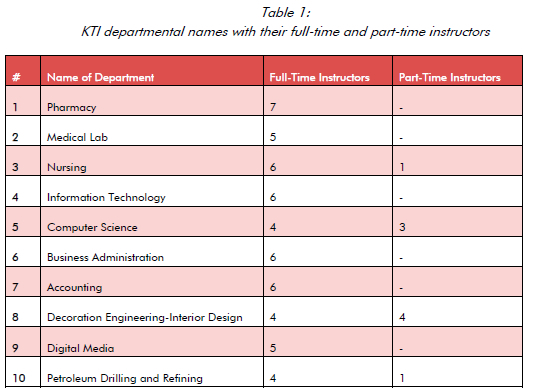
Since 2014, master's and doctoral degree holders have been seeking employment at private educational institutions due to a shortage of job opportunities in government institutions. One of the requirements for employment is the completion of a pedagogy training course by the applicant or holder of the position. At KTI, master's and doctoral degree holders must have undergone pedagogical training courses to meet this requirement. Therefore, this study focuses on this aspect of academic education. Each of the 10 departments at KTI has full-time and part-time instructors, as shown in Table 1. Reviewing the instructor profiles revealed that all full and part-time instructors held pedagogical training course certificates.
The part-time instructors did not have the opportunity to attend the workshop simultaneously with the full-time educators. The sample size for the study was 53 teachers, but since two of those instructors served as the study's researchers, only 51 instructors were included. Thus, among them, 34 teachers took part and provided comments, which is appropriate for a study on education (Creswell, 2012).
Analysis of the student-centred learning approach in the pedagogy training course
In the KRI, the Ministry of Higher Education and Scientific Research oversees higher education institutions and develops strategies to organize learning processes and promote local scientific research. Since 2019, the ministry has been implementing the Bologna Process (BP) to establish a common structure of higher education systems across all institutions in KRI (Tariq Khalid, 2022). The primary aim of the BP is to share more coherence among European higher education systems. In addition, it aims to create a European higher education system to improve student and staff mobility, increase access to higher education, and make it more attractive and competitive worldwide (Omer et al., 2021; Tariq Khalid, 2022).
Since the beginning of this decade, the term BP has been among the most often discussed topics in KRI higher education circles. The Ministry began implementing the BP in 2019 by sending selected members of higher education staff, especially professors and directors from different institutions, to HAMK-Häme University of Applied Sciences in Finland (Omer et al., 2021). The main objective of this initiative was to provide professional development pedagogical programmes for teaching staff. Previously, in the KRI, instructors were offered traditional pedagogical courses for three months as a Ministry of Higher Education employee training course. However, on October 28, 2019, the Ministry issued document number 1772, which proposed moving the traditional training courses to a new development and training academic and pedagogical centre.
All KRI institutions have since implemented this decision and now offer six-month pedagogical training courses as a prerequisite for BP implementation. Instructors who participated in the new pedagogical training course were significantly more motivated than those who did not. Therefore, training instructors for BP implementation is a critical element because it boosts motivation and helps the instructors define their new roles.
The pedagogical training course comprises six modules: Information and Communication Technology, Student-Centered Learning Approach, Innovative Teaching Methods and Assessment Tools, the Edupreneurship Module, Competency-Based Learning, and the Research Methodology Module. However, this study only discusses two modules: The Student-Centered Learning Approach and the Innovative Teaching Methods and Assessment Tools. These modules aim to help instructors understand how to shift the focus of the educational environment from teacher-centred to student-centred, as well as how to implement and evaluate students following BP standards.
The Student-Centred Learning Approach module, which can be accomplished in two months, is the most significant because it focuses on the learner. It aims to aid instructors in comprehending that the learning process is not only about transferring knowledge but also about deeper comprehension and critical thinking. According to this approach, instructors are facilitators who emphasize their students' autonomy and encourage them to construct meaning through proactive, independent learning, discovery, and reflection.
The second important module is the Innovative Teaching Methods and Assessment Tools module. Assessment is defined by quality assurance accreditation as any process that evaluates a student's knowledge, understanding, abilities, or skills in higher education (Zacharis, 2010). Therefore, assessment has a major impact on students' experience in higher education, and evidence for the certificate must be obtained. Traditionally, assessment was not seen as an essential part of teaching and learning itself but rather as a measuring tool after learning has been completed. However, the disadvantage of this traditional model is that assessments are given in an examination style at the end of each course, resulting in students prioritizing exams above actual learning. The outcome of taking this assessment module is to change 'assessment of learning' to 'assessment for learning'.
In the pedagogical course, instructors can get information about implementing assessments. There are two types of assessments which are presented in this module: formative and summative. The instructors learn how formative assessment is used to increase performance and improve students' learning experience (Zacharis, 2010). Such assessment should include providing students with timely, relevant feedback and helping them to understand and recognize quality during their educational process. On the other hand, the instructors are shown how summative assessments evaluate how much knowledge a student has acquired, which is crucial for certifications (Zacharis, 2010). This module helped instructors realize that formative assessment is the best method for assisting students in becoming the focus of their learning.
During the six-month pedagogical training course, the principles of psychology are ignored. The content of all six modules is far from the instructors' and students' emotional and social interactions. Due to these significant problems, a workshop was organized to discuss them with the KTI instructors and outline potential solutions.
Analyzing the instructors' reflections on the workshop
A one-day workshop was organized at the KTI under the guidance of the Ministry of Higher Education-KRI, in which 10 departments with more than 2000 students and 138 academic staff, including full-time instructors, part-time instructors, research assistants, and the employment of academic directorates, are employed. The workshop's goal was to allow participants to speak face-to-face with full-time teachers about the advantages, challenges, and limitations of using the student-centred learning approach in developing countries like Iraq and the KRI. The workshop was divided into three sessions. The first session presented general issues in applying a student-centred learning approach in KRI, including the lack of application of psychological principles. The conclusion of the session focused on three areas of interest: social interaction, instructors' emotions, and instructor-student communication. In the second session, an online Google questionnaire was conducted with three questions that targeted instructors' approaches in their classes. The third session was designed to understand instructors' reactions to the three main issues, i.e. social interaction, instructors' emotions, and instructor-student communication, and record their feedback on the topics.
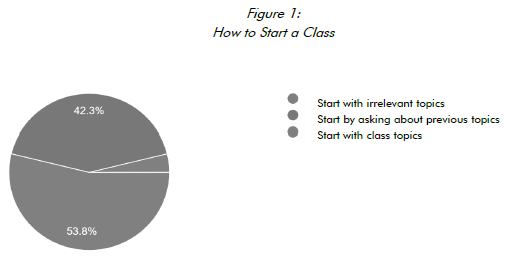
In the second session, an online Google questionnaire was designed to understand instructors' behavior toward students during class. Three questions were asked here. First, the instructors were asked how they started their classes. According to their responses, 53.8% of them start their classes with topics irrelevant to the class subjects, like having discussions about non-school subjects, including the overall situation of the area, business, social life, etc. Meanwhile, 42.3% said they started by asking about previous topics from the module. Then, 3.8% of them stated that they started with class topics.

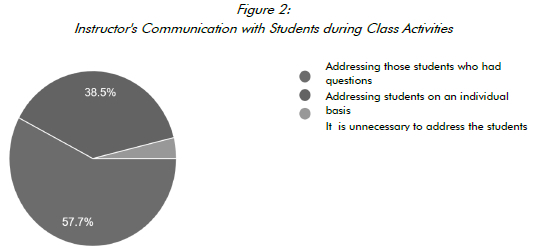
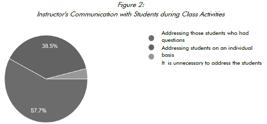
In addition, the instructors were asked if they communicated with individual students. From the total number of respondents, 57.7% of instructors said that they addressedstudents who had questions during class activities, while 38.5% mentioned that they addressed students on individual-basis during class activities. However, 19% of them stated that it was unnecessary to visit students when the activity had already been explained.
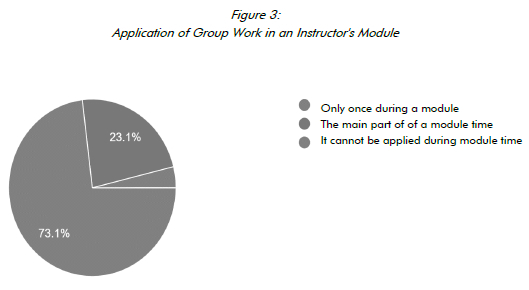
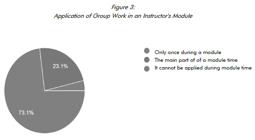
The last question was about designing module group work activities to enhance instructor-student and student-student communication. In this question, 73.1% of the instructors said that they could use group work activities only once during a module. Meanwhile, 23.1% said it is the main part of the learning strategy in their module. Finally, 3.8% stated that they could not apply for group work during their module time due to there being too many students in the classroom.
At the last session of the workshop, the participants discussed three psychological principles, and all of the instructors agreed that in the training pedagogy course, such principles had not been considered. Their feedback on the three issues was as follows:
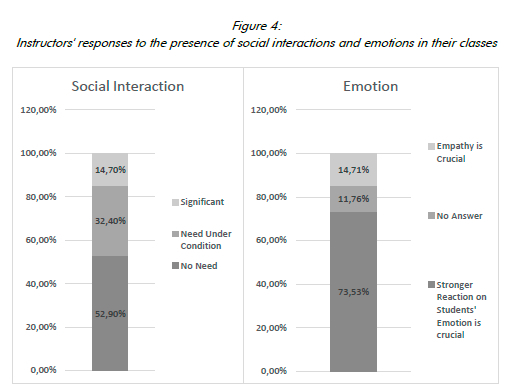
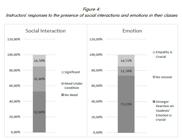
a. Social Interaction: The lecturers fell into three groups at this point. The first group, which comprised 52.9% of the participants, thought there should not be any social connection between students and teachers because the latter might use their positions for personal gain. Meanwhile, 32.4% believed in creating social interaction between teachers and students under the proviso that the subjects of these interactions would fall within the purview of the class topics. Then, 14.7% of the instructors said that social attraction should be used in all forms in a learning environment.
b. Emotion: When two participants considered that an instructor's activities might cause a strong emotional response, the other participants and all the participant teachers agreed that new instructors were sometimes hesitant before presenting their lectures. However, the workshop participants' opinions on how instructors should react to students' emotions brought about a heated conversation because 73.53% of them thought that to exert their authority over students, instructors should react to students more harshly/strictly', with less empathy. Meanwhile, 14.71% of them believed that empathy was essential and that there there should be more support for students, and 11.76% did not respond.
c. Communication: The importance of communication between students and instructors was shared by all participants. Surprisingly, almost all the participants highlighted the instructor's conversations without mentioning the importance of the student's perspective on listening.
DISCUSSION
Despite the mandatory modules that instructors had to complete for their training pedagogy course, the workshop discussions showed that they did not consider psychological principles to be an integral element of their teaching methodology. This may be a sign that the Ministry of Higher Education's agenda for increasing instructors' awareness and knowledge required for a student-centred approach may not successfully secure an environment suitable for instructors and students to engage in such an approach.
Researchers continue to debate the desired degree of engagement between instructors and students. In previous studies, many instructors said they adopted an approach with the students whereby they did not immediately start talking about the class material but, instead, engaged in conversation and discussion with the students about topics unrelated to their course materials. This was done to establish rapport with the students and encourage them to talk about topics in addition to those covered in class. The teachers believed this may have affected students' perceptions of the classes as being less important subjects to learn about and retain. However, we could not determine if the outcomes of these teachers' trials would be successful compared to those who did not utilize the same method in our study. The results imply that teachers need some engagement even when unfamiliar with psychological principles. Due to the feedback they receive from their students, most teachers now advocate group projects, which have been identified in the literature as one of the tactics for facilitating easy learning and fostering the development of stronger soft skills in students.
Another point raised was that 73.53 percent of respondents thought that teachers should adopt a teacher-centred role and exert authority over their students to demonstrate who is a teacher and who is a student. There is a significant lack of understanding among teachers regarding the importance of psychological principles centred on considering students' emotions.
Regarding the communication component, instructors thought it was important to communicate and that students should pay attention to what they had to say, with no expectation that they should do the same for them. This is, once again, a negation of the student-centred approach because it returns the process to a teacher-centred one in which the instructor is the sole authority who needs to be taken into account: the teacher is the source of knowledge, while the students serve as passive recipients.
The pedagogy course is a requirement for aspiring instructors wishing to implement a student-centred strategy. Many instructors' inability to create an environment supporting the student-centeed approach is due to the background attitudes they bring to their teaching practices from the schools they attended as students and the lack of any psychological principles in the pedagogy courses they took. This study recommends that the decision-makers change pedagogy courses to focus on psychological concepts. Without the focus on psychological concepts, creating a student-centred environment that works seems to be too difficult an undertaking, resulting in the teacher-centred approach predominating despite the necessary educational courses having been taught.
CONCLUSION
In conclusion, the student-centred approach is gaining popularity in higher education globally. However, implementing this method in developing countries like KRI faces several challenges, particularly due to the lack of psychological principles being introduced into the pedagogy courses required for new instructors. This study highlights the importance of including psychological principles in pedagogical training programmes to promote student-centred learning in higher education. Failure to do so, hinders the creation of a student-centred learning environment and influences the application of educational psychology principles, as the results of the one-day workshop held for teachers at KTI in KRI showed. Consequently, all the instructors employed a teacher-centred educational learning process. To address this, the study recommends that psychological principles be included in future pedagogical training programmes to promote a more effective learning experience for instructors and students. In addition, this study emphasizes the need for instructors to be aware of and understand the psychological concepts that play a crucial role in student-centred learning. Overall, the findings of this study highlight the need for ongoing education and development for instructors to create the most supportive and effective learning environment for students in the KRI.
REFERENCES
- Agrahari, R. (2016). The nature of educational reform and change: From teacher-centered to student-centered learning. Educational Quest-An International Journal of Education Applied Social Sciences, 7(2), 133-139. http://dx.doi.org/10.5958/2230-7311.2016.00030.1
- Ahmed, A. K. (2013). Teacher-centered versus learner-centered teaching style. Journal of Global Business Management, 9(1), 22.
- Alexander, P. A. & Murphy, P. K. (1998). The research base for APA's learner-centered psychological principles. Paper presented How students learn: Reforming schools through learner-centered education. https://doi.org/10.1037/10258-001
- Ali, S. S. (2019). Problem based learning: A student-centered approach. English language teaching, 72(5), 73-78. http://dx.doi.org/10.5539/elt.v12n5p73
- Anderson, G. & Arsenault, N. (2005). Fundamentals of educational research: Routledge: New York.
- Chong, C.-H. & Yeo, K.-J. (2015). An overview of grounded theory design in educational research. Asian Social Science, 11(12), 258. http://dx.doi.org/10.5539/ass.v11n12p258
- Creswell, J. (2012). Educational Research: Planning Cconducting and Evaluating Quantitative and Qualitative Research, (4th ed.). Pearson Education.
- Emaliana, I. (2017). Teacher-centered or student-centered learning approach to promote learning? Jurnal Sosial Humaniora, 100(2), 59-70. http://dx.doi.org/10.12962/j24433527.v10i2.2161
- Huguet, P. & Kuyper, H. (201 7). Applying social psychology to the classroom. In P. A. Schutz & R. Pekrun (Eds.), Emotion in education (pp.123-140). Cambridge University Press.
- Hurst, B., Wallace, R. R. & Nixon, S. B. (2013). The impact of social interaction on student learning. Reading Horizons, 2013(4), 375-398.
- Jaleel, S. (2010). Psychological Principles for e-Learning. Accepted in: 3rd Annual Forum on e-Learning Excellence in the Middle East 2010 - Bringing Global Quality to a Local Context. Online Submission. https://files.eric.ed.gov/fulltext/ED508860.pdf
- Keiler, L. S. (2018). Teachers' roles and identities in student-centered classrooms. International Journal of STEM education, 5(34), 1-20. https://doi.org/10.1186/s40594-018-0131-6
- Lojdová, K. (2019). Socialization of a student teacher on teaching practice into the discursive community of the classroom: Between a teacher-centered and a learner-centered approach. Learning, Culture Social Interaction, 22, 100314. http://dx.doi.org/10.1016/j.lcsi.2019.05.001
- Motschnig, R., Sedlmair, M., Schröder, S. & Möller, T. (2016). A team-approach to putting learner-centered principles to practice in a large course on Human-Computer Interaction. Paper presented at the 2016 IEEE Frontiers in Education Conference (FIE), (pp. 1-9). IEEE. doi:10.1109/FIE.2016.7757576
- Omer, M. A., Asaad, M. M., Sofi-Karim, M., Kakakhan, M. B., Al-Zangana, S., Mohammed, O. A., ... Mohamad, K. K. (2021). Academic staff's attitude toward the Bologna process and the new pedagogy in the University of Garmian. ZANCO Journal of Pure Applied Sciences, 33(1), 68-76.
- Rauf, H. L. & Shareef, S. S. (2022). Reconsidering architectural education based on Freire's ideas in Iraqi Kurdistan. Educational Philosophy Theory, 54(13), 2243-2255. http://dx.doi.org/10.1080/00131857.2022.2130045
- Schwartz, N., Click, K. & Bartel, A. (2023). Educational Psychology: Learning and Instruction. International Handbook of Psychology Learning Teaching, 357. http://dx.doi.org/10.1007/978-3-030-28745-067
- Serin, H. (2018). A comparison of teacher-centered and student-centered approaches in educational settings. International Journal of Social Sciences Educational Studies, 5(1), 164-167.
- Tariq Khalid, A. (2022). Teacher Motivation towards the Implementation of Bologna Process in Erbil-Kurdistan. International Journal of Social Sciences Educational Studies, 9(3), 83-92.
- Wulf, C. (2019). "From teaching to learning": Characteristics and challenges of a student-centered learning culture. In Inquiry-based learning-Undergraduate research: The German multidisciplinary experience 7-55.
- Zacharis, N. Z. (2010). Innovative assessment for learning enhancement: Issues and practices. Contemporary Issues in Education Research, 3(1), 61-70.
Date of Review Outcome: 15 July 2024
Date of Acceptance: 8 August 2024