The value of musical theatre training in performing arts education: a multidisciplinary and interdisciplinary paradigm shift
Abstract
Musical theatre in South Africa has transformed into an elective specialisation module within a multidisciplinary qualification structure that embraces entrepreneurship, decolonisation, Africanisation and the creative industries. This article critically evaluates the role and value of the Musical Theatre and Work Integrated Learning (WIL) modules for theatre productions at the Tshwane University of Technology (TUT), South Africa, within the Higher Education Qualification Sub Framework (HEQSF) curriculum. Employing an exploratory research approach, this study draws on the author's insights and experiences as a lecturer in musical theatre and production, especially in relation to the new curriculum. It offers valuable personal perspectives from participation, observation, and document analysis. These insights underscore the pedagogical significance of musical theatre productions, fostering cross-disciplinary collaboration and cultivating Communities of Practice (CoPs). Ultimately, the opportunities for cross-disciplinary collaboration hold promise in preparing students for a dynamic and competitive performing arts industry in South Africa.
Community of Practice (CoP); HEQSF curriculum; interdisciplinary; musical theatre; multidisciplinary; performing arts
INTRODUCTION
Multidisciplinary and interdisciplinary practices in the performing arts, especially in musical theatre, are not new concepts and are often demonstrated through various South African oral performance practices on personal and commercial platforms. Furthermore, multidisciplinary and interdisciplinary performance practices are strongly encouraged when reviewing the South African performing arts landscape and work integrated learning (WIL) possibilities in preparing graduates to enter the workforce. What has changed is the position of musical theatre within multidisciplinary South African performing arts training at Tshwane University of Technology (TUT).
The Higher Education Qualifications Framework (HEQF), introduced in 2007, aimed to establish a unified national framework for higher education in South Africa. The primary goal was to create a coordinated system enabling articulation and student mobility between universities and former Technikons (now Universities of Technology) (Council on Higher Education, 2013). In 2013, the framework was revised and renamed the Higher Education Qualifications Sub-Framework (HEQSF), which integrated all higher education qualifications into the National Qualification Framework (NQF). By December 2019, public and private Higher Education Institutions (HEIs) were required to phase out non-aligned qualifications, with TUT reducing its offerings from 400 to 324 HEQSF-compliant programmes (Buthelezi, 2018).
This transformative development reshaped the approach of performing arts education in a South African context, transcending Western-orientated curricula and conventions to embrace Africanisation and multidisciplinary collaboration as the core focus of the Performing Arts qualifications (Tshwane University of Technology, 2023). As a result, all TUT National Accredited Technical Education Diploma (NATED) qualifications in Drama, Entertainment Technology, and Performing Arts (Dance, Music, Musical Theatre, and Vocal Art) were gradually phased out. The new HEQSF-aligned qualifications were introduced under the unified Department of Performing Arts in 2020. Musical Theatre transitioned from an independent programme to an elective specialisation module within the HEQSF Performing Arts curriculum. Therefore, 2020 marked a significant turning point in the ever-evolving landscape of performing arts education.
Traditional musical theatre training is inherently multifaceted, requiring aspiring performers to develop as 'triple-threats', signifying the need for mastery in singing, dancing, and acting (Cuny, 2022: 133). Additionally, contextual studies play a vital role in traditional musical theatre training, incorporating modules that highlight its multidisciplinary nature, such as stagecraft, musical theatre history, audition protocols, and professional practices like headshot and showreel preparation (Fenton, 2024). What sets musical theatre education apart is the immersive pedagogical approach wherein these essential skills are interwoven seamlessly into the fabric of live performance, demanding artists to skilfully integrate this array of proficiencies (Cuny, 2022). Cuny (2018) observes that the successful integration of all musical theatre elements and competencies may remain elusive after three years of intensive training. Thus, embarking on a professional journey in this field, marked by sustained success emerges as a formidable challenge. Boughey and McKenna (2021: 52) argue that implementing the HEQSF in South African education may have been a regrettable missed opportunity, questioning if the implementation was 'generally undertaken in a superficial process of compliance; instead of a chance to delve deeper into transformation and to engage with questions of knowledge'. Consequently, we find ourselves at a critical juncture, compelled to consider whether the transformed Musical Theatre module is relevant in a multidisciplinary HEQSF curriculum framework or is a missed opportunity.
PROBLEM STATEMENTThe restructuring of the musical theatre paradigm has shifted from a self-contained curriculum in the NATED programmes to an integrated elective module within a wider-ranging, multidisciplinary framework for performing arts education. Musical theatre training has transitioned from approximately 2,308 dedicated notional hours over four years to an allocated 2,100 notional hours spanning five years. Notably, a significant portion of this revised HEQSF curriculum, amounting to 800 hours, is now devoted to multidisciplinary and interdisciplinary WIL: Production modules focused on production and performance aspects (Tshwane University of Technology, 2024b). Therefore, it becomes imperative to consider the enduring appeal of musical theatre training within a non-traditional musical theatre framework characterised particularly within a multidisciplinary South African-focused performing arts educational context.
RESEARCH PURPOSEThe article evaluates the impact of integrating musical theatre education into a multidisciplinary framework within the HEQSF curriculum at TUT. It investigates how this shift from a self-contained programme to an elective specialisation module influences the value of musical theatre education in a South African context. Additionally, the article reflects on the observed outcomes of this transition and perceived implications of multidisciplinary and interdisciplinary WIL: Production modules for musical theatre training. Ultimately, the article aims to understand how this integration enhances the alignment of musical theatre with broader performing arts education and the South African industry.
The literature review discusses the fundamental aspects of the current performing arts landscape in South Africa, including multimodal and socially integrated performance practices, the influence of COVID-1 9, and the reality of unemployment in the performing arts. The discussion is necessary to establish the relevancy of musical theatre in the HEQSF curriculum, specifically as part of WIL: Production modules.
South African performing arts landscape
South Africa boasts a vibrant and multifaceted performing arts landscape, deeply rooted in diverse cultural heritage and historical context. Ebewo (2017) perceptively observes that the nation is skilled with abundant performance practices from indigenous traditions to contemporary entertainment. This dynamic interplay of influences reflects South Africa's complex theatrical history, which includes pre-colonial indigenous performances, the influence of colonial theatre, the resilience of Apartheid-era protest theatre, and the evolution of hybrid theatrical styles. As Hauptfleish (1997) describes, South African theatre has emerged as a syncretic, or hybrid, form, reflecting the inevitable dynamics of a multicultural and multilingual society with continuous exposure to performance practices from Africa, Europe, America and the East. Nawa (in Kgwasi, 201 9: 239) further emphasises the cultural adaptability and notes that 'indigenous African culture is not sensitive to influences from other cultures' and 'thrives and evolves around them'. South Africa's 11 official languages and abundant hybrid cultural identities continue to shape the performing arts landscape, with Hemke (2019) highlighting these as critical factors in its ongoing evolution. South African theatre, therefore, serves as a mirror to its cultural plurality, offering a space where traditional and modern artistic expressions converge.
The performing arts industry portrays as an integral part of South African tourism appeal, resonating deeply with audiences and encompassing over 100 active venues nationwide (South African Tourism, 2023). These venues offer a wide range of productions, from Indigenous dramas, musical compositions, dance performances, cabaret, and satirical productions, as well as renditions of West End and Broadway musicals, classical operas, and ballet spectacles. Beyond formal theatre spaces, Ebewo (2017: 14-15) explains that there are many performances in the Southern African region that expresses 'the rhythm of everyday life'.
Performances are universally on display during festivals, commemoration day celebrations, sporting events, and even within the chambers of Parliament. Non-commercial spaces, including schools, churches, community theatre, performing arts competitions, and dynamic social media platforms further contribute to the theatrical ecosystem.
Multimodal and socially integrated performance practices
It is essential to recognise that dramatic performances in African societies are notably multimodal in their composition, skilfully weaving together elements of dance, drama, vocal and instrumental music. As Chinyowa (2000) explains, these fundamental performative elements synergistically combine to constitute the foundation of the signifying system within African ritual theatre. This multimodal integration serves as an intrinsic feature of African performance practices, as explained by Zenenga (2015), clarifying how the fusion of theatre, music, dance, and various other creative art forms are integral components of the aesthetic paradigm that underpins African performance traditions. Furthermore, performance practices in many African communities are fundamentally collective activities (Dei, 2000; Finnegan, 2016; Lebaka, 2018; Nasseem, 2003) and display communal processes of learning and Community of Practice (CoP) characteristics. Lave and Wenger's (1991) theory of CoP from studying apprenticeship as a learning model, was driven by dissatisfaction with traditional methods that emphasise abstract, decontextualised knowledge. These conventional approaches often fail to account for knowledge and skill acquisition through experiential and practical learning beyond formal education and training (Fuller et al., 2005; Lave & Wenger, 2006). According to Wenger (1998), this social theory of learning integrates meaning, practice, community, and identity, fostering knowledge acquisition and learning through social engagement and a sense of belonging within a community. Storytelling is an excellent example of such practices, as 'stories, riddles, proverbs, taboos, folklore, games, simulation, and drama' are frequently used as techniques for indirect social learning in many communities all over the world (Epskamp, 1992: 12). Ebewo (2017) fittingly explains that dramatic performance practices are intricately linked to the cultural core of a community.
It is crucial to acknowledge that the musical theatre genre, characterised by its multifaceted nature encompassing singing, dancing, acting, and storytelling, inherently resonates with the rich traditions of African performance practices. In this context, musical theatre finds a natural resonance within the South African theatre and performance landscape. This correlation enables the adaptation and integration of musical theatre performance into the local context, offering a dynamic avenue for artistic expression and cultural exploration. Furthermore, musical theatre underscores the potential for cross-cultural exchange and collaboration, enriching the diverse tapestry of South African theatre and performance.
COVID-19 and online stages
The onset of the COVID-19 pandemic expedited the adoption of various online alternatives, particularly within the performing arts sector, which faced an unprecedented halt and a slow recovery because of social distancing measures and venue audience capacity restrictions (NCOP Education, Sciences and Creative Industries, 2020). During this juncture, there was a collective pivot towards social media to alleviate boredom and foster community. The pandemic ushered in a new era, propelling live streaming and downloadable options to the forefront, offering audiences access to diverse performances from across the globe (Cohen, 2020).
In this digital transformation, social media platforms were pivotal as substitute storytelling and performance platforms. YouTube, Facebook, Instagram, and TikTok emerged as virtual stages, redefining the concept of the 'stage' itself (Boffone, 2021). The expansive and lasting impact of social media, as Boffone (2021) argues, has also affected traditional theatre environments, including live stage productions and physical performance spaces. This paradigm shift underscores digital media's enduring and transformative impact on the theatre and performance industries. As digital cultures become increasingly ingrained in our day-today cultural landscape, their impact on live theatre and performance spaces is an inevitable prospect and reality (Boffone, 2021).
In South Africa, Cowling (2024) reports 26 million social media users in January 2024 and a substantial increase in internet usage from 25 million in 2013 to 45.34 million in January 2024. Social media statistics for early 2024 revealed a growth rate of 0.8% (equivalent to 200,000 users) since 2023. Notably, Facebook leads with 26 million users, followed closely by YouTube (25.1 million users), Instagram (6.95 million users), and TikTok (17.46 million users) in South Africa (Kemp, 2024). Given these figures, imagining a contemporary world where social media does not exert significant cultural influence is increasingly challenging.
Scholars have extensively researched the performing arts landscape and trends in South Africa, both before and during the COVID-19 pandemic. However, it is apparent that the full implications of the ongoing transformation in the performing arts landscape, prompted by the profound shifts witnessed in the global environment since 2020, remain unfamiliar. Acknowledging digital platforms as dynamic and swiftly evolving arenas for teaching, learning, online community formation, and identity shaping is essential. These platforms play a significant role not only in social contexts but also across diverse professional domains, including the performing arts.
Performing arts employment reality
The notion of the 'struggling artist' persists as an unfortunate reality in South Africa, amplified by the prevailing high rates of unemployment, particularly among youth, women, and the black population (Snowball & Hadisi, 2020: 267). Notably, in the second quarter of 2023, the nation confronted a harsh reality, with the highest levels of unemployment observed within the age groups of 15 to 24 (60.7%) and 25 to 34 (39.8%), indicating a significant challenge in youth employment (Maluleke, 2023a). Furthermore, the unemployment rate for black South Africans remained persistently elevated, surpassing the national average at 36.8% (Maluleke, 2023a).
It is important to contextualise these figures within the broader economic landscape, particularly considering the impact of the COVID-19 pandemic. The pandemic has catalysed a noticeable surge in unemployment levels. By the second quarter of 2023, the nation was on the verge of returning to pre-pandemic unemployment levels (Maluleke, 2023a). The unemployment statistics underscore the pressing and pervasive challenges faced by many individuals in the arts sector who grapple with economic instability amid these persistently high levels of unemployment.
Maluleke (2023) describes TUT as an institution where the integration of academia and technology is driven by advanced technology in curriculum design. According to the Council on Higher Education (CHE), WIL plays a significant role in students' professional development and employability (Winberg et al., 2011). The CHE further states:
Programmes that include WIL offer opportunities for students to prepare for, and learn from, the workplace, to transfer discipline-based theory and a wide variety of skills learned in their formal education to an authentic context as a colleague and employee, with all the responsibilities and expectations such a role entails' (Winberg et al., 2011: 6).
As part of the WIL: Production modules, the Department of Performing Arts applies simulated work-based practices (Ebewo & Sirayi, 2018), industry masterclasses, and training workshops. Therefore, obtaining a comprehensive understanding of the performing arts landscape, challenges, and opportunities is crucial to ensure graduates' readiness for the reality of the performing arts industry.
Given the variety of performance practices in South Africa, there are various opportunities for employment within the performing arts. The United Nations Educational, Scientific and Cultural Organization's (UNESCO) Framework for Cultural Statistics (FCS) outlines various cultural domains as measurement tools to track cultural activities, goods and services provided by industrial and non-industrial processes (UNESCO, 2009). The South African performing arts landscape resonates with the UNESCO FCS, showcasing the diversity and significance of cultural practices in South Africa. It emphasises the rich cultural heritage, the role of performance and celebration, the influence of contemporary media, the importance of intangible cultural heritage, and the role of education and training in preserving and promoting cultural traditions.
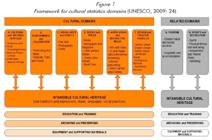
Domain A emphasises indigenous traditions, storytelling, and oral performance practices passed down orally through generations, providing a foundation for the nation's artistic expression despite economic struggles. Domain B underscores the role of performance and celebration in reflecting South Africa's diverse cultural expressions, which plays a key role in identity-building and can provide avenues for employment. The influence of audio-visual and interactive media is evident in the integration of performance practices on dynamic social media platforms, aligning with Domain E, which encompasses contemporary forms of cultural expression. The transversal domain of intangible cultural heritage emphasises preserving and promoting cultural performance practices within South African tourism and under the Department of Sports, Arts and Culture umbrella. Education and training are transversal domains that impact various aspects of artistic expression, and performing arts training at TUT directly contributes to this domain.
The National Arts Council (NAC) has explicitly expressed its commitment to actively contribute to economic growth and job creation within the domains of art, culture, and heritage (National Arts Council, 2021). The NAC suggests that a pivotal strategy in combating unemployment, particularly among the youth, is to provide comprehensive education about the numerous career prospects within the arts industries. However, the NAC also advocates for the cultivation of robust networks within the arts sector, urging young individuals to explore opportunities for self-employment and entrepreneurship as viable paths to employment and empowerment (National Arts Council, 2021).
While stakeholders increasingly recognise the potential of the Cultural and Creative Industries (CCI) to foster economic growth and generate employment opportunities, these projects often rely on short-term contracts. We can attribute this phenomenon to what Snowball and Hadisi (2020: 267-268) describe as a potential 'over-supply of creatives in a sector with low barriers to entry and high levels of risk'. Considering these circumstances, networking, entrepreneurship, and adaptability are paramount for performing artists aiming to endure and thrive in the ever-evolving landscape of the arts.
Furthermore, Snowball and Hadisi (2020) contend that formal education, access to social networks, and funding availability are pivotal factors determining the success of young artists seeking to establish themselves within the industry. Consequently, it is reasonable to argue that the cultivation of social networks should commence at the institutional level and encompass a multidisciplinary approach. In this context, musical theatre's position emerges as a potential platform that can facilitate the creation of social networks and community, fostering a supportive environment for emerging artists and offering them opportunities to navigate the multifaceted challenges of the performing arts sector.
Building upon the insights gained from the South African performing arts landscape and its alignment with the UNESCO FCS, it becomes evident that the rich and multifaceted cultural heritage of South Africa holds significant implications for the education and training of performing arts students. In South Africa, this underscores the vital need for performing arts education to nurture students who possess artistic talent and the ability to adapt and excel in an industry where multidisciplinarity, interdisciplinarity, and adaptability are paramount. Whether it be through the fusion of dance, music, and storytelling, the utilisation of performance in various societal settings, or the exploration of new avenues offered by digital platforms, the training of future performers must equip them with the skills, knowledge, and adaptability required to participate meaningfully in this diverse cultural milieu.
RESEARCH METHODOLOGYThe selected methodology is reflective and exploratory since the inquiry examines a phenomenon that has not yet been clearly studied or understood (Haile, 2023; Mbake & Monday Isiramen, 2021). Therefore, the aim is to gather insights and establish familiarity to inform subsequent research and investigation (Haile, 2023; Mbake & Monday Isiramen, 2021 ; Stevens et al., 201 2). Gardner (in Mulgan, 2021: 14) observes that 'it takes at least ten years of immersion in an art or discipline to make genuinely creative breakthrough'. Therefore, the advent of the HEQSF Performing Arts curriculum in 2020, combined with the nearly three-year disruption of educational and performing arts industries caused by the COVID-19 pandemic, has heightened the challenges of comprehending the impact and opportunities of the new curriculum. This context underscores the suitability of exploratory research for this inquiry.
Engagement with various stakeholders on the curriculum is crucial for academic staff to understand its impact and effectiveness. As lecturers, supervisors, and directors of practical projects and productions, continuous involvement in curriculum-related activities enables the identification of emerging patterns, the analysis of challenges, and the establishment of a solid foundation for ongoing research and curriculum improvement (Swedberg, 2020; Haile, 2023). Such engagements are not merely administrative but are integral to building a comprehensive understanding of how the curriculum functions in practice.
Drawing on Mulgan's (2021) concept of 'praxis' (where action, analysis, theory, and practice converge, the study employed document analysis, active participation, and personal observation as core methods. Document analysis included a thorough review of curriculum guidelines and course materials to understand the formal framework of the HEQSF curriculum. Active participation involved taking on the roles of lecturer, director, and supervisor during eight simulated musical theatre WIL productions from 2022 to 2023, facilitating first-hand experience in applying the curriculum. Personal observations focused on group dynamics, interactions, and learning processes within these productions, providing contextual insights into student engagement and collaborative practices. These combined methods were instrumental in thematically analysing how musical theatre is integrated into the HEQSF curriculum through WIL, offering preliminary insights that can inform future educational practices and research.
As the study is based on conceptual experiences and observations in the context of teaching practice, rather than research involving direct interaction or data collection from participants, ethical clearance was not required. The observations conducted focused on group processes and pedagogical practices, without collecting or recording any personal or identifiable student data. This approach ensured the integrity of students observed was maintained, and no ethical concerns arose.
Reiter (2013) emphasises that the reliability of exploratory research can be ensured when it is conducted systematically, with self-awareness, transparency, and honesty, while recognising the researcher's situatedness, limitations, and inherent biases. The musical theatre production experiences allowed the development of a critical reflection by employing a structured data collection and analysis approach while remaining mindful of the author's positionality, reflective approach and potential biases. Continuous reflection and critical engagement with the data ensured a balanced and honest interpretation of the findings to consider how the observed and explored practices align with the intended goals and objectives of the HEQSF curriculum framework.
DISCUSSION OF FINDINGS
The data for this reflective and exploratory article were collected and thematically analysed through document analysis, as well as active participation and observation in the author's roles as lecturer, director, supervisor, and mentor during eight musical theatre productions over a two-year period. Document analysis involved an in-depth review of various sources, including WIL: Production course material, TUT prospectus, institutional marketing material, and published articles by key contributors to the initial re-curriculation process. These documents were examined to establish the context, intended outcomes, and opportunities presented by the new curriculum. It is important to note that, as the new curriculum was only implemented in 2020, these documents primarily reflect the conceptual vision of the curriculum as designed on paper. The practical realities and effectiveness of what is outlined in these documents are still being explored and understood through its gradual application in teaching and learning practices.
Ebewo and Sirayi (2018) argue that the Department of Performing Arts merger streamlines offerings and eliminates duplication across disciplines. WIL: Production is an example of the streamlining process, where students can participate in productions across various streams and disciplines. According to Ebewo and Sirayi (2018) the industry prefers multidisciplinarity rather than focussing solely on specialisation in a single discipline. In support of the CHE's aim (Senekal & Lenz, 2020), the TUT Performing Arts curriculum supports local content development and addresses challenges and opportunities highlighted in the South African performing arts landscape. The module structure supports economic and creative industry developments within a business and entrepreneurial environment, better-preparing graduates for the industry as 'art for art's sake is gradually losing currency' (Ebewo & Sirayi, 201 8: 91).
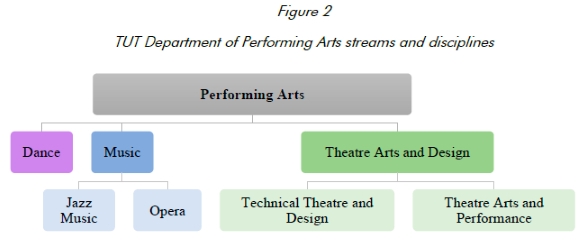
Within the HEQSF curriculum framework, the Department of Performing Arts consists of three streams: Theatre Arts and Design, Dance, and Music. Figure 2 illustrates how various disciplines further divide the three streams (Tshwane University of Technology, 2024b):
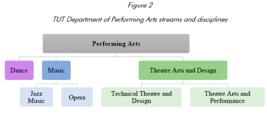
The curriculum spans from the first to the fifth year and is organised into core modules, stream-and discipline-specific compulsory modules, and elective specialisation modules (Tshwane University of Technology, 2024b). Core modules, such as WIL: Production, are compulsory for all students across the three streams. As part of these core requirements, all students must participate in at least one departmental production per year. To accommodate this, a diverse range of productions is scheduled each year across the various streams and disciplines.
Building on the foundation of core and compulsory modules, students select one or two elective specialisation modules, depending on their year of study. The Dance stream includes electives such as Tap, Ballet, Contemporary, Jazz, Popular Dance, and Studio Practice, allowing students to focus on specific dance styles. In the Music stream, the Jazz discipline offers both instrumental and vocal training, while the Opera discipline includes options such as Choral Studies and Conducting, Practical Musicianship, and Voice and Opera training. The Theatre Arts and Performance discipline provides a variety of elective specialisations, including Acting, Applied Theatre, Directing, Multilingual Voice and Media, Musical Theatre, Physical Theatre, and Scriptwriting (Tshwane University of Technology, 2024b).
WIL: Production offers ideal opportunities for 'multidisciplinary productions that offer exposure to different performing arts working strategies resulting in collaborative creative outcomes; (Tshwane University of Technology, 2024b: 119). The continuity of WIL: Production from the second to fifth year creates a unique platform for fostering multidisciplinary and interdisciplinary collaboration and skill enhancement. This environment, facilitated by mentor supervision and peer learning, enriches the educational experience, and cultivates essential attributes such as flexibility, adaptability, networking, and a strong sense of community. Musical theatre productions easily provide an inclusive platform for students across the Dance and Music streams, and Theatre Arts and Performance discipline, offering valuable preparation for future careers in the South African performing arts industry.
Reflection and themes
Key themes that emerged from the rehearsal and performance processes, situated within the context of Musical Theatre and WIL: Production modules, include production concerns and challenges, the snowball effect, students' sense of belonging, and the dynamics of collaboration and peer learning.
Production concerns and challenges
A persistent concern emerged in 2022 when many COVID-19 restrictions were eased in the education and performing arts sectors: the sense that the new curriculum might have been a missed opportunity. Balancing the integration of production across multiple streams and specialised discipline modules within the multidisciplinary curriculum framework, while aligning with the new curriculum's objectives and outcomes, posed significant challenges. Staff and students continuously compared the HEQSF curriculum to the NATED curriculum's outcomes while facing the reality that substantial changes in the curriculum and education (due to the COVID-19 pandemic) have occurred and that such a comparison was unrealistic.
Mindful of the persistent challenges stemming from ongoing COVID-19 restrictions at the start of 2022, and the recent implementation of the HEQSF curriculum during the national COVID-19 lockdown period, a musical revue was devised as a flexible production strategy to navigate these obstacles. The musical revue marked the inaugural departmental production following the relaxation of COVID-19 restrictions, allowing for live productions and audience attendance in theatres and other performance spaces (Modise, 2022).
Initially, the 2022 musical revue appeared to be an impossible challenge. An open audition invitation was necessary, recognising the potential for participation from students across Performing Arts streams. Regrettably, auditions yielded minimal sign-ups, resulting in a limited final cast. Despite encountering numerous challenges, the musical revue was captivating, well-received, and resonated positively with audiences. Consequently, the Musical Theatre elective students' determination to achieve their future project visions became evident.
The 2022 student-directed musical theatre project was a jukebox musical inspired by the work of an award-winning Afro-Pop South African singer and songwriter. The project was conceptualised in response to the student's aspiration to perform a musical in isiXhosa. The jukebox musical presented similar challenges, mainly recognising the necessity for a more extensive cast to fulfil the project's objectives. The student director proactively sought to recruit participants from all the Performing Arts streams. Prospective participants hesitated, felt uncertain, and perceived a lack of confidence in this endeavour due to their unfamiliarity with the genre and doubts about their abilities to contribute effectively.
The following year, six student-directed musical theatre adaptation projects were planned, each demanding substantial cast numbers. Student directors remained undeterred in pursuing ambitious projects and persisted in their chosen endeavours. However, similar to the previous year, auditions proved disappointing, leading to the realisation that casting the envisioned performers would be challenging.
The snowball effect
Unexpectedly, musical theatre productions since 2022 have created a surprising snowball effect, which has allowed for an upward trajectory in participation, teaching and learning, and interdisciplinary projects. Since 2022 the number of students engaging in musical theatre productions has increased significantly, with noticeable participation from previously underrepresented Performing Arts streams and disciplines. The 2022 musical revue featured a cast of 12 students, primarily from the musical theatre specialisation alongside two other elective specialisation modules, all within the Theatre Arts and Performance discipline. The jukebox musical from the same year included 15 cast members, comprising students from a limited number of elective specialisations in the Theatre Arts and Performance discipline and Dance stream. Across the six musical theatre adaptation projects in 2023, cast sizes ranged from 11 to 22, with a combined total of 97 performer roles. These adaptations included students from various elective specialisations within the Theatre Arts and Performance discipline, Dance and Music streams. The notable increase in participation across multiple streams and discipline electives demonstrates the snowball effect in action. The snowball effect can be attributed to the visibility of active student recruitment, word-of-mouth encouragement, and the success of previous productions, which collectively sparked interest among students from various streams and disciplines. Students who participated in the 2022 musical theatre productions returned to audition for the 2023 productions.
These productions visibly facilitated collaboration and the formation of new friendships, further enhancing students' engagement. The integration of performing arts disciplines across the three streams cultivated an interdisciplinary ecosystem. Within this environment, students developed adaptability through cross-disciplinary collaboration, aligning with Wenger's (1998) CoP framework, which highlights mutual engagement and shared goals as key to effective learning communities. This holistic approach to learning, as underscored by Mercieca (2017) and Wenger and Wenger-Trayner (2015), fosters dynamic learning environments that empower individuals and enrich collective knowledge. Prioritising these aspects, especially in an interdisciplinary and multidisciplinary environment, became essential in teaching-learning and production endeavours.
Students' sense of belonging
Initially, students (particularly those from Music and Dance streams, and other Theatre Arts and Performance elective specialisations) were noticeably reluctant to audition for musical theatre productions, despite being enrolled in multidisciplinary qualifications with interdisciplinary module opportunities. Students' hesitancy possibly stems from the NATED curriculum structures, wherein specialisation streams and disciplines were offered as independent programmes, fostering a siloed approach to learning.
The NATED Musical Theatre National Diploma experienced steady growth from an initial 32 students in 2012 to 78 registered students in 2019. During this period, students developed collective competence and skills while engaging in significant TUT production experiences. These included the South African premieres of Legally Blonde(2013), 9 to 5(2014), and The Producers (2016), in collaboration with the Dramatic, Artistic and Literary Rights Organisation (DALRO), at the Breytenbach Theatre. With the introduction of the HEQSF curriculum, the number of musical theatre students gradually decreased, reaching 27 in 2021, 21 in 2022, and 16 in 2023 across second to fifth-year levels. This shift in student numbers impacted the sense of community and belonging that had previously been nurtured within the programme. Additionally, observations from student participation patterns, feedback from departmental discussions, and reflections on curriculum implementation suggest that the transition to the HEQSF curriculum coincided with the challenges of the COVID-19 pandemic.
The COVID-19 pandemic intensified social isolation, mental health challenges, and disruptions in collaborative learning, affecting students' sense of belonging and identity (Brakespear & Cachia, 2021; Mizani et al, 2022; Dost & Smith, 2023; Senter, 2023). The rapid shift to online learning restricted face-to-face engagement, limiting opportunities for collaboration across disciplines. Furthermore, strict restrictions on higher education, theatre productions and gatherings (South African Government, 2025), integral components of creative and social engagement, forced staff and students into states of isolation. The impact of these disruptions was evident in students' reluctance to engage in cross-disciplinary performance opportunities and the challenges in rebuilding a sense of community within the programme.
Mercieca (2017) elucidates that individuals can belong to multiple communities, but there are specific boundaries to membership across various groups. Consequently, integrating into a new and unfamiliar community necessitates re-evaluating one's identity and belonging. Therefore, the paradigm shift is imperative for the Musical Theatre module's teaching and learning within the revamped Performing Arts curriculum, as students train to become multidisciplinary and interdisciplinary performing artists rather than discipline-specific specialists.
Spontaneously emerging CoPs afford students a sense of belonging within the social sphere and offer 'analytical perspectives on communal processes of learning' (Wenger & Wenger-Trayner, 2015: 36, 40). In student-directed projects involving students from the Music and Dance streams and other Theatre Arts and Performance elective specialisations, there appears to be a demonstration of interconnected characteristics of a Community of Practice (CoP), potentially fostering what Mercieca (201 7: 1 2) refers to as 'a dynamic learning community'. According to Wenger (1998), learning fundamentally transforms our sense of self and contributes to our personal narratives within the fabric of our communities. Three interconnected characteristics are pivotal to cultivating a vibrant learning community: (i) Domain (regular gatherings where individuals engage in social learning and collectively shape their identity), (ii) Community (participants nurture relationships, trust, and mutual respect among members), and (iii) Practice (authentic participation, guided by mentorship and skills transfer).
CoP characteristics were evident throughout the production process, particularly during rehearsals. In alignment with CoP domain, students appeared to value these gatherings, where a sense of enjoyment was evident, and their engagement reflected a playful yet committed energy that was observed and experienced. A sense of community developed as students demonstrated mutual respect and gradually built trust as they became more familiar with one another. This process involved recognising each other's strengths and weaknesses and fostering a collective willingness to support one another in achieving the production goals. Lastly, concerning practice as CoP characteristic, students displayed a willingness to learn unfamiliar skills. Students actively engaged with instructions and guidance from directors, mentors and peers demonstrating commitment to learn choreography, vocal techniques, and performance skills specific to the musical theatre style.
According to Ghimisi (2016), nurturing and promoting a sense of belonging is a fundamental aspect of CoP development, highlighting its importance in the context of performing arts education and collaboration. Engaging in multidisciplinary projects fosters a sense of belonging among participants as they collectively strive towards a successful production outcome, drawing upon collective competence from their respective streams and disciplines, and collaboration.
New strategies: Collaboration and peer learning
Collaboration in interdisciplinary projects, such as musical theatre productions, is a cornerstone of performing arts education. Collaboration is especially significant given the diverse landscape of South African performing arts, which emphasises creating employment opportunities through creative industries, entrepreneurship, and adaptability. Furthermore, as highlighted earlier, building social networks, including communities, and fostering adaptability are essential for emerging artists to carve their niche within the performing arts industry. While the WIL: Production modules provide avenues for networking and mentorship with industry stakeholders, establishing CoPs during tertiary education and collaborative efforts across the Performing Arts streams and disciplines presents an expanded networking platform for students among their peers before graduation.
The disappointing audition outcomes forced staff and students to devise a new strategy to assist students from other streams and discipline electives when participating in musical theatre productions. Wenger and Wenger-Trayner (2015) elucidate that CoPs place value on collective competence attained through peer learning. Ultimately, as initiated by the students, collective facilitation, additional skills training, and workshops were conducted to elevate students to the requisite standards for the respective productions. This improvement in skills was evident when comparing the progress from individual auditions to the final production. Students showcased enhanced performance abilities, increased confidence in executing choreography, vocal techniques and performance, as well as their overall professionalism within the musical theatre style.
Peer learning was evident during rehearsals and workshop sessions, where participants contributed diverse skills and expertise (Kenny, 2016) and shared a personal repertoire of resources (Wenger & Wenger-Trayner, 2015) to the learning environment. Student directors allocated vocal, choreography, and fitness training session tasks to leverage their strengths. Lecturers assisted with complex music scores, vocal harmonies, and performance training. Over time, cast members took the initiative to help struggling fellow cast members during breaks. Furthermore, students used credible online resources and tutorial videos to assist with specific choreography and singing challenges while making video and voice recordings to help with learning complicated choreography, song melodies, and harmonies at home because of rehearsal time restrictions. Consequently, WIL: Production modules evolved into a culmination of multiple skills and techniques drawn from personal experiences, disciplinary backgrounds, online resources, individual strengths, and peer and mentorship learning.
According to Higgs (2016), learners should be encouraged to seek meaningful connections between curriculum content and personal life experiences, presenting a significant challenge for educators in higher education to bridge this gap effectively. Therefore, combining a variety of learning strategies becomes essential. Discipline-specific elective modules follow structured lessons aimed at achieving specific curriculum outcomes, skills, and techniques under the guidance of lecturers, resembling an apprenticeship learning model. On the other hand, simulated WIL: Productions adopt a semi-structured format, facilitating practical learning and collaboration. Despite the value of peer learning and online resources, the concern arises that, without proper guidance, students might develop habits that could harm their vocal or physical health. Peer learning thus occupies a middle ground between structured strategies and lecturer supervision, underscoring the essential role of mentorship and guidance provided by faculty members.
CONCLUSION
Although musical theatre is considered a Western/European performance genre, it is easily adaptable to a South African context and allows for cross-cultural exchange. Therefore, Musical Theatre and WIL: Production modules encourage multidisciplinary and interdisciplinary collaboration and embraces the HEQSF curriculum's focus on Africanisation in content, styles, and social learning practices through CoP.
Experiences with the Musical Theatre and WIL: Productions modules in 2022 and 2023 revealed that many students from different streams and specialisation disciplines continue to participate in musical theatre productions and gradually build CoPs, redefining their identities and confidence as multidisciplinary and interdisciplinary performing artists. Musical theatre productions promote adaptability and skill development as students collectively learn to push boundaries outside of their elective's comfort zones, enhancing teaching and learning experiences while preparing the students for the many sectors within the South African performing arts industry. Therefore, musical theatre productions offer valuable opportunities for multidisciplinary and interdisciplinary collaborations that can accommodate diverse performers, large cast sizes, musicians, theatre technicians, and designers (possibilities are not discussed within this article's scope).
When the allocated WIL: Production hours are creatively and optimally utilised, teaching and learning benefit students from various backgrounds and stream disciplines, not just students taking the Musical Theatre module. Therefore, participation in musical theatre and similar multidisciplinary productions should be strongly encouraged and supported.
Whether the HEQSF in South African university curricula was undertaken as a superficial compliance process remains unclear, as the first cohort of HEQSF qualifications has only recently graduated. However, the new curriculum does not need to be a missed opportunity. This article has demonstrated various beneficial possibilities in the HEQSF Performing Arts qualifications, specifically in the Musical Theatre and WIL: Production modules at TUT. During the curriculum review processes, refinements to the curriculum will be inevitable, and the growing pains of new perspectives and paradigm shifts will be navigated while holding on to the exciting future possibilities the curriculum review might bring.
REFERENCES
Boffone, T. (2021, July 31). All the TikTok's a digital stage. The Theatre Times. https://thetheatretimes.com/all-the-tiktoks-a-digital-stage/
Boughey, C. & McKenna, S. (2021). Understanding higher education: Alternative perspectives. African Minds. http://dx.doi.org/10.47622/9781928502210
LITERATURE REVIEW
- Brakenspear, G. & Cachia, M. (2021). Young adults dealing with loneliness at university. New Vista, 7(1), 31-36. https://doi.org/10.36828/newvistas.23
- Buthelezi, S. A. (2018). Tshwane University of Technology curriculum gets 21st Century upgrade. Mail & Guardian. https://mg.co.za/article/2018-04-27-00-tshwane-university-of-technology-curriculum-gets-21st-century-upgrade/
- Cohen, R. (2020, April 16). Focus: South African theatre on demand. The Cape Robyn. https://thecaperobyn.co.za/focus-south-african-theatre-on-demand/
- Council on Higher Education. (2013). The Higher Education Qualifications Sub-Framework (HE Monitor no. 12). Council on Higher Education (CHE). https://www.che.ac.za/sites/default/files/inlinefiles/PUB_Higher%20Education%20Qualifications%20Sub-Framework%20%28HEQSF%29%202013.pdf
- Cowling, N. (2024, February 23). Digital population in South Africa as of January 2024. https://www.statista.com/statistics/685134/south-africa-digital-population/
- Cuny, J. (2018). Musical theatre performance strategies for the private singing studio. Australian Voice, 19, 7-14.
- Ebewo, P. J. (2017). Explorations in Southern African drama, theatre and performance. Cambridge University Press. Newcastle upon Tyne, United Kingdom.
- Ebewo, P. J. & Sirayi, M. (2018). Curriculum transformation in a post-apartheid South African University: The Arts Faculty, Tshwane University of Technology. Africa Education Review, 15(2), 82-95. https://doi.org/10.1080/18146627.2017.1307090
- Epskamp, K. (1992). Learning by performing arts from indigenous to endogenous cultural development(CESO Paperback no 16). Centre for the Study of Education in Developing Countries (CESO). https://eric.ed.gov/?id=ED379169
- Fenton, M. (2024). A proposed framework for reviewing and revising musical theatre curricula. Studies in Musical Theatre, 18(1), 57-73.
- Finnegan, R. (2016). Oral literature in Africa. Open Book Publishers. Cambridge, UK.
- Fuller, A., Hodkinson, H., Hodkinson, P. & Unwin, L. (2005). Learning as peripheral participation in communities of practice: a reassessment of key concepts in workplace learning. British Educational Research Journal, 31(1), 49-68. https://doi.org/10.1080/0141192052000310029
- Ghimisi, S. (2016). The role of community of practice in higher education. Bulletin of the Transilvania University of Braşov, 9(58), 139-144.
- Haile, Z. T. (2023). Power analysis and exploratory research. Journal of Human Lactation, 39(4), 579-583. https://doi.org/10.1177/08903344231195625
- Hauptfleish, T. (1997). Theatre and society in South Africa: Some reflections in a fractured mirror. J.L van Schaik. Pretoria.
- Hemke, R. C. (2019). Prologue: Time to take stock? In W. Schneider & L. L. Nawa (Eds). Theatre in transformation: Artistic processes and cultural policy in South Africa (pp.15-26). Transcript Verlag.
- Kemp, S. (2024, February 24). Digital 2024: South Africa. https://datareportal.com/reports/digital-2024-southafrica#:~:text=South%20Africa%20was%20home%20to,percent%20of%20the%20total%20population
- Kenny, A. (2016). Communities of musical practice. Routledge. Abingdon: United Kingdom.
- Kgwasi, O. 2019. Application of indigenous performance techniques in South African theatre. In W. Schneider & L. L. Nawa (Eds). Theatre in transformation: Artistic processes and cultural policy in South Africa (pp.233-242). Transcript Verlag.
- Lave, J. & Wenger, E. (1991). Situated learning: legitimate peripheral participation. Cambridge University Press. Cambridge, England.
- Lave, J. & Wenger, E. (2006). Learning and pedagogy in Communities of Practice. In J. Leach & B. Moon (Eds.), Learners & Pedagogy (pp.21-23). SAGE: Paul Chapman Publishing. London, England.
- Lebaka, M. E. K. (2018). The cultural identity of the Pedi people as reflected in their musical arts. In G. Mugovhani, O. Seda & M. Sirayi (Eds.), The strategic repositioning of arts, culture and heritage in the 21st century (pp.82-100). Cambridge Scholars Publishing. Cambridge, England.
- Maluleke, R. (2023). Quarterly Labour Force Survey (QLFS) Q2.2023. Statistics South Africa. https://www.statssa.gov.za/publications/P0211/Presentation%20QLFS%20Q2%202023.pdf
- Maluleke, T. (2023, December 7). Guess who's turning 20 in 2024? The Tshwane University of Technology! Tshwane University of Technology. https://www.tut.ac.za/index.php/latest-news/55-guess-whos-turning-20-in-2024-the-tshwane-university-of-technology
- Mbake, N. & Monday Isiramen, O. (2021). The changing role of exploratory research in modern organisations. International Journal Business Management, 4(12), 27-36. https://doi.org/https://doi.org/10.5281/zenodo.6992256
- Mercieca, B. (2017). What is a community of practice. In J. McDonald & A. Carter-Steel (Eds.), Communities of practice: facilitating social learning in higher education (pp.3-25). Springer. Singapore, Singapore.
- Modise, K. (2022). Curtain call for 2022 - this is what went down. IOL Entertainment. https://www.iol.co.za/entertainment/whats-on/curtain-call-for-2022-this-is-what-went-down-f6531c77-71dd-49f5-875f-f629483802dd#googlevignette
- Mulgan, G. (2021, September). The case for exploratory social sciences. The New Institute. https://thenew.institute/documents/geoff_mulgan_discussion_paper.pdf
- Nasseem, S. (2003). African heritage and contemporary life. In P. H. Coetzee & A. P. J. Roux (Eds.), The African Philosophy Reader (2nd ed.), (pp.259-272). Routledge. Londen: United Kingdom.
- National Arts Council. (2021, October 29). Five ways art can fight youth unemployment in South Africa. National Arts Council. https://www.nac.org.za/latest-news/five-ways-art-can-fight-youth-unemployment-in-south-africa/
- NCOP Education, Sciences and Creative Industries. (2020). Theatre industry on impact of COVID-19 pandemic on theatre sector. Parliamentary Monitoring Group. https://pmg.org.za/committee-meeting/31245/
- Partti, H. (2014). Cosmopolitan musicianship under construction: Digital musicians illuminating emerging values in music education. International Journal of Music Education, 32(1), 3-18. https://doi.org/10.1177/0255761411433727
- Reiter, B. (2013). The epistemology and methodology of exploratory social science research: Crossing Popper with Marcuse. Government and International Affairs Faculty Publications, 99. https://digitalcommons.usf.edu/gia_facpub/99/
- Senekal, Q. & Lenz, R. (2020). Decolonising the South African higher education curriculum: An investigation into the challenges. International Journal of Social Sciences and Humanity Studies, 72(1), 146-160.
- Senter, M. S. (2023). The impact of social relationships on college students learning during the pandemic: implications and sociologists. Teaching Sociology, 1-16. https://doi.org/10.1177/0092055X231178505
Date of Review Outcome: 13 December 2024
Date of Acceptance: 14 March 2025