Seamless learning as an alternative learning and teaching strategy: A case study of a social entrepreneurship module
Abstract
Students seem no longer to be satisfied with the traditional ways of teaching and learning. Seamless learning may be a solution to the problem. The research project's objectives were: first, to propose seamless learning as an alternative teaching and learning tool by providing students with the freedom to learn whenever and wherever they choose through the use of handheld devices; secondly, to measure the success of implementing this strategy through a single case study. The target group was 39 Community Development students. We implemented a qualitative method using biographic questionnaires and interviews comprising open-ended, non-leading questions. Ten students were selected through a random, purposive sampling method. Students experienced the seamless learning approach as positive, forward-thinking and empowering. This research offers an alternative way of presenting knowledge and designing assessments. The study shows that adapting content may lead to more accessible and engaging experiences for students.
seamless learning; technology-based learning; online learning; alternative assessments; social entrepreneurship
INTRODUCTION
The COVID-19 pandemic brought about an awareness that academic teachers must be ready to provide online classes for students. Lecturers were caught off guard and many struggled to cope with the added stress of presenting online classes. We suggest a new strategy for presenting classes by incorporating seamless learning. Rusman, Tan and Firssova (2018: 88) describe seamless learning as follows:
Connect experiences and learning activities, through technology-supported learning scenarios using ubiquitous technology and handheld devices, that learners experience through participation in various contexts and hereby supporting, improving and enhancing learning processes, so that learners experience a continuity of learning across environments and settings at different times.
The need for a seamless curriculum was stated by Knefelkamp in 1991, when he mentioned a need for a 'seamless curriculum' providing a 'holistic student education'. In his systematic literature review of publications on seamless learning (2006-2014), Wong (2015) reported on a gradual shift from a technology-enabled to a curriculum-design perspective and the nurturing of a learning culture. Rusman, Tan and Firssova (2018) carried out a study on the implementation of seamless learning in the school environment and concluded that 'personal experiences both in and across contexts' must be added to the seamless learning definition.
An advantage of this research could be that lessons learned from this study can help other lecturers design their course modules accordingly. The research problem is a lack of knowledge regarding alternative teaching strategies that incorporate the use of technology. The present project's objectives are, first, to propose seamless learning as an alternative teaching and learning strategy in providing students with the freedom to learn whenever and wherever they find it convenient; secondly, to gauge the success of implementing this strategy through a single case study. The main research question is: What are students' experiences of the application of seamless learning as an alternative teaching and learning strategy when it is applied to undergraduate teaching modules?
It is possible that the implementation of a seamless learning strategy can help students who are affected by disruptions such as problems with the power supply, load shedding, riots and a lack of resources.1 Under such constraints they will nevertheless be able to complete their modules and assignments at their own pace and in their own space. Students will also have equal opportunities to complete the tasks and assessments wherever and whenever they want. If they cannot attend a class it will not set them back. All their voices will be heard and the different preferences of the students will be accommodated by providing an array of types of assignments and different ways of accessing the knowledge required to complete assignments.
Technology
The use of cell phones and tablets in the educational situation is not a new concept. In 2011, El-Gayar, Moran and Hawkes reported on findings that the use of hand-held devices 'created a positive learning environment among learners in institutions of higher education'. In 2012, Wu et al. hold that the integration of mobile devices in learning is inevitable because of emerging mobile technologies.
The benefits of handheld devices are interlinked with the advantages of mobile learning - in our case, seamless learning. Accessibility appears to be the greatest asset. Sitthiworachart and Joy (2008) state that mobile learning can take place anytime and anywhere, giving students liberty, freedom and independence. This claim of 'anytime and anywhere' is echoed by Huang, Hwang and Chang (2010), although they mention the fact that some students may have problems connecting to the internet. Mobile learning extends learning beyond conventional lecture halls and libraries by almost eliminating hurdles such as distance and space. Uden (2007) discusses the fact that educational activities can be accessed across locations and times by using mobile technologies. Learning can now also take place in unconventional learning environments such as canteens, homes, community locations, parks and public transport.
Naveed et al. (2023) highlight the benefits of mobile learning in tertiary education by stating it enables collaboration, communication and creative learning activities. Rossing et al. (2012) also highlight the value of collaborative learning and the 'introduction of new learning tools'. The anonymity of completing tasks and communicating on handheld devices can encourage the participation of introverts or passive students.
Seamless learning
Seamless learning is a relatively new strategy to be used in the teaching and learning experience. It is incorrectly used interchangeably with concepts such as hybrid and online learning. Although it is related to these modes, seamless learning is more specifically described as the 'continuity of the learning experience across different scenarios or contexts and emerging from the availability of one device or more per student' (Chan et al.: 2006)2. Sharples et al. (2012: 246) explain it by stating that seamless learning occurs 'when a person experiences a continuity of learning, and consciously bridges the multifaceted learning efforts, across a combination of locations, times, technologies or social settings'.
It is worth noting that seamless learning shares similarities with other modes of learning, such as flexible, distance and open learning. Authors differentiate between flexible learning and flexible learning spaces. Lazareva and Tømte (2024: 489) note that some learning spaces are flexible, technology-rich environments. Students engage in collaborative learning experiences through the use of digital technologies (as will be explained later in the article, these characteristics coincide with those of seamless learning). Park and Choi (2014) refer to physical space, table seating and student grouping in the class when discussing flexible learning, whereas Villanueva (2024: 4932) focuses on the 'flexibility in almost all aspects of the teaching and learning process'. Therefore, it can be assumed that online and distance learning also form part of flexible learning and, in the same way, seamless learning since the student has flexibility and ownership.
According to Mouton and Subban (2023: 127), distance learning occurs when learning takes place remotely, involving communication through learning materials rather than face-to-face interactions. Schweighart et al. (2024) take it a step further by stating that it involves online learning programmes where students and lecturers communicate through written texts. On the other hand, open learning is student-centred and provides an 'openness' in the teaching and learning approach (Mouton & Subban, 2023: 128). Du Plessis (2011: 263) gives the difference between open and distance learning when stating that
open learning is a student-centred method to education that eliminates the barriers to access while providing a strong degree of learner structure, while distance education is a mode of delivering a course of study in which most of the communication between teachers and students occurs non-contiguously.
In a sense, seamless learning is related to some of the aspects mentioned, such as 'student-centred', 'technology-rich' and 'eliminate barriers to access'. However, it is not only 'online programmes' and the absence of 'face-to-face interactions'. The richness of what seamless learning entails will become apparent in the following paragraphs.
The core concepts of seamless learning can be summarised as alternative teaching and learning opportunities, challenges and concerns, expert engagement, innovation, measurement of success, and networking with other students (Hambrock & De Villiers, 2023). Wright (2011) suggests learning spaces where students can work within any environment that is conducive to learning. This includes alternative teaching and learning methods (Nurutdinova et al.: 2016) in both informal and formal learning environments (Eshach, 2007; Russell, Knutson & Crowley, 2013). Kolb (2014) also mentions that students must have first-hand experience of and access to real-world scenarios to improve their understanding of the content and make the learning more relevant and meaningful.
Dawley and Dede (2014) encourage students to connect with the community to enable themselves to understand the bigger picture.
Some challenges that may be experienced in implementing seamless learning are (Hambrock & De Villiers, 2023):
access to hardware (cell phones and tablets)
software (those applications necessary to complete assignments)
infrastructure (such as power supply, internet connectivity and a technical support team)
training.
Fitzgerald et al. (2016: 227) advocate the inclusion of engagement with experts and the community as part of the seamless learning experience because 'not all knowledge and expertise reside in the academy'. According to Markowitz (2020), engagement with peers is also vital, since 'students learn more effectively through interaction, collaboration and discussion with other students than they do through individual study'.
Innovation in seamless learning can be initiated by allowing students to be creative and explore in addition to introducing them to unique learning situations that move beyond traditional representations of their learning. Hambrock and De Villiers (2023) reported on a study incorporating lecturers' opinions from international higher-education institutions. Some participants mentioned that 'the application of seamless learning may stimulate creativity, innovation and unique learning opportunities'. The measurement of success is another core concept of seamless learning: in order to measure success, one needs to have good assessment strategies in place. Power et al. (2020) suggest that a variety of authentic assessment strategies need to be in place to increase student engagement and measure their success. Pellegrino (2012) states that knowledge can be accessed 'through activities in which learners demonstrate the interpretation of facts, learning and cognition, and observed performance of skills'.
Social entrepreneurship
Social Entrepreneurship (COMD 2623), the module used for the study, is a second-year module offered to students at our institution as part of the four-year degree in Community Development. This module introduces students to the concept of social entrepreneurship as a developing field of study, the role of social entrepreneurship in resolving problems related to poverty and development in the developing world, and South Africa in particular. It presents several theoretical concepts relevant to social entrepreneurship, such as social innovation and social economy. Special emphasis is placed on dealing with the challenges of developing communities and the possible role that social innovation and social entrepreneurship could play.
With social challenges worldwide forcing us to look anew at possible solutions, Meldrum and Bonnici (2019) are of the opinion that the adage '[n]ecessity is the mother of invention, and in Africa it has been the mother of innovation' has never rung truer, even in the sphere of social innovation. Soni et al. (2014) posit that social innovation is all about new ideas used to respond to pressing challenges such as poverty and unemployment. In order to have any measurable impact on these challenges, such new ideas should then have a measurable impact on the broader context that caused the challenge in the first place.
Even though social entrepreneurship as a specific approach has been practised for decades, it is only recently that it has come under more specific scrutiny, especially as far as community development is concerned. Malunga et al. (2014: 18) are of the opinion that it is a growing field of study, with certain concepts still being 'fuzzy' and needing clarification. Nonetheless, an ever-growing number of definitions, theories and case studies relating to social entrepreneurship are seeing the light, brought to the fore by academics, practitioners, private-sector actors and community members.
Nichols (2009: 209) defines social entrepreneurship as
the product of individuals, organizations, and networks that challenge conventional structures by addressing failures and identifying new opportunities in the institutional arrangements that currently cause the inadequate provision or unequal distribution of social and environmental goods.
With the concepts of 'social' and 'entrepreneurship' often being seen to be contrastive in nature - where one seems to indicate the presence of charity and the other a more business-like approach - it is important to give attention to the meaning of each concept. In brief, the social aspect refers to the 'impact area' of the initiative, the insertion of outside energies and the addressing of social challenges that cannot necessarily be resolved by those who are affected (Malunga et al., 2014: 19). Entrepreneurship, on the other hand, should not be limited to its economic and business roots but can also be seen as being social in nature - identifying possible solutions to community challenges and attempting to solve them in innovative ways while building social capital and empowering people to resolve their own challenges along the way (Korsgaard & Anderson, 2011).
Teaching of social entrepreneurship
There is no doubt that teaching Entrepreneurship - generally referred to as 'entrepreneurship education' - has been a growing phenomenon over recent decades. With greater emphasis being placed on sustainable development, more attention has been given to expanding entrepreneurship education to social entrepreneurship and sustainable development. There is currently no consensus on the exact curricula and pedagogies that best suit social entrepreneurship education, with the format often decided by the preference of the lecturers (Pittaway & Cope, 2007). As far as the teaching process is concerned, Awaysheh and Bonfiglio (2017) posit that it should focus on active and problem-based learning. Students should discover their own skills and competencies and take responsibility for problem-solving while doing so; this develops their capacity for entrepreneurial approaches and behaviours. Ndou (2021) states that even though most Social Entrepreneurship teaching is based on classroom lecturing, it is being supplemented with more experimental and innovative teaching approaches such as interactive learning, active learning, experiential learning, peer learning and reflective learning.
The use of innovative approaches in solving social challenges has led to social entrepreneurs also being called change agents. Rivers et al (2015) state that 21st-century change agents should be equipped with 21st-century skills, with social entrepreneurship and innovation competencies being developed in communities of practice. The COVID-19 pandemic had a major impact on entrepreneurship education and educators had to make use of blended applications and technologies. This led to an increased use of devices such as laptops, computers, tablets, mobile devices and smartphones as mediums for teaching (social) entrepreneurial syllabi (Chen et al., 2021).
Durak and Çankaya (2018) state that seamless learning fits not only the lifestyles and learning needs of the younger generation, but also the new paradigms of approaches to education. The opinions of Ndou (2021), and Awaysheh and Bonfiglio (2017) concur when they state that learning should be 'student-centred' and that seamless learning could contribute to this.
THEORETICAL FRAMEWORKWe have situated this research within the theoretical framework of self-directed learning (SDL). According to Robinson and Perskey (2020: 292), SDL occurs when the learner 'sets goals, determines how progress will be assessed, defines the structure and sequence of activities'. In other words, students take control of their learning objectives to meet their personal and academic goals, and in so doing they possibly increase their motivation, confidence and self-belief (Morris, 2019); see also Hiemstra (1994) and Robinson & Persky (2020). Hiemstra (1994) emphasises that learning does not occur in isolation, that skills transfers occur in effective learning and that learning incorporates various activities and resources.
In order to be a self-directed learner an individual should possess certain essential personal characteristics. These include self-awareness, self-guidance and an understanding of the significance of one's experiences and learning preferences (Hiemstra 1994). Furthermore, internal dynamics specific to each learner exist; these are shaped by elements such as their level of motivation, aspirations and past learning encounters. In addition, external elements such as the organisational and cultural environment may affect learners, as is highlighted by Pata (2009). These internal and external factors mean that SDL does not necessarily take place in isolation; instead, it can involve various activities, including 'self-guided reading, participation in study groups, internships, electronic dialogues, and reflective writing activities' (Hiemstra, 1994: 1).
The lecturers' leading roles remain important, though. They should support the students in their engagement in learning activities, task management, preparation for any challenges, promotion of critical thinking and modifications to skills and abilities (Ambrose et al., 2010). These may manifest themselves in the course of conversations with the students, where the lecturers encourage also critical thinking, provide resources and evaluate outcomes. These strategies fit in with the seamless learning strategy based on the fluidity that incorporates diverse methods and strategies based on individual needs and the freedom to learn at any time or place.
METHOD AND RESULTS
The target group of this qualitative study3 were second-year students of the Social Entrepreneurship (COMD2623) module which is part of the Community Development Programme on the QwaQwa campus of the UFS.4 According to Creswell and Creswell (2018), qualitative research is when a researcher explores the meaning individuals attribute to an issue or a problem. Here, data are usually collected through interviews, after which they are inductively analysed, interpreted and sorted into themes. A qualitative method focuses on individual meaning and reports on the complexity of situations in the form of a flexible report. Differently stated, the value of qualitative research lies in the depth and richness derived from the participants' opinions.
Data were collected through questionnaires and interviews. The students completed the first questionnaire before the study commenced. Topics included questions on devices, choice of assessments and data and internet access. Based on these answers, the module was adapted to fit a seamless learning approach. After the completion of the module, the students completed a second questionnaire which probed their opinions regarding the application of seamless learning in the module.
In the 'Findings' section, the results of the questionnaires are given in the form of graphs with numbers added. Some readers may describe this as an anomaly in qualitative research. As stated by Maxwell (2010: 1), 'The use of numerical/quantitative data in qualitative research studies and reports has been controversial'. Yet, the use of numbers is acceptable and is referred to as 'quasi-statistics' (Hammersley, 19925). Qualitative researchers like Becker (1970), Erickson (2007) and Miles and Huberman (1984) support the use of numerical data in qualitative research. Schwandt (2007: 251) states it clearly: 'qualitative studies can often and do make use of quantitative data'. The reason I include numerical data (but not statistical analysis as in quantitative studies) is to avoid general statements like 'some', 'most' or 'a few'.
After completion of the module, we posed seven open-ended, non-leading questions to 10 of the students during in-person semi-structured interviews. The interviewees were selected by employing a random purposive sampling method as described by Jupp (2011), using the Research Randomiser app (https://www.randomizer.org/app). They completed written informed consent forms where they also gave us permission to record the interviews for transcription purposes.
We used an interpretive inductive analysis approach to identify themes based on the suggestions of Braun and Clarke (2006). Burnard et al. (2008: 429) describe this type of analysis as 'analysing data with little or no predetermined theory, structure or framework'. Salanda (2011) maintains that the researcher's unique and subjective perspective informs this type of analysis. According to Merriam and Tisdell (2016), themes are identified after interpreting, reducing and consolidating comments.
The mode of delivery of seamless learning in this module varied. The classes and assessments were based on the core concepts of seamless learning as described above. The presentations were either online or face-to-face; we used a variety of technologies - for example, cell phone apps (WhatsApp), computer programs (narrated PowerPoint and Prezi) and online tools (Google Forms and also the Learning Management System of our university, Blackboard). The format of the content depended on both the availability of technology (to both the institution and the students) and the pedagogical aim and objective of the individual lessons.
FINDINGS
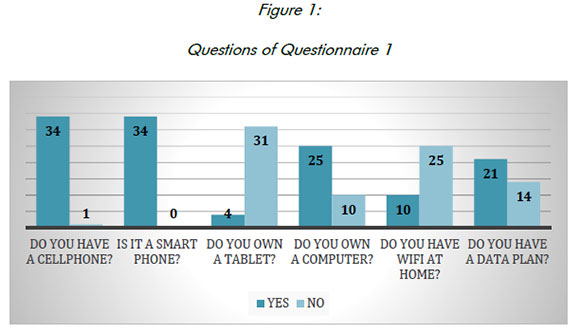
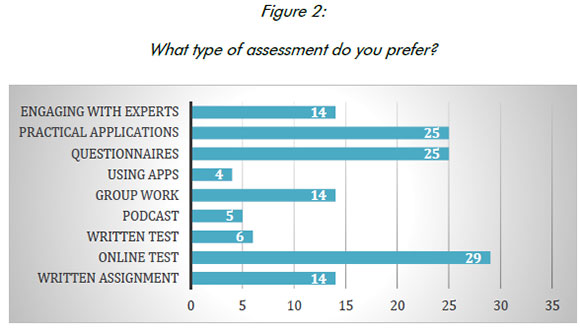
Before the module began, the students were asked to complete an online Google Forms questionnaire; 35 of the 42 students completed this questionnaire. Figures 1 and 2 below reflect the results.
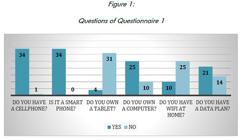
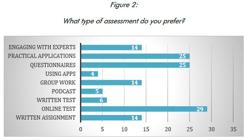
These data are important since it was imperative that they own cell phones to complete the assignments. It was also necessary to gauge their access to WiFi in order to develop the content in such a way that they would be able to access it and complete the assignments. It was gratifying to see that they would prefer online work, practical applications, group work, questionnaires and engaging with experts (see Figure 2). These are all aspects advocated by a seamless learning approach.
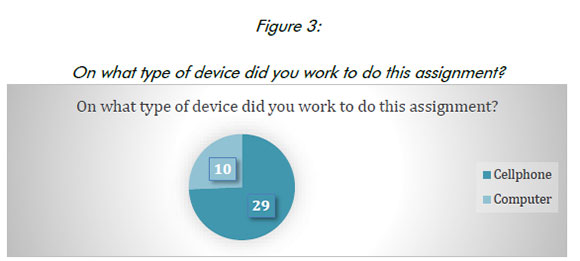
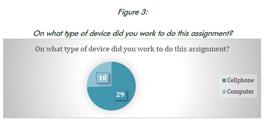
After the completion of the module, we conducted another online questionnaire, completed by 39 students. The first question was about assignment 1, where each student had to post two comments: one on the question posed by the lecturer and a second on another student's reply. This discussion was on Blackboard. Figure 3 below reflects the responses.
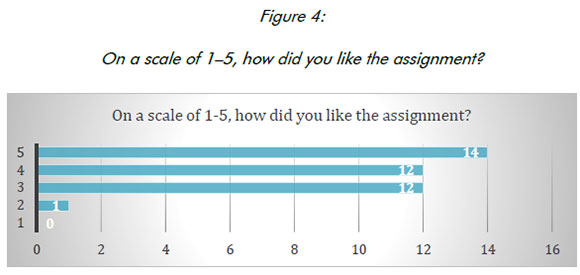
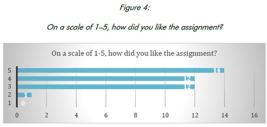
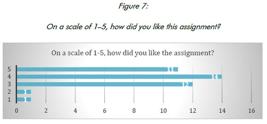
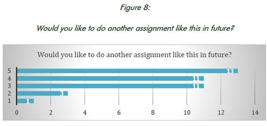
From the results, projected in Figures 46 and 57, it is clear that they liked this assignment and would like to do others like this in future.
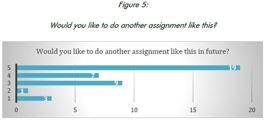
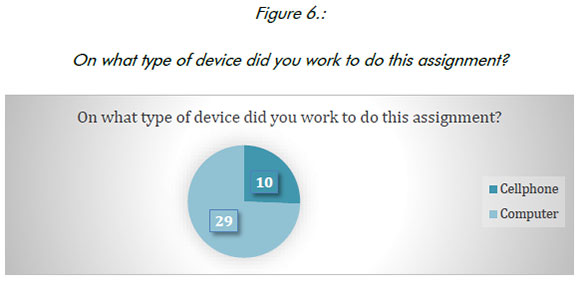
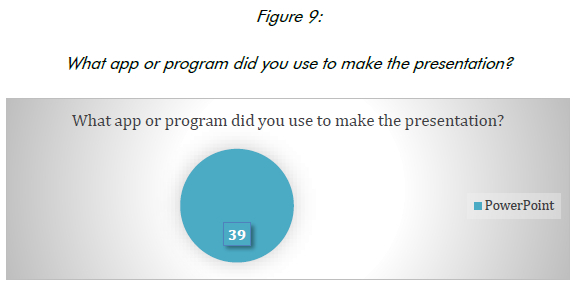
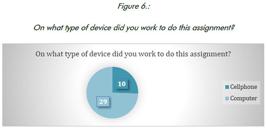
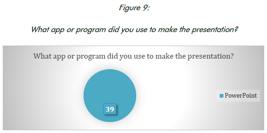
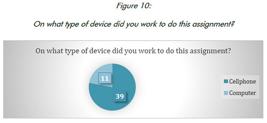
Regarding assignment 2 (the students had to watch the videos, answer specific questions relating to the videos and present their answers in the form of a PowerPoint, Canva or Prezi presentation), the following data were collected. Most of the students did the assignment on their cell phone, they liked this assignment and they would like to do another one like this (see Figures 6, 78, 89). It is interesting that everyone used Microsoft PowerPoint to complete this assignment (see Figure 9). From the interviews (discussed in the next section), it became clear that they felt comfortable with PowerPoint since it was familiar to them. It may be valuable to introduce them to different apps as part of the module.
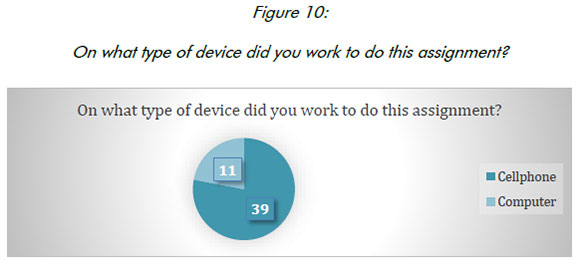
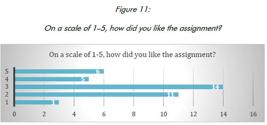
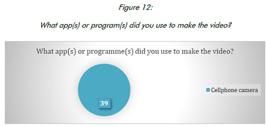
With assignment 3 they had to make a video of their interview with one person from the community, posing questions regarding forms of social economy. Similar questions to those posed in assignment 2 were asked, namely, what device they used and if they liked the assignment (see Figures 1010, 1111). It is clear they did not really like this assignment. From the interviews with the participants, it became clear that the problem was that it was difficult to find an interviewee.
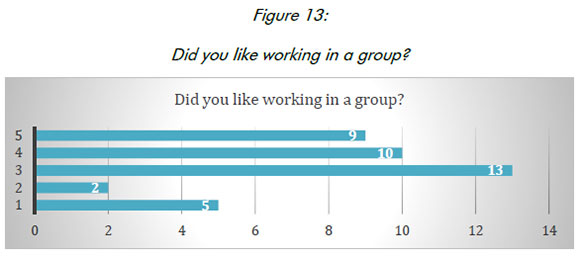
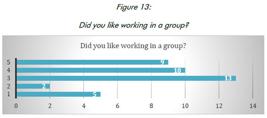
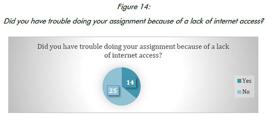
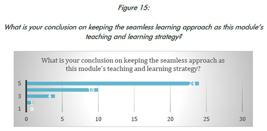
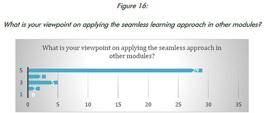
General questions followed regarding group work and the seamless learning approach. One can deduce that the majority of the class liked working in groups and they did not have problems with internet access. The most satisfying fact to emerge from these responses is that 29 of the 39 respondents liked the seamless learning approach, wanted to keep it as the module's teaching and learning strategy. They would also like it to be applied in other modules. Figures 13, 14, 1512, 1613 below reflect the responses.
We also conducted interviews, as described in the introduction to this section. The first question posed to the participants was: What was your experience of incorporating the seamless learning approach of this module? All 10 participants testified to the positive experience they had with incorporating the seamless learning approach. In the words of participant 8:
I think it is high time we adapt so that we go with times [sic].
Some (1, 4)14 stated that it was difficult to do the tests in person since they were used to online practices (this was after the COVID-19 pandemic).
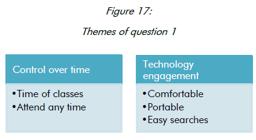
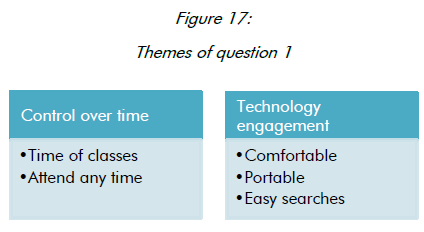
The positive aspects can be grouped into two themes: control over time and technology engagement. Four of the respondents (1, 3, 4, 5) mentioned that early classes were a problem. It was not explicitly stated, but transportation and long travel distances contribute to this view. The fact that they could concentrate more and attend classes at any time (1, 3, 4, 5)
you could be at home, and you'll still get up and be able to go to classes (10) was considered advantageous.
Participant 5 mentioned that some of them [classes] clashed
So with the seamless learning approach they could attend the class at any time. Participant 2 liked it because face-to-face classes can be stressful.
Technology engagement was welcomed in the sense that cell phones are easier to use than computers. Students are comfortable with them (2, 5, 6), internet searches are easy (5, 8), and they are portable
So I feel like a cell phone is portable anytime in a taxi you can get information and just write. (6)
Participant 6 felt it was a 'great experience using a cell phone'.
The second question was about their opinion on assignment 1 posting two comments: one on the question and one on another student's reply.
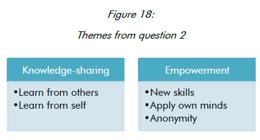
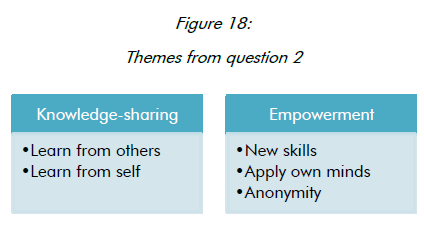
There was a generally positive feeling regarding this assignment. They felt empowered because they could use their minds, express their opinions (9, 10) and it was anonymous. They would not have had the courage to say something in class
One of the advantages of technology, I'm sitting on my bed, me and the keyboard. I will be more able to express myself more openly. (10)
For some, the assignment was daunting because
sometimes they (other students) find it offensive. (5)
They also felt empowered because they had learned a new skill (8).
Regarding knowledge-sharing, they felt that they learned from others (1, 3, 8, 10). In the words of participant 3:
I saw how other people answered questions and maybe I can implement that type of answering in my answers.
They also felt good sharing their own views and being heard (7, 8, 9)
It allowed us to share our view. (7)
Participant 9 stated that
you had to talk about your own perspective instead of going to the internet.
Their take on the use of Blackboard for assignment 1 flowed from question 2.
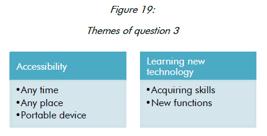
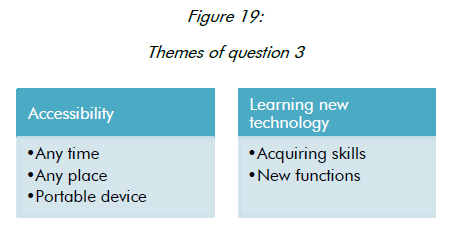
Although the students know Blackboard well (since this is the Learning Management System of the institution), they are not proficient in all of its functions - hence the theme of learning new technology and then also accessibility. Nine of the 10 participants were positive regarding the use of Blackboard for this assignment. The only concerns were connectivity (4, 10) and a lack of electricity (10), which are not unique to Blackboard.
They liked the fact that the assignment was something alternative and that they learned new functions (1, 8, 10). Accessibility featured a great deal in their responses. They mentioned the fact that they could do it at any time (5, 6), any place (3, 5, 6) and on a cell phone (6, 9). Participant 5 was very excited:
I was very much comfortable … very much accessible to everyone … if you need to do it in your own place like on your phone it's very much easy.
Question 4 probed their thoughts on assignment 2 (they had to watch videos and answer relevant questions in the form of a PowerPoint, Canva or Prezi presentation).
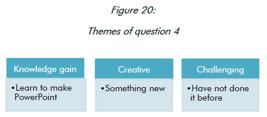
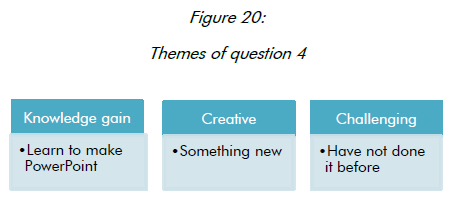
Although there was some negativity regarding this assignment, the majority liked it. The themes that crystallised were knowledge gain, creativity and then some challenges. Some (4, 6, 7, 8) liked the idea that they could learn to do something new by creating a PowerPoint presentation with audio, but it was also challenging (3, 4, 5, 8). One participant stated that they would rather do a written assignment than do this type of assignment. Others found it creative and fun to do something else (1, 5, 6, 10). (It is also clear from the responses in the questionnaire that they liked this assignment, as stated earlier.)
What is your opinion regarding the use of PowerPoint, Canva or Prezi for this assignment? constituted question 5. The whole group used PowerPoint for this assignment, and the overall reaction was positive. There are no themes other than positive reactions. It was easy (1, 3, 4, 7, 8, 9), and they were familiar (1, 3, 4, 5, 6, 7, 8, 10) and comfortable (1, 2) with it. Participants 6 and 10 said they liked it because they could learn new things.
Question 6 was as follows: What is your opinion regarding assignment 3, where you had to interview one person from the community, posing questions regarding forms of social economy and make a video?
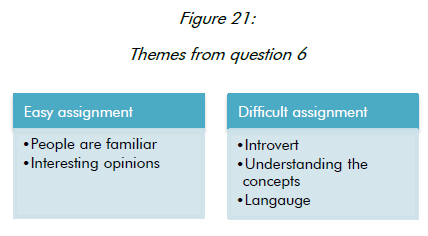
The two themes that emerged were simply that for some students the assignment was easy and for others, difficult.
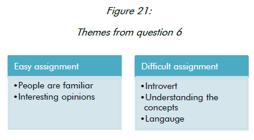
Those who found it easy (4, 9, 10) said that they knew people to interview (10) and it was nice finding out more from the people in the industry (5). Participant 4 stated that it was nice
hearing people's opinions on the social economy and making a video.
Aspects that made this assignment difficult for others were that they were introverts (1) or shy (3, 5) and found it difficult to approach people to interview or even find people to interview (7). Others found that the interviewees found it difficult to understand (1, 2, 3, 4, 6)
define to them what is social economy and sometimes people don't get it. (1)
The language barrier was also a problem for participants 4 and 8.
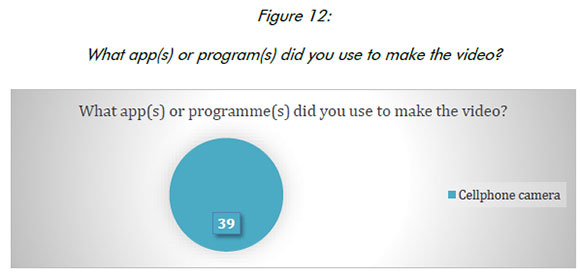
Their opinions on the apps used for assignment 3 (Question 7) were interesting. The interviewees and all the rest who completed the questionnaire used only the cell phone camera for this assignment. They did not elaborate, but it was apparent that they were familiar with the cell phone and thought it was sufficient to complete the assignment.
DISCUSSION
In an attempt to answer the research question: What are students' experiences of applying seamless learning as an alternative teaching and learning strategy to apply in undergraduate modules?, we identified two encompassing themes: empowerment and accessibility. Empowerment emerged in the sense of communication and personal and technology empowerment. Communicative empowerment occurs because they feel they learn from one another, but they also learn from themselves. This is echoed by Markowitz (2020), writing about interaction and collaboration between students. This overlaps with personal empowerment, where they felt they could stay anonymous and apply their minds without being judged. Introverts or passive students would thereby benefit from online learning. They also acquired new skills and functions and learned about technology (such as creating a PowerPoint presentation). Rossing et al. (2012) call them 'new learning tools'. Once again, this overlaps with technology empowerment, where they feel comfortable using cell phones: the fact that they are easy to use for internet searches added to the students' positive feelings and attitudes. El-Gayar, Moran and Hawkes (2011) also reported on the creation of a positive learning environment.
Accessibility surfaced multiple times. Authors such as Chayiwa and Mgutshini (2015), Sittiworachart and Joy (2008), Shonala, Joy, Oyelere and Suhonen (2016) and Huang, Hwang and Chang (2010) have all highlighted the accessibility of handheld devices and online learning, They felt that they could produce work at any time - attending the classes and completing the assignments - as observed by Chayiwa and Mgutshini (2015), and in any place (they did not need to be on campus and could even do their work while driving in a taxi). Interestingly enough, Uden (2007) also mentions that learning can even occur in 'parks and public transport'. The use of cell phones was applauded because they were found to be portable, easy to use, comfortable and familiar.
The implementation of seamless learning specific in the COMD2623 module had surprising outcomes. There was a clear eagerness among the students to attempt a new approach to learning, supported by the fact that they had become used to using their mobile devices for learning during the COVID-19 pandemic. What was interesting was the fact that several students clearly showed their preference for not returning to class but continuing online-based learning approaches and using their cell phones for this purpose. This bodes well for the future teaching of this module as (at least for the foreseeable future) the lecturer teaching the module would travel to this campus only irregularly. A module largely taught in a seamless fashion will help to save costs and time for the lecturer and the programme as a whole.
For the most part, reluctance to implement some of the interactive elements of the assignments was not linked to the use of technology or the application of the seamless learning approach, but to personal traits such as shyness, a lack of experience in conducting interviews or a lack of skills in completing the tasks. This is an issue that should be kept in mind and the strengthening of the 'soft skill' component of the course as a whole might have to be revisited.
We recommend that lecturers think about the following aspects when using the seamless learning strategy in their modules:
Apply the core concepts of seamless learning to the content and the structure of the module. It could be wise to scaffold the learning so that students who are used to a classroom approach to learning can be introduced gradually to the challenges accompanying a seamless approach.
These core concepts include access, support, applying innovative ideas, experts' engagement, alternative teaching and learning approaches, networking with other students and adjusting assessment criteria, to name but a few.
The instructions must be clear and simple, taking into account a previous possible lack of exposure to the concept of seamless learning and its peculiar challenges.
Introduce students to different types of application and programme, again taking into consideration the students' limited exposure to a variety of platforms in this regard.
All lectures and teaching materials must be available online so that they can access the content at any time.
In selecting materials, the various learning styles of students must be taken into consideration as far as the use of reading material, visual material and, for instance, podcasts is concerned.
Take the students' learning environment and circumstances into consideration. This is especially important where learning takes place in a developing country in which access to infrastructure and services could sometimes be limited.
Challenge the students to learn new things. This should not be limited to the use of technology but should include 'soft' skills such as inter-personal communication, problem-solving and innovative thinking.
Let them be creative in completing the assignments. This creativity could be stimulated by the methodology that the teacher follows in presenting their material.
Incorporate different types of assessment (e.g. group work, videos, podcasts, interviews and personal opinions).
They have to apply their minds in a problem-solving approach and not only do Google searches.
Do group work, but rather use smaller groups of, say, two or three students.
To situate the findings within the broader context of online learning, the following considerations may be relevant: online learning is only one of the formats used for seamless learning; other modes include hybrid-flexible, synchronous, asynchronous and fully online learning. These different formats all resort under the umbrella of the 'core' concepts of seamless learning.
CONCLUSION
In conclusion, the students felt overwhelmingly positive about the implementation of seamless learning in the teaching and learning strategy for the COMD2623 module. They experienced empowerment at different levels; they liked the accessibility of the content and reacted positively to the use of technology and handheld devices such as cell phones. It is, therefore, a viable option to use in the development of module content. We hope to inspire other lecturers to follow suit in implementing seamless learning in their modules. We want to bring about change in their mindsets towards using seamless learning and technology as part of their teaching strategy; and we want to change students' mindsets about completing tasks and assignments in alternative ways. Even though much more can be done regarding research related to the effectiveness of social entrepreneurship education and especially the use of a seamless learning approach in such education, it is clear that the skills, capacities and mindsets needed by the social entrepreneurs of the future can be strengthened only by pedagogies which support such skills, capacities and mindsets. Innovative learning approaches are able to contribute to the development of the social entrepreneurs of the future and they should be diligently researched to multiply their developmental effect.
REFERENCES
LITERATURE REVIEW
- Awaysheh, A., & Bonfiglio, D. (2017). Leveraging experiential learning to incorporate social entrepreneurship in MBA programs: A case study. International Journal of Management in Education, 15(2), 332-349.
- Becker, H. S. (1970). Field work evidence. In H. Becker (Ed.) Sociological work: Method and substance (pp.39-62). Transaction Books.
- Braun, V., & Clarke, V. (2006). Using thematic analysis in psychology. Qualitative Research in Psychology, III(2), 77-101.
- Chan, T., Roschelle, J., Hsi, S., Kinshuk, Sharples, M., Brown, T., & Hoppe, U. (2006). One-to-one technology-enhanced learning: An opportunity for global research collaboration. Research and Practice in Technology Enhanced Learning, I(1), 3-29.
- Chen, L., Ifenthaler, D., & Yau, J. Y. (2021). Online and blended entrepreneurship education: A systematic review of applied educational technologies. Entrepreneurship Education. https://doi.org/10.1007/s41959-021-00047-7
- Creswell, J. W., & Creswell, J. D. (2018). Research Design: Qualitative, Quantitative and Mixed Methods Approaches.(5th edition). Los Angeles: Sage.
- Dawley, L., & Dede, C. (2014). Situated learning in virtual worlds and immersive simulations. In J. M. Spector, M. D. Merill, J. Elen, & M. J. Bishop (Eds.) Handbook of Research and Educational Communications and Technology (pp.723-734). Springer. https://doi:10.1007/978-3-030-36119-8
- Durak, G., & Çankaya, S. (2018). Seamless learning: A scoping systematic review study. Journal of Education and e-learning Research, V(4), 225-234.
- El-Gayar, O., Moran, M., & Hawkes, M. (2011). Students' acceptance of tablet PCs and implications for educational institutions. Journal of Educational Technology & Society, XIV(2), 58-70.
- Erickson, F. (2007). Specifying "usually" and "some": Using simple descriptive statistics in qualitative inquiry. Presented at the 2007 Congress of Qualitative Inquiry, Urbana, Illinois, US.
- Eshach, H. (2007). Bridging in-school and out-of-school learning: Formal, non-formal and informal education. Journal of Science Education and Technology, XVI(2), 171-190. https://doi:10.1007/s10956-006-9027-1
- Fitzgerald, H., Bruns, K., Sonka, S., Furco, A., & Swanson, L. (2016). The centrality of engagement in education. Journal of Higher Education, Outreach and Engagement, XX(1), 223-245.
- Huang, Y., Hwang, W., & Chang, K. (2010). Innovations in desinging moblie learning applications. Educational Technologies and Societies, XIII(3), 1-2. https://www.ifets.info/download_pdf.php?j_id=48&a_id=1056
- Jupp, V. (2011). The Sage Dictionary of Social Research Methods. Online. London: SAGE. https://doi.org/10.4135/9780857020116
- Kolb, D. (2014). Experiential learning: Experience as the Source of Learning and Development. FT Press.
- Korsgaard, S., & Anderson, A. R. (2011). Enacting entrepreneurship as social value creation. International Small Business Journal, 29(2), 135-151.
- Lazareva, A., & Tømte, C. E. (2024). Flexible learning spaces as an arena for developing professional digital competence through small group collaboration. Teachers and Teaching, 30(4), 489-508. https://doi.org/10.1080/13540602.2024.2308893
- Markowitz, T. (2020). The power of peers in higher eduaction. Forbes. https://www.forbes.com/sites/troymarkowitz/2020/07/09/the-power-of-peers-in-higher-education/?sh=596282dd313c
- Malunga, P., Iwu, C. G., & Mugobo, V.V. (2014). Social entrepreneurs and community development. A literature analysis. Mediterranean Journal of Social Sciences, 5(16) 18-26. https://doi10.5901/mjss.2014.v5n16p18
- Maxwell, J. A. (2010). Using numbers in qualitative research. Qualitative Inquiry, 16(6), 475-482. https://doi:10.1177/1077800410364740
- Meldrum, B., & Bonnici, F. (2019). How to grow Social Innovation in South Africa. https://www.socialinnovationatlas.net/fileadmin/PDF/einzeln/02_SI-in-World-Regions/02_19_How-to-Grow-SI-inSouth-Africa_Meldrum-Bonnici.pdf
- Merriam, H., & Tissdell, H. (2016). Qualitative Research: A Guide to Design and Implementation (4th edition). Jossey-Bass.
- Miles, M. B., & Huberman, A. M. (1984). Qualitative data analysis: A sourcebook of new methods. Sage.
- Naveed, Q. N., Choudhary, H., Ahmad, N., Alqahtani, J., & Qahmash, A. I. (2023). Mobile learning in higher education: a systematic literature review. Sustainability, 15(18), 13566. https://doi.org/10.3390/su151813566
- Ndou, V. (2021). Social entrepreneurship education: A combination of knowledge exploitation and exploration processes. Administrative Sciences, 11, 112. https://doi.org/10.3390/admsci11040112
- Nurutdinova, A., Perchatkina, V., Zinatullina, L., Zubkova, G., & Galeeva, F. (2016). Innovative teaching practice: Traditional methods (challenges and implications). International journal of enviromental and science education, XI(10), 3807-3819. Retrieved from https://www.ijese.net/makale_indir/IJESE_599_articl_57a3590b108de.pdf
- Park, E. L., & Choi, B. K. (2014). Transformation of classroom spaces: Traditional versus active learning classroom in colleges. Higher Education, 68(5), 749-771. https://doi.org/10.1007/s10734-014-9742-0
- Pellegrino, J., & Hilton, M. (2012). Education for Life and Work: Developing Transferable Knowledge and Skills in the 21st Century. Wasihngton DC: The National Academies Press.
- Pittaway, L., & Cope, J. (2007). Simulating entrepreneurial learning: Integrating experiential and collaborative approaches to learning. Management Learning, 38(2), 211-233.
- Power, R., Gallant, G., Gallant, J., Girouard, J., Hildebrandt, K., MacLeod, J., & McCarthy, T. (2020). Integration of Instructional Design and Technology to support Rapid Changes. Nova Scotia: Power Learning Solutions. https://idandrapidchange.pressbooks.com/
- Rivers, A., Armellini, A., & Nie, M. (2015). Embedding social innovation and social impact across the disciplines: Identifying 'Changemaker' attributes. University of Northampton, UK. https://www.researchgate.net/deref/http%3A%2F%2Fwww.emeraldinsight.com%2Fdoi%2Fabs%2F10.1108%2FHESWBL-10-2014-0051
- Rusman, E., Tan, E., & Firssova, O. (2018). Dreams, realism and critics of stakeholders on implementing and adopting mobile seamless learning scenario's in Dutch secondary education. World Conference on Mobile and Contextual Learning, 88-96. Retrieved from https://www.learntechlib.org/p/184927/
- Russell, J. L., Knutson, K., & Crowley, K. (2013). Informal learning organizations as part of an educational ecology: Lessons from collaboration across the formal-informal divide. Journal of Educational Change, XIV(3), 259-281. Retrieved from https://doi.org/10.1007/s10833-012-9203-4
- Salanda, J. (2011). The Fundamentals of Qualitative Research: Understanding Qualitative Research. Tempe: Oxford University Press.
- Schwandt, T. (2007). The Sage dictionary of qualitative inquiry (3rd ed.). Sage
- Schweighart, R., Hast, M., Pampel, A. M., Rebien, J. A., & Trautwein, C. (2024). Transition into Distance Education: A Scoping Review. Education Sciences, 14(10), 1130. https://doi.org/10.3390/educsci14101130
- Sitthiworachart, J., & Joy, M. S. (2008). Is mobile learning a substitute for electronic learning? e-Learning, 451-458. http://wrap.warwick.ac.uk/61724/1/WRAP_Joy_sitthiworachart_joy_elearn_08.pdf
- Soni, P., Shaikh, A., & Karodia, M. (2014). Social Entrepreneurship and Social Innovation: Reclaiming Sustainable Development in South Africa. Regent Business School, South Africa. https://regent.ac.za/wp-content/uploads/2015/06/Social-Entrepreneurship-and-Social-Innovation.pdf
- Uden, L. (2007). Activity theory for designing mobile learning. International Journal of Mobile Learning and Organisation, 1(1) 81-102. https://doi:1010.1504/IJMLO.2007.011190
- Villanueva, J. E. (2024). Exploring Flexible Learning Experiences. International Journal of Multidisciplinary: Applied Business and Education Research, 5(12), 4932-4944. https://www.researchgate.net/publication/387387520_Exploring_Flexible_Learning_Experiences
- Wong, L. -H. (2015). A brief history of mobile seamless learning. In L. -H. Wong, M. Milrad, & M. Specht Eds.), Seamless Learning in the Age of Mobile Connectivity, (pp.3-40). Springer. https://doi.org/10.1007/978-981-287-113-8
Reviewed: 31 January 2025
Accepted: 14 January 2026
2 Chan et al (2006) is a seminal source since they were some of the first authors to publish on seamless learning.
3 Ethics clearance number UFS-HSD2022/0841/22 provided by the General/Human Research Ethics Committee of the institution. Great care was taken to protect the participants' identity, and they know they could withdraw at any time. All data were anonymized.
4 The institution has three campuses.
5 This is a seminal source.
6 5 is "I like it a lot"; 1 is "I do not like it at all".
7 5 is "Strongly agree", 1 is "I do not agree at all".
8 5 is "I like it a lot"; 1 is "I do not like it at all".
9 5 is "Strongly agree", 1 is "I do not agree at all".
10 All of them used a cell phone but 11 also used a computer.
11 5 is "I like it a lot"; 1 is "I do not like it at all".
12 5 is "Strongly agree", 1 is "I do not agree at all".
13 5 is "Strongly agree", 1 is "I do not agree at all".
14 The numbers in brackets represent the numbers allocated to the participants to ensure their anonymity.